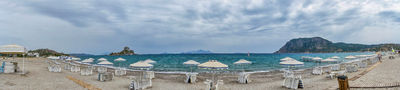
 Swimming © Stimoroll · CC BY-SA 4.0
 Paradise Beach (Bubble Beach)
Golden Kefalos Bay sand where volcanic gas fizzes up through the warm shallows like natural champagne.
Best for novelty swim in bubbles
The flat, green cycling island of the Dodecanese — birthplace of Hippocrates, with long sandy beaches, a Knights' castle and hot springs that meet the sea.
Rikki Mitterer / Wikimedia Commons (CC BY-SA 4.0)
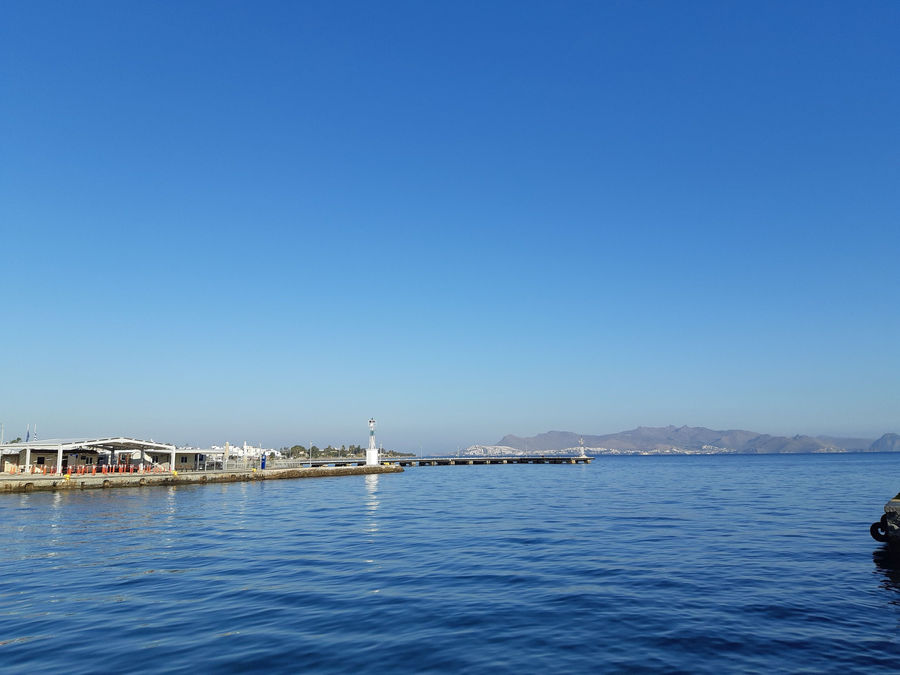
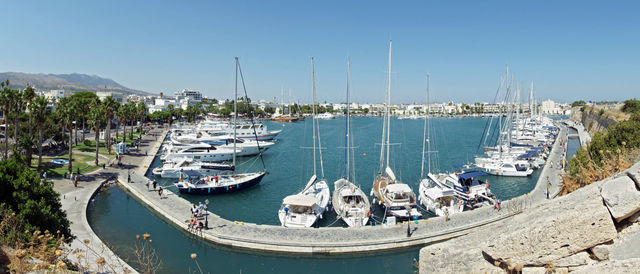
Kos is the second-largest of the Dodecanese islands, lying in the far south-eastern Aegean just a few kilometres off the Turkish coast — Bodrum is clearly visible across the strait and reachable by ferry in under half an hour. It is long and narrow (roughly 40km end to end), and unusually for a Greek island it is largely flat, fertile and green, with only the Dikeos mountain range rising in the centre. That flatness has made it Greece's premier cycling island: Kos Town and the resort strips are connected by more than 200km of dedicated bike lanes, and hiring a bicycle is a genuinely practical way to get around rather than a novelty. The island is inseparable from Hippocrates, the father of Western medicine, who was born here around 460 BCE; the Asklepion — an ancient healing sanctuary and medical school terraced up a hillside above Kos Town — is the island's headline archaeological site. Kos Town itself is a pleasant, walkable capital with a Castle of the Knights of St John guarding the harbour, a sunken ancient agora, Roman remains and a relaxed café culture. Around the coast, long shallow beaches at Tigaki, Marmari and Mastichari draw families, Kardamena is the frank package-party strip, and the wilder Kefalos peninsula in the south-west holds the most scenic bays. Big all-inclusive resorts are a defining feature — Kos suits beach-and-sun holidaymakers, families and cyclists more than it suits anyone chasing untouched authenticity.
Kos offers an unusually easy, low-effort island holiday: flat terrain, well-organised resorts, long sandy beaches and short transfer times mean it works especially well for families and for anyone who wants sun and sea without the logistics. But it has more depth than the package brochures suggest. The Asklepion is one of the most atmospheric ancient sites in the Dodecanese, and it comes with a story — this is where Hippocrates taught, and the sanctuary functioned as an early hospital. Kos Town blends Hellenistic, Roman, Byzantine and Crusader layers within a few walkable blocks. The mountain village of Zia, high on the Dikeos slopes, is the classic spot for a sunset dinner looking west across the plain to the sea. Most distinctive of all are the thermal springs at Therma (Embros), where hot sulphurous water bubbles out of the rock into a walled pool at the water's edge and mixes with the cool sea — a genuinely memorable free soak. And the position is a gift for island-hoppers: frequent ferries reach Rhodes, Kalymnos, Nisyros, Patmos and Symi, while a quick catamaran crosses to Bodrum in Turkey. Kos pairs naturally with a Dodecanese island-hop, or with a Bodrum add-on for a two-country trip.
Kos eats well, with a fertile island behind the tavernas: it's known for its own soft cheese, posa or krasotiri (a wine-washed cheese), for honey from the Dikeos slopes, and for good local tomatoes, watermelons and wine. Look for pitaridia (a local hand-cut pasta, often with meat), lountza and cured pork, marides (little fried fish), grilled octopus and the usual excellent Greek staples — horiatiki salad, tzatziki, souvlaki, gyros, moussaka and fresh seafood by the harbour. Zia, the mountain village, is the classic spot for a sunset dinner of grilled meats and mezes with a view across the plain, though it can be touristy — walk a little off the main lane for better value. Kos Town's back streets behind the marina and around the market hall hold more authentic tavernas than the harbour front. The island produces its own wine, and local honey and cheese make good things to bring home. Beach resorts skew towards international menus and all-inclusive buffets; seek out the village tavernas for the real cooking.
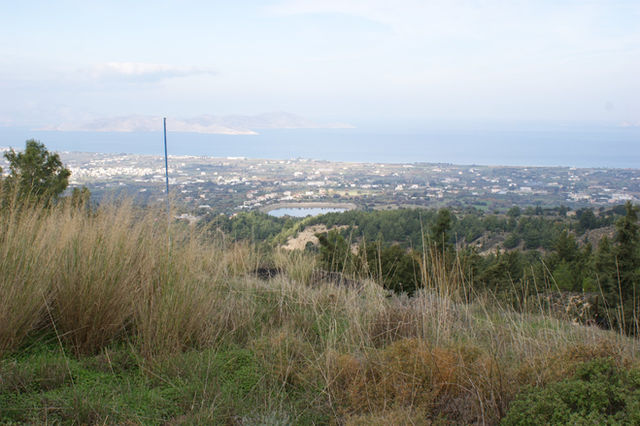
Live map of hotels and villas around Kos — powered by Stay22. Pan, zoom and compare live prices to pick your base.
Pan, zoom and compare live prices — every stay in one map.
Kos is famously flat, and cycling is the signature way to get around — the island has more than 200km of dedicated bike lanes, and Kos Town is threaded with them, connecting to Tigaki, Marmari and Lambi. Bike hire is cheap and available everywhere, and for once on a Greek island it's a practical mode of transport rather than a workout. For longer distances, a hire car or scooter opens up the Kefalos peninsula and the mountain villages; the road network is good and driving is easy given the gentle terrain. Scooters and ATVs are widely rented at the resorts. The public KTEL bus links the main towns and beaches, and cheap local buses run around Kos Town itself. Taxis are metered and available at the airport, town and larger resorts. For day trips, excursion boats run from Kos Town and Kardamena to Nisyros, and the Bodrum ferries leave from the main harbour in town. Distances are short — nowhere on the island is more than about an hour's drive from anywhere else.
Kos has two bus layers: the town's cheap urban buses (branded locally, running around Kos Town and to nearby beaches such as Lambi, Psalidi and Agios Fokas for a couple of euros), and the KTEL intercity buses that connect Kos Town to Tigaki, Marmari, Mastichari, Kardamena, Kefalos and the airport. KTEL fares are modest — typically a few euros depending on distance — and services are frequent enough on the main routes in summer, though thinner in shoulder season and sparse on Sundays. Buy tickets at kiosks or on board. There is also a seasonal tourist 'train' road-shuttle in Kos Town and up to the Asklepion. For beaches and villages off the main routes, or for the Kefalos peninsula, a bicycle, scooter or hire car is far more flexible than waiting for a bus. Taxis fill the gaps but are relatively expensive for longer hops; agree the fare or confirm the meter is running.
Go to the thermal springs at Therma (Embros Thermae) on the south-east coast late in the afternoon, when the day-trippers thin out: hot sulphurous water bubbles into a stone-walled pool right at the sea's edge, and you alternate between the scalding spring and the cool Aegean — bring water shoes for the pebbles. Time the Asklepion for opening or the last hour before closing to avoid both the heat and the cruise groups; it's terraced and shadeless. For Zia's famous sunset, arrive early to claim a west-facing table, or better, walk up towards the Dikeos summit path above the village for the same view without the crowd. Rent a bicycle for at least one day even if you're not a cyclist — the flat lane from Kos Town out to Tigaki is genuinely pleasant and the island was built for it. Skip the packed central Kos Town harbour tavernas in favour of the streets around the covered market. And treat Nisyros as a proper day trip, not a rushed stop: its steaming volcanic crater, which you can walk down into, is one of the most memorable half-days in the Dodecanese.
The 6 shores actually worth the trip on Kos — ranked, with the vibe of each and where to stay nearby. Tap a card to fly the map to it.
Swimming © Stimoroll · CC BY-SA 4.0 Golden Kefalos Bay sand where volcanic gas fizzes up through the warm shallows like natural champagne.
Best for novelty swim in bubbles
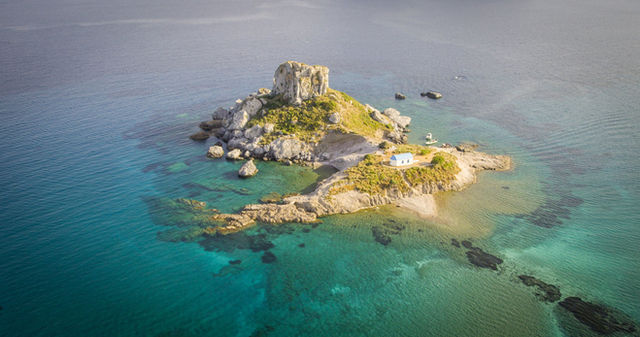
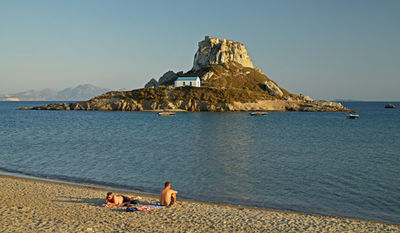 Snorkelling © Ввласенко · CC BY-SA 4.0
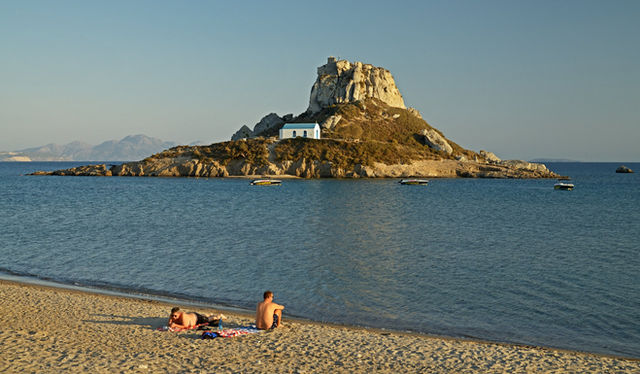
 Fine sand facing the chapel-topped Kastri islet, with early-Christian basilica ruins right ashore.
Best for snorkelling to Kastri
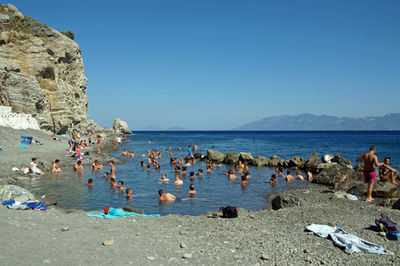 Dramatic © kallerna · CC BY-SA 3.0
 A rock-walled sea pool where 45°C sulphur springs meet the Aegean, reached by a short cliff scramble.
Best for natural hot-spring soak
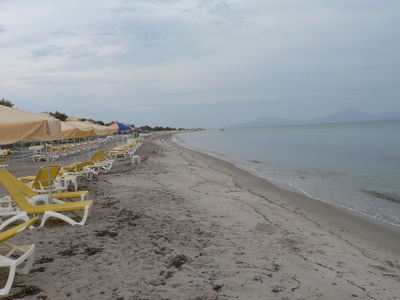 Family © Andy Mitchell · CC BY-SA 2.0
 A long white-sand strip with water so shallow toddlers can wade far out, backed by easygoing beach bars.
Best for toddlers & shallow water
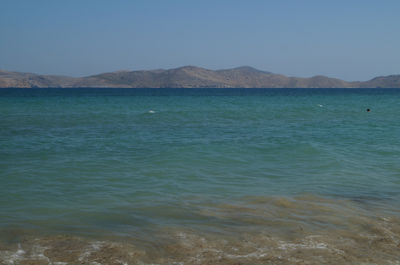 Long sandy © Alexey Reshetnikov · CC BY 3.0
 Wide pale sand and steady afternoon breeze that draws windsurfers and glorious west-facing sunsets.
Best for windsurfing & sunsets
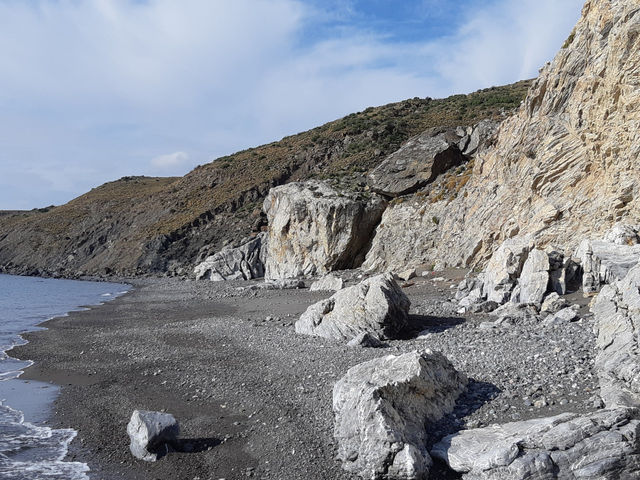
A wild little cove below the cliffs, near-empty and sheltered, with just a few loungers and calm water.
Best for quiet wild escape
Kos · Around the island · 1 island · 6 beaches · 1 hotels nearby
Skip-the-line tickets and small-group tours in Kos — compare across our partners.
We're still curating hand-picked tickets and tours for Kos. In the meantime, the map above and the nearby cities are a great place to start.
May – October
Kos has a hot, dry Mediterranean climate with a long, reliable summer. July and August are the hottest and busiest months, with daytime temperatures typically around 30–33°C, intense sun and the strong afternoon meltemi wind that funnels down the Aegean and can churn up the north-coast beaches (welcome for windsurfers, less so for a still swim). May, June, September and early October are the sweet spot: warm days of 24–29°C, sea temperatures that stay swimmable well into October, and lighter crowds. The sea is at its warmest from July to September. Spring brings green hillsides and wildflowers, and the salt lake behind Tigaki can host flamingos. Winters (November–March) are mild but wetter and much quieter, with many resorts, tavernas and seasonal flights shut down — the island effectively hibernates outside the April–October season. Whenever you visit in summer, the UV is strong; the flat, open beaches offer little natural shade.
Kos is a safe, well-established resort island with very low violent crime; the main risks are the ordinary holiday ones. Scooters, ATVs and quad bikes are the biggest hazard — accidents are common, hire machines are not always well maintained, and a helmet and a valid licence are legally required (though not always enforced); ride cautiously and check your travel insurance covers powered two-wheelers. Roads are generally good and flat, but cyclists should still watch for resort traffic and use the marked bike lanes. On the beaches, the north coast can develop strong wind-driven waves and currents when the meltemi blows, so heed any flags. The summer sun is fierce and shade is limited on the open sandy beaches — sunburn and dehydration are the most common ailments. Standard petty-theft precautions apply in the busy nightlife areas of Kos Town and Kardamena, where excessive drinking is the usual source of trouble. Tap water is generally not recommended for drinking on Kos — stick to bottled water. Emergency number is 112.
Kos is Greek Orthodox, and while the resort coast is thoroughly geared to international tourism, ordinary courtesies still matter away from the beach bars. When visiting churches, monasteries or the chapel on Kastri islet, cover shoulders and knees and behave quietly. Beachwear belongs on the beach — cover up for tavernas, shops and town streets, and topless or nude sunbathing is only acceptable on the recognised naturist stretches, not the family beaches. Tipping is appreciated but not obligatory: rounding up or leaving 5–10% for good service is normal. Greeks eat late, and tavernas fill from 9pm; lunch is leisurely. In the mountain villages such as Zia and Pyli, and in the working parts of Kos Town, you'll get a warmer reception with a little Greek — a 'kalimera' and 'efharisto' go a long way. Bear in mind the island's proximity to Turkey and its recent history as a migration entry point; be sensitive and factual rather than presumptive if the subject comes up.
£85/day mid-range (budget £45, luxury £220+; all-inclusive resorts can work out cheaper per head)
112 (European emergency), 100 (Greek police), 199 (fire), 166 (ambulance), 108 (Hellenic Coast Guard)
Kos International Airport 'Hippocrates' (KGS), in the centre of the island near Antimachia, has direct seasonal flights from the UK from roughly May to October, operated by Jet2, easyJet, TUI, British Airways and Ryanair from Manchester, London, Birmingham, Leeds, Bristol, Edinburgh and other regional airports — flight time is around 4 hours from the Midlands and the north, a little longer from London. Many arrivals are on charter and package deals rather than scheduled flights. Outside the summer season there are no direct UK flights; you connect through Athens (Aegean and Olympic fly the domestic hop) or fly to Kos via another European hub. By sea, Kos is a Dodecanese ferry hub: Blue Star Ferries and other operators run to and from Piraeus (Athens) and link Kos with Rhodes, Kalymnos, Leros, Patmos, Lipsi, Nisyros, Tilos and Symi; catamarans and high-speed boats add faster seasonal connections. Kos also has the easiest Turkey crossing of any Greek island — daily ferries and catamarans reach Bodrum, just 11 nautical miles away, in around 20–30 minutes, making it a straightforward day trip (bring your passport).
Flights, airport transfers and car hire to KGS — search and compare without leaving the page.
Parking, holiday extras, and more — coming soon.
We're lining up parking, holiday extras and activities you'll be able to add to any trip from here.