 Party © rene boulay · CC BY-SA 3.0
 Super Paradise Beach
Mykonos’ legendary party cove where beach clubs and DJs run from noon till dark.
Best for beach clubs & DJs
The Cyclades' party island — whitewashed lanes, hilltop windmills, chic beach clubs and glittering Aegean nightlife.
Mykonos is a small, arid, granite island in the Cyclades archipelago of the Aegean, roughly 150km southeast of Athens, with a permanent population of around 10,000 that multiplies many times over in peak summer. It has none of Santorini's volcanic drama — the landscape is low, rocky and treeless, scoured by the meltemi wind that gives the island its old name, the 'Island of the Winds'. What Mykonos has instead is atmosphere and a scene. The main town, Chora, is the archetypal Cycladic labyrinth: a deliberately confusing tangle of whitewashed lanes (built to disorient pirates), blue-shuttered houses, bougainvillaea, hundreds of tiny churches and cats, opening onto the waterfront quarter of Little Venice, where balconied houses hang directly over the sea. Above the town stand the five thatched windmills of Kato Mili, and nearby the extraordinary Panagia Paraportiani, a sculptural white church formed from five chapels merged into one. The south coast is a run of sandy beaches — Paradise, Super Paradise, Psarou, Platis Gialos, Ornos, Elia — many of them home to the beach clubs that made the island's modern reputation. Just offshore lies Delos, a UNESCO-listed sacred island and one of the most important archaeological sites in Greece. Mykonos suits those who want glamour, nightlife, beach-club days and a walkable, photogenic town — and who accept that it is Greece's priciest and most crowded island.
Mykonos earns its reputation on two very different fronts. The first is the town: Chora is genuinely one of the loveliest in the Cyclades — a place to get lost in on purpose, drifting between white lanes until you emerge at Little Venice for a sunset drink with the windmills silhouetted above and the water lapping the terrace below. The second is the scene. This is Greece's premier party and luxury island, glossy, hedonistic and unapologetically expensive, with beach clubs (Nammos at Psarou, Scorpios on Paraga, Jackie O' at Super Paradise) that run from long lazy lunches into DJ-driven afternoons and nights. It is also one of the Mediterranean's most established LGBTQ-friendly destinations, welcoming and unbothered in a way few islands match. Beyond the glamour, Mykonos holds a serious cultural card: the short boat trip to Delos, the mythological birthplace of Apollo and Artemis and once one of the great sanctuaries and trading ports of the ancient Aegean, is among the finest archaeological experiences in Greece. Mykonos pairs naturally with Santorini (a fast ferry of roughly an hour connects the two very different islands) and with a Delos half-day; quieter, cheaper Naxos and Paros are also a short hop away if the pace and the prices start to wear.
Mykonos eats well, though at a price. The island has its own genuine specialities: kopanisti, a sharp, peppery soft cheese cured to a spreadable paste; louza, air-cured spiced pork; and mostra, a barley-rusk topped with kopanisti and tomato. You'll also find the Cycladic staples done well — grilled fresh fish and octopus, fava (yellow split-pea purée), tomato fritters (domatokeftedes), horiatiki (village salad) and slow-cooked meats. Chora has the widest range, from expensive waterfront tables in Little Venice (worth it for the sunset, less so for the cooking) to excellent backstreet tavernas if you walk a few lanes inland. For authentic, better-value eating, head to the inland village of Ano Mera, where the tavernas around the square serve proper home-style Greek food at a fraction of the coastal prices. The beach clubs — Nammos at Psarou, Scorpios on Paraga — are as much about the scene and the bill as the food, though the cooking is genuinely good. Drink local Cycladic wine, ouzo or a frappé; the cocktail-and-champagne culture of the beach clubs is a different, and far pricier, proposition.


Live map of hotels and villas around Mykonos — powered by Stay22. Pan, zoom and compare live prices to pick your base.
Pan, zoom and compare live prices — every stay in one map.
Mykonos is small — around 10km across — but its beaches are spread along the south and east coasts, so you will need some form of transport. A hire car or, popularly, an ATV/quad or scooter gives the most freedom (roughly €30–60/day for a quad in season), though parking in and around Chora is severely limited and the town itself is pedestrianised. Taxis exist but are notoriously few for the island's summer demand — expect waits and pre-book where you can; ride-hailing and hotel-arranged transfers fill some of the gap. The most enjoyable way to move between the south-coast beaches is the water taxi: small boats run through the day linking Ornos, Platis Gialos, Paraga, Paradise, Super Paradise and Elia, roughly hourly in each direction in high summer, and they sidestep the road traffic entirely. The boat trip to Delos also leaves from the Old Port in Chora. Chora is for walking only — its lanes were built as a maze and no car goes in; wear decent shoes and accept that you will get pleasantly lost.
Mykonos has a reasonable KTEL bus network centred on two stations in Chora — Fabrika (southern end) and the Old Port area — with frequent services in season to the main beaches and villages: Ornos, Platis Gialos, Paradise, Paraga, Elia, Kalo Livadi, Ano Mera, the New Port at Tourlos and the airport. Fares are cheap (roughly €2 per ride, a little more for the further beaches), and buses run late into the night on the busiest routes in July and August, which is genuinely useful for getting back from the beach clubs. The catch is crowding — buses fill up fast at peak times and you may not board the first one. Buy tickets from machines, kiosks or on board. For the south-coast party beaches, the water taxi from Platis Gialos is often quicker and more pleasant than the bus. Taxis are metered but chronically in short supply; do not rely on flagging one down late at night.
Visit Delos early and check the day — the site closes on Mondays and the boats can be cancelled when the meltemi is up, so build in flexibility; the 09:00 or 10:00 departure from the Old Port gives you the ruins before the midday heat, and there is no shade, so take water and a hat. To dodge the beach-club economy without missing the coast, use the water taxi from Platis Gialos to hop between beaches and pick a stretch of free sand rather than a €100 sunbed pair. For the famous Little Venice sunset without the crush, arrive at a bar terrace well before the sun drops, or watch instead from up by the Kato Mili windmills, which look back over the whole scene. Chora is quietest and most photogenic in the early morning, before the day-trippers and cruise passengers arrive — walk the lanes at 8am. For real value and a glimpse of island life away from the scene, drive inland to Ano Mera for lunch. And if the crowds and prices start to grate, remember that Naxos, Paros and Tinos are all a short ferry away and far gentler on both the nerves and the wallet.
The 6 shores actually worth the trip on Mykonos — ranked, with the vibe of each and where to stay nearby. Tap a card to fly the map to it.
Party © rene boulay · CC BY-SA 3.0 Mykonos’ legendary party cove where beach clubs and DJs run from noon till dark.
Best for beach clubs & DJs
 Long sandy © Squirmy2000 (English Wikipedia) · Public domain
 The island’s longest golden strand, sweeping and roomy with calm, clear water.
Best for long sandy strolls
 Swimming © Olaf Tausch · CC BY 3.0
 Sheltered turquoise bay and south-coast hub for easy swimming and water taxis.
Best for calm-water swimming
 Family © Bgabel (wikivoyage) · CC BY-SA 3.0
 Shallow, well-organised resort bay close to town, ideal for kids and easy days.
Best for families with kids
 Secluded © Olaf Tausch · CC BY 3.0
 Wild, unspoilt north-coast cove with no sunbeds or bars, just raw natural beauty.
Best for off-grid quiet
 Sunset © Ken Curtis · CC BY-SA 2.0
 The ‘Shirley Valentine’ cove with dreamy sunsets over Delos across the water.
Best for sunset views over Delos
Mykonos · Around the island · 1 island · 6 beaches · 1 hotels nearby
Skip-the-line tickets and small-group tours in Mykonos — compare across our partners.
We're still curating hand-picked tickets and tours for Mykonos. In the meantime, the map above and the nearby cities are a great place to start.
Day-by-day itineraries that take in Mykonos — routes, timings and what to book.
 6 Nights
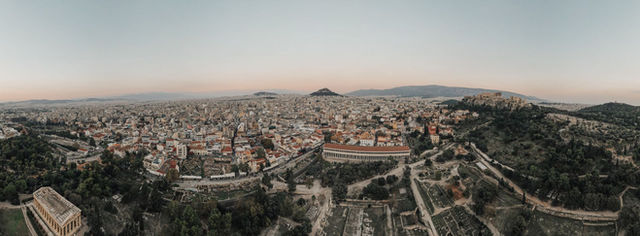
 Classical Athens paired with island-hopping to Santorini and Naxos.
Price on enquiry
View trip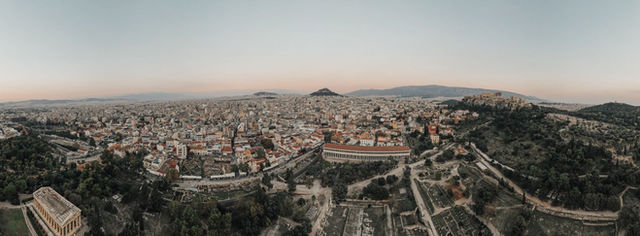 6 Nights
 Two days in Athens for the Acropolis and Plaka, then a ferry into the Cyclades — Naxos for beaches and mountain villages, Santorini for the caldera — routed so you never backtrack and fly home from the islands.
Price on enquiry
View trip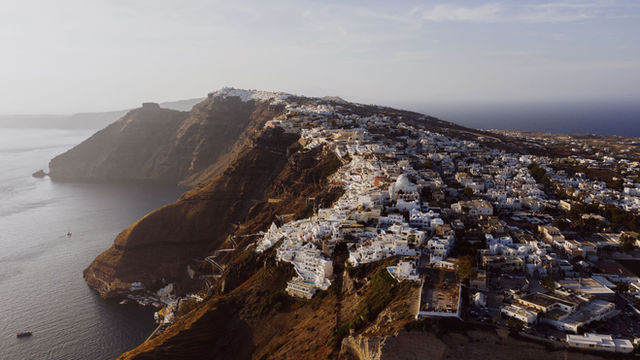 7 Nights
 Experience the dramatic volcanic cliffs of Santorini, the fertile valleys and ancient trails of Naxos, and the vibrant winding streets of Mykonos. This eight-day itinerary connects three distinct Cycladic islands using local ferries, public bus networks, and a targeted local vehicle rental.
Price on enquiry
View tripJune – September
Mykonos has a hot, dry Mediterranean climate, but its defining feature is wind. The meltemi — a strong, dry northerly that blows across the Aegean chiefly in July and August — can gust hard for days at a time, cooling the heat but whipping up the north-facing beaches and occasionally disrupting ferries and the Delos boats; it is why nearly all the developed beaches sit on the sheltered south coast. Peak summer (July–August) is hot (typically 26–30°C), rainless, at its busiest and most expensive, and at its windiest. The sweet spots are June and September into early October: warm (23–28°C), the sea comfortably swimmable (the Aegean warms slowly, so late summer is best for the water), lighter crowds and a more intermittent meltemi. May is pleasant and much quieter, though the sea is still cool and some venues only wake up towards the month's end. Winter (November–March) is mild, wet and windswept, with most of the island's tourist infrastructure closed. Whenever you come, pack a light layer for windy evenings — even August nights can turn breezy.
Mykonos is a very safe destination — serious crime against visitors is rare, and the main risks are practical rather than criminal. The single biggest hazard is the ATV/quad, which everyone hires and few respect: accidents are common on the island's narrow, sometimes gravel-strewn roads, often involving inexperienced riders, sunburnt shoulders and no helmet. Treat them with care, wear the helmet, and don't ride after the beach-club drinks. The meltemi wind creates genuinely strong currents and choppy water on exposed (north-facing) beaches; stick to the sheltered south coast when it blows and heed any flags. The Cycladic sun is fierce and the island offers little natural shade — sunstroke and dehydration are the commonest reasons visitors need help. Nightlife brings the usual big-party caveats: pace the alcohol, keep an eye on your belongings and your drink in crowded clubs, and agree taxi arrangements before you head out, as late-night taxis are scarce. Prices themselves are the other 'hazard' — beach-club bills and unlisted charges have a reputation, so ask for the price of sunbeds, bottles and covers before you commit.
Beneath the glamour, Mykonos is a Greek Orthodox island with hundreds of small churches, active monasteries (Panagia Tourliani at Ano Mera among them) and a working local community; dress modestly and behave quietly when entering any church or monastery — covered shoulders and knees. Delos is an archaeological site of the first importance: stay on the paths, don't climb on the ruins and remember there is almost no shade or shelter there. Mykonos is one of the most relaxed and openly LGBTQ-friendly places in the Mediterranean, and that easy tolerance is part of the island's character — reciprocate it. Beachwear is for the beach; cover up for town restaurants and shops. Tipping is appreciated but not obligatory (rounding up or 5–10% is normal). Above all, come with a clear sense of what things cost: Mykonos is markedly more expensive than mainland Greece or neighbouring islands, and confirming prices for sunbeds, drinks and tables before ordering is simply good sense rather than rudeness.
£180/day mid-range (budget £85, luxury £500+; beach-club sunbeds and Chora dining push costs sharply higher)
112 (European emergency), 100 (Greek police), 199 (fire), 166 (ambulance), 108 (Hellenic Coast Guard)
Mykonos Island National Airport (JMK), about 4km southeast of Chora, is served in the summer season by direct flights from across Europe, including from London — British Airways, easyJet and Ryanair among others — typically running roughly April/May to October. Aegean, Sky Express and others fly year-round via Athens (a short 40–45 minute hop), which is the usual routing outside the peak season. The airport is small and gets extremely busy in July and August; pre-booked transfers or taxis cover the short ride into town. By sea, high-speed catamarans and conventional ferries connect Mykonos to Athens from two ports: Rafina (nearer the city's eastern side and the airport, fastest ferries around 2h15) and Piraeus (Athens' main port, fastest around 2h40). Within the Cyclades, Mykonos is well linked to Santorini (fast ferries from around 40 minutes up to a couple of hours depending on service), Naxos (from around 35 minutes) and Paros (from around 35 minutes), as well as Tinos and others. Seajets, Golden Star, Fast Ferries and Blue Star are the main operators. Note that most fast ferries use the New Port at Tourlos, about 2km north of Chora, not the picturesque Old Port.
Flights, airport transfers and car hire to JMK — search and compare without leaving the page.
Parking, holiday extras, and more — coming soon.
We're lining up parking, holiday extras and activities you'll be able to add to any trip from here.