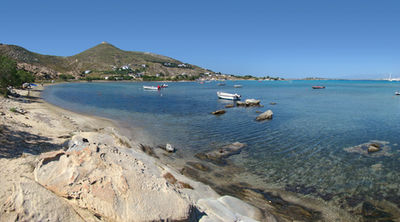
 Dramatic © Tango7174 · CC BY-SA 4.0
 Kolymbithres Beach
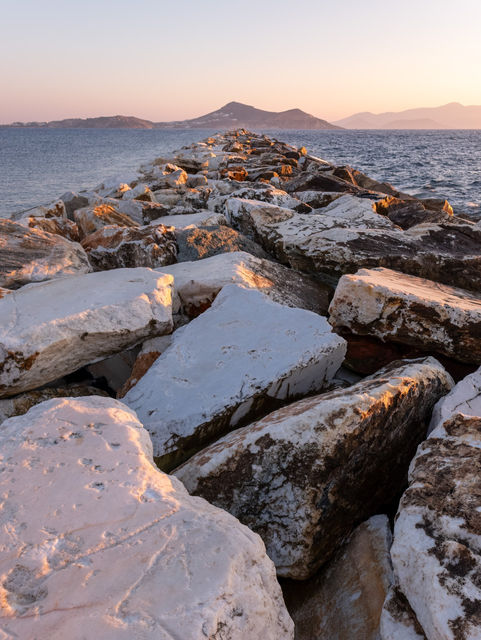
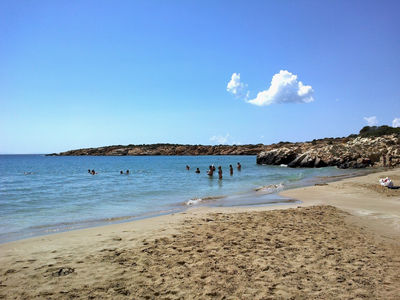
Smooth granite boulders carve the shallows into a maze of natural swimming pools in clear turquoise water.
Best for scenic swims & photos
The well-rounded heart of the Cyclades — a Byzantine port town, a stylish Venetian fishing harbour, wind-sculpted granite coves and some of Europe's finest windsurfing.
Hypick / Wikimedia Commons (CC0)
Paros is a granite-and-marble island in the centre of the Cyclades, roughly midway between Piraeus and Santorini, with a permanent population of around 14,000 that multiplies through the summer. It is the archipelago's great all-rounder — big enough (196 sq km) to have genuine variety, small enough to see comfortably in a few days, and blessed with a ferry position that makes it the natural hub of the central Cyclades. The two centres set the tone: Parikia, the port and capital, wraps a Venetian kastro and the remarkable 4th–6th-century Church of Panagia Ekatontapyliani (the 'Church of 100 Doors', one of the oldest and most important Byzantine churches in Greece) in a maze of whitewashed lanes behind the harbour; Naoussa, on the north coast, has transformed from a working fishing village into the island's fashionable centre, its half-sunken Venetian castle presiding over a quay now lined with boutique tavernas and cocktail bars. Inland, the marble-quarrying heritage runs deep — Parian marble, prized in antiquity for its translucency, was carved into the Venus de Milo and much of classical sculpture — and the hillside village of Lefkes preserves a cooler, greener, more traditional Cyclades. The coast delivers everything from the wind-sculpted granite coves of Kolymbithres to the long golden sweep of Chrissi Akti, home to PWA windsurfing world-cup competitions. Paros suits travellers who want the classic Cycladic aesthetic with more balance than Mykonos and more life than Naxos.
Paros is the Cyclades island that asks you to choose least. You can watch the sun set over a submerged Venetian castle in Naoussa, wander a genuinely significant Byzantine church in Parikia, swim between wind-carved granite boulders at Kolymbithres, and rig a windsurf sail on a world-class beach — all within a compact, well-connected island that never feels as frantic as its famous neighbour. It has developed a stylish reputation over the past decade, with Naoussa now holding some of the best dining and nightlife in the Cyclades, yet prices and crowds remain a clear notch below Mykonos and Santorini, and the interior villages of Lefkes, Marpissa and Prodromos still feel unhurried and authentic. The marble history gives it cultural depth beyond the beaches, and the sheltered west coast at Pounta puts one of the finest day trips in Greece — the low-key celebrity-quiet island of Antiparos and its dramatic cave — a seven-minute ferry away. Paros pairs beautifully with almost anything: hop 25 minutes to Naxos for bigger beaches and mountains, an hour to Mykonos for a night out, or 90 minutes to Santorini for the caldera. As a first Cyclades stop or a central island-hopping base, it is hard to better.
Paros eats well, and Naoussa in particular has become one of the stronger dining destinations in the Cyclades. Expect the full range of Aegean cooking: fresh grilled fish and octopus, sea urchin and marinated anchovies, slow-cooked lamb and goat, and the Cycladic staples of horiatiki (village salad), fava (yellow split-pea purée), tomato fritters and stuffed vegetables. Local specialities worth seeking out include gouna (sun-dried, chargrilled mackerel), the island's own cheeses, and revithada (baked chickpea stew). The old port of Naoussa is the place for polished seafood tavernas and modern Greek cooking with a harbour view, though you pay for the setting; Parikia offers more everyday, better-value tavernas in its back lanes; and the inland village of Lefkes and the fishing hamlet of Piso Livadi are good for authentic, unfussy meals away from the crowds. Paros makes its own wine — look for the local Monemvasia (Malvasia) whites and Mandilaria reds, some carrying a protected regional designation — and the island distils a respectable souma, a grape spirit similar to raki, best sampled where the locals drink it.
Live map of hotels and villas around Paros — powered by Stay22. Pan, zoom and compare live prices to pick your base.
Pan, zoom and compare live prices — every stay in one map.
Paros is compact and easy to get around. A single ring of good roads links Parikia, Naoussa, the south-east beaches and the inland villages, and nowhere is more than about 40 minutes' drive from anywhere else. Hiring a car is the most flexible option (roughly £30–50/day in season) and worth it if you want to reach quieter beaches and the interior; scooters, ATVs and quad bikes are widely available and popular for shorter hops, though the same safety caveats apply as elsewhere in the Cyclades. The KTEL bus network is genuinely useful here (see public transport) and covers the main routes cheaply. Water taxis are a lovely local feature on the north coast — small boats shuttle from Naoussa's old port to Kolymbithres, Monastiri and other nearby beaches, saving the drive. For Antiparos, frequent car-ferries cross from Pounta on the west coast in about seven minutes, and passenger boats also run from Parikia in summer. Taxis exist but are limited in number, so pre-booking is wise at peak times and for airport or port runs.
Paros has one of the better bus networks in the Cyclades, run by KTEL from the main terminal on the Parikia waterfront beside the ferry port. Buses radiate out to Naoussa (frequent, roughly every 30–60 minutes in season), Golden Beach and the south-east coast via Pounta, the airport and Alyki, Lefkes and the inland villages, and Piso Livadi and Marpissa on the east coast. Fares are cheap — typically a couple of euros a ride, paid on board or at kiosks — and services run late into the evening on the busy Parikia–Naoussa route in high summer, which makes carless nights out feasible. Frequencies thin out considerably in the shoulder and low seasons, so check the posted timetable, and expect crowded buses on the main routes in July and August. For Antiparos, the crossing is a separate short car-ferry from Pounta (not part of the bus network), though buses connect Parikia to the Pounta ramp.
Base your beach days by the wind: when the meltemi is blowing hard from the north, the sheltered west and south-west coves around Parikia, Aliki and Pounta stay calm while Naoussa's north-coast beaches get choppy — and vice versa on still days. Reach Kolymbithres by water taxi from Naoussa's old port rather than driving; it is quicker, more fun, and saves the car-park scramble. For the best light and fewest crowds, wander Ekatontapyliani and the Parikia kastro early in the morning, and save Naoussa for the evening, when the old port is at its most atmospheric. Escape the coastal heat with a half-day in Lefkes, a few degrees cooler up in the hills, and walk part of the old marble-paved Byzantine Road that once linked it to the east coast. Serious windsurfers should note that New Golden Beach (Nea Chrysi Akti) holds the most reliable wind and is the PWA competition site, while Golden Beach proper is friendlier for beginners. And treat Antiparos as more than a cave stop — its beaches and single easy village make a genuinely restful full day.
The 6 shores actually worth the trip on Paros — ranked, with the vibe of each and where to stay nearby. Tap a card to fly the map to it.
Dramatic © Tango7174 · CC BY-SA 4.0 Smooth granite boulders carve the shallows into a maze of natural swimming pools in clear turquoise water.
Best for scenic swims & photos
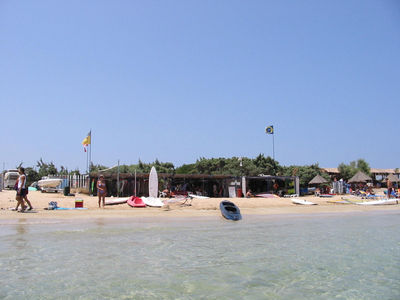 Snorkelling © brunobarbato · CC BY 3.0
 Shallow turquoise coves and a rocky-fringed seabed make this the island's top spot for snorkelling.
Best for snorkelling & watersports
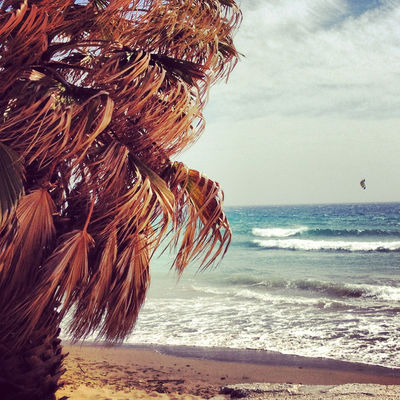 Long sandy © myParos.com · CC BY-SA 3.0
 A 700-metre sweep of pale golden sand where world-class windsurfers share the shallows with waders.
Best for long walks & windsurfing
 Family © rene boulay · CC BY-SA 3.0
 Three tiny wind-sheltered coves with calm, waist-deep water and a taverna right on the sand.
Best for young families
An unorganised cove below clay cliffs whose mineral mud swimmers smear on as a natural spa.
Best for quiet escapes & clay spa
A wide crescent of soft sand just south of Parikia that glows as the sun drops into the sea.
Best for sunset swims
Paros · Around the island · 1 island · 6 beaches · 1 hotels nearby
Skip-the-line tickets and small-group tours in Paros — compare across our partners.
We're still curating hand-picked tickets and tours for Paros. In the meantime, the map above and the nearby cities are a great place to start.
Day-by-day itineraries that take in Paros — routes, timings and what to book.
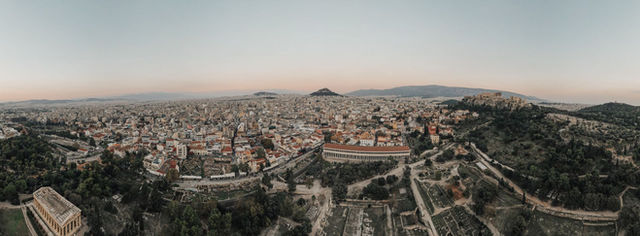 6 Nights
 Classical Athens paired with island-hopping to Santorini and Naxos.
Price on enquiry
View trip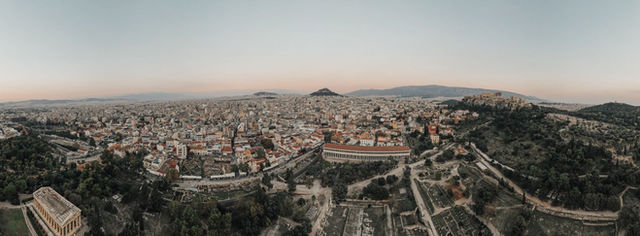 6 Nights
 Two days in Athens for the Acropolis and Plaka, then a ferry into the Cyclades — Naxos for beaches and mountain villages, Santorini for the caldera — routed so you never backtrack and fly home from the islands.
Price on enquiry
View trip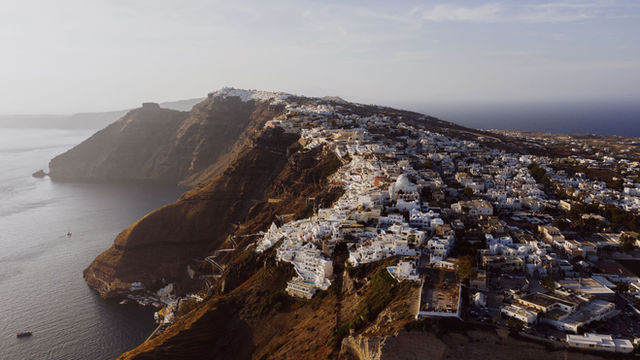 7 Nights
 Experience the dramatic volcanic cliffs of Santorini, the fertile valleys and ancient trails of Naxos, and the vibrant winding streets of Mykonos. This eight-day itinerary connects three distinct Cycladic islands using local ferries, public bus networks, and a targeted local vehicle rental.
Price on enquiry
View tripMay – October
Paros has a classic Cycladic climate: long, hot, dry summers and mild, changeable winters. July and August are the hottest and busiest months (typically 27–32°C by day), reliably sunny but subject to the meltemi, the strong northerly wind that can blow for days at a stretch — a nuisance on exposed north-coast beaches and for ferry comfort, but the very reason the south-east coast is a windsurfing mecca. May–June and September–early October are the sweet spots: warm (22–28°C), the sea pleasantly swimmable (it warms slowly and holds heat into autumn), the crowds and prices lower, and the light superb. April and late October are cooler and quieter, with some seasonal businesses shut and a greater chance of unsettled days. Winter (November–March) is low and green, mild but often windy and wet, with many hotels and tavernas closed; the island keeps a small year-round life around Parikia and Naoussa. Sun protection is essential throughout the season — Aegean UV is stronger than northern-European visitors expect.
Paros is a very safe destination — serious crime against tourists is rare, and the main risks are the ordinary ones of a Greek island holiday. Scooters, quads and ATVs cause the most trouble: the roads are narrow and winding, gravel and loose surfaces are common on the tracks down to beaches, and accidents among inexperienced riders are the single most frequent cause of injury; wear a helmet, take it slowly, and make sure hire cover is in order. The sea is generally benign but the meltemi can whip up strong winds, chop and offshore drift with little warning, especially off the north and east coasts — take inflatables and lilos seriously, and heed local advice on windy days. The rocks around Kolymbithres and other granite coves are slippery when wet and the entries can be sharp, so water shoes help. The summer sun is intense and shade is limited on many beaches. Petty theft is uncommon but the usual care with valuables on busy beaches and in nightlife areas applies. Tap water is best treated as non-potable for drinking; bottled or filtered water is the norm.
Paros is a Greek Orthodox island and its churches — above all the ancient Panagia Ekatontapyliani in Parikia — are active places of worship as well as monuments. Dress modestly to enter any church or monastery: shoulders and knees covered, hats off, quiet behaviour, and no flash photography where signs request it. Beyond that, island etiquette is relaxed and familiar to Mediterranean travellers: greet with a friendly 'kalimera' or 'yassas', don't rush a taverna meal, and understand that service runs late and unhurried by British standards. Beachwear stays on the beach — cover up for towns, tavernas and shops. Tipping is appreciated but modest, rounding up or leaving 5–10% for good service. Naoussa's nightlife is lively but rarely rowdy, and locals expect visitors to keep the boisterousness within reason in what remains, at heart, a residential village. A little Greek and a bit of patience with the slower island rhythm go a long way.
£110/day mid-range (budget £55, luxury £280+; Naoussa is the priciest base, beach villages the best value)
112 (European emergency), 100 (Greek police), 199 (fire), 166 (ambulance), 108 (Hellenic Coast Guard)
Paros National Airport (PAS), near Alyki on the south-west coast, handles domestic flights only: Sky Express and Olympic Air fly the short hop from Athens (ATH) in about 40 minutes, with up to around ten flights a day in season and occasional summer links to Thessaloniki and Heraklion. There are no direct international flights, so from London you connect through Athens. The far more common way to arrive — and often the more scenic — is by ferry: high-speed catamarans reach Paros from Piraeus (Athens) in about 3 hours (conventional ferries 4–5 hours), and Paros is one of the best-connected hubs in the Cyclades, with frequent sailings to Naxos (25 min–2 h), Mykonos (30 min–1.5 h, roughly March–November), Santorini (1.5–3 h, year-round), plus Ios, Milos, Amorgos, Andros and Crete (Heraklion). Blue Star Ferries, SeaJets and Fast Ferries are the main operators; book ahead in July–August. Ferries and flights both feed into the two main bases easily — the airport is about 10–20 minutes from Parikia and Naoussa by taxi or transfer.
Flights, airport transfers and car hire to PAS — search and compare without leaving the page.
Parking, holiday extras, and more — coming soon.
We're lining up parking, holiday extras and activities you'll be able to add to any trip from here.