 Dramatic © Sidvics · CC BY-SA 4.0
 Red Beach
Towering blood-red volcanic cliffs plunge into turquoise water — Santorini’s icon.
Best for photos & scenery
The caldera island of Greek legends — blue-domed churches above a submerged volcano, some of the world's most photographed sunsets and outstanding Aegean seafood.
Santorini (officially Thira) is a volcanic island in the Cyclades archipelago of the Aegean Sea, with a permanent population of around 15,000 that swells to over 100,000 in peak summer. It is not a conventional island — the dramatic landscape is the result of one of the largest volcanic eruptions in recorded history (circa 1600 BCE), which collapsed the island's centre into the sea and created the distinctive caldera: a flooded crater 12km wide, ringed by steep cliffs with the island villages perched on their rim. The villages of Oia (pronounced 'Ee-ah'), Imerovigli and Fira (the capital) hang on the caldera edge, their white Cycladic cube houses and blue-domed churches providing the visual shorthand for the Greek island aesthetic that has appeared in a thousand advertisements and films. The sunsets from Oia are among the most photographed in the world. Below the cliffs, the Aegean is a deep Prussian blue against the dark volcanic rock; the beaches — Perissa, Perivolos, Kamari — are black volcanic sand rather than white. As a holiday destination, Santorini is best suited to couples and those seeking a visually spectacular, gastronomy-focused, romantic break rather than a conventional beach holiday — the island is tiny (76 sq km), expensive, very crowded in July–August and utterly beautiful in the shoulder seasons.
Santorini's unique volcanic landscape — the caldera, the sunset panoramas, the black beaches, the white cliff-hanging villages — creates a visual and atmospheric experience that is genuinely unlike anywhere else in the Mediterranean. Oia at sunset, with the sun dropping behind the volcanic rock to the west while thousands of spectators watch from the battlements (yes, thousands — it is a communal performance), is one of those sights that photographs cannot diminish. The island also has an outstanding wine culture (Assyrtiko white wine from volcanic-ash soils, grown in the traditional kouloura basket shape low to the ground to protect from the famous meltemi wind) and excellent seafood and Cycladic cuisine. The hot springs accessible from the caldera boats, the volcanic islands of Nea Kameni and Palea Kameni for hiking, the archaeological site of Akrotiri (a Minoan settlement preserved under volcanic ash like a Greek Pompeii) and the historic villages of Pyrgos and Megalochori add depth beyond the visual spectacle. Santorini pairs naturally with Mykonos (ferry connection, very different energy) or with Athens (1h by plane or 7h by ferry for the classical dimension).
Santorini's food culture is excellent, built on exceptional local products: Assyrtiko wine (made from the island's own grape variety grown in volcanic ash, producing bone-dry, intensely mineral white wines that are among Greece's finest), cherry tomatoes and capers (both cultivated in the volcanic soil and wildly more flavourful than mainland equivalents), white aubergines (a local variety unusual in Greek cuisine), and the extraordinary fresh seafood of the Aegean. The village of Oia has the island's best high-end restaurants (Ambrosia, Roka, Kapari) with caldera views; Fira has a wider range at lower prices; the fishing village of Ammoudi below Oia has the best fresh octopus and grilled fish in a modest, genuine setting. Greek island staples — fresh grilled octopus (hung to dry on washing lines is the traditional image), taramasalata, tzatziki, horiatiki (village salad), moussaka, souvlaki — are all available. For wine: a visit to the Santo Wines or Venetsanos winery, both with caldera views, is recommended — Assyrtiko tasting is one of the finest wine experiences in Greece.


Live map of hotels and villas around Santorini — powered by Stay22. Pan, zoom and compare live prices to pick your base.
Pan, zoom and compare live prices — every stay in one map.
Santorini is a small island (25km end to end) with a single main road running the caldera rim from Oia through Imerovigli, Fira and south. The public KTEL bus system connects Fira to the main villages and beaches cheaply — useful for budget travel, but very crowded in summer and not timed to sunset. The iconic way to experience the caldera rim is on foot: the Fira-to-Oia walk (12km, 4–5h, stunning throughout) is one of the great Mediterranean walks, best done early morning before the heat builds and ending in Oia in time for lunch. ATV/quad bikes and scooters are widely available for hire (around €30–50/day); driving in Santorini is easy given the small road network but congestion in Oia is severe in summer. Taxis on the island are metered and supplement the bus service. Boat tours of the caldera — to the volcano, the hot springs and the neighbouring islet of Thirassia — depart from the Ammoudi port below Oia and from Fira's port; most hotels can arrange these. Cable car: the old cable car from Fira down to the old port (Fira Skala) is useful if arriving by small tender boat from a cruise ship; donkeys are also available (controversial for animal welfare reasons).
Santorini's public transport is the KTEL bus network — a basic system of buses connecting Fira (the central hub) to Oia, Imerovigli, Akrotiri, Perissa, Perivolos, Kamari, the ferry port (Athinios) and the airport. Fares are very cheap (€1.80–2.50 per ride); buy on board. Frequency is reasonable in high season (every 30 minutes on main routes) but buses are crowded in July–August and timetables can slip. The main KTEL terminal is in the north of Fira town (not the main square). Taxis supplement the bus network but are expensive and scarce in peak season — pre-booking is recommended. ATV/quad hire is widely available from Fira and Perissa; a motorcycle licence is technically required. Car hire is available for the independent-minded but parking in Oia and Fira is extremely limited. Caldera boat tours (not public transport) depart from Ammoudi port below Oia and from Fira port (Skala) — the main way to visit the volcanic islands of Nea Kameni and Palea Kameni.
The Oia sunset is magnificent, but the crowds at the castle viewpoint are so extreme in July–August that the experience becomes logistical rather than romantic. Instead: watch the sunset from the Imerovigli Skaros Rock (a dramatic volcanic plug 30 minutes' walk from Imerovigli, almost no one goes there) or from a terrace restaurant in Oia with a reserved table. The Akrotiri archaeological site — a remarkably intact Minoan Bronze Age settlement preserved under volcanic ash — is one of the best-preserved prehistoric sites in Europe and typically has no queue; the site has shade, which Santorini rarely provides. Ammoudi Bay (50–300 stone steps below Oia, or a short donkey ride) has the most authentic tavernas on the island — Dimitris fish restaurant serves fresh-caught seafood grilled simply and at prices 30–40% below the caldera-view restaurants above. For the finest Assyrtiko tasting, go to the Domaine Sigalas winery in Oia rather than the large Santo Wines cooperative — smaller, more focused and more revealing of what the grape variety does at its best.
The 6 shores actually worth the trip on Santorini — ranked, with the vibe of each and where to stay nearby. Tap a card to fly the map to it.
Dramatic © Sidvics · CC BY-SA 4.0 Towering blood-red volcanic cliffs plunge into turquoise water — Santorini’s icon.
Best for photos & scenery
 Family © Stan Zurek · CC BY-SA 3.0
 Long black-sand strip with sunbeds, tavernas and calm shallows for easy family days.
Best for families & swimming
 Long sandy © Bryan McDonald · CC BY-SA 2.0
 Buzzy black-sand sweep under the Mesa Vouno cliff — watersports, sunbeds, cheap eats.
Best for sunbathing & watersports
 Secluded © Anna.Tsolidou · CC BY-SA 4.0
 Sculpted moon-white cliffs frame a quiet black-sand beach far from the crowds.
Best for quiet & scenery
 Party © Wolfgang Staudt · CC BY 2.0
 Santorini’s beach-club capital — DJs, cocktails and loungers on endless black sand.
Best for beach clubs & partying
 Sunset © Anthony Baratier · CC BY-SA 4.0
 Cliff-jump and swim beneath Oia, then watch Greece’s most famous sunset ignite.
Best for sunset & cliff jumping
Santorini · Around the island · 1 island · 6 beaches · 1 hotels nearby
Skip-the-line tickets and small-group tours in Santorini — compare across our partners.
We're still curating hand-picked tickets and tours for Santorini. In the meantime, the map above and the nearby cities are a great place to start.
Day-by-day itineraries that take in Santorini — routes, timings and what to book.
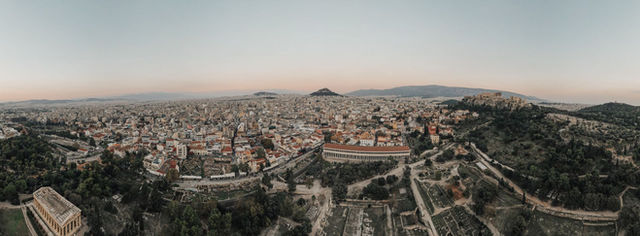 6 Nights
 Classical Athens paired with island-hopping to Santorini and Naxos.
Price on enquiry
View trip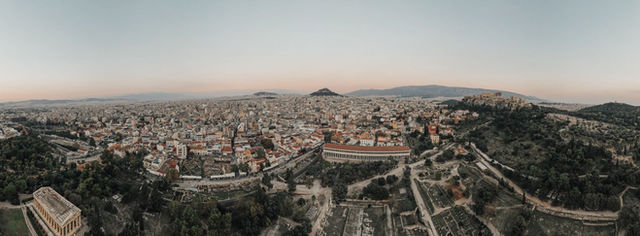 6 Nights
 Two days in Athens for the Acropolis and Plaka, then a ferry into the Cyclades — Naxos for beaches and mountain villages, Santorini for the caldera — routed so you never backtrack and fly home from the islands.
Price on enquiry
View tripMay – June, September – October
Santorini has a classic Mediterranean climate: hot, dry summers and mild winters. The island's peculiarity is the meltemi — a strong north wind that blows reliably from July through August, cooling temperatures but creating rough seas and surf on the north-facing beaches. July and August (25–30°C) are the most crowded months — very expensive, fully booked accommodation and the Oia sunset viewpoint packed with thousands of spectators. The optimal visits are May–June and September–early October: warm (22–27°C), the sea swimmable (the Aegean warms slowly), manageable crowds and the meltemi more intermittent. October is excellent value with late-season warmth. November–March is quiet, some hotels and restaurants close, but the island has a melancholy beauty in the off-season and a handful of excellent restaurants and wine bars remain open year-round. The black-sand beaches of Perissa and Perivolos attract strong summer sun and hold heat — beach towels are essential.
Santorini is among the safest destinations in the Mediterranean — violent crime is extremely rare, and the island's tourist economy creates a general environment of helpfulness towards visitors. The main practical hazards are: the Fira-to-Oia caldera path has genuinely exposed cliff-edge sections and is not suitable for those with vertigo or for young children without close supervision; it should be done early morning to avoid heat and to give time to get back before dark; there are no guardrails on much of the route. ATV/quad hire has a poor safety record — accidents are common, particularly on the main road where local speed and confidence can surprise tourists; a driving licence and helmet wearing are mandatory but not always enforced. The black-sand beaches get extremely hot in the midday summer sun (the sand absorbs and holds heat); bring sandals you can wear to the waterline. Sun protection in the Aegean is critical — UV intensity is significantly higher than northern European summers.
Santorini is a Greek Orthodox island and the churches (blue-domed, white-walled, quintessentially Greek) are active places of worship, not just backdrops for photography. Dress appropriately when entering any church — shoulders and knees covered, quiet behaviour inside. The island's famous cats are local characters and generally well-cared-for by residents. The sunset crowds at Oia (the castle battlements, the main caldera-edge street) are a phenomenon — arriving at least an hour before sunset to secure a position is necessary if you want a clear view; the crush in the final 30 minutes is intense. Bargaining is not standard in shops or restaurants; prices are generally posted or can be asked. Santorini is significantly more expensive than mainland Greece or other Cyclades islands (Naxos, Paros) — budget accordingly for accommodation, food and excursions.
£160/day mid-range (budget £80, luxury £400+; caldera-view accommodation is very expensive)
112 (European emergency), 100 (Greek police), 199 (fire), 166 (ambulance), 108 (Hellenic Coast Guard)
Santorini Thira Airport (JTR) is 6km southeast of Fira, served by British Airways, easyJet, Ryanair, Aegean/Olympic and other carriers with direct seasonal flights from London (typically April–October) and year-round flights via Athens. Outside peak season, connecting through Athens Airport (Eleftherios Venizelos, ATH) is necessary — Aegean and Olympic run frequent short-hop flights (45 minutes from Athens). Taxis from the airport to Fira are fixed-rate; pre-booked transfers are widely available and recommended. High-speed catamaran ferries connect Santorini to Piraeus (Athens port) in 5h and to other Cyclades islands (Mykonos 2h40, Naxos 1h50, Paros 1h20) — Blue Star Ferries and SeaJets are the main operators. The conventional overnight ferry from Piraeus takes 7–9h and is significantly cheaper but less comfortable. Buses (KTEL) from the ferry port (Athinios) to Fira are cheap; taxis from the port are expensive and may be scarce in peak season — pre-book.
Flights, airport transfers and car hire to JTR — search and compare without leaving the page.
Parking, holiday extras, and more — coming soon.
We're lining up parking, holiday extras and activities you'll be able to add to any trip from here.