
← India
INDIA · CITY

Agra

Home to the Taj Mahal and Agra Fort — two UNESCO World Heritage Sites in one city, with Mughal history at every turn.

  • City
  • 2–3 days
▸ Where you'll stay

Where you'll stay in Agra

<h4>Taj Ganj (South Gate area)</h4><p>The neighbourhood immediately south of the Taj Mahal is the most atmospheric place to stay — you can walk to the South Gate in five minutes and catch the sunrise without a taxi. Family-friendly guesthouses and mid-range hotels here offer rooftop views of the Taj dome and are excellent value. It is a little noisy and traffic-heavy on the main road, but side streets are quieter.</p><h4>Fatehabad Road</h4><p>This is the main hotel corridor for mid-range and upscale accommodation — a 10–15 minute tuk-tuk ride from the Taj, lined with well-maintained hotels that have pools, gardens and room service. If you are prioritising comfort and space for a family of five, this strip has the most reliable options. Several family-friendly hotels here offer views of the Taj from their rooftop restaurants, which is an extraordinary dinner backdrop.</p><h4>Civil Lines (central Agra)</h4><p>A quieter, more residential area closer to Agra Fort and the railway station. Good for families who plan to continue their journey by train, and a slightly better base if you want to split your time between the Fort and the Taj without one dominating. Budget and mid-range guesthouses here tend to offer good value.</p><h4>Sadar Bazaar</h4><p>The commercial heart of old Agra — noisy, vibrant and full of local street food, marble shops and textile traders. A handful of clean, mid-range hotels sit on the edges of this area. Best for families who want a fully immersive local experience and do not mind the bustle.</p><h4>How to choose</h4><p>If the Taj Mahal is the primary reason you are here — and for most families it will be — stay in Taj Ganj or on Fatehabad Road. The early morning visit (first entry after sunrise) is transformative; being within walking distance removes all logistical stress from what should be a magical morning.</p>

Stay

Hotels & rentals around Agra

Pan, zoom and compare live prices — every stay in one map.

▸ Getting around

Getting around Agra

Metro/subway

Agra has a metro system currently under construction and operation on its first corridor. Service is limited in scope and does not yet cover the main tourist sites; most families will not use it during a 2026 visit. Check the latest route status before you arrive as expansion is ongoing.

Tuk-tuks and e-rickshaws

The most practical and atmospheric way to get between the Taj, Agra Fort and the markets. Electric tuk-tuks (e-rickshaws) are available near all major sites and are a cleaner and quieter option than the petrol variants. Agree a price before you get in — short hops between Taj Ganj and the Fort should cost a modest amount (always confirm the going rate locally). Tuk-tuks cannot enter the immediate Taj Mahal zone; a quiet walking zone and electric bus link the carpark to the gate.

Taxis and ride-hailing

Uber and Ola both operate in Agra and are the most stress-free option for families — fares are set by the app, no negotiation required, and cars are air-conditioned. For longer runs (airport, Fatehpur Sikri day trip, inter-city), pre-booked taxis via your hotel or a reputable local agency offer the most comfort and flexibility for a group of five.

Buses

City buses exist but routes and timetables are hard to navigate for first-time visitors and stops near the major sites are inconsistent. Families are better served by tuk-tuks and app-based taxis. The electric bus from the Taj car park to the East Gate is the one exception — mandatory for the Taj approach and easy to use.

Walking

The area immediately around the Taj — Taj Ganj, the rooftop cafes, the Mehtab Bagh waterfront — is walkable at a comfortable pace, especially in the cool of early morning. Between the Taj and Agra Fort it is about 2.5 km along busy roads; a tuk-tuk makes more sense than walking in the midday heat. Footwear advice: the Taj Mahal requires removing shoes or using the cloth overshoes provided at the gate — carry your own socks for comfort.

▸ What you'll do

Insider tips

Taj Mahal at sunrise (UNESCO World Heritage Site)

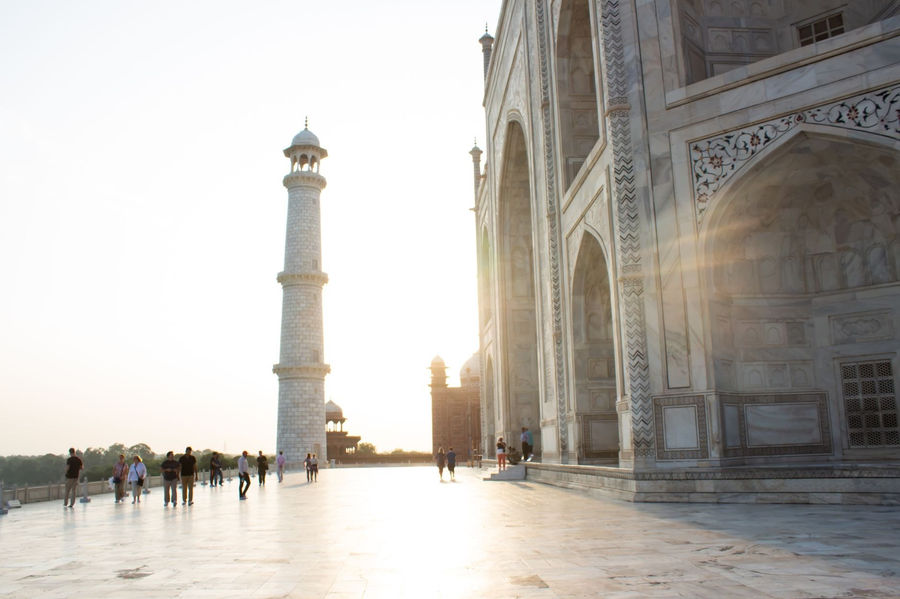
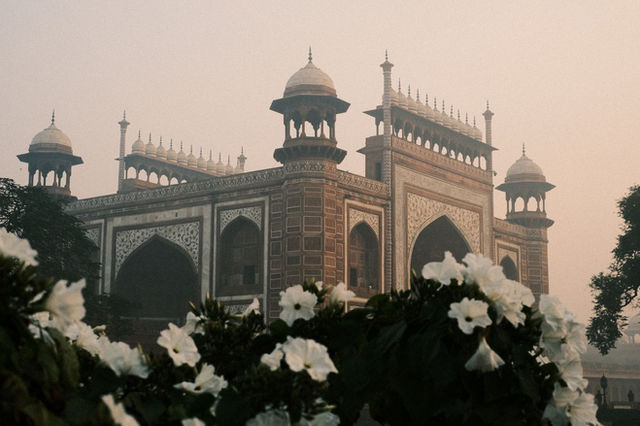
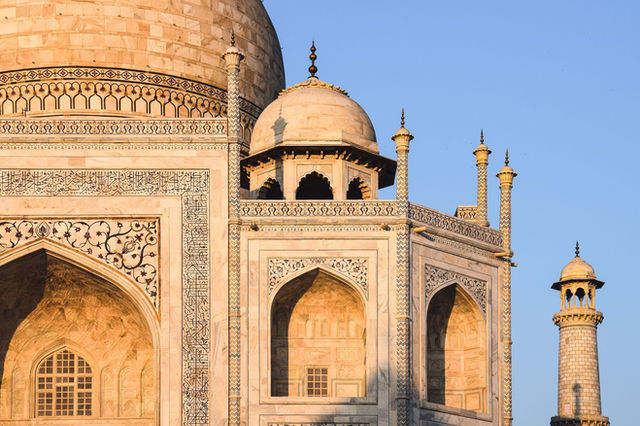
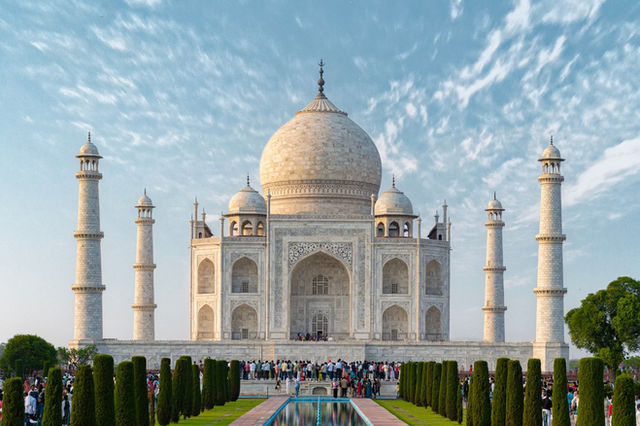
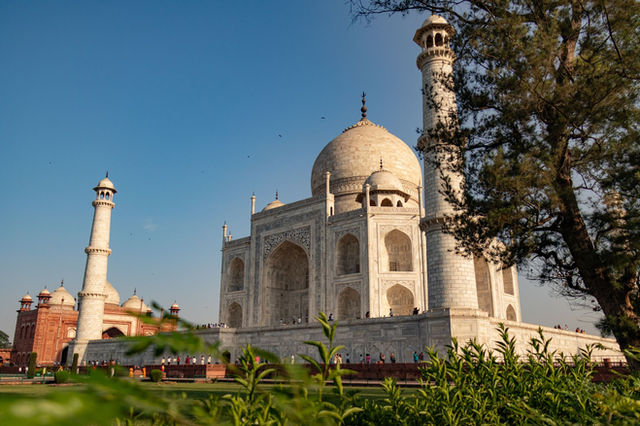
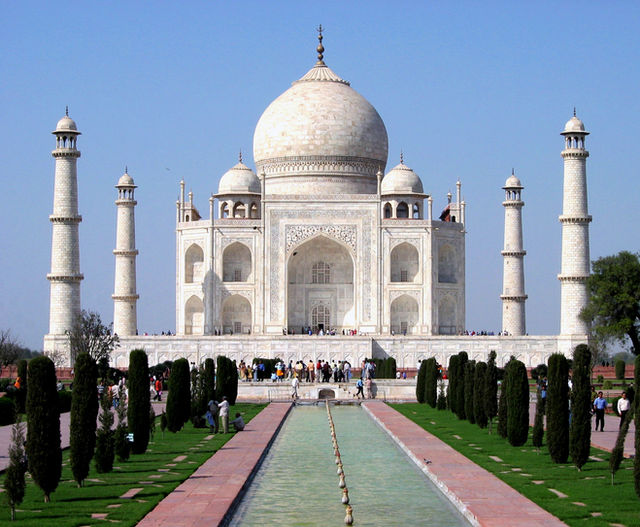
The Taj Mahal is the absolute centrepiece of any Agra visit and I strongly recommend arriving at first entry — around 30 minutes after sunrise — when the marble shimmers in warm golden light and crowds are thinner. Book tickets in advance online (foreign national rates apply; children under 15 free); the East Gate and South Gate are the main entrances and queues move faster at the South Gate in my experience. Allow at least two to three hours. A licensed government guide adds real depth for teenagers — the construction story alone (20,000 workers, 22 years, marble inlaid from across Asia) is extraordinary.

Agra Fort (UNESCO World Heritage Site)

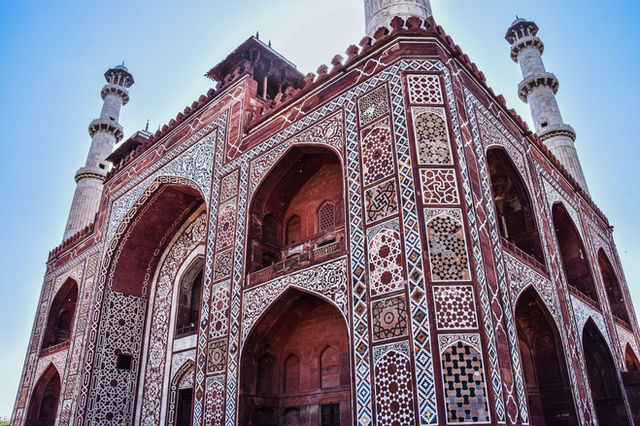
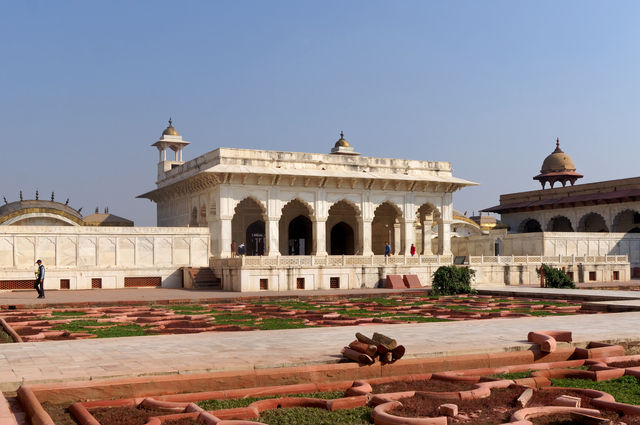
Agra Fort is often treated as the second stop after the Taj, but it deserves equal billing. The 16th-century red sandstone complex contains multiple palaces, the Diwan-i-Am (Hall of Public Audience), the Khas Mahal and the famous octagonal tower where Shah Jahan was held captive in his final years — the view of the Taj from there is one of the most poignant sights in India. Allow a full half-day; hire a guide to unlock the layered Mughal, Maratha and British history.

Mehtab Bagh (Moonlight Garden)

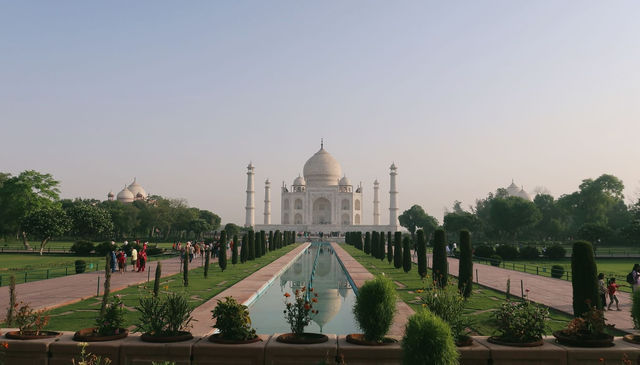
Directly across the Yamuna River from the Taj, this Mughal garden offers what I think is the finest view of the monument — the full reflection of the Taj in the river channel (seasonal) and the sweeping perspective across the water with no crowds. It is far less visited than the Taj itself and entry is included in the Taj Mahal ticket. Perfect for families wanting a quieter, unhurried look at an icon.

Fatehpur Sikri day trip

About 37 km west of Agra, Fatehpur Sikri is another UNESCO World Heritage Site — the ghost city built and briefly used as Mughal capital under Akbar before being abandoned. The sandstone palaces, the Buland Darwaza (one of the tallest gateways in the world), and the atmospheric emptiness make this a genuinely powerful half-day excursion. Teenagers who have started to engage with Mughal history at the Fort tend to find Fatehpur Sikri memorable. Easy to do by hired car from Agra.

Itmad-ud-Daulah (Baby Taj)

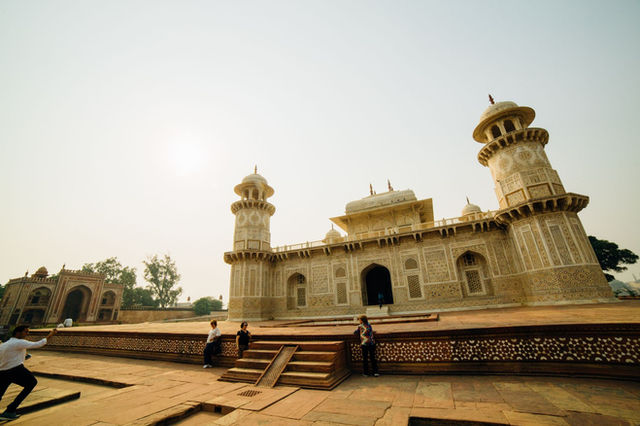
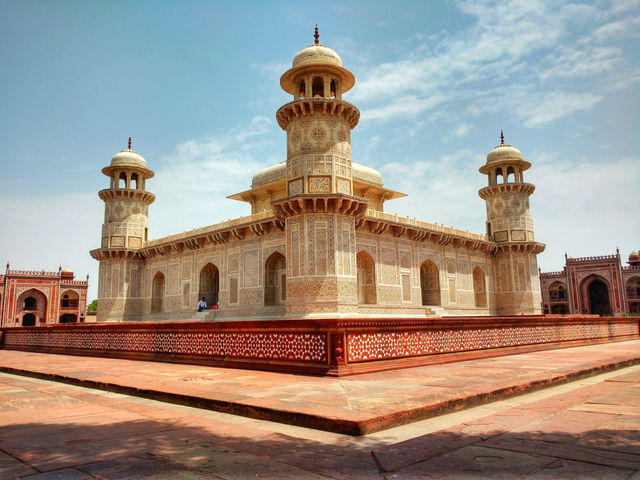
This smaller marble mausoleum — built about 15 years before the Taj Mahal — is sometimes called the 'Baby Taj' and is worth an hour of your time. It features some of the earliest examples of pietra dura marble inlay work (the same technique later used to spectacular effect on the Taj itself), and the garden setting on the Yamuna bank is peaceful. Far fewer crowds than the main sites.

Marble craft workshops

Agra's artisan tradition — particularly marble inlay and embroidery — is centuries old and many workshops near the Taj gate area offer demonstrations. Watching craftsmen tap coloured stone into white marble using techniques unchanged since the Mughal era is genuinely absorbing, especially for teenagers. There is no obligation to buy, but the pieces are beautiful and prices are negotiable. Be aware that some workshops run a hard sell; choose recommended ones near the main gates.

Kinari Bazaar and Sadar market

The old bazaar streets around Kinari Bazaar sell textiles, bangles, leather goods and Mughal-era designs. It is chaotic, colourful and a good place to practise bargaining. For families wanting to experience the texture of an Indian market without overwhelming the kids, the Sadar market is somewhat calmer and has a good selection of local handicrafts and snacks.

Frequently asked

How many days do I need in Agra?

Two nights and two full days is the minimum I would recommend to do Agra justice. Day one: Taj Mahal at sunrise, then Mehtab Bagh for the afternoon view across the river. Day two: Agra Fort in the morning, Itmad-ud-Daulah in the afternoon, and an evening in the market. A third day allows a comfortable excursion to Fatehpur Sikri. Most families visiting as part of the Golden Triangle (Delhi–Agra–Jaipur) spend two nights here.

Is the Taj Mahal worth it for teenagers?

Absolutely — in my experience it is one of the rare UNESCO sites that genuinely lands with teenagers rather than producing polite indifference. The scale is shocking in person: the dome alone is 73 metres high, the complex covers 42 acres, and the story behind it — a grieving emperor building a monument to his wife that took 22 years and 20,000 artisans — is the kind of history that stays with you. Pair the visit with a good local guide who can explain the Mughal context and the construction techniques, and you will find that teens leave asking questions rather than checking their phones.

Do I need to book Taj Mahal tickets in advance?

Yes — I strongly recommend it, especially in peak season (October to February). Tickets are available online through the Archaeological Survey of India booking system; foreign national tickets include entry to the Taj and the main mausoleum building. Children under 15 enter free. Booking ahead means you skip the queuing at the ticket counters. Timed slots are available; the first slot after sunrise is the most popular and sells out fastest.

Is Agra safe for a family of five?

Yes, the main tourist areas of Agra are safe and well-policed. The Taj Mahal and Agra Fort both have security screening on entry. The main practical concerns are petty hustling near the gates (tour touts, unofficial guides, souvenir sellers), traffic on city roads, and the heat from March onwards. Use app-based taxis for inter-site travel rather than walking on busy roads, stay hydrated, and you will have a smooth trip. Most families I have spoken to describe Agra as one of the more manageable Indian cities to visit with teenagers.

What is the best time of day to visit the Taj Mahal?

Sunrise is the classic answer and for good reason — the light is extraordinary, the monument is cooler, and crowds are genuinely thinner in the first hour. If sunrise is impractical for your family (especially with younger teens who resist early mornings), late afternoon before closing is the second-best option: the golden hour light hits the west-facing entrance façade beautifully. Avoid 10am to 3pm if you are visiting in any month other than November and December, when midday heat and crowds make the experience significantly harder work.

Can I do Agra as a day trip from Delhi?

Technically yes — the Gatimaan Express gets you there in under two hours from Delhi — but I do not recommend it for families. A day trip forces you to rush both the Taj and the Fort, leaves no time for Mehtab Bagh or Itmad-ud-Daulah, and the journey fatigue on top of intense sightseeing is significant. Two nights in Agra is genuinely a better investment of your India time, and it allows the early-morning Taj visit that a day-trip schedule almost always misses.

Is there a second UNESCO site in Agra — and is it worth visiting?

Yes — Agra Fort (UNESCO 1983, ID 251) is the city's second World Heritage Site and absolutely worth a dedicated half-day. It is more than a secondary attraction: the Fort is a working archaeological complex with multiple distinct palaces and audience halls, a genuine political and military history spanning Mughal and British periods, and — crucially — that haunting tower view of the Taj Mahal across the river. Many families leave the Fort saying it was as memorable as the Taj itself. Two UNESCO inscriptions in a single city is rare anywhere in the world; using both makes your Agra visit genuinely exceptional.

What's on

While you're there

06
NOV
Diwali 2026
Johari Bazar 194، 302003 Jaipur، India · festival
Build a trip around it →
21
MAR
Holi 2027
J104 105، 281001 Mathura، India · festival
Build a trip around it →
Explore

Explore the area

Do

Local attractions & tours

Skip-the-line tickets and small-group tours in Agra — compare across our partners.

Not seeing offers? Try or — some destinations have thinner inventory on Tiqets.

▸ When you'll go

Best time to visit Agra

Seasons overview

Winter (October–February) is the prime season. Temperatures sit between 8°C and 25°C — cool nights but clear, comfortable days. Visibility is good and the Taj glows brilliantly in winter light. This is when international families should aim to visit. Note that December and January can bring dense fog in the mornings, occasionally limiting the famous sunrise views at the Taj for an hour or two.

Spring (March–April) warms quickly. Temperatures climb from around 25°C to 38°C by late April. It is still manageable in March but April starts to feel demanding for young children. The sites are less crowded than peak winter and prices drop noticeably.

Summer (May–June) is intense — Agra regularly hits 42–47°C and outdoor sightseeing becomes exhausting and potentially unsafe for long stretches. I would not recommend this window for families with children or teenagers.

Monsoon (July–September) brings relief from the heat but also heavy rains and high humidity. The Taj's marble gleams beautifully in the rain and crowds thin dramatically, but planning is harder and some days are simply too wet for comfortable touring.

Best months for families

November to February is the clear sweet spot. October and March work well as shoulder options with fewer crowds. Avoid May, June and July entirely if travelling with teens or younger children — the heat is not comfortable or safe for sustained outdoor activity.

▸ Ready to book your trip?

Getting there

By air

Agra Airport (AGR) handles limited domestic flights from Delhi; connections are infrequent and most families find the train or road far more practical. The main international gateway is Indira Gandhi International Airport (DEL) in Delhi, approximately 200 km away — around a 3–4 hour drive or a fast train under two hours. Flights from London to Delhi are available with multiple airlines (British Airways, Air India, Virgin Atlantic and others) with journey times of around 9–10 hours; fares from London typically range from ~£450–£900 return depending on season and how far ahead you book. Delhi is also the hub for onward connections if you are flying in via Dubai, Doha or Abu Dhabi.

By train

The train between Delhi and Agra is one of the best options for families. The Gatimaan Express covers the route in under two hours (Delhi Hazrat Nizamuddin to Agra Cantt) and is comfortable, air-conditioned and punctual — it is one of India's fastest trains. The Shatabdi Express runs the same route slightly slower but with more departures. Book via the IRCTC website or app; I recommend booking seats well in advance, especially in peak winter season. AC Chair Car (CC) or First AC (1A) are the comfortable choices for families. The train experience is genuinely enjoyable and I always recommend it over the road for the Delhi–Agra leg.

By road

The Yamuna Expressway connects Delhi to Agra in around 3–4 hours by car or taxi (depending on traffic, which can be significant leaving Delhi). Private taxi hire from Delhi is widely available and convenient for families with luggage; it also gives flexibility to stop at Fatehpur Sikri or other points along the way. Buses are available but slower and less comfortable for long-haul with teens.

Book

Ready to book your trip?

Flights, airport transfers and car hire — search and compare without leaving the page.

▸ Trip extras
Book

More trip extras

Parking, holiday extras, and more — coming soon.

Coming soon

We're lining up parking, holiday extras and activities you'll be able to add to any trip from here.