
Delhi (New Delhi)
India's ancient, layered capital: three UNESCO World Heritage Sites, Mughal grandeur, street food that redefines the genre, and a metro that actually works.
- City
- 3–5 days
Where you'll stay in Delhi (New Delhi)
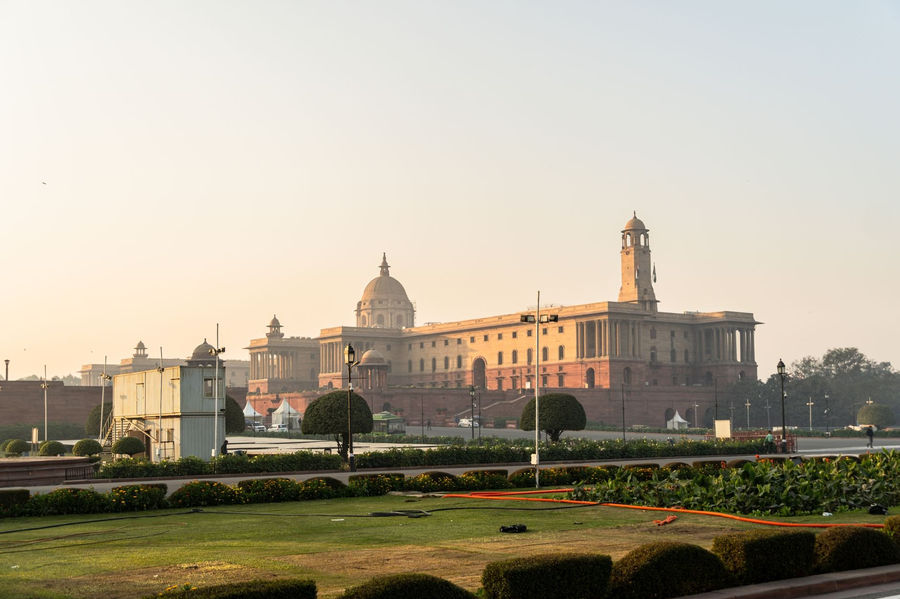
<h4>New Delhi (Connaught Place and Lutyens' Delhi)</h4><p>New Delhi — Lutyens' planned capital — sits at the centre of the city with wide, tree-lined roads, the grand circular commercial hub of Connaught Place, and easy metro access to every major sight. Families staying here are within reasonable distance of everything and well-served by the central metro interchange at Rajiv Chowk. Mid-range and upscale family-friendly hotels cluster in this area, and it tends to feel safer and more manageable for first-time visitors than the busier old city.</p><h4>Karol Bagh and Paharganj</h4><p>Karol Bagh is a dense, lively middle-class neighbourhood west of New Delhi — excellent value, well connected by metro, and home to good mid-range hotels popular with Indian domestic travellers. Paharganj, the legendary backpacker strip behind New Delhi Railway Station, is extremely convenient for trains but noisy and chaotic; fine for adventurous solo travellers, less ideal for families with younger teens who haven't experienced India before.</p><h4>South Delhi (Lodi Colony, Safdarjung, Hauz Khas)</h4><p>South Delhi is where I'd steer families looking for a quieter base with character. The leafy lanes around Lodi Colony and Safdarjung put you within walking distance or a short ride from Humayun's Tomb and Khan Market. Hauz Khas Village has excellent food and an arts scene that teenagers tend to find genuinely interesting. Family-friendly hotels and boutique guesthouses in South Delhi tend to offer a more relaxed atmosphere than central areas.</p><h4>Aerocity</h4><p>A cluster of international-brand hotels sits immediately adjacent to <strong>Indira Gandhi International Airport (DEL)</strong> — very useful for early-morning or late-night flights, or for families breaking a longer journey. It is convenient but lacks neighbourhood life; best used as a one-night option rather than a base.</p><h4>How to choose</h4><p>For first-time families, I recommend New Delhi or South Delhi — both are well-connected, less overwhelming than Old Delhi's lanes, and positioned well for the UNESCO sites and key sights. If your teens are history-focused or keen on authentic street-life experience, a guesthouse near Karol Bagh or Lodi Colony gives you both without the chaos of Paharganj.</p>
Hotels & rentals around Delhi (New Delhi)
Pan, zoom and compare live prices — every stay in one map.
Getting around Delhi (New Delhi)
Metro
Delhi's metro is one of the best arguments for the city. It is clean, air-conditioned, punctual, and covers virtually every sight a family would want to visit — Humayun's Tomb (JLN Stadium station, a 5-minute walk), Qutb Minar (Qutb Minar station), Red Fort (Chandni Chowk station), and Connaught Place (Rajiv Chowk station). Buy a Delhi Metro Smart Card for a small deposit and top it up as you go — it gives a 10% discount over single tickets and avoids queuing each time. Women-only carriages exist at the front of each train; families can ride together in standard carriages.
Taxis and ride-hailing
Uber and Ola both operate city-wide and are the most reliable, price-transparent option for journeys not served by the metro. App-based booking means no haggling; fares to most tourist sites are ~£1.50–£4 for shorter trips in central Delhi. Avoid flagging down auto-rickshaws without agreeing a price first — or use the Ola Auto option within the app, which meters the fare and removes the negotiation entirely.
Auto-rickshaws
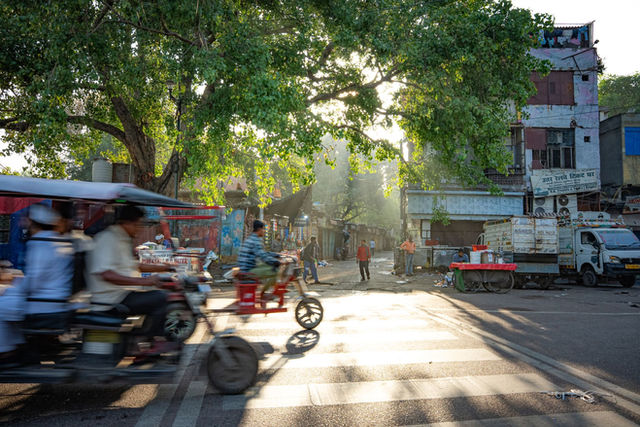
The three-wheeled auto-rickshaw is Delhi's most atmospheric transport mode and, in lighter traffic, also one of the most enjoyable. For short distances in Old Delhi or South Delhi where the metro doesn't reach door-to-door, an auto is perfect. Always agree the fare before getting in, or insist on the meter. Teens tend to love the exposure and wind; parents may prefer Uber for longer journeys with bags.
Buses
Delhi Transport Corporation (DTC) buses cover the city comprehensively, and the air-conditioned express services are comfortable. For most families on a first visit, however, the metro and ride-hailing apps are more practical — bus stops and route numbers require some familiarity with the city to use efficiently, and stops are announced in Hindi.
Walking
Delhi is not a walkable city in the European sense — distances between sights are large, air quality varies, and midday heat is intense for much of the year. Within specific areas, however, walking is rewarding: the garden complex of Humayun's Tomb is entirely on foot, Old Delhi's lanes must be walked, and Lodi Garden is a pleasant stroll. Wear closed shoes, carry water, and plan outdoor walking for mornings or after 4pm in warmer months.
Insider tips
Humayun's Tomb — the prototype for the Taj Mahal
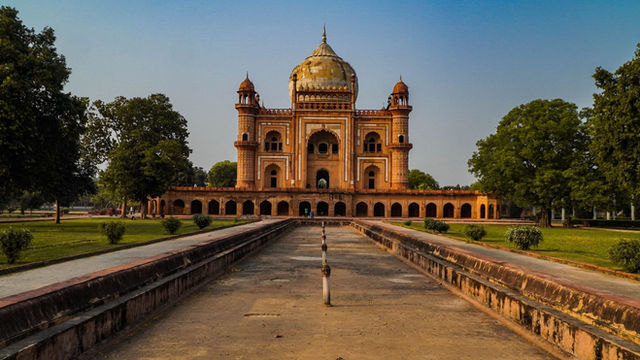
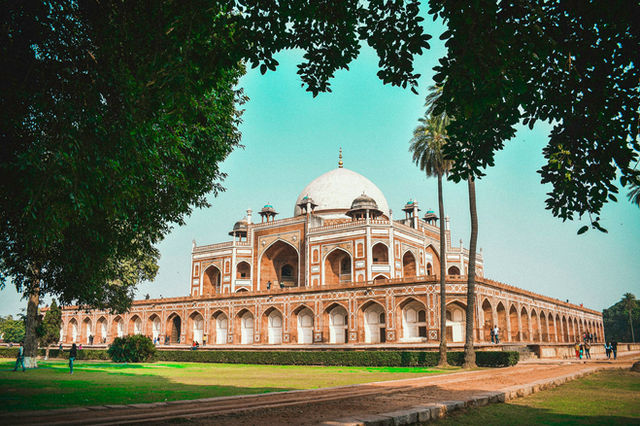
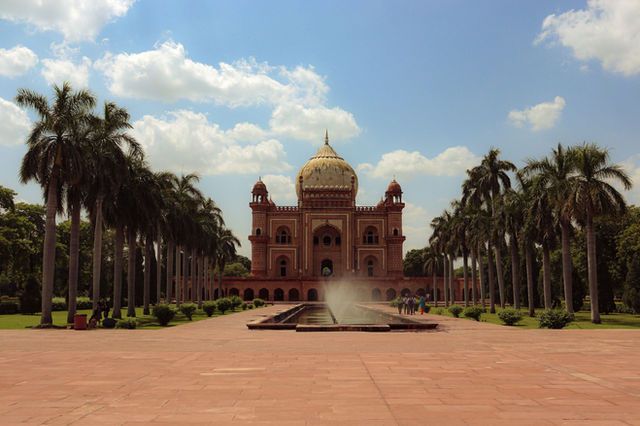
This is the UNESCO centrepiece and the visit I'd build the trip around. Built in 1570 by Humayun's widow, the tomb pioneered almost everything we associate with Mughal architecture: the double dome, the raised platform garden, and the charbagh (four-quartered garden) symmetry that the Taj Mahal later perfected. For teenagers, the framing I always use is this: if you've seen the Taj Mahal, you're looking at a later iteration of the building we're standing in now. The garden is enormous and genuinely beautiful; allocate at least 90 minutes. Tickets are bookable online through the Archaeological Survey of India; arriving early (opening time is 6am) avoids the worst heat and the mid-morning tour groups.
Qutb Minar
The second UNESCO site in Delhi, and one of the most extraordinary structures in India: a 72-metre sandstone minaret built in 1193 after the defeat of Delhi's last Hindu kingdom. The complex around it includes the Quwwat-ul-Islam Mosque — the first mosque built in India — and the mysterious Iron Pillar, a 1,600-year-old metallurgical achievement that has barely rusted. Teenagers who like history or engineering find this site unexpectedly compelling; the scale of the minaret, which you can no longer climb for safety reasons, is impressive from below. Allow 1.5–2 hours and wear sun protection.
The Red Fort (Lal Qila)
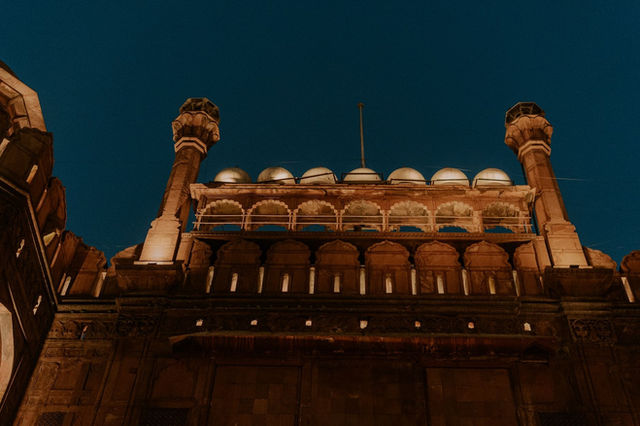
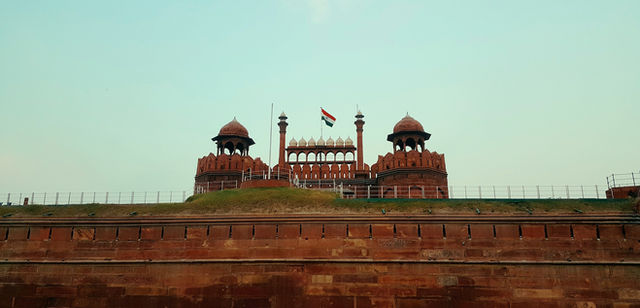
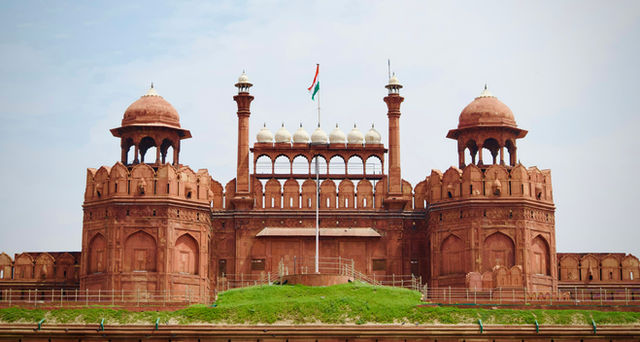
The third UNESCO site, and the most dramatic in scale: Shah Jahan's 17th-century red sandstone fortress that was the ceremonial and political heart of the Mughal Empire. The audio guide is genuinely good and worth hiring; the Diwan-i-Khas (Hall of Private Audiences) and the Pearl Mosque are highlights within the complex. The Red Fort is also where India's Prime Minister delivers the Independence Day address on 15 August — if your trip coincides, the atmosphere is electric. Book tickets online; queues for walk-up entry can be very long.
Old Delhi: Chandni Chowk and the Jama Masjid
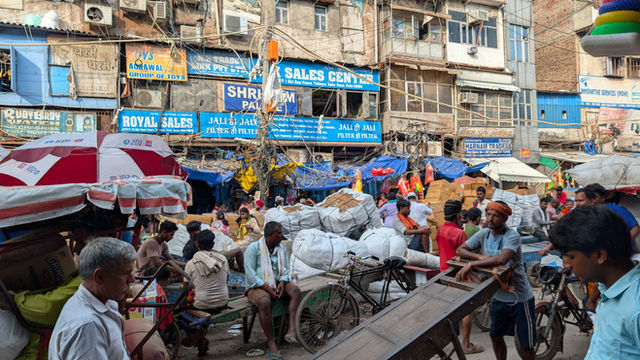
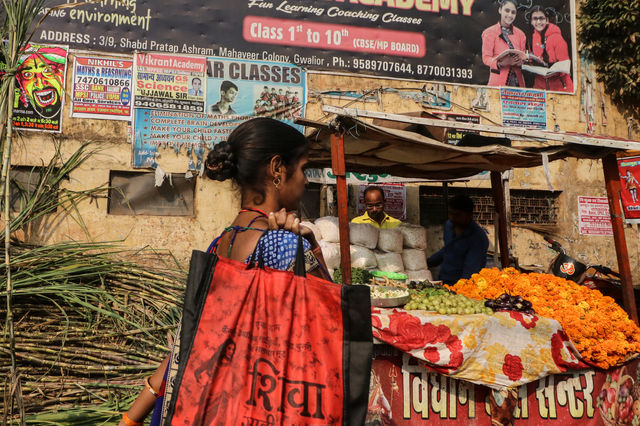
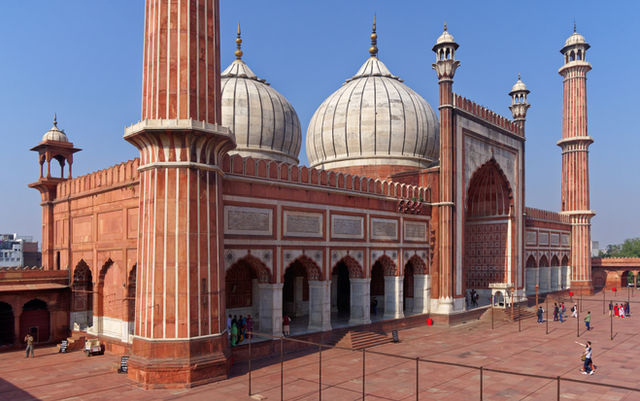
No family trip to Delhi is complete without at least half a day in Old Delhi. Chandni Chowk — the 17th-century market street running west from the Red Fort — is an assault on the senses in the best possible way: spice traders, sweet shops, jewellers, fabric sellers and street food stalls crammed into narrow lanes. The Jama Masjid, built by Shah Jahan in 1656, is India's largest mosque and free to enter (modest dress required; scarves available at the gate). A cycle rickshaw through the lanes with a local guide is one of the most memorable family experiences Delhi offers, and teen reactions are usually immediately engaged once they're inside the old city's lanes.
The National Museum
Delhi's national museum on Janpath holds one of the world's great collections of South Asian art: Indus Valley Civilisation artefacts from 2500 BCE, Gandharan sculpture, Mughal miniatures, and a superb decorative arts section. It is large and can be done partially — I'd suggest two to three focused galleries rather than trying to cover the whole building. Air-conditioned and excellent for a hot afternoon.
Lodi Garden
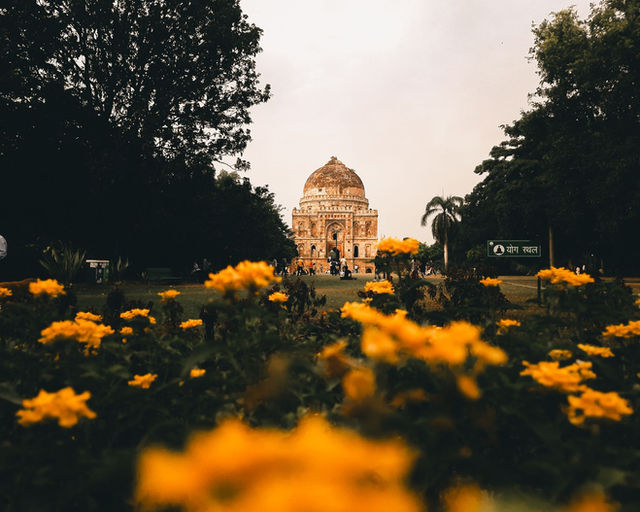
A 90-acre public park containing medieval tombs dating from the 15th and 16th centuries, scattered amongst lawns, rose gardens and joggers. Entry is free. It is a perfect half-hour break between South Delhi sights — the Sikandar Lodi and Mohammed Shah tombs are surprisingly atmospheric for what amounts to a city park, and Delhi families use it for picnics at the weekend. Teens who need space to breathe after dense sightseeing tend to appreciate this stop.
India Gate and Rajpath
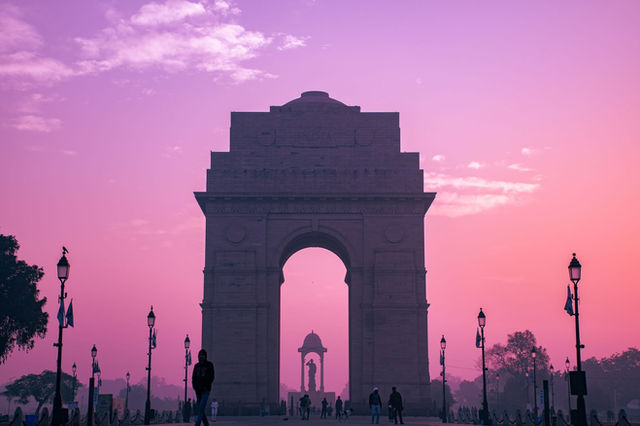
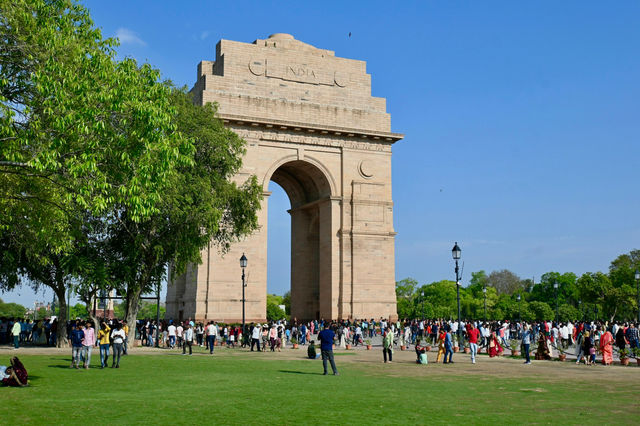
The 42-metre memorial archway erected in 1931 for soldiers of the British Indian Army is now the centrepiece of a long ceremonial boulevard leading to the Presidential Palace. The surrounding lawns fill with Indian families on weekend evenings; ice cream and snack vendors are everywhere. It is not a deep historical experience, but it is a genuinely pleasant place to be at sunset — and understanding the colonial urban planning of New Delhi as you walk the boulevard is its own history lesson.
Frequently asked
How many days do I need in Delhi (New Delhi)?
Three days covers the three UNESCO sites, Old Delhi, and the National Museum comfortably — add a fourth if you want a day trip to Agra for the Taj Mahal (2.5 hours each way by fast train). Five days allows you to settle in, explore South Delhi's quieter neighbourhoods, and pace things for younger or less experienced family members. I usually recommend four nights as the sweet spot for first-time family visits.
Is Humayun's Tomb worth visiting if we've already seen the Taj Mahal?
Absolutely — and I'd argue it becomes more interesting, not less. Humayun's Tomb was built a century before the Taj and served as the direct architectural prototype: the double dome, the raised platform, the charbagh garden geometry were all pioneered here. Seeing Humayun's Tomb after the Taj Mahal reverses the chronological order, but it deepens your understanding of how that Mughal design language evolved. The garden here is also less crowded than Agra and genuinely beautiful.
Is Delhi safe for families?
Yes, with reasonable awareness. The main risks are tourist-targeted scams — unofficial travel offices, gem shop commissions, and inflated rickshaw fares — rather than anything more serious. Travelling by metro and app-based taxis, staying in established hotels, and keeping a mild scepticism toward unsolicited offers of help removes most risk. Many UK families visit Delhi every year without incident. I always advise booking the first day's activities through the hotel or a reputable tour operator so you arrive oriented rather than uncertain.
What is the best way to get between Delhi's three UNESCO sites?
The metro handles two of the three well: Chandni Chowk station for the Red Fort, and a 10-minute walk or short auto-rickshaw from JLN Stadium station for Humayun's Tomb. Qutb Minar has its own metro station on the Yellow Line in South Delhi. A private car or driver for a full-day UNESCO circuit is a comfortable alternative — families often hire a driver for a day through their hotel and cover all three sites in sequence, typically starting with the Red Fort (cooler in the morning), then Humayun's Tomb, then Qutb Minar in the afternoon.
Is Delhi appropriate for teenagers?
Delhi is one of the most teen-engaging destinations I know in Asia. The UNESCO sites carry a genuinely compelling story (especially Humayun's Tomb as the Taj prototype), Old Delhi is visceral and memorable in a way few cities are, and the food is adventurous without being unapproachable. Teens who are curious or have studied any South Asian history will find the Red Fort and Qutb Minar unexpectedly absorbing. The overwhelming quality of the city — the density, the noise, the scale — tends to be exciting rather than frightening for most teenagers, particularly with a guide for the first Old Delhi venture.
Should we go to the Taj Mahal from Delhi?
If you're in Delhi for four or more days, yes — a day trip to Agra is very manageable. The Gatimaan Express (Delhi Hazrat Nizamuddin to Agra Cantt) takes around 90 minutes and is by far the most comfortable option; book seats in advance through IRCTC or a hotel concierge. Agra can also be done as an overnight stay if you want to catch the Taj at sunrise without the pressure of a day-trip return. Delhi–Agra is the logical start of the Golden Triangle itinerary if your trip has the time.
What should families know about food safety in Delhi?
Eat at busy stalls with high turnover, where fresh food is continuously prepared rather than sitting. Drink only bottled or properly filtered water — no tap water and no ice from unknown sources. Carry a hand sanitiser. Most families visiting Delhi experience no stomach issues if they follow these rules; some have a day or two of adjustment regardless. I recommend packing basic rehydration sachets just in case, and starting with milder dishes on the first day before working up to the full street food adventure. The upside is that Delhi's cuisine is extraordinary — the chaat, the kebabs, the parathas — and a bit of caution on process should not stop you from eating adventurously.
While you're there
Explore the area
Local attractions & tours
Skip-the-line tickets and small-group tours in Delhi (New Delhi) — compare across our partners.
Not seeing offers? Try or — some destinations have thinner inventory on Tiqets.
Day cruises, catamarans and multi-hour excursions — we're wiring up Viator next.
Not seeing offers? Try or — some destinations have thinner inventory on Viator.
Small-group and local-host experiences — GetYourGuide is on the way.
Not seeing offers? Try or — some destinations have thinner inventory on GetYourGuide.
Best time to visit Delhi (New Delhi)
Seasons overview
Winter (November–February) is the prime visiting window: days are clear and pleasantly warm at 15–22°C, evenings cool enough for a jacket. This is when Delhi is most comfortable for sustained sightseeing. Pollution (smog) can be an issue in November and December, particularly after Diwali; air quality apps are worth checking before outdoor-heavy days.
Spring (March–April) sees temperatures rising quickly from the low 20s to the high 30s. March is still very manageable; by mid-April the heat intensifies sharply. The Holi festival (March) falls in this window — spectacular but hectic, and worth planning around deliberately rather than stumbling into.
Summer (May–June) is brutal: 40–45°C regularly, with hot winds (loo) making outdoor sightseeing genuinely unpleasant. I would not bring teens to Delhi in peak summer unless the itinerary is mostly museum-heavy and air-conditioned.
Monsoon (July–September) brings some relief from the heat but also heavy rain, flooding in low-lying areas, and high humidity. Some visitors enjoy the green parks and fewer crowds; most families find it challenging.
Autumn (October) is a transitional month — humidity dropping, temperatures falling, but post-monsoon dust settling. By late October it is very comfortable.
Best months for families
I recommend November through early March as the family window. December and January are peak season — book accommodation several weeks ahead and expect bigger crowds at Humayun's Tomb and the Red Fort. February is my personal favourite: quieter, cool, and the gardens at Humayun's Tomb are at their best.
Getting there
By air
The main gateway for UK families is Indira Gandhi International Airport (DEL), located about 16 km southwest of the city centre. Direct flights from London operate year-round with Air India, British Airways, and Virgin Atlantic from Heathrow; flight time is approximately 8.5–9 hours. Indirect fares (via Gulf hubs such as Dubai, Doha or Abu Dhabi) are typically ~£400–£700 return per adult; direct fares are higher and frequently ~£600–£900 return from London. Book 6–10 weeks ahead for best pricing in the November–February peak window. The airport is modern, well-signed and manageable with children; immigration queues can be long on busy evenings, so factor in extra time.
From the airport to the city
The Delhi Metro Airport Express Line runs directly from Terminal 3 (international) to New Delhi Railway Station in around 20 minutes — clean, air-conditioned, and a genuinely excellent option for families with manageable luggage. Prepaid taxis are available at the arrivals hall and typically cost ~£10–£15 to central Delhi depending on time of day; Uber and Ola both operate from the airport and are often cheaper. Auto-rickshaws are available but not recommended with large luggage or as a first introduction to Delhi traffic.
Ready to book your trip?
Flights, airport transfers and car hire — search and compare without leaving the page.
More trip extras
Parking, holiday extras, and more — coming soon.
We're lining up parking, holiday extras and activities you'll be able to add to any trip from here.