Gili Islands
Three tiny car-free islands off north-west Lombok — turtle-filled snorkelling reefs, sunsets over Bali's Mount Agung and a pace set by bicycle and horse cart.
- Island
- May – October (dry season)
- LOP
- 3–5 days
Jorge Láscar from Melbourne, Australia / Wikimedia Commons (CC BY 2.0)
About Gili Islands
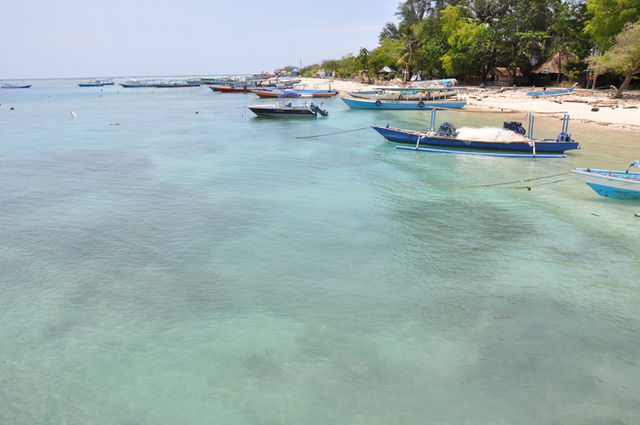
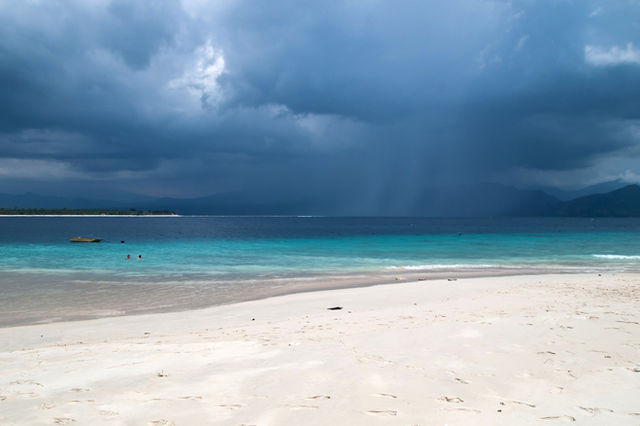
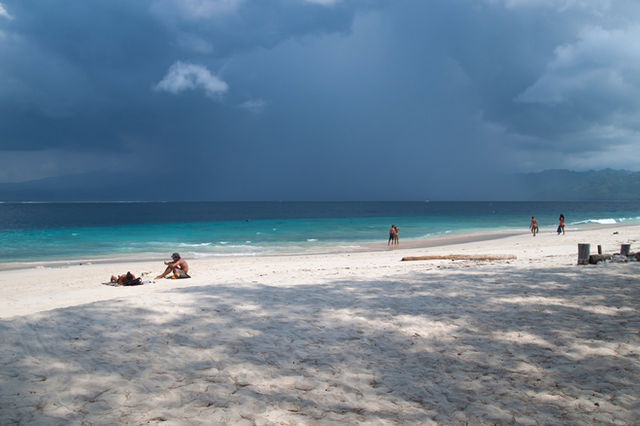
The Gili Islands are three small, sandy coral islands lying a few kilometres off the north-west coast of Lombok, in the Indonesian province of West Nusa Tenggara. Despite the name being Indonesian for 'small island' (so 'Gili Islands' is technically a tautology), the three that travellers mean are Gili Trawangan, Gili Meno and Gili Air. None is more than a couple of kilometres across, each can be walked around in one to two hours, and — this is the defining fact — there are no motorised vehicles at all. No cars, no motorbikes, no scooters: you move by foot, by bicycle or by cidomo, the small pony-drawn cart that carries luggage and the occasional weary tourist. The three islands share the same turquoise water and white-coral sand but have distinct personalities. Trawangan (universally 'Gili T') is the largest and busiest, a dive-school and nightlife hub with beach bars and a backpacker energy. Meno, in the middle, is the smallest and quietest — barely developed, honeymoon territory. Air, closest to Lombok, splits the difference: relaxed, with a genuine village and local life alongside the guesthouses. All three sit within a snorkeller's reach of coral reefs, resident sea turtles and an underwater sculpture installation. They suit travellers who want warm, easy island time over sightseeing — best in the May–October dry season.
Why go
The Gilis offer something increasingly rare: proper tropical islands with no traffic, no honking, no exhaust. The absence of vehicles changes the atmosphere entirely — you fall asleep to the sea rather than scooters, and cross an island on a squeaky rented bicycle in fifteen minutes. The snorkelling and diving are the headline. The reefs here are home to large numbers of green and hawksbill turtles, and you can often see them from the shore, drifting over the coral just metres out; Gili Meno and the reef between Meno and Air are the reliable turtle spots. Off Meno's north-west shore lies the BASK 'Nest', an underwater ring of life-sized human figures by the British sculptor Jason deCaires Taylor, installed in 2017 as an artificial reef and now one of the region's most photographed dive and snorkel sites. Add long, west-facing beaches where the sun drops behind Bali's Mount Agung volcano on a clear evening, ocean swings for the obligatory photo, and a choice of pace — party, silence or somewhere between — and the appeal is obvious. The Gilis pair naturally with Lombok itself (Mount Rinjani trekking, the south-coast surf beaches) or a wider Bali trip, since most people arrive by fast boat from Bali anyway.
Highlights
- Snorkelling with green and hawksbill turtles off Gili Meno
- The BASK 'Nest' underwater statue circle by Jason deCaires Taylor
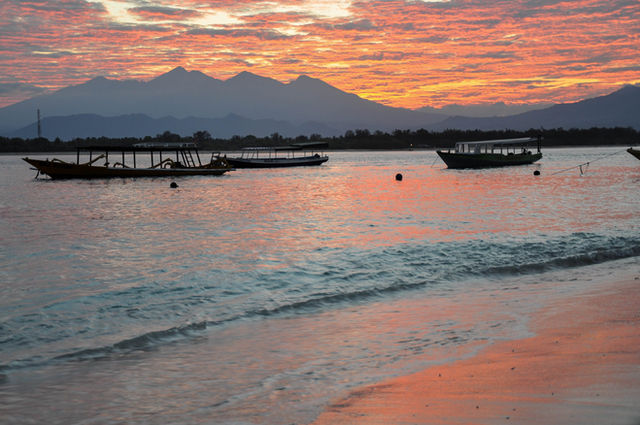
- Sunset over Bali's Mount Agung from Trawangan's west coast
- Cycling a full lap of a car-free island
- Diving the reefs and coral walls with Trawangan's dive schools
- Trawangan's evening seafood night market
Food & drink
Eating on the Gilis mixes simple Indonesian cooking with the international café-and-bar fare that follows backpackers everywhere. The staples are Lombok and wider Indonesian: nasi goreng and mie goreng (fried rice and noodles), satay, gado-gado, and fresh grilled fish. Lombok's own signature is ayam taliwang — grilled chicken in a fierce chilli-and-garlic sauce — often served with plecing kangkung, water spinach in a tomato-chilli sambal; the island name Lombok even means 'chilli', and the local palate runs hot. Trawangan's night market, set up each evening in the middle of the island, is the classic cheap eat: pick fresh seafood from the ice and have it grilled to order. Beyond that, all three islands have beachfront cafés doing smoothie bowls, wood-fired pizza, seafood barbecues and Western breakfasts, with the widest choice on Trawangan and the most limited on Meno. For drinks, Bintang beer is everywhere; cocktails and beach bars concentrate on Trawangan's west coast. Note that Indonesia is largely Muslim and Lombok strongly so — alcohol is available on the Gilis but is neither cheap nor universal, and beware cheaply made spirits (methanol-tainted arak has caused serious poisonings in Indonesia; stick to bottled beer or reputable brands).
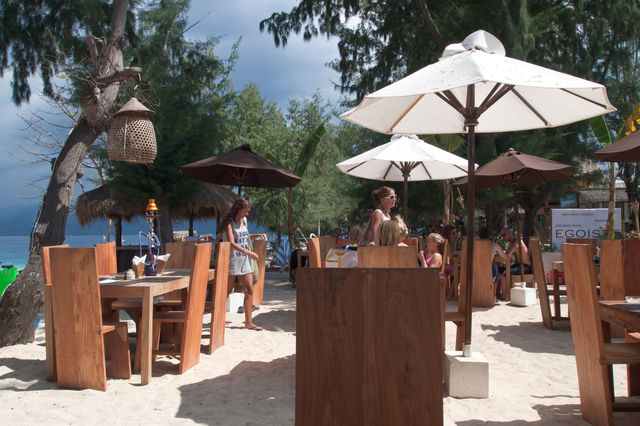
Gili Islands in photos
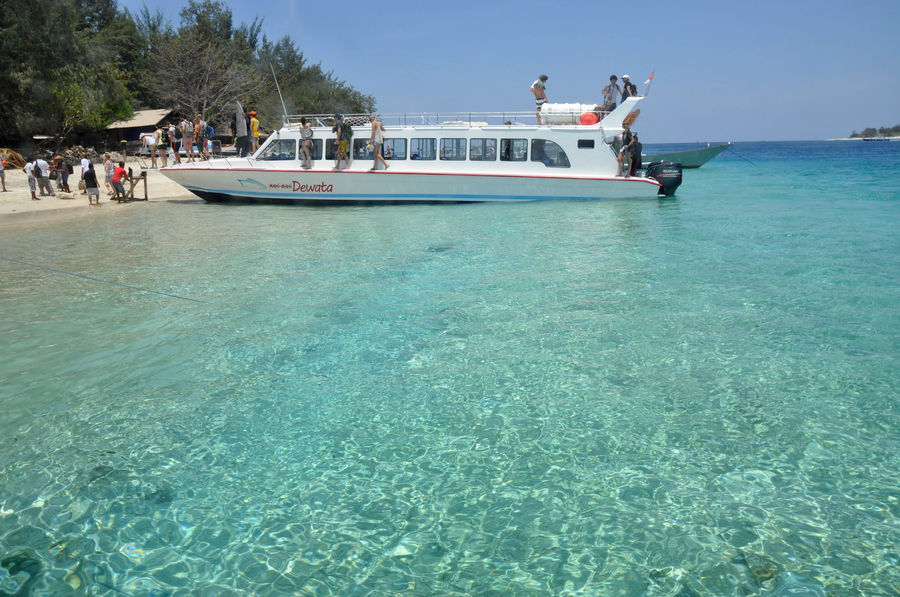
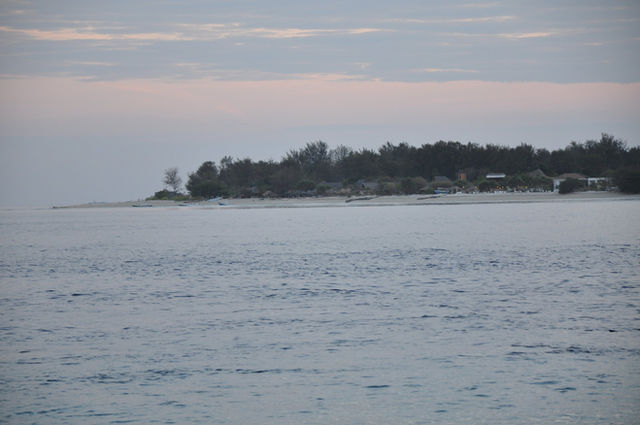
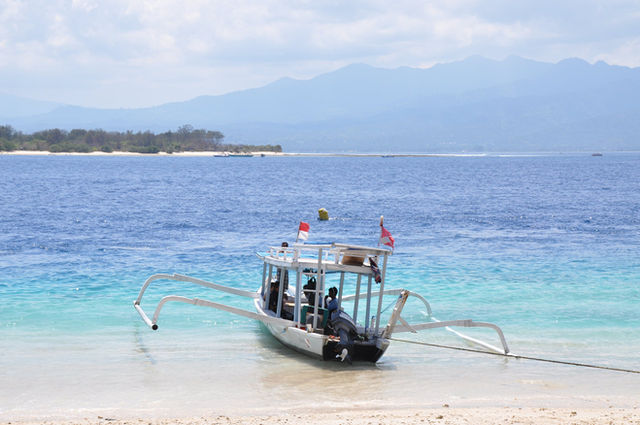
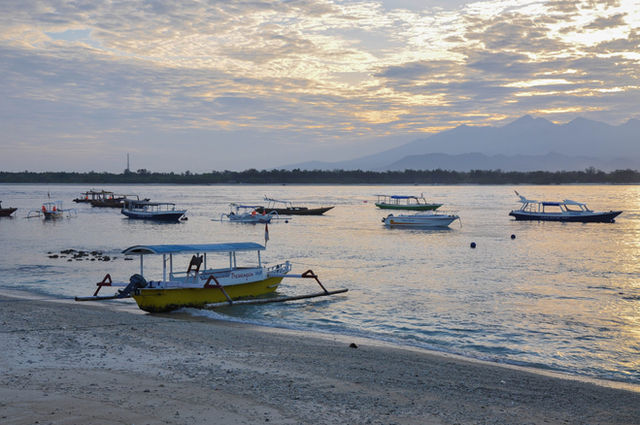
Where you'll stay in Gili Islands
Live map of hotels and villas around Gili Islands — powered by Stay22. Pan, zoom and compare live prices to pick your base.
Hotels & rentals around Gili Islands
Pan, zoom and compare live prices — every stay in one map.
Getting around Gili Islands
This is the whole point of the Gilis: there are no cars, motorbikes or scooters on any of the three islands — motorised vehicles are banned by local ordinance. You get around on foot, by bicycle or by cidomo, the traditional pony-drawn cart. Each island is small enough to walk around entirely: Trawangan takes about two hours on foot, Meno and Air rather less. Bicycles are the standard way to cover ground and are cheap to hire by the day from countless stalls; the sandy back tracks can be hard going in places, so you will occasionally push rather than ride. Cidomo carts act as the local taxi, mainly used to shuttle luggage between the jetty and your accommodation — agree the fare before you set off, as they are not metered and tourist pricing is common. Animal-welfare campaigners have raised concerns about the working ponies, so many travellers walk or cycle where they can. Between the islands, island-hopping boats connect all three: a public hopping service runs on a set morning and afternoon schedule, and private speedboat charters run on demand for a higher, negotiable fee. There are no roads, no traffic lights and no need for a driving licence — a genuine relief.
There is no bus, van or scheduled land transport on the Gilis — with no vehicles, there is nothing to run. 'Public transport' here means two things: the cidomo horse carts that serve as island taxis (fares are negotiated, not fixed, and tend to be inflated for tourists — settle the price before boarding, and expect a short hop from jetty to guesthouse to cost a few pounds), and the boats. The public island-hopping boat links Trawangan, Meno and Air on a published timetable, typically one loop mid-morning and one in the afternoon, at a modest fixed fare per leg; it is slow and weather-dependent but by far the cheapest way to move between islands. Private boat charters run any time for a negotiated fee (often the equivalent of £15–25 for a short crossing), useful if you miss the public boat or want to move on your own schedule. To reach Lombok, the local public boats from Bangsal harbour are cheap and frequent in daylight hours; fast boats to Bali are a separate, pricier ticketed service. Bring enough cash — ATMs exist on Trawangan and Air but are unreliable and charge poor rates, and Meno's are very limited.
Insider tips
Match the island to your mood and, if you can, sample more than one — a night on Trawangan for the scene, then Meno or Air to decompress, is the classic combination, and the island-hopping boat makes it painless. For turtles, you rarely need a tour: snorkel out from the north or west of Gili Meno, or the reef on the Meno–Air side, early in the day when the water is calmest and clearest, and you will usually find greens and hawksbills grazing on the coral. The BASK 'Nest' underwater statues off Meno's north-west shore sit in shallow enough water to snorkel (not just dive), but go on a still morning and at higher tide for the clearest view and to avoid brushing the coral. For sunset, Trawangan's west coast is the spot — the swings and bean-bag bars line up facing Bali, and on a clear evening Mount Agung's silhouette appears across the water; arrive before the light goes to get a swing without queuing. Rent a bike to lap your island once — the interiors are quieter and more local than the beach strip. Crucially, help the reef: the Gilis have suffered coral bleaching and damage, so wear reef-safe sunscreen (or cover up with a rash vest instead), never stand on or touch the coral, and don't chase or touch the turtles. Bring plenty of cash from the mainland — island ATMs are unreliable and charge heavily.
Frequently asked
Explore the area
Gili Islands · Around the island · 1 island
Local attractions & tours
Skip-the-line tickets and small-group tours in Gili Islands — compare across our partners.
We're still curating hand-picked tickets and tours for Gili Islands. In the meantime, the map above and the nearby cities are a great place to start.
When to visit Gili Islands
May – October (dry season)
The Gilis have a hot, humid tropical climate with two seasons and little temperature variation — daytime highs sit around 29–32°C year-round, and the sea stays a warm 27–29°C. What changes is the rain. The dry season runs roughly April to October, with May to September the reliably driest and sunniest stretch and the best time to visit: calm seas, clear water for snorkelling and dependable sunsets. July and August are the busiest and priciest months, coinciding with the European and Australian summer holidays. The wet season is roughly November to March, hotter and stickier, with tropical downpours — often short, heavy afternoon storms rather than all-day rain — and choppier crossings from Bali. February tends to be the wettest. The islands are quieter and cheaper then, and February–March sees conditions improving as the wet season tails off. The Gilis sit outside the main typhoon belt, so there is no cyclone season as such, but rough seas in the wet months can delay or cancel fast boats. Whatever the month, the equatorial sun is strong — high UV, little natural shade on the beaches — so sun protection matters more than the mild-sounding temperatures suggest.
Know before you go
Safety
The Gilis are generally relaxed and low-crime, but they come with real, specific caveats that guidebooks sometimes gloss over. There is no police station on the islands — they are community-governed, and disputes or theft are handled by the local village authority (the kepala desa), which can leave visitors with little recourse if something goes wrong. Petty theft from rooms and bikes does happen; use your accommodation's safe. On Trawangan especially, drugs are openly touted (magic mushrooms, cannabis and more) — Indonesia has extremely harsh drug laws, informal 'deals' are frequently scams, and spiked drinks and methanol-tainted spirits (arak) are genuine dangers; be cautious about what you drink and never carry drugs. Medical facilities are limited: there are small tourist clinics on Trawangan and Air for minor problems, but no hospital and — importantly for divers — no hyperbaric decompression chamber on the islands. Serious cases, including suspected decompression sickness, require boat or helicopter evacuation to Lombok or Bali, so comprehensive travel and dive insurance is essential. In the water, watch for strong currents in the channels between the islands, which have caught out snorkellers drifting off the reef. Dengue-carrying mosquitoes are present (there is no malaria); use repellent. Boat crossings from Bali have a chequered safety history — choose an established operator.
Culture & etiquette
The Gilis and Lombok are predominantly Muslim, and the local Sasak culture is more conservative than tourist-oriented, Hindu Bali. That coexistence is generally easy-going on the islands, but a little awareness goes a long way. You will hear the call to prayer from the island mosques, including early morning — part of the texture of the place. Away from the beach and your resort, dress modestly: cover shoulders and knees when walking through the villages or buying from local warungs, and keep swimwear and toplessness to the beach and pool. During Ramadan, many locals fast during daylight; be discreet about eating, drinking and drinking alcohol in front of them, and expect some warungs to keep different hours. Alcohol is available for tourists but is not part of local life, so drink with some restraint in mixed settings. A smile and a few words of Indonesian (terima kasih — thank you) are warmly received. Bargaining is normal for cidomo fares, boat charters and market goods, but do it good-naturedly. Finally, treat the reef as the fragile thing it is (see insider tips): the islands' economy and appeal depend on it.
Daily budget
£45/day mid-range (budget £22, luxury £180+; Meno's boutique resorts push the top end higher)
Emergency numbers
112 (general emergency), 110 (police), 118 or 119 (ambulance), 113 (fire), 115 (SAR / Basarnas)
Getting there
There is no airport on the Gili Islands themselves. The nearest is Lombok International Airport (LOP, officially Zainuddin Abdul Madjid), in south Lombok, served by domestic flights from Jakarta, Surabaya and Bali plus some regional international routes (Singapore, Kuala Lumpur). From LOP it is roughly 1.5–2 hours by car north to Bangsal harbour, then a short local boat across to the Gilis. From London there is no direct route: fly to Jakarta, Bali (Denpasar, DPS) or Singapore/Kuala Lumpur and connect. In practice, most visitors reach the Gilis by fast boat from Bali rather than via Lombok's airport. Fast boats run from Padangbai and Serangan (near Sanur/south Bali) and, in season, from Amed in the east, taking roughly 1.5–2.5 hours depending on operator, sea state and stops; several companies run daily and land directly at each Gili's jetty. From Lombok itself, the cheap public boats (and private charters) depart Bangsal for all three islands. Book fast boats with an established operator and allow buffer time — crossings can be delayed or cancelled in rough weather, and safety records among cheaper boats have historically been mixed.
- Lombok International Airport (LOP — nearest; ~1.5–2h to Bangsal harbour, then boat)
- Bali Ngurah Rai / Denpasar (DPS — the main international gateway; most arrive by fast boat from Bali)
Ready to book your trip?
Flights, airport transfers and car hire to LOP — search and compare without leaving the page.
More trip extras
Parking, holiday extras, and more — coming soon.
We're lining up parking, holiday extras and activities you'll be able to add to any trip from here.