
Indonesia — hero

Asia

Indonesia

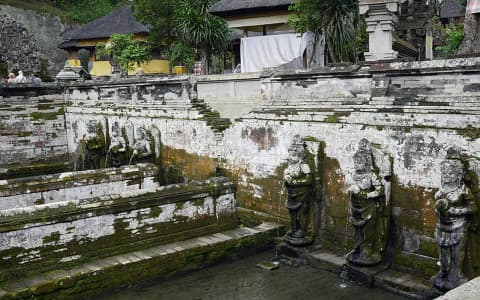
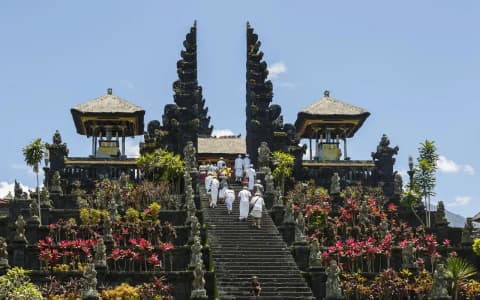
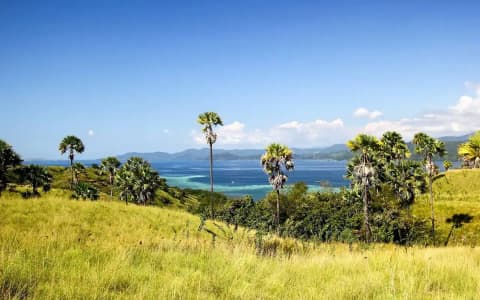
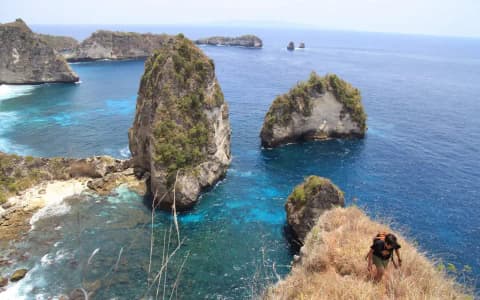
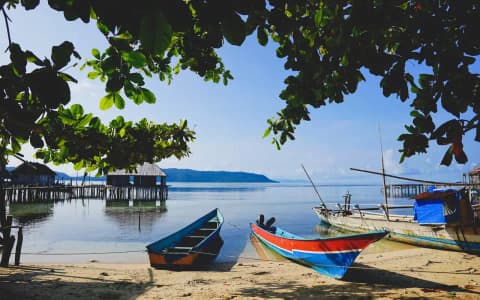
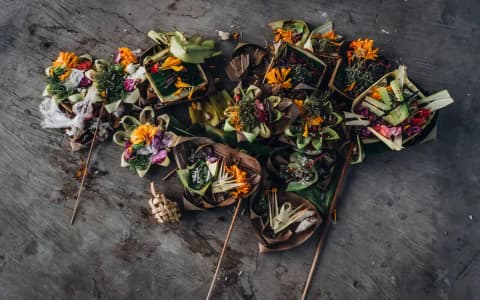
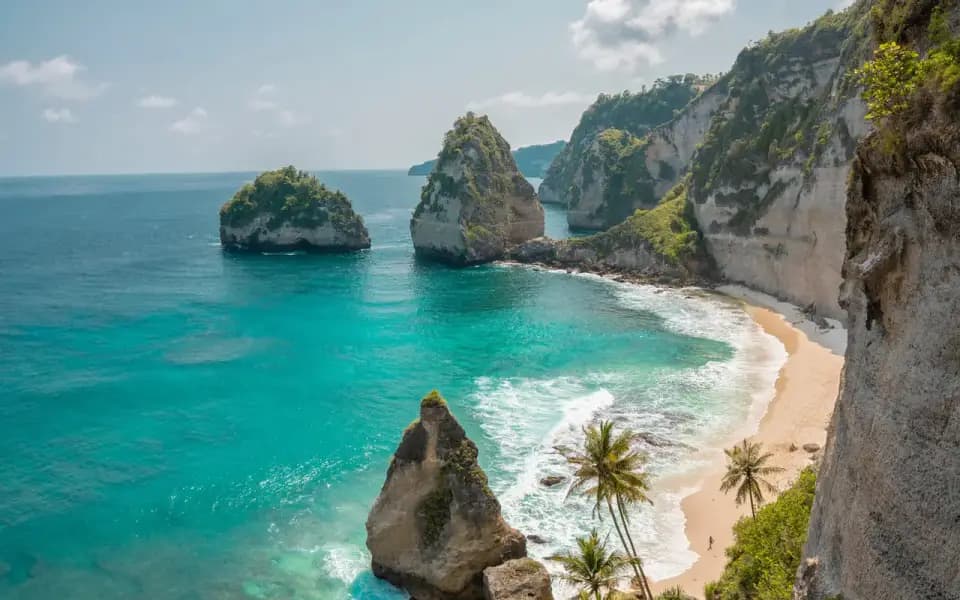
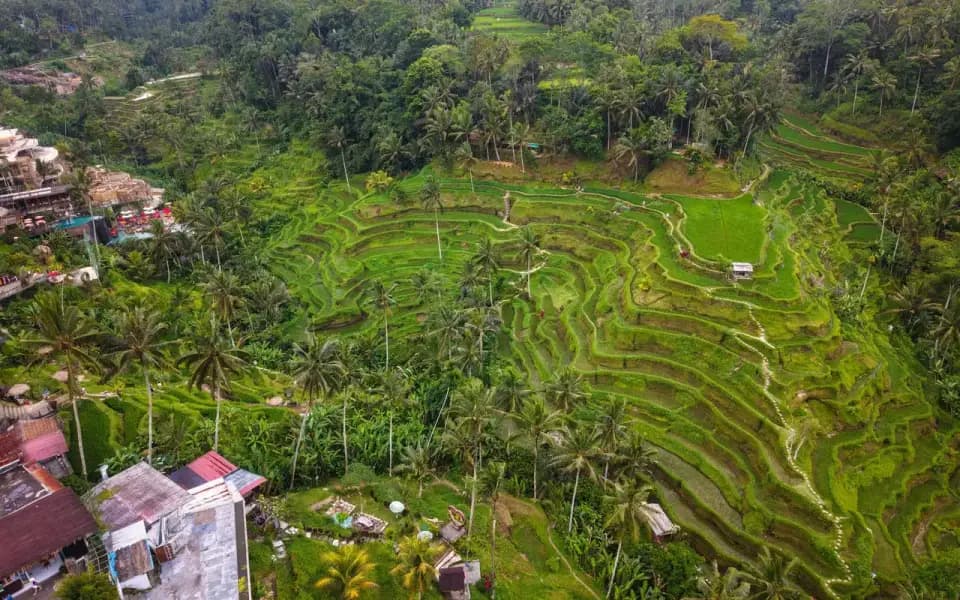
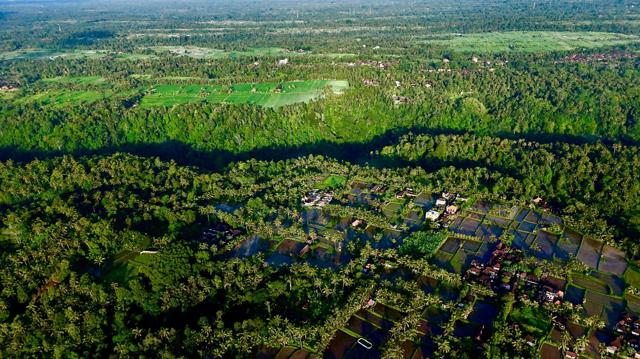
An archipelago of 17,000 islands: Bali's emerald rice terraces and temples, Borneo's orangutan jungles and Komodo's dragon-inhabited seas.

Currency
Indonesian Rupiah (IDR)
Language
Indonesian
Best time
April – October
Visa
Visa on arrival (up to 30 days)

The FCDO has no advisory against travel to Indonesia.

Still current at: 13 November 2026 Updated: 18 September 2026

Source: UK Foreign, Commonwealth & Development Office — the definitive source. Check it close to your travel dates.

Flight cancelled or delayed because of this? Your rights under UK261 / EU261 →

Why visit

Why Indonesia

An archipelago of 17,000 islands: Bali's emerald rice terraces and temples, Borneo's orangutan jungles and Komodo's dragon-inhabited seas.

  • Bali's rice terraces
  • Borobudur temple
  • Komodo dragons
  • Ubud Monkey Forest
Read more

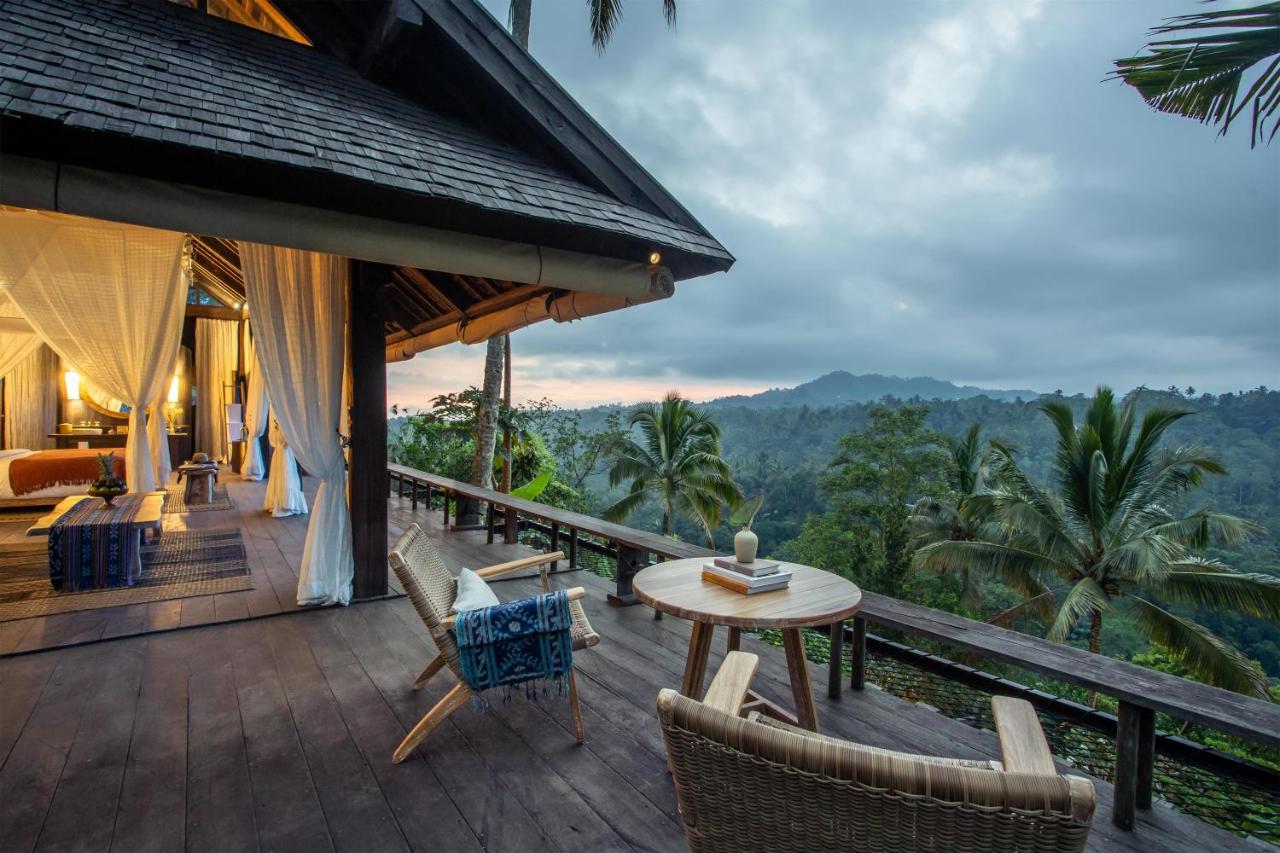
Indonesia is a world's worth of landscapes strung across 17,000 islands. Bali anchors it with emerald rice terraces and spiritual depth, but beyond lie the orangutan jungles of Borneo, the dragons of Komodo and coral-encrusted dive sites of near-mythical clarity.

For 2026, Bali doubles as a bleisure hub, well-connected and long-loved by yogis, surfers and digital nomads alike, while the wider archipelago rewards those who venture to quieter islands like Lombok and East Java.

The country's future is regenerative and community-led: homestay culture, reef and jungle restoration, and soft adventure through rice terraces and rainforest make Indonesia an affordable yet high-value, nature-first journey.

A pillar, not a footnote

Eat your way through Indonesia

The single reason many travellers come back — the food culture worth reshaping a trip around, and the dishes to seek out region by region.

Indonesia

The original spice islands, where each island guards its own chilli, its own sambal, its own way with rice.

Sit down at a Padang restaurant and you don't so much order as get buried: a dozen little bowls land unbidden — curried jackfruit, blistering green sambal, a coal-dark beef you'll keep reaching for — and you pay only for what you eat, which is always more than you meant to. This is the food of the original spice islands, where nutmeg and clove once launched a thousand ships and every island still keeps its own chilli close.

The pantry is fierce and fragrant — lemongrass, galangal, turmeric, shrimp paste and coconut milk pounded to a paste and cooked down slow. Nowhere slower than rendang, beef simmered for hours in spiced coconut until it turns dark, dry and impossibly deep. Around it sit the everyday joys: skewers of satay smoking over coconut husks, a plate of nasi goreng crowned with a fried egg, and a sambal so good you'll judge every meal after it. Come hungry; leave rearranged.

Dishes to seek out
  • rendang (slow-cooked spiced beef)
  • nasi goreng (fried rice)
  • satay (grilled skewers & peanut sauce)
  • gado-gado (vegetables in peanut sauce)
  • nasi Padang (Minang spread)
  • babi guling (Balinese suckling pig)
  • sambal (chilli relish)
Places to go

Cities and regions worth your time

10 destinations in Indonesia — pick a base or link them into a route.

Browse by type

Tap a type to filter the list and the map — tap it again or “All” to see everything.

© OpenFreeMap · OSM · terrain Mapterhorn
Things to do

Nature, culture and the outdoors

  • Padang Padang Beach

    A tiny white cove reached through a cliff crevice and cave, fronting a world-class surf break.

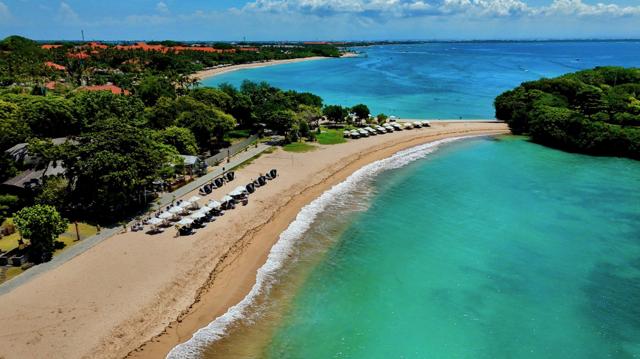
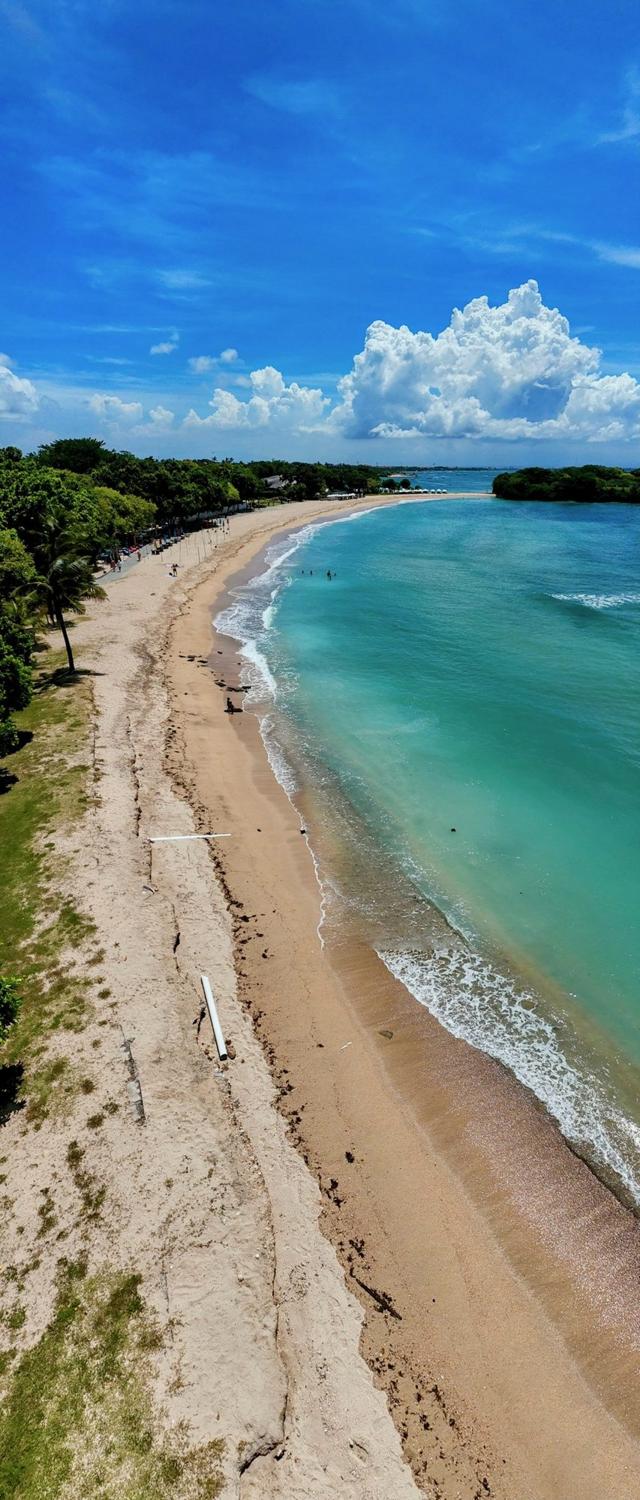
  • Nusa Dua Beach

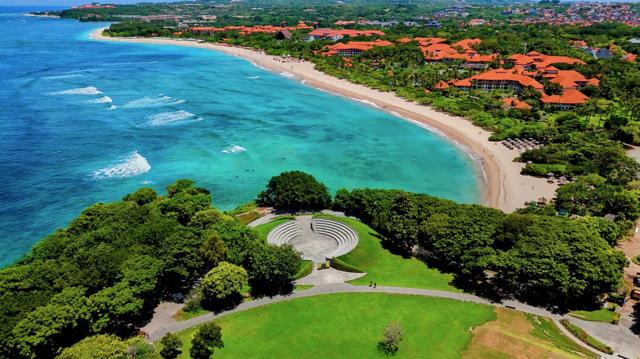
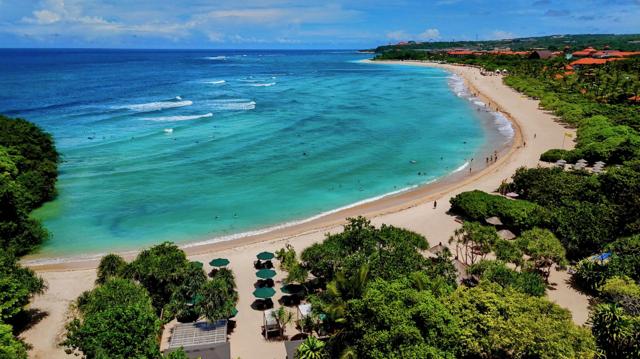
    Groomed white sand and reef-calmed shallows front the big resorts, easy for toddlers to paddle.

  • Tanjung Aan

    A wide horseshoe of pale, pepper-grain sand and shallow turquoise water, split by a climbable lookout rock.

  • Balangan Beach

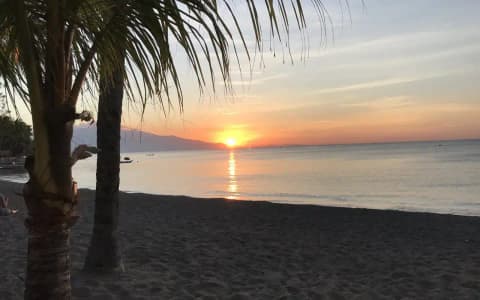
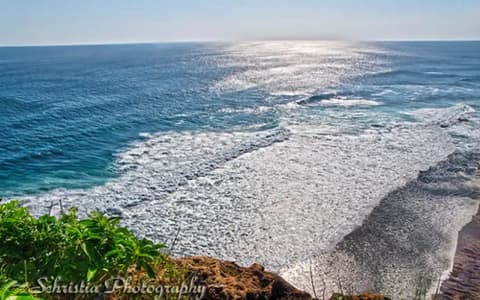
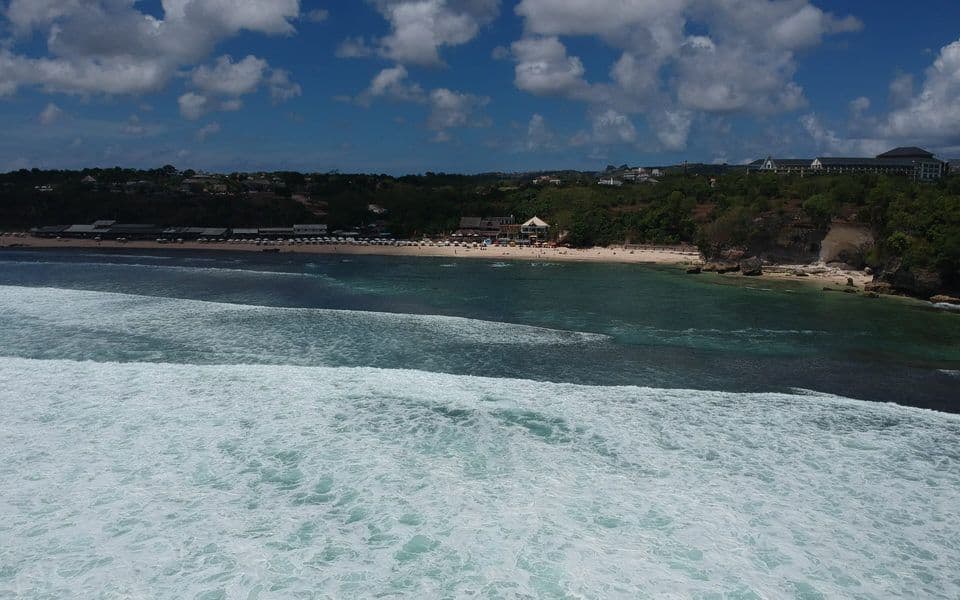
    Nearly a kilometre of pale sand under limestone cliffs, with warungs facing a fiery west sunset.

  • Selong Belanak

    Soft-breaking waves over a sandy shelf make this long white bay the island's easiest place to learn to surf.

  • Bingin Beach

    A hidden pocket of sand below a cliff stacked with guesthouses, low tide baring a reef to explore.

  • Mawun Beach

    A sheltered crescent between two green headlands, with a calm middle deep enough for an easy family swim.

  • Jimbaran Bay

    A long crescent of pale sand where fishing boats land and grilled-seafood tables fill up at dusk.

  • Pink Beach (Pantai Tangsi)

    Crushed red coral tints the sand rosy in this hard-to-reach cove near Lombok's wild southeast tip.

  • Kuta Beach (Mandalika)

    The buzzing base town for south Lombok, its main beach lined with warungs, bars and moored fishing boats.

  • Sanur Beach

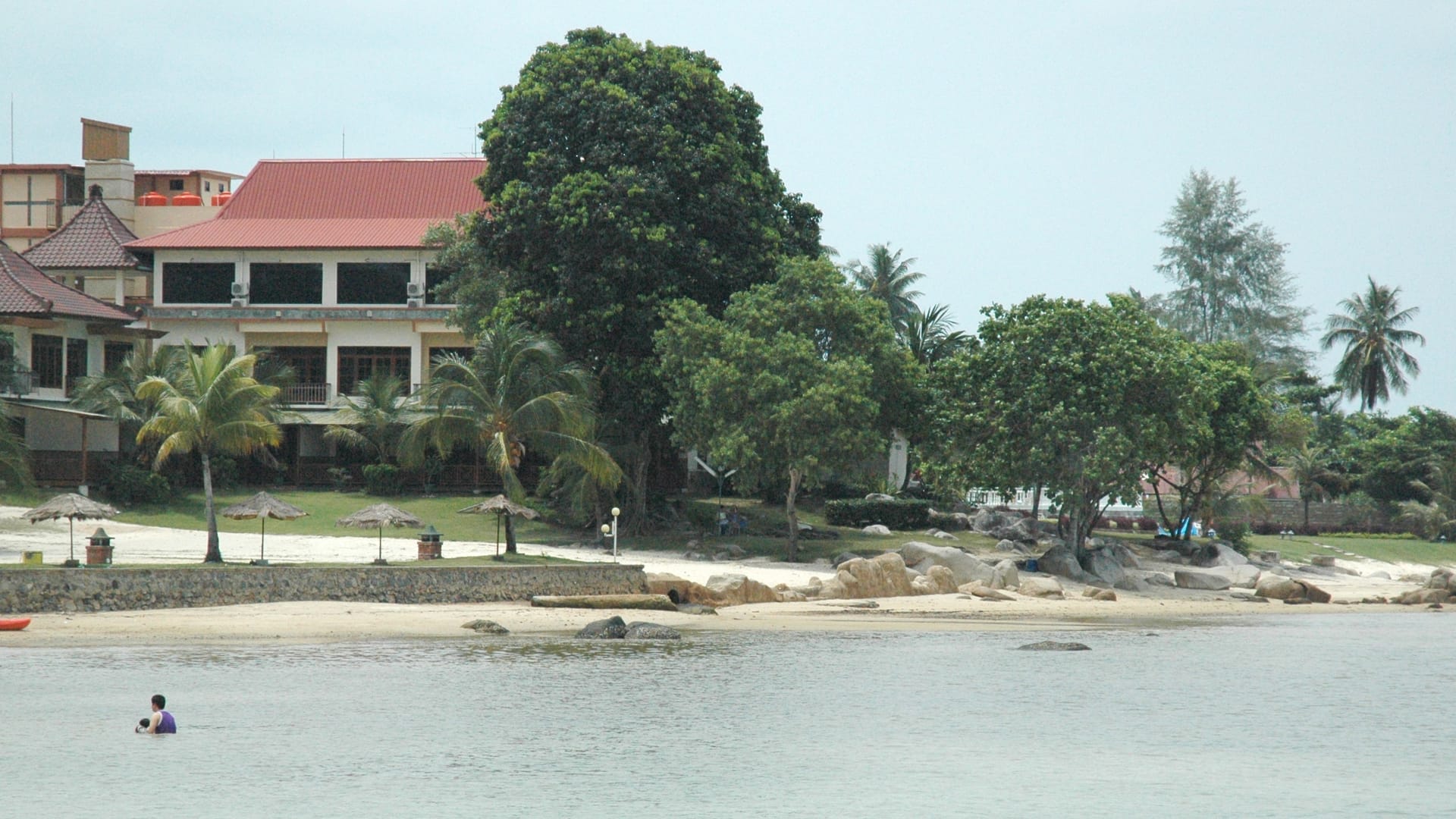
    Reef-sheltered calm water and a shady 5km beach path make this the gentlest swim on Bali's coast.

  • Kuta Beach

    Bali's original party strip: a broad sandy sweep of surf schools, sunset crowds and loud nightlife.

  • Senggigi Beach

    Lombok's original resort strip, a chain of west-facing bays that glow at sunset over the Bali strait.

Plan your trip

Curated Indonesia itineraries

Browse all Indonesia trips →
Guides

All our Indonesia guides

Where to stay

Hand-checked places in Indonesia

Browse all Indonesia stays →
When to go

Weather & timing in Indonesia Right now RIGHT NOW 31°C drizzle

Best Jul–Sep · Shoulder May–Jun, Oct

Units

Monthly figures are for Java (Jakarta); other regions of Indonesia vary. See every region, month by month →

Next 7 days · Java

Forecast · Met Office · Powered by Met Office data

Typical · climate data

Best time to visit

April – October

Best for
  • Bali Beaches
  • Diving
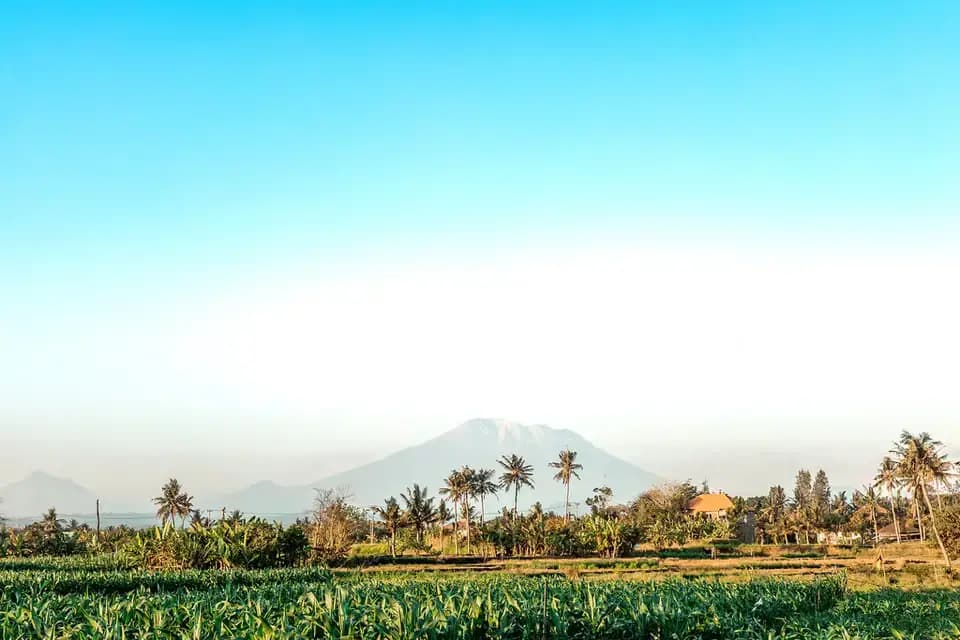
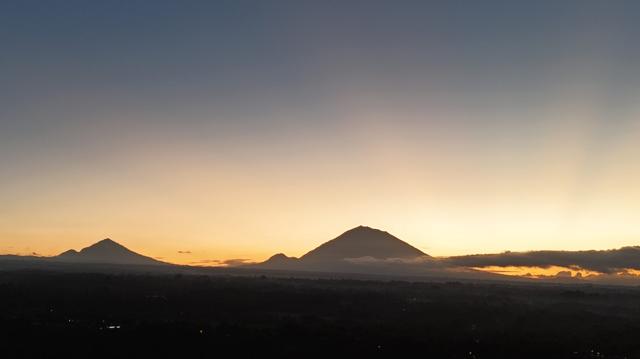
  • Volcanoes
  • Rice Terraces
At a glance
Sunshine 9.5 hr/day
Rainfall 204 mm/mo
Wettest February · 339.1mm
Driest August · 76.7mm
Part of Southeast Asia →
By season

Units

Spring (Sep–Nov)

What to expect — Daytime highs average about 33°C with overnight lows near 24°C, with plenty of rain.

What's best — Dry season, then Monsoon. Sep and Oct are among the best months here (dry season, some showers).

Summer (Dec–Feb)

What to expect — Daytime highs average about 30°C with overnight lows near 24°C — the wettest stretch of the year.

What's best — Monsoon.

Autumn (Mar–May)

What to expect — Daytime highs average about 31°C with overnight lows near 24°C, with plenty of rain.

What's best — Monsoon, then Wet season, then Dry season. May is among the best months here (dry season, rain likely).

Winter (Jun–Aug)

What to expect — Daytime highs average about 32°C with overnight lows near 23°C, with plenty of rain.

What's best — Dry season. Jun, Jul and Aug are among the best months here (dry season, rain likely).

Live forecast map · Windy.com · temperature with wind, °C and km/h

When to go, region by region

Indonesia has 5 climate regions

Each month our cards and map show the region with the best weather that month: Jan–Apr Sumatra · May–Jun Bali · Jul Java · Aug Sulawesi · Sep–Nov Bali · Dec Java.

Region JFMAMJJASOND
JavaJakarta · best May–Oct January: good February: good March: good April: good May: great June: great July: great, shown on the cards August: great September: great October: great November: good December: good, shown on the cards
BaliDenpasar · best May–Oct January: good February: good March: good April: good May: great, shown on the cards June: great, shown on the cards July: great August: great September: great, shown on the cards October: great, shown on the cards November: good, shown on the cards December: good
SumatraMedan · best Feb–Mar, Jul January: good, shown on the cards February: great, shown on the cards March: great, shown on the cards April: good, shown on the cards May: good June: good July: great August: good September: good October: good November: good December: good
SulawesiMakassar · best Jul–Oct January: not ideal February: not ideal March: not ideal April: good May: good June: good July: great August: great, shown on the cards September: great October: great November: good December: not ideal
BorneoBalikpapan · best May–Oct January: good February: good March: good April: good May: great June: great July: great August: great September: great October: great November: good December: good

Great Good Not ideal Shown on our cards that month

A little context

A little history

To read what you're looking at — the empires and eras that shaped Indonesia's food, art and streets.

An archipelago of more than 17,000 islands, so the food, faith and language shift from one to the next
the old Spice Route made it the world's prize — nutmeg and cloves grew nowhere else
Hindu-Buddhist kingdoms raised Borobudur and Prambanan before Islam became the majority faith
four centuries of Dutch trade rule ended with independence declared in 1945, uniting it under one flag
Before you book

Know before you go

The practical back-matter — safety, earthquakes & tsunamis, drones and the essentials, in one place.

Safety

No FCDO advisory against travel FCDO advice →

Official UK Foreign, Commonwealth & Development Office guidance is the definitive source — check it close to your travel dates.

Earthquakes & tsunamis

Earthquakes happen regularly in Indonesia and it has many active volcanoes; after a strong quake near the shore, a tsunami can arrive within minutes.

When the shaking starts

  • Drop, cover and hold on: get down low, protect your head and neck, and hold on until the shaking stops.
  • Expect aftershocks, and drop, cover and hold on again each time.
  • Then follow instructions from local authorities and your hotel staff.

Near the coast

  • If you are near the coast and feel shaking that makes it hard to stand, or a rolling quake that lasts a minute or more, move to high ground or as far inland as you can as soon as the shaking stops.
  • Do the same if the sea suddenly pulls back or rises, or you hear a loud, unusual roar from the water.
  • Don't wait for an official warning. Walk or cycle if you can, and stay away until the authorities give the all-clear.

Around volcanoes

  • Keep out of exclusion zones around active volcanoes: they can change at short notice, so check the latest local advice before you go.

On arrival When you check in, look at your hotel's evacuation map and note the nearest high ground or evacuation route.

Coasts most exposed to tsunami Coasts nationwide; BMKG highlights the south coast of Java (e.g. Cilacap) and the Sunda Strait

Official sources to follow
General guidance, not a live alert · Sources checked Nov 2026 FCDO advice for Indonesia →

Drone rules (sub-250g)

  • Indonesia
    A sub-250g drone needs no national registration or licence for visitors (150 m ceiling, 15 km from airports, daylight within sight) — but Bali now requires every drone, whatever its weight, to be pre-registered online before you fly, and the best spots layer on their own permits. ⚠ Komodo National Park runs its own paid drone permit (apply via the SIORA system about a week ahead); in Bali a roughly 5 km sacred-zone rule puts many temples off-limits without written consent from the local village council, and visitors have been detained for flying even a sub-250g drone at the rice terraces. Rules checked: Jul 2026

National parks, protected sites and religious/heritage venues often have their own rules and permits — always check the specific site before you fly.

The essentials

Plug & voltage Type C/F/G · 230V
Daily budget Budget-friendly
Region South-Eastern Asia