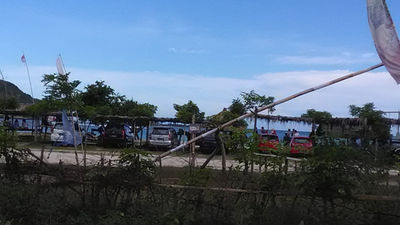
 Swimming © 伊賀上野ニンニン, CC BY-SA 4.0
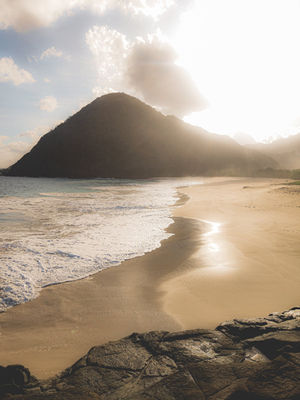
 Tanjung Aan
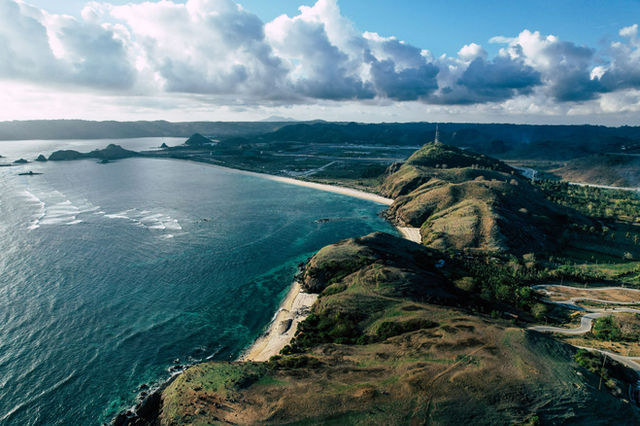
A wide horseshoe of pale, pepper-grain sand and shallow turquoise water, split by a climbable lookout rock.
Best for calm turquoise swims
Bali's quieter neighbour — empty beaches, the mighty Mount Rinjani volcano and the easygoing Gili Islands offshore.
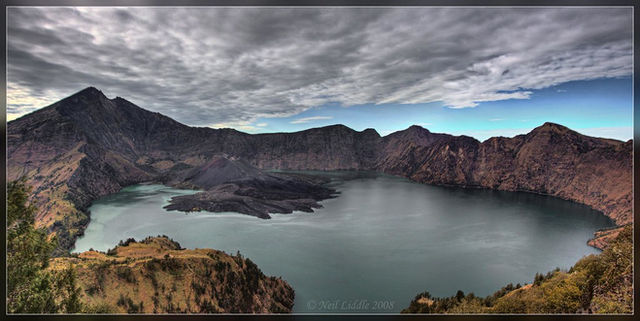
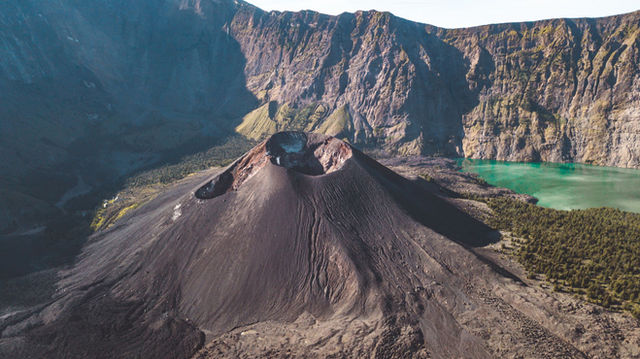
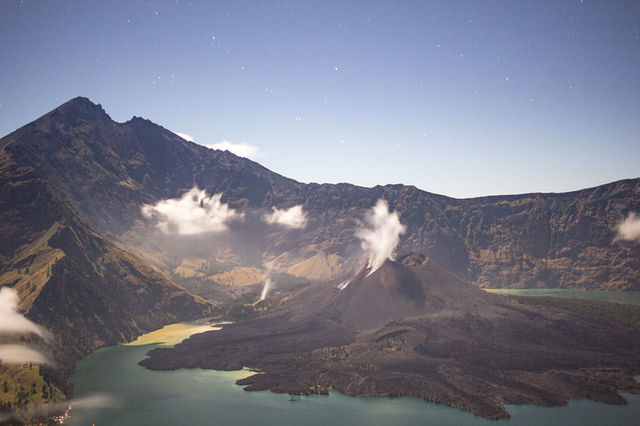
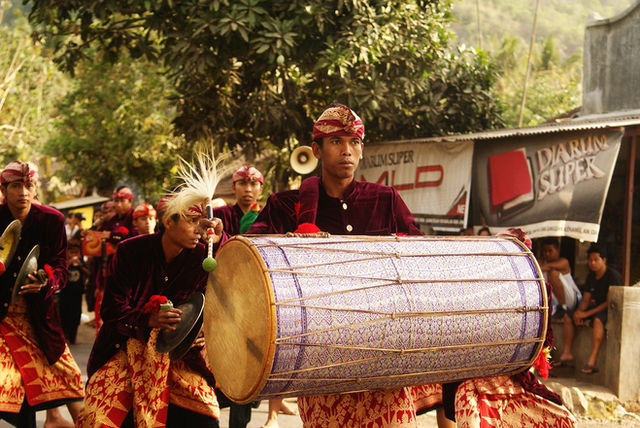
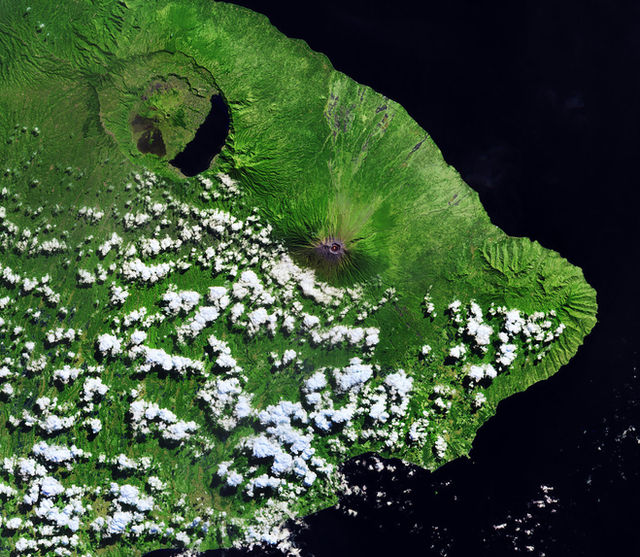
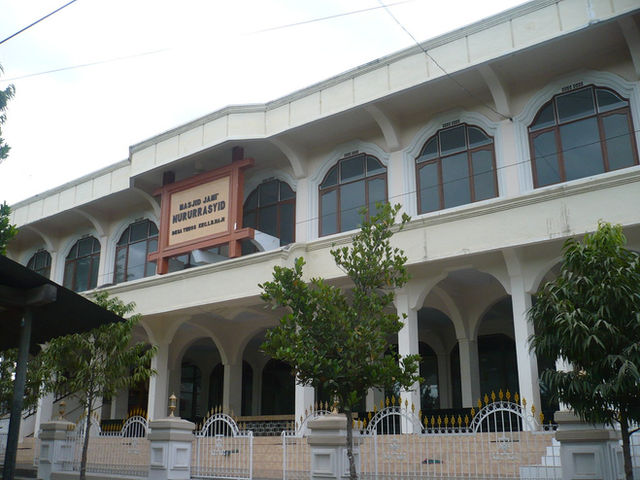
Lombok is the large island immediately east of Bali, separated from it by the narrow but deep Lombok Strait, and part of Indonesia's West Nusa Tenggara province. It is often described as 'Bali twenty years ago', which is lazy but not entirely wrong: the island is far less developed, the beaches are emptier, and prices are lower — but the character is genuinely different, not merely a rewind. Where Bali is Hindu, Lombok is Muslim-majority, home to the indigenous Sasak people, and noticeably more conservative — you will hear the call to prayer, see mosques rather than temples, and want to dress more modestly away from the beach resorts. The island's dominant feature is Mount Rinjani (3,726m), Indonesia's second-highest volcano, whose crater holds the sacred lake Segara Anak and whose multi-day summit trek is one of Southeast Asia's great walks. The south coast, around Kuta Lombok and the Mandalika resort zone, has a run of white-sand bays and consistent surf; the west coast around Senggigi is the older, gentler resort strip; and the three tiny Gili Islands lie just off the north-west corner, reached most quickly from Lombok itself. It suits independent travellers, surfers, trekkers and anyone who wants Bali's landscapes without Bali's traffic and crowds — though it asks a little more effort and self-sufficiency in return.
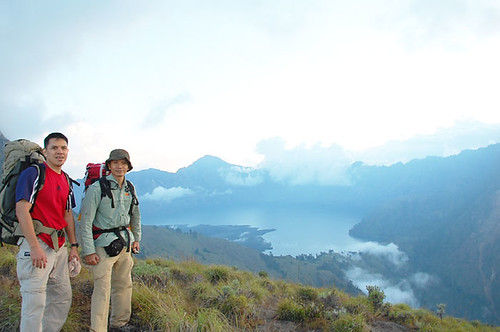
The case for Lombok is space and scale. You can have a two-kilometre curve of white sand — Selong Belanak, Tanjung Aan, Mawun — with a handful of other people on it, in a way that is now almost impossible in southern Bali. The trekking is world-class: the two- or three-day Rinjani route climbs through savannah and cloud forest to a crater rim campsite above the turquoise Segara Anak lake, with the option of a pre-dawn summit push for one of Indonesia's finest sunrises. The south is a proper surf coast with beginner-friendly beach breaks at Selong Belanak and serious reef waves further along, and the Mandalika circuit brings a MotoGP round (scheduled for 9–11 October 2026) to what is otherwise a sleepy corner. Add the waterfalls of Tiu Kelep and Sendang Gile near Senaru, the traditional Sasak weaving villages of Sade and Ende, and the pink-tinged sand of the remote south-east, and there is easily a week here. Lombok pairs naturally with Bali (a 25-minute flight or a 2–4 hour fast boat) or with the Gili Islands, which are quicker to reach from Lombok than from Bali — many people do all three in one trip.
Sasak food is one of Lombok's underrated pleasures, and distinctly spicier than Balinese cooking — the local word 'lombok' even means chilli. The signature dish is ayam taliwang, a whole young chicken grilled or fried and coated in a fierce red chilli, garlic and shrimp-paste sauce, traditionally eaten with plecing kangkung (water spinach in a raw tomato-chilli sambal). Look out too for sate rembiga (sweet-spicy beef satay), nasi balap puyung (a Sasak rice plate with shredded spiced chicken, dry-fried soybeans and chilli), and ares (a banana-stem curry served at ceremonies). The Karang Taliwang area of Mataram is the spiritual home of ayam taliwang; in Kuta and Senggigi you will also find plenty of Western cafés, surf-town brunch spots and fresh seafood grills. Because Lombok is Muslim-majority, alcohol is less freely available and less openly consumed than on Bali — tourist restaurants and bars in Kuta, Senggigi and on the Gilis serve beer and cocktails, but you will see very little elsewhere, and it is polite to drink discreetly. Tap water is not safe to drink; stick to bottled or filtered.
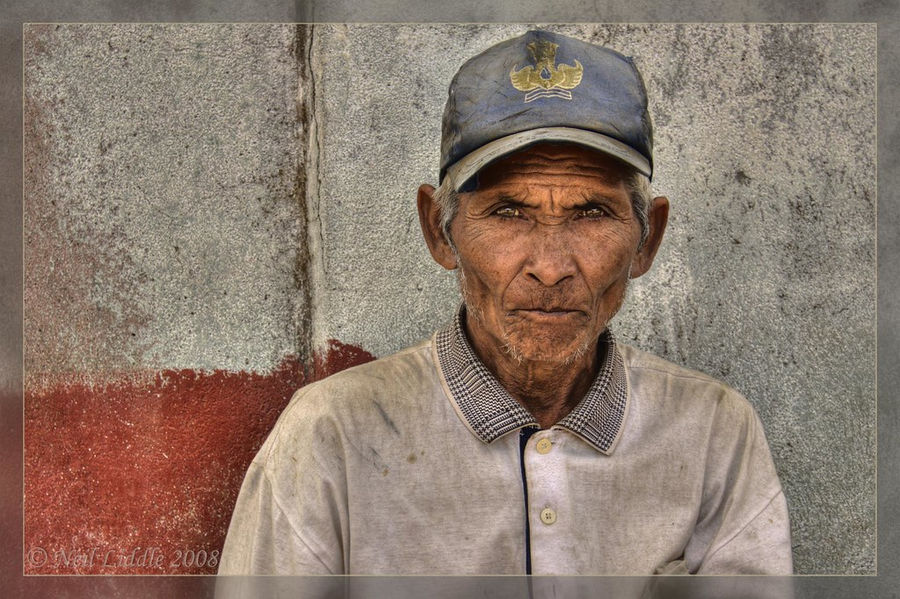
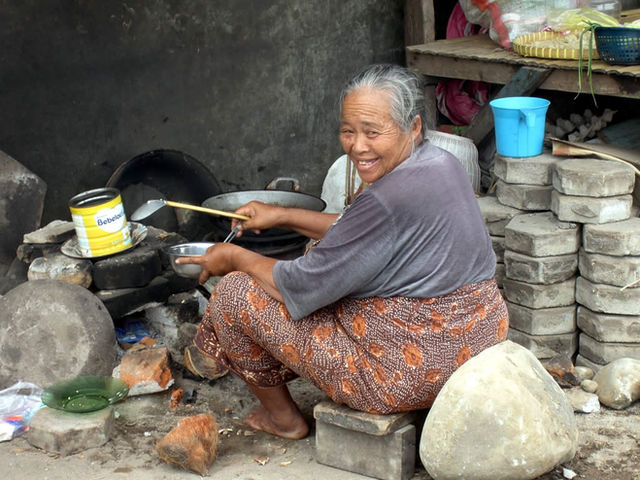
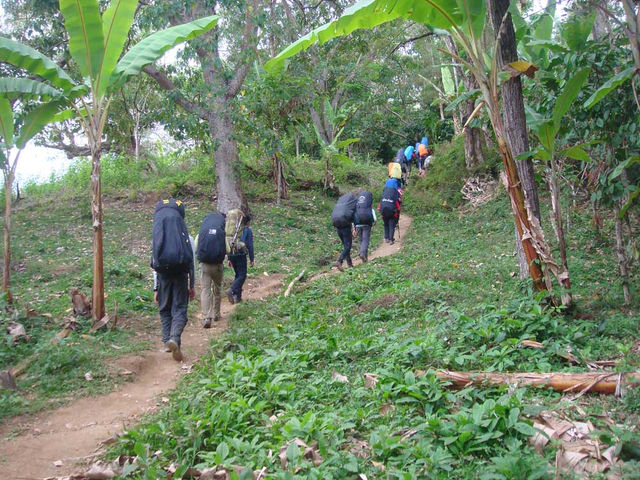

Live map of hotels and villas around Lombok — powered by Stay22. Pan, zoom and compare live prices to pick your base.
Pan, zoom and compare live prices — every stay in one map.
Lombok is large — roughly 80km across — and public transport is thin, so getting around takes planning. The most flexible option for confident travellers is a scooter, widely hired in Kuta and Senggigi for a modest daily rate; roads are quieter than Bali's but road surfaces vary, and once you leave the tourist areas signage and fuel stops become sparse. For longer hops — say Kuta to Senaru, or the airport to Senggigi — most people hire a car with a driver for the day, which is inexpensive and removes the stress of navigation; guesthouses and hotels arrange this readily. Metered taxis (the reputable Blue Bird company operates on the island) and ride-hailing apps (Grab and Gojek) work in and around Mataram, the airport and Senggigi but are patchy elsewhere, and drivers are sometimes blocked from picking up in areas controlled by local transport cooperatives. For the Gili Islands you take a boat from Bangsal, Senggigi or the fast-boat ports; the islands themselves have no motor vehicles at all, getting around on foot, by bicycle or by pony-drawn cidomo cart.
Formal public transport on Lombok is limited and geared towards locals rather than tourists. The backbone is the bemo (shared minibus) network and larger inter-town buses radiating from the Mandalika terminal in Bertais, near the capital Mataram, and from Praya; fares are very cheap (a few thousand rupiah, roughly under £1 for short hops) but routes, timings and the need to change vehicles make them impractical for most visitors trying to reach the beaches or the mountain. There is a DAMRI airport shuttle bus linking Lombok International to Mataram, Senggigi and a few other points at a fixed low fare, which is a useful budget option on arrival. In practice most travellers skip the local network entirely and use a hired scooter, a car-and-driver for the day, or metered Blue Bird taxis and Grab/Gojek around Mataram and Senggigi. For crossing to the Gilis, the public boats from Bangsal are cheap and frequent in the mornings, with pricier scheduled fast boats filling the rest of the day.
Base decisions on distance: Lombok's highlights are genuinely spread out, so rather than one central base and long daily drives, split your nights — a few in the south for the beaches and a couple near Senaru or on the Gilis. If Rinjani is your main aim, choose your route deliberately: the Senaru trailhead climbs through forest to the crater rim, while the eastern Sembalun approach is drier, more gradual and the standard way to reach the summit for sunrise; a two-night, three-day itinerary lets you see the crater lake and the summit without a brutal single-day push. Beach-wise, Selong Belanak is the softest place to learn to surf and Mawun the prettiest sheltered swim, while Tanjung Aan rewards the short climb up Bukit Merese hill at the eastern end for the view. The much-photographed Pink Beach (Tangsi) in the remote south-east is a long, rough drive and best combined with a boat trip rather than tackled as a day-drive on a scooter. For the waterfalls near Senaru, go early to beat both the heat and the tour groups, and be prepared to wade the last stretch to Tiu Kelep. Finally, carry cash: ATMs are scarce outside Mataram, Kuta and Senggigi, and many warungs, homestays and the Gili boats are cash-only.
The 6 shores actually worth the trip on Lombok — ranked, with the vibe of each and where to stay nearby. Tap a card to fly the map to it.
Swimming © 伊賀上野ニンニン, CC BY-SA 4.0 A wide horseshoe of pale, pepper-grain sand and shallow turquoise water, split by a climbable lookout rock.
Best for calm turquoise swims
 Family © Friskaexaktiningtyas, CC BY-SA 4.0
 Soft-breaking waves over a sandy shelf make this long white bay the island's easiest place to learn to surf.
Best for kids and beginner surf
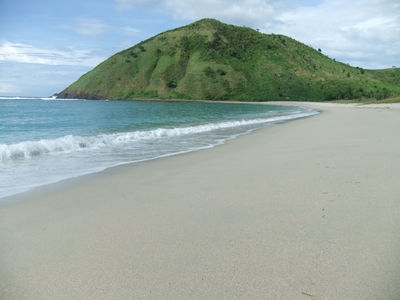 Long sandy © Midori, CC BY 3.0
 A sheltered crescent between two green headlands, with a calm middle deep enough for an easy family swim.
Best for quiet family days
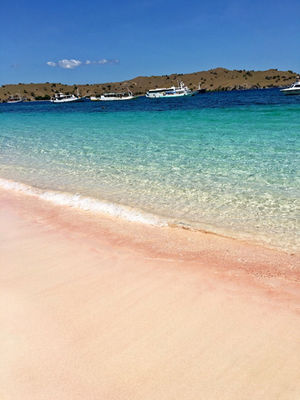 Secluded © Astri nina sanderiana, CC BY-SA 4.0
 Crushed red coral tints the sand rosy in this hard-to-reach cove near Lombok's wild southeast tip.
Best for unique pink sand
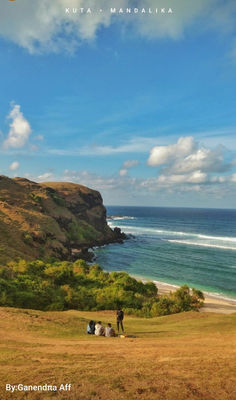 Party © Ganendra Afritz, CC BY-SA 4.0
 The buzzing base town for south Lombok, its main beach lined with warungs, bars and moored fishing boats.
Best for nightlife and base
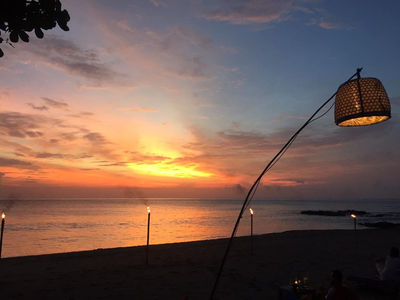 Sunset © Myungok Lee, CC BY-SA 4.0
 Lombok's original resort strip, a chain of west-facing bays that glow at sunset over the Bali strait.
Best for sunset drinks
Lombok · Around the island · 1 island · 6 beaches
Skip-the-line tickets and small-group tours in Lombok — compare across our partners.
We're still curating hand-picked tickets and tours for Lombok. In the meantime, the map above and the nearby cities are a great place to start.
May – October
Lombok has a tropical monsoon climate with two seasons and warm temperatures year-round (generally 27–32°C by day at sea level, cooler in the Rinjani highlands). The dry season runs roughly May to October and is the best time to visit: sunny days, calmer seas, lower humidity and reliable surf on the south coast. The wet season, roughly November to April, brings heavy afternoon downpours, higher humidity and rougher crossings, with the wettest months usually December to February. This weather pattern governs the mountain directly — Mount Rinjani National Park closes its trekking routes entirely during the rains, typically from 1 January to 31 March, reopening on 1 April and running the official season through to December (for 2026 the park reopened on schedule and caps entry at 400 trekkers a day). On the summit itself expect near-freezing pre-dawn temperatures even in the dry season, so warm layers are essential despite the tropical coast below. Sea temperatures stay warm all year for swimming and snorkelling.
Lombok is generally safe and welcoming, with low levels of violent crime, but there are real practical hazards worth respecting. Scooter and motorbike accidents are the single biggest risk to visitors — roads are uneven, other traffic is unpredictable, and many hire bikes are poorly maintained; wear a helmet, check your travel insurance covers riding, and don't ride at night on unlit rural roads. In the sea, several south-coast beaches have strong currents and shore breaks despite looking calm, and lifeguards are rare, so ask locally before swimming and take rip currents seriously. The Rinjani trek is a serious high-altitude undertaking: people are injured or worse most seasons from falls, exposure and altitude, and you should go only with a licensed guide, proper footwear and warm kit — the summit ridge is loose scree and genuinely dangerous in poor visibility. Petty theft (bag-snatching from scooters, opportunistic room theft) occurs in the busier tourist spots, so use hotel safes. On the roads to the Gilis and around Bangsal, be firm about agreed prices to avoid ticket-touting hassle. Lombok lies in a seismically active zone and suffered a series of damaging earthquakes in 2018; the island has since rebuilt and recovered, but it is worth knowing the basic earthquake drill.
Lombok is Muslim-majority and home to the Sasak people, and it is noticeably more conservative than Hindu Bali — a difference visitors should be conscious of. Away from the beach resorts and the Gili Islands, dress modestly: cover shoulders and knees in villages, markets and towns, and swimwear belongs only on the beach. During the fasting month of Ramadan, many local eateries close or curtain their windows in daytime and it is courteous not to eat, drink or smoke openly in public during fasting hours. When visiting mosques or Sasak villages such as Sade or Ende, dress respectfully, ask before photographing people, and follow your guide's lead; a small purchase of the hand-woven ikat textiles the Sasak are known for is a welcome way to support the village. Use your right hand for giving, receiving and eating, as across Indonesia. Alcohol is far less prominent than on Bali, so drink discreetly and don't assume every restaurant serves it. The Gili Islands are a relaxed exception to much of this — busier, more international and more permissive — but the same modesty and courtesy still apply the moment you step back onto the Lombok mainland.
£45/day mid-range (budget £22, luxury £200+; noticeably cheaper than Bali)
112 (general emergency), 110 (police), 118 or 119 (ambulance), 113 (fire), 115 (SAR / Basarnas)
Lombok International Airport (LOP), officially renamed Zainuddin Abdul Madjid International Airport in 2018, sits near Praya in the centre-south of the island, about 30–40 minutes from Kuta and around 1.5 hours from Senggigi. It is the island's only airport and handles domestic flights from Jakarta, Surabaya and other Indonesian cities plus a short list of international routes (Singapore and Kuala Lumpur among them). From the UK there is no direct flight; the usual route is London to Singapore or Kuala Lumpur, then on to Lombok, or a hop from Bali. The Bali–Lombok flight (from Denpasar, DPS) takes only about 25 minutes and runs several times a day. Many travellers arrive instead by sea: fast boats cross from Bali's east-coast ports (Padang Bai, Serangan and Amed) to Bangsal, Senggigi or direct to the Gili Islands in roughly 2–4 hours depending on the route and conditions, while a slower public car ferry runs between Padang Bai and Lembar in the south-west (4–5 hours). Fast-boat schedules thin out in rough weather, so build in a buffer if you have an onward flight.
Flights, airport transfers and car hire to LOP — search and compare without leaving the page.
Parking, holiday extras, and more — coming soon.
We're lining up parking, holiday extras and activities you'll be able to add to any trip from here.