Nusa Penida
The rugged limestone island south-east of Bali — home to the T-Rex cliff at Kelingking, manta rays year-round and some of Indonesia's most dramatic, hard-won coastal scenery.
- Island
- April – October (dry season)
- DPS
- 2–3 days
Hendrojkson / Wikimedia Commons (CC BY-SA 4.0)
About Nusa Penida
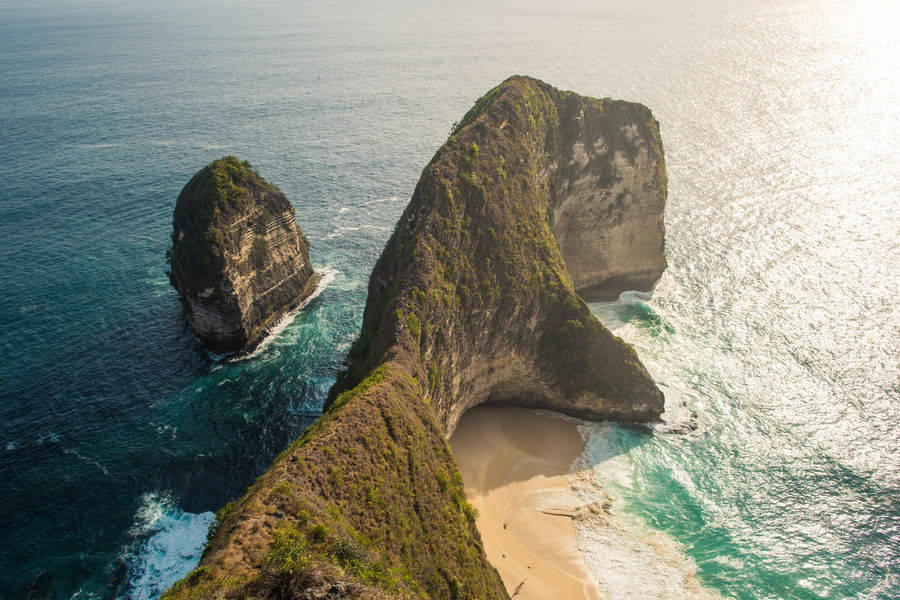
Nusa Penida is a rugged limestone island about 20km south-east of Bali, the largest of a trio that also includes Nusa Lembongan and tiny Nusa Ceningan. Roughly triangular and around 200 sq km, it is a raised karst plateau: the interior is dry, hilly farmland dotted with villages and temples, while the coastline is a near-continuous wall of white cliffs plunging into the deep, current-swept water of the Badung and Lombok straits. This is part of the Coral Triangle, the most biodiverse marine region on earth, which is why the diving and snorkelling here are exceptional. For most of the last decade Penida was a rough, little-visited backwater; it has since become one of Indonesia's fastest-growing destinations, driven almost entirely by a single view — the T-Rex-shaped headland above Kelingking Beach, which has become the defining image of 'Bali' online. The reality on the ground is more complicated than the photographs suggest. The scenery is genuinely spectacular, but the roads are notoriously steep, potholed and in places barely paved; infrastructure is limited; and the marquee viewpoints fill with day-trippers from mid-morning. Penida suits adventurous travellers, divers and photographers who want raw drama and don't mind rough edges, rather than anyone after polished resort comfort. Its neighbours Lembongan and Ceningan are smaller, flatter and far more relaxed — a gentler alternative or an easy add-on.
Why go
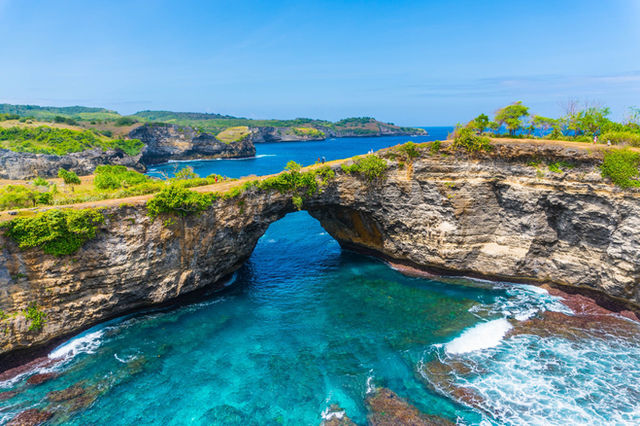
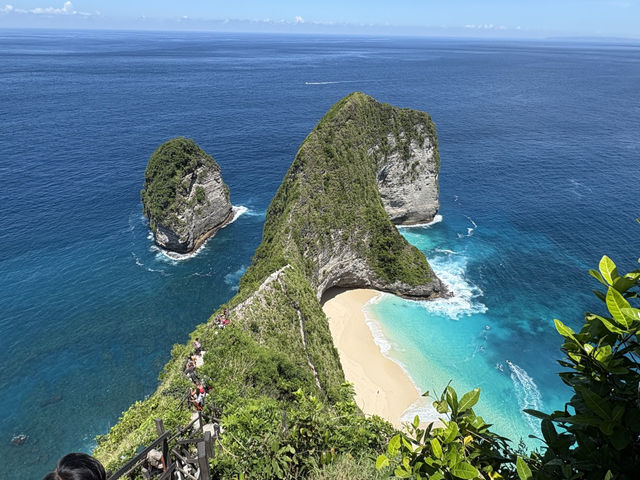
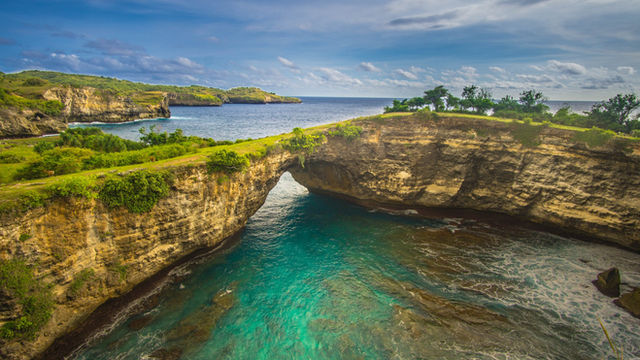
Nusa Penida delivers some of the most theatrical coastal landscapes in South-East Asia, and it does so at a fraction of the cost of a European equivalent. Kelingking Beach — the 'T-Rex' cliff, a green-clad headland arching over a slice of white sand and turquoise water hundreds of metres below — is the obvious draw and lives up to its reputation from the viewpoint (the beach itself is a punishing scramble down and back). Beyond it are Angel's Billabong, a natural rock infinity pool that fills and drains with the tide; Broken Beach (Pasih Uug), a circular collapsed cove with a natural arch to the open sea; and, on the quieter east coast, the golden crescents of Diamond Beach and Atuh Beach beneath jagged limestone stacks. Underwater is arguably the bigger prize: manta rays cruise the cleaning stations at Manta Point and Manta Bay essentially year-round, and from roughly July to October the bizarre, disc-shaped mola mola (oceanic sunfish) rises into diveable depths at Crystal Bay on the cold upwelling currents. Pair Penida with a night or two on mellow Nusa Lembongan and Ceningan — linked by the photogenic Yellow Bridge, with mangrove paddling, the Devil's Tear blowhole and easy swimming beaches — for a well-rounded three-island trip, or fold it into a wider Bali holiday as a two-day escape.
Highlights
- Kelingking Beach — the 'T-Rex' cliff viewpoint
- Angel's Billabong tidal infinity pool
- Broken Beach (Pasih Uug) natural arch cove
- Diamond Beach & Atuh Beach on the east coast
- Diving manta rays at Manta Point and Bay
- Mola mola sunfish at Crystal Bay (Jul–Oct)
Food & drink
Nusa Penida's food scene is simple and improving rather than a destination in itself; for high-end dining you look to Lembongan or back to Bali. The staples are Indonesian warung classics — nasi goreng and mie goreng (fried rice and noodles), nasi campur (rice with a spread of small dishes), sate lilit (Balinese minced-fish satay wrapped on lemongrass), grilled fresh fish (ikan bakar) and gado-gado (vegetables with peanut sauce) — eaten cheaply at family-run warungs. A growing crop of café-style spots near Toyapakeh and along the north coast, and more on Lembongan, cater to travellers with smoothie bowls, decent coffee (Bali grows good arabica) and Western dishes. Fresh seafood is the local strength given the island's fishing tradition and seaweed farms. Drink bottled or filtered water — tap water is not safe — and try es kelapa (fresh young coconut) and the local Bintang beer. Bali's Hindu culture means alcohol is available but generally low-key; several beachside warungs do a sunset drink well, particularly on Lembongan and at Crystal Bay.
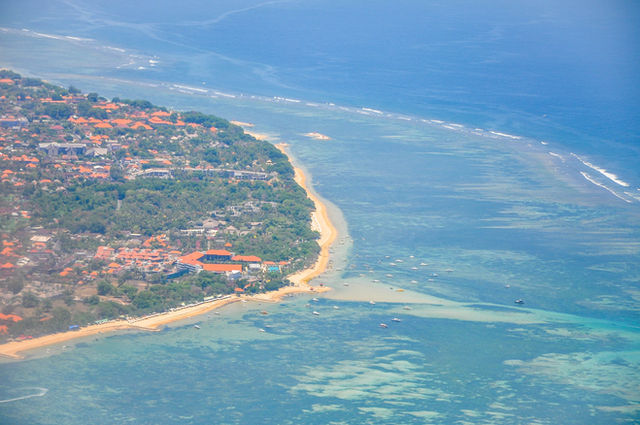
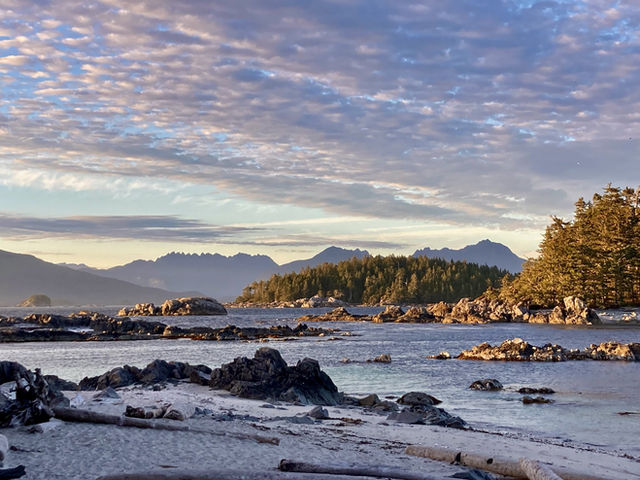
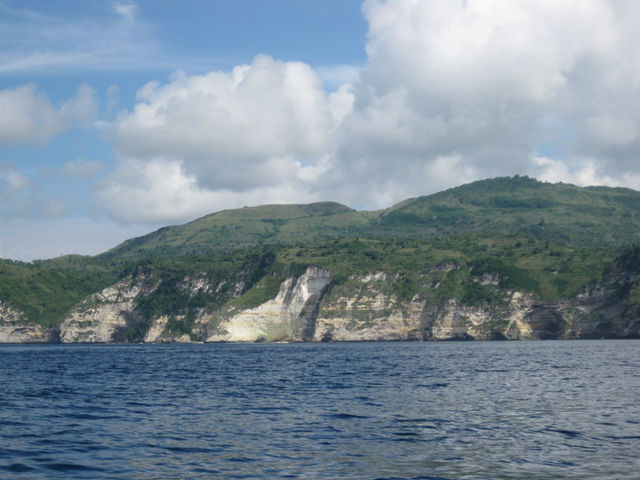
Nusa Penida in photos
Where you'll stay in Nusa Penida
Live map of hotels and villas around Nusa Penida — powered by Stay22. Pan, zoom and compare live prices to pick your base.
Hotels & rentals around Nusa Penida
Pan, zoom and compare live prices — every stay in one map.
Getting around Nusa Penida
Getting around Penida is the island's biggest practical challenge and its most common source of trouble. It is far larger than it looks on a map, and the roads — especially the steep tracks branching off the main coastal route down to the west-coast viewpoints and the east-coast beaches — are notoriously bad: steep, potholed, littered with loose gravel and sand, and in places barely surfaced. Some main stretches have been resurfaced and are fine; many connecting roads are not. Scooter hire is cheap and popular, but the combination of rough terrain, steep hills, inexperienced riders and fast local traffic gives Penida a poor road-safety record — this is not the place to ride a motorbike for the first time. Many visitors instead hire a car with a local driver for the day, which is far more sensible for reaching the scattered sights, or book a private tour that bundles the driver in. Distances that look short can take 45 minutes or more. Whichever you choose, allow generous time, don't over-pack the day, and expect to walk — often down long, steep staircases — to reach the actual beaches and pools once you've parked.
There is effectively no public transport on Nusa Penida — no scheduled buses or shared vans of any use to visitors. Getting around means self-driving a hired scooter (widely available for a low daily rate, but see the safety notes), hiring a car with driver for the day (the most popular option for sightseeing, negotiated locally or through your accommodation), or joining a packaged tour. App-based ride-hailing is unreliable to non-existent across the Nusa islands, so don't count on it. On Nusa Lembongan and Ceningan, distances are small enough to cover on a scooter or even on foot, and the Yellow Bridge links the two on a scooter-and-pedestrian crossing. Inter-island local boats connect the three Nusas cheaply. Budget realistically: a full-day car-and-driver on Penida is inexpensive by UK standards but far and away the biggest single on-island cost for most visitors.
Insider tips
Beat the crowds by inverting the standard route: the day-trip boats arrive mid-morning and hit Kelingking first, so start on the quieter east coast — Diamond Beach and Atuh Beach at dawn are transformed compared with the midday scrum — and reach Kelingking late afternoon as the tour groups leave. Angel's Billabong is only safe and photogenic at low tide, and dangerous when swells surge over the rim, so check the tide table before committing to that corner of the west coast; pair it with neighbouring Broken Beach, which is a short walk away. For the same coastline as Kelingking without the throng, walk over to the Paluang cliff viewpoint nearby. Serious about the mola mola? Come July–October and dive (rather than snorkel) with an operator who knows Crystal Bay's cleaning stations, and accept the water will be cold and the currents strong. Note that the controversial glass-lift project once planned to ferry visitors down Kelingking's cliff was suspended in late 2025 and ordered dismantled, so the climb remains on foot — arrive with grippy shoes and water. Finally, don't try to 'do' east and west Penida in one day; the roads make it a rush. Split the island over two days, or base on Lembongan and cherry-pick.
Frequently asked
Explore the area
Nusa Penida · Around the island · 1 island
Local attractions & tours
Skip-the-line tickets and small-group tours in Nusa Penida — compare across our partners.
We're still curating hand-picked tickets and tours for Nusa Penida. In the meantime, the map above and the nearby cities are a great place to start.
Trips in Nusa Penida
Day-by-day itineraries that take in Nusa Penida — routes, timings and what to book.
-
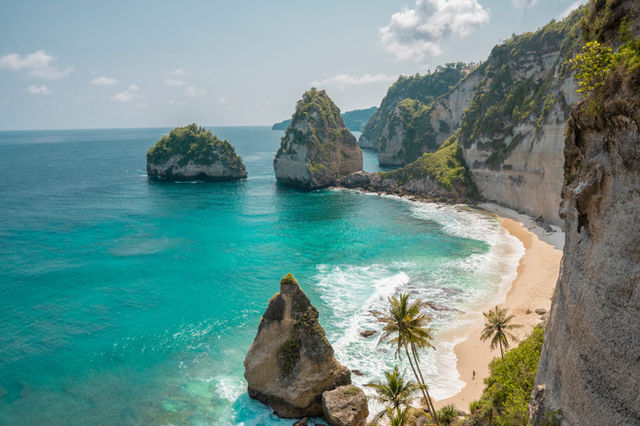 3 Nights
 Bali Getaway: A Tropical Escape
Discover the magic of Bali with an unforgettable journey to paradise. Sun-kissed beaches, vibrant culture, and lush landscapes await.
Economy
View trip -
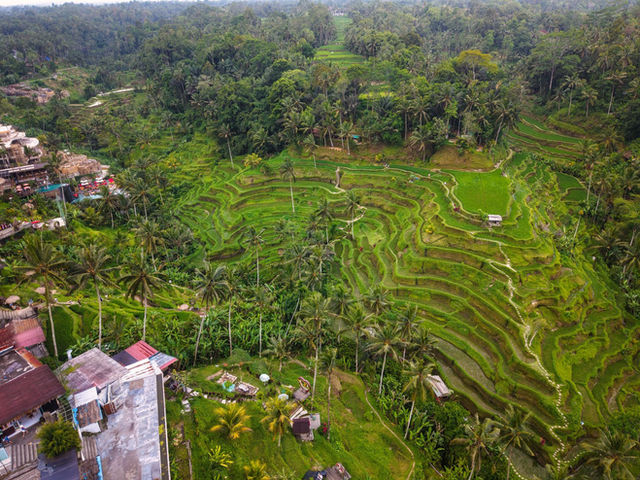 6 Nights
 The Perfect Bali Introduction: Cultural Highlands, Sunset Coasts, and Southern Beaches
Discover the diverse spiritual, cultural, and coastal landscapes of Bali on a well-balanced week-long journey anchored by three distinct regional bases. This route loops seamlessly from the emerald rice terraces and jungle temples of Ubud to the vibrant sunset beaches of Seminyak and the calm, reef-protected waters of Nusa Dua.
Price on enquiry
View trip
When to visit Nusa Penida
April – October (dry season)
The Nusa islands share Bali's tropical climate: hot and humid year-round, with daytime temperatures typically 28–32°C and warm seas around 27–29°C. There are two seasons. The dry season, roughly April to October, is the time to come — reliable sunshine, calmer seas, better boat crossings and clearer underwater visibility, with the added draw that the cold upwelling currents of July–October bring the mola mola to Crystal Bay. Note that these same currents also make the water noticeably cooler and stronger in those months, which divers should plan for. The wet season, November to March, brings heavier tropical downpours (usually short but intense), higher humidity, choppier straits and more frequent boat disruptions; it is quieter and greener but the rough roads become slippery and some crossings are cancelled. The islands sit outside the typhoon belt, so there is no typhoon season as such, but sea conditions in the strait can turn rough quickly year-round. July and August are the driest, busiest and best-value-for-conditions months; the shoulders of April–June and September–October offer a good balance of weather and smaller crowds.
Know before you go
Safety
Nusa Penida's serious hazards are physical rather than criminal — petty theft exists but violent crime against tourists is rare. The single biggest risk is the roads: scooter accidents are common and sometimes severe, caused by steep gravel-strewn tracks, poor surfaces, inexperienced riders and fast local traffic. If you are not a confident off-road motorcyclist, hire a car with a driver instead; if you do ride, wear a proper helmet, go slowly and check your travel insurance covers motorbikes (many policies exclude riding without the correct licence). The second real danger is the cliffs and beach descents. Kelingking's path down is a steep, rope-assisted scramble of timber steps and ladders that takes around an hour each way and demands proper footwear and fitness — the climb back up in the heat catches people out, and there have been fatal falls at the island's unfenced viewpoints, so keep well back from crumbling cliff edges when posing for photos. In the water, currents are strong and unpredictable at several sites, including around Crystal Bay and the manta points; snorkel and dive only with reputable operators, heed local advice, and don't swim off exposed beaches with rips. Add fierce tropical sun, limited medical facilities on Penida itself (serious cases go to Bali), and the usual advice to drink only bottled water.
Culture & etiquette
The Nusa islands are overwhelmingly Balinese Hindu, and the rhythms of temple life, offerings (canang sari — the little woven trays of flowers you'll see on the ground) and ceremonies are part of daily life. Dress modestly away from the beach, and cover shoulders and knees at temples; a sarong and sash are required at temple sites and usually available to borrow or rent. Penida holds particular spiritual significance in Balinese belief — Pura Goa Giri Putri, a large cave temple entered through a small opening, and Pura Ped are active places of worship, not just sights, so behave respectfully, remove shoes where asked, and women should not enter temples while menstruating (a genuine local custom). Step around, never over, offerings on the ground. A smile and a little politeness go a long way; bargaining is normal and good-natured at markets and for transport, but do it with warmth rather than hard-nosed haggling. Away from the main beaches this is a conservative rural community, so keep swimwear to the sand and public displays of affection low-key.
Daily budget
£45/day mid-range (budget £22, comfortable £120+; the island is cheap but transport and boat tours add up)
Emergency numbers
112 (general emergency), 110 (police), 118 or 119 (ambulance), 113 (fire), 115 (SAR / Basarnas)
Getting there
There is no airport on Nusa Penida; the gateway is Bali's I Gusti Ngurah Rai International Airport (DPS) at Denpasar, served from London by one-stop routings (via the Gulf or South-East Asian hubs — Qatar Airways, Emirates, Singapore Airlines, Malaysia Airlines and others) with no direct flights from the UK. From Bali the island is reached by fast boat, most conveniently from Sanur, where a new dedicated pier and harbour (opened 2023) replaced the old wet beach-boarding with proper dry gangways and streamlined departures. The Sanur–Penida crossing takes roughly 30–45 minutes depending on the sea and the operator, with frequent daily services; fares are modest one-way and it is worth pre-booking in the July–September and December–January peaks. Boats also run from Padangbai (handy if you are coming from east Bali) and from Kusamba and Serangan. Fast boats from Sanur serve Nusa Lembongan directly as well, and small local boats hop between Lembongan, Ceningan and Penida. Crossings can be cancelled or rough in bad weather; the strait has real currents, so the earliest morning departures are usually the calmest.
- I Gusti Ngurah Rai International Airport (DPS — Bali/Denpasar; then fast boat from Sanur)
Ready to book your trip?
Flights, airport transfers and car hire to DPS — search and compare without leaving the page.
More trip extras
Parking, holiday extras, and more — coming soon.
We're lining up parking, holiday extras and activities you'll be able to add to any trip from here.