Raja Ampat
The planet's richest coral seas off West Papua — karst-island lagoons, world-record reefs and simple Papuan homestays, reached only by a long journey most travellers never make.
- Island
- October – April (calm seas, best visibility)
- SOQ
- 7–10 days
Brizinsky T Juneanto / Wikimedia Commons (CC BY-SA 4.0)
About Raja Ampat
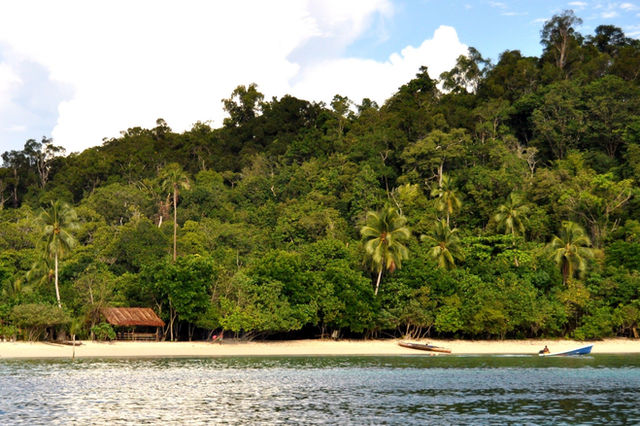
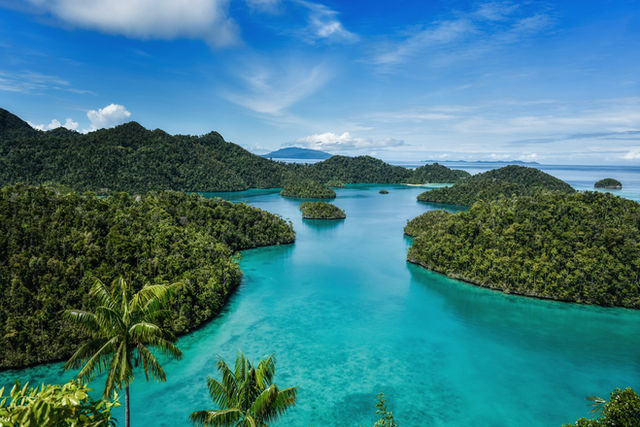
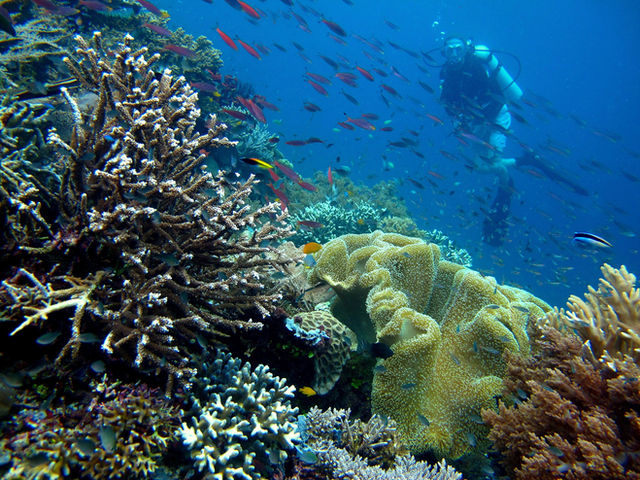
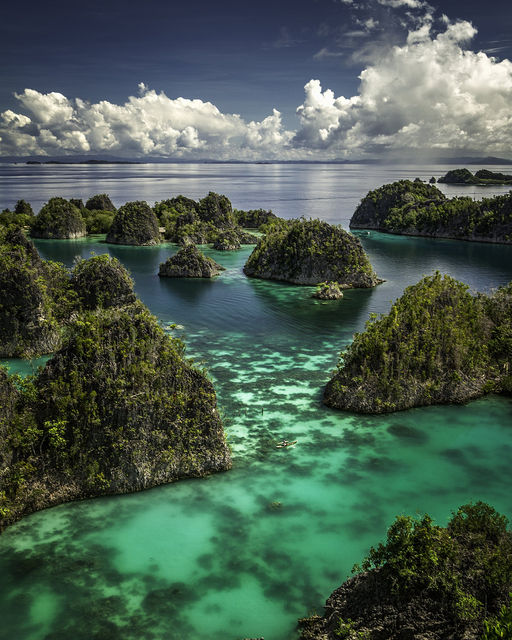
Raja Ampat ("Four Kings") is an archipelago of more than 1,500 islands, cays and shoals spread across roughly 40,000 sq km of sea off the Bird's Head Peninsula of West Papua, in the far east of Indonesia. The four largest islands — Waigeo, Batanta, Salawati and Misool — give the region its name, but the enduring image is of hundreds of small, mushroom-shaped limestone karst islets, jungle-topped and undercut at the waterline, rising from turquoise lagoons. Beneath the surface lies the reason most people come: this is the epicentre of the Coral Triangle and the most biodiverse marine environment ever documented, with well over a thousand reef-fish species and more than 500 species of hard coral — around three-quarters of all known coral species — packed into one region. The dive site of Cape Kri holds the record for the most fish species counted on a single dive. Above water, the archipelago is home to red and Wilson's birds-of-paradise, and to small Papuan villages such as Arborek and Sawinggrai. This is not a conventional island holiday. There are no big towns, limited electricity and patchy connectivity, malaria is present, and getting here takes flights, a ferry and often a further boat transfer. It suits divers, snorkellers, birdwatchers and travellers who value wilderness over comfort — and it repays the effort like almost nowhere else.
Why go
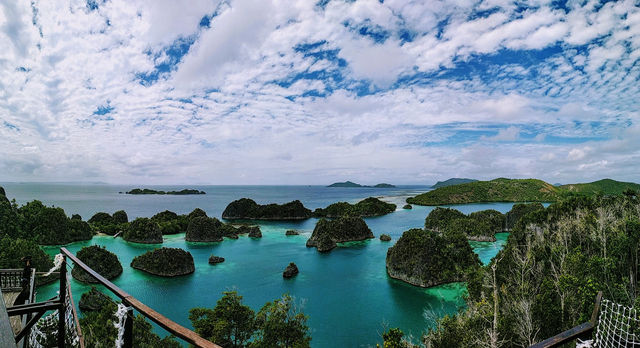
Raja Ampat offers something increasingly rare: a marine wilderness that genuinely lives up to its reputation. The reefs are astonishingly dense with life — walls and slopes carpeted in soft coral and sea fans, schooling fish that darken the water, reef sharks, wobbegongs, and the manta cleaning station at Manta Sandy where the animals queue overhead. Cape Kri, Blue Magic and the current-swept passages around Dampier Strait are unmissable dives, while the southern reefs of Misool are among the healthiest and most colourful on earth. Above water, the payoff is the karst scenery: the climb to the Piaynemo lookout (the view on the back of Indonesia's 100,000-rupiah note) and the harder-won panorama over Wayag's jewelled lagoon are the archetypal Raja Ampat images. Land trips add red birds-of-paradise displaying at dawn on Waigeo, Wilson's bird-of-paradise in the forest, and unhurried village life at Arborek and Sawinggrai. The homestay network — simple, often over-water bamboo huts run by Papuan families — lets independent travellers experience all of this affordably and with a low footprint. Pair Raja Ampat with a few days in the Bird's Head interior for birdwatching, or break the long journey with a stopover in Makassar or Manado (itself a diving hub at Bunaken and Lembeh).
Highlights
- Cape Kri — the world-record reef dive
- Piaynemo karst viewpoint (about 300 steps)
- Wayag lagoon panorama in the far north
- Manta Sandy cleaning station
- Misool's pristine southern soft-coral reefs
- Red bird-of-paradise dawn display on Waigeo
Food & drink
Food in Raja Ampat is simple, fresh and centred on the sea. At homestays, meals are included and typically feature grilled or fried reef fish, rice, water spinach (kangkung) and other vegetables, sambal, and tropical fruit, cooked by the host family; portions are generous but the range is limited, so bring snacks and any particular treats you want. Papuan staples include sago (papeda, a glutinous sago porridge eaten with fish in yellow turmeric broth) alongside the Indonesian standards of nasi goreng and mie goreng. Fresh fish — tuna, snapper, grouper — is the highlight, often barbecued the day it is caught. Resorts offer wider, more international menus. Drinking water should be bottled or filtered; alcohol is scarce, expensive and not sold at most homestays, so buy any you want in Sorong beforehand and drink respectfully, as many communities are conservative. Coffee and tea are ubiquitous. Do not expect restaurants, cafés or nightlife outside the resorts — dining is wherever you are staying.
Raja Ampat in photos
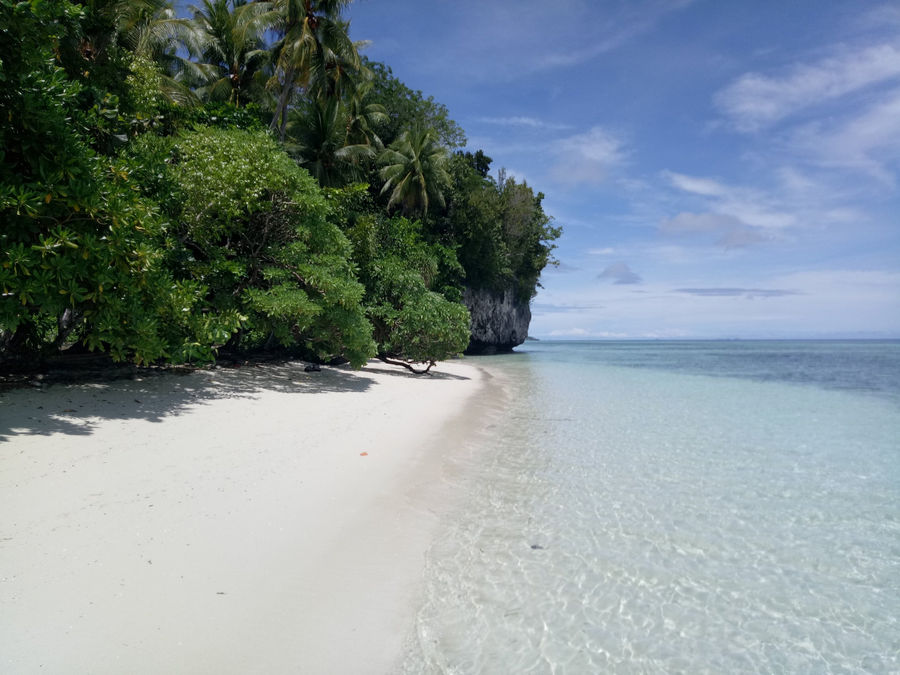
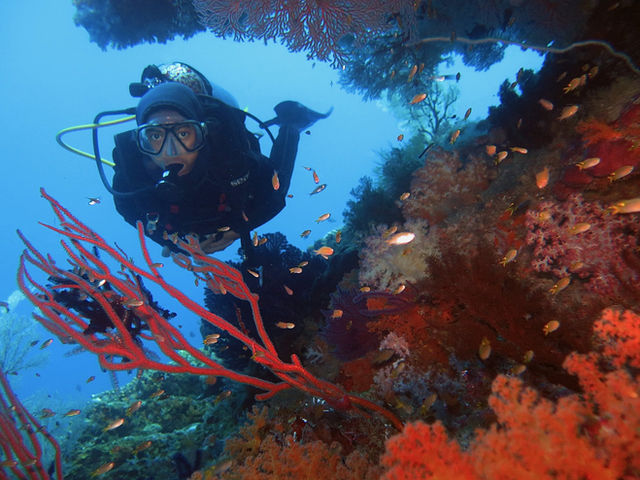
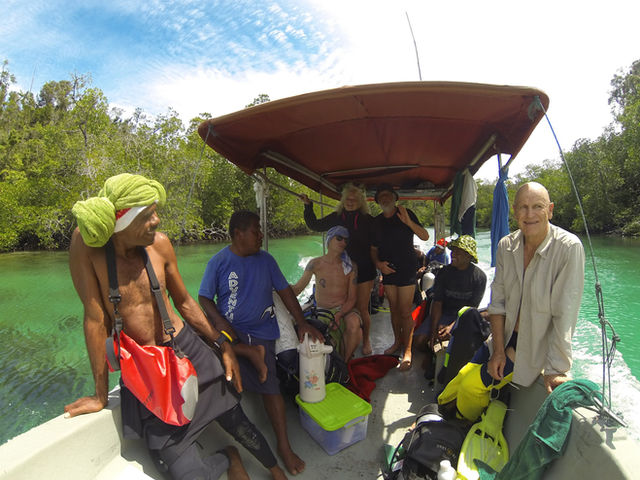
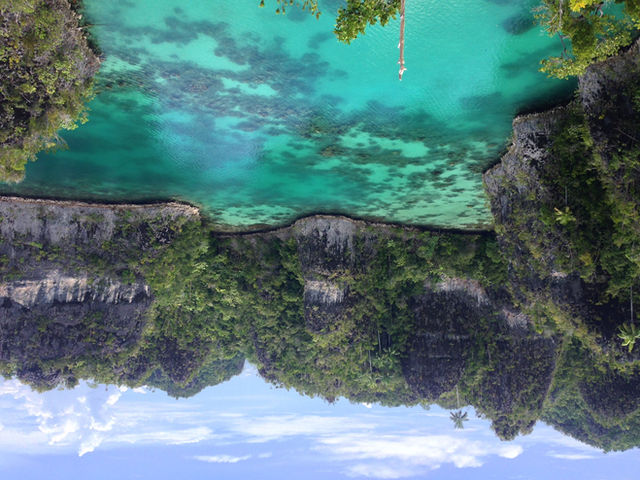
Where you'll stay in Raja Ampat
Live map of hotels and villas around Raja Ampat — powered by Stay22. Pan, zoom and compare live prices to pick your base.
Hotels & rentals around Raja Ampat
Pan, zoom and compare live prices — every stay in one map.
Getting around Raja Ampat
Everything in Raja Ampat moves by boat. There are no road connections between islands and little in the way of roads on them; your homestay, resort or liveaboard is your transport hub. Homestays and resorts run day trips and dive excursions by longboat or speedboat, and these are how you reach dive sites, snorkelling spots, the Piaynemo and Wayag viewpoints, and the bird-of-paradise forests. Boat trips are charged by distance and fuel, so costs add up quickly — the karst viewpoints of the Fam Islands (Piaynemo) and especially Wayag, in the far north-west, are long, fuel-heavy runs and are often the single biggest boat expense of a trip. Confirm what is included before you book, and consider sharing longer excursions with other guests to cut costs. On the larger islands and around villages you travel on foot; short forest walks lead to birdwatching hides and viewpoints, and the Piaynemo lookout is reached by a climb of roughly 300 steps. There is no scooter-and-explore culture here as on Bali or Lombok.
Public transport is minimal and confined to the Sorong–Waisai link. The main scheduled service is the express passenger ferry between Sorong harbour and Waisai on Waigeo, which runs roughly twice a day in each direction and takes about two hours; economy and air-conditioned VIP classes are available and fares are modest by Western standards (a few pounds to around ten pounds). Beyond that, there are no island-hopping public ferries and no bus network among the islands — onward travel from Waisai to your homestay or resort is by private or homestay-arranged boat, arranged in advance because pick-ups are timed to the ferry. In Sorong town, ojek (motorbike taxis) and metered or negotiated taxis cover the short distances between the airport, harbour and hotels. Do not rely on turning up and finding a boat; almost all inter-island transfers must be booked ahead with your accommodation.
Insider tips
Buy your Raja Ampat marine-park entry permit and visitor registration in advance where possible, and keep the tag or receipt on you — it is checked, and the fee funds local conservation and communities. Bring cash: there are ATMs in Sorong and a limited one in Waisai, but homestays and boatmen are cash-only and the machines run dry, so draw plenty of rupiah before leaving Sorong. Pack a good torch or head-lamp, a power bank and any medication, as electricity is limited to a few hours a day at most homestays. For the karst viewpoints, Piaynemo (about 300 steps) gives the famous panorama for far less time and fuel than Wayag, which is a long, weather-dependent run from central Waigeo best reached from the north or by liveaboard — if Wayag is your dream, factor in the cost and a flexible day. Snorkellers do not miss out: the house reefs off many homestay jetties, and sites like the Arborek pier, are world-class from the surface. For birds-of-paradise, book a pre-dawn forest guide on Waigeo or from Sawinggrai and accept an early, quiet start. Finally, go with realistic expectations — this is wilderness, not a resort; the reward is exactly that.
Frequently asked
Explore the area
Raja Ampat · Around the island · 1 island
Local attractions & tours
Skip-the-line tickets and small-group tours in Raja Ampat — compare across our partners.
We're still curating hand-picked tickets and tours for Raja Ampat. In the meantime, the map above and the nearby cities are a great place to start.
When to visit Raja Ampat
October – April (calm seas, best visibility)
Raja Ampat lies just south of the equator and is warm and humid year-round, with air temperatures around 27–32°C and sea temperatures of roughly 27–30°C. It does not have a clear-cut dry season in the usual sense; instead, conditions are governed by the monsoon winds and the state of the sea. The best window is broadly October to April, when seas are generally calmest, underwater visibility is at its best (often exceeding 25–30 metres) and marine life is most active — December to April is the most reliable stretch for manta rays at Manta Sandy and Manta Ridge. The transitional and mid-year months, particularly around June to September, can bring stronger winds and rougher seas, especially for the exposed northern crossings to Wayag, and some homestays and boats scale back. Rain can fall in any month as short tropical downpours rather than prolonged wet spells. Note that this seasonality differs from much of Indonesia, where the June–September dry season is peak — in Raja Ampat those can be the choppier months.
Know before you go
Safety
Raja Ampat is a remote, low-crime destination, but the real risks are environmental and medical rather than criminal. Malaria is present in Papua, including Raja Ampat — seek travel-clinic advice on antimalarial prophylaxis before you go, and take mosquito precautions (repellent, long sleeves at dusk, nets). Medical facilities are extremely limited: there is basic care in Waisai and Sorong but no advanced hospital nearby, and serious cases require evacuation, so comprehensive travel and dive insurance with evacuation cover is essential. For divers, the nearest recompression chamber is far away, currents can be strong (many sites are for experienced divers and demand good buoyancy and briefings), and you should dive conservatively and within your certification. Sea travel carries its own hazards: small boats, open crossings and occasional rough water mean life jackets and a sensible skipper matter — avoid pressuring boatmen to cross in bad conditions. Sun and dehydration are constant; connectivity and electricity are patchy, so tell someone your itinerary. Petty theft is uncommon but secure valuables as anywhere.
Culture & etiquette
Raja Ampat is Papuan and predominantly Christian, with some Muslim communities, and village life is traditional and close-knit. Homestay tourism means you are often a guest in a family's world, so modesty and courtesy go a long way: dress modestly away from the water (cover shoulders and knees in villages and when visiting communities), ask before photographing people, and behave quietly and respectfully. Land, reefs and even specific dive and birdwatching sites are frequently owned by clans, and access is sometimes subject to a local fee paid to the owning family — this is normal and should be respected, not haggled over aggressively. Reef and wildlife etiquette matters as much as social etiquette here: do not touch or stand on coral, keep a respectful distance from mantas and other animals, take all rubbish away with you, and follow guides' instructions at bird-of-paradise sites where silence and stillness are required. Learning a few words of Bahasa Indonesia is appreciated. A relaxed, patient attitude to the slow pace and limited facilities is part of travelling here well.
Daily budget
£120/day mid-range homestay with meals and boat trips (budget £70 basic homestay, luxury £500+ per night at a dive resort; liveaboards are priced separately and higher)
Emergency numbers
112 (general emergency), 110 (police), 118 or 119 (ambulance), 113 (fire), 115 (SAR / Basarnas)
Getting there
There are no international flights to Raja Ampat; the gateway is Domine Eduard Osok Airport (SOQ) in Sorong, on the West Papua mainland. Sorong is connected by multiple daily domestic flights to Jakarta (around 4–5 hours, usually overnight), Makassar (about 2.5 hours) and Manado (about 2 hours), on Garuda Indonesia, Batik Air, Lion Air and others; from London this means at least two flights (typically via a Middle East or Asian hub to Jakarta, then the domestic leg) plus an onward boat, so allow a long day and a half of travel and build in buffer time for missed connections. From Sorong, the islands are reached by sea: a public express ferry runs to Waisai on Waigeo (roughly 2 hours, departing around twice daily), or resorts and liveaboards arrange private speedboat transfers of 1.5–3 hours or more depending on destination. Misool and other outlying areas involve longer boat journeys. Because flight arrivals into Sorong are often late or early, most itineraries include a night in Sorong at the start and end to connect safely with the ferry.
- Domine Eduard Osok Airport (SOQ — Sorong; the gateway, then a 2-hour ferry or transfer boat to the islands)
Ready to book your trip?
Flights, airport transfers and car hire to SOQ — search and compare without leaving the page.
More trip extras
Parking, holiday extras, and more — coming soon.
We're lining up parking, holiday extras and activities you'll be able to add to any trip from here.