← Indonesia
INDONESIA · CITY

Ubud

Bali's spiritual and artistic heart: terraced rice fields, Sacred Monkey Forest, traditional ceremonies and world-class wellness retreats in the cool highlands.

  • City
  • April to October — the drier season; wetter November to March
  • DPS
  • ~approx 2–4 days
  • Bali's Cultural Heart
  • Rice Terraces & Temples
  • Monkey Forest
  • Yoga & Art

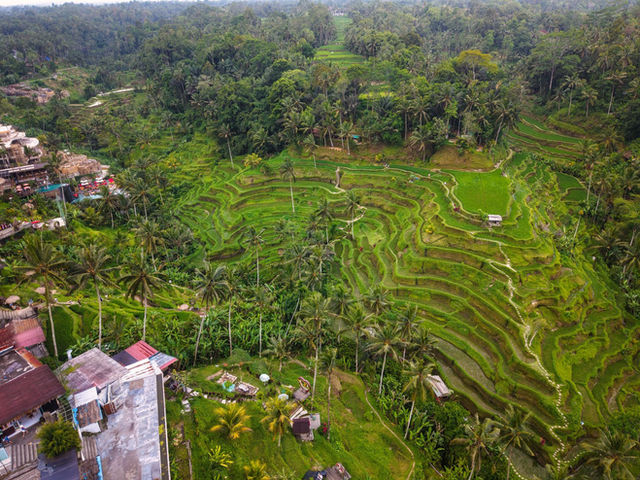
Tiered rice terraces glowing green in the morning light, macaques scrambling over mossy temple statues in a sacred forest, and the clang of gamelan and flash of gold as Balinese dancers perform in a palace courtyard at dusk.

Ubud is Bali's cultural and spiritual heart — a town of temples, palaces and painters set among emerald rice terraces and river gorges, wrapped in a modern scene of yoga studios, wellness retreats, art markets and famously good cafés.

Type
town
Ideal length
~approx 2–4 days
Getting around
on foot in the centre; scooter or driver for the countryside
Neighbourhoods
3 areas
Best season / months
April to October — the drier season; wetter November to March
Language
Indonesian and Balinese; English widely spoken
Currency
Indonesian rupiah (Rp)
Budget level
moderate — affordable, with pricey wellness options
Good for
  • Culture
  • Wellness and yoga
  • Nature
  • Couples
  • Foodies
▸ Discover

About Ubud

Ubud sits in the hills of central Bali, in Indonesia, about an hour inland from the airport and the southern beaches. Long the island's centre of art, dance and craft, it grew around a royal palace and a network of temples, among steep river valleys and the rice terraces that define the Balinese landscape. In recent decades it has become a global wellness-and-yoga hub — a scene of retreats, vegan cafés and boutiques — layered over the still-living Balinese culture of temple festivals, offerings and dance. Central Ubud can be busy and traffic-clogged, but a short walk or ride reaches ridge trails, terraces and quiet villages. It's Bali's soul, if a well-discovered one.

Why go

Ubud offers the richest slice of Balinese culture — royal palace and temple dances, a deep tradition of painting and craft you can see in museums and markets, sacred sites like the Monkey Forest and the water temples, and the iconic rice terraces on its doorstep. It's also the island's wellness capital, for yoga, spas and healthy food, and a comfortable base for waterfalls, volcanoes and river adventures. Green, spiritual and creative, it balances living tradition with modern travel comforts — even if its fame now comes with crowds.

Don't miss

  • The Sacred Monkey Forest Sanctuary — the temple-and-macaque forest
  • The rice terraces — Tegallalang and the countryside
  • Ubud Palace and a Balinese dance — the royal courtyard
  • The Campuhan Ridge Walk — the green valley trail
  • The water and cave temples — Tirta Empul, Goa Gajah nearby

Signature experiences

Rice terraces and green valleys — Ubud's landscape is its glory — tiered rice terraces stepping down the hills, kept by the ancient Balinese subak irrigation system, and steep river gorges wrapped in jungle. Walk the free Campuhan Ridge trail above the valleys in the cool morning, or ride out to the famous Tegallalang terraces (touristy but beautiful; go early). The green, layered scenery is what most people picture when they think of Bali, and it's on Ubud's doorstep. **Living Balinese culture** — Ubud is the island's cultural capital, and its traditions are alive. Watch a Balinese dance — the graceful legong, the trance-like fire-and-chant kecak — performed most evenings in the palace courtyard and temple stages; see the offerings and processions of the constant temple festivals; and trace the town's painting tradition in the Neka, ARMA and Blanco museums and the Penestanan galleries. The Ubud Art Market and craft villages sell the woodcarving, silver and textiles the region is famous for. **Sacred forest and water temples** — At the foot of Monkey Forest Road, the Sacred Monkey Forest Sanctuary is a genuine temple complex in a river gorge, its mossy shrines overrun by long-tailed macaques (charming, and cheeky thieves — mind your sunglasses and snacks). Out in the countryside lie the great water and cave temples — Tirta Empul, where Balinese and visitors bathe in the holy spring, and Goa Gajah, the ancient "Elephant Cave." These sacred sites are the spiritual core beneath Ubud's modern scene. **Wellness, food and the modern town** — Ubud reinvented itself as a global wellness hub, and yoga studios, spas, meditation and healthy-eating cafés now fill the town — an easy place to take a class, a massage or a long vegan brunch. The café-and-boutique scene is genuinely good. Be aware the "Eat, Pray, Love" fame supercharged all this, bringing crowds, traffic and commercialisation — the antidote is to rise early, walk the ridges and terraces before the tour vans, and seek the still-living culture beneath the wellness gloss.

Neighbourhoods

Ubud neighbourhood by neighbourhood — the character of each and who it suits.

  • Central Ubud

    The busy heart around the palace and the main crossroads — the market, Monkey Forest Road, temples, restaurants and shops, lively and traffic-clogged. The hub.

    Why go
    The palace, the Monkey Forest, the market, dance and dining.
    Best for
    Sightseeingshoppingdancerestaurants
    Known for
    Ubud Palace (Puri Saren) and its evening dance performances, the Ubud Art Market, the Sacred Monkey Forest Sanctuary at the foot of Monkey Forest Road, the temples, and the concentration of cafés and boutiques.
  • Campuhan and Penestanan

    The quieter, greener west of town — the Campuhan Ridge, the artists' village of Penestanan, boutique stays and yoga studios above the river valleys. The calm, creative side.

    Why go
    The ridge walk, the artists' village and the yoga-and-wellness scene.
    Best for
    Walkingyogaarta quieter stay
    Known for
    The Campuhan Ridge Walk, the painters and galleries of Penestanan, the Blanco museum, the yoga studios and health cafés, and the valley-view villas.
  • The Rice-Terrace Countryside

    The villages, river gorges and rice terraces ringing the town — Tegallalang's tiered fields, waterfalls, water temples and craft villages, reached by scooter or driver. The scenic, cultural hinterland.

    Why go
    The rice terraces, waterfalls, temples and craft villages.
    Best for
    Rice terracestempleswaterfallsday rides
    Known for
    The Tegallalang rice terraces, the Tirta Empul holy-water temple, Goa Gajah (the "Elephant Cave"), the Tegenungan and other waterfalls, and the craft villages (silver at Celuk, woodcarving at Mas).

Views & hidden gems

Best views

  • The Campuhan Ridge Walk at sunrise — the green valley trail
  • The Tegallalang rice terraces early morning — before the crowds
  • Ubud Palace at dusk during a dance performance
  • A jungle-valley infinity pool or café over the river gorge

Hidden gems

  • The quieter rice-field walks around Penestanan and Sari Organik
  • Tirta Empul's holy-spring bathing (respectfully, with a sarong)
  • The Neka or ARMA art museums for Balinese and Ubud painting
  • The craft villages — silver at Celuk, woodcarving at Mas — for buying from makers
  • Lesser-known waterfalls beyond the busy Tegenungan

Food & drink

Ubud eats two ways — traditional Balinese and Indonesian, and a strong international-wellness scene. Seek out Balinese specialities: babi guling (suckling pig), bebek betutu (slow-cooked spiced duck), nasi and mie goreng, and satay lilit, plus the everyday nasi campur (rice with an array of sides). Alongside them sit some of Bali's best vegan and vegetarian cafés, smoothie bowls, and third-wave coffee, born of the wellness crowd. Eat a proper Balinese meal at a warung and a healthy brunch at a café, and drink fresh coconut, Bali coffee or a jamu tonic.

  • Babi guling — Balinese spit-roast suckling pig
  • Bebek betutu — duck slow-cooked in spices and banana leaf
  • Nasi campur — rice with a selection of Balinese sides
  • Satay lilit — minced, lemongrass-skewered satay
  • Smoothie bowls and vegan café fare — the wellness-scene staples
  • Bali coffee, fresh coconut and jamu — the local drinks
Dietary notes

Ubud is one of the easiest places in Asia for vegetarians and vegans — the wellness scene means abundant dedicated vegan cafés, raw food and clearly marked menus, alongside plenty of plant-based Balinese dishes. Halal food is available (Indonesia is majority Muslim, though Bali is Hindu); kosher is unavailable. Gluten-free is well catered for in the cafés, but soy sauce (kecap) and some sauces contain gluten — confirm. Traditional dishes may use shrimp paste (terasi) — ask if vegetarian.

Ubud in photos

▸ Where you'll stay

Where you'll stay in Ubud

Stay in central Ubud for the palace, market, dance and dining on your doorstep (but expect traffic and noise), or in the greener west around Campuhan and Penestanan for ridge walks, yoga and valley-view calm. For total tranquillity, boutique resorts perch over the river gorges and among the rice fields just outside town. Ubud spans cheap homestays to luxury jungle villas; a scooter or driver helps for the countryside.

  • Budget
    Central Ubud / Penestanan homestays and guesthouses, cheap and walkable or a short ride out.
  • Mid-range
    Campuhan / near the centre comfortable hotels and villas with gardens or valley views.
  • Luxury
    River-gorge and rice-field resorts high-end jungle villas and spa resorts around the town.
Stay

Hotels & rentals around Ubud

Pan, zoom and compare live prices — every stay in one map.

▸ Getting around

Getting around Ubud

Central Ubud is walkable (if congested); for the countryside — terraces, temples, waterfalls — hire a scooter (ride carefully and legally) or, more relaxing, a driver for the day, which is cheap and easy. Ride-hailing apps operate with some local restrictions. A car in the tight centre is a liability.

Central Ubud, Campuhan and Penestanan are a short walk or ride apart (~approx); the rice terraces, temples and waterfalls are 20–60 minutes out by scooter or driver — plan them as half-day loops.

▸ Plan your days

Suggested itineraries

Ready-made day plans for Ubud — from a single day to a long weekend.

One day

Start at dawn on the Campuhan Ridge Walk, then the Sacred Monkey Forest and Ubud Palace and Art Market in the centre, with a Balinese lunch at a warung. In the afternoon, ride out to the Tegallalang rice terraces and a waterfall or the Tirta Empul water temple, and return for an evening Balinese dance performance in the palace courtyard and dinner.
Two days

Give day two to the countryside and wellness. Take a driver on a temple-and-terrace loop — Tirta Empul, Goa Gajah, a craft village for silver or woodcarving — or spend the morning in a yoga class and a spa, and the art museums (Neka or ARMA) in the afternoon. Round off with a jungle-view dinner over the gorge.

Three days

Use day three for adventure or deeper culture — white-water rafting on the Ayung, a cycling descent through the villages, a cooking class, or a trip toward Mount Batur's sunrise and the northern lakes and temples.

▸ What you'll do

Insider tips

  • Rise at dawn for the ridge walk and the rice terraces — before the tour vans and the heat.
  • Hire a driver for a countryside day (temples, terraces, waterfalls); it's cheap and beats battling the traffic.
  • Carry and wear a sarong for the temples, and mind your belongings among the Monkey Forest macaques.
  • Look past the wellness scene to the living culture — an evening dance at the palace is the real Ubud.

Frequently asked

Explore

Explore the area

© OpenFreeMap · OSM · terrain Mapterhorn
Do

Local attractions & tours

Skip-the-line tickets and small-group tours in Ubud — compare across our partners.

We're still curating hand-picked tickets and tours for Ubud. In the meantime, the map above and the nearby cities are a great place to start.

Plan

Trips in Ubud

Day-by-day itineraries that take in Ubud — routes, timings and what to book.

▸ Budget

What it costs in Ubud

Backpacker
roughly €20–40 a day.
Mid-range
roughly €55–110 a day.
Luxury
€200 a day and up.
Cash vs card
Carry rupiah for warungs, markets, scooter hire and temple entries; cards and QR (QRIS) work in cafés, villas and boutiques.
Tipping
Tipping is appreciated but not obligatory — round up or add around 5–10%; small notes for drivers and spa staff.
▸ When you'll go

When to visit Ubud

April to October — the drier season; wetter November to March

Spring

What to expect — The start of the drier season (around April), warm and humid but with more sunshine, the terraces green. A good, less-crowded window.

What's best — Greener terraces and drier days as the wet season fades, fewer crowds than the July–August peak, and pleasant walking weather — a sweet spot.

Summer

What to expect — The dry season peak (June to August) — the driest, sunniest and busiest time, warm by day and cooler in the Ubud hills at night; also the high tourist season. Popular and pricey.

What's best — The best weather for terraces, walks and temples, the Ubud arts scene in full swing, and dry days — but expect crowds, traffic and higher prices; go early to the sights.

Autumn

What to expect — The tail of the dry season easing toward the wet by around November, still warm and mostly pleasant early on. A good shoulder window.

What's best — Warm, mostly dry weather early in the season, thinner crowds after the summer peak, and green surroundings — a rewarding, quieter time before the rains.

Winter

What to expect — The wet season (roughly November to March), warm and humid with heavy afternoon downpours and lush green terraces; mornings often clear. The low season.

What's best — The terraces at their greenest and lushest, lower prices and fewer crowds, and clear mornings for sightseeing — carry rain gear and plan around the afternoon storms.

▸ Know before you go

Know before you go

Honest swaps

Skip the midday crowds at Tegallalang → go at sunrise for the terraces to yourself, or walk the quieter Penestanan fields.

Skip driving into the traffic-choked centre → base near the ridge, walk, and hire a driver for the countryside.

Skip chasing every "Insta swing" and gilded-wing photo spot → the temples, terraces and ridge walk are the real Ubud.

Skip judging Ubud by its wellness gloss → seek the living Balinese dance, temple festivals and warung food beneath it.

Crowds & timing

Central Ubud and the famous terraces get very busy and traffic-clogged by mid-morning — start at dawn.

The July–August dry-season peak is crowded and pricey; the shoulder months are calmer.

Local rules & etiquette

The temples are sacred and active — wear a sarong and sash (often provided), cover shoulders and knees, and don't enter during menstruation (a local temple rule).

At the Monkey Forest, don't feed or touch the macaques, hide food, sunglasses and loose items, and don't panic if one climbs on you.

Respect the daily offerings (canang sari) on the ground — don't step on them.

Money

Carry rupiah for warungs, markets and scooter hire; cards and QRIS work in cafés and villas; use bank ATMs (watch for skimming, and the foreign-card fee).

Ride scooters carefully and legally (licence and helmet); Ubud's roads and traffic catch out many visitors.

After dark

Central Ubud has the dance performances, restaurants and a low-key bar scene rather than a party one.

Ubud is calm and early compared with the southern beach towns — the evening is a dance, dinner and a jungle-view drink.

For nightlife proper, the coast (Seminyak, Canggu) is the place; Ubud stays gentle.

Safety

Ubud is a safe tourist destination. The main risks are: scooter accidents (the most common cause of tourist injury in Bali — roads are narrow and traffic is erratic; avoid scooters without experience); petty theft at crowded market areas; and tourist-targeted pricing that requires negotiation. Swimming is not a consideration in Ubud (highland location, no beaches); the Ayung River rafting operators are generally professional. Sun protection is essential at outdoor sites. Ground tremors from Bali's volcanic activity are not unusual but are rarely significant; Mount Agung's status should be checked if visiting the northeast.

Culture & etiquette

Ubud is the spiritual and ceremonial centre of Balinese Hinduism — temple ceremonies (odalan) occur on most days of the week somewhere in the district, and visitors who encounter them should dress appropriately (a sarong and sash are required to enter temple compounds; many can be borrowed or purchased cheaply at the entrance). Do not point with your feet (considered the spiritually lowest part of the body) toward shrines, statues, or seated Balinese. The daily offerings (canang sari) placed at thresholds, shrines, and trees throughout the town should not be stepped on. Topless behaviour is not appropriate outside beach areas. Bargaining is expected at all markets except fixed-price restaurants.

Daily budget

£60–£120/day mid-range (budget: £30/day guesthouse + warung food; luxury: £250+/day villa resort)

Emergency numbers

Police: 110 | Ambulance: 118 | Fire: 113 | Bali Emergency Helpline: +62 361 724-124

▸ Ready to book your trip?

Getting there

Bali's Ngurah Rai International Airport (DPS) near Denpasar is the gateway, around 1–1.5 hours from Ubud by car (longer in traffic); private drivers and shuttles are the usual transfer.

  • Ngurah Rai International Airport (DPS)
Book

Ready to book your trip?

Flights, airport transfers and car hire to DPS — search and compare without leaving the page.

▸ Trip extras
Book

More trip extras

Parking, holiday extras, and more — coming soon.

Coming soon

We're lining up parking, holiday extras and activities you'll be able to add to any trip from here.