← Italy
ITALY · CITY

Ferrara

A refined Renaissance city of the Este dukes — a moated castle, a diamond-studded palace and cycling in the flat plains.

  • City
  • April to June and September to October — mild; hot, humid summers
  • ~approx 1–2 days
  • Este Castle & Court
  • Renaissance Ideal City
  • Cyclable Walls
  • Ancient Jewish Ghetto

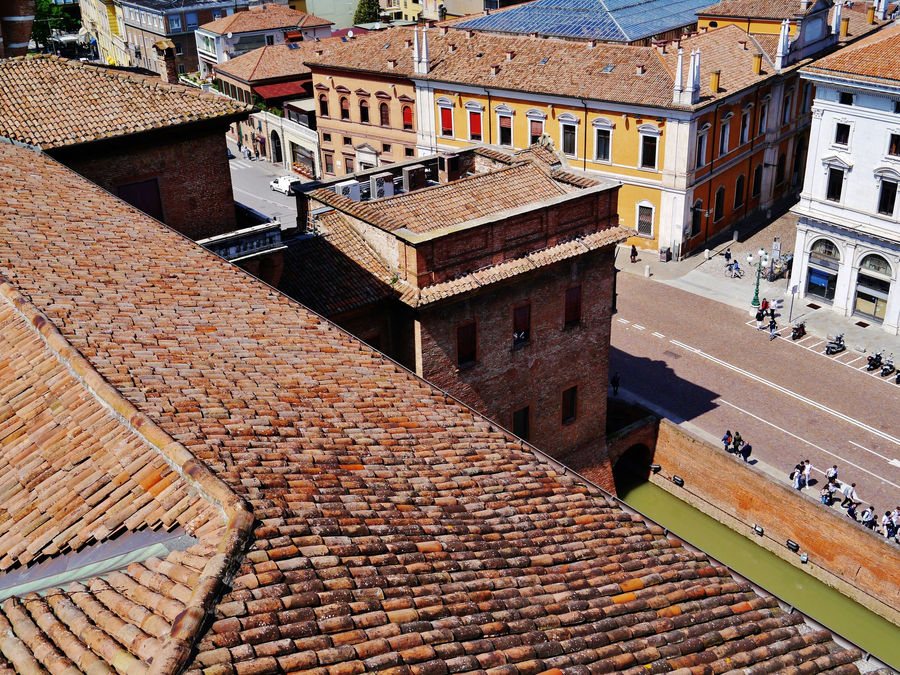
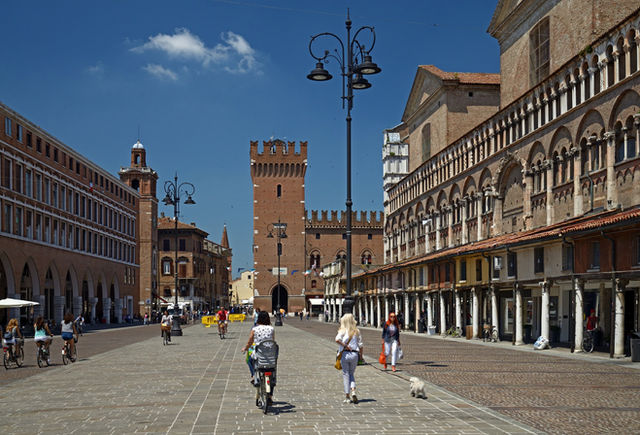
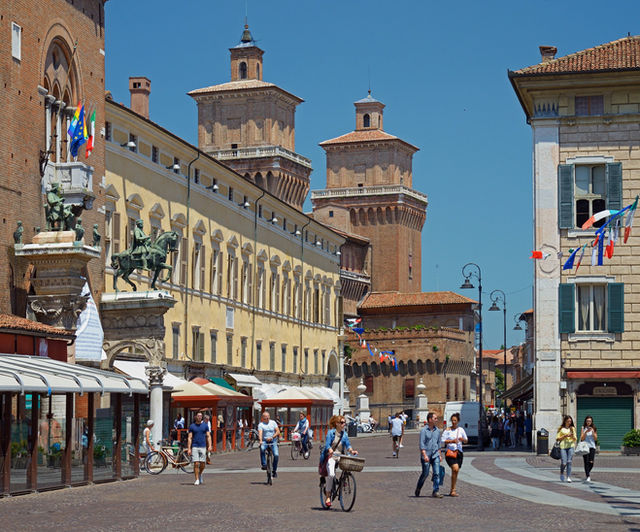
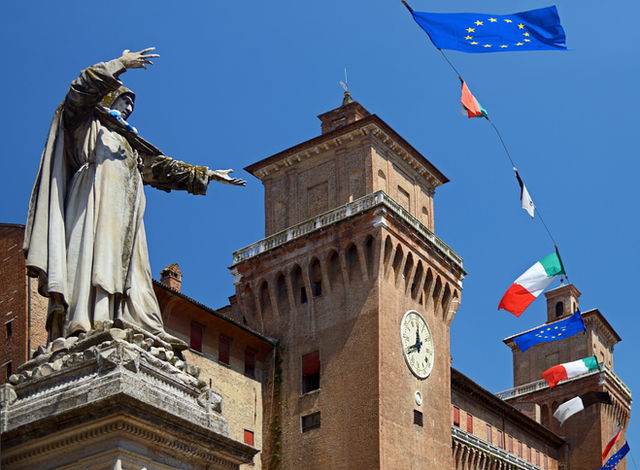
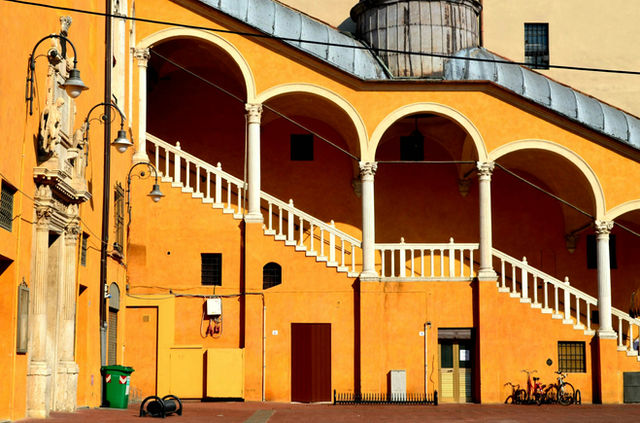
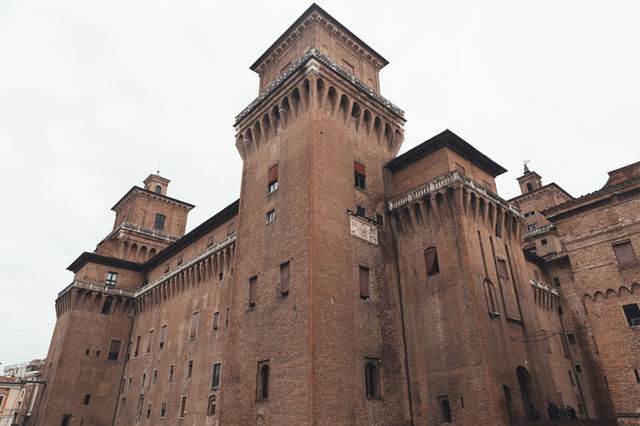
The red-brick Castello Estense reflected in its own moat in the middle of town, bicycles gliding down wide Renaissance avenues, and the diamond-faceted stone of the Palazzo dei Diamanti catching the light on a quiet street.

Ferrara is the Renaissance made real — an Este ducal capital in flat Emilia-Romagna, built around a moated castle, laid out as one of Europe's first planned city extensions, ringed by walls you cycle along, with a medieval ghetto and a rich, distinctive kitchen.

Type
city
Ideal length
~approx 1–2 days
Getting around
on foot and, above all, by bicycle
Neighbourhoods
3 areas
Best season / months
April to June and September to October — mild; hot, humid summers
Language
Italian (some English)
Currency
euro (€)
Budget level
moderate — affordable by Italian standards
Good for
  • History
  • Architecture
  • Cyclists
  • Food
  • Quieter Italy
▸ Discover

About Ferrara

Ferrara sits on the flat Po plain in Emilia-Romagna, northern Italy, once the seat of the powerful Este dukes. Its medieval core huddles around the moated Castello Estense and the cathedral, threaded with atmospheric arcaded lanes and one of Italy's oldest Jewish ghettos. To the north, the "Addizione Erculea" — a visionary 15th-century extension of wide straight streets and palaces, among the first planned urban expansions in Europe — earns the city its UNESCO status. Around it all runs a green belt of intact Renaissance walls, made for cycling. Flat, elegant and famously bike-mad, it's a graceful, under-touristed city.

Why go

Ferrara is a Renaissance dream city — the Este court's capital, with a moated castle at its heart, the diamond-studded Palazzo dei Diamanti, and a groundbreaking planned quarter that shaped how cities were designed. It has one of Italy's most important Jewish heritages, nine kilometres of cyclable walls, and a bold Emilia-Romagna kitchen of pumpkin pasta and rich stews. Flat, walkable, wonderfully bikeable and refreshingly quiet, it's a cultured, relaxed alternative to the tourist-heavy names, and an easy hop from Bologna.

Don't miss

  • The Castello Estense — the moated ducal castle
  • The Palazzo dei Diamanti — the diamond-faceted palace
  • The city walls — the cyclable Renaissance ramparts
  • The Cathedral and medieval centre — the old core
  • The Jewish ghetto and Via delle Volte — the atmospheric lanes

Signature experiences

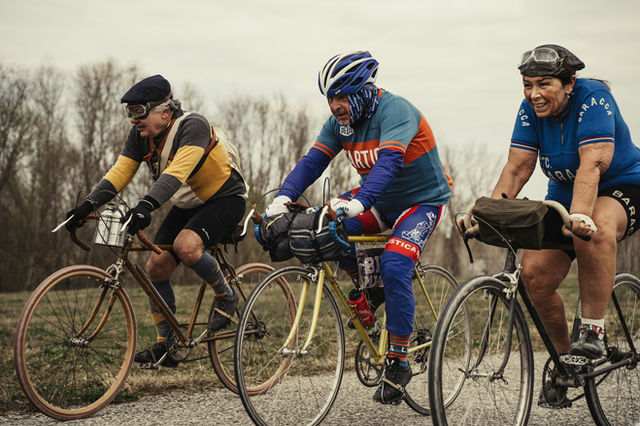
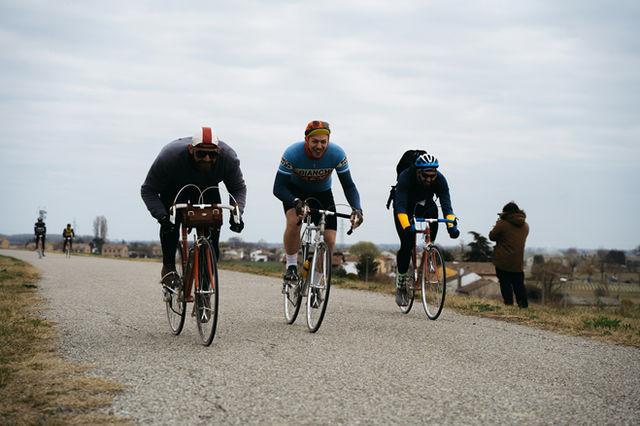
The Este castle and court — Ferrara's heart is the Castello Estense, a red-brick fortress with round towers rising straight out of a water-filled moat in the middle of the city — you can tour the ducal apartments, the dungeons and the frescoed halls of the family that made Ferrara a Renaissance powerhouse. Around it, the medieval centre and the cathedral tell the rest of the story. It's a rare thing: a genuine moated castle in a living city centre, and the obvious place to begin. **A city designed on paper** — Ferrara's claim to fame among architects is the Addizione Erculea, a late-15th-century extension that doubled the city with wide, straight avenues and grand palaces — one of the first pieces of planned modern urbanism in Europe. Walk the great crossroads and up to the Palazzo dei Diamanti, its façade studded with thousands of diamond-shaped stones and now the city's picture gallery. The contrast between the tight medieval core and the airy Renaissance grid is Ferrara's signature. **Cycling the walls** — Ferrara is one of Italy's great cycling cities — flat, and ringed by some nine kilometres of intact Renaissance walls topped with a green, tree-shaded path. Hire a bike (as half the city does) and ride the ramparts around the whole town, dropping into the centre and the quiet avenues. Bikes are the local way of life here, and doing the walls on two wheels is the quintessential Ferrara afternoon. **Ghetto lanes and a bold kitchen** — Southeast of the centre, the arcaded Via delle Volte and the lanes of one of Italy's oldest Jewish ghettos are the city's most atmospheric corner, with the MEIS museum telling the long story of Italian Judaism. And Ferrara eats richly and distinctively: cappellacci di zucca (pumpkin-stuffed pasta), the intense salama da sugo sausage, the baroque pasticcio pasta pie, and the twisted coppia bread. Wander the old lanes and settle into a trattoria for the local specialities.

Neighbourhoods

Ferrara neighbourhood by neighbourhood — the character of each and who it suits.

  • The Medieval Centre

    The old core around the moated castle and cathedral — arcaded lanes, the market, and the seat of Este power, dense and atmospheric. The historic heart.

    Why go
    The Castello Estense, the cathedral and the medieval streets.
    Best for
    Sightseeingcafésthe castlewalking
    Known for
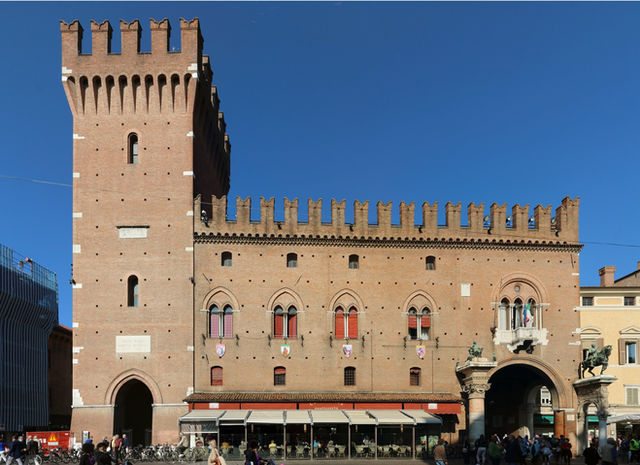
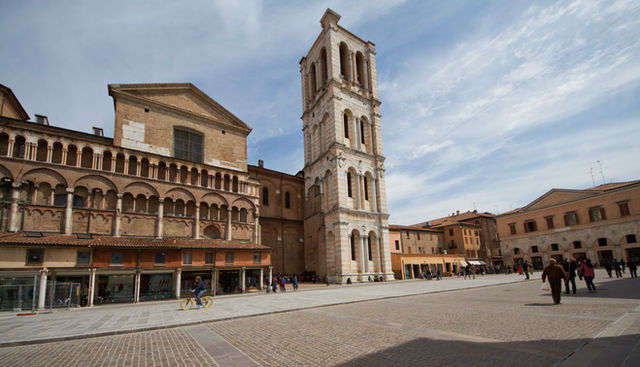
    The moated Castello Estense, the Romanesque cathedral and its market side, the Palazzo Municipale, the Piazza Trento e Trieste, and the arcaded shopping streets.
  • The Jewish Ghetto and Via delle Volte

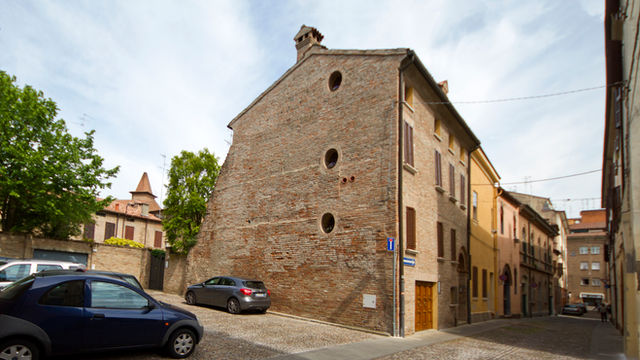
    The tight medieval quarter southeast of the centre — the arched, cobbled Via delle Volte and the lanes of one of Italy's oldest and most important Jewish ghettos. The evocative, historic corner.

    Why go
    The Via delle Volte, the ghetto and the Jewish heritage museum.
    Best for
    Atmospheric walkshistorysmall trattorias
    Known for
    The arcaded Via delle Volte, the historic Jewish ghetto and synagogues, the MEIS museum of Italian Judaism, and the tucked-away trattorias.
  • The Addizione Erculea

    The visionary Renaissance extension north of the castle — wide straight avenues, noble palaces and the diamond-faceted Palazzo dei Diamanti, an early masterpiece of urban planning. The elegant, spacious quarter.

    Why go
    The Palazzo dei Diamanti, the grand avenues and the art galleries.
    Best for
    Renaissance architectureartgrand streets
    Known for
    The Palazzo dei Diamanti and the National Picture Gallery, the crossroads of Corso Ercole I d'Este and Corso Biagio Rossetti, the noble palaces, and the wide, quiet avenues.

Views & hidden gems

Best views

  • The Castello Estense reflected in its moat — the city's emblem
  • The walls' tree-lined rampart path — the green ring by bike
  • The Palazzo dei Diamanti façade — the diamond-cut stone in raking light
  • The arcaded Via delle Volte — the medieval street at its most atmospheric

Hidden gems

  • The Via delle Volte — a long, dark, arcaded medieval lane
  • The MEIS — the National Museum of Italian Judaism, in the old prison
  • The Palazzo Schifanoia's Salone dei Mesi frescoes — a Renaissance calendar in paint
  • The Certosa and its cemetery, and the quiet northern avenues
  • A pampapato chocolate cake from an old Ferrara pasticceria

Food & drink

Ferrara's cooking is one of Emilia-Romagna's most distinctive, courtly and rich. The signature pasta is cappellacci di zucca, pockets of sweet pumpkin in butter and sage; the great festive dish is salama da sugo, an intense, aged, wine-soaked pork sausage served with mashed potato. There's the elaborate pasticcio ferrarese (a sweet-crust pasta pie), the twisted coppia ferrarese bread, and, for dessert, the dense chocolate-and-spice pampapato. Eat in the trattorias of the old centre and the ghetto lanes, and pair with a fizzy local red or a Lambrusco.

  • Cappellacci di zucca — pasta stuffed with sweet pumpkin, in butter and sage
  • Salama da sugo — an intense aged, wine-soaked pork sausage
  • Pasticcio ferrarese — a sweet-pastry baked macaroni pie
  • Coppia ferrarese — the twisted, crusty local bread (a protected shape)
  • Cappellacci and pumpkin dishes — the city's autumn-and-winter staples
  • Pampapato — a dense chocolate, almond and spice cake
Dietary notes

Vegetarians do well with cappellacci di zucca, pumpkin and squash dishes, risottos and vegetable antipasti, though pork runs deep in the local repertoire — ask. Vegan is doable with pasta and vegetable dishes on request. Halal and kosher are limited, though the city's Jewish heritage means some kosher tradition survives — check locally. Gluten-free pasta is increasingly offered, but the coppia bread and many pastas are wheat — confirm.

Ferrara in photos

▸ Where you'll stay

Where you'll stay in Ferrara

Stay in the medieval centre near the castle to walk (and cycle) to everything — the old core holds characterful hotels and B&Bs in historic buildings. The quieter Renaissance avenues of the Addizione are elegant and calm, a short ride from the centre. Ferrara is compact, flat and cheap by Italian standards, and a bike makes any central base convenient. Book ahead for the summer palio and festivals.

  • Budget
    Around the centre / near the station budget hotels and B&Bs, cheap and central.
  • Mid-range
    The medieval centre comfortable hotels near the castle and cathedral.
  • Luxury
    Historic palazzo hotels in the centre high-end stays in noble buildings, the top of a modest range.
Stay

Hotels & rentals around Ferrara

Pan, zoom and compare live prices — every stay in one map.

▸ Getting around

Getting around Ferrara

The city is flat and best on a bicycle — hire one as the locals do — with the compact centre also easily walked. The walls have a dedicated cycle-and-walk path; a car is a liability in the restricted centre. Trains link the wider region.

The medieval centre, the ghetto and the Addizione are all a short walk or cycle apart (~approx); the walls encircle them all — the whole city crosses in minutes by bike.

▸ Plan your days

Suggested itineraries

Ready-made day plans for Ferrara — from a single day to a long weekend.

One day

Start at the moated Castello Estense and tour the ducal apartments, then see the cathedral and the medieval centre. Walk the arcaded Via delle Volte and the Jewish ghetto, with the MEIS museum, and have a cappellacci lunch in a trattoria. In the afternoon, head up into the Addizione Erculea for the Palazzo dei Diamanti and the grand avenues, then hire a bike and ride a stretch of the walls at sunset.

Two days

Give day two to cycling and the wider city. Ride the full ring of walls, visit the Palazzo Schifanoia's frescoes and the quieter northern avenues, and browse the market and craft shops. Round off with a rich Ferrara dinner of salama da sugo, or take the short trip out toward the Po delta or Bologna.

▸ What you'll do

Insider tips

  • Hire a bike — Ferrara is flat, bike-mad, and the walls are made for cycling.
  • Time an autumn or winter visit for the rich local food — cappellacci, salama da sugo and pampapato.
  • Buy a combined ticket if you plan to see the castle, the picture gallery and Schifanoia.
  • Ferrara pairs easily with Bologna and the Po delta — an easy train hop away.
What's on

While you're there

02
SEP
Venice Film Festival 2026
Via Pietro Buratti 5, 30126 Venezia Venice, Italy · cultural
Build a trip around it →
30
JAN
Venice Carnival 2027
Piazza San Marco 40, 30124 Venezia Venice, Italy · festival
Build a trip around it →
Explore

Explore the area

© OpenFreeMap · OSM · terrain Mapterhorn
Do

Local attractions & tours

Skip-the-line tickets and small-group tours in Ferrara — compare across our partners.

We're still curating hand-picked tickets and tours for Ferrara. In the meantime, the map above and the nearby cities are a great place to start.

▸ Budget

What it costs in Ferrara

Backpacker
roughly €50–75 a day.
Mid-range
roughly €95–160 a day.
Luxury
€230 a day and up.
Cash vs card
Cards and contactless work widely, but carry a little cash for bike hire, market stalls and small trattorias.
Tipping
Tipping is modest in Italy — a cover charge (coperto) is usually on the bill; round up or leave small change for good service.
▸ When you'll go

When to visit Ferrara

April to June and September to October — mild; hot, humid summers

Spring

What to expect — Mild and pleasant, warming through the season with the odd shower, the walls and avenues green. One of the best times to cycle.

What's best — Ideal weather for cycling the walls and the centre, blossom on the ramparts, and café terraces reopening — a lovely, uncrowded season.

Summer

What to expect — Hot and humid on the Po plain, with mosquitoes near the water; midday can be sticky, but evenings are lively and there's a summer festival calendar. Warm nights.

What's best — Long evenings, the Palio di Ferrara and the buskers' festival, and the walls shady on a bike — sightsee early and late, and carry water in the heat.

Autumn

What to expect — The heat easing into mild, comfortable weeks, sometimes misty on the plain, with the pumpkin-and-truffle food season arriving. One of the best times.

What's best — Fine cycling weather, the cappellacci-and-salama season at its best, golden light on the brick, and thin crowds — a rewarding, flavourful window.

Winter

What to expect — Cold, damp and often foggy on the Po plain, with short days, though the centre turns festive in December. Chilly and atmospheric.

What's best — The rich winter food (salama da sugo, pampapato), the Christmas markets, and the misty city almost to yourself — pack warm layers for the damp cold.

▸ Know before you go

Know before you go

Honest swaps

Skip walking everywhere → hire a bike like the locals and ride the walls and the centre.

Skip a tourist-menu meal → seek out cappellacci di zucca and salama da sugo in a local trattoria.

Skip only the castle → give the Addizione Erculea and the Palazzo dei Diamanti their due for the Renaissance city.

Skip rushing through → the quiet ghetto lanes and the MEIS reward a slow hour.

Crowds & timing

Ferrara is rarely crowded, but the summer Palio and the buskers' festival fill the city — book ahead then.

Museum days vary (some close Mondays) — check before planning a gallery day.

Local rules & etiquette

Bikes rule here — cycle considerately, and watch for them as a pedestrian.

Dress respectfully inside the cathedral and synagogues, which are working religious sites.

Italian mealtimes run later than in the north; kitchens often close mid-afternoon.

Money

Cards work widely; carry a little cash for bike hire, markets and small trattorias.

Use bank ATMs and avoid the standalone tourist machines with poor rates.

After dark

The Piazza Trento e Trieste and the streets by the castle hold the evening aperitivo and dining scene.

The university keeps a lively, affordable bar scene going in term time.

Ferrara is a gentle, early-ish city; evenings are aperitivo, dinner and a stroll rather than clubs.

▸ Ready to book your trip?

Getting there

Ferrara has no major airport; Bologna (BLQ) is the nearest, around an hour away, with frequent trains into Ferrara's central station (a short walk or bike from the centre). Venice's airports are also within reach.

Book

Ready to book your trip?

Flights, airport transfers and car hire — search and compare without leaving the page.

▸ Trip extras
Book

More trip extras

Parking, holiday extras, and more — coming soon.

Coming soon

We're lining up parking, holiday extras and activities you'll be able to add to any trip from here.