← Italy
ITALY · CITY

Mantua

Two Renaissance towns of the Gonzaga dukes — a lake-ringed art city and a purpose-built 'ideal city'.

  • City
  • April to June and September to October — mild; humid summers, foggy winters
  • ~approx 1–2 days
  • Gonzaga Palaces
  • Three Encircling Lakes
  • Mantegna Frescoes
  • Pumpkin Tortelli

The domes and towers of Mantua doubled in the flat, misty water of its lakes at dawn, then the ceiling of the Camera degli Sposi opening into painted blue sky, and a plate of pumpkin tortelli with the odd surprising note of crushed amaretti.

Mantua is a Renaissance island of art — a Gonzaga ducal town wrapped on three sides by mirror-still lakes, holding one of Italy's largest palaces, Mantegna's magical frescoed room, and Giulio Romano's playful pleasure-palace, with a kitchen built on sweet pumpkin pasta.

Type
town
Ideal length
~approx 1–2 days
Getting around
on foot; a bike or boat for the lakes
Neighbourhoods
3 areas
Best season / months
April to June and September to October — mild; humid summers, foggy winters
Language
Italian (some English)
Currency
euro (€)
Budget level
moderate — affordable by Italian standards
Good for
  • Art
  • History
  • Food
  • Quieter Italy
  • Couples
▸ Discover

About Mantua

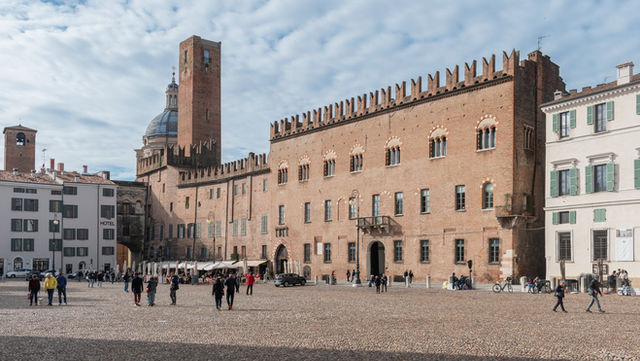
Mantua (Mantova) sits on the Lombard plain in northern Italy, all but surrounded by three artificial lakes formed by the Mincio river — Superiore, di Mezzo and Inferiore — that give it the look of an island afloat on the water. The compact old town gathers around a string of handsome piazzas, from Gonzaga-era Piazza Sordello and the vast Palazzo Ducale to the market bustle of Piazza delle Erbe, with Giulio Romano's Palazzo Te on the southern edge. It's a flat, walkable, art-stuffed town, quietly grand and refreshingly untouristed, twinned in its UNESCO listing with the ideal-city of Sabbioneta nearby.

Why go

Mantua is a Renaissance treasure-house that most visitors miss — the Gonzaga court's capital, with a palace complex so large it's a city within a city, Andrea Mantegna's illusionistic Camera degli Sposi, Alberti's mighty basilica, and Giulio Romano's astonishing Palazzo Te. Its setting among the lakes is uniquely lovely, its food (sweet pumpkin tortelli, sbrisolona) is a distinctive Lombard-Emilian hybrid, and its streets are calm and elegant. Cultured, watery and quiet, it's a perfect slow-Italy town.

Don't miss

  • The Palazzo Ducale and the Camera degli Sposi — Mantegna's frescoed room
  • The Palazzo Te — Giulio Romano's pleasure palace
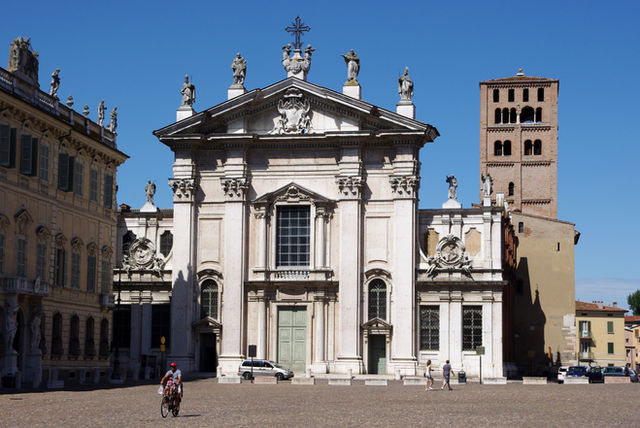
  • The Basilica di Sant'Andrea — Alberti's great church
  • The three lakes — the water encircling the town
  • Tortelli di zucca — the sweet pumpkin pasta

Signature experiences

The Gonzaga palaces and Mantegna — Mantua's art is world-class. The Palazzo Ducale is one of Europe's largest palaces, a labyrinth of hundreds of rooms, courtyards and gardens — and hidden within it is the jewel: the Camera degli Sposi, Andrea Mantegna's frescoed chamber where painted courtiers look down from illusionistic walls and the ceiling opens into a trompe-l'œil sky, one of the Renaissance's magical rooms. Give the palace real time; the Camera alone is worth the trip. **Giulio Romano's Palazzo Te** — On the southern edge stands the Palazzo Te, a Renaissance pleasure-villa built for the Gonzaga by Giulio Romano — and its Sala dei Giganti (Room of the Giants) is unforgettable: a frescoed room where the walls and ceiling dissolve into collapsing architecture as the gods hurl down the rebel giants around you. Mannerist, theatrical and slightly mad, it's a highlight of Italian art and the perfect foil to the sober ducal palace across town. **The lakes and the water** — Mantua's setting is half its magic — three linked lakes wrap the town, mirroring its domes and towers and softening it in mist at dawn and dusk. Walk or cycle the lakeshore paths, take a boat trip out among the reeds and, in high summer, the lotus and water-lily blooms, and see the skyline float on the water. It's a serene, watery counterpoint to the art indoors, and the classic photograph of the town. **A distinctive kitchen** — Mantua eats at the border of Lombardy and Emilia, and its food is a sweet-savoury delight. The signature is tortelli di zucca — pumpkin-stuffed pasta laced with amaretti and mostarda; there's the compact risotto alla pilota, pike in sauce (luccio in salsa) from the lakes, and the crumbly almond sbrisolona for dessert. Even the old donkey stew (stracotto) survives on menus. Eat in the trattorias around the piazzas, and finish with sbrisolona and a Lambrusco.

Neighbourhoods

Mantua neighbourhood by neighbourhood — the character of each and who it suits.

  • The Ducal Core (Piazza Sordello)

    The medieval-and-ducal heart around Piazza Sordello — the vast Palazzo Ducale, the cathedral and the old Gonzaga seat of power, grand and quiet. The historic, monumental corner.

    Why go
    The Palazzo Ducale and the Camera degli Sposi, and the ducal piazza.
    Best for
    The great palacearthistorywalking
    Known for
    Piazza Sordello, the enormous Palazzo Ducale and Mantegna's Camera degli Sposi, the Castello di San Giorgio, and the cathedral.
  • The Central Piazzas

    The lively linked squares at the town's centre — Piazza delle Erbe with its market, the clock tower and the round Rotonda church, and Alberti's basilica just beyond. The bustling social heart.

    Why go
    The market piazzas, Sant'Andrea and the cafés.
    Best for
    Marketscafé-sittingaperitivothe basilica
    Known for
    Piazza delle Erbe and its market, the medieval Rotonda di San Lorenzo, the astronomical clock tower, the Basilica di Sant'Andrea, and the arcaded shopping streets.
  • Palazzo Te and the Lakes

    The southern edge with Giulio Romano's pleasure palace, and the lakeshores and parks that ring the town — where the water and the gardens frame the art. The green, watery side.

    Why go
    The Palazzo Te and the lakeside walks and boat trips.
    Best for
    The pleasure palacelake walkscyclingboat trips
    Known for
    The Palazzo Te and its Room of the Giants, the lakeside parks and paths, the boat trips on the lakes, and the water-lily blooms of the Mincio in summer.

Views & hidden gems

Best views

  • The skyline mirrored in the lakes at dawn — from the lakeside or a bridge
  • The Camera degli Sposi ceiling — Mantegna's painted sky
  • The Sala dei Giganti in Palazzo Te — the collapsing frescoed room
  • Piazza delle Erbe with the clock tower and Rotonda — the market square

Hidden gems

  • The Rotonda di San Lorenzo — a small round Romanesque church below street level
  • The Teatro Bibiena — a jewel-box Baroque theatre where the young Mozart played
  • The lotus blooms on the lakes in high summer — a boat trip among the reeds
  • The Camera degli Sposi's oculus — look up for the painted courtiers peering down
  • A slab of sbrisolona from an old Mantua pasticceria

Food & drink

Mantua's cooking straddles Lombardy and Emilia, and it loves a sweet-savoury twist. The great dish is tortelli di zucca — pasta stuffed with pumpkin, amaretti and mostarda, served in butter and sage; alongside come risotto alla pilota (with crumbled sausage), luccio in salsa (lake pike in a caper sauce), and the hearty stracotto. The famous dessert is sbrisolona, a crumbly almond cake you break with your hands. The wine is the local fizzy Lambrusco Mantovano. Eat in the trattorias around Piazza delle Erbe and Sordello.

  • Tortelli di zucca — pumpkin pasta with amaretti and mostarda, in butter and sage
  • Risotto alla pilota — a dry risotto with crumbled sausage
  • Luccio in salsa — lake pike in a caper-and-anchovy sauce
  • Sbrisolona — a crumbly almond cake broken by hand
  • Stracotto — a long-braised meat stew, the old Mantuan classic
  • Lambrusco Mantovano — the local fizzy red
Dietary notes

Vegetarians eat well thanks to the pumpkin tortelli, risottos and vegetable dishes, though check the tortelli filling and stocks. Vegan is doable with pasta and vegetable dishes on request. Halal and kosher are limited. Gluten-free pasta is increasingly available, but tortelli, sbrisolona and breads are wheat — confirm.

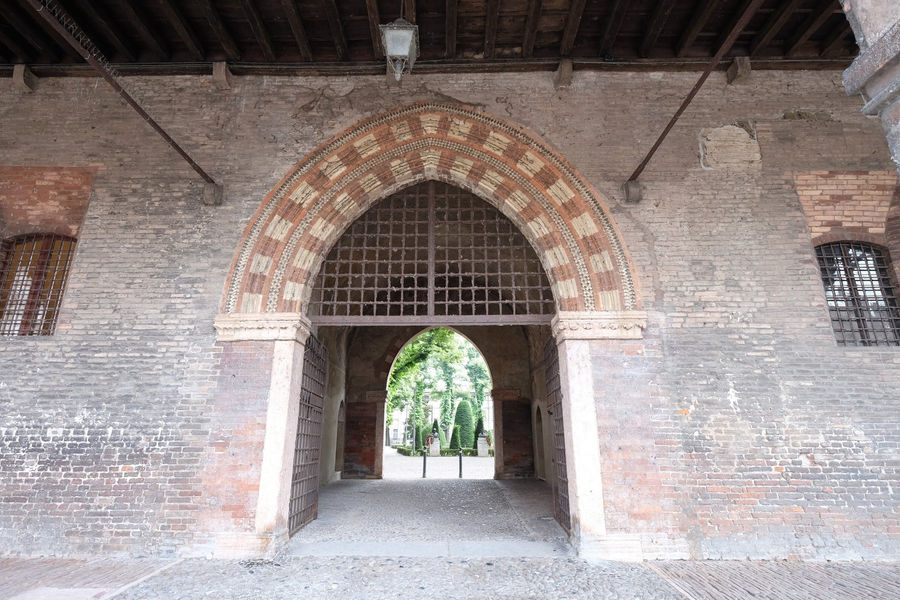
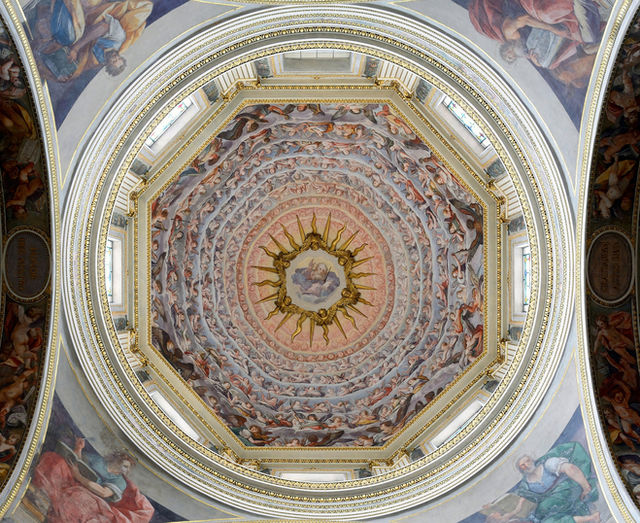
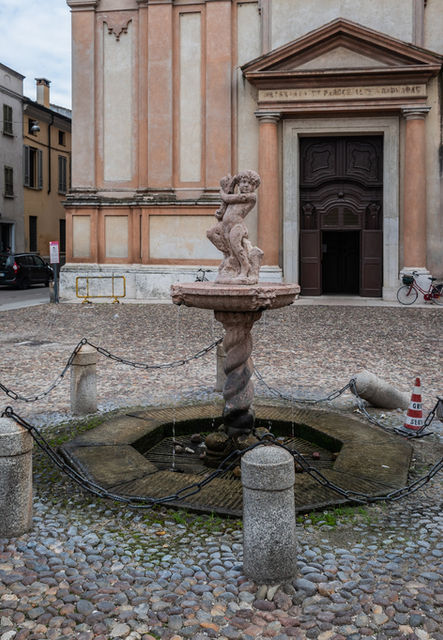
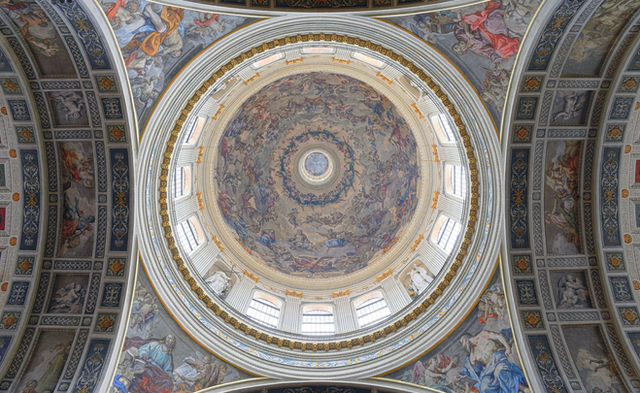
Mantua in photos

▸ Getting around

Getting around Mantua

The old town is compact and flat, best on foot, with a bike ideal for the lakeshore paths; boats run trips on the lakes. A car is a liability in the restricted centre and best parked outside. Trains serve the wider region.

The ducal core, the central piazzas and Palazzo Te are all a short walk apart (~approx); the lakeshores ring the town — the whole centre crosses in 15–20 minutes on foot.

▸ Plan your days

Suggested itineraries

Ready-made day plans for Mantua — from a single day to a long weekend.

One day

Start at Piazza Sordello and the vast Palazzo Ducale, booking the Camera degli Sposi for Mantegna's frescoed room. Walk to Piazza delle Erbe for the market, the Rotonda and Alberti's Basilica di Sant'Andrea, and have a tortelli-di-zucca lunch. In the afternoon, cross to the Palazzo Te for the Room of the Giants, then walk or cycle the lakeshore at sunset for the skyline mirrored on the water.

Two days

Give day two to the water and the wider setting. Take a boat trip on the lakes among the reeds and summer lotus, cycle the shore paths, and see any art you missed (the Teatro Bibiena, the ducal apartments). With more time, make the trip to Sabbioneta, the Gonzaga "ideal city" that shares Mantua's UNESCO listing, for its planned Renaissance streets.

▸ What you'll do

Insider tips

  • Book the Camera degli Sposi ahead — entry is timed and limited within the Palazzo Ducale.
  • Don't skip Palazzo Te on the southern edge — the Room of the Giants is unmissable.
  • Cycle or take a boat on the lakes for the classic skyline-on-water view, best at dawn or dusk.
  • Try tortelli di zucca and finish with sbrisolona — the town's signature sweet-savoury pairing.
What's on

While you're there

02
SEP
Venice Film Festival 2026
Via Pietro Buratti 5, 30126 Venezia Venice, Italy · cultural
Build a trip around it →
30
JAN
Venice Carnival 2027
Piazza San Marco 40, 30124 Venezia Venice, Italy · festival
Build a trip around it →
Explore

Explore the area

Interactive area map
Map coordinates coming soon

This place is missing lat/lng — waiting on the next Wix sync.

Do

Local attractions & tours

Skip-the-line tickets and small-group tours in Mantua — compare across our partners.

We're still curating hand-picked tickets and tours for Mantua. In the meantime, the map above and the nearby cities are a great place to start.

▸ Budget

What it costs in Mantua

Backpacker
roughly €50–75 a day.
Mid-range
roughly €95–160 a day.
Luxury
€230 a day and up.
Cash vs card
Cards and contactless work widely, but carry a little cash for the market, bike hire and small trattorias.
Tipping
Tipping is modest in Italy — a cover charge (coperto) is usually on the bill; round up or leave small change.
▸ When you'll go

When to visit Mantua

April to June and September to October — mild; humid summers, foggy winters

Spring

What to expect — Mild and pleasant, warming through the season with the odd shower, the lakes and parks fresh. One of the best times.

What's best — Ideal weather for the palaces and lakeside walks, blossom around the water, and café terraces reopening — a lovely, quiet season.

Summer

What to expect — Hot and humid on the Lombard plain, with mosquitoes near the lakes; midday is sticky, but the water and the lotus blooms are at their peak. Warm evenings.

What's best — The lakes at their most beautiful with the summer lotus and water-lily blooms, boat trips, and warm evenings on the piazzas — sightsee early and carry repellent by the water.

Autumn

What to expect — The heat easing into mild, comfortable weeks, sometimes misty, with the pumpkin-and-tortelli season and the September literature festival. One of the best times.

What's best — Fine weather for the art and the lakes, the tortelli-di-zucca season at its best, the famous Festivaletteratura, and golden light on the water — a rewarding window.

Winter

What to expect — Cold, damp and often foggy on the plain, with short days, though the centre turns festive in December. Chilly and atmospheric, the lakes ghostly in mist.

What's best — The palaces quiet and crowd-free, the rich winter food (tortelli, sbrisolona), and the misty lakes at their most romantic — pack warm layers for the damp cold.

▸ Know before you go

Know before you go

Honest swaps

Skip only the Palazzo Ducale's grand halls → make sure you book and see the small Camera degli Sposi, its true jewel.

Skip a tourist-menu meal → order tortelli di zucca and sbrisolona in a local trattoria.

Skip a town-only visit → walk or cycle the lakeshore, or take a boat out for the skyline-on-water view.

Skip missing Palazzo Te → the Room of the Giants is one of Italy's great frescoed rooms.

Crowds & timing

Mantua is rarely crowded, but the September Festivaletteratura fills the town — book ahead then.

The Camera degli Sposi has timed, limited entry within the Palazzo Ducale — book ahead.

Local rules & etiquette

Dress respectfully inside the basilica and churches, which are working religious sites.

Italian mealtimes run later; kitchens often close mid-afternoon.

Respect the quiet, residential feel of the lakeside paths and the piazzas at night.

Money

Cards work widely; carry a little cash for the market, bike hire and small trattorias.

Use bank ATMs and avoid the standalone tourist machines with poor rates.

After dark

Piazza delle Erbe and the central piazzas hold the aperitivo and dining scene.

The town is gentle and early-ish; evenings are aperitivo, dinner and a lakeside stroll rather than clubs.

The September festival brings late-evening events and a livelier buzz.

▸ Ready to book your trip?

Getting there

Mantua has no airport of its own; Verona (VRN) is nearest (~approx 45 min), with Bologna and Milan also within reach; trains link Mantua to Verona, Modena and beyond into the central station, a walk or bus from the old town.

Book

Ready to book your trip?

Flights, airport transfers and car hire — search and compare without leaving the page.

▸ Trip extras
Book

More trip extras

Parking, holiday extras, and more — coming soon.

Coming soon

We're lining up parking, holiday extras and activities you'll be able to add to any trip from here.