← Italy
ITALY · CITY

Siena

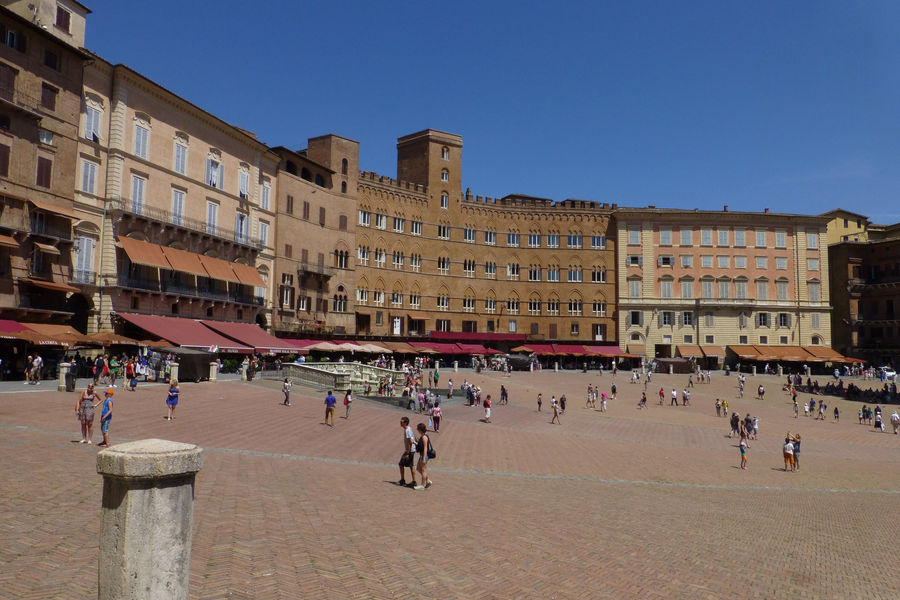
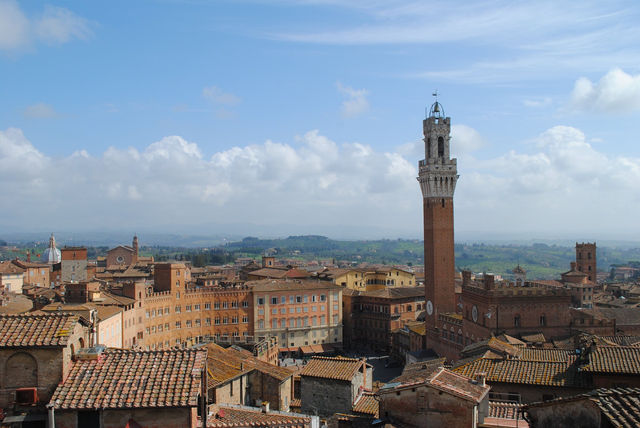
A Gothic Tuscan masterpiece built around Il Campo — the shell-shaped square that hosts the thundering Palio horse race.

  • City
  • April to June and September to October — mild, and clear of the summer heat (bar Palio days)
  • ~approx 1–2 days
  • The Shell-Shaped Campo
  • The Palio Race
  • Gothic Tuscany
  • Striped Cathedral

A great shell-shaped square filling with the roar of a bareback horse race, a striped marble cathedral rising over red rooftops, and church bells rolling across the Tuscan hills at dusk.

Siena is medieval Tuscany at its most complete — a red-brick hill city gathered around a sloping shell-shaped square, fiercely proud of the bareback horse race that still divides it into rival neighbourhoods. Frozen in its Gothic golden age, it is smaller, steeper and more intense than Florence, and unforgettable for it.

Type
city
Ideal length
~approx 1–2 days
Getting around
an entirely walkable, steep hill-town centre
Neighbourhoods
3 areas
Best season / months
April to June and September to October — mild, and clear of the summer heat (bar Palio days)
Language
Italian
Currency
euro (€)
Budget level
moderate
Good for
  • History
  • Culture
  • Couples
  • Food & wine
▸ Discover

About Siena

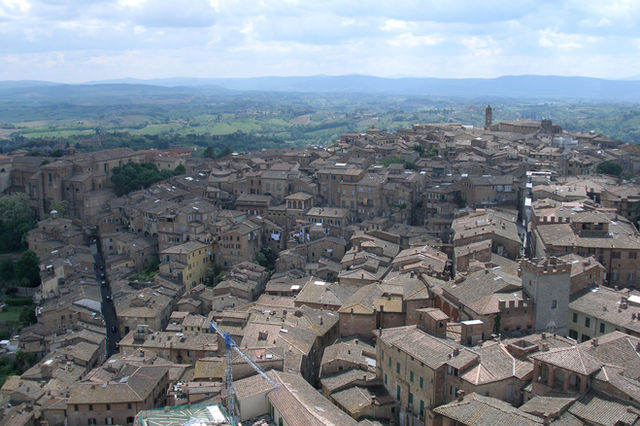
Siena sits on three ridges in the hills of central Tuscany, its red-brick medieval centre spilling down the slopes and meeting at the Piazza del Campo, the sloping, shell-shaped square at its heart. A wealthy rival to Florence in the Middle Ages, it was frozen in its Gothic prime by plague and never overtaken, leaving one of the best-preserved medieval cities in Italy. It is small, steep and entirely walkable, still divided into seventeen fiercely loyal contrade — neighbourhood districts that live for the Palio.

Siena’s historic core is inscribed on the UNESCO World Heritage List (as “Historic Centre of Siena”, 1995).

Why go

Siena is the great Gothic hill city of Tuscany, unspoiled and gathered around one of the most beautiful squares in the world. Its cathedral is a striped-marble marvel, its medieval streets a pleasure to get lost in, and its Palio — a bareback horse race run around the Campo twice each summer — is like nothing else in Europe, an ancient rivalry lived with real passion. It is compact, atmospheric and the ideal base for the vineyards and hill towns around it.

Don't miss

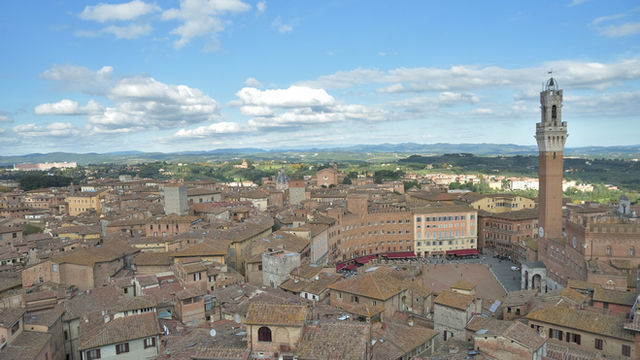
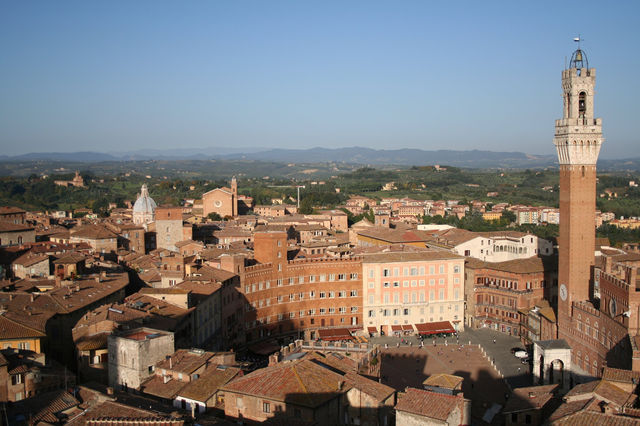
  • The Piazza del Campo — the sloping, shell-shaped main square
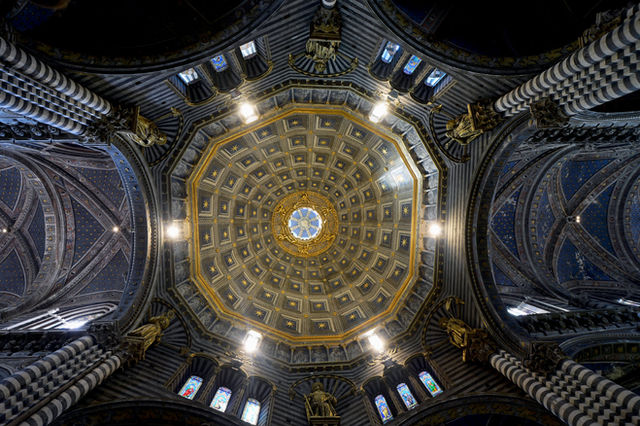
  • The Duomo — the striped-marble Gothic cathedral and its floor
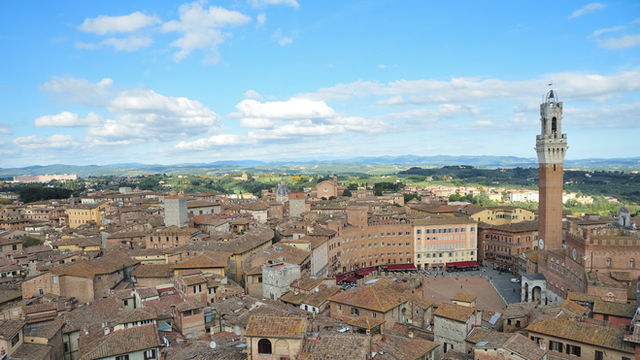
  • The Torre del Mangia — the tower over the Campo
  • The Palazzo Pubblico — the Gothic town hall and its frescoes
  • The contrade and the Palio — the neighbourhoods and their race

Signature experiences

The Campo — Siena's shell-shaped square is one of the loveliest urban spaces in Europe — a sloping fan of red brick where all the streets funnel down, ringed by the Gothic town hall and its soaring tower. Sit on the warm brick with an ice cream, climb the Torre del Mangia for the view over the roofs and hills, and step inside the Palazzo Pubblico for the great medieval frescoes of good and bad government. **The striped cathedral** — Siena's Duomo is a Gothic showpiece, banded inside and out in black and white marble, its floor an astonishing inlaid picture-book usually kept partly covered, its Piccolomini Library glowing with frescoes. Beside it, the "unfinished façade" of a cathedral Siena began and never completed can be climbed for one of the best views in the city — a monument to ambition cut short by plague. **The Palio and the contrade** — Twice each summer, the Campo is packed to run the Palio — a bareback horse race of ferocious, ancient rivalry between the city's seventeen contrade, over in ninety seconds after days of ritual, and lived all year round in the neighbourhoods' flags, songs and loyalties. Even outside race days, wandering the contrade — spotting their symbols, fountains and churches — is to see a medieval social order still alive. **Gothic Tuscany, at a walk** — More than any single sight, Siena's pleasure is the whole — a complete medieval city of red brick and Gothic stone, best explored on foot, up and down its ridges, into its churches and out to the viewpoints over the vineyards and hills. It is the ideal slow base for the Tuscan countryside around it.

Neighbourhoods

Siena neighbourhood by neighbourhood — the character of each and who it suits.

  • The Campo and the Civic Heart

    The sloping shell-shaped square at the city's low point, where all the streets converge — the civic and social heart, ringed by the town hall and cafés.

    Why go
    The single most beautiful space in the city, and the Palio's stage.
    Best for
    First-time sightseeingthe squarecafé-sitting
    Known for
    The Piazza del Campo and its fan-shaped brick paving, the Palazzo Pubblico and its Gothic frescoes, the Torre del Mangia, and the Fonte Gaia fountain.
  • The Cathedral Quarter

    The high western ridge crowned by the great striped cathedral and its complex of museums and buildings, the spiritual heart of medieval Siena.

    Why go
    The Duomo, its marble floor, and the panoramic "unfinished façade".
    Best for
    The cathedralartviews
    Known for
    The striped-marble Duomo and its inlaid floor, the Piccolomini Library's frescoes, the cathedral museum and the "Facciatone" viewpoint, and the old pilgrims' hospital of Santa Maria della Scala.
  • The Contrade and the Backstreets

    The steep residential ridges spreading from the centre — the seventeen contrade neighbourhoods, each with its own flag, fountain, church and fierce loyalty, quiet lanes away from the crowds.

    Why go
    The real, lived-in Siena and the neighbourhood pride.
    Best for
    Wanderinglocal lifequiet corners
    Known for
    The contrada flags and symbols on the streets, the little neighbourhood fountains and churches, the Basilica of San Domenico and San Francesco, and the medieval lanes and viewpoints over the hills.

Views & hidden gems

Best views

  • The Torre del Mangia — over the Campo, the roofs and the hills
  • The Facciatone (unfinished façade) — a panorama beside the cathedral
  • The Basilica of San Domenico terrace — the cathedral floating over the roofs
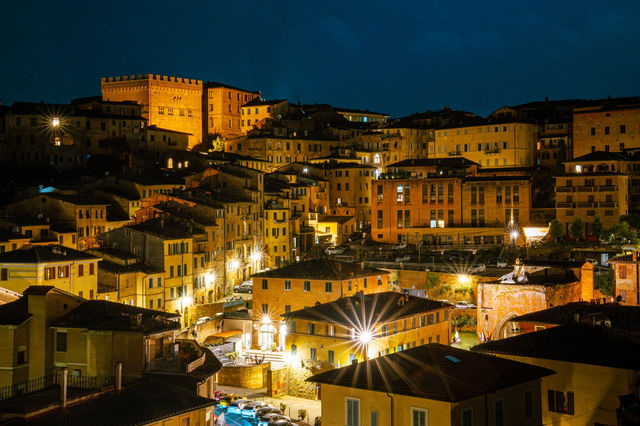
  • The Campo at dusk — the warm brick and the town hall lit

Hidden gems

  • The contrada museums and fountains — each neighbourhood's own little world
  • The cathedral's inlaid marble floor — fully uncovered only for a limited season each year (typically summer into autumn); check the cathedral's official dates before visiting
  • The Orto de' Pecci — a green medieval garden valley just below the walls
  • The Santa Maria della Scala — a vast former pilgrims' hospital with frescoed halls
  • A back-street enoteca for a glass of local Chianti or Brunello

Food & drink

Sienese food is rustic Tuscan — simple, seasonal and built on good bread, olive oil and beans. The classics are pici, a thick hand-rolled pasta, often with a garlic or wild-boar sauce; the bread soups ribollita and pappa al pomodoro; and hearty wild boar. The city's famous sweets are medieval — panforte, a dense fruit-and-nut cake, and the almond ricciarelli biscuits. The wine is superb: Chianti from the hills around, and the great Brunello and Vernaccia within easy reach.

  • Pici — thick hand-rolled pasta, with garlic (all'aglione) or wild-boar sauce
  • Ribollita — a hearty bread-and-vegetable soup
  • Pappa al pomodoro — a thick bread-and-tomato soup
  • Cinghiale — wild boar, in stews and sauces
  • Panforte — a dense medieval fruit-and-nut cake
  • Ricciarelli — soft almond biscuits, with a glass of Vin Santo
Dietary notes

Vegetarians do well — the bread soups, bean dishes, pici with tomato or garlic, and pecorino are naturally meat-free, though check the stock in soups. Vegan options are growing in the centre. Halal and kosher food are limited in a small city and best sought ahead. Gluten-free is understood in newer restaurants; confirm at traditional trattorie where bread and pasta dominate.

Siena in photos

▸ Where you'll stay

Where you'll stay in Siena

Staying inside the walls is the point — the day-trippers thin by evening, and Siena at night, its lanes quiet and the Campo glowing, is magical. Anywhere in the compact centre is walkable, if steep; the streets near the Campo and the cathedral are the most convenient. The contrade backstreets offer quieter, more local stays. Cars must stay outside the walls. Prices climb sharply around the Palio; book far ahead for those days.

  • Budget
    Near the walls / San Domenico budget hotels and B&Bs, a short walk to the Campo, parking outside.
  • Mid-range
    The historic centre characterful hotels near the Campo or the cathedral, walkable to everything.
  • Luxury
    Around the Campo / a converted palazzo grand hotels in historic buildings, the most central address.
Stay

Hotels & rentals around Siena

Pan, zoom and compare live prices — every stay in one map.

▸ Getting around

Getting around Siena

The medieval centre is compact and entirely walkable, if steep — a car is a liability and must stay outside the walls. Escalators and a small shuttle help with the climb up from the station and car parks; everything within the walls is on foot. City and regional buses handle the wider area and the hill towns.

The Campo, the cathedral and the contrade are all a short, if steep, walk apart (~approx). The station is below the hill, reached by escalator or bus; the countryside and hill towns are by regional bus or car parked outside.

▸ Plan your days

Suggested itineraries

Ready-made day plans for Siena — from a single day to a long weekend.

One day

Start at the Piazza del Campo, climb the Torre del Mangia and see the frescoes in the Palazzo Pubblico. Walk up to the striped Duomo and its inlaid floor and the Piccolomini Library, climb the Facciatone for the view, and spend the afternoon wandering the contrade backstreets, ending with an aperitivo on the Campo at dusk.

Two days

Give day two to the details and the hills. See Santa Maria della Scala and a couple of the contrada museums and churches, wander the quiet ridges and viewpoints, then take an afternoon trip out to the vineyards or a nearby hill town like San Gimignano or Monteriggioni, returning for dinner in the centre.

▸ What you'll do

Insider tips

  • Stay overnight — Siena transforms once the day-trippers leave, and the Campo at night is the memory you keep.
  • Book the cathedral's combined ("OPA SI") ticket ahead in season, and check whether the marble floor is uncovered during your visit.
  • Wear proper shoes for the steep, cobbled ridges, and carry water in the summer heat.
  • The Palio is extraordinary but crowded and hard to plan around — decide early whether you want that Siena or a quieter one.
What's on

While you're there

02
SEP
Venice Film Festival 2026
Via Pietro Buratti 5, 30126 Venezia Venice, Italy · cultural
Build a trip around it →
30
JAN
Venice Carnival 2027
Piazza San Marco 40, 30124 Venezia Venice, Italy · festival
Build a trip around it →
Explore

Explore the area

© OpenFreeMap · OSM · terrain Mapterhorn
Do

Local attractions & tours

Skip-the-line tickets and small-group tours in Siena — compare across our partners.

We're still curating hand-picked tickets and tours for Siena. In the meantime, the map above and the nearby cities are a great place to start.

▸ Budget

What it costs in Siena

Backpacker
roughly €55–80 a day as a rough guide.
Mid-range
roughly €120–190 a day as a rough guide.
Luxury
from around €350 a day.
Cash vs card
Cards are widely taken; keep a little cash for market stalls, small bars and the coffee counter.
Tipping
Not expected; a cover charge (coperto) is often on the bill, and rounding up for good service is plenty.
▸ When you'll go

When to visit Siena

April to June and September to October — mild, and clear of the summer heat (bar Palio days)

Spring

What to expect — Mild warming to warm, the hills green and the crowds still moderate, the light lovely on the red brick. Occasional rain.

What's best — The best all-round weather, green Tuscan hills, comfortable walking of the steep lanes, and the city before the summer heat and the Palio crush.

Summer

What to expect — Hot and dry, the hill city baking at midday, and the busiest season — above all on the two Palio days (early July and mid-August), when the city fills to bursting.

What's best — The Palio itself for those who plan for it, long warm evenings on the Campo, and the vineyards at their fullest. Come in spring or autumn if the heat and the Palio crowds aren't for you.

Autumn

What to expect — Warm easing to mild, the summer crowds gone, the light golden and the wine harvest on across the hills. Comfortable, wetter later.

What's best — Comfortable sightseeing, the grape and olive harvest, quieter sights, and the food and wine at their best.

Winter

What to expect — Cool to cold, sometimes foggy or frosty, with short days but often bright, and a quiet, low-season city. The odd dusting of snow on the hills.

What's best — A near-empty Campo and cathedral, cheap rooms, crisp walking weather, and the medieval city at its most atmospheric under a low sun.

▸ Know before you go

Know before you go

Honest swaps

Skip a rushed day trip from Florence → stay a night to see the Campo and the lanes empty and glowing after the coaches leave.

Skip the tourist-menu restaurants on the Campo → eat pici and ribollita in a back-street trattoria for better food and prices.

Skip only the cathedral interior → climb the Facciatone next door for one of the best views in Tuscany.

Skip driving into the walls → park outside and walk; the old town is car-restricted and steep.

Crowds & timing

The Duomo and the Campo are busiest with midday coach groups; go early or in the evening, and book the cathedral's timed and combined tickets ahead.

The two Palio days pack the city and spike prices hugely — plan months ahead if you want to be there, and expect a very different, crowded city.

Local rules & etiquette

The Duomo is an active cathedral — cover shoulders and knees, keep quiet, and mind photography and the floor coverings.

The contrade are proud, living communities — respect their symbols and, around the Palio, the intense local feeling.

The lanes are steep and cobbled — wear proper shoes.

Money

Cards work in most places; carry a little cash for markets and the coffee counter.

Decline dynamic currency conversion and use bank ATMs over tourist machines.

After dark

The Campo and its cafés are the gentle evening heart — an aperitivo on the warm brick more than a nightlife.

A few enotecas and bars in the centre keep a quiet buzz; students add some life in term.

This is an early-to-bed city — dinner, wine and a floodlit-Campo stroll are the evening.

▸ Ready to book your trip?

Getting there

Siena has no airport — most visitors arrive from Florence (whose airport, FLR, is nearest) or Pisa by train or, more reliably, the fast bus, which arrives close to the centre. Siena's train station sits below the hill, with escalators up into the old town; the bus is often the easier link from Florence.

Book

Ready to book your trip?

Flights, airport transfers and car hire — search and compare without leaving the page.

▸ Trip extras
Book

More trip extras

Parking, holiday extras, and more — coming soon.

Coming soon

We're lining up parking, holiday extras and activities you'll be able to add to any trip from here.