← Italy
ITALY · CITY

Urbino

A hill-town gem of the Italian Renaissance — Raphael's birthplace, crowned by a graceful ducal palace.

  • City
  • April to June and September to October — mild; cold winters at altitude
  • ~approx 1 day
  • Ducal Palace
  • Raphael's Birthplace
  • Hilltop Renaissance Court
  • Marche Hills

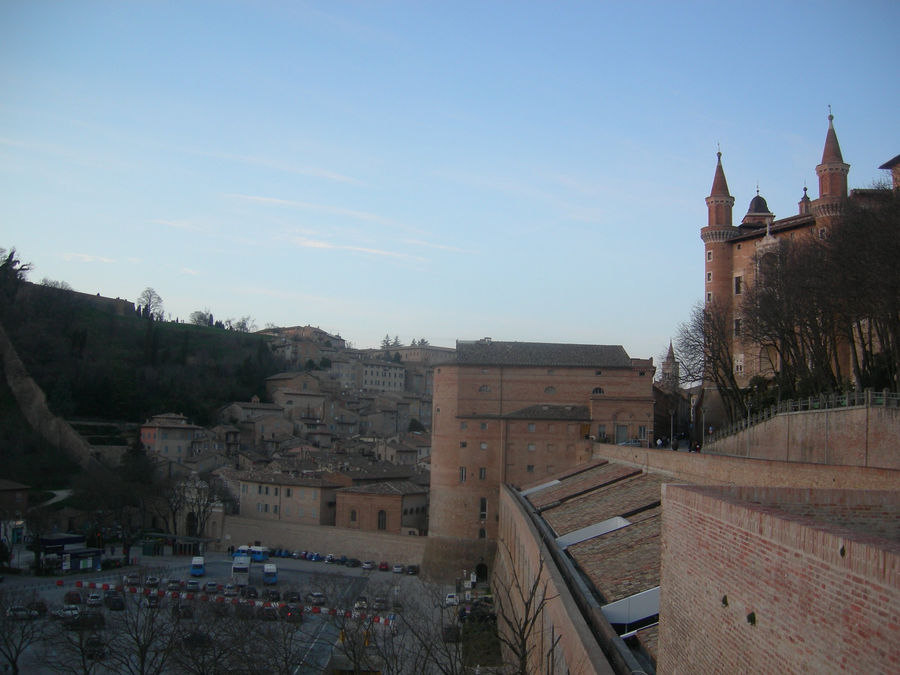
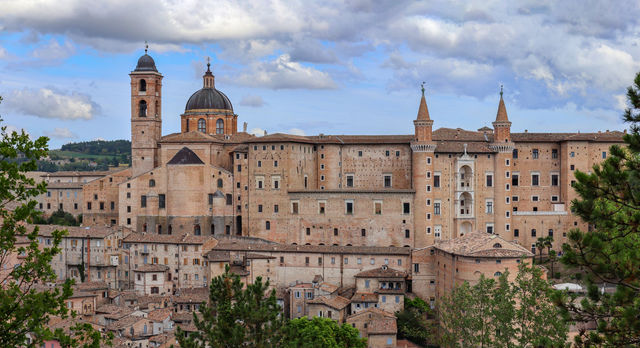
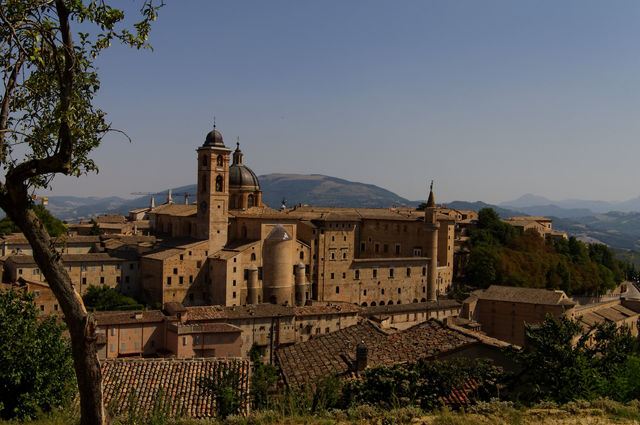
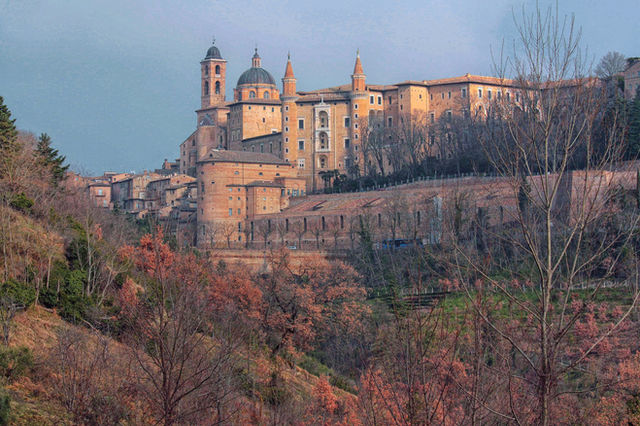
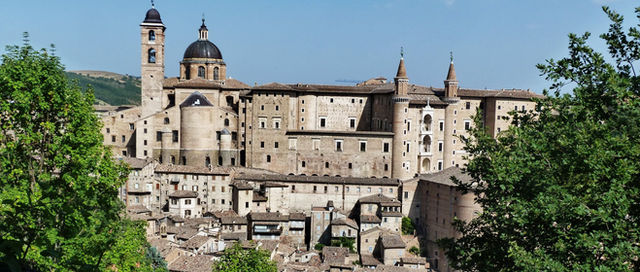
The slender twin turrets of the Palazzo Ducale rising above the rooftops against the Marche hills, a Piero della Francesca panel holding a room in perfect stillness, and the steep brick lanes climbing to the house where Raphael was born.

Urbino is a Renaissance ideal frozen on a hill — the courtly capital of Federico da Montefeltro, its twin-towered ducal palace holding a great art gallery, its steep brick streets the birthplace of Raphael, all set in the green folds of the Marche.

Type
town
Ideal length
~approx 1 day
Getting around
on foot — steep and compact; a bus from the parking
Neighbourhoods
3 areas
Best season / months
April to June and September to October — mild; cold winters at altitude
Language
Italian (some English, given the university)
Currency
euro (€)
Budget level
moderate — affordable by Italian standards
Good for
  • Art
  • History
  • Renaissance lovers
  • Students
  • Quieter Italy
▸ Discover

About Urbino

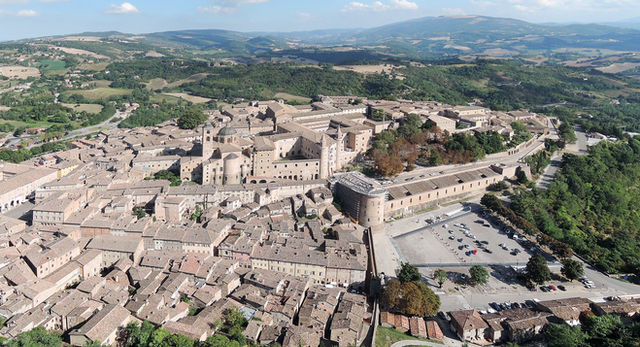
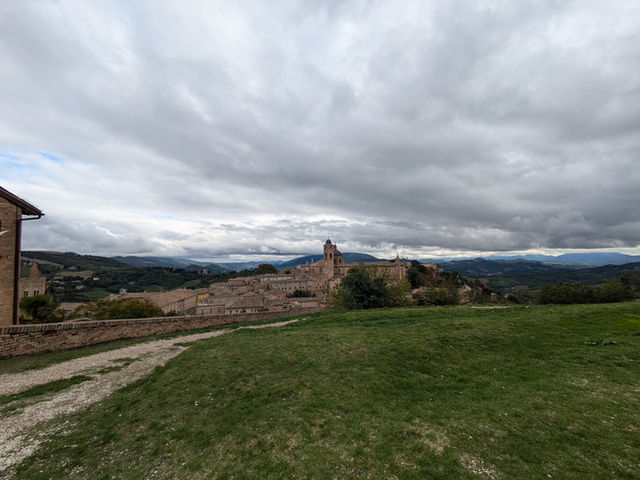
Urbino sits on two hills in the green interior of the Marche, in central-eastern Italy, away from the coast and the main routes. Its compact old town, a brick-and-stone huddle within walls, is dominated by the Palazzo Ducale — Federico da Montefeltro's 15th-century palace, one of the most harmonious buildings of the Renaissance and now home to the region's great art collection. Steep streets climb past Raphael's birthplace, the cathedral and the old university to the Fortezza Albornoz on the height above. Small, hilly and remarkably intact, it's a UNESCO town that feels like stepping into a Renaissance painting.

Why go

Urbino is one of the purest expressions of the Italian Renaissance — Duke Federico's palace was a byword for the ideal court, gathering the finest artists and minds of the age, and its gallery holds masterpieces including Piero della Francesca's Flagellation and the enigmatic Ideal City. It's the birthplace of Raphael, a lively university town, and a beautifully preserved hill town in an under-visited region of good food and green landscapes. Cultured, compact and off the tourist trail, it rewards anyone who makes the climb.

Don't miss

  • The Palazzo Ducale and the Galleria Nazionale delle Marche
  • Piero della Francesca's Flagellation and the Ideal City painting
  • Raphael's birthplace (Casa Natale di Raffaello)
  • The twin towers (torricini) of the ducal palace
  • The Fortezza Albornoz — the hilltop viewpoint

Signature experiences

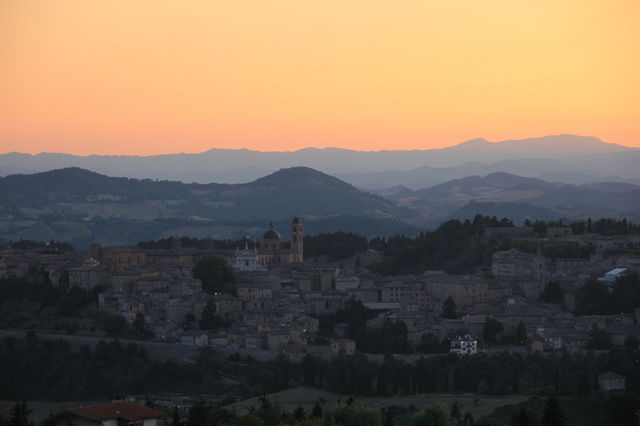
The Palazzo Ducale and its art — Urbino's reason for being is the Palazzo Ducale, Federico da Montefeltro's palace and the model of a Renaissance court — a serene sequence of courtyards, an elegant façade with two slender turrets, and, tucked within, the duke's tiny intarsia studiolo, a study panelled in trompe-l'œil marquetry. It now houses the Galleria Nazionale delle Marche, whose walls hold Piero della Francesca's Flagellation, Raphael's La Muta, and the haunting Ideal City. Give the palace and gallery unhurried time; this is the heart of it all. **Raphael's town** — Urbino gave the world Raphael, and his birthplace on the steep Via Raffaello — a modest house, now a museum, where the young painter grew up in his artist father's workshop — is a quiet pilgrimage. Nearby, the Oratorio di San Giovanni glows with early-15th-century frescoes. Climbing the brick lanes past these, among the students of the old university, you feel the town that shaped one of art's great names. It's small enough to absorb in a slow morning. **The hill town and its view** — Urbino is a joy to walk — steep, quiet brick streets, small piazzas, artisan and food shops, and the old university woven through it. Climb to the Fortezza Albornoz on the height above for the classic view: the twin towers of the ducal palace rising over the tiled roofs against the green Marche hills, especially fine at sunset. The town's intactness and its setting are as much the pleasure as the art. **Marche food and green hills** — Urbino sits in one of Italy's under-rated food regions, and the local table is worth exploring — the crescia sfogliata (a flaky griddle flatbread split and filled), the soft casciotta d'Urbino cheese, passatelli in broth, and, in season, the prized truffles of the Marche hills, all with the local Bianchello wine. The surrounding countryside of vineyards, oak woods and hill villages is lovely for a drive. Settle into a trattoria for the regional specialities.

Neighbourhoods

Urbino neighbourhood by neighbourhood — the character of each and who it suits.

  • The Ducal Core

    The heart of the old town around the Palazzo Ducale — the great palace, the cathedral and the main piazza, all Renaissance grace above the valley. The monumental centre.

    Why go
    The Palazzo Ducale, the art gallery and the ducal square.
    Best for
    The palacearthistorywalking
    Known for
    The Palazzo Ducale and the Galleria Nazionale delle Marche, the twin torricini towers, the cathedral (Duomo), Piazza Rinascimento, and the ducal courtyard.
  • The Upper Town and University

    The steep brick streets climbing from the centre — Raphael's birthplace, the old university, artisan shops and student life on the slopes. The lively, everyday hill town.

    Why go
    Raphael's house, the steep lanes and the student atmosphere.
    Best for
    Raphael's birthplacewanderingcaféslocal life
    Known for
    The Casa Natale di Raffaello on Via Raffaello, the University of Urbino, the Oratorio di San Giovanni frescoes, and the climbing brick lanes and small shops.
  • The Fortezza Albornoz

    The green height above the town, crowned by the Albornoz fortress and a park, giving the classic view back at the twin-towered palace and the hills. The scenic high edge.

    Why go
    The panorama of the ducal palace and the Marche hills.
    Best for
    Viewsphotographya short climbsunset
    Known for
    The Fortezza Albornoz and its ramparts, the park and slopes, and the postcard view of the Palazzo Ducale's turrets against the landscape.

Views & hidden gems

Best views

  • The Fortezza Albornoz — the twin-towered palace and the hills
  • The Palazzo Ducale's turrets from the valley road — the classic profile
  • The ducal courtyard — Renaissance harmony in stone
  • The steep brick lanes at golden hour — the hill town glowing

Hidden gems

  • The duke's studiolo — the intarsia study inside the palace
  • The Oratorio di San Giovanni — luminous early-15th-century frescoes
  • Piero della Francesca's Flagellation — small, perfect, endlessly debated
  • A crescia sfogliata filled with casciotta and greens from a local kiosk
  • The quiet slopes and gardens below the fortress

Food & drink

Urbino's food is Marche country cooking, hearty and under-sung. The local street snack is crescia sfogliata, a flaky griddle bread split and stuffed with cured meats, cheese or greens; the region gives the soft casciotta d'Urbino cheese, passatelli (egg-and-breadcrumb pasta) in broth, olive all'ascolana nearby, and, in autumn, truffles from the hills. The wines are the Marche's — crisp Bianchello del Metauro and reds from the coast. Eat in the town's trattorias and osterie, and try the crescia from a kiosk.

  • Crescia sfogliata — a flaky griddle flatbread, split and filled
  • Casciotta d'Urbino — a soft, mild local sheep-and-cow's-milk cheese
  • Passatelli — egg-and-breadcrumb pasta strands in broth
  • Marche truffles — prized in autumn, shaved over pasta and eggs
  • Tagliatelle and hill-country ragùs — the everyday pasta staples
  • Bianchello del Metauro — the crisp local white wine
Dietary notes

Vegetarians manage with cheese-and-greens crescia, passatelli (check the broth), truffle and vegetable pasta and salads, though cured meats and stock are common — ask. Vegan is doable with pasta and vegetable dishes on request. Halal and kosher are effectively unavailable. Gluten-free is hard around crescia, passatelli and pasta — grilled dishes, cheese and salads are safer, but confirm.

Urbino in photos

▸ Where you'll stay

Where you'll stay in Urbino

Stay in the walled old town to be steps from the palace, Raphael's house and the lanes — the compact centre holds B&Bs and small hotels in historic buildings, though expect steep streets and steps. A handful of stays sit just outside the walls, handier for parking. Urbino is tiny and affordable, and easily walked once you're up the hill; leave the car at the edge. Book ahead for university events and the summer festivals.

  • Budget
    Near the centre / by the parking budget rooms and B&Bs a short climb or bus from the palace.
  • Mid-range
    The walled old town comfortable hotels and B&Bs among the brick lanes.
  • Luxury
    The best central and edge-of-town hotels high-end rooms in historic buildings, the top of a modest range.
Stay

Hotels & rentals around Urbino

Pan, zoom and compare live prices — every stay in one map.

▸ Getting around

Getting around Urbino

The old town is tiny, steep and entirely walkable — everything is on foot, up and down brick lanes (wear grippy shoes). Car parks and lifts/shuttles sit at the edge; a car is a liability in the restricted centre but useful for the surrounding hills.

The ducal core, the upper town and the Fortezza are all a short (if steep) walk apart (~approx) — the whole town crosses on foot in 15–20 minutes.

▸ Plan your days

Suggested itineraries

Ready-made day plans for Urbino — from a single day to a long weekend.

One day

Spend the morning in the Palazzo Ducale and the Galleria Nazionale delle Marche — the courtyards, the duke's studiolo, and the great paintings, Piero's Flagellation and the Ideal City among them. Have a crescia-and-casciotta lunch, then climb the brick lanes to Raphael's birthplace and the frescoed Oratorio di San Giovanni. In the late afternoon, walk up to the Fortezza Albornoz for the twin-tower view at sunset, and dine in an old-town osteria.

Two days

With an overnight, slow down and add the countryside. Explore the quieter lanes and any art you missed, enjoy the town at dawn and after dark when the day visitors have gone, and take a drive into the green Marche hills — vineyards, hill villages and, in season, the truffle country — before a last regional dinner.

▸ What you'll do

Insider tips

  • Leave the car at the edge and walk or take the shuttle up — the centre is steep and restricted.
  • Give the Palazzo Ducale and its gallery real time; the Piero della Francesca panels and the studiolo reward it.
  • Climb to the Fortezza Albornoz for the classic twin-tower view, best at sunset.
  • Try crescia sfogliata — the town's flaky filled flatbread — from a local kiosk.
What's on

While you're there

02
SEP
Venice Film Festival 2026
Via Pietro Buratti 5, 30126 Venezia Venice, Italy · cultural
Build a trip around it →
30
JAN
Venice Carnival 2027
Piazza San Marco 40, 30124 Venezia Venice, Italy · festival
Build a trip around it →
Explore

Explore the area

© OpenFreeMap · OSM · terrain Mapterhorn
Do

Local attractions & tours

Skip-the-line tickets and small-group tours in Urbino — compare across our partners.

We're still curating hand-picked tickets and tours for Urbino. In the meantime, the map above and the nearby cities are a great place to start.

▸ Budget

What it costs in Urbino

Backpacker
roughly €45–70 a day.
Mid-range
roughly €85–150 a day.
Luxury
€210 a day and up.
Cash vs card
Cards and contactless work widely, but carry a little cash for kiosks, small trattorias and parking.
Tipping
Tipping is modest in Italy — a cover charge (coperto) is usually on the bill; round up or leave small change.
▸ When you'll go

When to visit Urbino

April to June and September to October — mild; cold winters at altitude

Spring

What to expect — Mild and green, warming through the season with the odd shower, the hills at their freshest. One of the best times.

What's best — Comfortable weather for the steep town and the views, green Marche hills, and café terraces reopening — a lovely, quiet season.

Summer

What to expect — Warm to hot but tempered by the hilltop altitude, cooling at night, and lively with summer festivals; the student town quieter. Pleasant evenings.

What's best — Warm days for the town and the countryside, the summer arts and early-music festivals, and cool evenings on the ramparts — a good, uncrowded time.

Autumn

What to expect — Crisp and colourful, cooling toward winter, with the truffle-and-harvest season and golden light on the brick. One of the best times.

What's best — The Marche truffle and wine season, clear light on the palace and hills, and thin crowds — a rewarding, flavourful window.

Winter

What to expect — Cold at this hilltop altitude, with frost, grey spells and occasional snow, and short days. The quiet low season.

What's best — The town atmospheric and near-empty, the palace and gallery crowd-free, cosy osterie with hearty food, and low prices — pack warm layers for the hill cold.

▸ Know before you go

Know before you go

Honest swaps

Skip a coastal-resort day → head inland to Urbino for a pure, uncrowded Renaissance hill town.

Skip a tourist-menu meal → try crescia sfogliata from a kiosk and casciotta cheese in a trattoria.

Skip only the palace's grand rooms → seek out the tiny studiolo and the Piero della Francesca panels.

Skip driving into the centre → park at the edge and walk or take the shuttle up the hill.

Crowds & timing

Urbino is rarely crowded, but summer festivals and university events bring visitors — book ahead then.

The gallery can close Mondays and has seasonal hours — check before planning your visit.

Local rules & etiquette

The town is steep and stepped — wear proper shoes for the brick lanes.

Dress respectfully inside the cathedral and oratories, working religious sites.

Photography is often restricted inside the gallery — check the rules.

Money

Cards work widely; carry a little cash for kiosks, small trattorias and parking.

Use bank ATMs and avoid the standalone tourist machines with poor rates.

After dark

The central piazzas and the streets by the university hold the evening aperitivo and student bar scene.

The town is small and early; evenings are dinner, a wine and a lamplit wander rather than clubs.

Summer festival nights bring concerts and a livelier buzz to the piazzas.

▸ Ready to book your trip?

Getting there

Urbino has no railway; most arrive by bus or car, with the nearest airports and stations on the coast (Rimini and Ancona-Falconara) around an hour away, and buses running inland to the town. Park at the edge and walk or take a shuttle up.

Book

Ready to book your trip?

Flights, airport transfers and car hire — search and compare without leaving the page.

▸ Trip extras
Book

More trip extras

Parking, holiday extras, and more — coming soon.

Coming soon

We're lining up parking, holiday extras and activities you'll be able to add to any trip from here.