← Italy
ITALY · CITY

Verona

The romantic city of Romeo and Juliet, built around a colossal Roman arena that still hosts grand summer operas.

  • City
  • April to June and September to October — mild, before and after the summer heat
  • ~approx 1–2 days
  • Roman Arena
  • Romeo & Juliet
  • Pink-Marble Squares
  • Gateway to Lake Garda

An amphitheatre two thousand years old ringing with an opera crowd under the stars, marble squares glowing pink at dusk, and the green Adige curling fast beneath a Roman bridge.

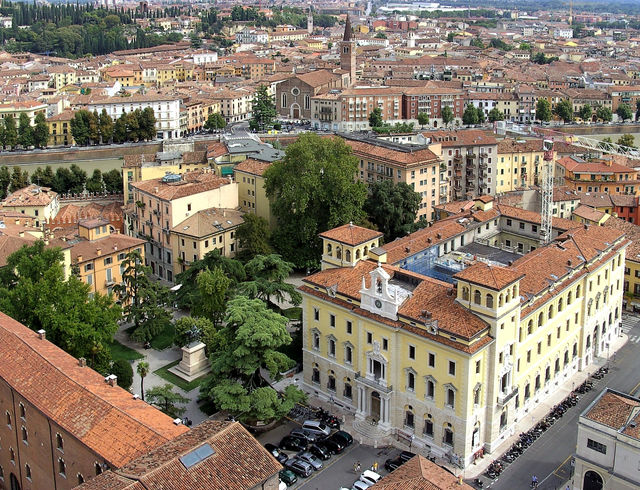
Verona is a rosy-stoned northern Italian city wrapped in a loop of the Adige, where a vast Roman arena still fills for summer opera and a much-visited balcony trades on the world's most famous love story. It is elegant, walkable and genuinely lovely — and refreshingly less mobbed than Venice down the line.

Type
city
Ideal length
~approx 1–2 days
Getting around
an entirely walkable historic centre
Neighbourhoods
3 areas
Best season / months
April to June and September to October — mild, before and after the summer heat
Language
Italian
Currency
euro (€)
Budget level
moderate
Good for
  • History
  • Culture
  • Couples
  • Food & wine
▸ Discover

About Verona

Verona sits in the Veneto plain of northern Italy, cradled in a tight loop of the Adige river, with hills rising on the far bank. Its historic centre fills the loop — the great Roman Arena on Piazza Bra, the market square of Piazza delle Erbe, and a dense weave of medieval streets and Scaliger monuments. Across the river lie the Roman theatre and the hillside viewpoints. It is compact, flat and made for walking, and sits on the main rail line between Milan and Venice, a short hop from Lake Garda.

Verona’s historic core is inscribed on the UNESCO World Heritage List (as “City of Verona”, 2000).

Why go

Verona gives you a beautiful, layered Italian city without the overwhelming crowds of its neighbours — a superbly preserved Roman arena that still hosts a summer opera festival, elegant marble squares, and the romance the world attaches to it thanks to Shakespeare. It has the food and wine of the Veneto, a lovely riverside setting, and Lake Garda within reach. It is the ideal base for the region and a rewarding city in its own right.

Don't miss

  • The Verona Arena — the Roman amphitheatre and summer opera
  • Piazza delle Erbe — the frescoed market square
  • Juliet's House — the famous (if invented) balcony
  • Castelvecchio and its bridge — the medieval castle over the Adige
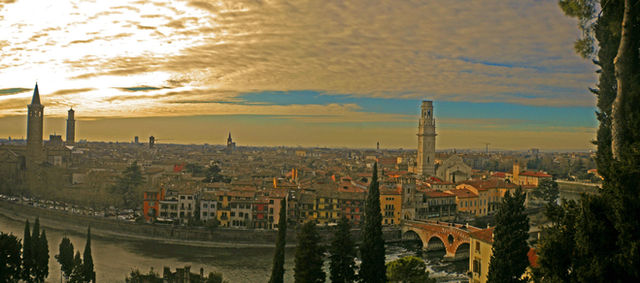
  • The Roman Theatre and Castel San Pietro — the hillside views

Signature experiences

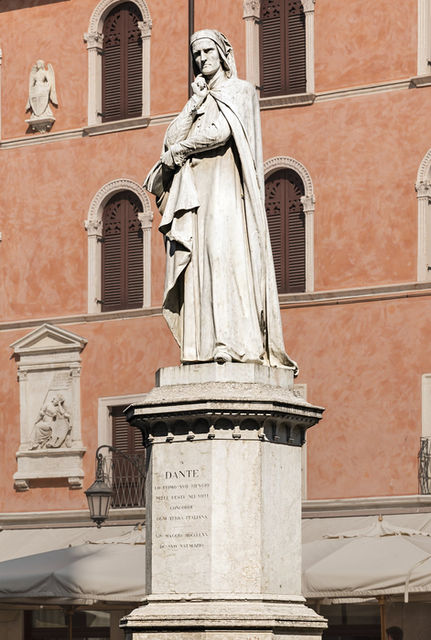
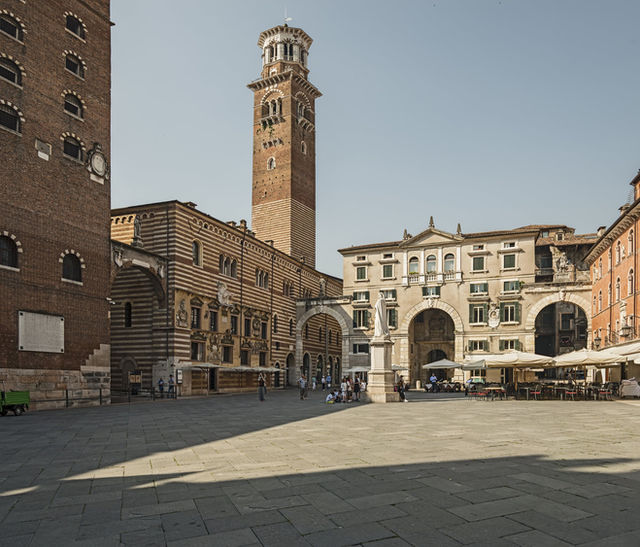
Opera in a Roman arena — Verona's Arena is a first-century Roman amphitheatre, remarkably intact, and for a few weeks each summer it becomes one of the world's great opera stages — thousands watching under the stars from ancient stone tiers, holding little candles as the light fades. Even outside the festival, walking the arena and its tunnels brings the Roman city vividly close. It is the city's defining sight. **The pink-marble squares** — Verona's heart is its squares. Piazza delle Erbe, the old Roman forum, is now a market ringed with frescoed façades and a fountain; Piazza dei Signori beside it is grander and calmer, watched by a statue of Dante. Climb the Torre dei Lamberti for the view over the red roofs, and time a wander for dusk, when the local pink-tinged stone glows. **Romeo and Juliet, honestly** — Shakespeare set his star-crossed lovers here, and the city leans in — Juliet's House draws crowds to a balcony that was actually added in the twentieth century, its walls covered in love notes and a bronze Juliet polished by hopeful hands. It is pure tourist theatre and knowingly so; enjoy the myth lightly, then give the real Roman and medieval city its due. **The river and the hills** — The Adige loops through the city, and crossing it opens Verona's quieter, older side — the Roman Theatre built into the hillside, the terraced Giusti gardens, and the climb (or funicular) to Castel San Pietro for the classic panorama back over the river, the bridges and the arena. It is the loveliest half-hour in the city.

Neighbourhoods

Verona neighbourhood by neighbourhood — the character of each and who it suits.

  • The Centro Storico

    The historic heart in the river's loop — the Roman arena, the great squares and the medieval streets, elegant and dense with the sights everyone comes for.

    Why go
    The single densest run of Verona's landmarks, all on foot.
    Best for
    First-time sightseeingthe squaresthe arena
    Known for
    The Verona Arena on Piazza Bra, the frescoed Piazza delle Erbe, the Piazza dei Signori and the Scaliger tombs, the Torre dei Lamberti, and Juliet's House.
  • Castelvecchio and the River

    The western edge on the Adige, anchored by a red-brick medieval castle and its crenellated bridge, where the river bends fast below.

    Why go
    The castle, the bridge, and the riverside walk.
    Best for
    The castle museumriver viewsa quieter wander
    Known for
    The Castelvecchio castle and its art museum, the crenellated Scaliger Bridge over the Adige, and the riverside promenades.
  • Veronetta and the Hills

    The left bank across the river — the Roman theatre, the hillside gardens and the castle-topped viewpoint looking back over the whole city.

    Why go
    The Roman theatre and the best panorama of Verona.
    Best for
    ViewsRoman ruinsa garden walk
    Known for
    The Roman Theatre and its archaeological museum, the Castel San Pietro viewpoint, the terraced Giardino Giusti gardens, and the Ponte Pietra Roman bridge.

Views & hidden gems

Best views

  • Castel San Pietro — the whole city in the river's loop, best at sunset
  • The Torre dei Lamberti — over the squares and the red roofs
  • The Ponte Pietra — the Roman bridge and the hills beyond
  • Piazza delle Erbe at dusk — the frescoed façades and the market

Hidden gems

  • The Giardino Giusti — a Renaissance terraced garden with a cypress avenue
  • The Scaliger tombs — extravagant Gothic funerary monuments in a wrought-iron enclosure
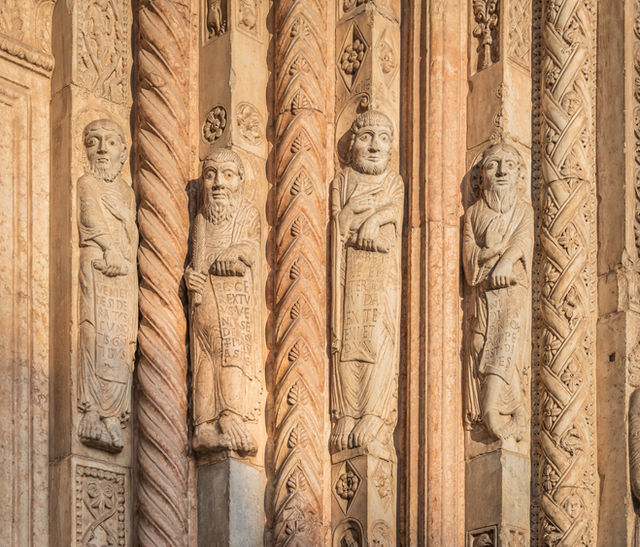
  • The Basilica di San Zeno — a Romanesque masterpiece with bronze doors, away from the centre
  • The Ponte Pietra riverbank — a quiet spot to watch the Adige run
  • An Amarone tasting — the great local wine, in an old enoteca

Food & drink

Verona eats and drinks Veneto, and it drinks very well — this is the heart of the Valpolicella wine country, home of the rich, powerful Amarone made from dried grapes. The food is northern and hearty: risotto (sometimes cooked in Amarone), the thick bigoli pasta, polenta, and the regional pastissada horse-meat stew, a Veronese tradition not to everyone's taste. Pandoro, the tall golden Christmas cake, was born here. An aperitivo of the local Custoza white or a spritz is the ritual.

  • Risotto all'Amarone — risotto cooked in the rich local red wine
  • Bigoli — thick, rough egg pasta, often with duck ragù or anchovy
  • Pastissada de caval — a slow-cooked horse-meat stew, a Veronese classic
  • Polenta — with cheese, mushrooms or stew, a northern staple
  • Pandoro — the tall, star-shaped golden Christmas cake, born in Verona
  • Amarone and Valpolicella — the great local reds
Dietary notes

Vegetarians manage with risotto, polenta, pasta and the newer restaurants, though some classics are meat-based (and the horse-meat dish is best asked about). Vegan options are growing in the centre. Halal and kosher food are limited and best sought ahead. Gluten-free is understood in newer restaurants; risotto and polenta suit it — confirm.

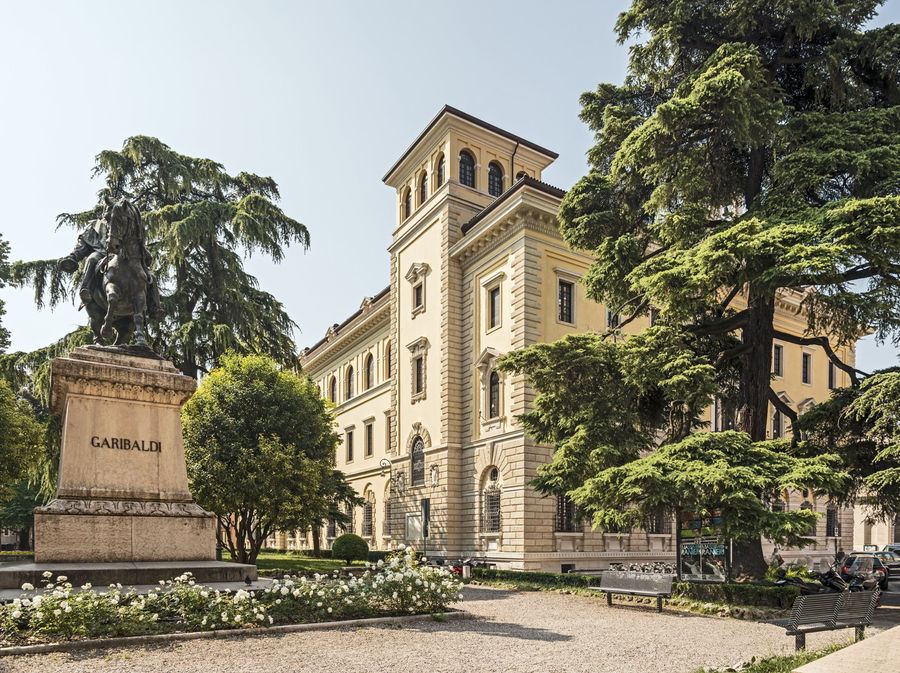
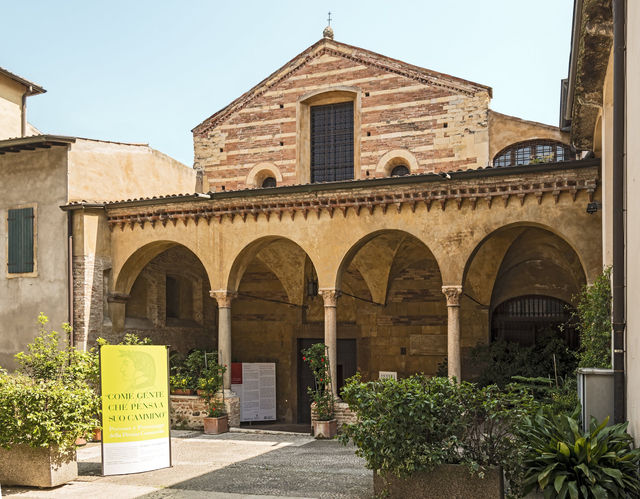
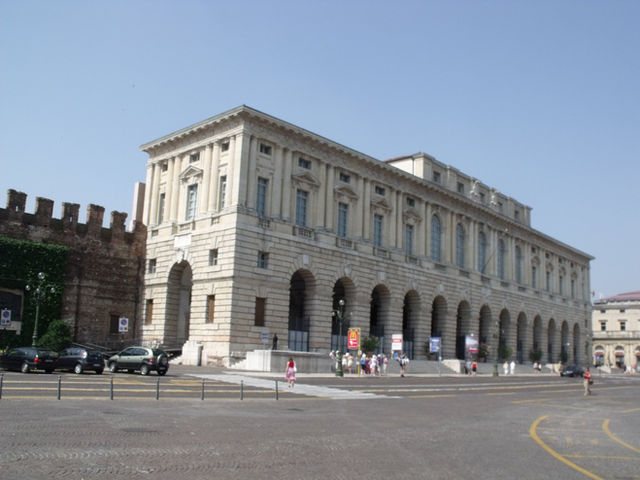
Verona in photos

▸ Where you'll stay

Where you'll stay in Verona

The Centro Storico inside the river loop is the ideal base — walkable to the arena, the squares and the river, elegant and central, at the top of the local price range. The streets near Piazza Bra and Piazza delle Erbe are the most convenient. Across the river, Veronetta is quieter, more local and often better value, a short walk in. Prices climb during the summer opera festival; book ahead for those weeks.

  • Budget
    Near the station / Veronetta budget hotels and B&Bs, a short walk or bus to the centre.
  • Mid-range
    The Centro Storico boutique hotels near the squares and the arena, walkable to everything.
  • Luxury
    Around Piazza Bra / the arena grand hotels by the amphitheatre and the smart streets.
Stay

Hotels & rentals around Verona

Pan, zoom and compare live prices — every stay in one map.

▸ Getting around

Getting around Verona

The historic centre in the river loop is compact and entirely walkable — a car is a liability in the restricted-traffic old streets. City buses link the station and the outskirts; a funicular climbs to Castel San Pietro. Everything central is on foot.

The centro storico, Castelvecchio and the river are all a short walk apart (~approx). The Veronetta side and the hill viewpoint are across the Ponte Pietra, a short walk or funicular from the centre.

▸ Plan your days

Suggested itineraries

Ready-made day plans for Verona — from a single day to a long weekend.

One day

Start at the Verona Arena on Piazza Bra, then walk to Piazza delle Erbe and Piazza dei Signori, climbing the Torre dei Lamberti for the view. See Juliet's House and the Scaliger tombs, cross to Castelvecchio and its bridge, then end across the river at Castel San Pietro for the sunset panorama.

Two days

Give day two to the river's far side and the wine. Visit the Roman Theatre and the Giardino Giusti gardens, see the Romanesque San Zeno basilica, and spend the afternoon on a Valpolicella wine tasting or an easy trip out to Lake Garda, returning for a square-side dinner.

▸ What you'll do

Insider tips

  • Book arena opera tickets well ahead in summer, and know the difference between the cheap stone tiers (bring a cushion) and the pricier numbered seats.
  • Climb to Castel San Pietro at sunset for the best view over the river loop — walk up, or take the funicular.
  • Verona is a short train hop from both Venice and Lake Garda — an ideal base rather than a rushed stop.
  • The centre is small and flat and entirely walkable — you won't need transport within it.
What's on

While you're there

02
SEP
Venice Film Festival 2026
Via Pietro Buratti 5, 30126 Venezia Venice, Italy · cultural
Build a trip around it →
30
JAN
Venice Carnival 2027
Piazza San Marco 40, 30124 Venezia Venice, Italy · festival
Build a trip around it →
Explore

Explore the area

© OpenFreeMap · OSM · terrain Mapterhorn
Do

Local attractions & tours

Skip-the-line tickets and small-group tours in Verona — compare across our partners.

We're still curating hand-picked tickets and tours for Verona. In the meantime, the map above and the nearby cities are a great place to start.

Plan

Trips in Verona

Day-by-day itineraries that take in Verona — routes, timings and what to book.

▸ Budget

What it costs in Verona

Backpacker
roughly €55–80 a day.
Mid-range
roughly €120–190 a day.
Luxury
€350 a day and up.
Cash vs card
Cards are widely taken; keep a little cash for market stalls, small bars and the coffee counter.
Tipping
Not expected; a cover charge (coperto) is often on the bill, and rounding up for good service is plenty.
▸ When you'll go

When to visit Verona

April to June and September to October — mild, before and after the summer heat

Spring

What to expect — Mild warming to warm, bright and comfortable, the squares and riverside at their freshest and the crowds still moderate. Occasional rain.

What's best — The best all-round weather, comfortable sightseeing, and the city before the summer opera crowds and heat.

Summer

What to expect — Hot and often humid on the plain, and the busiest season, above all during the arena opera festival, when the centre fills in the evenings. Afternoons can be sweltering.

What's best — The opera festival under the stars, long warm evenings in the squares, and Lake Garda an easy escape. Come in spring or autumn if the heat and crowds put you off.

Autumn

What to expect — Warm easing to mild, the summer crowds thinning, the light golden and the wine harvest on. Comfortable, wetter later.

What's best — Comfortable walking, the Valpolicella harvest and Amarone season, quieter sights, and the pink stone glowing in the low sun.

Winter

What to expect — Cold, grey and sometimes foggy on the plain, with short days, but December brings Christmas markets and lights to the squares. Deep winter is quiet.

What's best — Christmas markets in the squares, the pandoro at its source, a quiet arena and cheaper rooms, and cosy enotecas for the local reds.

▸ Know before you go

Know before you go

Honest swaps

Skip queuing to cram into Juliet's courtyard for a balcony photo → enjoy the myth briefly, then give your time to the arena and the squares.

Skip the tourist-menu restaurants on Piazza Bra → eat risotto and bigoli in a back-street osteria where locals go.

Skip a rushed day trip from Venice → Verona rewards a night, especially to see the squares at dusk and, in summer, the opera.

Skip the pricey arena-square cafés → have your spritz at a quieter enoteca off the main squares.

Crowds & timing

Juliet's House and the arena are busiest midday; go early, and book arena opera tickets and any tower climbs ahead.

The summer opera festival fills the city in the evenings and spikes prices — plan accommodation around it.

Local rules & etiquette

Cover shoulders and knees for the churches, and keep quiet inside.

Order coffee standing at the bar for the local price; sitting at a table in the squares costs more.

The pastissada horse-meat dish is a genuine local tradition — ask if you'd rather avoid it, rather than assume.

Money

Cards work in most places; carry a little cash for markets and the coffee counter.

Decline dynamic currency conversion and use bank ATMs over tourist machines.

After dark

The squares — Piazza delle Erbe and Piazza Bra — hold the aperitivo and evening crowd, lively and central.

The Veronetta side and the university area run younger and a little later.

In summer, the opera and the warm-evening square life are the night out; this is not a big-club city.

▸ Ready to book your trip?

Getting there

Verona's airport (VRN, Villafranca) is a short bus or taxi southwest of the city; Venice, Milan and Bergamo airports are also within reach. Verona Porta Nuova station, on the main Milan–Venice line, is a short bus or twenty-minute walk from the centre, with fast trains across the north and to Lake Garda.

Book

Ready to book your trip?

Flights, airport transfers and car hire — search and compare without leaving the page.

▸ Trip extras
Book

More trip extras

Parking, holiday extras, and more — coming soon.

Coming soon

We're lining up parking, holiday extras and activities you'll be able to add to any trip from here.