← Mexico
MEXICO · CITY

Guanajuato

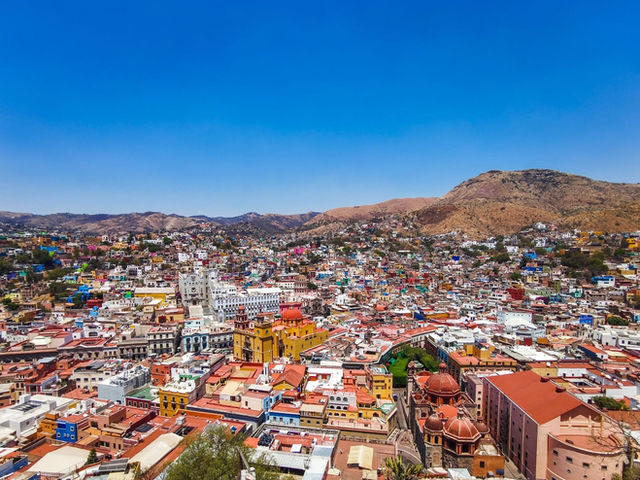
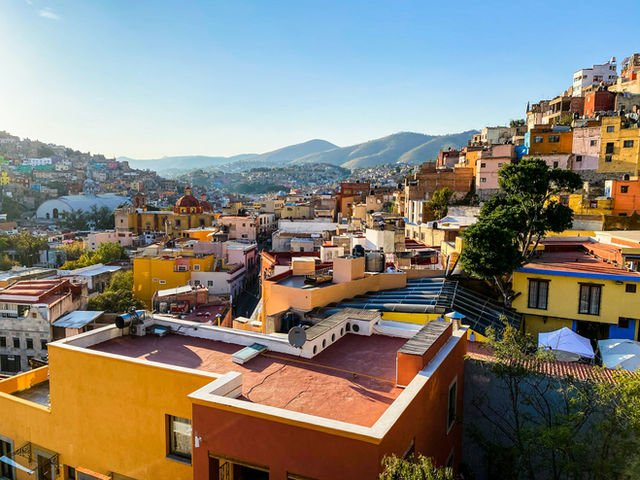
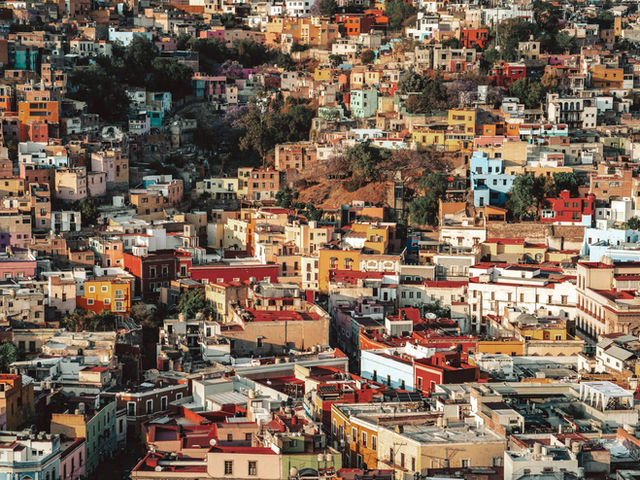
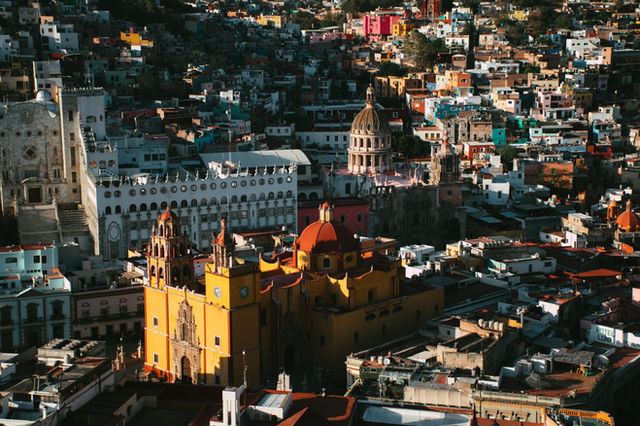
Mexico's most colourful colonial city: underground tunnels, silver-mining history, Diego Rivera's birthplace and a UNESCO-listed historic core.

  • City
  • 3–4 days
▸ Where you'll stay

Where you'll stay in Guanajuato

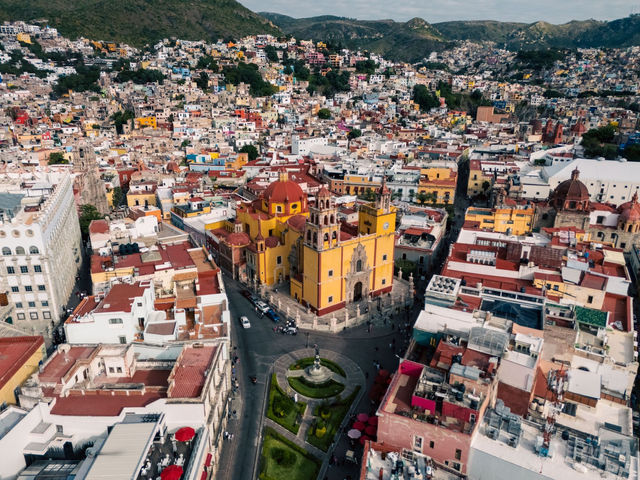
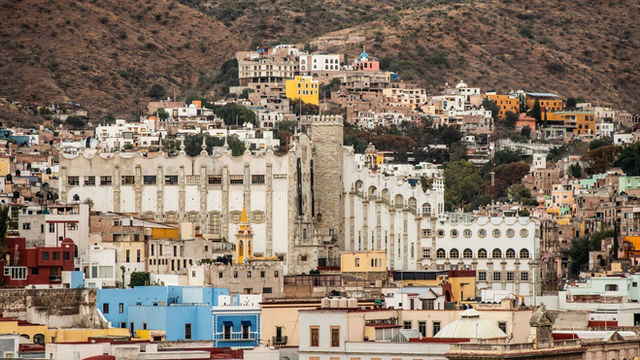
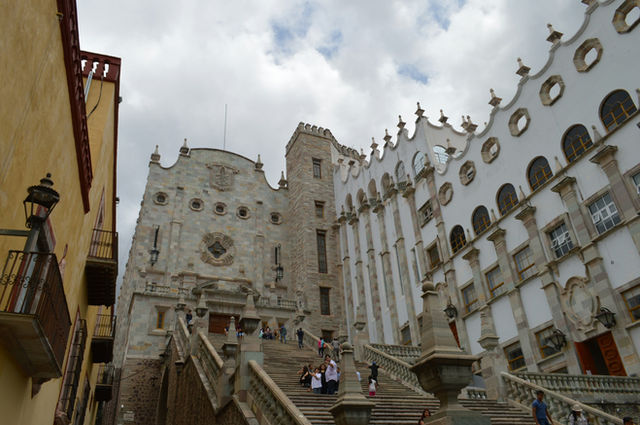
<h4>Historic Centre (Centro Histórico)</h4><p>Staying in the historic centre puts you within walking distance of virtually everything — the Alhóndiga, the Jardín de la Unión, the Teatro Juárez, the market and the main callejones (alleyways). The streets are pedestrian-friendly but steep and cobbled, so comfortable shoes are essential. Family-friendly hotels near the Jardín de la Unión tend to sit in historic colonial buildings; expect characterful rooms, internal courtyards and often a rooftop with city views. This is my first choice for families on a first visit.</p><h4>Pípila Hill (Zona de Pípila)</h4><p>The residential streets climbing towards the Pípila monument offer quieter guesthouses and small family-run hotels with elevated views over the city. The funicular from the centre reaches this zone in minutes. Mid-range options here tend to have more space than the tight colonial conversions below and often include breakfast. Good for families wanting a calmer base without sacrificing access.</p><h4>Near the University (Zona Universitaria)</h4><p>The area around the <em>Universidad de Guanajuato</em> — with its famous stepped facade — has a lively, youthful energy: good cafés, bookshops, street food and evening atmosphere. Family-friendly guesthouses and boutique options here suit families with older teens who want the social texture of a student district. It is also close to the Diego Rivera Museo.</p><h4>How to choose</h4><p>For a first visit with younger children, I would prioritise a central hotel near the Jardín de la Unión — proximity to all the main sights removes the strain of navigating steep streets with tired legs. Families with teens who want more independence and local atmosphere will enjoy the university zone. Both areas are equally safe and well-served for the tourist city that Guanajuato is.</p>

Stay

Hotels & rentals around Guanajuato

Pan, zoom and compare live prices — every stay in one map.

▸ Getting around

Getting around Guanajuato

Walking

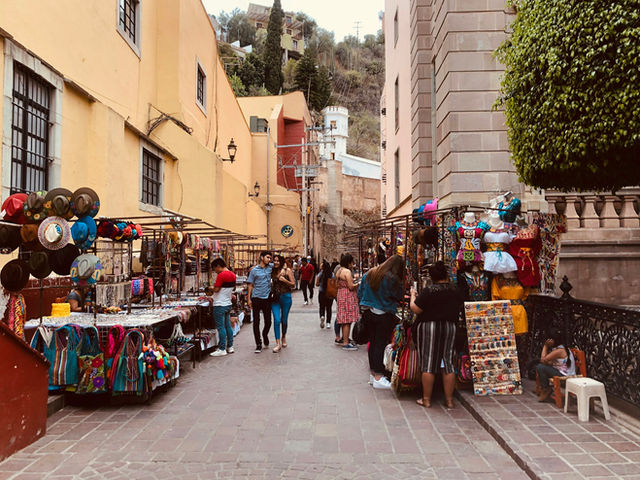
The historic centre of Guanajuato is extraordinarily walkable for those who do not mind gradients — nearly every major sight is within 15–20 minutes on foot of the Jardín de la Unión. The callejones (pedestrian alleyways) are the city's circulatory system and cannot be accessed by vehicle at all. Comfortable shoes with grip are essential; cobblestones and steep inclines are the norm, and some alleyways have uneven steps. I would call it very walkable by Mexican city standards but physically demanding compared to, say, a European flat-city walk.

Subterranean road system (tunnels)

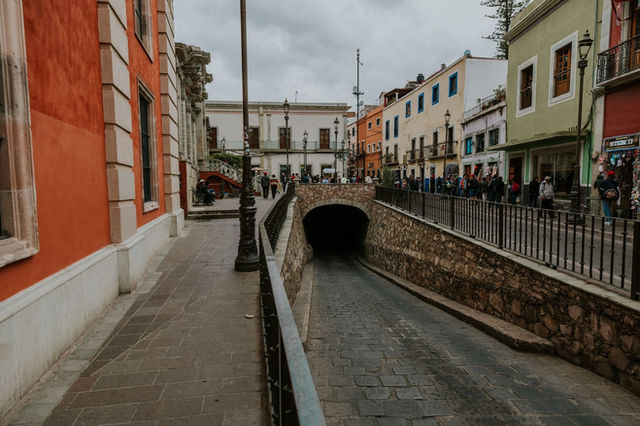
Guanajuato's most distinctive transport feature is its network of underground tunnels — the original Río Guanajuato riverbed, drained and repurposed in the 1960s as a road network running beneath the historic centre. City buses and taxis use the tunnels; walking through them is also possible on designated pedestrian stretches and is genuinely atmospheric. The main tunnel entrance near the bus station is a useful landmark for orientation.

Buses

City buses are cheap (~£0.20–0.30 per ride), frequent and cover the city including the route to La Valenciana and the mines. The network is navigable for a non-Spanish-speaker if you have your destination written down. For the route to the Mina de Bocamina, ask hotel staff for the current correct bus number — it changes occasionally. The main bus station (Central de Autobuses) handles regional routes including León and Mexico City connections.

Taxis and ride-hailing

Taxis are plentiful and affordable in Guanajuato — agree the fare before getting in or ensure the meter is running. Most intra-city journeys cost ~£2–5. Uber operates in León (30km away) but coverage in Guanajuato city itself is limited; do not rely on it. Licensed taxi ranks near the Jardín de la Unión and the bus terminal are reliable. For trips to the mines or outlying sights, negotiate a return fare with a driver and a fixed pickup time.

Funicular

The funicular links the historic centre to the Pípila monument and the residential hillside above in roughly three minutes. Fares are very low. It operates from morning to evening (hours vary by season) and is the most enjoyable way to reach the viewpoint — the alternative is a steep walk up alleyways.

▸ What you'll do

Insider tips

Historic Town & Adjacent Mines (UNESCO World Heritage Site)

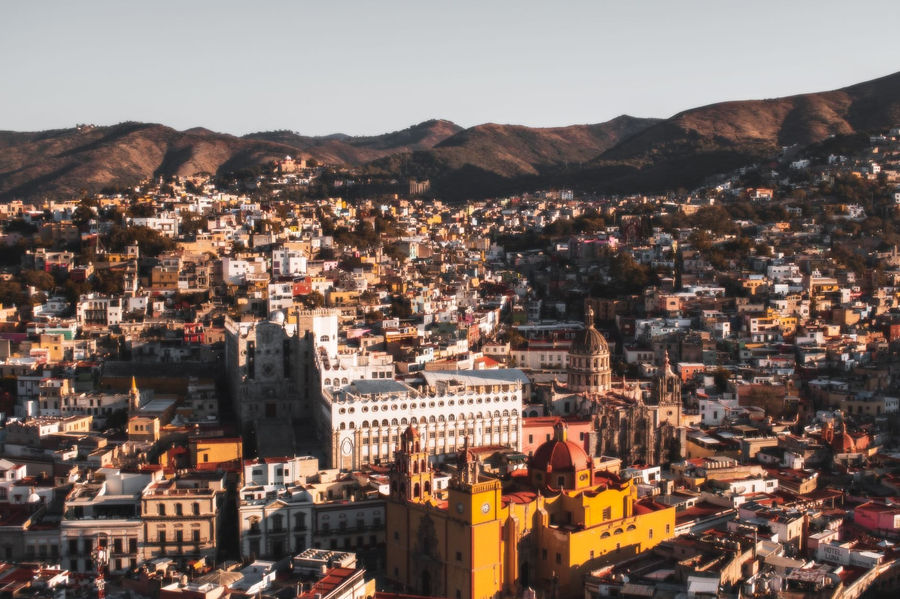
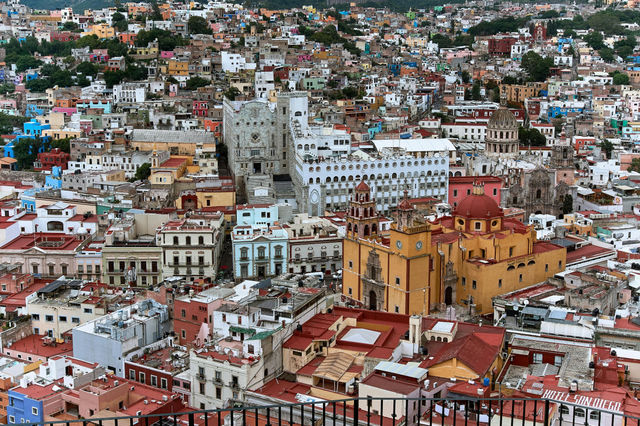
The entire UNESCO-designated core is the centrepiece, and it is best understood as a living city rather than a museum district — walk the main callejones, climb to viewpoints like the Pípila statue and simply absorb the layered colonial architecture. I always dedicate at least half a day to the Alhóndiga de Granaditas, the former granary that played a pivotal role in Mexico's 1810 War of Independence and is now a superb regional history museum — extraordinarily relevant to Mexican identity and compelling for teenagers. The adjacent silver mines in La Valenciana are 4km from the centre; the Mina de Bocamina San Ramón y San Cayetano offers guided underground tours that go deep into the original shafts, which teenagers in particular find brilliant. Book mine tours in advance at busy periods.

Teatro Juárez

The Teatro Juárez is one of the most beautiful Neoclassical theatres in Latin America, with a bronze-lantern facade flanked by muses and Doric columns. Interior guided tours run through the day and are affordable and short enough to hold children's attention. Check the programme if you are visiting during the Cervantino festival (October) — even a single evening performance here is an experience I would prioritise over a restaurant dinner.

Callejón del Beso (Alley of the Kiss)

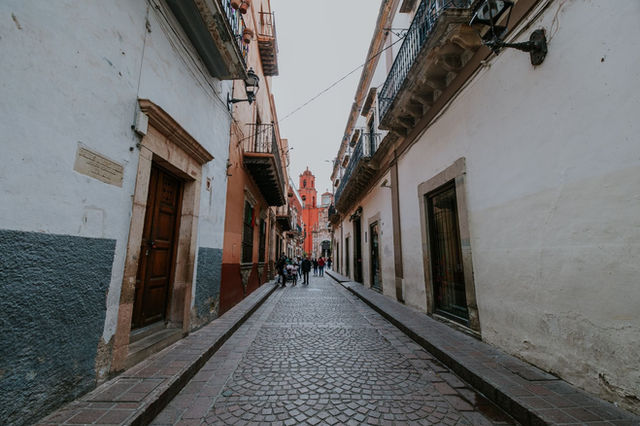
The narrowest alleyway in Guanajuato — at its tightest point, the balconies of two opposing houses are just 68cm apart. The romantic legend attached to it is enjoyable to share with teenagers, and the alley leads naturally into a network of quieter callejones that are best explored without a map. The climb to reach it doubles as a gentle introduction to the city's vertical geography.

Museo Casa Diego Rivera

Diego Rivera was born in this house in 1886, and the ground floor is preserved as it was during his childhood. Upper floors display a rotating collection of his early works alongside permanent paintings. The museum is small, unhurried and genuinely moving — Rivera's murals elsewhere in Mexico are overwhelming in scale, so seeing his domestic origins and early pieces here gives teenagers an accessible entry point into his significance. Entry is inexpensive; allow 45–60 minutes.

Las Momias de Guanajuato

The Museo de las Momias houses a collection of naturally mummified remains discovered in the municipal cemetery during the 19th century. It is genuinely unusual — and genuinely fascinating for the right audience. Teens with a curious bent will find it riveting; younger children or more squeamish visitors may prefer to skip it. It sits at the edge of the historic centre and is one of Mexico's most visited museums for a reason. Worth checking your family's appetite before booking.

Funicular to Pípila

The funicular from the centre ascends to the Pípila monument in around three minutes and gives one of the best panoramas of the UNESCO city bowl. Rides are very affordable and the view at sunset is exceptional. Walk back down through the residential streets for a different perspective on the city.

Festival Internacional Cervantino

If your visit falls in October, the Cervantino festival — one of Latin America's largest arts events — transforms every plaza, church courtyard and theatre into a performance venue. Street theatre, classical concerts, dance and spoken word spread through the UNESCO zone. I have found this particularly useful for engaging teenagers who are less naturally drawn to colonial history: the festival reframes the city as alive and creative rather than preserved and static.

Frequently asked

How many days do I need in Guanajuato?

Three to four days is the sweet spot for a thorough first visit — enough time for the UNESCO historic centre, a mine tour, the Rivera museum, the Momias and at least one full evening in the Jardín de la Unión. A long weekend (four nights) allows a day trip to nearby León or the pilgrimage town of San Juan de los Lagos without feeling rushed.

Is the UNESCO historic site worth visiting with teenagers?

Genuinely, yes — and I say this as someone who has seen teenagers switch off at far more celebrated World Heritage Sites. The UNESCO designation here is not about a single monument but about an entire city system: the underground roads, the mining history, the colonial wealth story and the War of Independence link. Teenagers who engage with any one of those threads tend to find the whole city interesting. The mine tours in particular, which go underground into the original silver shafts, are something most teenagers find viscerally exciting.

Is Guanajuato safe for families?

Yes, Guanajuato city itself is one of the safer destinations in Mexico for family travel. It is a university city with a strong tourist infrastructure and the historic centre is well-policed. The usual common-sense precautions apply — keep valuables out of sight, use licensed taxis from ranks rather than flagging random cars, and avoid poorly lit areas late at night — but the threat level is lower than in larger Mexican cities. The UK Foreign Office guidance for the Guanajuato state is worth checking before you travel, as the broader state has some areas of concern that do not apply to the city itself.

What is the best time of year to visit Guanajuato with children?

March, April and November are my top recommendations for families. The weather is dry and warm (22–28°C), the school holiday crowds are manageable and the city's attractions are fully operational. October is exceptional if your children are older and you want the added dimension of the Cervantino arts festival and Día de los Muertos preparations — but book accommodation very early, as the city fills completely. Avoid Semana Santa (Easter) unless you specifically want the processions; it is beautiful but very crowded.

What should we combine Guanajuato with?

The most natural combination is San Miguel de Allende, 90km east — another UNESCO colonial city with a strong arts scene and excellent family-friendly infrastructure. A week split between the two cities is a satisfying itinerary. Many families also combine with Mexico City (4–5 hours by coach), which adds the Teotihuacan pyramids, the Frida Kahlo Museum and Rivera's major murals. Morelia (2 hours south) is a quieter colonial alternative with an exceptional cathedral.

Are the callejones (alleyways) accessible with a pushchair or buggy?

Realistically, no. Many of the callejones have steep stone steps and uneven cobbles that make pushchair navigation genuinely difficult. If you are travelling with a child who needs a pushchair, the main streets and the area around the Jardín de la Unión are accessible, but the characterful alley network that makes Guanajuato distinctive is best explored on foot without equipment. A soft carrier for smaller children is far more practical here than any wheeled option.

Do we need to speak Spanish to get around?

Basic Spanish is helpful and warmly appreciated, but Guanajuato's historic centre is well set up for English-speaking visitors — many museum staff, hotel teams and restaurant workers in the tourist zone speak workable English. Menus in the Jardín de la Unión area are often bilingual. Outside the tourist core, particularly at market stalls and local fondas, Spanish is essential for ordering, though pointing, smiling and a willingness to try go a long way.

What's on

While you're there

31
OCT
Day of the Dead 2026
Portal De Flores 7, 68000 Oaxaca, Oaxaca, Mexico · cultural
Build a trip around it →
Explore

Explore the area

Do

Local attractions & tours

Skip-the-line tickets and small-group tours in Guanajuato — compare across our partners.

Not seeing offers? Try or — some destinations have thinner inventory on Tiqets.

▸ When you'll go

Best time to visit Guanajuato

Seasons overview

Guanajuato sits at around 2,000 metres elevation in the Bajío highlands, which gives it a mild, almost spring-like climate year-round — noticeably cooler than the beach resorts or Mexico City. Daytime temperatures in the dry season (November to May) hover between 22–28°C, with crisp evenings dropping to 10–14°C. Pack a light jacket even in what feels like summer.

The rainy season runs from June through September. Afternoon thunderstorms arrive reliably, usually between 2pm and 6pm, then clear. Mornings are typically bright and the air is noticeably fresh after rain. The city's hillsides turn vivid green during these months, which gives it a different but equally beautiful character. The rain is rarely disruptive if you plan sightseeing for the morning and hold afternoons more loosely.

October is a transitional month — the rains thin out, the green lingers and the Cervantino arts festival fills the city with performers and visitors. It is one of my favourite times to visit, but accommodation books up months in advance.

Best months for families

March, April and early November are the sweet spot: dry, warm days, mild evenings and smaller crowds than the Christmas or Easter holiday peaks. Avoid Semana Santa (Easter week) unless you specifically want to experience the processions — it is spectacular but extremely busy. Late October coincides with Día de los Muertos preparations, which are genuinely moving and educational for teenagers.

▸ Ready to book your trip?

Getting there

By air

The gateway airport is Guanajuato International Airport Del Bajío (BJX), located approximately 30km southwest of the city near Silao. From London, there are no direct flights — the most common routing is via Mexico City (MEX) with Aeromexico or LATAM, or via a US hub (Dallas/Fort Worth, Houston, or Atlanta) with American Airlines or United. Total journey time from London is typically 13–17 hours including connections. Fares vary seasonally; budget roughly ~£550–£900 return per adult for economy from London, with shoulder-season prices at the lower end. From BJX, a taxi to the city centre costs around ~£20–25 (300–380 pesos) and takes 30–40 minutes. Shared shuttle services are also available and cost less per seat.

An alternative approach for families combining Mexico City with Guanajuato is to fly into Mexico City (MEX) directly — more flights, often better fares — and then take a coach. Guanajuato is well-connected by comfortable long-distance coach from TAPO or the Norte terminal in Mexico City; journey time is around 4–5 hours.

By coach

Long-distance coach in Mexico is significantly more comfortable than the UK equivalent — the main operators (ETN and Primera Plus) run reclining-seat services with air conditioning and onboard entertainment. From Mexico City, fares are very affordable (~£10–18 per person) and the scenery through the Bajío highlands is pleasant. This is how I would approach the journey from Mexico City if combining destinations, especially with teenagers who appreciate the space of a premium-class coach seat over domestic flying.

Book

Ready to book your trip?

Flights, airport transfers and car hire — search and compare without leaving the page.

▸ Trip extras
Book

More trip extras

Parking, holiday extras, and more — coming soon.

Coming soon

We're lining up parking, holiday extras and activities you'll be able to add to any trip from here.