← Mexico
MEXICO · CITY

Oaxaca

Mexico's food and craft capital: Zapotec ruins, colonial baroque and mole negro, all within one remarkable UNESCO-listed valley.

  • City
  • 5–7 days
▸ Where you'll stay

Where you'll stay in Oaxaca

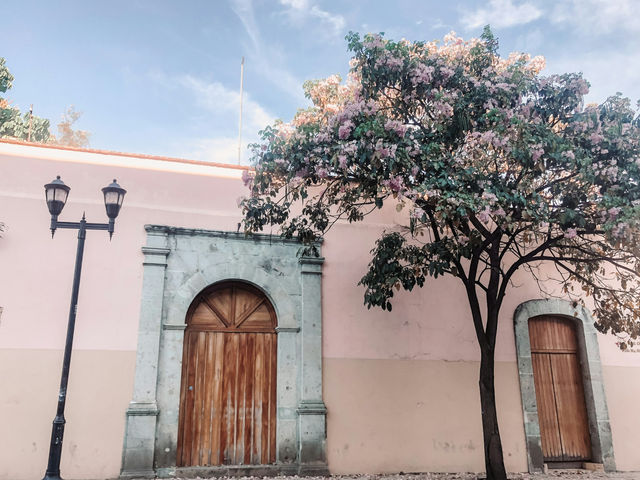
<h4>The Historic Centre</h4><p>Staying within walking distance of the zócalo and the Templo de Santo Domingo puts you at the heart of everything. Family-friendly hotels here range from converted colonial mansions around the pedestrianised Alcalá corridor to smaller guesthouses tucked into quieter side streets. The neighbourhood is safe, walkable and energetic in the evenings — ideal if you want your teens to feel the city's pulse without a taxi ride.</p><h4>Jalatlaco</h4><p>This cobblestoned neighbourhood just east of the centre is Oaxaca's quietest and most photogenic residential district — narrow alleys, painted walls and almost no through traffic. Mid-range guesthouses and boutique options cluster here. It is a lovely base for families who want tranquillity within ten minutes' walk of the main sights, and teenagers tend to love the Instagram-ready streets.</p><h4>Around the Second Periférico</h4><p>The ring road north and east of the centre has newer mid-range and business-style hotels with parking — a practical choice if you are renting a car to explore the valleys and surrounding villages. Less atmospheric than the centre, but good value and easy for early-morning departures to Monte Albán or the craft villages.</p><h4>How to choose</h4><p>If this is your family's only visit to Oaxaca, stay in or very near the Historic Centre — the walkability to the zócalo, markets, museums and restaurants after dark is simply not replicated elsewhere in the city. Reserve for Jalatlaco if tranquillity is your priority and the centre's evening energy feels like too much; opt for the Periférico hotels only if you are driving daily and value parking over atmosphere.</p>

Stay

Hotels & rentals around Oaxaca

Pan, zoom and compare live prices — every stay in one map.

▸ Getting around

Getting around Oaxaca

Walking

The Historic Centre of Oaxaca is extremely walkable — most colonial-era sights, the two main markets, the zócalo, the Santo Domingo complex and the Ethnobotanical Garden are within a 15-minute walk of each other on flat or gently sloping ground. Many of the most enjoyable streets in Oaxaca are pedestrianised or very low-traffic. Walking is the default mode for the centre and I always encourage families to build extra walking time into plans — the city rewards wandering.

Taxis & ride-hailing

Taxis in Oaxaca are affordable and generally reliable — agree the fare before getting in (most central journeys cost ~£1.50–3). Uber also operates in Oaxaca city and is sometimes more convenient for families as prices are confirmed in advance and there is no language negotiation. For trips to Monte Albán, asking your hotel to arrange a return taxi (with the driver waiting) is the most practical option. From the airport, authorised taxi desks inside arrivals are the safest choice.

Collectivos

Shared minibuses called collectivos connect the city to surrounding villages including Teotitlán del Valle, San Bartolo Coyotepec and other craft destinations — they are very cheap and used constantly by locals. Collectivos depart from fixed stops (the main one for valley villages is near the second periférico). They are perfectly safe and a great way to travel like a local, but require knowing which vehicle to board; a quick question to your hotel will confirm the right stop and route.

Organised day trips

For Monte Albán, Hierve el Agua, and mezcal village tours, organised minibus day trips booked through hotels or local agencies are the most straightforward family option — they handle logistics, include a guide and typically cost ~£15–25 per person. This is often better value than hiring a private driver for a full day, and the guides add significant context that makes the experience richer for children and teenagers alike.

▸ What you'll do

Insider tips

Monte Albán Archaeological Zone

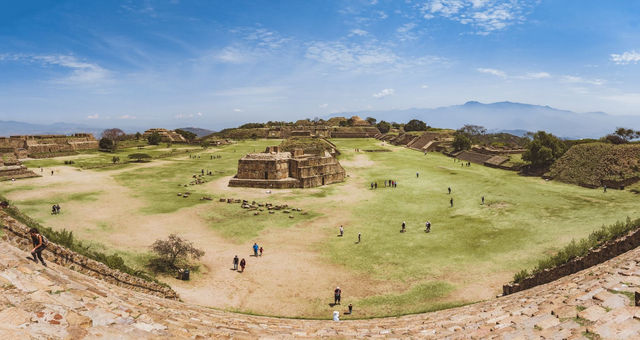
The hilltop Zapotec capital of Monte Albán is the centrepiece of the UNESCO inscription and one of the most extraordinary archaeological sites in the Americas. Occupied from around 500 BC until roughly 700 AD, it sits on a mountain ridge that was deliberately levelled by Zapotec engineers — the resulting platform commands views across three converging valleys for 30 kilometres in every direction. The main plaza is flanked by pyramids, temples and a ball court, and the site's Building J (shaped like an arrowhead, possibly an astronomical observatory) consistently captures teenage imaginations. I always allow at least three hours here; go early, bring water and sun protection, and plan to return to the city for lunch. Tickets are available at the entrance; guided tours from Oaxaca city are easy to arrange and add genuine depth.

Templo de Santo Domingo and the Cultural Museum

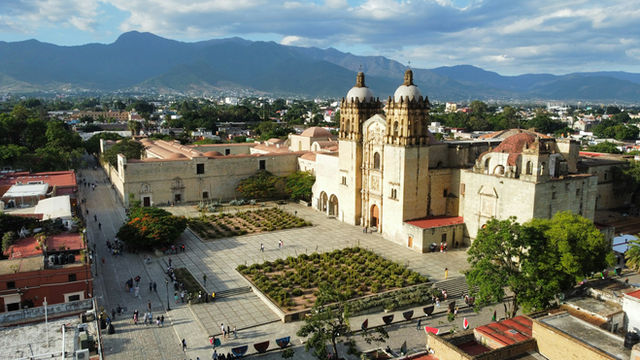
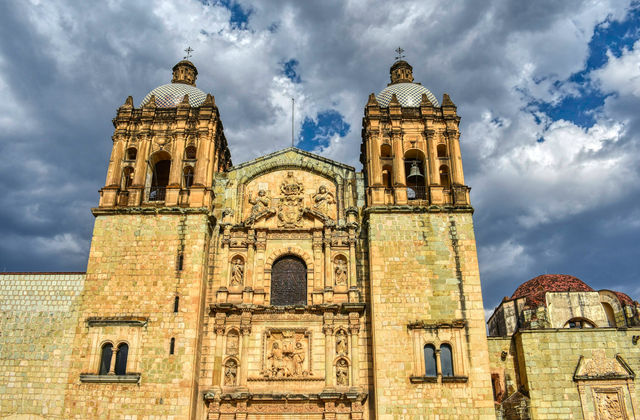
The Templo de Santo Domingo is the baroque heart of the city's UNESCO-listed Historic Centre — its gilded interior, entirely covered in relief carvings, is one of the most lavish surviving examples of New World baroque architecture. Immediately behind it, the former convent houses the Museum of Cultures of Oaxaca, whose collection of Mixtec gold and jade jewellery from Tomb 7 at Monte Albán is extraordinary and rarely crowded. This is one museum that genuinely holds teenage attention — the golden treasures are arresting.

Mercado Benito Juárez and Mercado 20 de Noviembre

Oaxaca's two central markets are essential and very family-friendly. Mercado Benito Juárez sells crafts, textiles, chocolate, mole pastes, chapulines (grasshoppers, toasted and salted — teenagers will want to try them on a dare) and fresh produce. Across the alley, the Mercado 20 de Noviembre is one of Mexico's great food markets: stalls line a long hall, each with its own charcoal grill, and the smell of tlayudas, carne asada and mole negro is overwhelming in the best way. Eating here is cheap, delicious and completely safe — point, order, eat.

Craft Villages in the Valleys

The villages within 30–45 minutes of Oaxaca city form one of Mexico's most intact artisan production networks: Teotitlán del Valle for hand-woven woollen rugs using natural dyes and pre-Hispanic designs; San Bartolo Coyotepec for shiny black barro negro pottery; Arrazola and Tilcajete for painted alebrijes (fantastical carved animals). A half-day loop through two or three villages is one of the most rewarding things you can do as a family — visiting working workshops, watching artisans and buying directly. Teens tend to be surprisingly engaged; the alebrijes in particular land well.

Hierve el Agua

About an hour east of the city by car or tour, Hierve el Agua is a set of mineral-rich springs on a cliff edge that have created dramatic petrified waterfall formations — and two natural pools where you can swim. The view over the Cañada valley is spectacular. This is the most popular day trip from Oaxaca and books up quickly; organised tours from the city are the easiest option for families. Go on a weekday if possible and arrive before 11am.

Mezcal Distillery Visits

Oaxaca state produces the vast majority of Mexico's artisanal mezcal, and visits to small palenques (traditional distilleries) in villages like Santiago Matatlán are genuinely educational — watching the agave roasting, crushing and fermentation process is fascinating for teenagers even without tasting. Many distilleries offer non-alcoholic agave agua fresca for younger visitors. A guided mezcal tour is one of the most authentic cultural experiences available in the region.

Oaxaca's Zócalo and Botanical Garden

The central zócalo (main square) is one of Mexico's most pleasant — tree-shaded, café-lined and busy with musicians and street performers in the evening. The adjacent Ethnobotanical Garden inside the Santo Domingo complex is an underrated gem: a beautifully maintained collection of Oaxacan plant species with guided tours in English (book ahead). It is a peaceful, shaded hour that gives context to everything you have eaten, worn and seen since arriving.

Frequently asked

How many days do I need in Oaxaca?

I recommend five to seven days for a family visit. Three days covers the city centre sights — Monte Albán, Santo Domingo, the markets and the zócalo. The additional days allow for a craft village loop, Hierve el Agua and a mezcal distillery visit without feeling rushed. Oaxaca rewards a slower pace; the families who come for a week always tell me they could have stayed longer.

Is the UNESCO site worth it for teenagers?

Monte Albán consistently surprises families — teenagers who are indifferent to history at home often find themselves genuinely absorbed here. The scale of the site, the panoramic views across three valleys and the astronomical features (especially Building J) create a sense of discovery rather than duty. Pairing it with a guide who can explain the Zapotec civilisation in accessible terms makes a real difference. I would call it the unmissable activity of the trip for families with older children.

Is Oaxaca safe for families?

The Historic Centre and main tourist areas are considered safe for families, with a busy, well-monitored public atmosphere particularly around the zócalo and the Alcalá corridor. Oaxaca City itself has a much calmer security profile than Mexico's northern border cities or parts of Mexico City. Apply standard city precautions — keep valuables secure, use reliable transport, avoid poorly lit areas at night — and most families travel here without incident.

What is the best time of year to visit Oaxaca?

Late October through early December and February through April are the sweet spots: dry weather, warm days and manageable crowds. Early November brings the Día de los Muertos celebrations in the cemeteries and streets — one of the most extraordinary cultural events in Latin America and deeply appropriate for families. If you can visit for the last two Mondays of July, the Guelaguetza indigenous festival is spectacular, though the city fills up significantly and hotels should be booked months ahead.

Do I need to speak Spanish?

Some Spanish is helpful in Oaxaca, particularly in markets and when taking collectivos. In the main tourist restaurants, museums and tour operations, English is widely spoken. Basic market Spanish — greetings, numbers, please and thank you — is genuinely appreciated and adds warmth to interactions. A translation app on your phone covers most situations. Teenagers often find this a low-pressure way to practise Spanish in real situations.

How do I get to Monte Albán?

The simplest family option is an organised minibus tour departing from the city centre, typically costing around £10–15 per person for return transport plus a guide — these run every morning and many hotels can book them. Alternatively, authorised taxis from the city centre negotiate a return fare with waiting time; ask your hotel to arrange this and confirm the return wait time in advance. There is no public bus to the site. The drive from the city centre takes around 20–25 minutes.

What should families budget per day in Oaxaca?

Oaxaca is genuinely affordable by international standards. A mid-range family budget of around £70–100 per day covers comfortable accommodation for a family room, meals (mixing market lunches with sit-down dinners), entrance fees and local transport. Monte Albán entrance, mezcal tours and craft village day trips add roughly £15–25 per person per excursion. Budget families eating primarily at markets and collectivising all transport can live very well on considerably less.

What's on

While you're there

31
OCT
Day of the Dead 2026
Portal De Flores 7, 68000 Oaxaca, Oaxaca, Mexico · cultural
Build a trip around it →
Explore

Explore the area

Do

Local attractions & tours

Skip-the-line tickets and small-group tours in Oaxaca — compare across our partners.

Not seeing offers? Try or — some destinations have thinner inventory on Tiqets.

▸ When you'll go

Best time to visit Oaxaca

Seasons overview

Oaxaca's high-valley climate is pleasantly mild year-round, but the seasons are sharply defined. The dry season runs roughly October through May: clear skies, warm afternoons (22–27°C), cool evenings, and very little rain. This is the primary travel window and the easiest time for families. The rainy season (June to September) brings daily afternoon showers — usually 1–3 hours of heavy rain followed by clearing skies. Mornings are often brilliantly clear even during the wet months, and the surrounding valleys turn extraordinarily green.

High summer temperatures in the valley rarely exceed 30°C even at peak. December and January nights can drop to around 8–10°C — warm layers are worth packing. March and April are especially lovely: dry, warm and busy but not yet at peak crowding. July and August bring the famous Guelaguetza festival (usually the last two Mondays of July), a spectacular indigenous dance and music celebration that draws visitors from across Mexico — if you can time your trip around it, do.

Best months for families

I recommend late October through early December and February through April as the sweet spots for families. You get dry weather, manageable crowds, and — for the October window — the extraordinary Día de los Muertos celebrations in early November, which in Oaxaca are among the most heartfelt and visually arresting in the country. Avoid Holy Week (Semana Santa) if you want quieter streets and lower prices.

▸ Ready to book your trip?

Getting there

By air

The gateway is Xoxocotlán International Airport (OAX), located about 8 km south of the city centre — roughly 20 minutes by taxi. There are no direct flights from the UK; from London you will connect through Mexico City (MEX) or, less frequently, via US hubs such as Houston, Dallas or Miami. Expect a total journey time of 14–18 hours from London depending on your connection. Return fares from London typically range from ~£600–£900 per person in economy during mid-season; book at least 3–4 months ahead for the best availability on the MEX–OAX segment, as domestic Mexican routes sell out. From Mexico City, the onward domestic flight to Oaxaca takes around 50 minutes.

By road from Mexico City

An alternative to flying the final leg is the overnight bus from Mexico City's TAPO terminal — first-class services (ADO or Autobuses del Oriente) take around 6–7 hours and are comfortable, air-conditioned and popular with Mexican families. This is a viable option if you have time and want to see more of the countryside, or if you are travelling during a period when domestic flights are fully booked. Not recommended as the primary route for families with young children given the journey length, but perfectly manageable for families with teens.

Book

Ready to book your trip?

Flights, airport transfers and car hire — search and compare without leaving the page.

▸ Trip extras
Book

More trip extras

Parking, holiday extras, and more — coming soon.

Coming soon

We're lining up parking, holiday extras and activities you'll be able to add to any trip from here.