← Morocco
MOROCCO · CITY

Chefchaouen

The 'Blue Pearl' of the Rif Mountains — a dreamlike town washed entirely in shades of powder blue.

  • City
  • April to June and September to October — warm days, cool mountain nights
  • ~approx 1–2 days
  • The Blue City
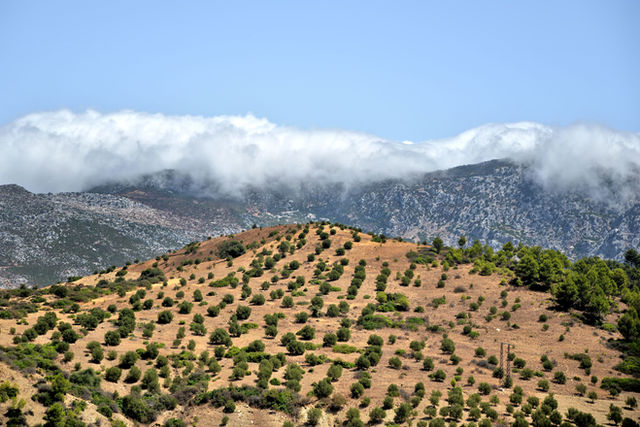
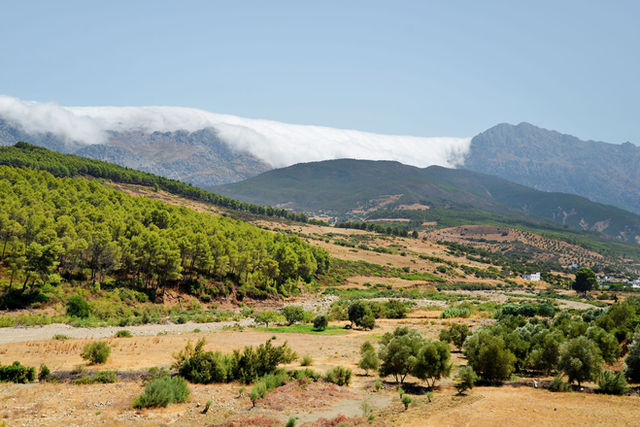
  • Rif Mountain Setting
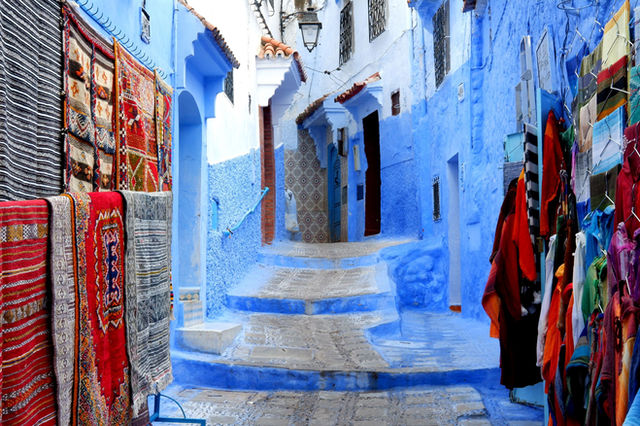
  • Washed Medina Lanes
  • Hillside Hiking

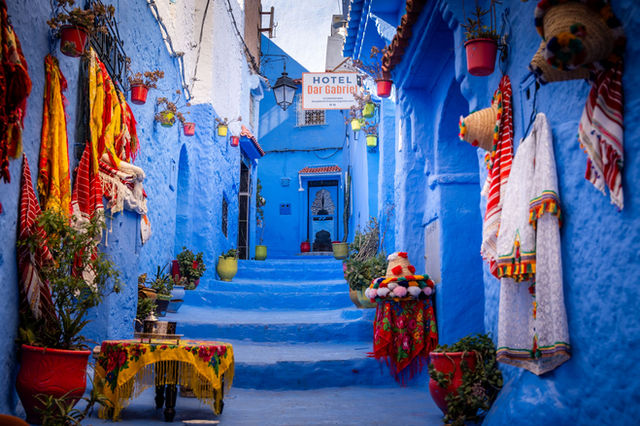
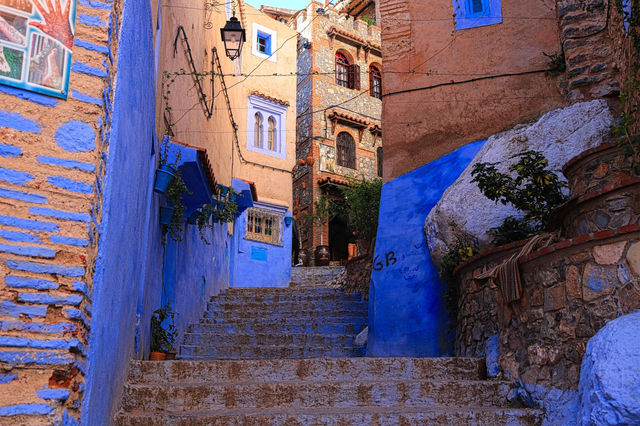
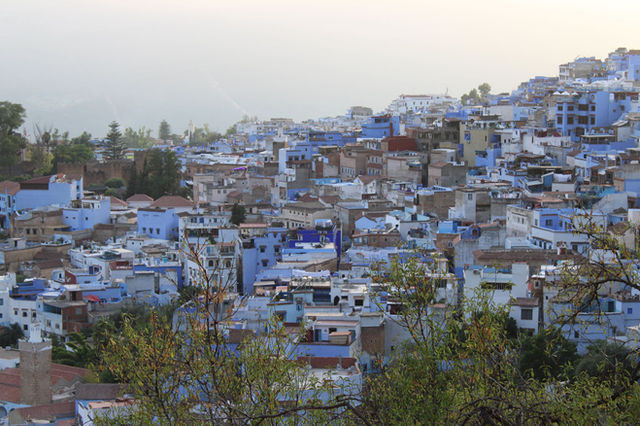
A staircase of cobalt and powder-blue houses climbing toward the mountains, a cat asleep on an indigo step, and the sun setting the whole town glowing from the hilltop Spanish Mosque as the call to prayer rolls down the valley.

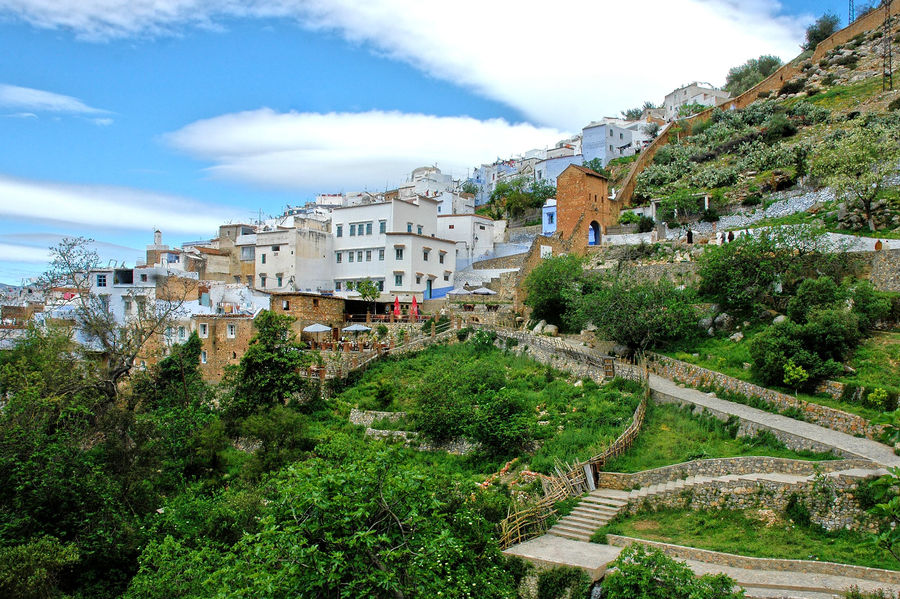
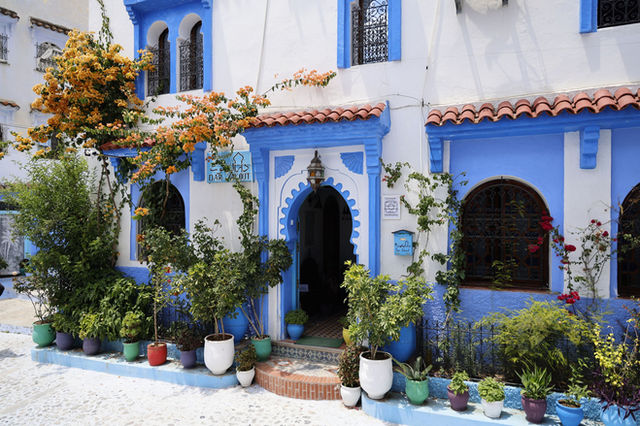
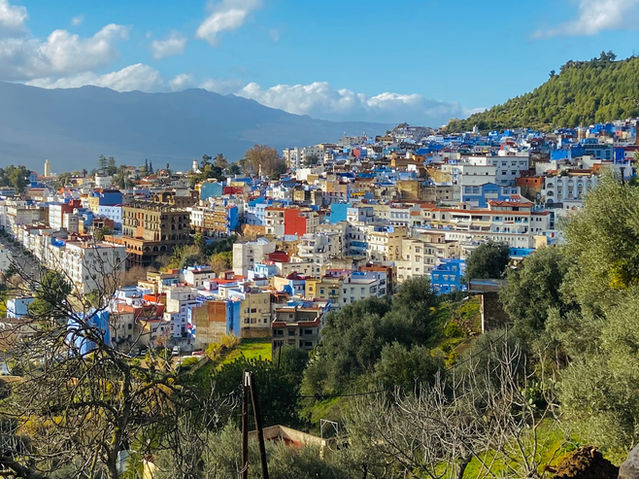
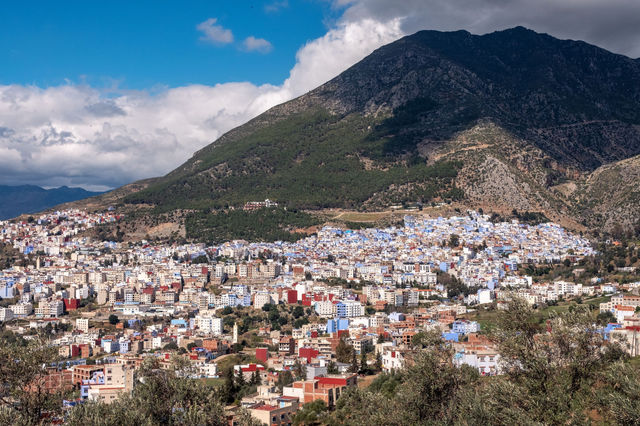
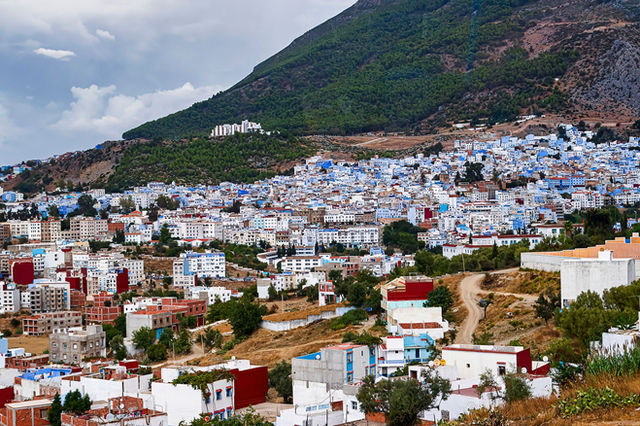
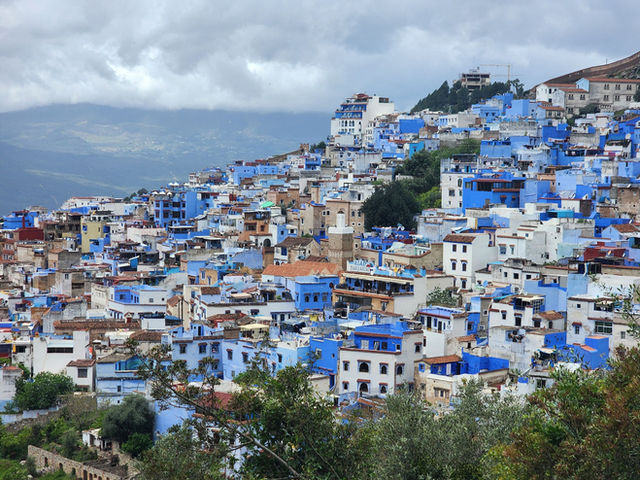
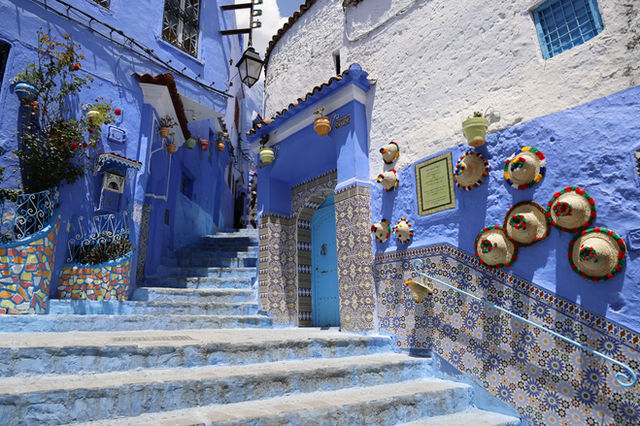
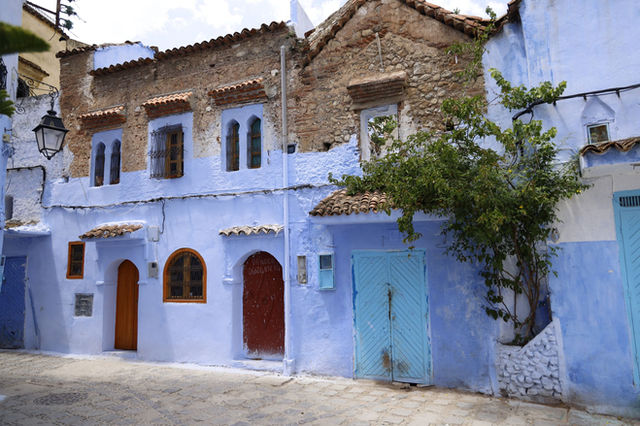
Chefchaouen is Morocco's blue town — a medina washed in every shade of blue, spilling down a Rif mountain slope, its stepped lanes, tiled fountains and painted doorways among the most photographed in the country, with hiking and waterfalls on its doorstep.

Type
town
Ideal length
~approx 1–2 days
Getting around
entirely on foot in the medina; taxis to the modern town
Neighbourhoods
3 areas
Best season / months
April to June and September to October — warm days, cool mountain nights
Language
Arabic and Amazigh; Spanish and French widely spoken (some English)
Currency
Moroccan dirham (MAD)
Budget level
low — very affordable
Good for
  • Photography
  • Relaxed travellers
  • Hikers
  • Couples
  • Slow travel
▸ Discover

About Chefchaouen

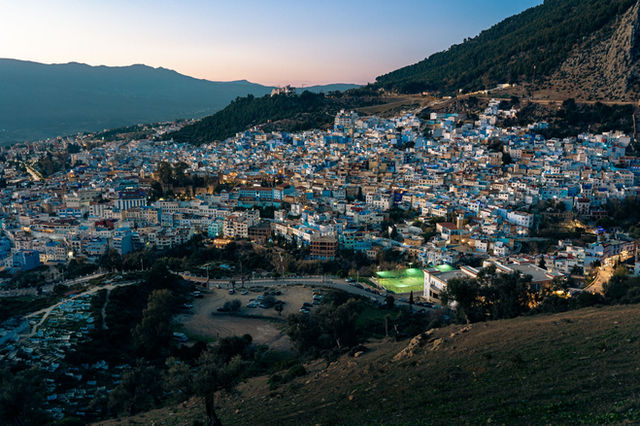
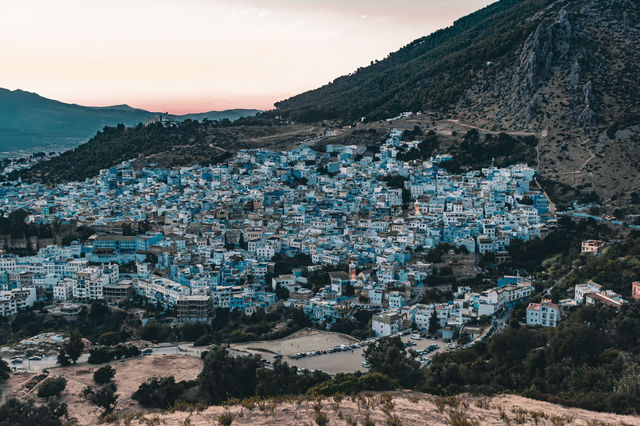
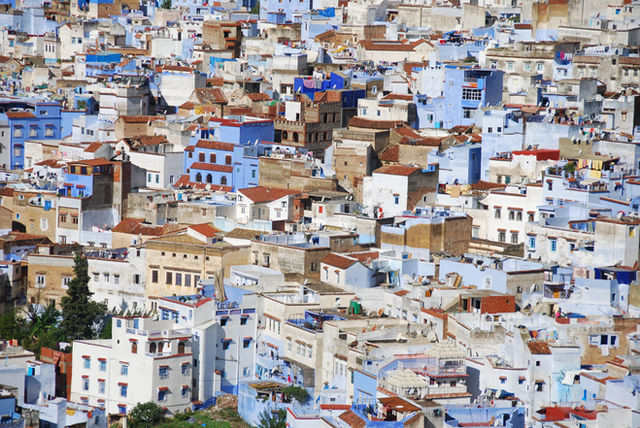
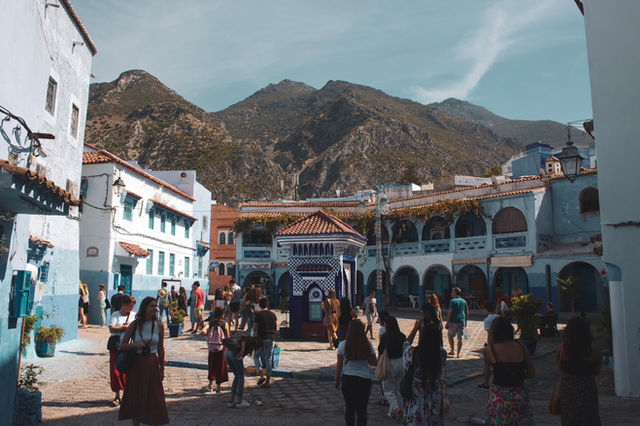
Chefchaouen sits high in the Rif mountains of northern Morocco, its medina draped over a steep hillside beneath two peaks (the "horns" that give the town its name). Almost every wall, step and door in the old town is painted blue, in countless shades, making a small, walkable medina feel dreamlike. The central Plaza Uta el-Hammam and its kasbah anchor it; a spring and cascade (Ras el-Maa) tumbles out at the top, and a hilltop mosque gives the classic view back. Below sits a small modern town. It's compact, relaxed and made for slow wandering — and a base for Rif hiking.

Why go

Chefchaouen is one of Morocco's most enchanting and easygoing towns — the blue-washed medina alone is worth the trip, endlessly photogenic and refreshingly low-pressure to explore. Add a dramatic mountain setting, a hilltop viewpoint, a spring-fed cascade, and superb hiking to the Akchour waterfalls and Talassemtane park nearby, and it's a place to slow right down. Cooler and calmer than the imperial cities, it pairs perfectly with the Rif and the northern coast.

Don't miss

  • The blue medina — the washed lanes and staircases
  • Plaza Uta el-Hammam — the main square and kasbah
  • The Spanish Mosque viewpoint — the town from above
  • Ras el-Maa — the spring and cascade at the medina's top
  • The Rif setting — hikes and mountain air

Signature experiences

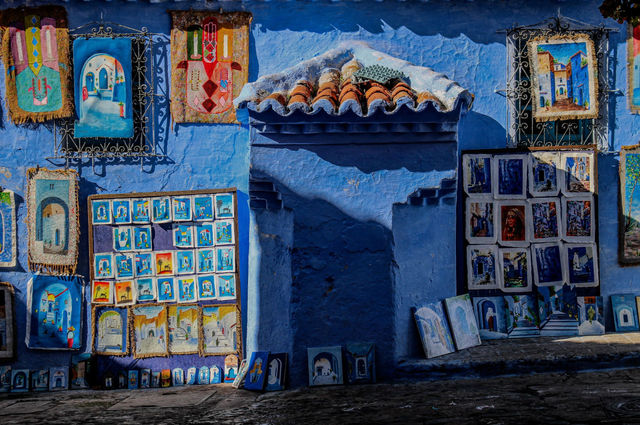
Wandering the blue — Chefchaouen's medina is small enough to lose yourself in happily for hours, and the pleasure is simply the blue — walls, steps, doors and archways painted in every shade from deep cobalt to pale sky, with cats, flowerpots and tiled fountains at every turn. There's no single "must-see" so much as a mood; drift up and down the staircases, follow the light, and let the town reveal its corners. Morning and late afternoon give the best colour and the fewest crowds. **The viewpoint and the cascade** — At the top of the medina, the Ras el-Maa spring gushes from the mountain into a cascade where locals wash and children splash, a cool, green counterpoint to the blue lanes. From there, a short uphill path leads to the hilltop Spanish Mosque, whose terrace gives the classic postcard view — the whole blue town spread below the Rif peaks, best at sunset. It's the essential climb, and an easy one. **Crafts and the square** — Plaza Uta el-Hammam, shaded by trees and fronted by the old kasbah and the Grande Mosquée, is the town's living room — take a café or rooftop table and watch it turn. The medina's craft tradition leans to wool: blankets, throws and the region's weaving, plus leather and the usual Moroccan wares, sold with far less pressure than in the big cities. It's an easy, pleasant place to shop and to sit. **The Rif on foot** — Chefchaouen is the gateway to the Rif's greenest corner. Short walks climb straight from the medina to viewpoints; longer ones head into Talassemtane National Park and to the Akchour waterfalls and the natural rock arch of the "Bridge of God," a rewarding day's hike through gorges and pools. The mountain air is cool and clean, and the trails are the town's best-kept secret beyond the blue.

Neighbourhoods

Chefchaouen neighbourhood by neighbourhood — the character of each and who it suits.

  • The Blue Medina

    The heart of it all — a small, steep, blue-washed old town of stepped lanes, tiled fountains, painted doorways and craft shops climbing the slope, endlessly photogenic and easy to wander. The reason to come.

    Why go
    The blue lanes, the main square, the crafts and the get-lost wandering.
    Best for
    Photographycaféscraft shoppingaimless walking
    Known for
    The washed-blue staircases and doorways, Plaza Uta el-Hammam and the red-earth kasbah, the Grande Mosquée, the wool and weaving shops, and the rooftop cafés.
  • Ras el-Maa and the Upper Slopes

    The top edge of the medina where a spring and cascade tumble out of the mountain, women still wash clothes, and the path climbs to the hilltop Spanish Mosque and the Rif trails. The town's natural, active edge.

    Why go
    The cascade, the hilltop viewpoint and the start of the hikes.
    Best for
    Viewsthe waterfallhikingsunset
    Known for
    The Ras el-Maa spring and cascade, the hilltop Spanish Mosque and its panorama, the washing pools, and the trailheads into the Rif.
  • The Modern Town

    The small new town below the medina — the bus station, some hotels and everyday shops, the practical, un-blue side where you arrive and leave.

    Why go
    Transport, arrivals and a few hotels and services.
    Best for
    Arrivals and departuresbudget services
    Known for
    The bus and grand-taxi stations, the everyday shops and cafés, and the road up to the medina gates.

Views & hidden gems

Best views

  • The Spanish Mosque hilltop at sunset — the blue town below the Rif
  • The blue staircases of the upper medina — colour and light
  • Plaza Uta el-Hammam from a rooftop café — the square and kasbah
  • Ras el-Maa cascade — greenery and rushing water at the medina's top

Hidden gems

  • The kasbah gardens and its small museum on the main square
  • The washing pools at Ras el-Maa — everyday life at the spring
  • The wool and weaving workshops — the region's textiles, from the makers
  • The Akchour waterfalls and the "Bridge of God" — a Rif hike out of town
  • The quietest upper lanes at dawn — the blue to yourself

Food & drink

Chefchaouen's food is mountain Moroccan, hearty and simple. Tagines, couscous, harira, brochettes and bean dishes fill the medina restaurants and rooftop cafés, and the Rif's goat's cheese — soft, fresh, sometimes served with honey — is a local speciality worth seeking out. Vegetables, olives and bread come from the surrounding hills. The cafés and mint tea are central to the slow pace, and the rooftop tables over the blue lanes are the place to linger.

  • Tagine — slow-cooked lamb or chicken with vegetables and spices
  • Goat's cheese — the Rif's fresh, soft cheese, sometimes with honey
  • Couscous — the Friday semolina-and-vegetable classic
  • Bissara — a warming split-pea or fava-bean soup, a mountain staple
  • Harira — a hearty tomato, lentil and chickpea soup
  • Mint tea — sweet green tea, the constant welcome
Dietary notes

Vegetarians do well here by Moroccan standards — bissara, vegetable tagines, couscous, salads, goat's cheese and bread are all easy, though check stock. Vegan options exist but need care around butter, cheese and eggs. As a Muslim country, halal is the default and universal; kosher is effectively unavailable. Gluten-free is hard around couscous and bread — tagines (minus bread), grilled meats and salads are safer, but confirm.

Chefchaouen in photos

▸ Where you'll stay

Where you'll stay in Chefchaouen

Stay in the blue medina — that's the whole point — in a riad or guesthouse among the painted lanes, ideally with a rooftop for the mountain-and-town view. The upper medina is quieter and closer to the viewpoint and cascade; the lower gates handier for arrivals. The modern town below has a few plainer hotels near the bus station. Chefchaouen is small and cheap, so a medina stay is the easy, characterful choice.

  • Budget
    The medina guesthouses and budget riads among the blue lanes.
  • Mid-range
    Medina riads with rooftops restored blue houses with town-and-mountain views.
  • Luxury
    The best medina riads high-end restored houses, the top of a modest range.
Stay

Hotels & rentals around Chefchaouen

Pan, zoom and compare live prices — every stay in one map.

▸ Getting around

Getting around Chefchaouen

The medina is small, steep and entirely walkable — everything is on foot, up and down staircases (wear proper shoes). Petits taxis link the modern town and the medina gates; grand taxis and guides run to the Akchour trailheads. A car isn't needed and parks outside the walls.

The blue medina, Ras el-Maa and the viewpoint are all short (if uphill) walks apart (~approx); the modern town is just below by taxi or on foot, and the Rif hikes are a grand-taxi ride to the trailhead.

▸ Plan your days

Suggested itineraries

Ready-made day plans for Chefchaouen — from a single day to a long weekend.

One day

Spend the morning losing yourself in the blue medina — the staircases, the doorways, the tiled fountains — with a coffee on Plaza Uta el-Hammam and a look at the kasbah. Follow the lanes up to the Ras el-Maa cascade, then climb to the Spanish Mosque for the view over the town. Back down, browse the wool and craft shops, and end with dinner on a rooftop as the blue deepens at dusk.

Two days

Give day two to the Rif. Take a guided or self-guided hike to the Akchour waterfalls and the "Bridge of God," through gorges and pools, or a shorter walk into Talassemtane park for the mountain air and views. Return to the medina for a last evening among the blue lanes and a rooftop dinner.

▸ What you'll do

Insider tips

  • Stay a night — the medina at dawn, before the day-trippers, is the town at its most magical.
  • Climb to the Spanish Mosque for sunset; it's a short walk from Ras el-Maa and the best view in town.
  • Carry cash — card acceptance is limited, with ATMs down in the modern town.
  • Decline any offer of "kif" (cannabis) politely; it's illegal and buying it risks real trouble.
What's on

While you're there

28
MAY
Fes Festival of World Sacred Music 2027
99 Zkak Rouah, 30 Fez, Morocco · music festival
Build a trip around it →
Explore

Explore the area

© OpenFreeMap · OSM · terrain Mapterhorn
Do

Local attractions & tours

Skip-the-line tickets and small-group tours in Chefchaouen — compare across our partners.

We're still curating hand-picked tickets and tours for Chefchaouen. In the meantime, the map above and the nearby cities are a great place to start.

▸ Budget

What it costs in Chefchaouen

Backpacker
roughly €18–32 a day as a rough guide.
Mid-range
roughly €40–75 a day as a rough guide.
Luxury
from around €120 a day.
Cash vs card
Morocco runs largely on cash — carry dirhams for the medina, taxis, cafés and stalls; cards are accepted in only a few hotels here.
Tipping
Tipping is customary — small dirham tips for cafés, guides and help; round up taxis.
▸ When you'll go

When to visit Chefchaouen

April to June and September to October — warm days, cool mountain nights

Spring

What to expect — Warm days and cool mountain nights, the Rif green and fresh, with occasional showers. One of the best times, and the colour at its brightest.

What's best — Ideal weather for wandering and hiking, wildflowers on the Rif trails, and vivid blue in clear light — a lovely, comfortable season.

Summer

What to expect — Warm to hot by day but tempered by mountain altitude, cooling sharply at night, and busy with visitors escaping the lowland heat. Comfortable in the evenings.

What's best — A cooler mountain refuge from the interior's heat, long light for photography, and prime hiking to the Akchour waterfalls — start walks early and rest at midday.

Autumn

What to expect — Warm, settled days easing into cool nights as the summer crowds fade — one of the best windows, clear and comfortable.

What's best — Fine weather for the medina and the Rif, thinner crowds, and crisp clear light on the blue — a relaxed, rewarding time.

Winter

What to expect — Cold, especially at night, with grey, rainy spells, the odd bright crisp day, and sometimes snow on the peaks. The quiet low season.

What's best — Few tourists, lower prices, and the blue town atmospheric under moody mountain skies (and occasional snow) — pack warm layers and a waterproof, and pick clear days for the viewpoint.

▸ Know before you go

Know before you go

Honest swaps

Skip only photographing the famous staircases → climb to the Spanish Mosque for the whole town at sunset.

Skip a rushed half-day → stay a night to catch the medina at dawn, empty and glowing.

Skip staying near the noisy lower gate → choose an upper-medina riad for quiet and the cascade.

Skip the town-only visit → give a day to the Akchour waterfalls or a Rif walk.

Crowds & timing

Day-trippers from Fes and Tangier fill the medina at midday; the blue is best (and emptiest) early morning and late afternoon.

Summer and holidays bring Moroccan visitors escaping the heat — book ahead then.

Local rules & etiquette

Dress modestly, especially near mosques; the medina is conservative despite the relaxed mood.

Ask before photographing people — locals in a much-photographed town can be weary of cameras.

The Rif is a cannabis-growing region and you may be offered "kif" — it's illegal, and buying or carrying it risks serious trouble; decline politely.

Money

Carry dirhams for the medina, cafés, taxis and stalls; few places take cards, and ATMs cluster in the modern town.

Agree grand-taxi and guide fees before setting off for hikes or onward travel.

After dark

The rooftop cafés and Plaza Uta el-Hammam hold the gentle evening life — mint tea, dinner and the lit square.

The medina is quiet and safe after dark, made for a slow lamplit wander rather than nightlife.

Chefchaouen is an early, alcohol-light town; nights are cafés, rooftops and the stars over the Rif.

▸ Ready to book your trip?

Getting there

Chefchaouen has no airport; most arrive by bus or grand taxi from Tangier or Fes (each a few hours), with Tangier (TNG) the nearest airport. The bus and grand-taxi stations sit in the modern town below the medina, a short taxi or uphill walk from the blue gates.

Book

Ready to book your trip?

Flights, airport transfers and car hire — search and compare without leaving the page.

▸ Trip extras
Book

More trip extras

Parking, holiday extras, and more — coming soon.

Coming soon

We're lining up parking, holiday extras and activities you'll be able to add to any trip from here.