← Morocco
MOROCCO · CITY

Essaouira

A breezy, blue-and-white Atlantic port — windswept ramparts, fresh grilled sardines, gnawa music and kitesurfing.

  • City
  • April to October — warm, breezy and bright; windiest in high summer
  • ~approx 2 days
  • Atlantic Ramparts
  • Blue Fishing Port
  • Windy Beach
  • Gnaoua Music

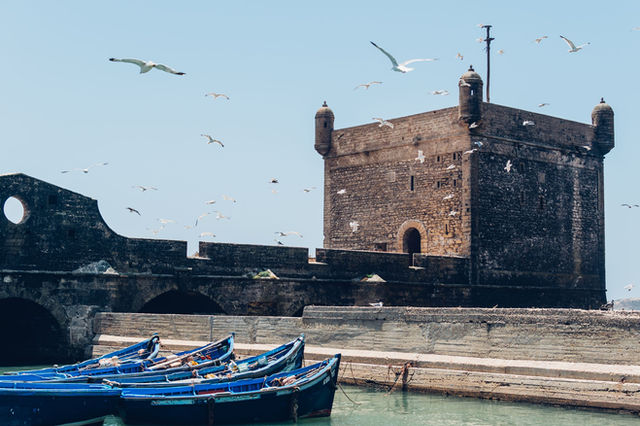
Waves crashing against the sea bastions as gulls wheel over rows of cobalt-blue fishing boats, the smell of sardines grilling on the quay, and a Gnaoua rhythm drifting out of a medina café on the wind.

Essaouira is Morocco's breezy Atlantic escape — a walled blue-and-white town of sea-battered ramparts and a working fishing port, famous for its wind, its Gnaoua music, its seafood grills and a relaxed, salt-air pace a world away from the imperial cities.

Type
town
Ideal length
~approx 2 days
Getting around
entirely on foot in the medina; taxis for the beach ends
Neighbourhoods
3 areas
Best season / months
April to October — warm, breezy and bright; windiest in high summer
Language
Arabic and Amazigh; French widely spoken (some English)
Currency
Moroccan dirham (MAD)
Budget level
low to moderate — affordable
Good for
  • Relaxed travellers
  • Seafood
  • Music
  • Wind sports
  • Couples
▸ Discover

About Essaouira

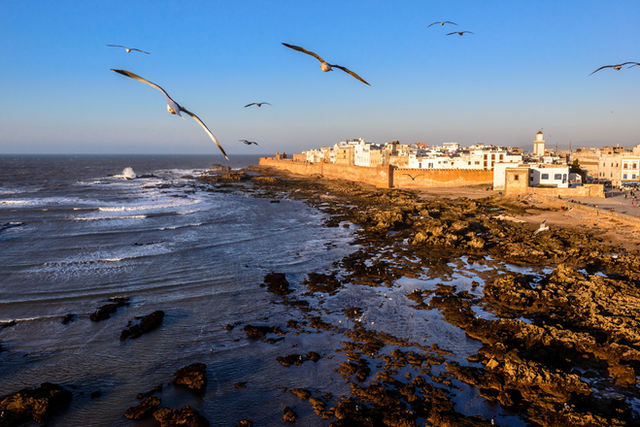
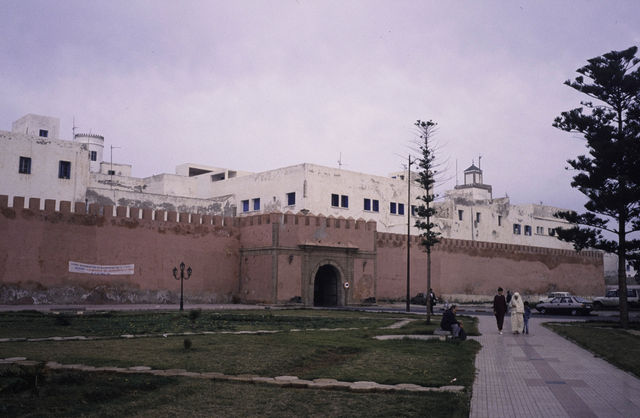
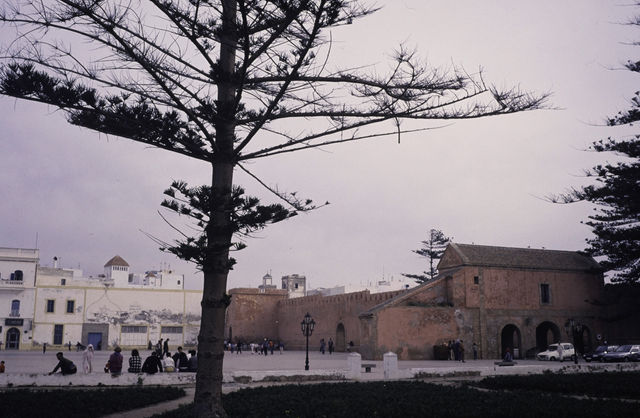
Essaouira sits on the Atlantic coast of Morocco, a few hours west of Marrakech. The compact medina — walled, whitewashed and trimmed in blue — is wrapped by rampart walls and sea bastions built to a French engineer's plan, with a busy fishing harbour at one end and a long, wind-raked beach curving away to the south. The steady Atlantic wind cools the air and draws windsurfers and kitesurfers; the argan forests and goat-dotted countryside spread inland. It's flat, walkable, low-key and genuinely charming — a place to slow down.

Why go

Essaouira is the antidote to the intensity of Fes and Marrakech — a laid-back, salt-washed town where the medina is a UNESCO site but the hustle is minimal and the mood is easy. It has dramatic sea ramparts, one of Morocco's most photogenic fishing ports, a great music festival, superb fresh seafood, and a beach built for wind sports. Add the argan-oil countryside, the artistic and hippie legend (Hendrix, Orson Welles, and its screen fame), and it's the coast's most rewarding stop.

Don't miss

  • The sea ramparts (Skala de la Ville) — the rampart walk over the Atlantic
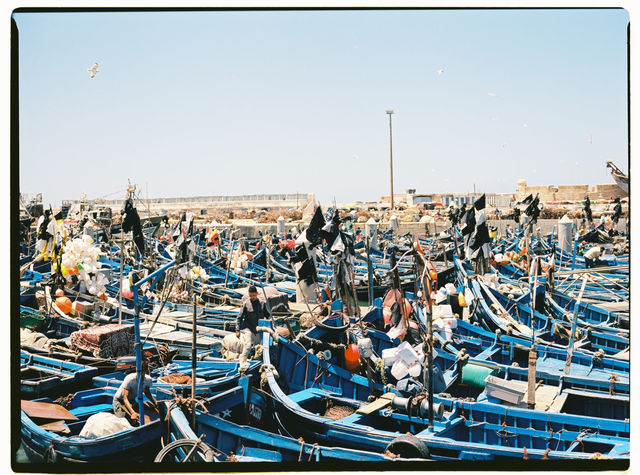
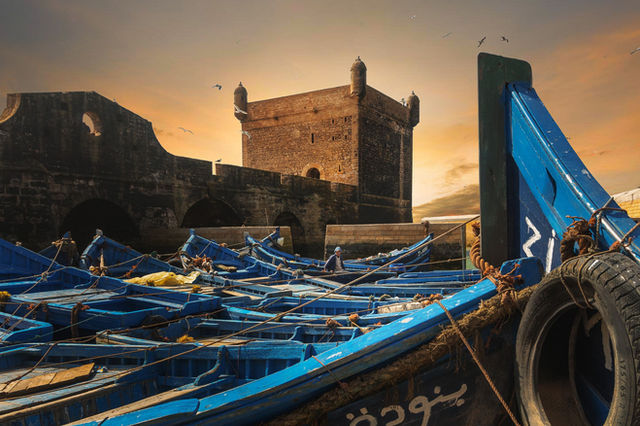
  • The fishing port — the blue boats and the quay grills
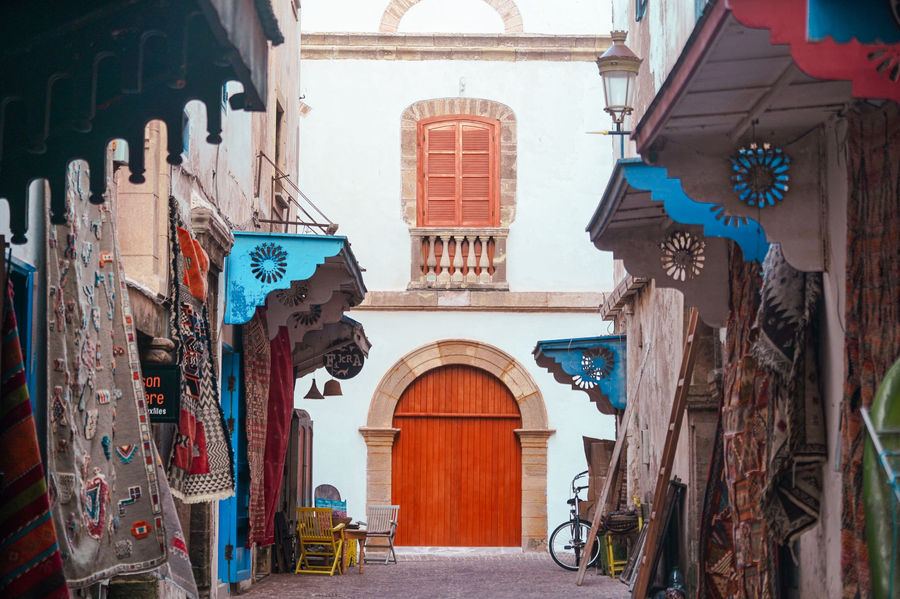
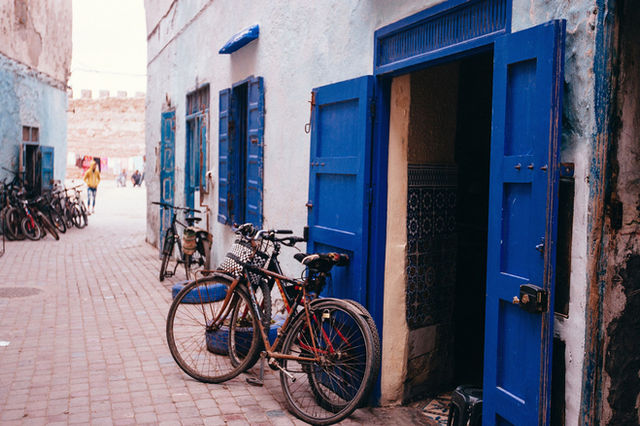
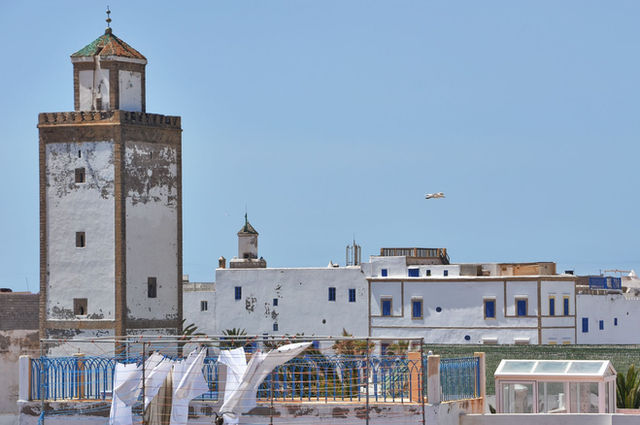
  • The medina — the walled, blue-and-white old town
  • The beach — the long, windy Atlantic sweep
  • Fresh grilled seafood — straight off the boats

Signature experiences

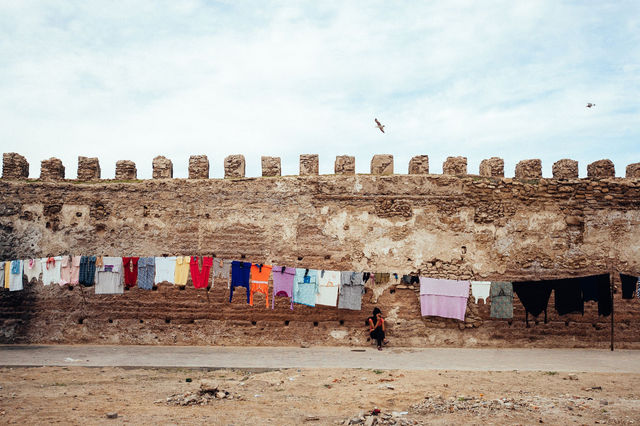
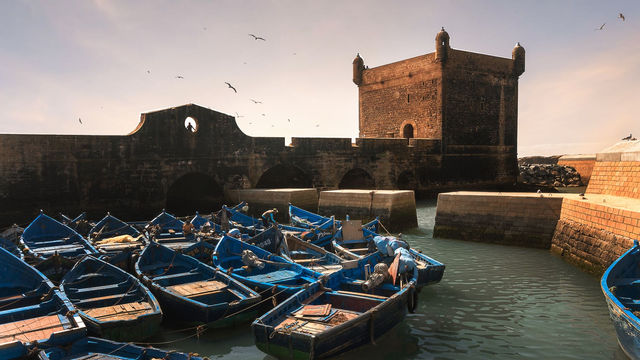
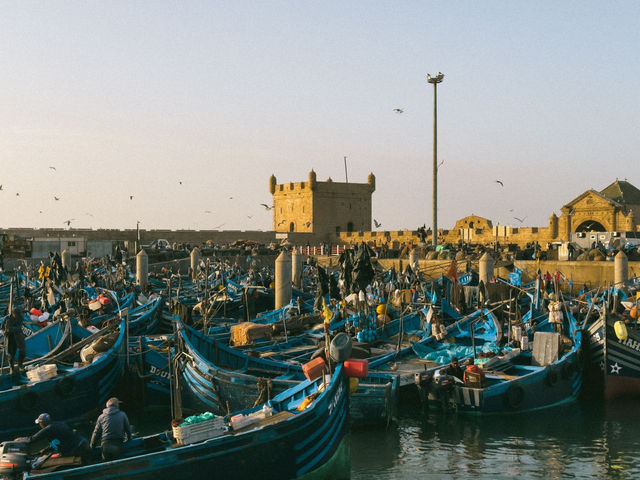
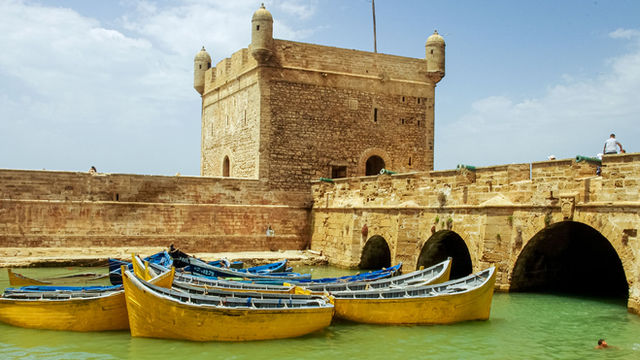
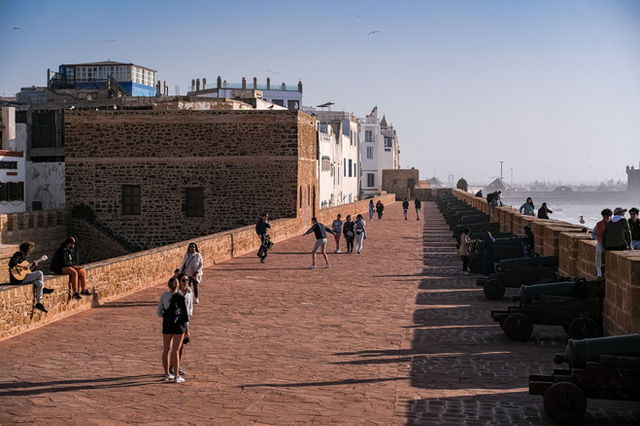
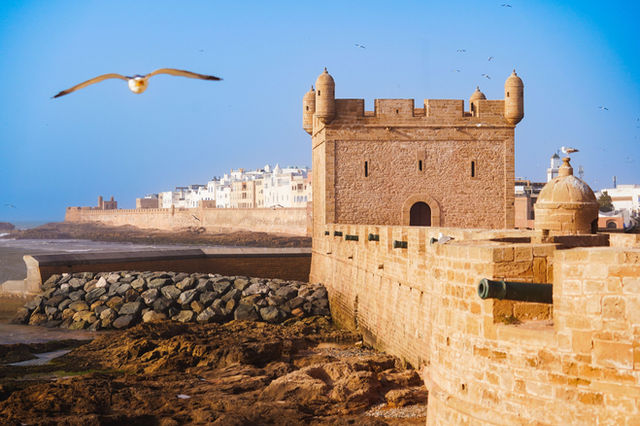
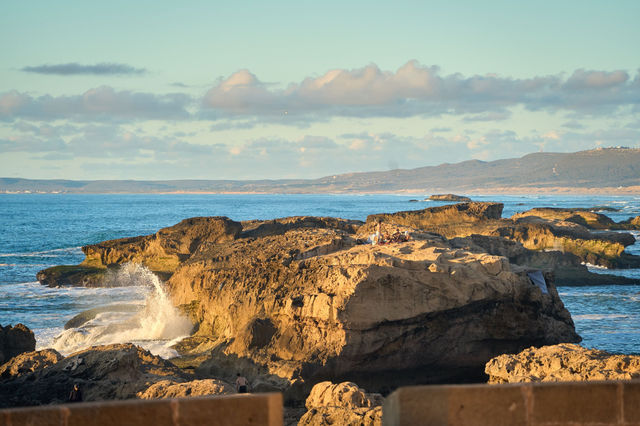
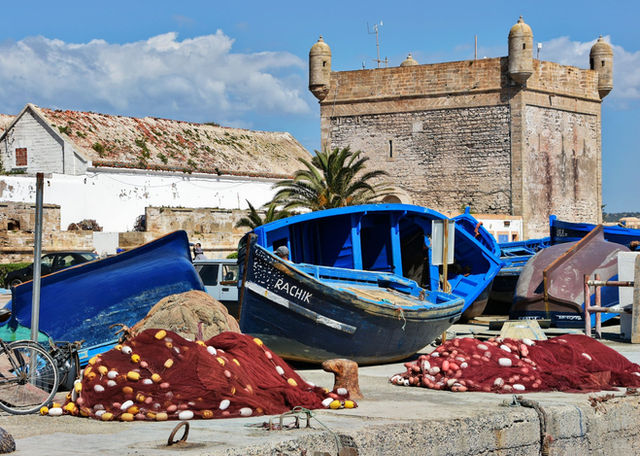
The ramparts and the sea — Essaouira's defences are its signature — walk the Skala de la Ville, a rampart terrace lined with old bronze cannons where the Atlantic smashes against the walls and the spray blows over. It's the town's great free spectacle, and a favourite film location (its bastions have doubled for other worlds on screen). Time it for late afternoon, when the light goes gold and the waves are at their most dramatic. **The fishing port** — At the medina's north end, the harbour is a working, unpolished delight — rows of cobalt-blue boats, a clamorous fish auction, boatbuilders sawing timber, and a strip of grills where you pick your catch from the ice and eat it minutes later at a plastic table. It's the most photogenic and most delicious corner of town, salty and real; go for the colour in the morning and the seafood at lunch. **Wind, waves and the beach** — The steady Atlantic wind that cools Essaouira also made it "the wind city" — the long beach is one of North Africa's top windsurfing and kitesurfing spots, with schools renting gear and teaching beginners. Even without a board, the beach is a fine long walk toward the ruined fort at the far end, past camels and horses for hire. It's the town's active, open counterpoint to the medina. **Music, art and the easy life** — Essaouira has long drawn artists, musicians and free spirits, and it wears it lightly — galleries and thuya-wood and argan workshops fill the medina, and the town's Gnaoua music (a hypnotic Afro-Moroccan tradition) spills from cafés and, each June, from a huge free festival. Between the sights, the real pleasure here is slow: a mint tea on a rooftop, a wander with no plan, a long seafood lunch. Lean into it.

Neighbourhoods

Essaouira neighbourhood by neighbourhood — the character of each and who it suits.

  • The Medina

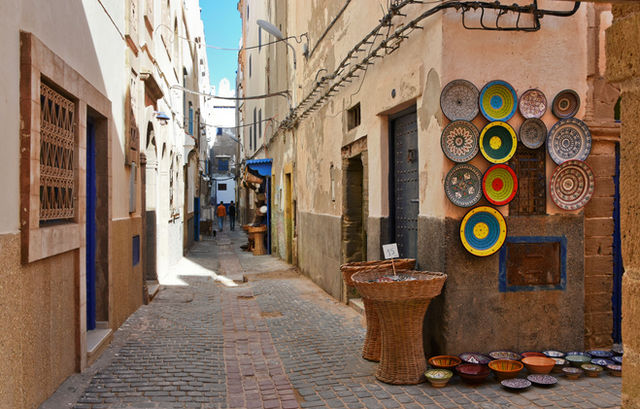
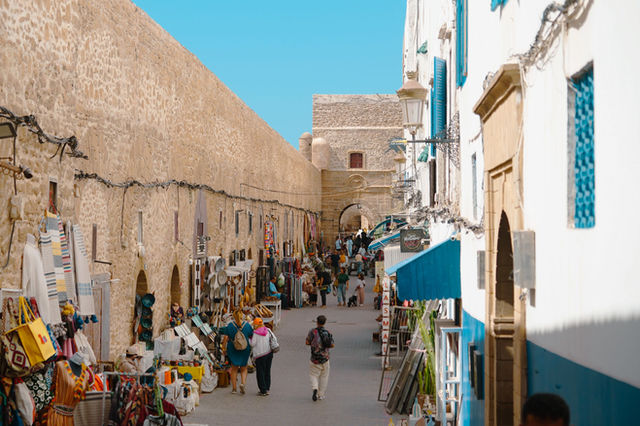
    The walled old town — whitewashed, blue-trimmed and refreshingly easy to navigate, its souks, art galleries and workshops set on a rare (for Morocco) near-grid. The relaxed heart.

    Why go
    The souks, the galleries, the ramparts and the low-hassle wandering.
    Best for
    Shoppinggalleriescafésaimless walking
    Known for
    The Skala de la Ville rampart walk and its cannons, the souks and thuya-wood and argan workshops, the art galleries, and the gates like Bab Marrakech.
  • The Port and Skala

    The working fishing harbour and its sea bastion at the medina's north end — cobalt boats, gulls, a fish auction and a row of open-air grills, salty and alive. The town's raw, briny edge.

    Why go
    The fishing boats, the sea bastion and the quayside seafood grills.
    Best for
    Seafoodphotographyharbour lifesea views
    Known for
    The blue wooden fishing boats, the Skala du Port bastion and its cannons and gate, the fish stalls and grills, and the boatbuilders still working the quay.
  • The Beach and Bay

    The long sandy sweep curving south from the town, raked by the Atlantic wind — the domain of windsurfers, kitesurfers, camel and horse riders, and beachfront cafés. The active, open side.

    Why go
    The wind sports, the long beach walk and the seafront cafés.
    Best for
    Windsurfingkitesurfingbeach walkssundowners
    Known for
    The wide windy beach and its surf schools, the beachfront cafés and clubs, the walk toward the ruined Bordj el Berod (a Hendrix-legend spot), and the dunes and river mouth beyond.

Views & hidden gems

Best views

  • The Skala de la Ville ramparts at sunset — the Atlantic breaking on the walls
  • The fishing port — the blue boats and gulls in the morning
  • The medina rooftops — white walls and the sea beyond
  • The beach toward Bordj el Berod — the ruined fort in the surf

Hidden gems

  • The thuya-wood workshops — Essaouira's fragrant marquetry, from the makers
  • The island of Mogador offshore — a bird reserve seen from the ramparts (landing restricted)
  • The argan cooperatives inland — oil pressed the traditional way (and goats in the trees)
  • The Gnaoua café sessions — live music in the medina year-round
  • The old mellah lanes — the medina's historic Jewish quarter

Food & drink

Essaouira eats from the Atlantic. The signature experience is the port grills — pick your fish, prawns or calamari from the day's catch and have it grilled on the spot — and the medina restaurants build on that with fish tagines, seafood pastilla and Moroccan classics. Argan oil, pressed from the region's trees, appears in amlou (an argan-almond-honey spread) and drizzled on everything. The café and rooftop scene is strong and relaxed. As ever, mint tea is the constant.

  • Grilled seafood — pick-your-own fish, prawns and calamari at the port
  • Fish tagine — Atlantic fish slow-cooked with tomato, chermoula and vegetables
  • Seafood pastilla — a coastal take on the sweet-savoury pie
  • Sardines — the local staple, grilled fresh off the boats
  • Amlou — an argan-oil, almond and honey spread for bread
  • Mint tea — sweet green tea, the constant welcome
Dietary notes

As a seafood town, committed vegetarians work a little harder, but vegetable tagines, couscous, salads and the argan-and-almond amlou fill the gaps — ask about stock. Vegan options are more common here than in most Moroccan towns, given the traveller scene, but check butter and eggs. Halal is the default and universal; kosher has a historic presence given the old mellah but is effectively unavailable today. Gluten-free is manageable with grilled fish, tagines (minus bread) and salads, but couscous and pastilla are wheat — confirm.

Essaouira in photos

▸ Where you'll stay

Where you'll stay in Essaouira

Stay in the medina to be steps from the ramparts, souks and port — the walled town holds riads and guesthouses in restored houses, atmospheric and central, if sometimes wind-buffeted. The seafront and the streets toward the beach have hotels handy for wind sports and sunsets. Essaouira is small and walkable, so anywhere in or near the medina works. Book ahead for the June Gnaoua festival.

  • Budget
    The medina guesthouses and budget riads among the souks.
  • Mid-range
    Medina riads / seafront restored riads or comfortable hotels near the beach.
  • Luxury
    The best medina riads / beachfront hotels high-end restored houses or sea-view stays.
Stay

Hotels & rentals around Essaouira

Pan, zoom and compare live prices — every stay in one map.

▸ Getting around

Getting around Essaouira

The medina is small, flat and entirely walkable — you'll do the ramparts, souks and port on foot. Petits taxis and calèches cover the beach ends and the outskirts; a car isn't needed and parking sits outside the walls. The beach is a walk or short taxi from the medina.

The medina, the port and the beach are all a short walk apart (~approx); the far beach and the argan countryside are a longer walk, taxi or tour — plan the countryside as a half-day.

▸ Plan your days

Suggested itineraries

Ready-made day plans for Essaouira — from a single day to a long weekend.

One day

Start in the medina — the souks, the galleries and the thuya-wood workshops — then walk the Skala de la Ville ramparts over the crashing Atlantic. Head to the fishing port for the blue boats and a pick-your-own seafood grill lunch on the quay. Spend the afternoon on the beach or with a mint tea on a rooftop, and end back on the ramparts for the sunset.

Two days

Give day two to the beach and the countryside. Take a windsurfing or kitesurfing lesson, or walk the long beach toward the ruined Bordj el Berod, then head inland to an argan cooperative to see the oil pressed (and the tree-climbing goats). Return for a last seafood dinner and, if there's a session on, some live Gnaoua music.

▸ What you'll do

Insider tips

  • Eat at the port grills — pick your fish from the ice and have it cooked on the spot for the freshest, cheapest seafood.
  • Come in spring or autumn for the gentlest wind, or embrace high-summer gusts if you're here to windsurf.
  • Buy argan oil from a genuine cooperative inland to support the makers and get the real thing.
  • Bring a windbreaker — the Atlantic breeze that keeps Essaouira cool can whip up sand on the beach.
What's on

While you're there

28
MAY
Fes Festival of World Sacred Music 2027
99 Zkak Rouah, 30 Fez, Morocco · music festival
Build a trip around it →
Explore

Explore the area

© OpenFreeMap · OSM · terrain Mapterhorn
Do

Local attractions & tours

Skip-the-line tickets and small-group tours in Essaouira — compare across our partners.

We're still curating hand-picked tickets and tours for Essaouira. In the meantime, the map above and the nearby cities are a great place to start.

▸ Budget

What it costs in Essaouira

Backpacker
roughly €22–40 a day.
Mid-range
roughly €50–90 a day.
Luxury
€150 a day and up.
Cash vs card
Morocco runs largely on cash — carry dirhams for the medina, port grills, taxis and stalls; cards work in bigger hotels and some restaurants.
Tipping
Tipping is customary — small dirham tips for cafés, grills, guides and help; round up taxis.
▸ When you'll go

When to visit Essaouira

April to October — warm, breezy and bright; windiest in high summer

Spring

What to expect — Warm, bright and breezy, the town at its most pleasant before the high-summer wind, with mild sea air and few crowds. One of the best times.

What's best — Comfortable weather for the ramparts, port and beach walks, gentler wind for beginners, and an easy, uncrowded pace.

Summer

What to expect — Warm and famously windy — the Atlantic breeze keeps Essaouira cool while inland Morocco bakes, but the beach can be gusty and the town busy with escapees from the heat.

What's best — A cool coastal refuge from the interior's heat, peak wind for windsurfers and kitesurfers, and the huge June Gnaoua music festival — bring a windbreaker for the beach.

Autumn

What to expect — Warm, settled and easing as the summer wind and crowds fade — one of the loveliest windows, with warm seas lingering.

What's best — Fine weather for the town and the beach, thinner crowds, and warm swimming into the early autumn — a relaxed, rewarding time.

Winter

What to expect — Mild but cooler and sometimes wet, with grey Atlantic spells and bright, breezy days between; quieter and low-key. The off-season.

What's best — Few tourists, lower prices, and dramatic winter surf on the ramparts — pack a warm layer and a waterproof, and enjoy the town at its quietest.

▸ Know before you go

Know before you go

Honest swaps

Skip a medina tourist restaurant for your fish → pick your catch at the port grills and eat it minutes later on the quay.

Skip the crowds of Marrakech for a couple of days → slow down on the coast in Essaouira instead.

Skip mass-produced souvenirs → buy thuya-wood marquetry and argan oil from the medina workshops and cooperatives.

Skip fighting the summer wind on the beach → come in spring or autumn for gentler air, or embrace it with a board.

Crowds & timing

The June Gnaoua festival packs the town and books out rooms months ahead — plan early or come another time.

The port is best in the morning for the boats and the auction; the ramparts best at sunset.

Local rules & etiquette

Dress a little more modestly than a European beach resort, especially in the medina; the beach itself is relaxed.

Non-Muslims cannot enter the working mosques; be respectful around prayer times.

Ask before photographing fishermen and market people, and agree any guide's fee first.

Money

Carry dirhams for the medina, port grills, taxis and stalls; cards cover bigger hotels only.

Use bank ATMs in the medina and new town rather than standalone machines.

After dark

The medina cafés and rooftops, and a handful of bars, hold the low-key evenings, often with live Gnaoua music.

The seafront has a few beach clubs and bars that liven up in summer.

Essaouira is a gentle, early town; nights are music, seafood and a rooftop rather than clubs.

▸ Ready to book your trip?

Getting there

Essaouira Mogador airport (ESU) is south of town with seasonal European flights; many arrive by bus or grand taxi from Marrakech (~approx 3 hours), or by shuttle. The bus stations are a short walk or petit-taxi ride from the medina.

Book

Ready to book your trip?

Flights, airport transfers and car hire — search and compare without leaving the page.

▸ Trip extras
Book

More trip extras

Parking, holiday extras, and more — coming soon.

Coming soon

We're lining up parking, holiday extras and activities you'll be able to add to any trip from here.