← Morocco
MOROCCO · CITY

Fes

Morocco's spiritual heart — a labyrinthine medieval medina of tanneries, madrasas and workshops, best entered on foot.

  • City
  • March to May and September to November — warm and comfortable, before and after the summer heat
  • ~approx 2 days
  • The World's Largest Medina
  • Ancient University
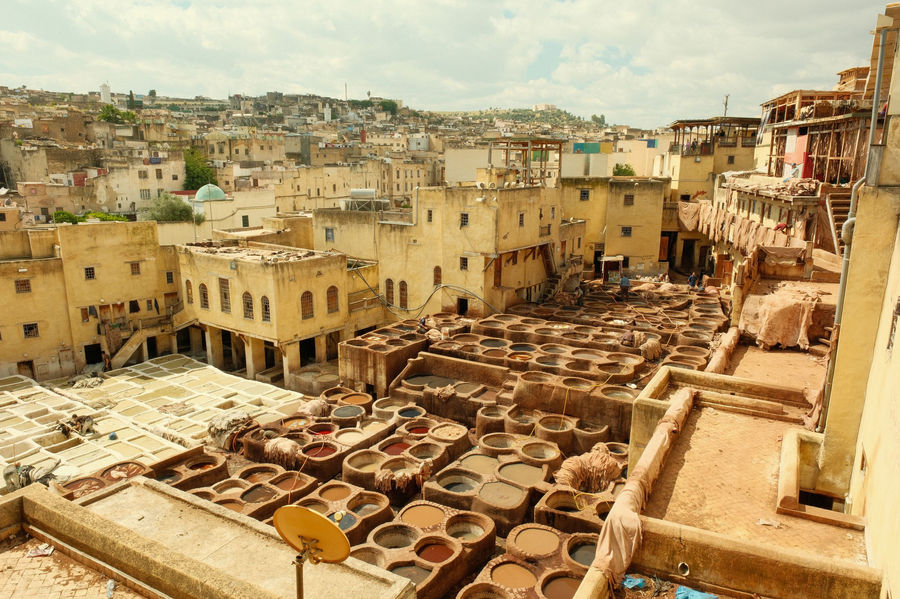
  • The Tanneries
  • Blue Gate

A donkey squeezing past under a lantern-lit archway, the hammer of coppersmiths ringing down a covered lane, and the sharp smell of the tanneries reaching you before you find the balcony above the dye pits.

Fes holds the largest car-free old city on earth — a medieval labyrinth of nine thousand lanes where donkeys still carry the loads, craftsmen still hammer brass, and the tanneries still dye leather in stone vats as they have for a thousand years. It is Morocco's spiritual and cultural heart, and its most intense.

Type
city
Ideal length
~approx 2 days
Getting around
the medina is entirely on foot; taxis link the quarters
Neighbourhoods
3 areas
Best season / months
March to May and September to November — warm and comfortable, before and after the summer heat
Language
Arabic and Amazigh (Berber); French widely used
Currency
Moroccan dirham (DH)
Budget level
low — very affordable for a visitor
Good for
  • History
  • Crafts
  • Culture
  • Adventurous travellers
▸ Discover

About Fes

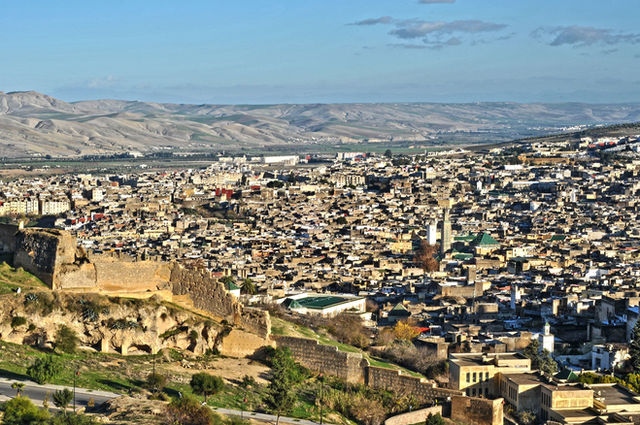
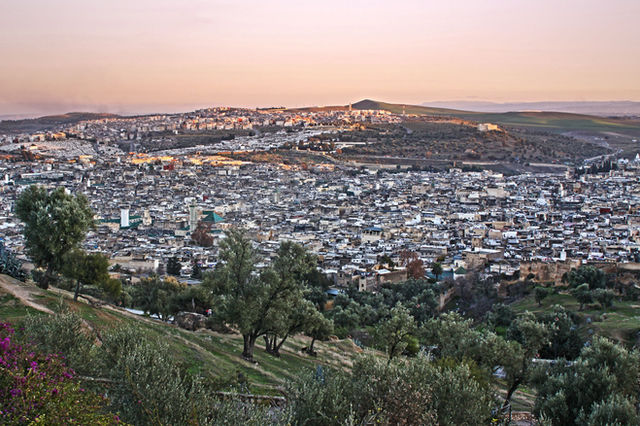
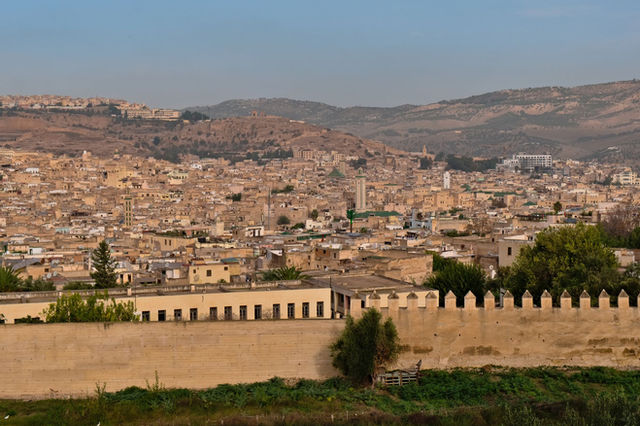
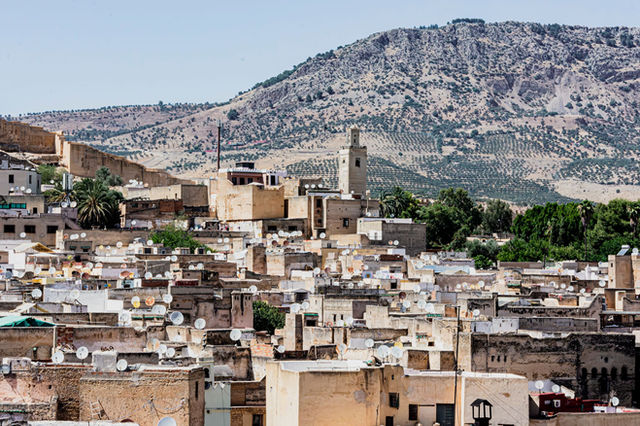
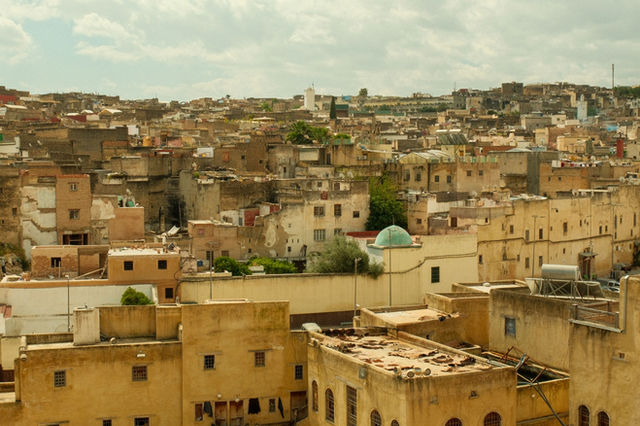
Fes sits inland in northern Morocco, in a bowl of hills, and splits into three parts. Fes el-Bali, the old walled medina, is the heart — a dense, downhill maze of souks, mosques and workshops, entirely closed to cars. Beside it, Fes el-Jdid, the "new" medieval quarter, holds the royal palace gates and the old Jewish district. Out beyond the walls spreads the French-built Ville Nouvelle, the modern city. The medina is the reason to come, and it is a place to surrender your sense of direction — you will get lost, and that is part of it.

Fes is home to a UNESCO World Heritage Site — Medina of Fez — inscribed in 1981.

Why go

Fes is the best-preserved medieval city in the Arab world — a living one, not a museum, where the crafts, trades and rhythms of a thousand years still run. The medina is an overwhelming, sensory marvel of colour, smell and sound; the old university is among the oldest anywhere; and the tanneries and souks are unlike anything in Europe. It is harder work than Marrakech, less polished and more real, and all the more rewarding for it.

Don't miss

  • Fes el-Bali — the vast car-free medieval medina
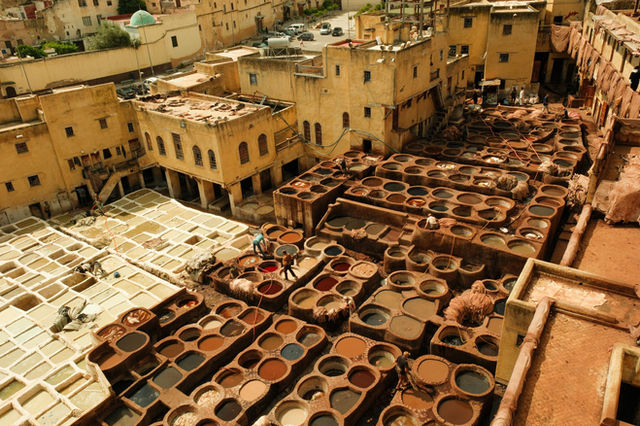
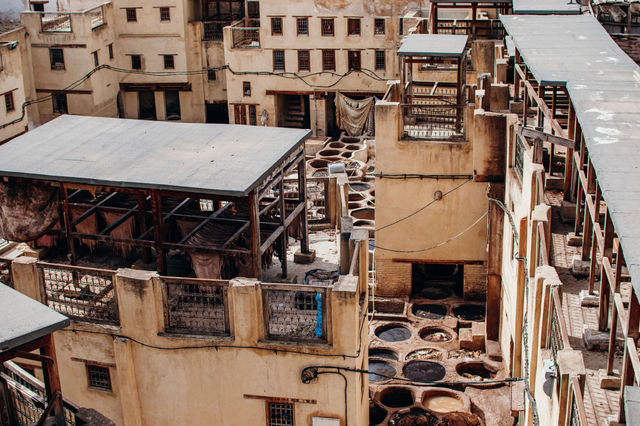
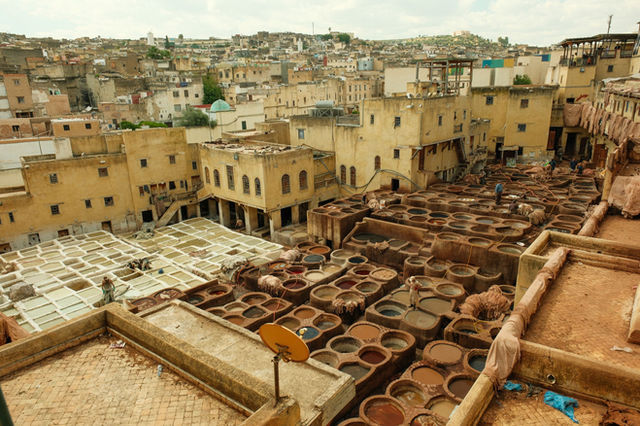
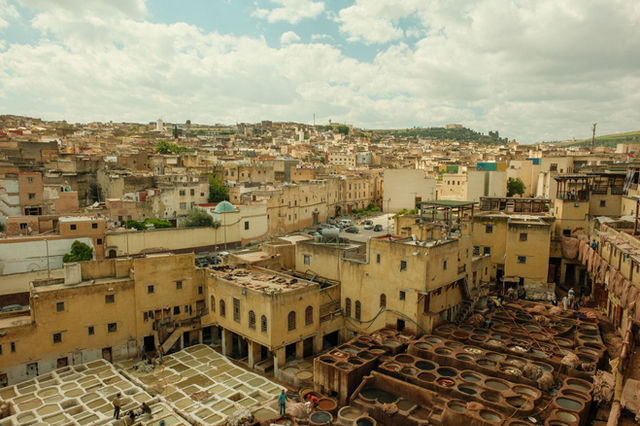
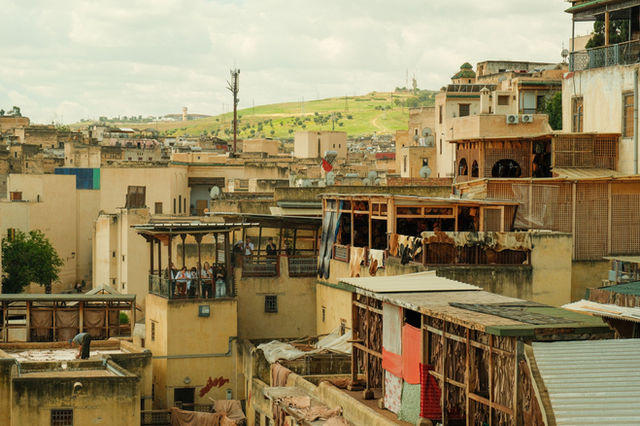
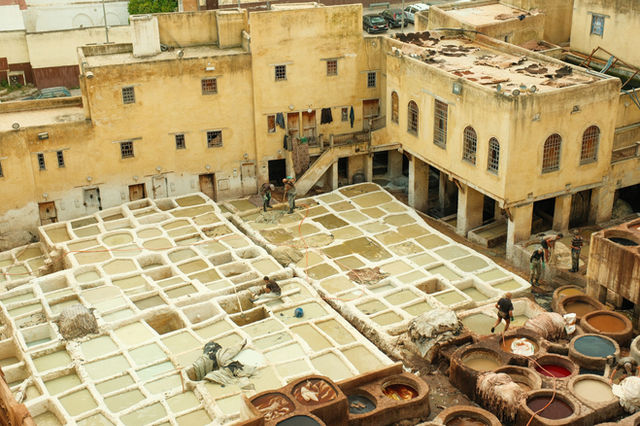
  • The Chouara tanneries — leather dyed in stone vats from a balcony above
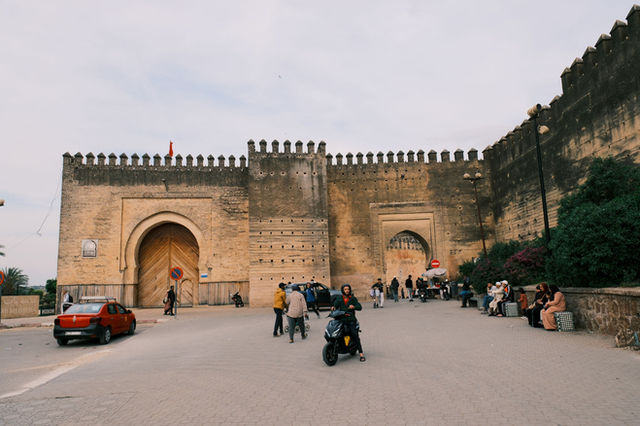
  • Bab Boujloud — the blue-tiled gate into the old city
  • The Bou Inania and Al-Attarine medersas — jewel-box Quranic schools
  • The Qarawiyyin — one of the world's oldest universities and mosques

Signature experiences

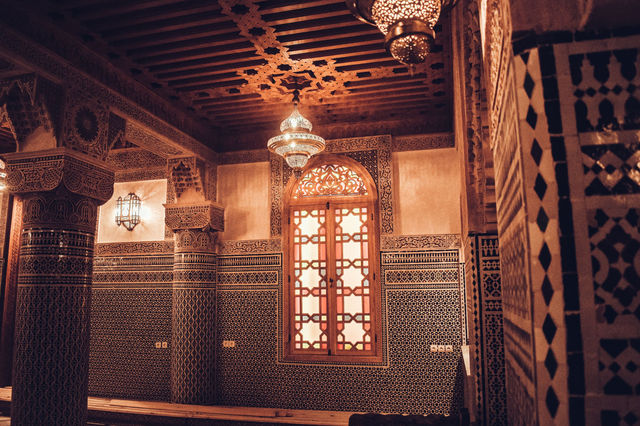
Losing yourself in the medina — Fes el-Bali has no straight lines and no cars, and the only way to know it is to walk it — down through the souks organised by trade, past the coppersmiths and the dyers, following the crowds and the donkeys. You will get lost; embrace it, and let the lanes deliver you to a hidden fountain, a food stall or a craftsman at work. A licensed guide for the first morning is worth it to make sense of the tangle. **The tanneries** — The Chouara tanneries have dyed leather the same way for centuries — a honeycomb of stone vats of colour where hides are worked by hand. Climb to one of the leather-shop balconies above (you'll be handed a sprig of mint for the smell) to look down on the whole medieval process. It is pungent, extraordinary and unforgettable. **The medersas and the university** — Behind plain doors, the old Quranic schools open into courtyards of astonishing craft — carved cedar, stucco lace and zellij tilework covering every surface. The Bou Inania and Al-Attarine medersas are the finest, and the Qarawiyyin, founded over a thousand years ago, is claimed as the oldest continually operating university in the world. **The craft trades** — Fes is Morocco's craft capital, and the souks are still working — brass and copper beaten in the metalworkers' square, ceramics glazed in the famous Fes blue, weavers, woodcarvers and the tanneries. Watching the makers, and buying at the source, is one of the city's great pleasures; haggling is expected and good-humoured.

Neighbourhoods

Fes neighbourhood by neighbourhood — the character of each and who it suits.

  • Fes el-Bali

    The old walled medina — a downhill labyrinth of thousands of lanes, souks by trade, mosques, fountains and workshops, entirely free of cars and utterly immersive.

    Why go
    The medieval city itself, the crafts, the tanneries and the great monuments.
    Best for
    The medinasoukscraftsgetting lost
    Known for
    The Chouara tanneries, the Qarawiyyin mosque and university, the Bou Inania and Al-Attarine medersas, the covered souks by trade, and the blue gate of Bab Boujloud.
  • Fes el-Jdid

    The "new" medieval quarter beside the old medina — the royal palace, the old Jewish district, and gardens, less dense and less visited.

    Why go
    The palace gates, the Mellah, and a quieter walk.
    Best for
    The royal gatesthe Mellaha calmer stroll
    Known for
    The golden doors of the Royal Palace, the Mellah Jewish quarter and its balconied houses, the old synagogue and cemetery, and the Jnan Sbil gardens.
  • The Ville Nouvelle

    The French-built modern city beyond the walls — broad avenues, cafés, hotels and the everyday commerce of contemporary Fes.

    Why go
    Modern comforts, cafés and a break from the medina's intensity.
    Best for
    Cafésmodern hotelsa breather
    Known for
    The colonial-era avenues, the cafés and restaurants, the train station, and the everyday shops and services.

Views & hidden gems

Best views

  • The Merenid Tombs on the hill — the whole medina spread below at sunset
  • A tannery balcony — down over the vats of colour
  • Bab Boujloud — the blue gate, blue outside and green within
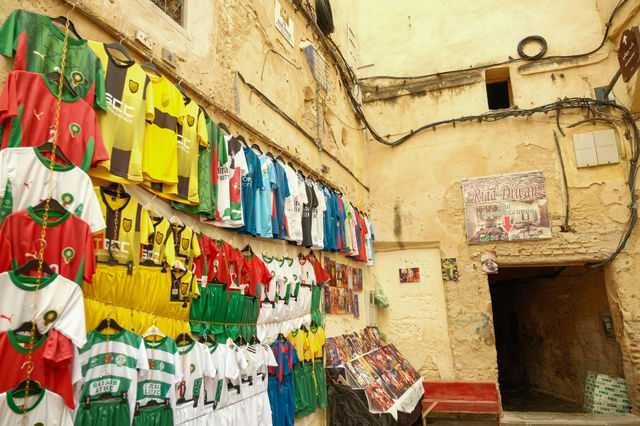
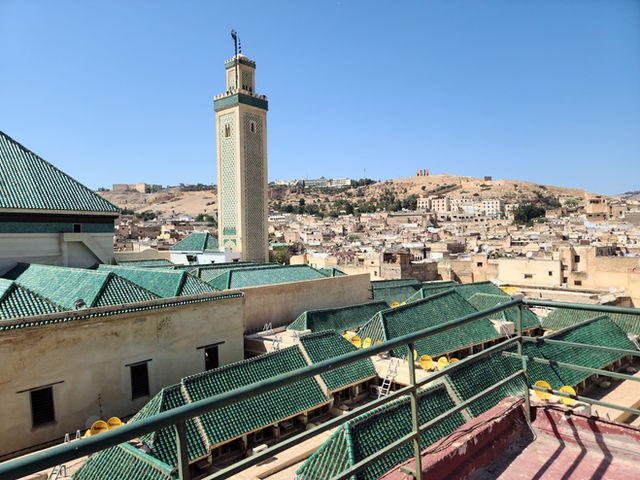
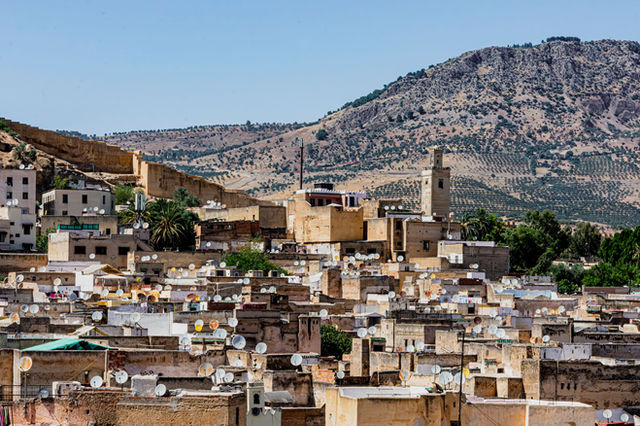
  • The rooftop of a riad or café — over the medina's satellite-dished roofscape

Hidden gems

  • The Nejjarine museum and its fountain — a restored caravanserai of woodcraft
  • The Fes blue-ceramic workshops beyond the walls — potters and zellij cutters at work; most welcome visitors (arrange ahead)
  • The Mellah's balconied houses — a different, outward-facing architecture from the Muslim medina
  • A traditional hammam — the neighbourhood steam bath, a local ritual
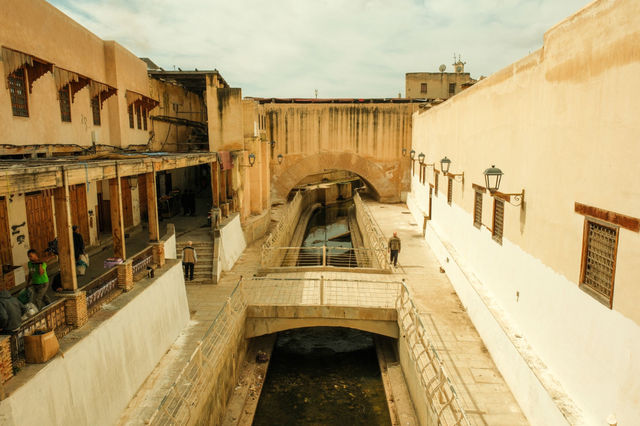
  • The Andalusian Quarter across the medina's river — quieter lanes and the Andalous mosque

Food & drink

Fassi cooking is among Morocco's most refined. The tagine — slow-cooked in a conical pot — comes in endless forms, sweet with prunes and almonds or sharp with preserved lemon and olives; couscous is the Friday ritual. The city's signature dish is the pastilla, a pigeon or chicken pie dusted with cinnamon and sugar, savoury and sweet at once. Harira soup, grilled meats and fresh bread fill the tables, and mint tea — poured high and sweet — is the constant. Alcohol is limited; the ceremony is all in the tea.

  • Pastilla — a pigeon or chicken pie dusted with cinnamon and sugar
  • Tagine — slow-cooked stew in a conical pot, sweet or savoury
  • Couscous — the Friday dish, steamed with vegetables and meat
  • Harira — a hearty tomato, lentil and chickpea soup
  • Msemen and khubz — flaky griddle bread and round loaves
  • Mint tea — sweet green tea poured from a height, the ritual drink
Dietary notes

Vegetarians manage with vegetable tagines, couscous, salads and bread, though meat stock is common, so ask. Vegan is harder but doable from the same base. Halal is the default across the city. Kosher food is very limited despite the historic Mellah, and needs arranging ahead. Gluten-free is difficult given the bread-and-couscous base; rice and tagines help — confirm at each place.

Fes in photos

▸ Where you'll stay

Where you'll stay in Fes

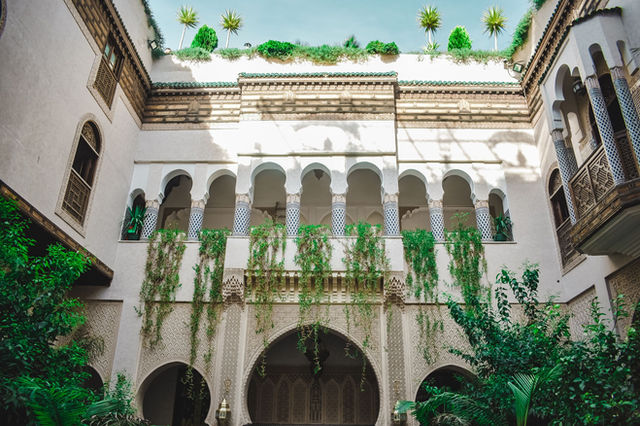
Staying in a riad — a traditional courtyard house — inside the medina is the classic Fes experience, all carved plaster and a rooftop over the old city, though you'll walk (and porters will carry your bags) through the lanes to reach it. The medina is atmospheric but intense and easy to get lost in after dark. The Ville Nouvelle offers modern hotels, quiet and cars, but you trade away the magic. Most visitors choose a medina riad and accept the walk.

  • Budget
    A simple guesthouse or dar in Fes el-Bali cheap rooms in the medina, atmospheric, a walk through the lanes.
  • Mid-range
    A restored riad in the medina a courtyard house with a rooftop, the classic Fes stay.
  • Luxury
    A grand riad or a Ville Nouvelle hotel opulent courtyard palaces in the medina, or modern comfort beyond the walls.
Stay

Hotels & rentals around Fes

Pan, zoom and compare live prices — every stay in one map.

▸ Getting around

Getting around Fes

The medina is entirely car-free and walked — there is no way around that, and it is the point. Beige petit taxis link the medina gates, the Ville Nouvelle and the station cheaply; agree the meter or the fare. A car is useless inside the walls and only needed for onward trips. Porters with carts move luggage through the lanes.

Within Fes el-Bali everything is on foot, downhill from Bab Boujloud toward the tanneries and back up. A petit taxi links Fes el-Bali, Fes el-Jdid and the Ville Nouvelle in minutes, saving the longer walks between quarters.

▸ Plan your days

Suggested itineraries

Ready-made day plans for Fes — from a single day to a long weekend.

One day

Enter the medina at the blue gate of Bab Boujloud and work downhill through the souks with a guide for the morning, taking in the Bou Inania medersa, the Qarawiyyin, the Al-Attarine medersa and the Chouara tanneries. Break for a medina lunch, explore the craft souks in the afternoon, and climb to the Merenid Tombs for sunset over the whole old city.

Two days

Give day two to the quieter quarters and the crafts. Wander Fes el-Jdid for the royal palace gates and the Mellah, visit the potters and zellij-cutters beyond the walls, browse for brass, leather or ceramics at the source, and end with a hammam and a riad rooftop dinner.

▸ What you'll do

Insider tips

  • Take a licensed guide for your first morning in the medina — it is genuinely disorienting, and a guide turns confusion into understanding.
  • Wear comfortable, closed shoes — the medina is steep, uneven, and shares its lanes with donkeys.
  • Note your riad's location and nearest landmark before you set off, and don't rely on phone maps in the tangle of covered lanes.
  • Carry small dirham notes constantly for tips, and accept the mint sprig at the tanneries — you'll want it.
What's on

While you're there

28
MAY
Fes Festival of World Sacred Music 2027
99 Zkak Rouah, 30 Fez, Morocco · music festival
Build a trip around it →
Explore

Explore the area

© OpenFreeMap · OSM · terrain Mapterhorn
Do

Local attractions & tours

Skip-the-line tickets and small-group tours in Fes — compare across our partners.

We're still curating hand-picked tickets and tours for Fes. In the meantime, the map above and the nearby cities are a great place to start.

▸ Budget

What it costs in Fes

Backpacker
roughly €25–40 a day as a rough guide.
Mid-range
roughly €60–110 a day as a rough guide.
Luxury
from around €250 a day.
Cash vs card
Fes runs on cash — carry dirham for the souks, food, tips and taxis; cards work only in bigger hotels and restaurants. The dirham is a closed currency, best obtained on arrival.
Tipping
Small tips are expected for help, guiding and service; keep small notes and tip modestly and often.
▸ When you'll go

When to visit Fes

March to May and September to November — warm and comfortable, before and after the summer heat

Spring

What to expect — Warm and comfortable, one of the best times, with the surrounding hills green and the medina pleasant to walk. Occasional rain early on.

What's best — Ideal walking weather for the medina, green landscapes, and comfortable days before the summer heat. The sacred-music festival draws crowds in early summer.

Summer

What to expect — Very hot and dry inland — Fes bakes, and the airless medina lanes are hard going at midday. Fewer tourists, and the city slows in the heat.

What's best — Lower prices and thinner crowds; do the medina early and late and rest through the afternoon. Better to come in spring or autumn if heat is a problem.

Autumn

What to expect — The summer heat easing into warm, pleasant weeks, the light golden and the medina comfortable again. Reliable into November.

What's best — The best all-round weather returning, comfortable medina walking, and the crafts and food at their most active as the season picks up.

Winter

What to expect — Cool to cold, especially at night, with grey days and the occasional rain; the medina can be chilly and the hills sometimes snow. Low season and quiet.

What's best — A quieter medina, low prices, crisp air, and the tanneries and workshops without the crowds — bring warm layers for the cold evenings.

▸ Know before you go

Know before you go

Honest swaps

Skip hiring a "guide" who attaches himself in the street → arrange a licensed guide through your riad or the tourist office, and agree the plan and price first.

Skip the hard-sell tannery shops that funnel you in → you can reach the balconies to look, and buy only if and where you choose.

Skip trying to navigate the medina alone on day one → take a guide for the first morning to get your bearings, then explore freely after.

Skip the tourist-menu restaurants near Bab Boujloud → eat where locals do deeper in the medina, or book a riad dinner.

Crowds & timing

The medersas and the tannery balconies are busiest midday; go early for the light and the calm.

The sacred-music festival in early summer fills the city — wonderful, but book accommodation well ahead.

Local rules & etiquette

Dress modestly — cover shoulders and knees, and women may want a scarf; non-Muslims cannot enter the working mosques, including the Qarawiyyin, though the medersas are open.

Ask before photographing people, and expect a small tip to be requested; the tannery workers and craftsmen appreciate the courtesy.

Haggle with good humour in the souks, and be firm but polite with persistent sellers and would-be guides.

Money

Carry cash in dirham — the medina is cash-only for almost everything, and small notes ease tips and taxis.

The dirham can't easily be bought abroad; change on arrival, and use bank ATMs over informal exchanges.

After dark

The medina quiets and darkens early — an atmospheric after-dinner wander near your riad, more than a nightlife.

The Ville Nouvelle has the modern cafés, and a few hotels have bars, but this is not a party city.

A riad rooftop dinner under the stars is the classic Fes evening.

▸ Ready to book your trip?

Getting there

Fes has its own airport, Fès–Saïs (FEZ), a short drive southwest of the city, with a taxi into town. The train (ONCF) also links Fes well to Casablanca, Rabat, Meknes and Marrakech, arriving at the Ville Nouvelle station. Petit taxis connect the station and the medina gates.

Book

Ready to book your trip?

Flights, airport transfers and car hire — search and compare without leaving the page.

▸ Trip extras
Book

More trip extras

Parking, holiday extras, and more — coming soon.

Coming soon

We're lining up parking, holiday extras and activities you'll be able to add to any trip from here.