← Morocco
MOROCCO · CITY

Meknes

Morocco's imperial city of monumental gates and vast walls, built by a sultan to rival Versailles.

  • City
  • March to May and September to November — warm, dry and comfortable
  • ~approx 1–2 days
  • Imperial City
  • Bab Mansour Gate
  • Moulay Ismail's Monuments
  • Volubilis Nearby

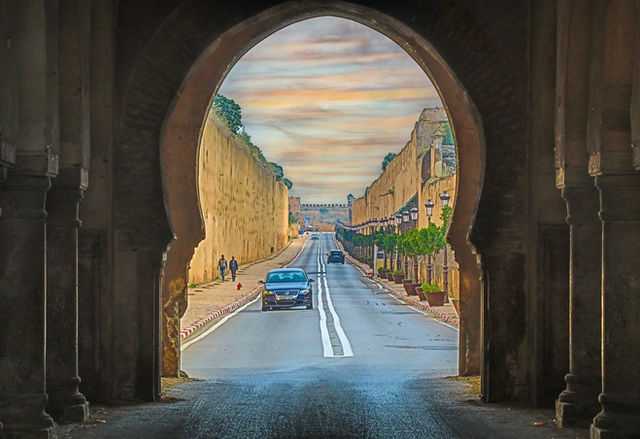
The vast tiled arch of Bab Mansour glowing over an empty square at dusk, the cool cathedral-like gloom of the great granaries where the sultan once stabled thousands of horses, and, on the horizon, the columns of a Roman city rising from the wheat fields.

Meknes is Morocco's quietest imperial city — the 17th-century capital of the sultan Moulay Ismail, ringed by miles of rammed-earth walls and crowned by one of the country's grandest gates, with a workable medina, colossal royal granaries, and the Roman ruins of Volubilis on its doorstep.

Type
city
Ideal length
~approx 1–2 days
Getting around
on foot in the medina and imperial city; petits taxis beyond
Neighbourhoods
3 areas
Best season / months
March to May and September to November — warm, dry and comfortable
Language
Arabic and Amazigh; French widely spoken (some English at hotels)
Currency
Moroccan dirham (MAD)
Budget level
low — very affordable
Good for
  • History
  • Architecture
  • Quieter Morocco
  • Roman-ruin trips
▸ Discover

About Meknes

Meknes sits on a plateau in the fertile plains of northern Morocco, between the Middle Atlas and the Rif, an easy hop from Fes. The city splits in two: the old medina and the huge imperial city (ville impériale) on one side of the Oued Boufekrane, and the French-built ville nouvelle on the other. Moulay Ismail poured a lifetime and a vast forced labour into the imperial quarter — walls, gates, a mausoleum, granaries and a great water basin — and much survives. It's calmer, more spread out and far less touristy than Fes or Marrakech, and it's the base for Volubilis and the holy town of Moulay Idriss.

Meknes’s historic core is inscribed on the UNESCO World Heritage List (as “Historic City of Meknes”, 1996).

Why go

Meknes offers imperial Morocco without the hard sell. It has a monumental legacy — Bab Mansour, widely called the finest gate in Morocco; the tiled mausoleum of Moulay Ismail; the awe-inspiring Heri es-Souani granaries and stables — plus a genuine, workable medina where you can shop and eat with far less hassle than its famous neighbours. Add the superb Roman city of Volubilis and the whitewashed pilgrimage town of Moulay Idriss a short drive away, and its wine-country setting, and it makes a rewarding, relaxed base.

Don't miss

  • Bab Mansour — the great tiled imperial gate
  • The Mausoleum of Moulay Ismail — the sultan's tiled tomb
  • Heri es-Souani — the vast royal granaries and stables
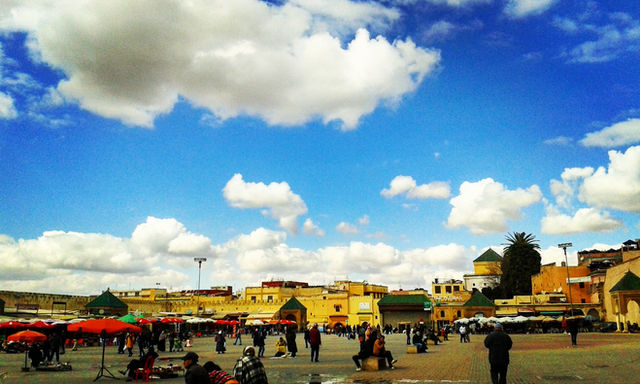
  • Place el-Hedim and the medina — the old-city heart
  • Volubilis — the Roman ruins nearby

Signature experiences

Moulay Ismail's imperial city — The sultan who made Meknes a capital built on a colossal scale, and the ruins are the reason to come. Stand before Bab Mansour, its horseshoe arch sheathed in green-and-white tiles and framed by marble columns, then visit the serene tiled mausoleum where the sultan lies. Walk out to the Heri es-Souani — cavernous vaulted granaries and stables, cool and cathedral-like, once holding grain and horses for an army. It's imperial Morocco at its most ambitious. **The easygoing medina** — Meknes's old city is a pleasure precisely because it's low-key. Around Place el-Hedim, the souks sell everything from olives and dates to metalwork and carpets, and the pace is gentler and the hustle far softer than in Fes next door. See the finely tiled Bou Inania Madrasa and the Dar Jamai palace, graze the food stalls, and shop without the pressure. It's a place to relax into Morocco. **Volubilis and Moulay Idriss** — A short drive north, the Roman city of Volubilis spreads across a hillside above the plains — triumphal arch, basilica, columns and superb floor mosaics still in place, one of North Africa's finest Roman sites. Pair it with Moulay Idriss, the whitewashed hill town wrapped around the tomb of Morocco's most revered saint, cascading down two hills. Together they make the essential day out from Meknes. **Wine country and the table** — Meknes sits at the heart of Morocco's main wine region, and the surrounding plains are dotted with vineyards — an unusual note in the country. In town, the food is classic Moroccan: tagines, couscous, harira soup, brochettes and pastilla, eaten at medina stalls and ville-nouvelle restaurants. The fertile plains mean good produce, olives and preserved lemons; graze the souk and settle in for a slow tagine.

Neighbourhoods

Meknes neighbourhood by neighbourhood — the character of each and who it suits.

  • The Medina

    The old walled city around Place el-Hedim — souks, mosques, a madrasa and everyday market life inside the ramparts, more relaxed and workaday than Fes's. The living old town.

    Why go
    The souks, the great square and the medina's monuments, with far less hassle.
    Best for
    Souk shoppingstreet foodwanderingeveryday Morocco
    Known for
    Place el-Hedim, the covered and open souks, the Bou Inania Madrasa, the Dar Jamai palace-museum, and the food stalls and craft workshops within the walls.
  • The Imperial City

    Moulay Ismail's monumental quarter beyond Bab Mansour — a sprawl of ramparts, gates, the royal mausoleum, the granaries and the great water basin, grand and half-empty. The city's imperial heart.

    Why go
    Bab Mansour, the mausoleum, and the granaries and stables.
    Best for
    Imperial monumentsrampartsphotographyspace
    Known for
    Bab Mansour gate, the Mausoleum of Moulay Ismail, the Heri es-Souani granaries and royal stables, the Agdal basin, and the long rammed-earth walls.
  • The Ville Nouvelle

    The French-built new town (Hamria) across the river — wide boulevards, cafés, the train station and many of the hotels and restaurants. Meknes's modern, orderly side.

    Why go
    The hotels, cafés and restaurants, and the transport links.
    Best for
    Hotelsdiningcafésarrivals and departures
    Known for
    The boulevards and café terraces, the train and bus stations, the modern hotels and restaurants, and the everyday shops of the new city.

Views & hidden gems

Best views

  • Bab Mansour from Place el-Hedim — the great gate across the square
  • The Heri es-Souani granaries — the vaulted, light-shafted interior
  • The ramparts and gates of the imperial city — long earthen walls
  • Moulay Idriss from above — the white town tumbling over two hills

Hidden gems

  • The Agdal basin — Moulay Ismail's huge reflecting reservoir
  • The Dar Jamai museum — Moroccan arts in a 19th-century palace
  • The Bou Inania Madrasa — a jewel of tilework and carved cedar
  • The Roman mosaics of Volubilis — floors still in place under the sky
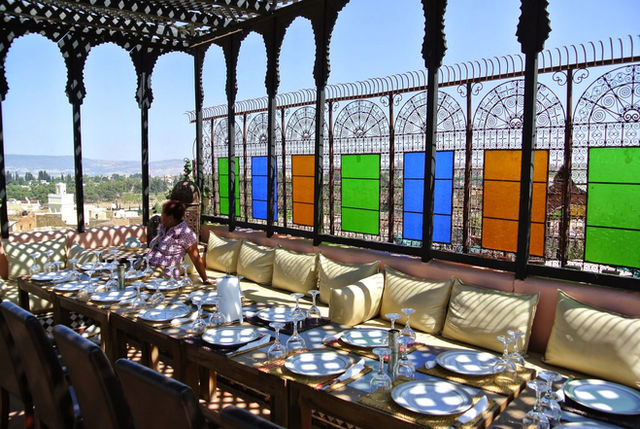
  • The rooftop cafés over Place el-Hedim — the medina and gate from above

Food & drink

Meknes eats classic Moroccan, with the bonus of a fertile-plains larder and a rare local wine tradition. The medina stalls and ville-nouvelle restaurants serve tagines (lamb with prunes, chicken with preserved lemon and olives), couscous on Fridays, harira soup, grilled brochettes and the sweet-savoury pastilla. The souk overflows with olives, dates, preserved lemons and mint for the ever-present tea. As Morocco's wine capital, Meknes is one of the easier places to find a local glass with dinner.

  • Tagine — slow-cooked lamb with prunes or chicken with lemon and olives
  • Couscous — the Friday semolina-and-vegetable classic
  • Pastilla — a sweet-savoury pigeon or chicken pie in flaky pastry
  • Harira — a hearty tomato, lentil and chickpea soup
  • Brochettes — charcoal-grilled skewered meats from the stalls
  • Mint tea — sweet green tea, the constant welcome
Dietary notes

Vegetarians manage with vegetable tagines, couscous, harira (check the stock), salads and bread, though meat stock is common, so ask. Vegan options exist but need care around butter and eggs. As a Muslim country, halal is the default and universal; kosher is effectively unavailable. Gluten-free is genuinely hard around couscous, bread and pastilla — grilled meats, salads and tagines (minus bread) are safer, but confirm.

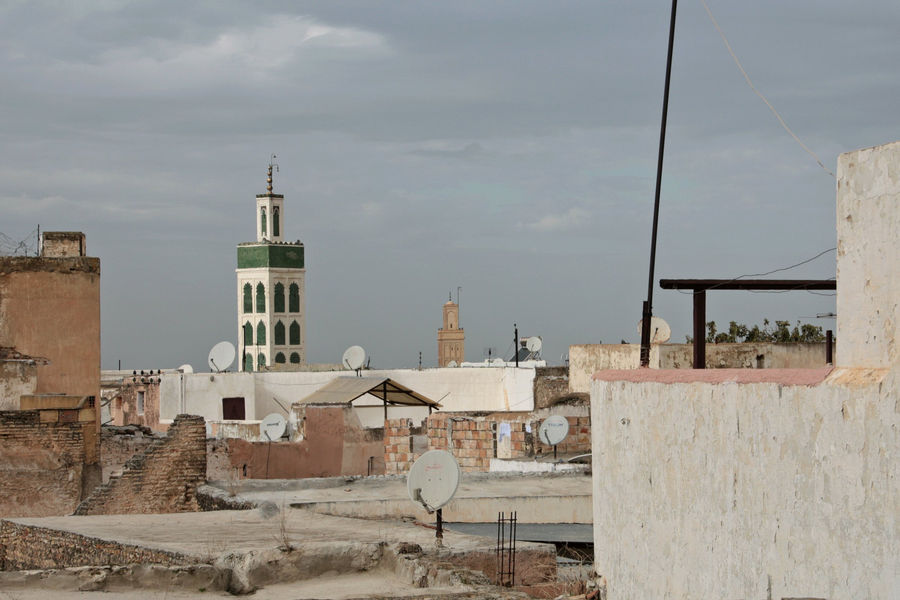
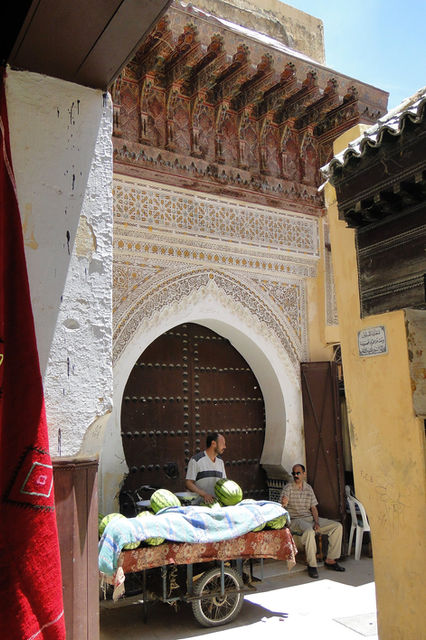
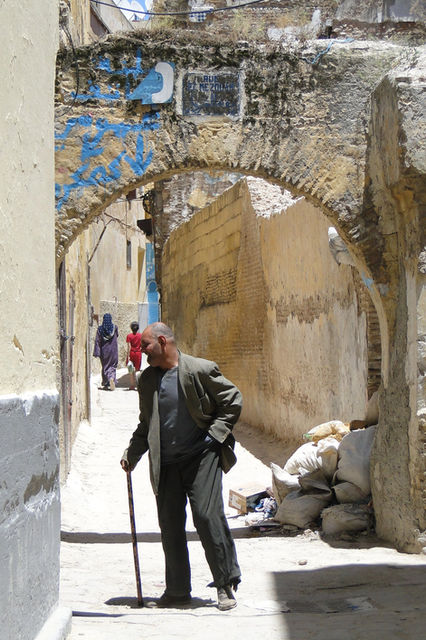
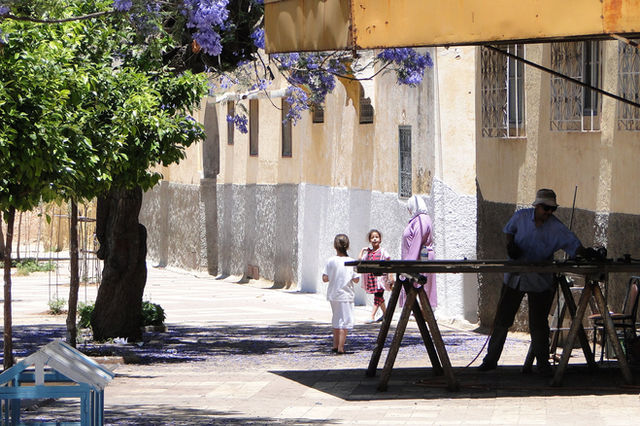
Meknes in photos

▸ Where you'll stay

Where you'll stay in Meknes

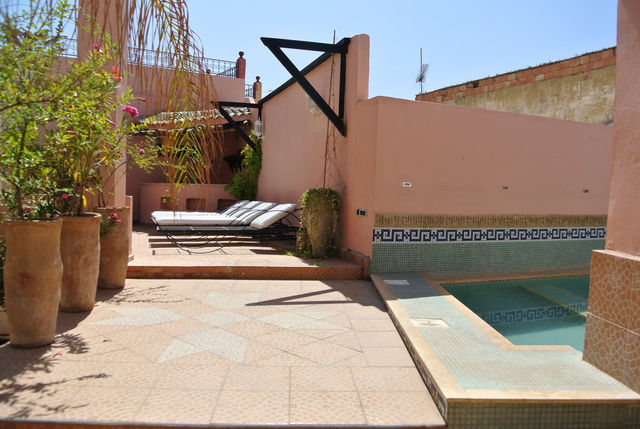
For atmosphere, stay in a riad or guesthouse in the medina, within walking distance of Place el-Hedim and the imperial monuments. For modern comfort, cafés and the train station, the ville nouvelle across the river holds most of the standard hotels. Meknes is compact and cheap, and petits taxis bridge the two sides easily. The medina is the more characterful choice for a first visit.

  • Budget
    The medina / near Place el-Hedim guesthouses and budget riads among the souks.
  • Mid-range
    Medina riads / ville nouvelle restored riads or comfortable new-town hotels.
  • Luxury
    The best medina riads high-end restored courtyard houses, the top end of a modest range.
Stay

Hotels & rentals around Meknes

Pan, zoom and compare live prices — every stay in one map.

▸ Getting around

Getting around Meknes

The medina and imperial city are walkable, if spread out — the granaries are a fair stroll or a short petit-taxi ride from Bab Mansour. Petits taxis (cheap, metered or fixed) shuttle between the medina and the ville nouvelle; grand taxis and guided cars run to Volubilis. A car isn't needed in town.

The medina and imperial city adjoin each other on foot (~approx), with a taxi useful for the further monuments; the ville nouvelle is a short petit-taxi ride across the river — Volubilis is a half-hour drive out.

▸ Plan your days

Suggested itineraries

Ready-made day plans for Meknes — from a single day to a long weekend.

One day

Start at Place el-Hedim and cross to Bab Mansour, then tour the imperial city — the Mausoleum of Moulay Ismail, the Agdal basin and the vast Heri es-Souani granaries and stables. Back in the medina, browse the souks, see the Bou Inania Madrasa and the Dar Jamai palace, and eat a tagine among the stalls. End with a mint tea on a rooftop over the square.

Two days

Give day two to the Romans and the saints. Drive out to Volubilis for the mosaics, arch and columns in the morning, then to whitewashed Moulay Idriss on its two hills for a wander and a viewpoint lunch. Return to Meknes for a last evening in the ville nouvelle or the medina.

▸ What you'll do

Insider tips

  • Base in Meknes for a calmer alternative to Fes, with Volubilis and Moulay Idriss on the doorstep.
  • Take a grand taxi or guided car to Volubilis and Moulay Idriss together — they pair perfectly in a half-day.
  • Carry cash — the medina, taxis and stalls are cash-only, and ATMs cluster in the ville nouvelle.
  • As Morocco's wine capital, Meknes is a rare place to find a local glass with dinner — ask at ville-nouvelle restaurants.
What's on

While you're there

28
MAY
Fes Festival of World Sacred Music 2027
99 Zkak Rouah, 30 Fez, Morocco · music festival
Build a trip around it →
Explore

Explore the area

© OpenFreeMap · OSM · terrain Mapterhorn
Do

Local attractions & tours

Skip-the-line tickets and small-group tours in Meknes — compare across our partners.

We're still curating hand-picked tickets and tours for Meknes. In the meantime, the map above and the nearby cities are a great place to start.

▸ Budget

What it costs in Meknes

Backpacker
roughly €20–35 a day as a rough guide.
Mid-range
roughly €45–85 a day as a rough guide.
Luxury
from around €140 a day.
Cash vs card
Morocco runs largely on cash — carry dirhams for the medina, taxis, stalls and small riads; cards work in bigger hotels and some restaurants.
Tipping
Tipping is customary — small dirham tips for cafés, guides, and help; round up taxis.
▸ When you'll go

When to visit Meknes

March to May and September to November — warm, dry and comfortable

Spring

What to expect — Warm, green and comfortable, the plains at their freshest before the summer heat, with occasional showers. One of the best times.

What's best — Ideal walking weather for the imperial city and Volubilis, green wheat fields around the ruins, and wildflowers — a lovely, uncrowded season.

Summer

What to expect — Hot and dry on the inland plateau, though less extreme than the Sahara side; midday sightseeing is tiring, evenings pleasant. Demanding by day.

What's best — Long light, warm evenings on the café terraces, and thin crowds at the monuments — start early, rest at midday, and save the imperial city and Volubilis for the cooler hours.

Autumn

What to expect — The heat easing into warm, clear, comfortable weeks — one of the best times, with the grape harvest in the surrounding wine country.

What's best — Fine weather for the ruins and the medina, the vineyards at harvest, and clear light over Volubilis — a settled, rewarding window.

Winter

What to expect — Cool to cold, especially at night on the plateau, with grey, rainy spells and the odd bright, crisp day. The quietest season.

What's best — Few tourists, lower prices, and atmospheric low light on the monuments and the Roman ruins — pack warm layers and a waterproof, and pick the clear days for Volubilis.

▸ Know before you go

Know before you go

Honest swaps

Skip fighting the crowds and touts of Fes for a day → base or detour in Meknes for imperial Morocco with far less hassle.

Skip a rushed Volubilis stop → give the Roman city and Moulay Idriss a proper half-day together.

Skip the ville nouvelle for atmosphere → stay and eat in the medina, then use the new town for the station and a change of pace.

Skip a guide's obligatory "cooperative" shopping detour → agree the itinerary first, and buy only what you want.

Crowds & timing

Meknes is rarely crowded — an easy city any time — though Volubilis fills with day trips from Fes at midday; go early or late.

Fridays are quieter in the medina around midday prayers; plan the souk shopping around them.

Local rules & etiquette

Dress modestly, especially near mosques and the mausoleum — cover shoulders and knees.

Non-Muslims cannot enter the working mosques or the shrine at Moulay Idriss's core, though the mausoleum of Moulay Ismail is open to visitors.

Ask before photographing people, and agree any guide's fee and route in advance.

Money

Carry dirhams in small notes for the medina, taxis, stalls and tips; cards cover bigger hotels only.

Use bank ATMs and agree grand-taxi fares for Volubilis before setting off.

After dark

The ville nouvelle's café terraces and restaurants hold the liveliest evenings.

Place el-Hedim and the medina edges have evening food stalls and a gentle buzz.

Meknes is a quiet, early city; nights are dinner, mint tea and a stroll rather than a bar scene.

▸ Ready to book your trip?

Getting there

The nearest airport is Fes–Saïss (FEZ), around an hour away; many arrive by train, with Meknes on the main line between Fes, Rabat and Casablanca into the central station. Grand taxis and buses also serve the city.

Book

Ready to book your trip?

Flights, airport transfers and car hire — search and compare without leaving the page.

▸ Trip extras
Book

More trip extras

Parking, holiday extras, and more — coming soon.

Coming soon

We're lining up parking, holiday extras and activities you'll be able to add to any trip from here.