← Norway
NORWAY · CITY

Ålesund

  • City
  • May to September for long days, fjord and island trips and the Geiranger connections
  • ~approx 2–3 days (more as a fjord base)
  • Art Nouveau Town
  • Islands and Sea
  • Fjord Gateway
  • Salt Cod Coast

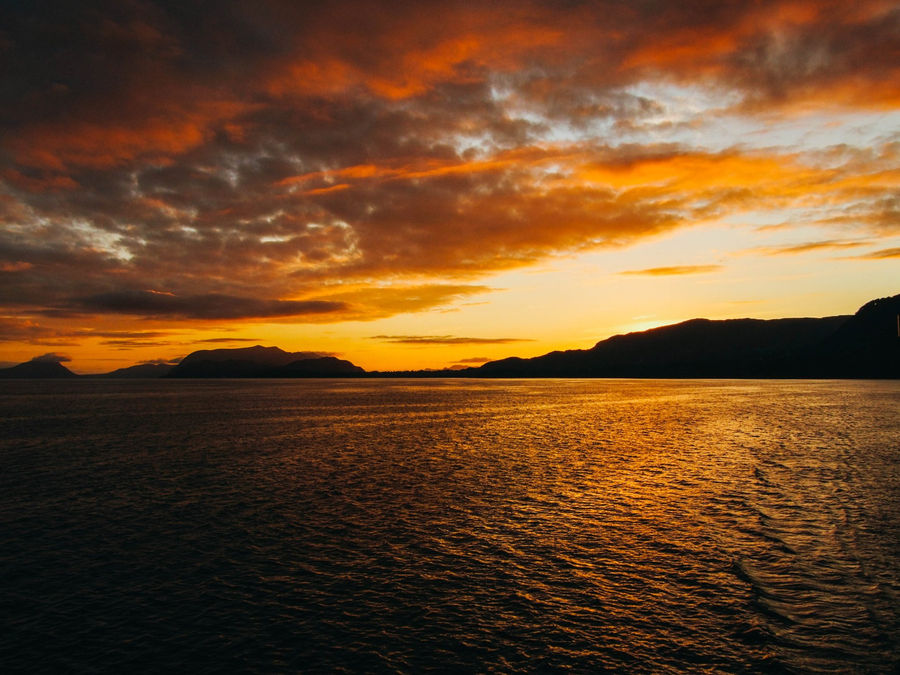
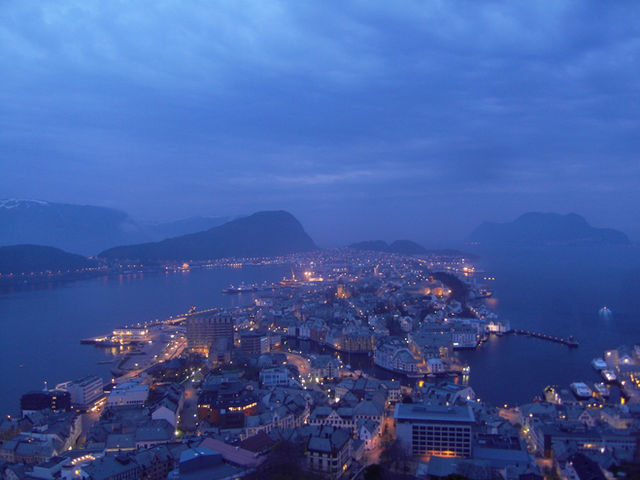
The pointed turrets and gables of the Art Nouveau town glowing pale along the Brosundet canal, fishing boats and cruise ships in the harbour, and the whole scene falling away beneath you from the terrace on Mount Aksla with the islands and the sea running out to the horizon.

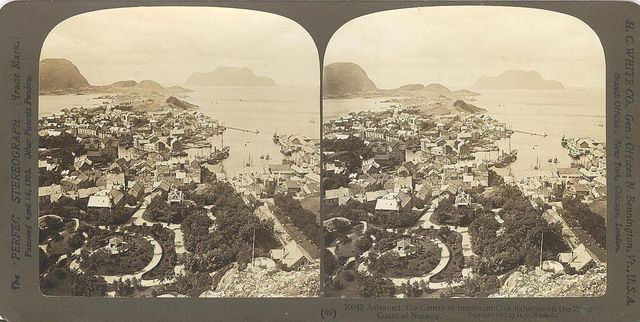
Ålesund is a small port town rebuilt in one architectural breath — after a fire levelled it in 1904, it rose again in ornate Art Nouveau, with turrets, spires and decorated facades wrapped around a harbour canal at the edge of the Norwegian Sea. Climb the 418 steps above the rooftops and the whole thing lays out below you: a stone-and-plaster fairy tale spread across islands, with the Sunnmøre Alps and open water beyond.

Type
city
Ideal length
~approx 2–3 days (more as a fjord base)
Getting around
mostly on foot; local buses and fjord and island boats for excursions
Neighbourhoods
6 areas
Best season / months
May to September for long days, fjord and island trips and the Geiranger connections
Language
Norwegian, with fluent, near-universal English
Currency
Norwegian krone (kr / NOK)
Budget level
high — Norway is among Europe's most expensive countries
Good for
  • First-timers
  • Architecture
  • Fjord trips
  • Cruise arrivals
  • Hiking
  • Couples
▸ Discover

About Ålesund

Ålesund sits at the mouth of the Storfjord in the Sunnmøre region of west Norway, spread across a cluster of low islands where the fjord country meets the open Norwegian Sea. The compact centre wraps around the Brosundet, a narrow harbour canal lined with old sea-warehouses, and climbs the two central islands of Aspøya and Nørvøya. Behind the town rises Mount Aksla, the hill everyone climbs for the view; to the northwest, flat green islands reached by undersea tunnels run out to beaches and the airport. What makes the place singular is the architecture: after the catastrophic fire of 1904 destroyed almost the entire wooden town, it was rebuilt in a few concentrated years in the Art Nouveau — Jugendstil — style, making it one of the most architecturally distinctive towns in Norway. It is a working fishing and cruise port, a stop on the coastal ship, and the natural springboard for the fjords and mountains inland.

Why go

Nowhere else in Norway gives you a whole town built in one ornamental style, framed by islands, mountains and the sea, small enough to cross on foot in an afternoon. The Art Nouveau streets are the draw — turrets, spires and decorated facades around a working harbour — and the view from Mount Aksla is one of the finest in the country. Beyond the town it is a gateway: to UNESCO's Geirangerfjord, the quiet Hjørundfjord, the Sunnmøre Alps for hiking and skiing, the bird island of Runde, and the famous Atlantic Road to the north.

Don't miss

  • The Art Nouveau town — the Jugendstil streets and turrets around the Brosundet canal
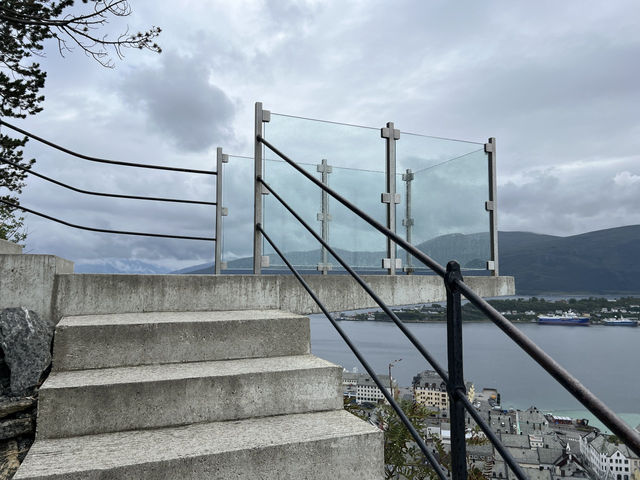
  • The Aksla viewpoint (Fjellstua) — the 418 steps up Mount Aksla for the classic panorama
  • The Jugendstilsenteret — the Art Nouveau Centre inside a preserved pharmacy interior
  • Atlanterhavsparken — the Atlantic Sea-Park aquarium built into the coast west of town
  • A day trip to Geirangerfjord — the UNESCO fjord by bus, ferry or boat

Signature experiences

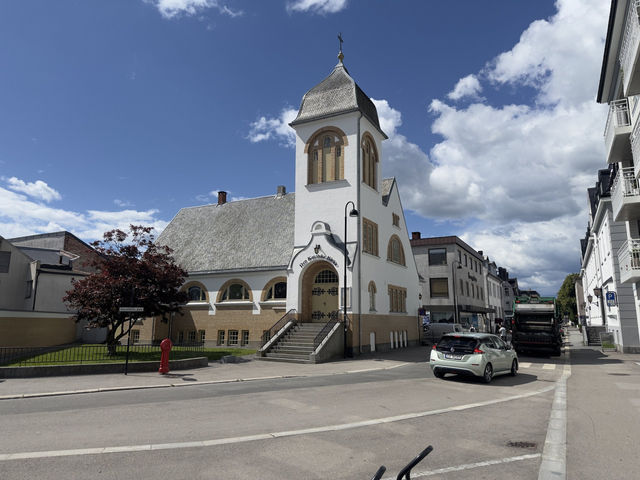
The Art Nouveau town — Ålesund is a town rebuilt in a single style, and the pleasure is simply walking it. After the 1904 fire took almost the whole wooden town in a night, it went up again in a few years entirely in Jugendstil — turrets, spires, curved gables, dragons and flowers worked into stone and plaster. Trace Kongens gate and the streets around the Brosundet canal, look up at the decorated facades and down at the boats moored against the warehouses, and the whole centre reads as one 1900s dream. It is a working town, not a museum, but the fabric is the real thing, built in one concentrated burst of optimism. **The view from Mount Aksla** — The classic Ålesund experience is the climb to Fjellstua, the terrace on Mount Aksla directly above the town. Take the 418 steps of the Fjellstua stairway up from the town park — or drive round the back — and the reward at the top is the definitive panorama: the Art Nouveau town spread pale below on its islands, the harbour and the boats, the fjord mouth, and the Sunnmøre Alps and the open sea running to the horizon. Go in clear evening light and it is one of the best views in Norway; there is a café at the top for a rest before the walk down. **The Art Nouveau Centre and the town's story** — To understand what you are looking at, the Jugendstilsenteret — the Art Nouveau Centre — sets it out inside a preserved pharmacy interior, one of the few original 1900s rooms to survive intact, all fitted cabinets and period detail. It tells the story of the fire, the rebuilding and the style that swept Europe and landed whole on this one Norwegian port. Nearby, the Sunnmøre Museum out of the centre is an open-air museum of old boats and timber buildings, and the Atlanterhavsparken aquarium west of town — one of northern Europe's biggest — is built right into the coast, with big tanks fed by the sea and a diver-feeding show. **A fjord day out to Geiranger** — Ålesund is a springboard for the fjords, and the headline trip is UNESCO's Geirangerfjord, reached by bus-and-ferry combinations, on excursion boats, or as a stop for cruise and coastal ships. The narrow arm of green walls, hanging waterfalls — the Seven Sisters among them — and villages clinging to ledges is the postcard western Norway, and it is a day out from the harbour. Closer and quieter, the Hjørundfjord runs deep among the Sunnmøre Alps, and the whole coast east of town folds into fjord after fjord. exact excursion durations and schedules. **Islands, birds and the coastal road** — The sea is half the point here. Out through the undersea tunnels lie the flat green islands of Giske and Valderøya, with white-sand beaches and a medieval marble church; further out, the bird island of Runde draws puffins, gannets and thousands of seabirds to its cliffs in the breeding season. To the north, the famous Atlantic Road (Atlanterhavsveien) hops from islet to islet on low bridges across open water — a spectacular coastal drive, especially in a rising sea. And Ålesund is a scheduled stop on the Norwegian coastal ship (Hurtigruten and Havila), which threads the whole shoreline north and south.

Neighbourhoods

Ålesund neighbourhood by neighbourhood — the character of each and who it suits.

  • Sentrum & Brosundet

    The Art Nouveau heart of the town, strung along the Brosundet harbour canal and the main streets like Kongens gate. Turreted stone-and-plaster facades, old sea-warehouses turned into restaurants, and boats moored right up against the buildings.

    Why go
    The most concentrated stretch of Jugendstil architecture in Norway, and the working harbour it faces — the whole reason to come, all on foot.
    Best for
    First-time sightseeingarchitectureharbour walksseafood
    Known for
    The decorated facades of Kongens gate and Apotekergata, the Brosundet canal and its warehouse restaurants, the Jugendstilsenteret Art Nouveau Centre, and the fishing and cruise quays a few steps away.
  • Aspøya

    The westernmost of the two central islands the town sits on, a quieter grid of Art Nouveau and older houses running out toward the open water and the road to the airport islands.

    Why go
    A calmer, more residential slice of the same architecture, away from the harbour crowds.
    Best for
    Wanderingquieter streetslocal lifephotography
    Known for
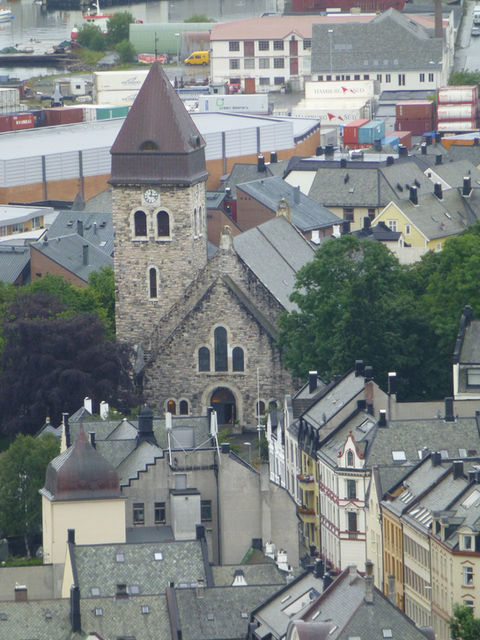
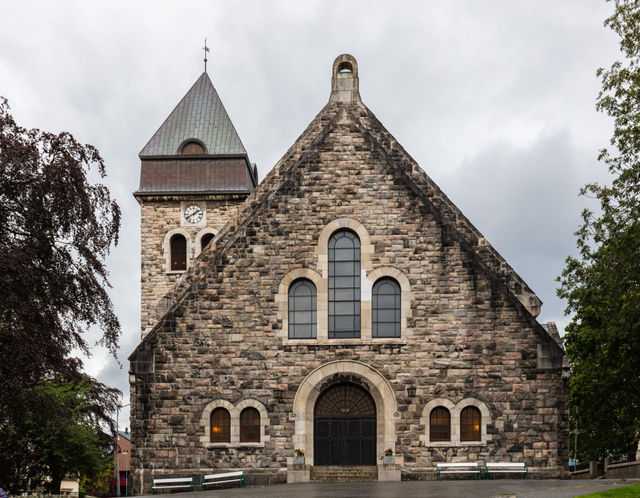
    The tightly built town blocks west of the canal, the churches and civic buildings in the same 1904 style, and the bridges linking across to Aspøya's neighbour.
  • Nørvøya

    The eastern of the two islands, holding the foot of Mount Aksla and the streets that climb toward the hillside, plus more of the residential town.

    Why go
    The way up to the viewpoint, and the town thinning into greener slopes below the hill.
    Best for
    The Aksla climbquiet cornersviews back over the rooftops
    Known for
    The base of the Fjellstua stairway, the town park below it, and the streets running up toward Mount Aksla.
  • The harbour & waterfront

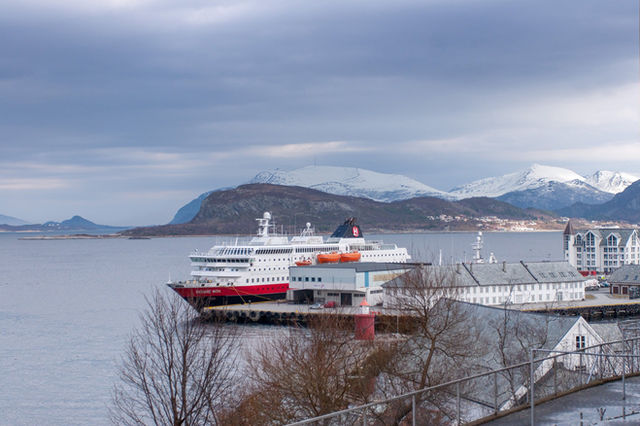
    The working edge of the town — the fishing harbour and the cruise and coastal-ship quays, the departure point for fjord and island boats, warehouses and chandlery mixed with restaurants.

    Why go
    Where the sea life of the place is most visible, and where every excursion by water begins.
    Best for
    Boat departuresseafoodwatching the port workcruise arrivals
    Known for
    The cruise and Hurtigruten/Havila quays, the fjord and island boat departures, the old salt-cod warehouses, and the fish-market and harbourside eating.
  • Aksla & Fjellstua

    The hillside behind the town rising to the Fjellstua terrace on Mount Aksla — part climb, part viewpoint, part green ridge above the rooftops.

    Why go
    The single best view in Ålesund, over the Art Nouveau town, the islands, the peaks and the sea.
    Best for
    The panoramathe stairway walksunsetsphotography
    Known for
    The 418 steps of the Fjellstua stairway (or the road up), the terrace and café at the top, the town park at the foot, and the long views out to the Sunnmøre Alps and the Norwegian Sea.
  • Giske & Valderøya

    The flat, green islands to the northwest, reached from town by undersea tunnels, with beaches, farmland, small churches and the airport.

    Why go
    A completely different landscape a short drive out — open sky, white-sand beaches and the gateway island for flights and the bird cliffs beyond.
    Best for
    Beachesa quiet drivethe airportisland air
    Known for
    The white beaches of Giske, the medieval marble church, the undersea tunnels that link the islands, and Ålesund Airport, Vigra out on the far island.

Views & hidden gems

Best views

  • Fjellstua on Mount Aksla — the definitive view over the Art Nouveau town, the islands and the sea
  • The Brosundet canal at water level — turrets and warehouses reflected, boats moored against the facades
  • The Aksla stairway itself — framed glimpses of the rooftops opening up as you climb
  • The airport-island roads and the Atlantic Road to the north — open-sea horizons and low bridges

Hidden gems

  • The preserved pharmacy interior inside the Jugendstilsenteret — an original 1900s room, not a reconstruction
  • The white beaches of Giske through the undersea tunnels — a local swimming and picnic spot most visitors miss
  • The Hjørundfjord — quieter and wilder than Geiranger, deep among the Sunnmøre Alps
  • The bird island of Runde in the breeding season — puffins and seabird cliffs a boat ride out
  • The old salt-cod warehouses on the harbour — the klippfisk trade that built the region, now part-restaurant, part-history

Food & drink

Ålesund eats from the sea. This stretch of coast built its wealth on klippfisk — salt-dried cod — and Sunnmøre was one of the great export centres, shipping bacalao to southern Europe for generations. That heritage still shows on the plate: bacalao, the tomato-and-cod stew, is a genuine local speciality, and fresh fish and shellfish run through everything, much of it eaten in old harbour warehouses turned into restaurants. Save room for the sweet Norwegian bakery staples too. Eating out in Norway is expensive, so many travellers mix a harbour lunch and bakery snacks with one good warehouse dinner; self-catering from the supermarkets keeps the costs in check.

  • Bacalao — the salt-cod, tomato and potato stew, the town's signature dish
  • Klippfisk — salt-dried cod, the trade that built Sunnmøre's wealth
  • Fresh cod, halibut and shellfish — landed on the harbour and cooked simply
  • Fiskesuppe — creamy Norwegian fish soup, a west-coast staple
  • Skillingsbolle — the big sugar-crusted cinnamon bun, found in bakeries along the coast
  • Brunost — Norwegian brown whey cheese, sliced thin on waffles and bread
Dietary notes

Vegetarian and vegan food is workable in the centre — modern kitchens and cafés mark it clearly, though the traditional dishes are firmly fish- and meat-heavy. Gluten-free is well understood. Halal and kosher options are limited in a town this size and concentrated in the centre; self-catering from the Rema 1000 and Kiwi supermarkets is how many travellers keep the daily spend down.

Ålesund in photos

▸ Getting around

Getting around Ålesund

The centre is small and best walked — the Art Nouveau streets, the canal, the harbour and the foot of Mount Aksla are all minutes apart. Local buses cover the rest of the town and the island tunnels; tap a contactless card or use the local transport app. Fjord and island excursions leave by boat and bus from the harbour. A car is a liability in the compact centre but useful for the islands, the fjords and the Atlantic Road.

Everything central is on foot — Sentrum, the Brosundet canal, Aspøya, Nørvøya and the base of the Aksla stairway are all within a short walk. The Aksla terrace is the 418 steps up or a short drive round the back. Only Giske and Valderøya, the airport, and the fjord and coastal-road excursions really need a bus, boat or car.

▸ Plan your days

Suggested itineraries

Ready-made day plans for Ålesund — from a single day to a long weekend.

One day

Start in the centre before the cruise crowds and walk the Art Nouveau streets around the Brosundet canal — Kongens gate, the decorated facades, the warehouses on the water — and step into the Jugendstilsenteret to make sense of it. Climb the 418 steps up Mount Aksla to Fjellstua for the panorama, then come down for a harbour seafood lunch. Spend the afternoon at the Atlanterhavsparken aquarium west of town, and end with a bacalao dinner in a warehouse restaurant on the canal.
Two days

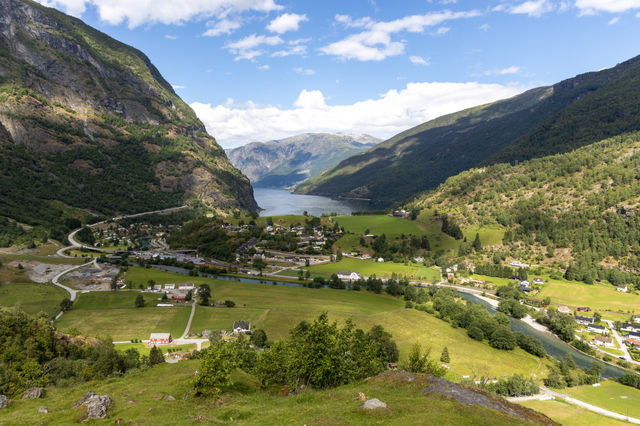
Give day two to the fjords. Take an excursion to UNESCO's Geirangerfjord — by bus-and-ferry combination or an excursion boat from the harbour — for the narrow walls, the Seven Sisters waterfall and the villages on their ledges. Back in Ålesund, spend the late afternoon on the quieter streets of Aspøya and the harbour, and the evening along the canal.

Three days

Use day three for the islands and the sea. Drive out through the undersea tunnels to the flat green islands of Giske and Valderøya for the white beaches and the medieval marble church, or take a boat to the bird cliffs of Runde in the breeding season. With more time, point north for the Atlantic Road (Atlanterhavsveien), the island-hopping coastal drive on its low bridges over open water.

▸ What you'll do

Insider tips

  • The airport (Vigra, AES) is out on an island north of town, reached by an undersea tunnel and an airport bus or taxi in ~approx 20–25 minutes — simple, but leave margin for the tunnel run.
  • No trains reach Ålesund at all — access is by air, coastal ship, or bus; the nearest rail hub is Åndalsnes on the scenic Rauma line, then a bus connection.
  • Coastal weather changes by the hour; carry a packable waterproof always and plan the Aksla and fjord days around the forecast, not the other way round.
  • The coastal ship (Hurtigruten and Havila) and the fjord and island boats leave from different quays around the harbour — check exactly which one, as departures are spread along the waterfront.
Explore

Explore the area

Interactive area map
Map coordinates coming soon

This place is missing lat/lng — waiting on the next Wix sync.

Do

Local attractions & tours

Skip-the-line tickets and small-group tours in Ålesund — compare across our partners.

We're still curating hand-picked tickets and tours for Ålesund. In the meantime, the map above and the nearby cities are a great place to start.

▸ Budget

What it costs in Ålesund

Backpacker
roughly kr 800–1,300 a day.
Mid-range
roughly kr 2,000–3,500 a day.
Luxury
kr 5,000 a day and up.
Cash vs card
Norway is effectively cashless — contactless cards and phones tap through everything, including buses and harbour stalls. You rarely need cash at all.
Tipping
Not expected; service is included. Round up or leave ~5–10% for good restaurant service if you wish.
▸ When you'll go

When to visit Ålesund

May to September for long days, fjord and island trips and the Geiranger connections

Spring

What to expect — Cool and changeable, greening fast, with lengthening days from April and snow lingering on the Sunnmøre Alps. Fjord and island excursions build back up through May as the season starts.

What's best — Fewer crowds, waterfalls at full snowmelt volume on the Geiranger trips, seabirds returning to Runde, and the town at its freshest before the summer ships arrive.

Summer

What to expect — The warmest, longest and busiest season — daylight late into the night, cruise ships in the harbour, and every fjord and island trip running. Coastal weather is fickle; sun and rain trade places by the hour.

What's best — Long light for the Aksla view and the fjords, the full run of Geiranger and island excursions, the beaches on Giske, and the harbour in full swing.

Autumn

What to expect — Cooler, darker and wetter as the Atlantic storms return, the crowds thinning from September. The mountainsides turn gold and the sea light goes low and dramatic.

What's best — Autumn colour on the Sunnmøre Alps, quiet streets and museums, cosy warehouse restaurants, and lower shoulder-season rates once the ships stop.

Winter

What to expect — Dark, wet and windy at sea level, with snow more reliable up in the Alps than in the town. Short days, many excursions reduced or paused, but the town keeps working and the coastal ship still calls.

What's best — The Art Nouveau town under low winter light, skiing in the Sunnmøre Alps within reach, quiet cafés, and the lowest room rates of the year.

▸ Know before you go

Know before you go

Honest swaps

Skip driving into the centre → Ålesund is a compact walking town; leave the car and use your feet, with a bus or hire car only for the islands and fjords.

Skip the 418 steps if the knees object → a road climbs to Fjellstua for the same view, and a tourist "train" runs up in season.

Skip a rushed coach tour to Geiranger if time is short → a fjord excursion boat from the harbour still delivers the walls and waterfalls with less time on the road.

Skip pricey harbour-front seafood for lunch → eat fish soup or a bakery lunch and spend on one good warehouse dinner instead.

Crowds & timing

The Art Nouveau streets and the harbour are busiest when cruise ships are in — check the day's cruise schedule and walk the centre early or in the evening for it to yourself.

Geiranger and island excursions sell out in summer; book the popular fjord trips ahead.

The Aksla terrace is busiest at midday in high season and on cruise days; go early or at sunset for space and the best light.

Local rules & etiquette

Bring proper rain gear and layers — this is exposed Atlantic coast, and the weather turns fast; locals dress for it rather than wait it out.

The Sunnmøre Alps trails and the Aksla ridge are real hillwalking — good footwear, water and a look at the forecast before you go up.

Alcohol is heavily taxed and sold in bars and, for spirits and wine, only through the state Vinmonopolet shops, which close early and all day Sunday.

Money

Tap-to-pay everywhere; cash is close to obsolete. Decline "pay in your home currency" (dynamic currency conversion) on card terminals — always choose Norwegian kroner.

After dark

The bars and restaurants cluster around the Brosundet canal and the central streets — the main evening out, atmospheric along the water.

The harbour and the Art Nouveau streets are quietest and prettiest after the cruise crowds leave, good for an evening walk and a waterside drink.

Live music and events run at the town's cultural venues; the nightlife is small-town scale — a few good bars rather than a club scene.

On a clear evening, the Aksla terrace at sunset is the best "night out" the town offers.

▸ Ready to book your trip?

Getting there

The gateway is Ålesund Airport, Vigra (AES), out on an island north of the town and reached by an undersea tunnel and an airport bus or taxi in ~approx 20–25 minutes. There are no trains to Ålesund — the nearest railhead is Åndalsnes on the scenic Rauma line, connected onward by bus. The Norwegian coastal ship (Hurtigruten and Havila) calls at the town on its route north and south, and cruise ships dock right in the centre by the Art Nouveau streets.

Book

Ready to book your trip?

Flights, airport transfers and car hire — search and compare without leaving the page.

▸ Trip extras
Book

More trip extras

Parking, holiday extras, and more — coming soon.

Coming soon

We're lining up parking, holiday extras and activities you'll be able to add to any trip from here.