Preikestolen — the Pulpit Rock hike — This is the marquee day out, and it is a proper mountain walk, not a viewpoint you drive to. From Stavanger you cross to the trailhead by bus and ferry (or an organised transfer), then climb a roughly 8 km round trip — about 4–5 hours there and back — over boardwalk, boulders and rock steps to the flat cliff plateau of Preikestolen, some 604 metres straight above the Lysefjord. The pay-off is one of the great views in Norway: a table of bare rock with nothing between you and the green water far below. It is moderate rather than hard, but it is genuinely tiring, exposed at the edge, and mobbed in summer — start early, take real footwear, water and a windproof, and check the forecast, because cloud can wipe the view entirely.
**A Lysefjord cruise from the harbour** — If the hike is beyond you, or you just want the fjord from the water, sightseeing boats run straight out of Stavanger's own harbour into the Lysefjord, gliding under the same cliffs you'd otherwise climb. You pass waterfalls, sheer walls and, looking up, the pale slab of Preikestolen itself far overhead, along with goats on the rock ledges near the water. It is the low-effort, all-weather way to feel the scale of the fjord, and it leaves from the centre rather than a distant quay.
**Kjerag and the Kjeragbolten boulder** — The harder, higher sibling to Preikestolen, further up the Lysefjord and reached from Lysebotn, Kjerag is a longer, steeper, more demanding hike across bare mountain — with, at the end, the Kjeragbolten: a boulder wedged in a chasm above a roughly kilometre of open air, which the brave (and dry-day) walkers step onto for the photograph. It is a serious full-day undertaking with chains and steep pitches, firmly a summer-only outing, and not to be attempted in wet or icy conditions. Come for this only if you want the walk as much as the picture.
**The white town, the rainbow street and the oil museum** — Back in the city, the pleasure is a slow half-day on foot. Wander the cobbled lanes and cottage gardens of Gamle Stavanger, the white timber quarter above the harbour's west side; cut through the rainbow paintwork of Øvre Holmegate for a coffee; then cross to the eastern waterfront for the Norwegian Petroleum Museum, whose platform-shaped pods over the water make an honest, well-told case for how oil built the modern city. Add the medieval Domkirke behind the harbour and the Valberg watchtower above the old town, and the centre is neatly done in an afternoon.
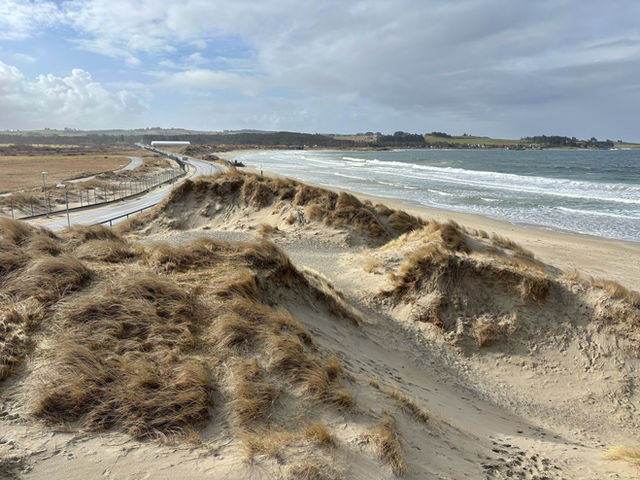
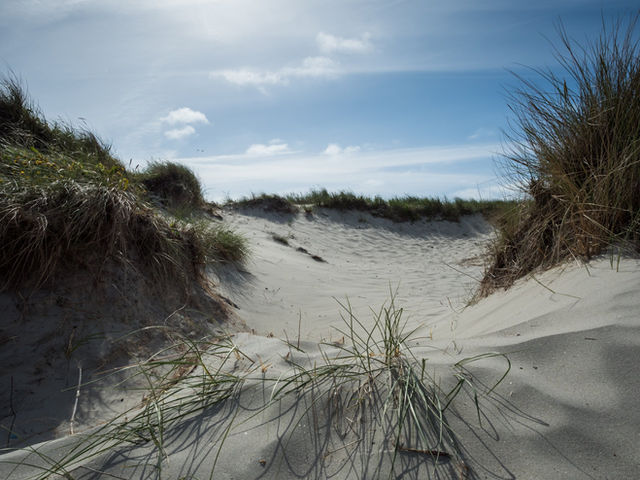
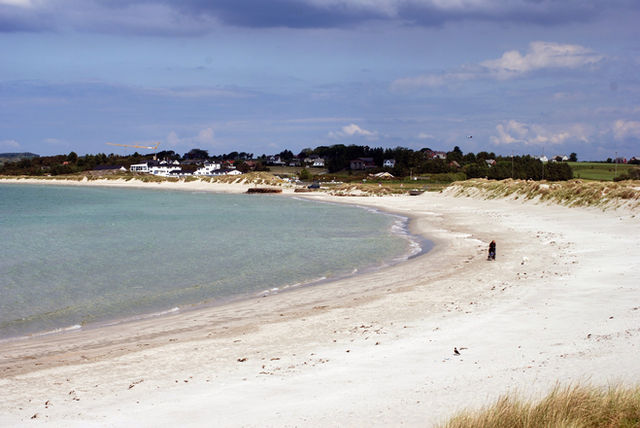
**Swords in the rock and the Jæren beaches** — Just outside town, three giant bronze Viking swords — the Sverd i fjell monument — stand planted in a low hill by the fjord, marking a decisive Viking-Age battle and making an easy, uncrowded stop. South of the city, the Jæren coast opens into long North Sea sand beaches — Sola, Orre and their neighbours — flat, wind-blown and beautiful, popular for bracing walks and, when the swell is up, for surfing. It is a very different Norway from the fjord cliffs: open, sandy and low, and a good half-day if the weather turns kind.