← Poland
POLAND · CITY

Kraków

Poland's soulful royal city — a vast medieval square, a hilltop castle and the moving heritage of Kazimierz.

  • City
  • May to September for warmth; late spring and early autumn for the best balance of weather and crowds
  • ~approx 2–3 days, more with day trips
  • Medieval Market Square
  • Wawel Castle
  • Jewish Kazimierz
  • Milk-Bar Pierogi

A lone trumpet call breaking off mid-note from a church tower, pigeons scattering over the largest medieval square in Europe, and the smell of grilled sausage drifting up from a cellar bar.

Kraków is Poland's old royal capital, and one of the few big central-European cities to come through the last century with its medieval heart intact. A vast market square, a castle on a hill, and a Jewish quarter turned nightlife district — all walkable, all cheap.

Type
city
Ideal length
~approx 2–3 days, more with day trips
Getting around
a very walkable old town, plus trams for the outer districts
Neighbourhoods
4 areas
Best season / months
May to September for warmth; late spring and early autumn for the best balance of weather and crowds
Language
Polish
Currency
Polish złoty (zł)
Budget level
low to moderate — excellent value by western standards
Good for
  • First-timers
  • History
  • Food
  • Nightlife
▸ Discover

About Kraków

Kraków sits on the Vistula in southern Poland, its old town a near-perfect medieval oval ringed by the Planty, a belt of park where the city walls once stood. At its centre is the Rynek Główny, one of Europe's great market squares; to the south, the castle hill of Wawel rises over the river. Just beyond the old town lies Kazimierz, the historic Jewish quarter, and across the water Podgórze, the former wartime ghetto. It is compact, flat and made for walking, with trams filling in the longer hops.

Kraków’s historic core is inscribed on the UNESCO World Heritage List (as “Historic Centre of Kraków”, 1978).

Why go

This is the best-preserved great city in Poland and one of the most atmospheric in the region — a real medieval core, not a rebuilt one, at a fraction of western-European prices. The history runs deep and sometimes dark (Auschwitz is a sobering day trip), the food is hearty and cheap, and Kazimierz has become one of central Europe's best places to eat and drink. You can see the essentials on foot in a couple of days.

Don't miss

  • Rynek Główny — the vast medieval main square and Cloth Hall
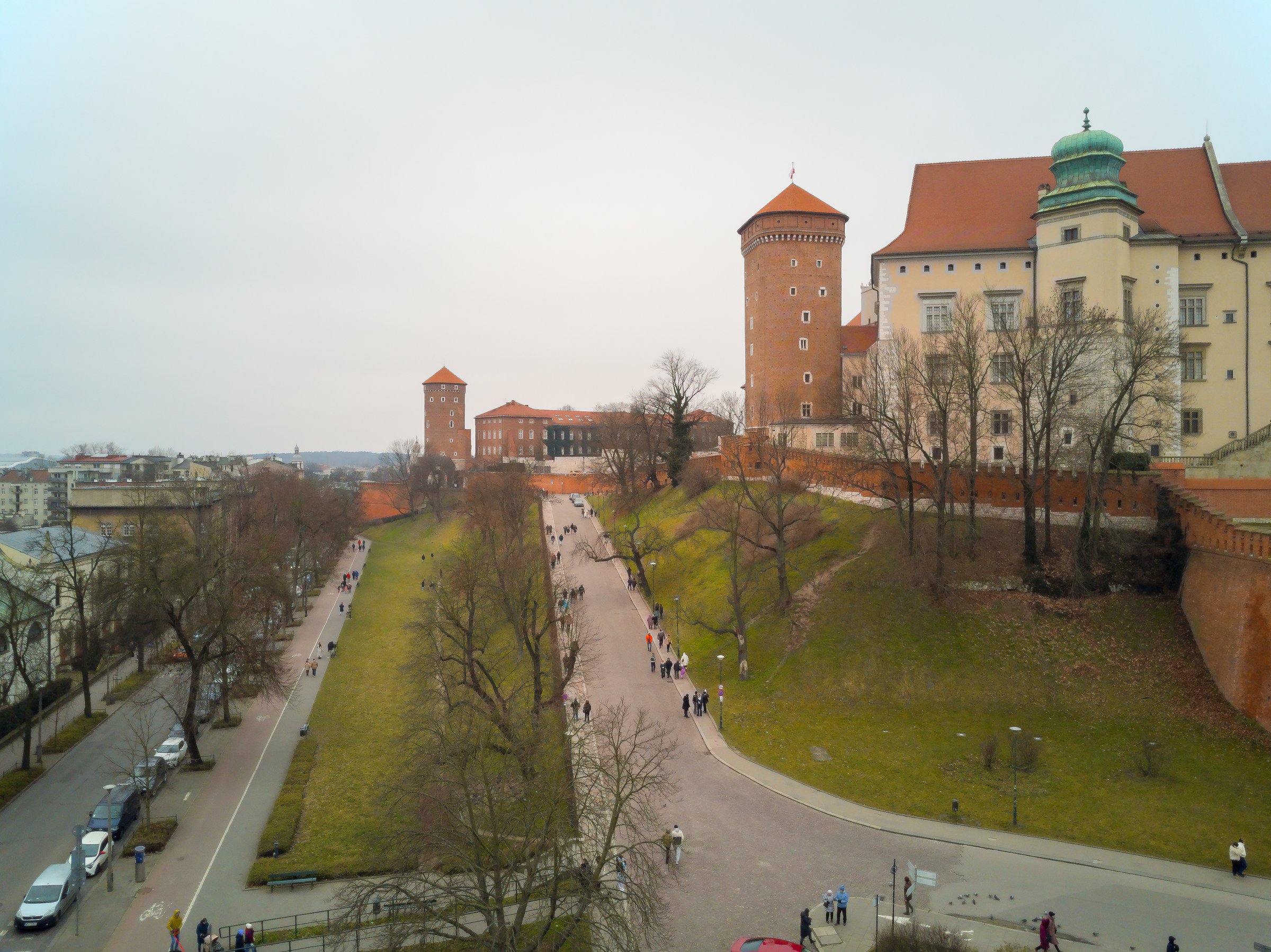
  • Wawel Castle and Cathedral — the royal hill over the Vistula
  • St. Mary's Basilica — the twin-towered church and its wooden altar
  • Kazimierz — the old Jewish quarter, synagogues and nightlife
  • Schindler's Factory — the wartime-occupation museum in Podgórze

Signature experiences

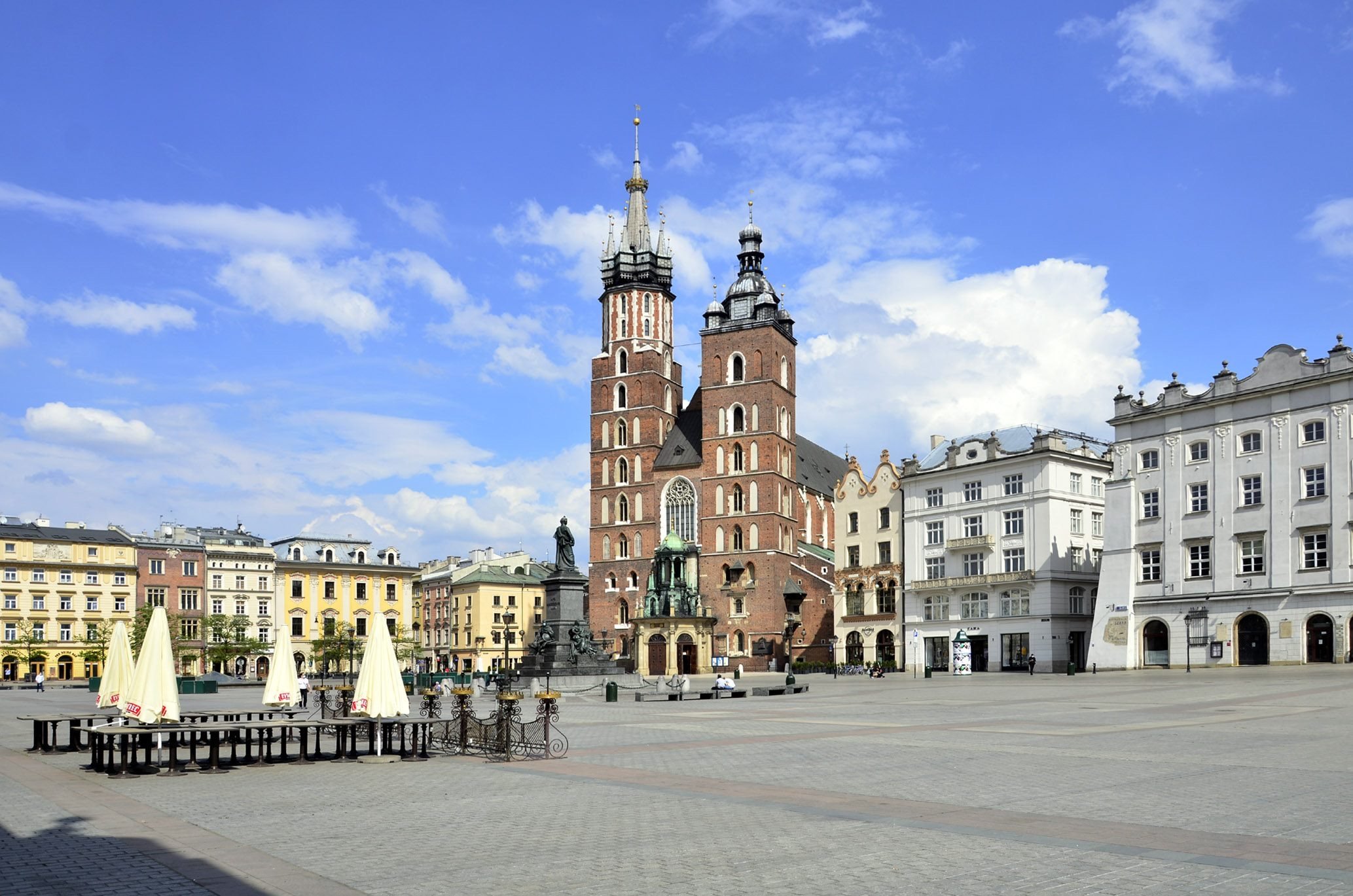
The great square and the old town — The Rynek Główny is the set piece — the largest medieval market square in Europe, edged by the long Cloth Hall of souvenir stalls and watched over by St. Mary's Basilica. Time your visit for the top of the hour, when a trumpeter plays the hejnał from the tower and cuts it off mid-note, a tradition tied to a medieval siege. Duck into the Rynek Underground museum to see the market's medieval layers beneath the cobbles. **Wawel and the river** — Climb the castle hill for the royal apartments, the cathedral where Poland crowned and buried its kings, and the legend of the dragon in the cave below. From the ramparts, the Vistula bends past the old town; walk the riverbank and you get the castle from every angle. **Kazimierz after dark** — The old Jewish quarter is the city's night out — a tangle of bars in candlelit rooms and courtyards, klezmer music in some, cheap vodka and craft beer in others, and the round Plac Nowy hall dishing out zapiekanka toasted baguettes until late. Come for the food and stay for the wandering. **The weight of history** — Kraków carries the twentieth century heavily. Schindler's Factory tells the occupation and the ghetto in Podgórze; the empty chairs of Ghetto Heroes Square mark what was lost; and Auschwitz-Birkenau, a sobering day trip beyond the city, is one of the most important places in Europe to see. It is not a light day, but it is a necessary one.

Neighbourhoods

Kraków neighbourhood by neighbourhood — the character of each and who it suits.

  • Stare Miasto

    The medieval old town inside the Planty ring — a grid of merchant houses, churches and cellar bars around a market square so large it doubles as the city's living room.

    Why go
    The single densest run of landmarks, all flat and walkable.
    Best for
    First-time sightseeingcafésthe market square
    Known for
    The Rynek Główny and the Cloth Hall (Sukiennice), St. Mary's Basilica and its hourly trumpet call, the Jagiellonian University quarter, and the Planty park that rings it all.
  • Wawel

    The royal castle hill on the river's edge — Poland's historic seat of kings, its cathedral, and a dragon's den at the bottom.

    Why go
    The castle, the cathedral, and the view along the Vistula.
    Best for
    Historyroyal architectureriverside views
    Known for
    Wawel Castle and its state rooms, Wawel Cathedral where Polish kings were crowned and buried, the Dragon's Den cave, and the fire-breathing dragon statue by the river.
  • Kazimierz

    The old Jewish quarter southeast of the centre — layered with synagogues and memory, and reborn as the city's most creative eating-and-drinking district.

    Why go
    The Jewish heritage by day and the best food and nightlife by night.
    Best for
    Historyfood trucksbarsmarkets
    Known for
    The Old and Remuh synagogues, the Plac Nowy round market hall with its zapiekanka stalls, the antique-and-flea-market squares, and a wall of bars that fill after dark.
  • Podgórze

    The district across the Vistula, quieter and more industrial, holding the heaviest of the city's wartime history and a growing arts scene.

    Why go
    The ghetto memory sites and Schindler's Factory museum.
    Best for
    Modern historymuseumsa reflective half-day
    Known for
    Schindler's Factory and its occupation museum, the Ghetto Heroes Square with its empty-chairs memorial, the MOCAK contemporary art museum, and the footbridge back to Kazimierz.

Views & hidden gems

Best views

  • The Town Hall Tower on the Rynek — a climb to look over the great square
  • Wawel Hill's ramparts — the castle, cathedral and the bend of the Vistula
  • The Kościuszko Mound on the western hill — a panorama over the whole city
  • The Vistula boulevards at dusk — Wawel floodlit above the water

Hidden gems

  • The Rynek Underground museum — the medieval market excavated beneath the square
  • A traditional milk bar (bar mleczny) — canteen pierogi and soup at giveaway prices
  • The Nowa Huta district — a planned socialist-realist town on the city's edge, eerie and fascinating
  • Plac Nowy's zapiekanka window — the late-night toasted-baguette institution of Kazimierz
  • The stained glass of the Franciscan Basilica — Wyspiański's luminous Art Nouveau windows

Food & drink

Polish food is hearty, cheap and made for cold weather, and Kraków does it especially well. The pierogi are the headline — dumplings stuffed with everything from potato and cheese to meat or seasonal fruit — alongside sour rye soup, hunter's stew and the street pretzel-bagel sold from carts on every corner. The great budget institution is the milk bar, a plain canteen serving home-style food for almost nothing. Kazimierz is where the modern scene lives, from food trucks to smart bistros, and the drinking runs from craft beer to a properly cold vodka.

  • Pierogi — dumplings, filled savoury (potato-cheese, meat) or sweet (fruit)
  • Żurek — sour rye soup, often served in a bread bowl with sausage and egg
  • Obwarzanek — the ring-shaped Kraków street pretzel-bagel
  • Zapiekanka — an open toasted baguette with mushrooms and cheese, Plac Nowy's staple
  • Bigos — hunter's stew of cabbage, sauerkraut and meat
  • Oscypek — smoked highland sheep's cheese, grilled and served with cranberry
Dietary notes

Vegetarians manage well — pierogi ruskie, potato dishes, soups and a strong modern veggie scene in Kazimierz — though many traditional dishes hide meat stock, so ask. Vegan spots are plentiful around Kazimierz and the old town. Kosher-style restaurants cluster in Kazimierz reflecting its heritage, though few are strictly certified; halal is found around the centre's kebab and Middle Eastern spots. Gluten-free is understood in newer places, less so in milk bars.

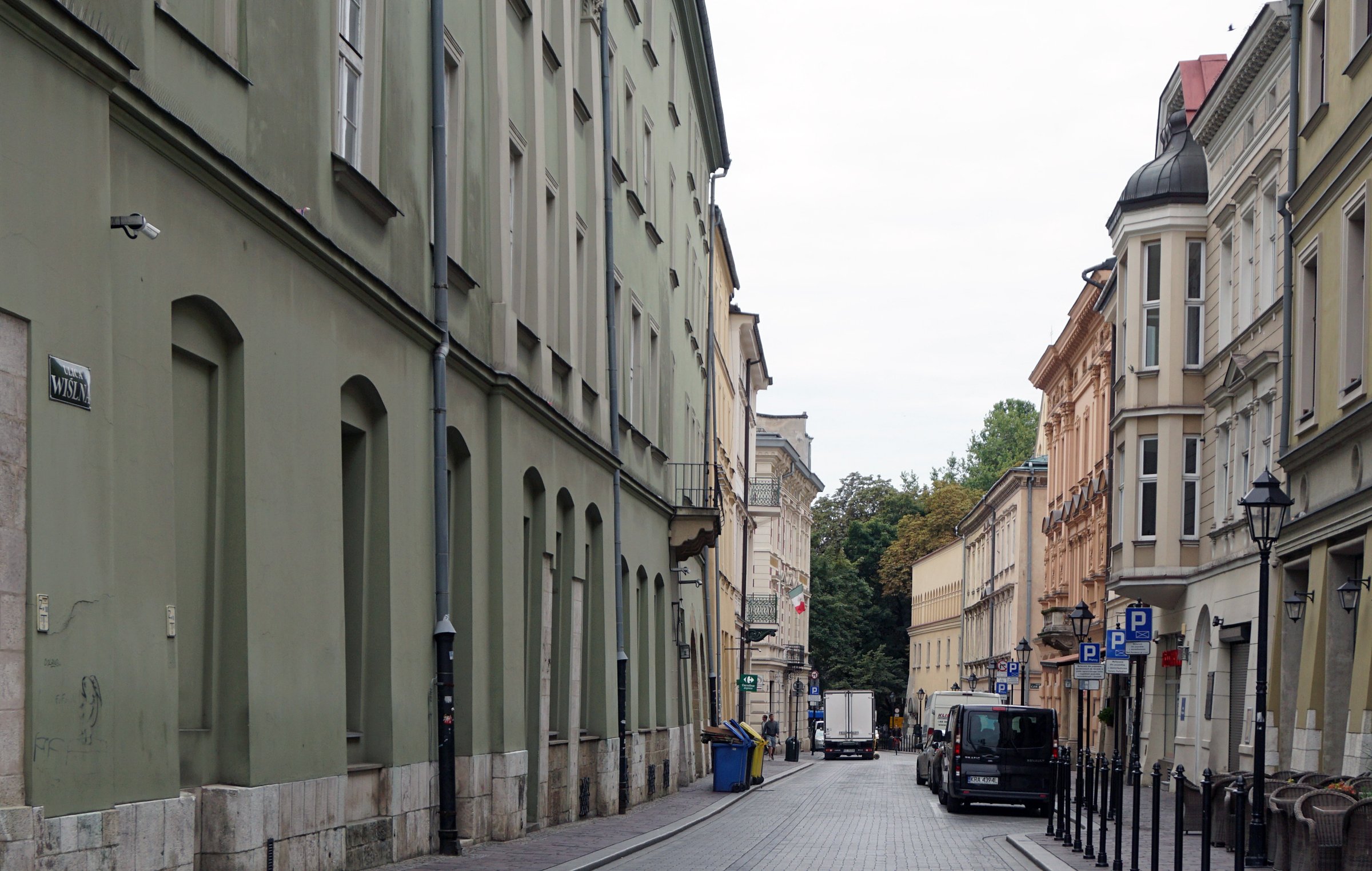
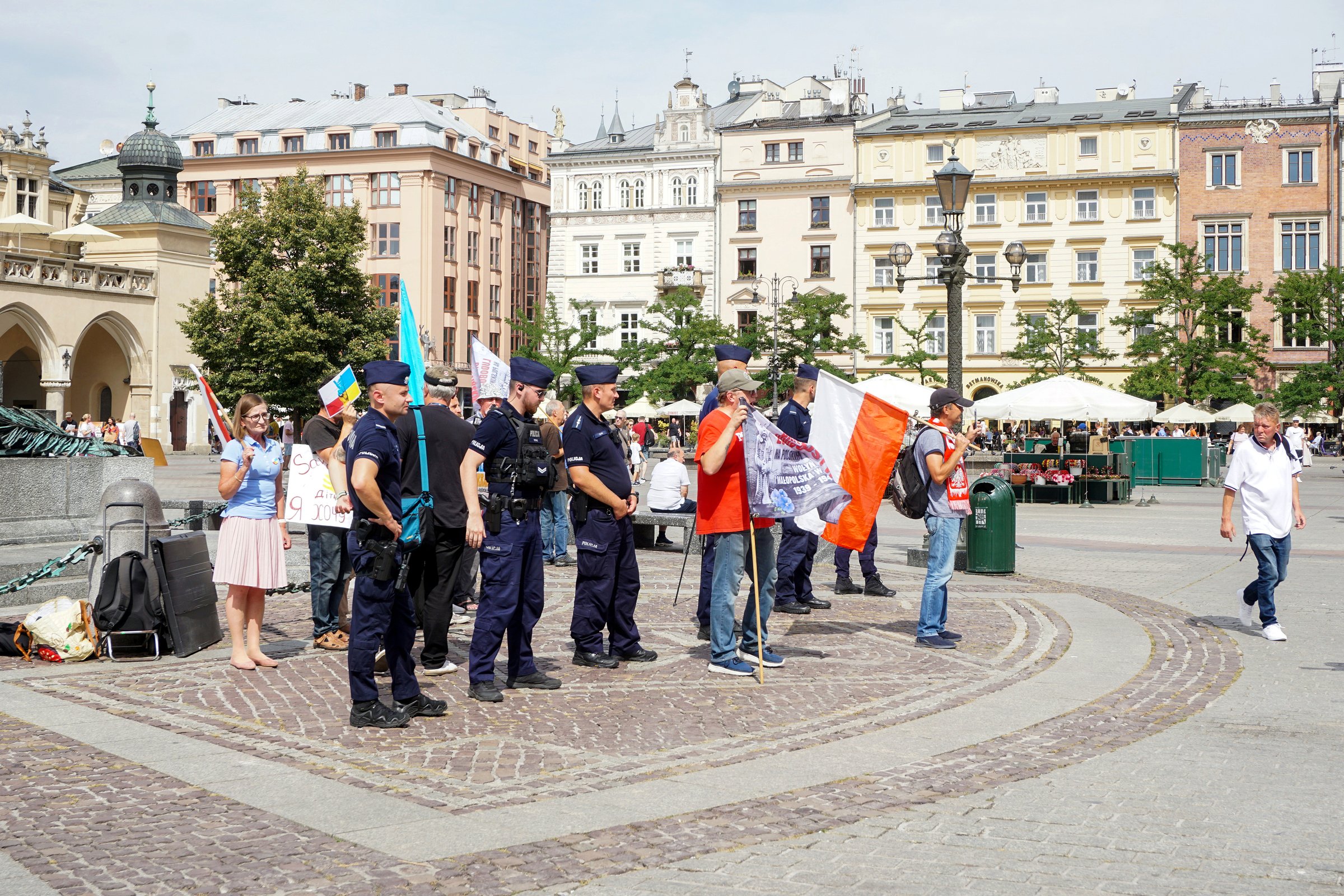
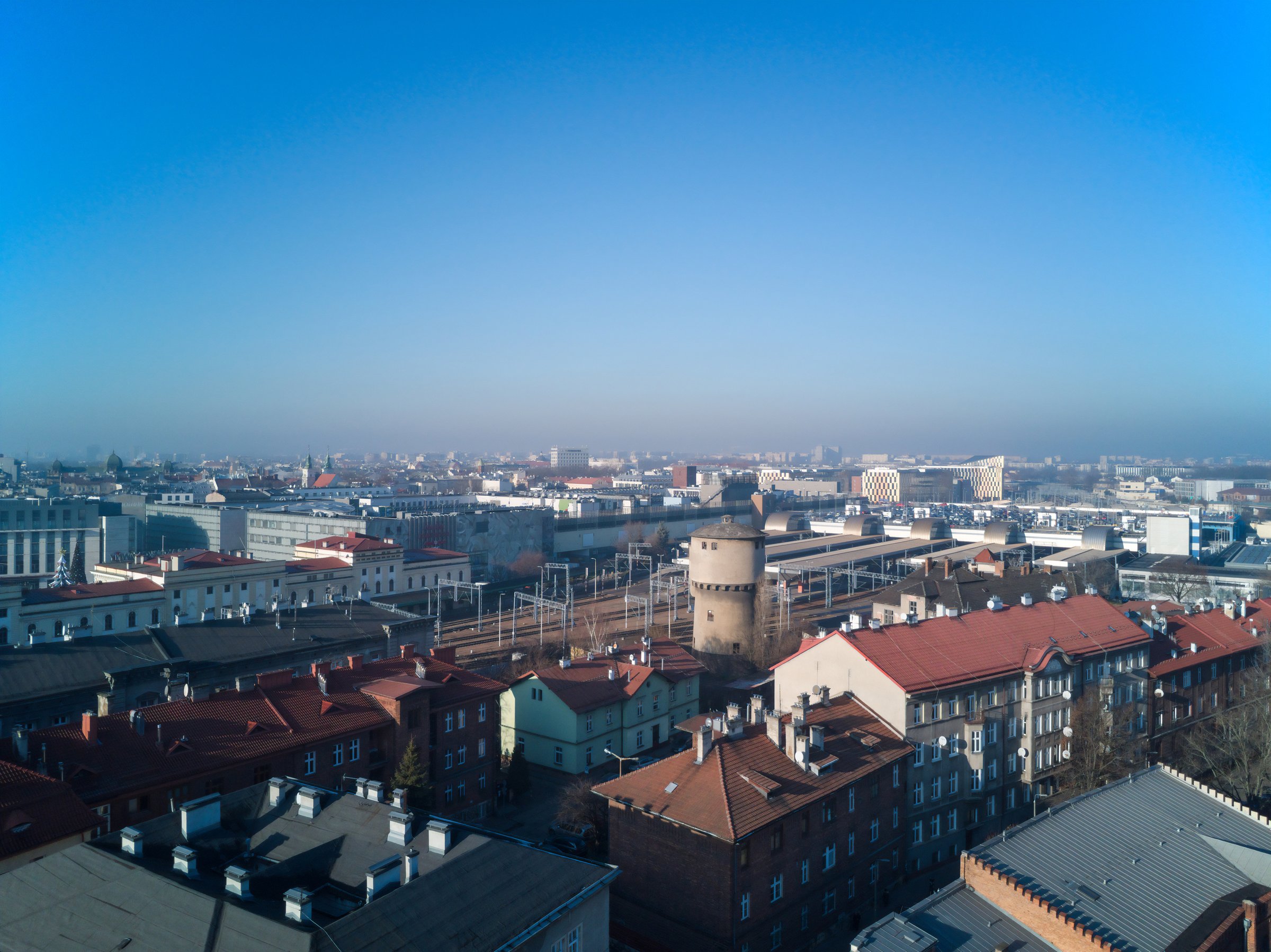
Kraków in photos

▸ Where you'll stay

Where you'll stay in Kraków

The old town (Stare Miasto) puts you inside the medieval ring, steps from the square and the castle, and is the most convenient — walkable everywhere, quiet at night, at the top of the local price range. Kazimierz trades a short walk for the best food and nightlife and a bit more character, though it can be lively after dark. Podgórze across the river is calmer and cheaper, handy for the history museums. Even the priciest central rooms are a bargain by western standards.

  • Budget
    Kazimierz hostels and budget rooms in the food-and-bar quarter, walkable to the old town, lively at night.
  • Mid-range
    Stare Miasto (Old Town) boutique stays inside the Planty ring, steps from the square and Wawel.
  • Luxury
    Around the Rynek Główny grand hotels on or near the main square, the most central address in the city.
Stay

Hotels & rentals around Kraków

Pan, zoom and compare live prices — every stay in one map.

▸ Getting around

Getting around Kraków

The old town is small, flat and entirely walkable — the Planty ring makes a natural loop. Trams cover the outer districts and Podgórze cheaply and frequently; buses reach the airport-area and suburbs. A car is pointless and unwelcome in the pedestrianised centre. Buy a ticket for trams and buses and validate it on board.

The old town, Wawel and Kazimierz are all a short walk apart (~approx 10–20 min on foot). For Podgórze, walk the footbridge from Kazimierz or take a tram; for Nowa Huta or the mounds, ride the tram out.

▸ Plan your days

Suggested itineraries

Ready-made day plans for Kraków — from a single day to a long weekend.

One day

Start on the Rynek Główny for the Cloth Hall and St. Mary's Basilica, timing the hourly trumpet call, and drop into the Rynek Underground museum. Walk south to Wawel for the castle and cathedral and the dragon by the river, then cross into Kazimierz for the synagogues, an early dinner and the bars after dark.

Two days

Give day two to memory and the modern city. Cross to Podgórze for Schindler's Factory and the Ghetto Heroes Square, spend the afternoon back in Kazimierz's markets and food trucks, and finish with a riverside walk under a floodlit Wawel.

Three days

Use day three for a day trip. Take the sobering guided visit to Auschwitz-Birkenau, or go underground at the Wieliczka Salt Mine's carved chapels, returning for a last evening on the square or in a Kazimierz cellar bar.

▸ What you'll do

Insider tips

  • Wawel sells separate timed tickets for each part (state rooms, cathedral, dragon's den) and caps daily numbers — buy online ahead in season.
  • The milk bar (bar mleczny) is a genuine budget experience — expect a Polish-only menu, a queue, and food for pennies; point and pay.
  • Auschwitz is emotionally heavy and a full half-day with travel — plan it as its own day, not tacked onto sightseeing.
  • Trams are cheap and cover the outer districts; validate your ticket and mind that the old town itself is a car-free walk.
Explore

Explore the area

© OpenFreeMap · OSM · terrain Mapterhorn
Do

Local attractions & tours

Skip-the-line tickets and small-group tours in Kraków — compare across our partners.

We're still curating hand-picked tickets and tours for Kraków. In the meantime, the map above and the nearby cities are a great place to start.

▸ Budget

What it costs in Kraków

Backpacker
roughly €30–50 a day.
Mid-range
roughly €80–130 a day.
Luxury
€250 a day and up.
Cash vs card
Cards and contactless are widely accepted, but keep some złoty for milk bars, market stalls, obwarzanek carts and small bars. Prices are in złoty — decline euro conversion.
Tipping
Around 10% is normal in sit-down restaurants; say the total as you pay rather than leaving it to a card prompt, and don't tip at counters or milk bars.
▸ When you'll go

When to visit Kraków

May to September for warmth; late spring and early autumn for the best balance of weather and crowds

Spring

What to expect — Cool and changeable early, warming into pleasant weeks by May, with the Planty and riverbanks greening up. Some rain, thinning crowds before summer.

What's best — Mild walking weather, blossom in the park ring, and the old town before the summer crush and the highest prices.

Summer

What to expect — Warm to hot, long days, and the busiest, priciest season, with the square and Wawel at their fullest. Occasional thunderstorms break the heat.

What's best — Long evenings on the square, riverside bars, open-air events, and the warmest weather for day trips. Come in May or September to dodge the peak.

Autumn

What to expect — Crisp, golden and comfortable, with the summer crowds gone and the light soft over the old town. Cooling and wetter as it goes.

What's best — Comfortable sightseeing, turning leaves in the Planty, the food at its most warming, and quieter museums.

Winter

What to expect — Cold, grey and often snowy, with short days and real frost. December brings a Christmas market to the square; deep winter is quiet and cheap.

What's best — The Christmas market and the szopka nativity-crib tradition, snow on the medieval roofs, cellar bars at their cosiest, and the lowest prices of the year.

▸ Know before you go

Know before you go

Honest swaps

Skip the pricey restaurants ringing the Rynek → eat pierogi and soup in a milk bar or a Kazimierz bistro for a fraction of the price.

Skip the horse-carriage loop of the square → walk the old town and the Planty ring, which is small enough to cover on foot.

Skip the touristy "folk show" dinners → hear real klezmer in a Kazimierz bar or catch a concert in a church.

Skip a taxi to Wieliczka or Auschwitz → both are reachable by cheap public transport or an organised minibus, and Auschwitz especially is best done as a proper guided visit.

Crowds & timing

St. Mary's Basilica and Wawel's paid interiors get busy midday; go at opening and book Wawel's timed tickets, which are limited each day.

Auschwitz-Birkenau requires a booked entry slot in high season and a guide during peak hours — reserve well ahead.

Local rules & etiquette

Auschwitz and the memorial sites ask for quiet, modest dress and no eating or loud behaviour — treat them as the solemn places they are.

Cover shoulders and knees in churches, and don't photograph services.

Jaywalking is fined and locals wait for the green man even on empty streets.

Money

Pay in złoty and decline "pay in your own currency" prompts, which use a poor rate.

Use bank ATMs over the independent tourist machines by the square, and skip the old-town exchange kiosks with poor rates.

After dark

Kazimierz is the nightlife heart — candlelit bars, courtyards, craft beer and late food around Plac Nowy.

The old town's cellar bars and the streets around the university run younger and busier on weekends.

The Vistula boulevards and the barge-bars on the river are the warm-weather outdoor option.

▸ Ready to book your trip?

Getting there

Kraków's airport is John Paul II International (KRK, Balice), west of the city. A train runs from the airport to Kraków Główny, the main station beside the old town (~approx 20 min). Kraków Główny is also the hub for domestic and international trains, with a bus station alongside for the day-trip coaches.

Book

Ready to book your trip?

Flights, airport transfers and car hire — search and compare without leaving the page.

▸ Trip extras
Book

More trip extras

Parking, holiday extras, and more — coming soon.

Coming soon

We're lining up parking, holiday extras and activities you'll be able to add to any trip from here.