← Syria
SYRIA · CITY

Damascus

One of the oldest continuously inhabited cities on Earth — the Great Umayyad Mosque and labyrinthine ancient souks.

  • City
  • April to May and October to November — mild, before and after the summer heat
  • ~approx 2 days
  • City of Jasmine
  • The Umayyad Mosque
  • Roman Old City
  • Covered Souks

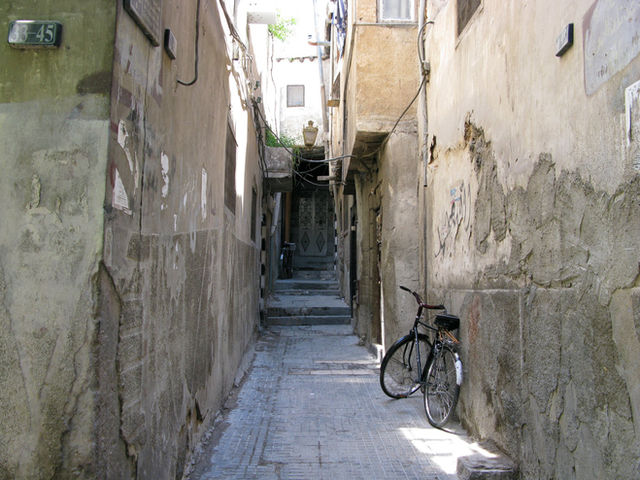
The vast marble courtyard of a mosque older than almost any standing, sunlight through the tin-punched roof of a covered market, and a lane of courtyard houses where jasmine spills over the wall.

One of the oldest continuously inhabited capitals in the world, and a founding city of Islamic civilisation. Damascus wraps a Roman street grid, a colossal early mosque and miles of covered souk inside its old walls, all scented — the poets insist — with jasmine.

Type
metropolis
Ideal length
~approx 2 days
Getting around
a walkable Old City; taxis for the wider metropolis
Neighbourhoods
4 areas
Best season / months
April to May and October to November — mild, before and after the summer heat
Language
Arabic; some English and French; Aramaic still spoken in villages nearby
Currency
Syrian pound (£S)
Budget level
low — but access and everyday practicalities are the real question, not price
Good for
  • History
  • Religious heritage
  • Architecture
  • Food
▸ Discover

About Damascus

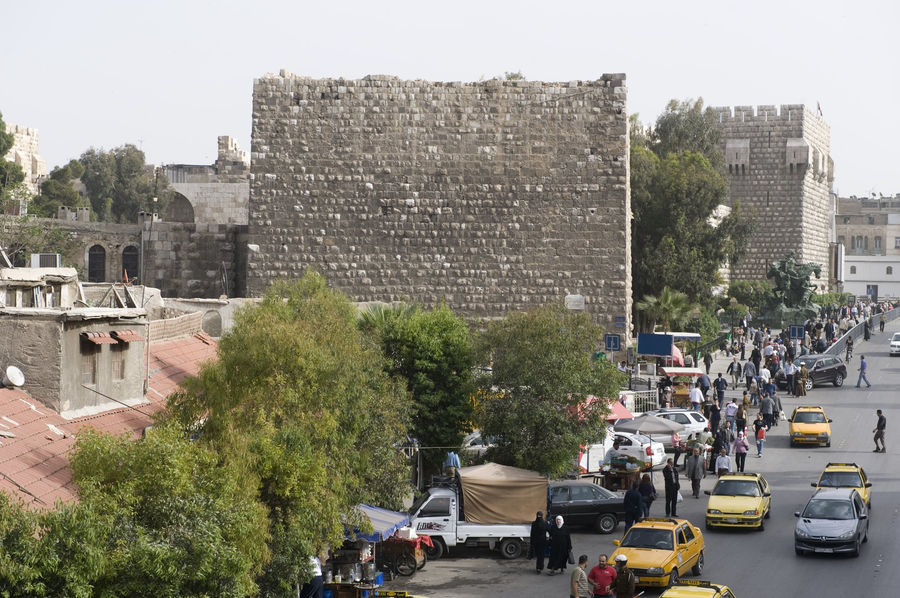
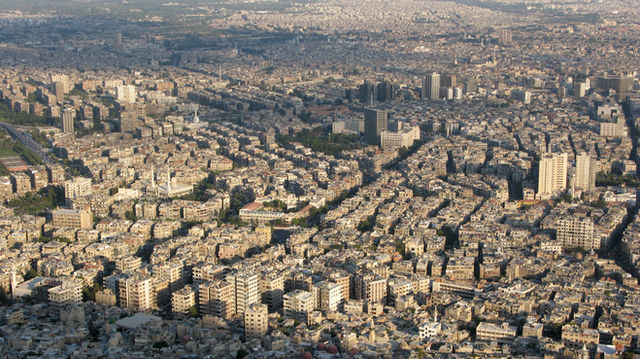
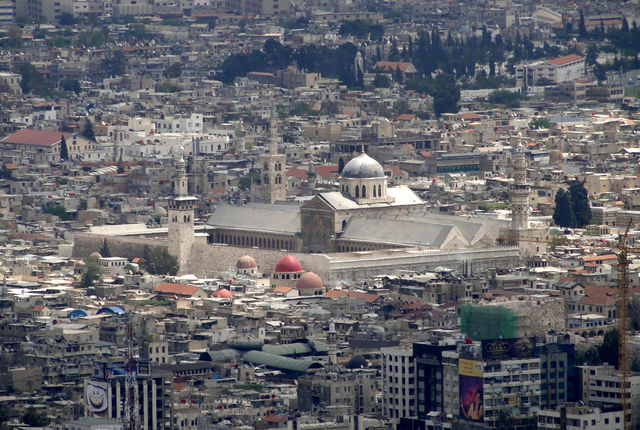
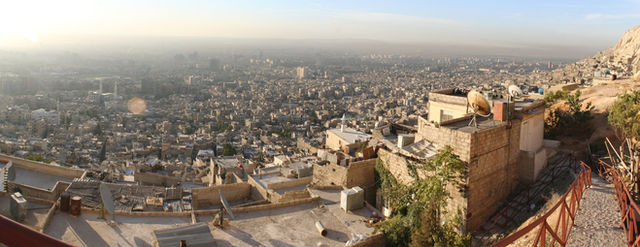
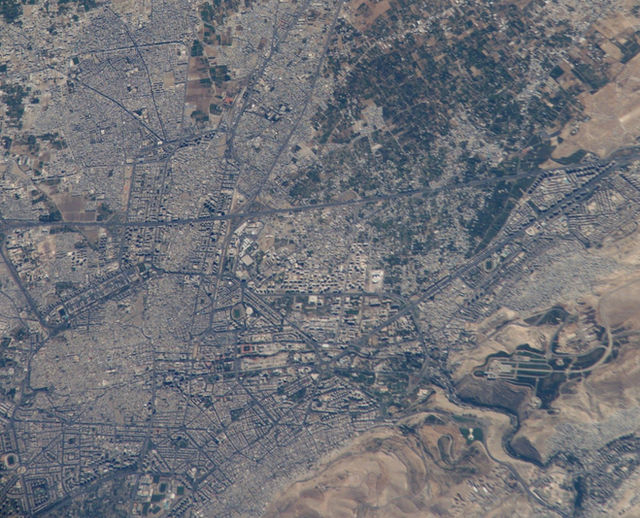
Damascus lies on a plateau at the foot of Mount Qasioun in southwestern Syria, watered by the Barada river that made an oasis city possible in the dry interior — settled for several thousand years and, many argue, the oldest capital on earth. Its walled Old City, a UNESCO World Heritage site, still follows the Roman grid: the long east–west Straight Street, the great Umayyad Mosque at the centre, the covered Souq al-Hamidiyya running to it, the Christian quarter of Bab Touma to the east, and the old gates in the walls. A larger modern metropolis has grown around it, with Mount Qasioun rising behind for the classic view. The account here centres on the city's enduring heritage; present-day conditions and access change and must be checked against your government's current advice.

Why go

The Umayyad Mosque is one of the oldest and most important mosques in the world, built on a site sacred in turn to Aramean, Roman and Christian worship, and it alone makes Damascus one of the great heritage cities. Around it the Old City preserves a living Roman-to-Ottoman townscape: the covered markets, the Azm Palace, the courtyard mansions, the churches of the oldest Christian community anywhere. This is the Damascus of Saint Paul on Straight Street, of the Umayyad caliphs, of damask cloth and Damascus steel — a city whose cultural and religious significance is hard to overstate.

Don't miss

  • The Umayyad Mosque — one of the oldest and grandest in Islam
  • Souq al-Hamidiyya — the grand covered market
  • Straight Street (Via Recta) — the Roman spine of the old city
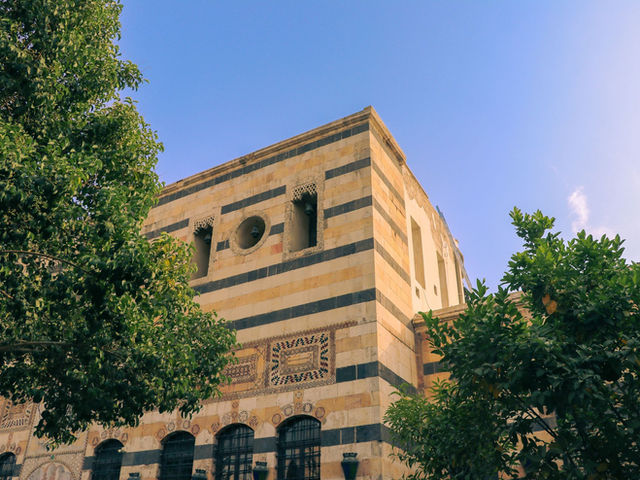
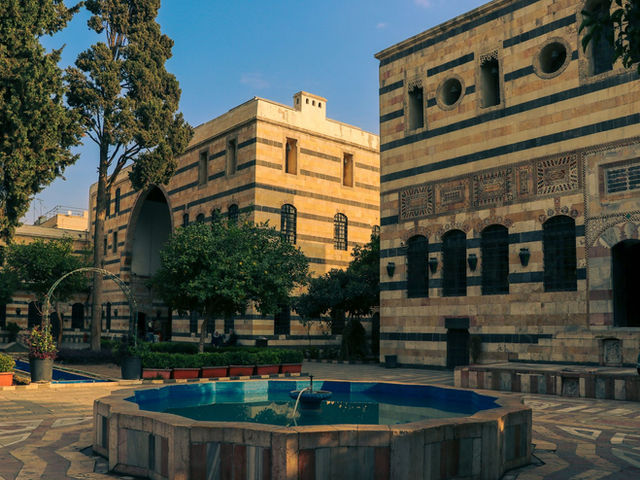
  • The Azm Palace — the Ottoman governor's courtyard palace
  • Mount Qasioun — the overlook above the City of Jasmine

Signature experiences

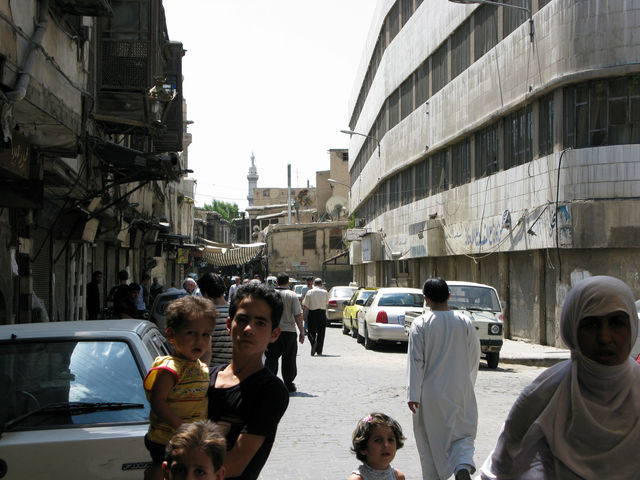
The Umayyad Mosque and the old city core — Give real time to the Great Mosque: the enormous marble courtyard, the gold-ground mosaics of an imagined paradise, the shrine within, and Saladin's tomb in its garden just outside. Approach it as pilgrims and traders always have, down the tin-roofed length of Souq al-Hamidiyya, where shafts of light fall through bullet-old holes in the roof. **Walking the Roman city** — Damascus still runs on its ancient plan. Trace Straight Street from the covered Souq Midhat Pasha to the Roman arch and Bab Sharqi, turn off to the Azm Palace's cool courtyards, and wind into Bab Touma's lanes — a continuous walk through Roman, Umayyad, Ottoman and Christian Damascus in a few hundred metres. **Courtyards, sweets and the City of Jasmine** — Old Damascus lives behind its walls, in courtyard houses built around a fountain and a lemon tree, many now cafés and restaurants. The city is famous for its sweets — the pounded pistachio ice cream (booza) of the Hamidiyya market, barazek cookies, halawet el-jibn — and for the jasmine that gives it its nickname. An evening in a Bab Touma courtyard, over mezze and cardamom coffee, is the city at its most itself.

Neighbourhoods

Damascus neighbourhood by neighbourhood — the character of each and who it suits.

  • The Umayyad Mosque

    The religious and physical heart of the Old City — the great early mosque and the covered market that leads to it, the most sacred and most visited ground in Damascus.

    Why go
    The Umayyad Mosque itself, one of Islam's founding monuments.
    Best for
    The headline heritagemosque architecturethe market approach
    Known for
    The Great Umayyad Mosque with its mosaic courtyard and the shrine said to hold the head of John the Baptist, the mausoleum of Saladin just outside, and Souq al-Hamidiyya leading up to the mosque gate.
  • Bab Touma

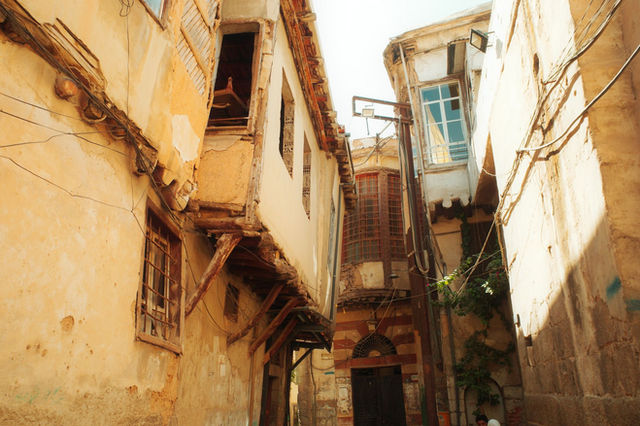
    The Christian quarter in the northeast of the Old City — narrow lanes, old churches and courtyard houses, home to one of the world's oldest Christian communities and now a district of courtyard cafés and restaurants.

    Why go
    The ancient churches and the most atmospheric courtyard-house dining.
    Best for
    Churchescourtyard housesan evening out
    Known for
    The Chapel of Ananias below street level, the tradition of Saint Paul's escape by the city wall, the Armenian, Greek and Syriac churches, and the restored courtyard mansions of the quarter.
  • Straight Street

    The Roman east–west spine of the Old City — the biblical "street called Straight" — now a run of covered souk, the Azm Palace and the eastern Roman gate.

    Why go
    The Roman axis, the covered markets and the grandest old palace.
    Best for
    The Roman citysouksthe Azm Palace
    Known for
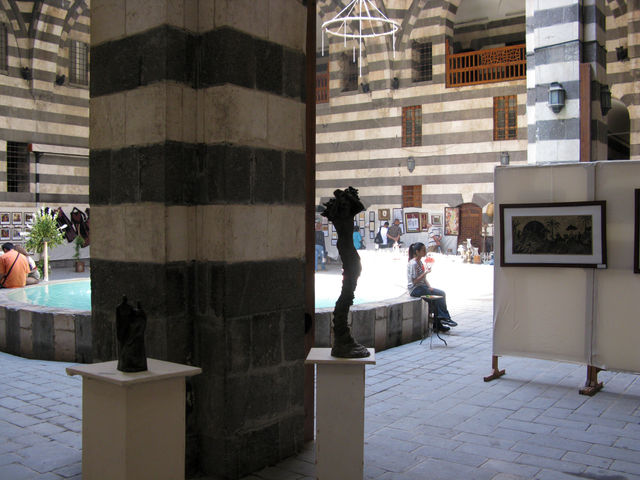
    Straight Street and the covered Souq Midhat Pasha, the Azm Palace with its black-and-white stone and courtyards, the Roman arch and the eastern gate of Bab Sharqi, and the artisans' lanes off the main street.
  • Mount Qasioun

    The mountainside and the modern centre below it — the balcony over the whole city and the 19th- and 20th-century downtown of squares, the national museum and grand Ottoman mosques.

    Why go
    The panorama over Damascus and the museum.
    Best for
    The city viewthe museumorientation
    Known for
    The Mount Qasioun overlook above the city, the National Museum of Damascus with its ancient and Palmyrene collections, the Tekkiye Suleymaniye mosque complex, and the Salhiyya and Marjeh districts of the modern centre.

Views & hidden gems

Best views

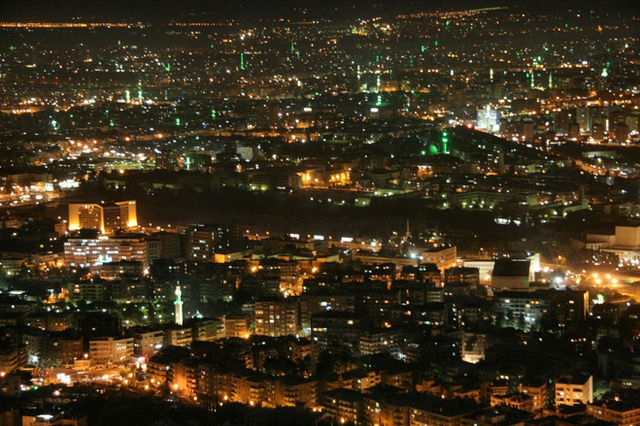
  • Mount Qasioun at dusk, the whole city spread below
  • The mosaic courtyard of the Umayyad Mosque
  • The light falling through the roof of Souq al-Hamidiyya

Hidden gems

  • The Chapel of Ananias, a small early-Christian crypt below the street in Bab Touma
  • The point on the old wall linked to Saint Paul's escape in a basket
  • The Azm Palace's private hammam and reception rooms
  • The pounded-to-order pistachio ice cream of the Hamidiyya sweet stalls

Food & drink

Damascene food is the refined end of the Levantine table, and the city is as famous for its sweets as its savouries. Expect a long spread of mezze — hummus, muhammara, fattoush, stuffed vine leaves — before grilled meats, fatteh and mahshi, all eaten slowly in a courtyard. The sweet tradition is celebrated: booza, the stretchy pistachio-topped ice cream pounded in the Hamidiyya market, plus barazek sesame cookies, halawet el-jibn and syrup pastries. Cardamom coffee, fresh tamarind and liquorice drinks, and historically arak round out the table.

  • Fatteh — chickpeas and yoghurt over crisp bread, a Damascus breakfast
  • Kibbeh — bulgur-and-meat croquettes, many varieties
  • Muhammara — roasted red pepper and walnut dip
  • Booza — pounded pistachio-topped ice cream from the Hamidiyya market
  • Barazek — thin sesame-and-pistachio cookies
  • Cardamom coffee — the standard close to a meal
Dietary notes

Vegetarians eat well from the mezze table — hummus, muhammara, salads, stuffed vegetables, grains — though some dishes use meat stock; ask. Nearly all food is halal by default. Kosher and certified gluten-free are not catered to and should not be assumed. Confirm anything essential in advance.

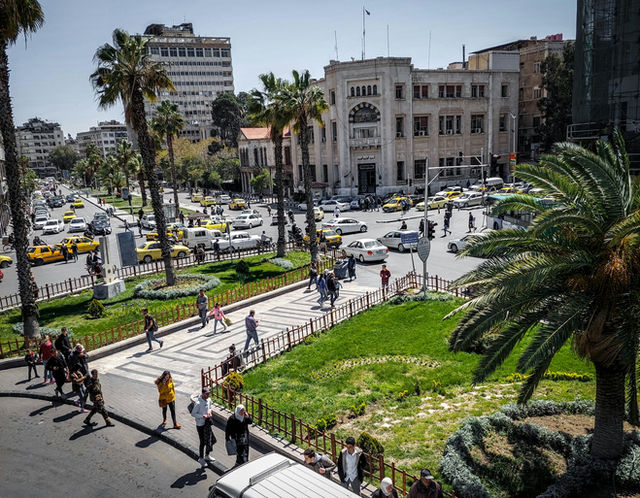
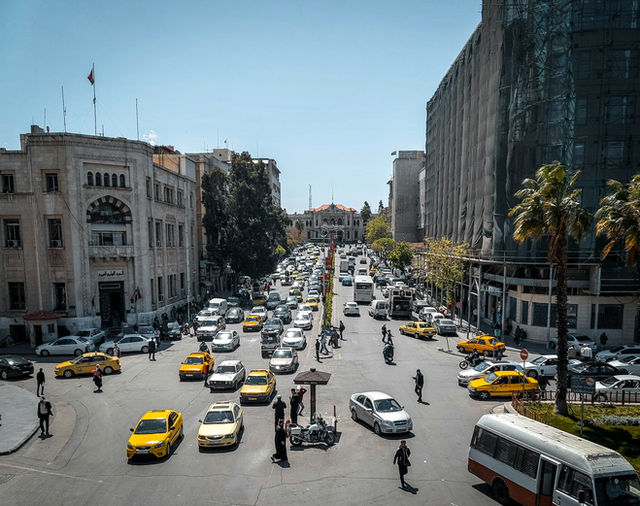
Damascus in photos

▸ Where you'll stay

Where you'll stay in Damascus

The most characterful lodging in Damascus has always been the restored courtyard mansions of the Old City, especially around Bab Touma and Bab Sharqi, within the walls and steps from the souks and the mosque; the modern centre around Salhiyya has more conventional hotels. Given the wider situation, current options and their status change and must be checked against present advice; the pointers below describe the city's traditional geography rather than a recommendation to travel now.

  • Budget
    The modern centre (around Marjeh / Salhiyya) simpler, budget-oriented hotels; current options and their status change and must be checked against present advice.
  • Mid-range
    The edges of the Old City mid-range hotels near the Old City walls; their current status must be checked against present advice.
  • Luxury
    Bab Touma / Bab Sharqi restored courtyard-house mansions, traditionally the city's finest heritage stays; their current status must be checked against present advice.
Stay

Hotels & rentals around Damascus

Pan, zoom and compare live prices — every stay in one map.

▸ Getting around

Getting around Damascus

The walled Old City — mosque, souks, Straight Street, Bab Touma — is compact and best on foot; taxis and microbuses cover the wider metropolis. Movement on the ground depends on current conditions; check your government's current travel advisory before making any plans.

The mosque, souks, Straight Street and Bab Touma are all within walking distance inside the walls (~approx); the modern centre and Qasioun are a short taxi beyond them.

▸ Plan your days

Suggested itineraries

Ready-made day plans for Damascus — from a single day to a long weekend.

One day

Enter the Old City down Souq al-Hamidiyya to the Umayyad Mosque and Saladin's tomb, then walk Straight Street past the Azm Palace to Bab Sharqi and the Roman arch. Spend the afternoon in the Bab Touma lanes among the churches and courtyard houses, ending with mezze in a courtyard and pistachio ice cream from the market. (Access to individual sites must be checked against current advice.)

Two days

A second day widens out: the National Museum near the modern centre for the ancient Near East and Palmyra, the Tekkiye Suleymaniye mosque, and Mount Qasioun at dusk for the panorama over the whole City of Jasmine. (Subject to current access.)

▸ What you'll do

Insider tips

  • The state of individual sites and quarters changes; verify what is open before relying on it, and check your government's current travel advisory before making any plans.
  • Damascene sweets and the pounded pistachio ice cream of the Hamidiyya market are a genuine local ritual, where the stalls are operating.
  • Photography near official or military sites is sensitive throughout Syria — err on the side of not.
Explore

Explore the area

© OpenFreeMap · OSM · terrain Mapterhorn
Do

Local attractions & tours

Skip-the-line tickets and small-group tours in Damascus — compare across our partners.

We're still curating hand-picked tickets and tours for Damascus. In the meantime, the map above and the nearby cities are a great place to start.

▸ Budget

What it costs in Damascus

Backpacker
Costs are hard to state in advance and conditions change frequently; check your government's current travel advisory before making any plans.
Mid-range
Prices and currency are volatile and change frequently; check current official advice before relying on any figure.
Luxury
Prices and currency are volatile and change frequently; check current official advice before relying on any figure.
Cash vs card
The money situation is volatile and changes frequently; check your government's current travel advisory before making any plans.
Tipping
Small tips and rounding up are customary in restaurants.
▸ When you'll go

When to visit Damascus

April to May and October to November — mild, before and after the summer heat

Spring

What to expect — Mild and fragrant, the most comfortable season, with blossom and jasmine and the oasis gardens green before the heat.

What's best — Gentle temperatures for the Old City, and the jasmine the city is named for at its best.

Summer

What to expect — Hot and dry on the interior plateau, with strong midday sun; the covered souks and courtyard houses stay cool by design.

What's best — Long light evenings in the courtyards and markets. Spring or autumn is the easier visit for daytime sightseeing.

Autumn

What to expect — The heat eases into a second mild window — warm days, cool nights, clear light on the stone.

What's best — Comfortable walking weather and calm at the sights.

Winter

What to expect — Cool to cold with spells of rain and chilly nights; the high plateau can be genuinely cold. Short days.

What's best — Crisp air and clear views of snow on Mount Qasioun, warm courtyard interiors and hot food.

▸ Know before you go

Know before you go

Before you go — official advisories

Most governments currently advise against all travel to Syria; check your own government's current advice first — this guide describes the city's heritage and does not assess present-day safety or access.

Entry, permits, movement and the situation on the ground change constantly and must be verified against your government's current official guidance before any travel.

Which monuments and quarters are open or accessible changes over time and must be checked against current official guidance.

Honest swaps

Skip treating Damascus as a single sight → the Old City is a continuous walk from the mosque through the souks to Bab Touma, and that walk is the experience, where it can be done.

Local rules & etiquette

Dress modestly, especially at the Umayyad Mosque and in the markets; women are usually asked to cover at the mosque, which provides robes.

Ask before photographing people, and avoid official or military sites entirely.

Money

The money situation is volatile and changes frequently; research it carefully and check your government's current travel advisory before making any plans.

▸ Ready to book your trip?

Getting there

Damascus International Airport (DAM) lies southeast of the city, and Damascus is the hub of Syria's road network; all routes and their availability change with the current situation and must be verified.

Book

Ready to book your trip?

Flights, airport transfers and car hire — search and compare without leaving the page.

▸ Trip extras
Book

More trip extras

Parking, holiday extras, and more — coming soon.

Coming soon

We're lining up parking, holiday extras and activities you'll be able to add to any trip from here.