Saint-Malo was 80 per cent destroyed in August 1944 and rebuilt, stone by numbered stone, over the following twelve years — which is why the walled city inside the ramparts looks four centuries old and is largely seventy. It was a corsair port: privateers licensed by the crown to raid enemy shipping, who made the town rich enough to build the granite mansions that are still there. The tides here are among the largest in Europe, with a range that can exceed thirteen metres.
You can walk the complete circuit of the ramparts in forty minutes with the Channel on one side and the town on the other, and at low tide walk out to two tidal islands — the Fort National and the Île du Grand Bé, where Chateaubriand is buried facing the sea. It is also the best base on the Emerald Coast, with Dinard across the estuary, Cancale's oyster beds twenty minutes east and Mont-Saint-Michel under an hour.
Things to do
- The ramparts circuit — 1.7 km, free, and open all hours. Do it at sunset and again at high tide.
- Île du Grand Bé — Walk out at low tide to Chateaubriand's grave, turned to face the sea as he asked. Check the tide board first.
- Cancale oysters — Twenty minutes east. Buy a dozen at the Marché aux Huîtres and eat them on the wall.
- The Bus de Mer to Dinard — Ten minutes across the estuary to the Promenade du Clair de Lune and the Villa Eugénie.
- Fort National — Vauban's island fort, open at low tide in season, with the best view back at the walled city.
- Pointe du Grouin — A headland north of Cancale with the whole bay, a bird reserve island offshore, and the coast path either way.
Where to base yourself
The Saint-Malo neighbourhoods worth knowing before you book.
- Coming soon Intra-muros Inside the walls: granite, ramparts, and every hotel worth having. Loud in August, magical off-season.
- Coming soon Saint-Servan South of the walls round the Tour Solidor — quieter, cheaper, better restaurants, and a fifteen-minute walk in.
- Coming soon Le Sillon The long beach and promenade north-east of the walls, with the wooden breakwaters and the big seafront hotels.
- Coming soon Paramé & Rothéneuf Further out — family beaches, the sculpted rocks, and much better value in July.
- Coming soon Dinard Across the estuary by boat: Belle Époque villas, a British-founded resort, and the best view back at Saint-Malo.
3 days in Saint-Malo
- Day 1 The walls
Ramparts circuit first thing, then the Demeure de Corsaire and the cathedral. Lunch in Saint-Servan. Walk out to the Grand Bé at low tide, and back before it closes. Dinner intra-muros.
- Day 2 The Emerald Coast
Cancale for oysters and the market, then the coast path from the Pointe du Grouin. Afternoon on the Bus de Mer to Dinard for the villas and the Clair de Lune walk.
- Day 3 Mont-Saint-Michel
An hour south-east. Go for opening or stay until the evening — the abbey at either end of the day is a different building from the abbey at noon.
Day trips
Worth the train or the drive from Saint-Malo.
-
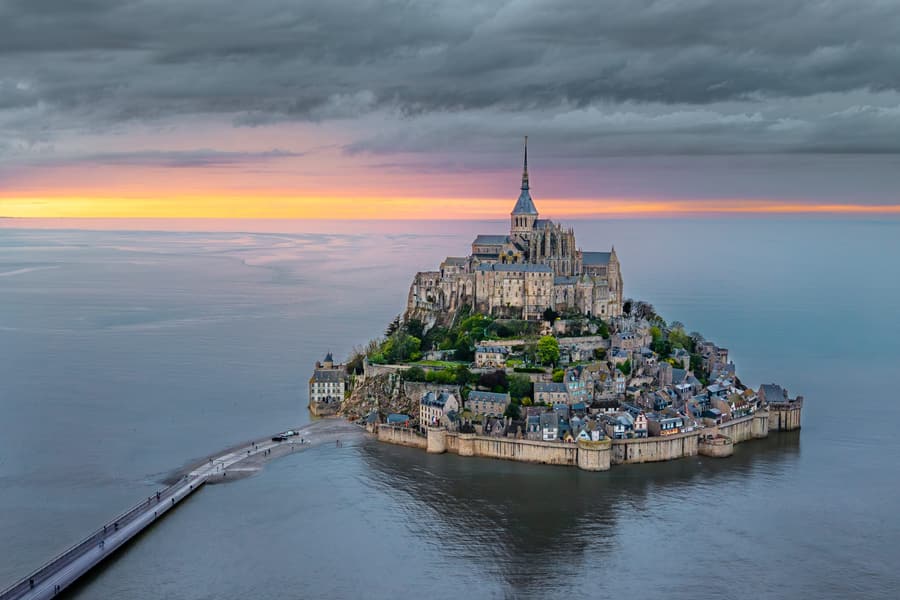 Mont-Saint-Michel An hour south-east. Check the tide tables — the spring tides are the spectacle.
 - Dinan 40 min inland — three kilometres of intact ramparts above the Rance.
-
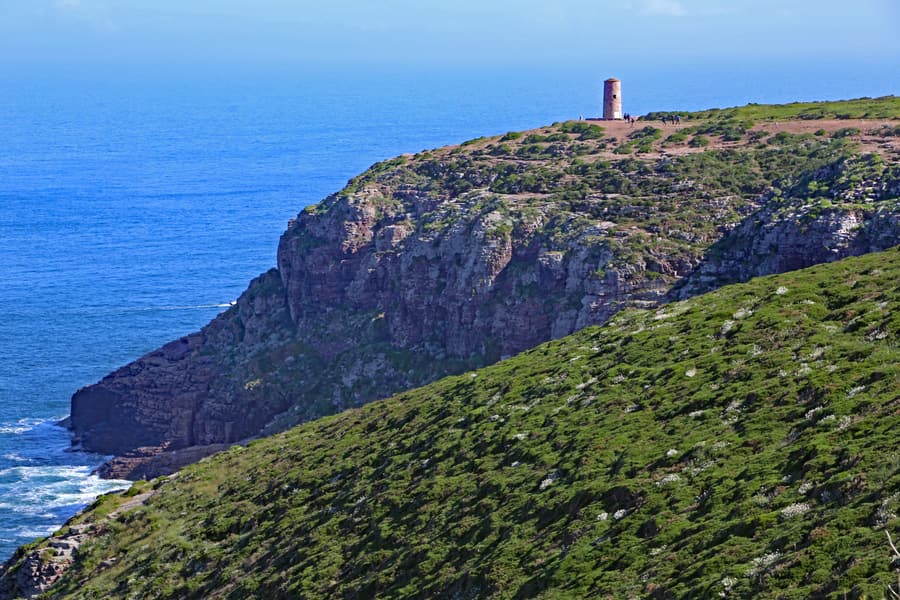 Cap Fréhel 70 m of red sandstone cliff, heather on top, seabirds below.
 -
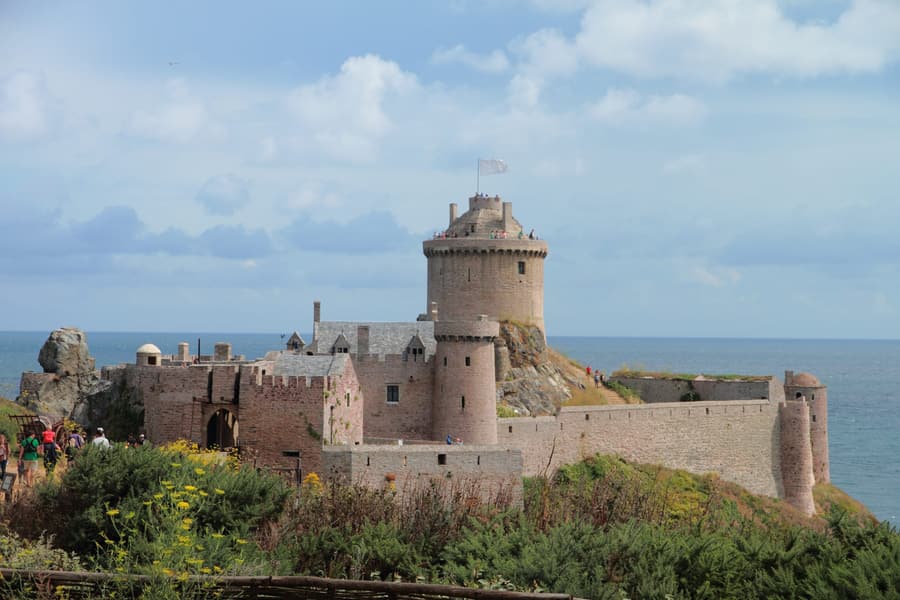 Fort la Latte A fourteenth-century castle on its own sea stack, reached by drawbridge.
 -
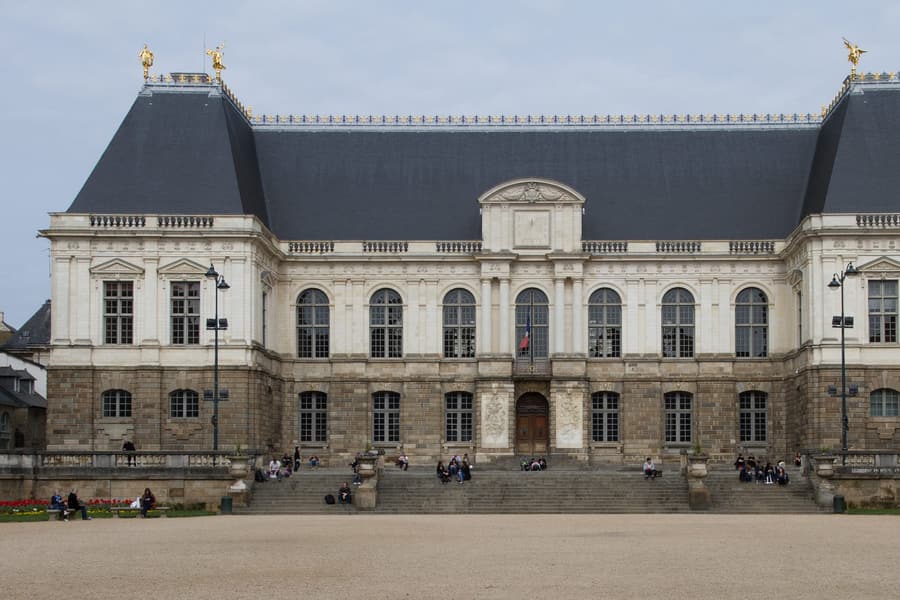 Rennes 1h — Brittany capital, half-timbered and full of students.
 -
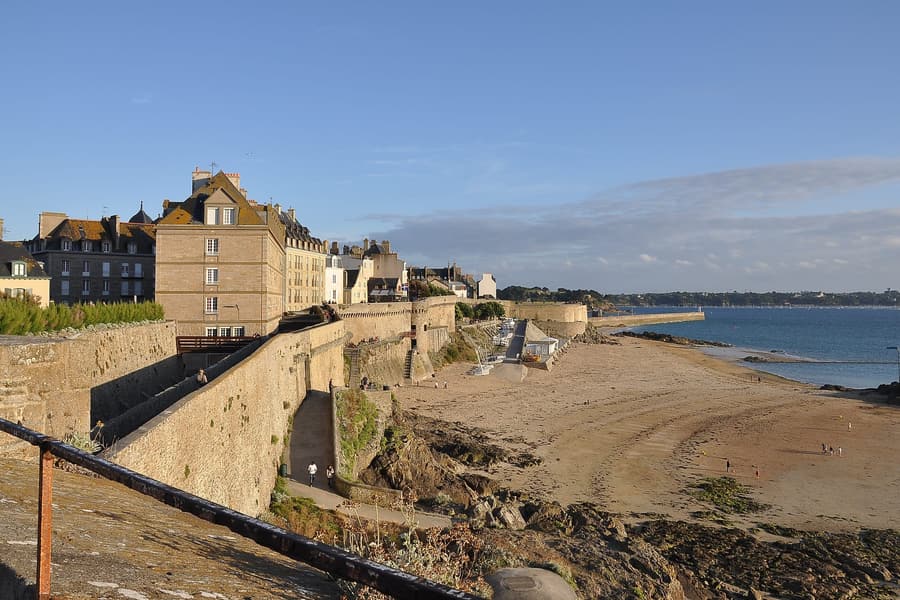 The Ramparts of Saint-Malo The complete walled circuit, in the town itself.
Practical
- Best time to go
- May–September. The grandes marées — the highest spring tides, around the equinoxes in March and September — bring waves over the ramparts and are a genuine spectacle; check the coefficient tables. July and August fill the intra-muros completely.
- Getting there
- TGV Paris–Saint-Malo in about 3h, changing at Rennes. Brittany Ferries from Portsmouth (overnight) and Poole, landing you a five-minute walk from the walls — the most civilised arrival in France. Rennes airport is an hour.
- Getting around
- Intra-muros is pedestrian and tiny. The Bus de Mer crosses to Dinard in ten minutes and saves a long drive round the estuary. Buses reach Cancale and Pointe du Grouin. A car is useful for the coast and essential for Mont-Saint-Michel.
- Eat & drink
- Oysters from Cancale, eaten on the sea wall from a stall for a couple of euros a piece with the shells thrown onto the beach. Otherwise: galettes de sarrasin with cider in a bolée, kouign-amann (butter, sugar, laminated, indefensible), and Bordier butter, which is made here and is genuinely worth the fuss.
- Know before you go
- The tide comes in fast and the causeways to the Grand Bé and the Fort National flood completely — the times are posted at each and people are cut off every summer. Intra-muros restaurants on the main streets are mostly mediocre; walk to the ramparts side or eat in Saint-Servan.
More of Brittany
- Rennes Brittany's capital — half-timbered streets and a student city's nightlife
- Dinan Three kilometres of intact ramparts above the Rance
-
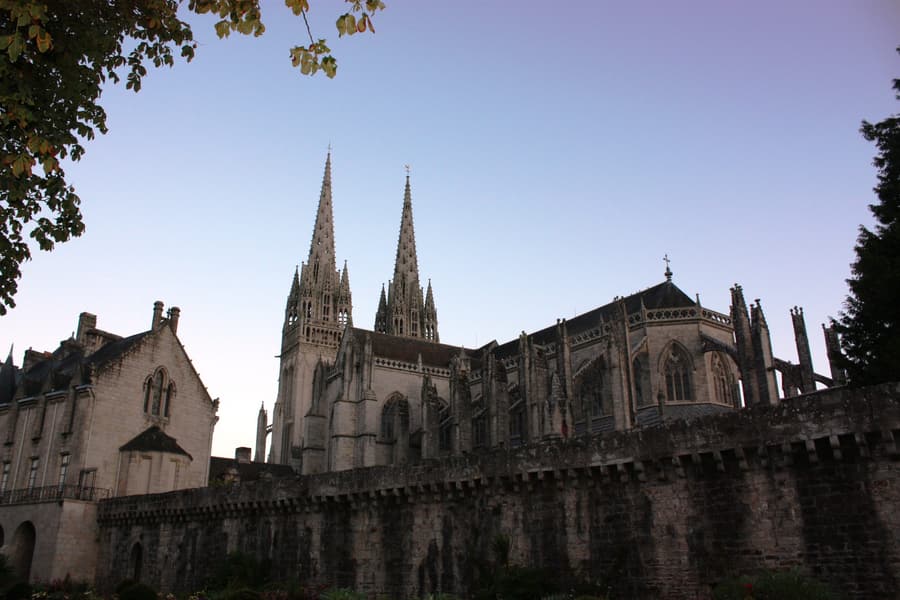 Quimper Cornouaille's capital — twin spires, faience and the Festival de Cornouaille
 -
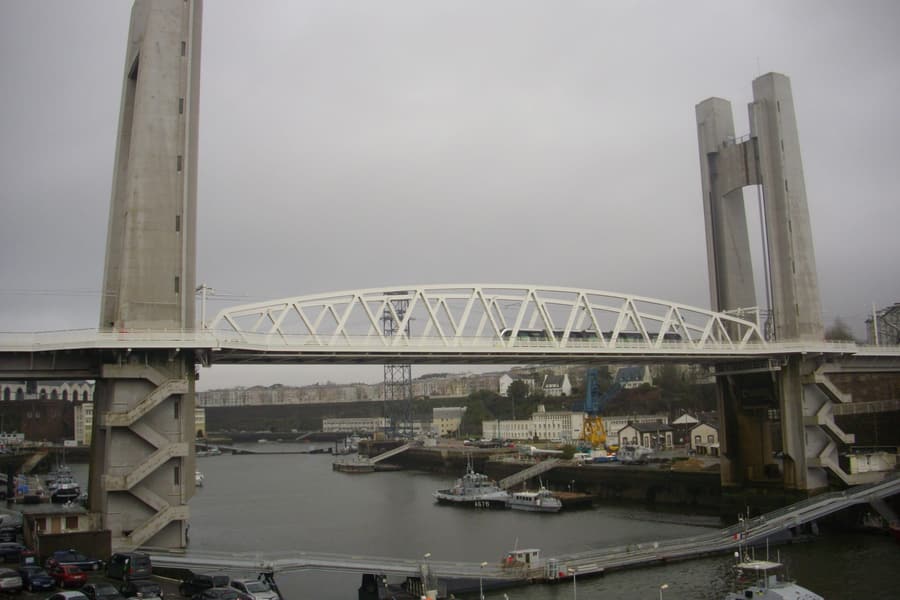 Brest A working naval city, Océanopolis, and the gateway to Ouessant
 -
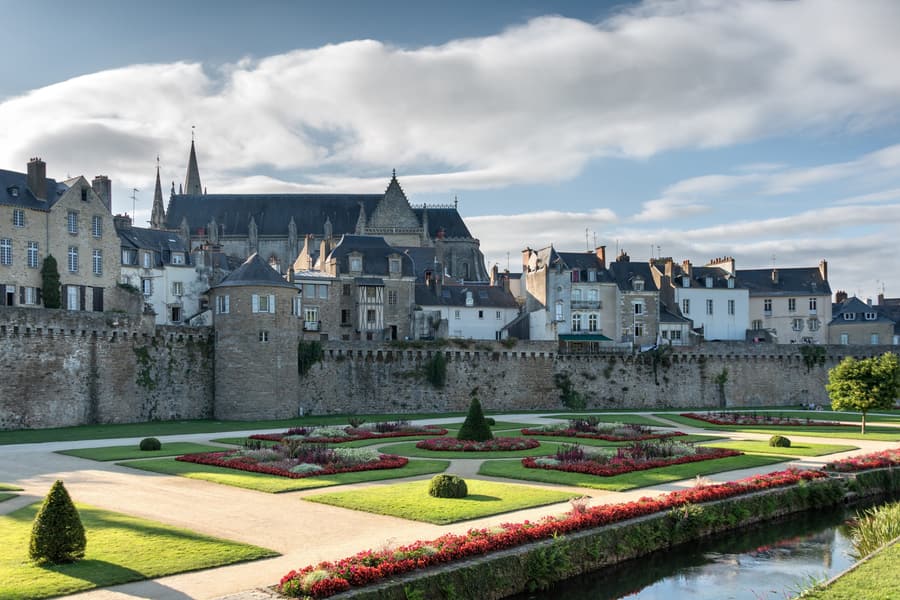 Vannes Walled and half-timbered, at the top of the Gulf of Morbihan
 -
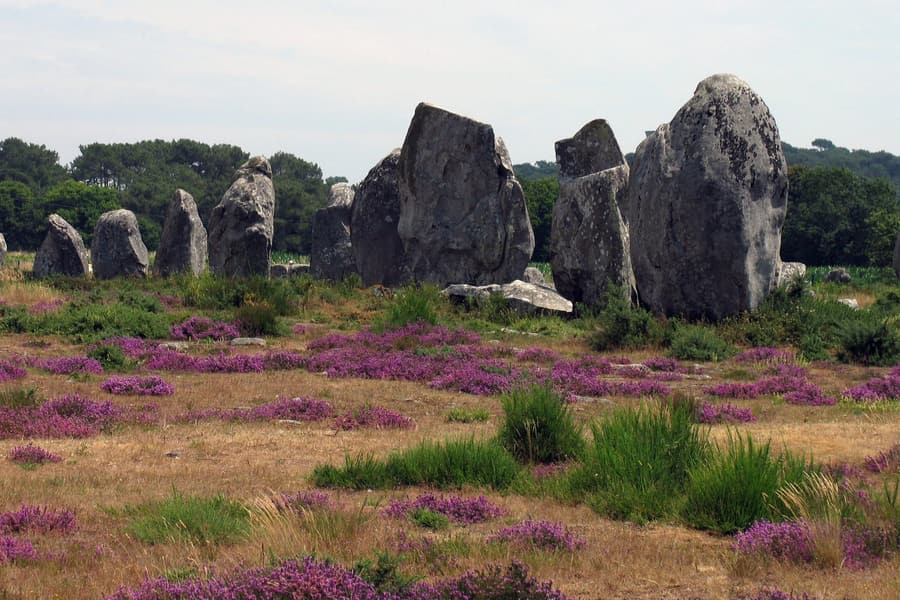 Carnac Three thousand standing stones, raised before the pyramids
 -
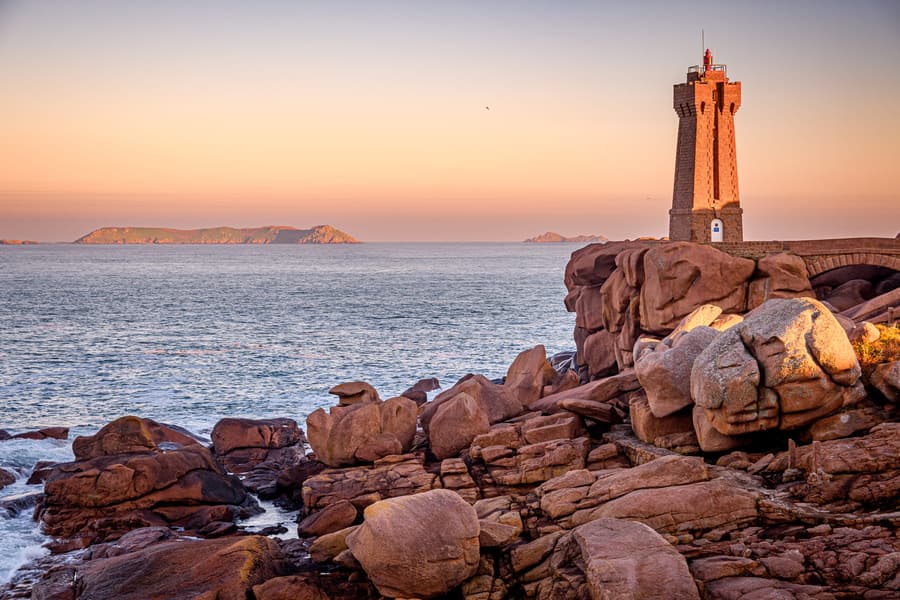 Perros-Guirec The base for the Pink Granite Coast and the Sept-Îles seabirds