Sarlat survived because it was poor. It grew rich in the Middle Ages, was ruined by the Hundred Years' War and the Wars of Religion, and then simply stopped — no industry, no railway boom, no money to knock anything down. The result is one of the densest concentrations of medieval and Renaissance buildings in France, all in the same honey-coloured limestone, and it was the pilot site for the 1962 Malraux law that invented the French system of protected historic sectors.
It is the base for the Dordogne, which means the painted caves of the Vézère, the clifftop castles above the river, and the Saturday market that fills every street in the old town. This is duck, walnut and truffle country, and the food is the reason a lot of people come at all. Sixty-five listed monuments in a town of 9,000 people.
Things to do
- The Saturday market — Fills every street of the old town from 8am. Go early, eat everything, and buy the walnut oil.
- Lascaux IV — A complete facsimile of the painted cave — the original closed in 1963 because human breath was destroying it.
- Jardins de Marqueyssac — 150,000 hand-clipped box shrubs on a spur 130 m above the river. Candlelit on Thursday evenings in summer.
- Château de Beynac — Vertical above the Dordogne, barely altered, and used for half the medieval films shot in France.
- A canoe from Vitrac — Downstream past La Roque-Gageac, Castelnaud and Beynac in about three hours, with a minibus back.
- Rocamadour — An hour east and technically in the Lot — a pilgrimage village stacked up a 120 m cliff in three tiers.
Where to base yourself
The Sarlat-la-Canéda neighbourhoods worth knowing before you book.
- Coming soon Secteur sauvegardé The protected old town either side of rue de la République — the whole reason to be here. Stay inside it if you can.
- Coming soon La Roque-Gageac Ten minutes south-west: a single row of houses pressed between a cliff and the river. Canoe launch and gabare boats.
- Coming soon Beynac & Castelnaud The two castles that faced each other across the Hundred Years' War, fifteen minutes apart.
- Coming soon Les Eyzies Twenty minutes north-west, the capital of prehistory — the National Prehistory Museum and the decorated caves.
- Coming soon Domme A bastide on a clifftop with the whole Dordogne valley below and Templar graffiti in the gatehouse.
3 days in Sarlat-la-Canéda
- Day 1 The town
Old town on foot — the Maison de La Boétie, the lantern of the dead, the covered market in the deconsecrated church, and the glass lift in its bell tower for the roofscape. Dinner on Place de la Liberté.
- Day 2 The river
Marqueyssac gardens at opening, then down to La Roque-Gageac and a canoe or a gabare. Afternoon at Beynac or Castelnaud. Sunset from Domme.
- Day 3 Prehistory
Lascaux IV in the morning with a booked slot, then Les Eyzies and the National Prehistory Museum. If you got a Font-de-Gaume ticket, that instead — it is the last polychrome cave still open to the public.
Day trips
Worth the train or the drive from Sarlat-la-Canéda.
- Lascaux IV The full facsimile of the painted cave, 25 minutes north.
-
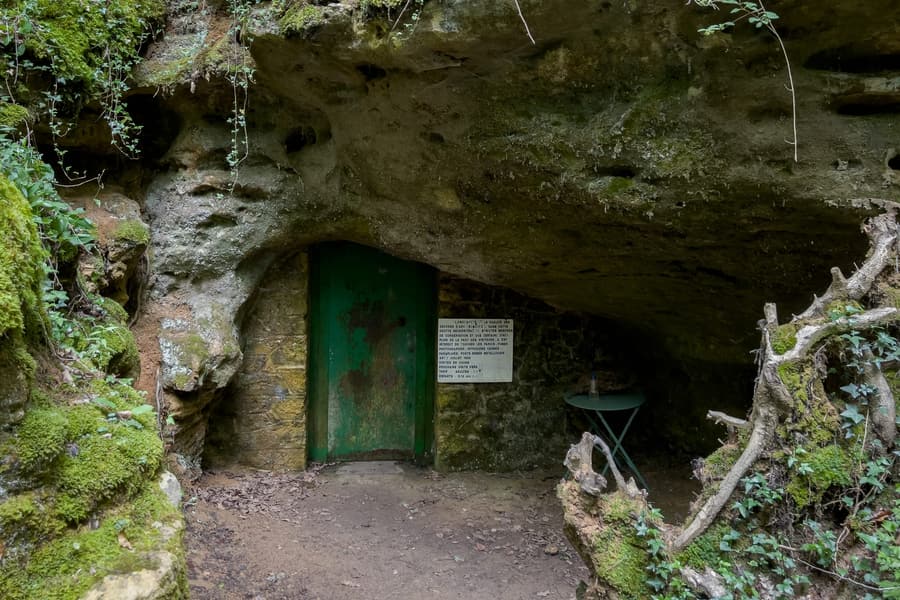 The Vézère Valley Fifteen UNESCO sites and twenty-five decorated caves in one valley.
 -
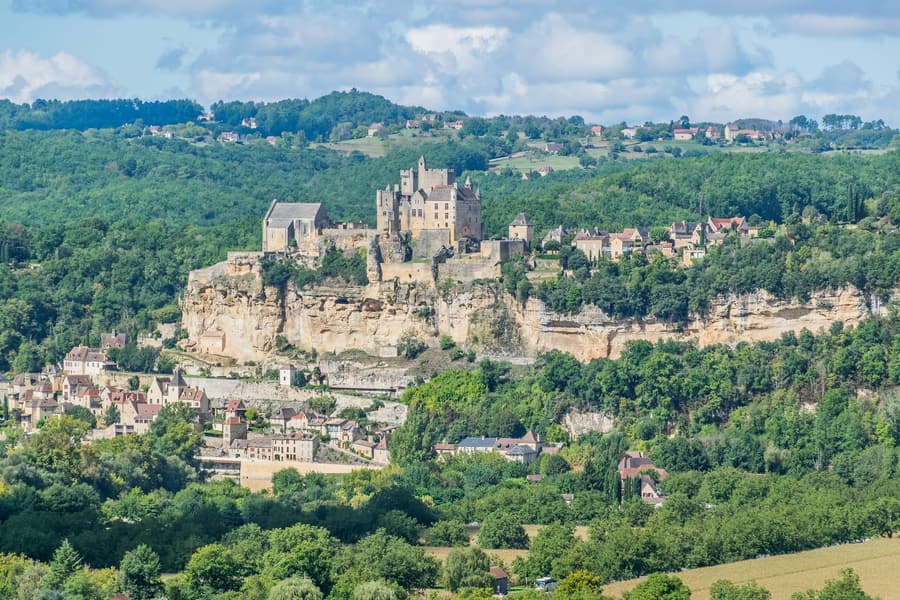 Château de Beynac 150 m above the Dordogne, facing the castle it fought for 200 years.
 -
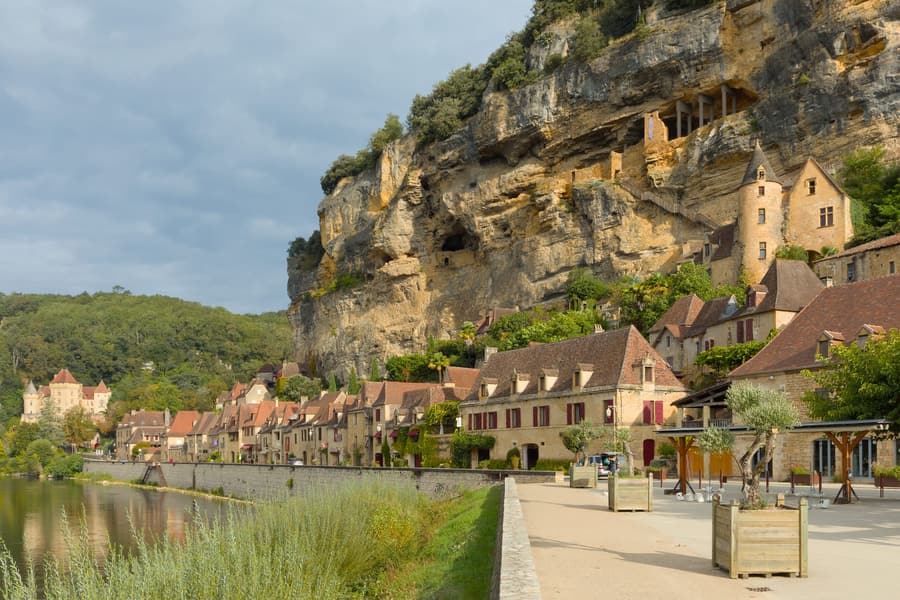 La Roque-Gageac A single row of houses between the cliff and the river.
 -
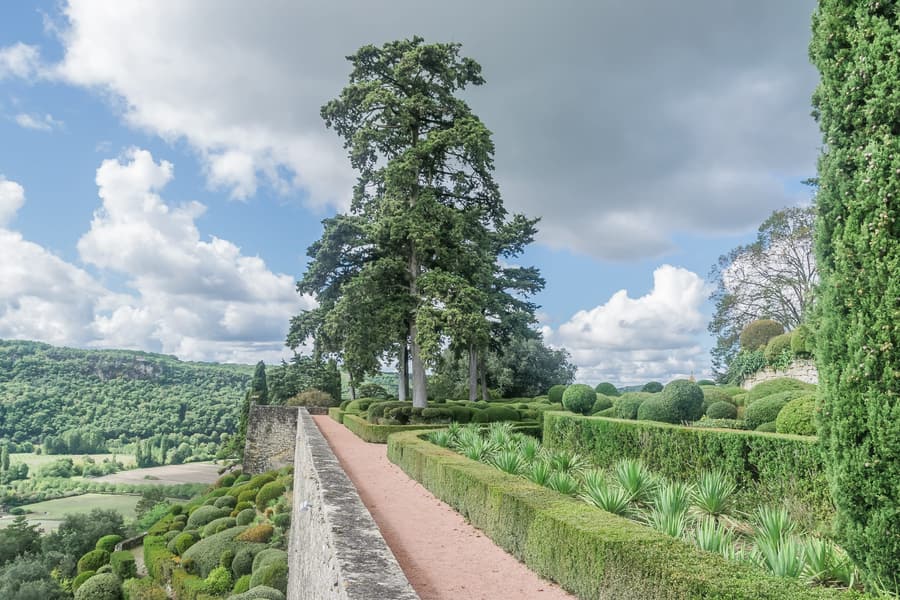 Jardins de Marqueyssac 150,000 clipped box shrubs on a spur above the valley.
 -
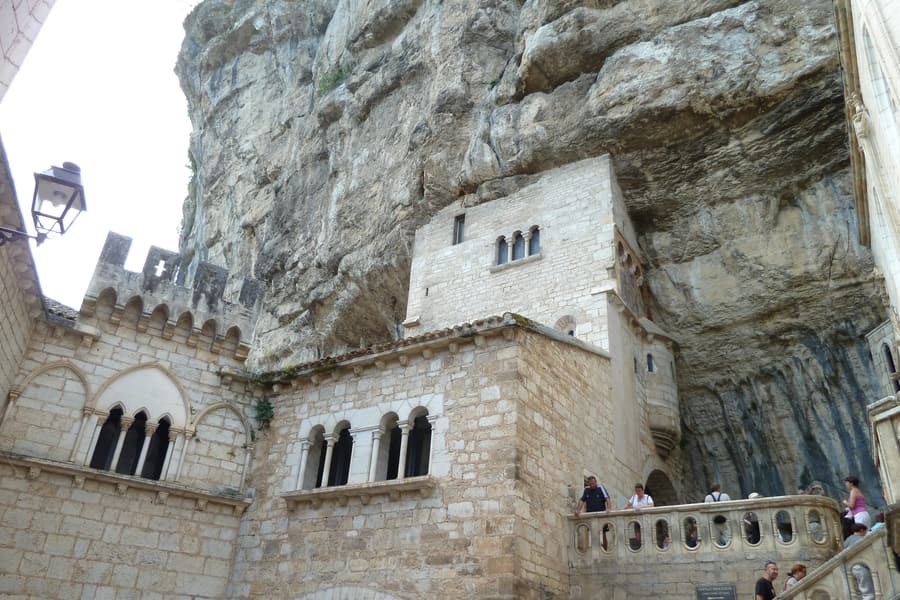 Rocamadour An hour east — a pilgrimage village stacked up a cliff in three tiers.
 -
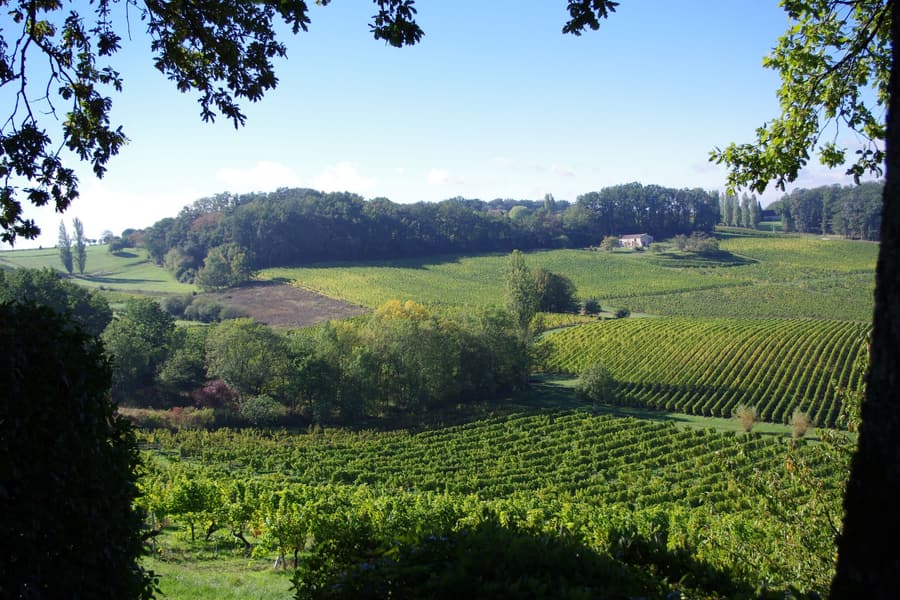 Bergerac An hour west, for the riverside town and its own appellations.
Practical
- Best time to go
- May–June and September for the weather without the traffic. July and August are extremely busy — the Dordogne is one of the most popular French holiday regions and the roads show it. The truffle market runs December to February and the Saturday market runs year-round.
- Getting there
- No TGV: Paris–Sarlat is around 6 hours by rail via Bordeaux or Souillac. Most people fly to Bergerac (1h15) or Bordeaux (2h15) and drive. A car is close to essential — the valley's sights are strung along thirty kilometres of river.
- Getting around
- The old town is pedestrian and small. Everything else needs a car; there is a scenic branch railway along the river to Les Eyzies but it is infrequent. Canoe hire at La Roque-Gageac and Vitrac lets you do a stretch of the Dordogne downstream with a shuttle back.
- Eat & drink
- Confit and magret de canard, foie gras, walnut oil and walnut cake, cèpes in autumn, black truffle in winter, and Bergerac and Cahors wines. The Saturday market is one of the best in France; there is a smaller one on Wednesday. Cabécou, the local goat's cheese, is grilled onto salad everywhere.
- Know before you go
- Parking in Sarlat in July is genuinely hard — use the outer car parks and walk. The Lascaux original is closed permanently; Lascaux IV is the full facsimile and is the one to book. Several of the best caves (Font-de-Gaume) cap daily numbers severely and sell out weeks ahead online.
In the area
The tourism areas this town sits inside.
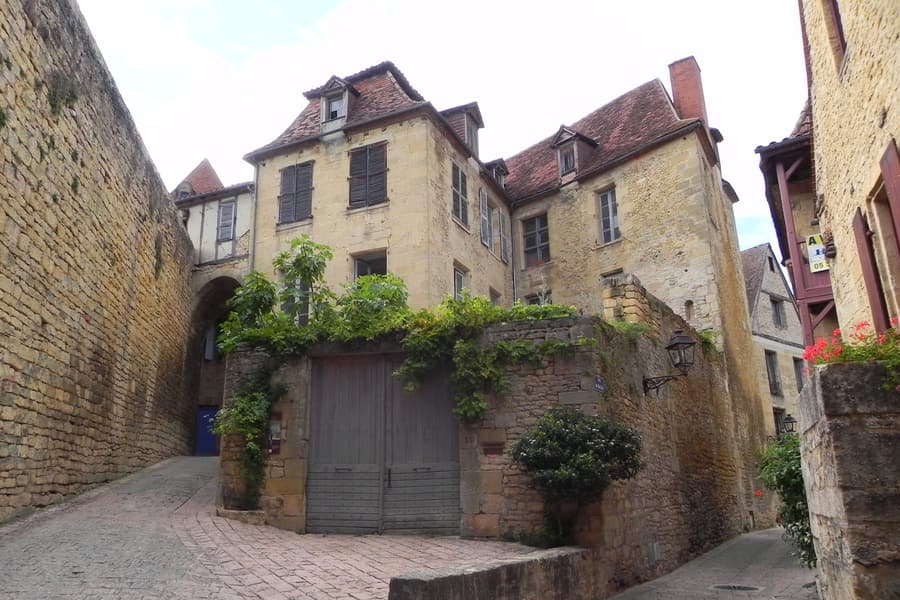
More of Nouvelle-Aquitaine
-
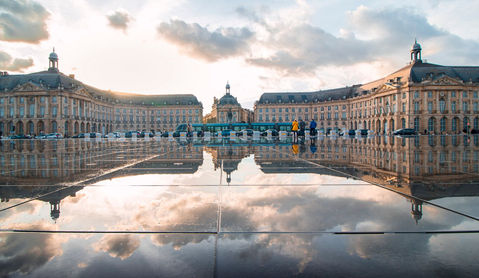 Bordeaux An eighteenth-century city on a river, with 6,000 châteaux behind it
 -
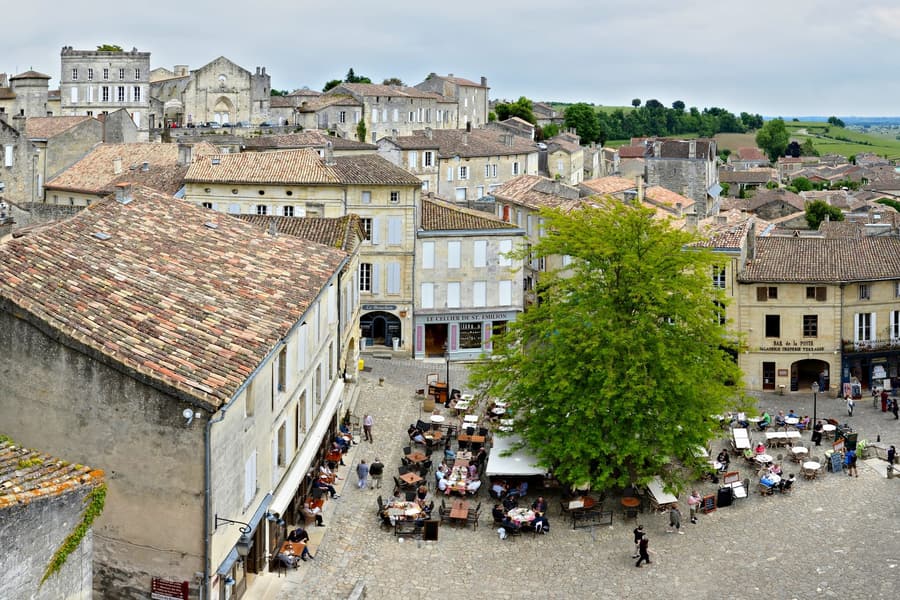 Saint-Émilion A monolithic church cut into rock, ringed by grand cru vineyards
 - Arcachon Oysters, a Winter Town of villas, and Europe's tallest dune next door
-
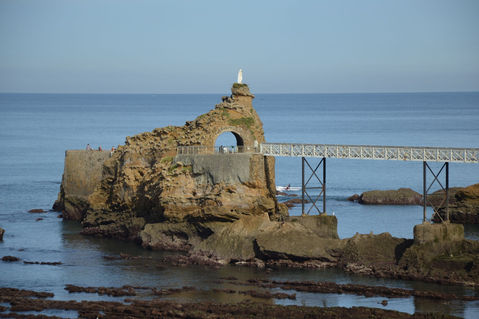 Biarritz An imperial resort that became Europe's first surf town
 -
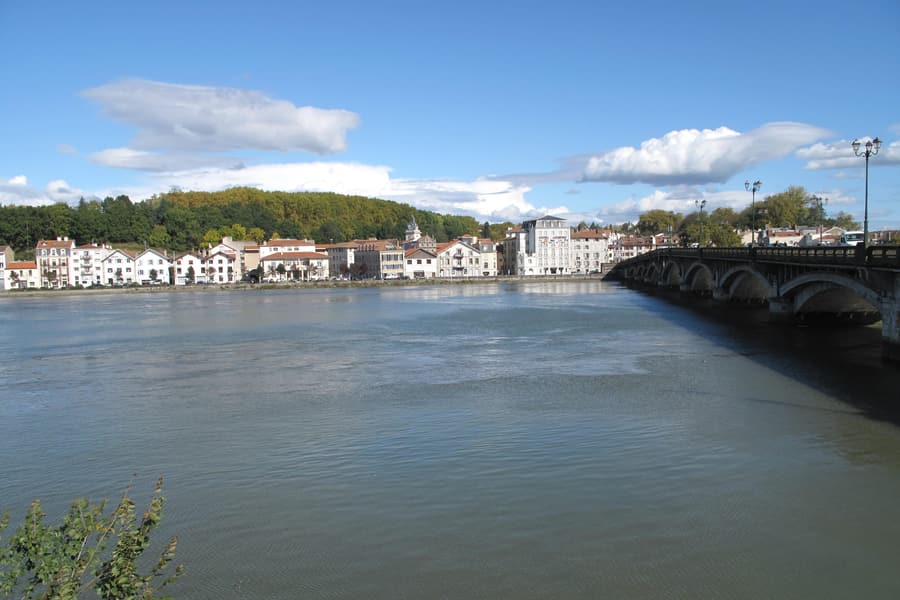 Bayonne Basque ham, chocolate since the 1600s, and a five-day summer fête
 -
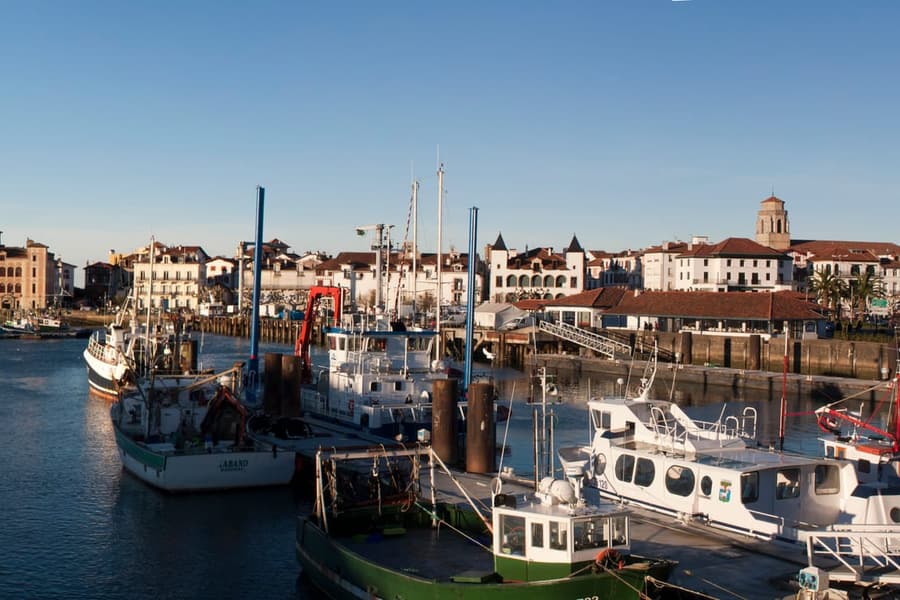 Saint-Jean-de-Luz A sheltered Basque bay, and the church where Louis XIV married
 - Bergerac A riverside old town and the Dordogne's own wine appellations
-
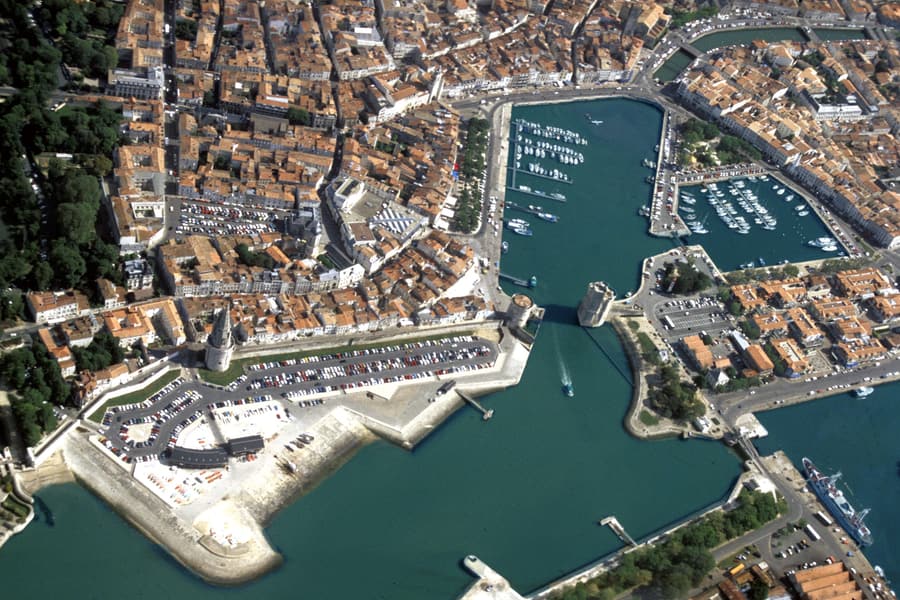 La Rochelle Three harbour towers, arcaded streets and the bridge to Île de Ré
 -
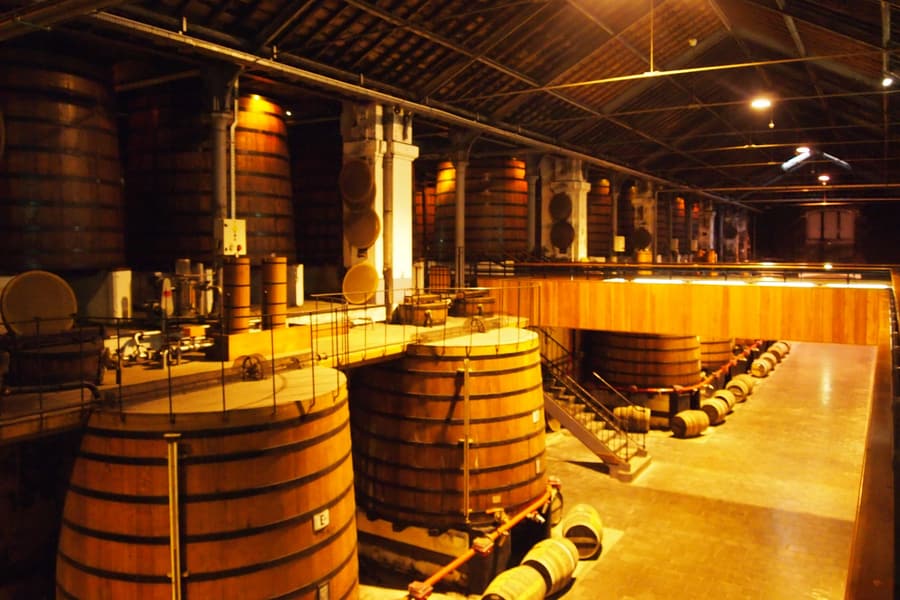 Cognac The Charente, the angels' share, and every house name you know
 -
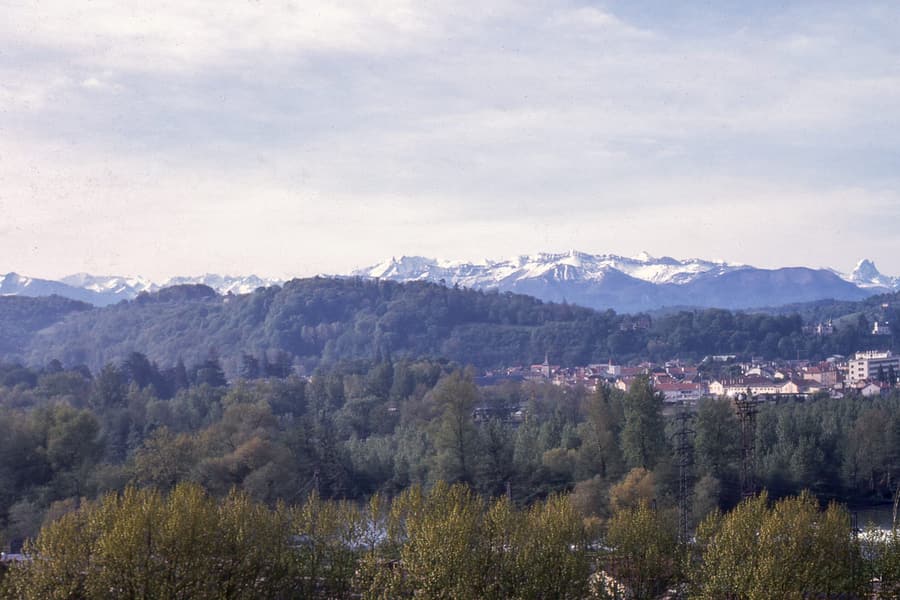 Pau A boulevard with the whole Pyrenean chain laid out in front of it
 - Hossegor A pine-backed beach break that hosts the world tour