La Ville Rose, and the name is literal — the local clay fires to a pink brick that the whole centre is built from, and it changes colour through the day. Toulouse is the fourth-largest city in France, the European capital of aerospace (Airbus assembles the A350 here, and the Ariane programme is run from here), and a university town of around 100,000 students. It sits on the Garonne where the Canal du Midi meets it, which is why it exists at all.
Saint-Sernin is the largest Romanesque church still standing anywhere, and the Jacobins holds a single palm-vault column that is one of the most extraordinary pieces of Gothic engineering in Europe. Beyond that it is a warm, cheap, extremely social city — the aperitif on a Garonne quay is a civic institution — and the base for Carcassonne, Albi and the Cathar country.
Things to do
- Basilique Saint-Sernin — The largest Romanesque church anywhere, on the pilgrim road to Santiago, with a five-tier octagonal tower.
- Couvent des Jacobins — The palm-tree vault springing from one column, and the tomb of Thomas Aquinas. Twenty minutes, and unforgettable.
- Place du Capitole — The vast pink square with the occitan cross laid into it, and the painted halls upstairs, free to walk through.
- Cité de l'Espace — A full-scale Ariane 5 standing outside and a real Mir module inside. The best science museum in France.
- The Canal du Midi — Cycle the towpath under the plane trees from Port Saint-Sauveur — flat, shaded and 240 km if you keep going.
- Marché Victor Hugo — Buy downstairs, eat upstairs at one of the seven restaurants on the first floor. Lunch only.
Where to base yourself
The Toulouse neighbourhoods worth knowing before you book.
- Coming soon Capitole & Centre The main square, the theatre, the shopping and most of the hotels. Everything is a ten-minute walk from here.
- Coming soon Saint-Cyprien Across the Garonne — the Prairie des Filtres for sunset, the Abattoirs modern art museum, and cheaper eating.
- Coming soon Carmes South of the Capitole: the daily market, antique shops and the best restaurant density in the city.
- Coming soon Saint-Sernin & Arnaud-Bernard Around the basilica — student, North African, and the flea market on Sunday.
- Coming soon Port Saint-Sauveur Where the Canal du Midi comes into the city. Barges, towpath cycling and quiet water.
3 days in Toulouse
- Day 1 Pink brick
Place du Capitole and the Salle des Illustres, then Saint-Sernin and the Musée Saint-Raymond. Lunch at Victor Hugo. Afternoon at the Jacobins and along the Garonne to the Pont-Neuf. Aperitif on the Prairie des Filtres.
- Day 2 Space and water
Cité de l'Espace in the morning (allow four hours). Afternoon cycling the Canal du Midi towpath, or the Musée des Augustins if it is 35 °C. Dinner in Carmes.
- Day 3 Albi or Carcassonne
Albi in an hour for the fortress cathedral and Toulouse-Lautrec, or Carcassonne in 50 minutes for the walls. Both are comfortable day trips by train.
Day trips
Worth the train or the drive from Toulouse.
-
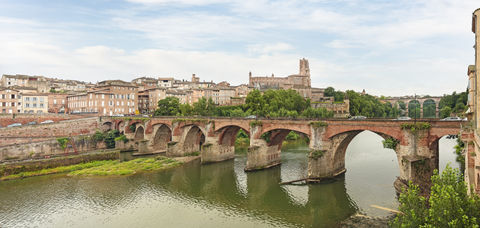 Albi 1h by train. The largest brick building in the world, and Toulouse-Lautrec.
 -
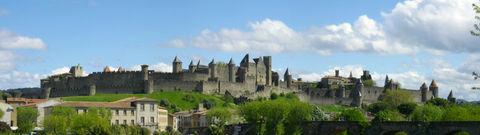 Carcassonne 50 min. The largest walled city in Europe.
 -
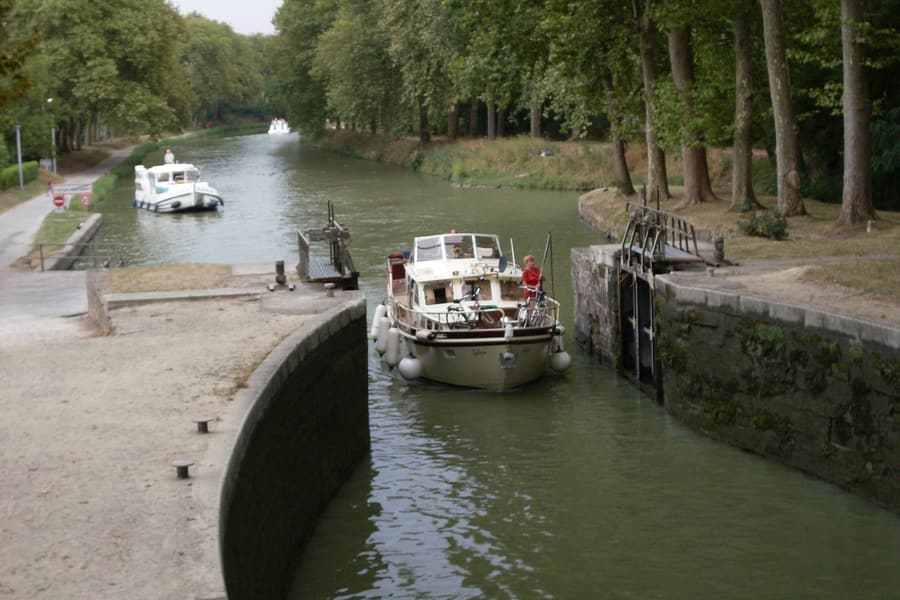 The Canal du Midi The towpath starts in the city and runs to the Mediterranean.
 -
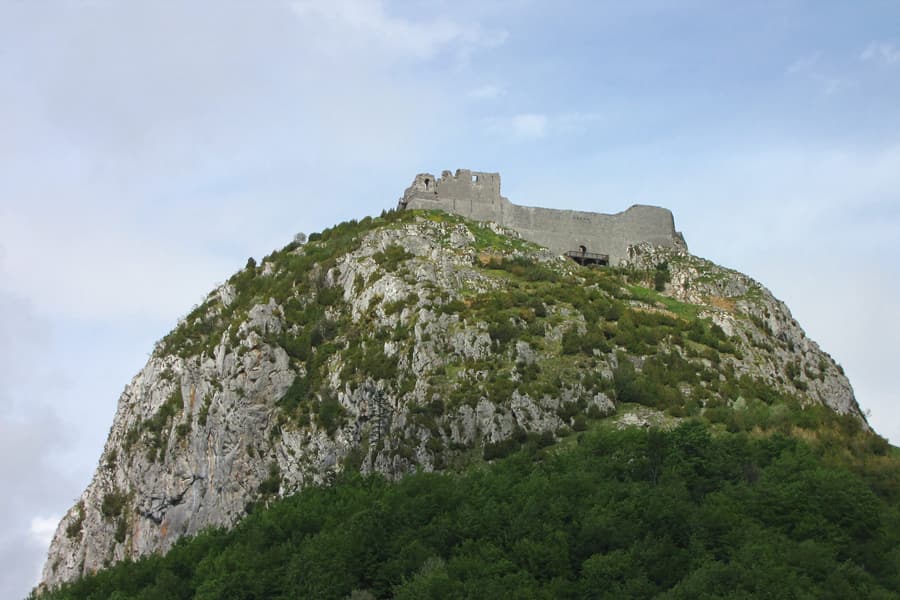 Château de Montségur The last Cathar siege, on a rock at 1,200 m. Needs a car.
 -
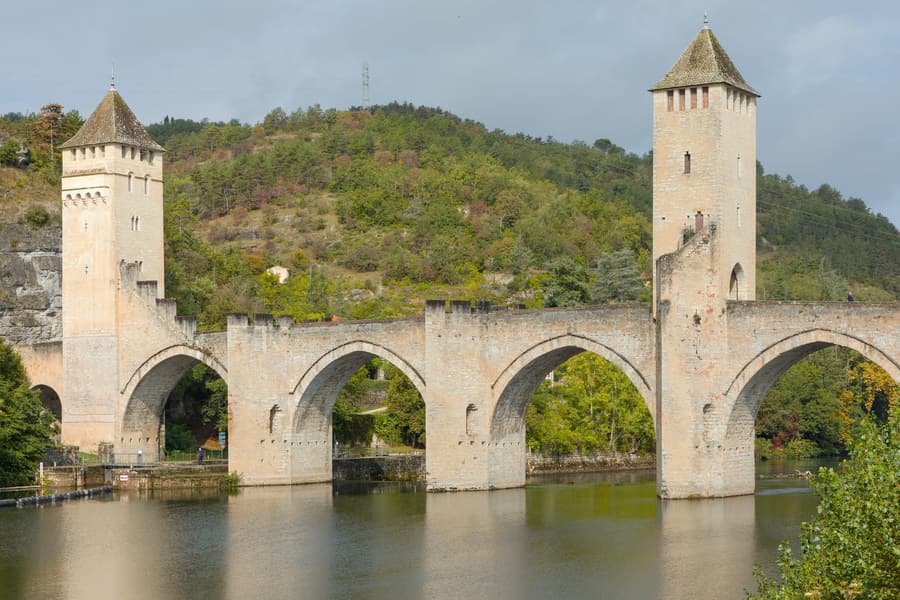 Cahors 1h15 north — the fortified Pont Valentré and black Malbec.
 - Lourdes Under two hours, at the foot of the Pyrenees.
-
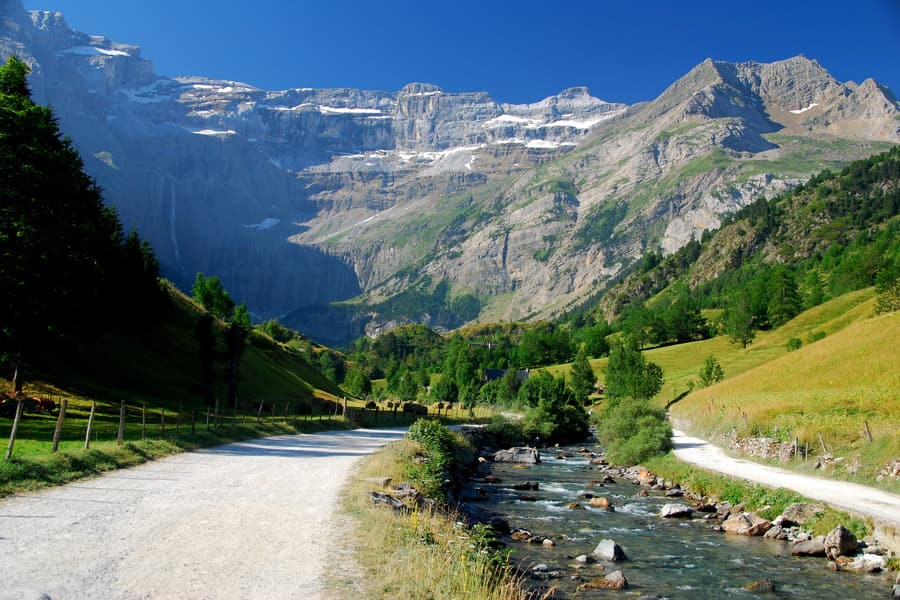 Cirque de Gavarnie A 1,500 m rock amphitheatre with Europe's tallest waterfall.
Practical
- Best time to go
- April–June and September–October. July and August regularly pass 35 °C and the students leave. Rugby season runs September to June and a Stade Toulousain home game is worth planning around.
- Getting there
- TGV Paris–Toulouse in 4h20 (faster once the new line opens); Toulouse-Blagnac airport is 20 min by tram T2. Bordeaux is two hours by road, Carcassonne 50 minutes by train, Barcelona about four hours.
- Getting around
- Two metro lines, two trams and a compact brick centre. The VélôToulouse bike share and the canal towpaths make cycling easy and flat. A car is unnecessary unless you are heading into the Cathar country.
- Eat & drink
- Cassoulet — the Toulouse version has Toulouse sausage in it and the argument about whether Castelnaudary's or Carcassonne's is correct is not settled. Also duck in every form, Marché Victor Hugo for lunch upstairs above the stalls, and violet-flavoured everything, which is a genuine local speciality rather than a gimmick.
- Know before you go
- The city is hot and largely shadeless in high summer — plan indoor afternoons. The Airbus factory tours (Aeroscopia and the A350 line) sell out weeks ahead and need photo ID booked in advance for non-EU visitors.
More of Occitanie
-
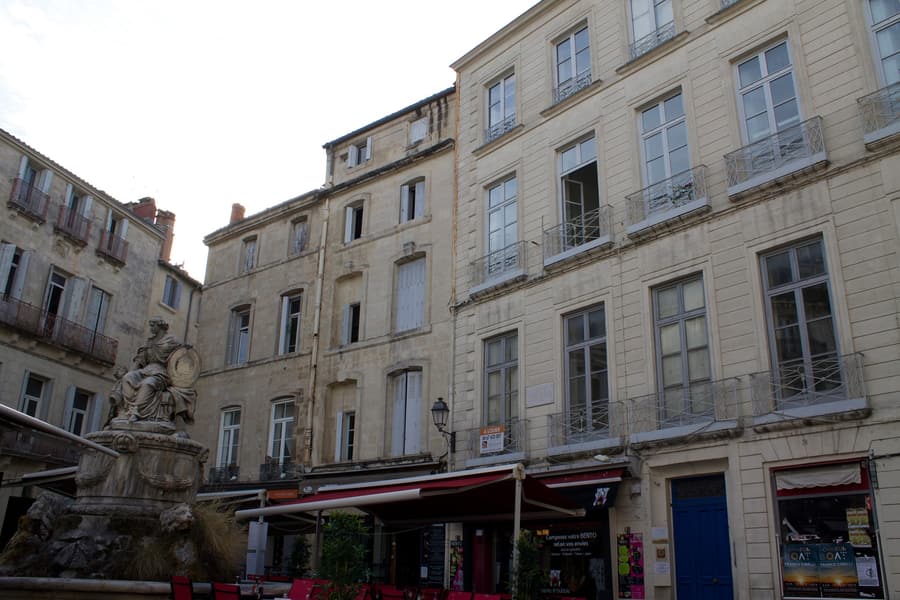 Montpellier Europe's oldest working medical school, and the sea ten minutes away
 - Carcassonne The largest walled city in Europe — 52 towers and a double rampart
- Nîmes The best-preserved Roman arena anywhere, still in weekly use
- Albi A fortress cathedral in red brick, and the Toulouse-Lautrec museum
-
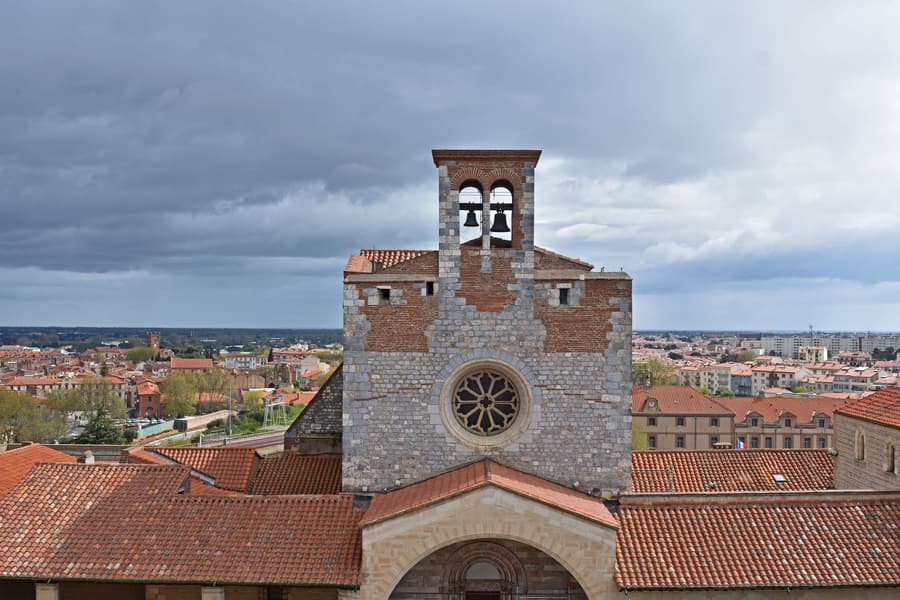 Perpignan Catalan France — a palace of the Kings of Majorca, and sardanes
 -
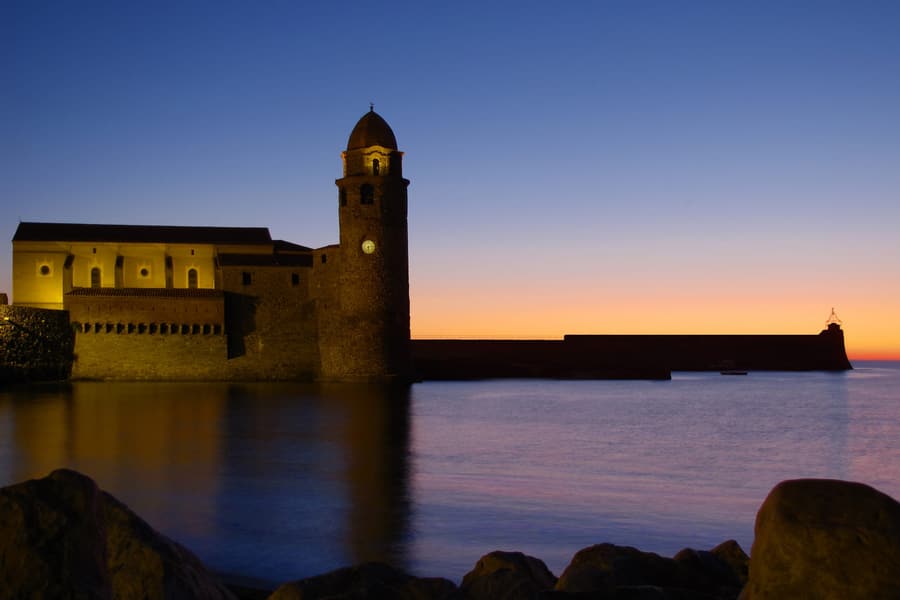 Collioure The bay where Matisse and Derain invented Fauvism
 -
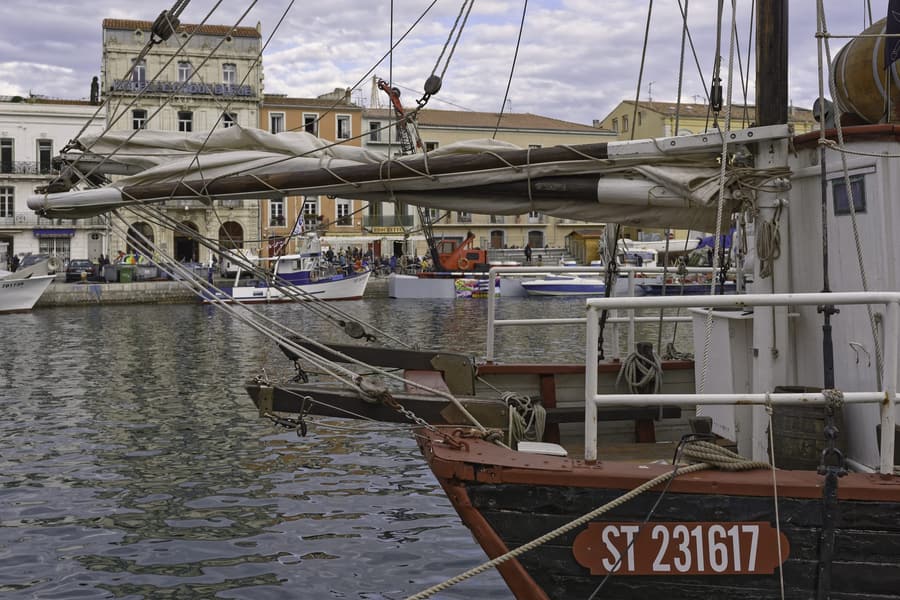 Sète A canal port between sea and lagoon, and water jousting in August
 -
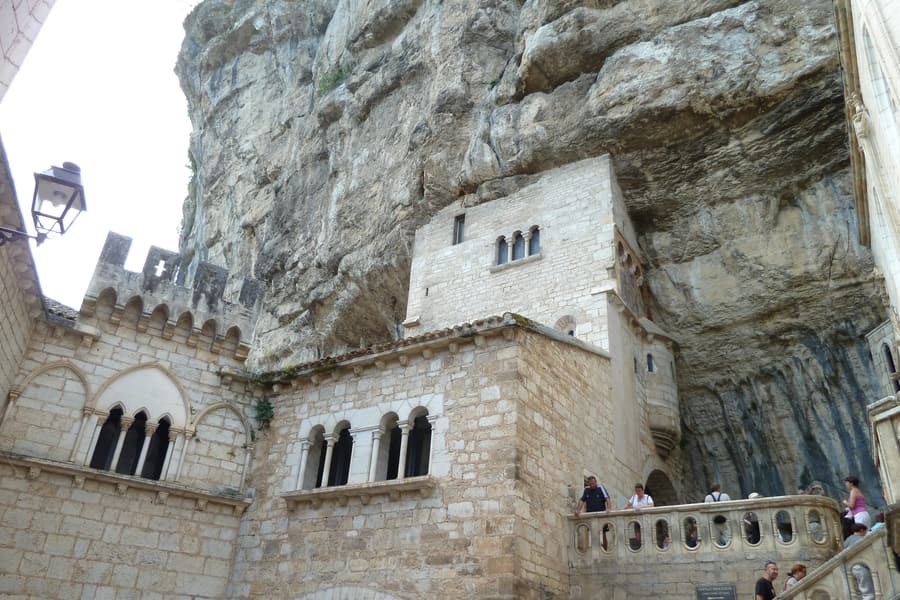 Rocamadour A pilgrimage village stacked up a 120-metre cliff in three tiers
 - Cahors A fortified bridge with three towers, and black Malbec wine
-
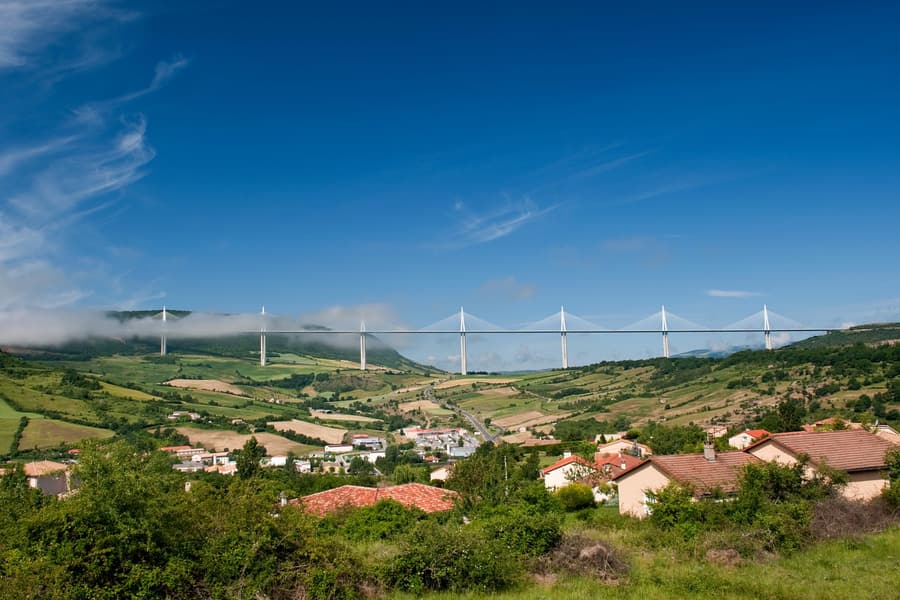 Millau Under the tallest bridge in the world, at the mouth of the Tarn gorges
 - Lourdes Six million pilgrims a year, at the foot of the Pyrenees