Aosta was founded in 25 BC as Augusta Praetoria, a garrison town on the road to the two great Alpine passes, and the Roman plan is still the town plan — the Porta Praetoria, the theatre façade, the forum cryptoporticus and a stretch of walls all stand inside a modern town of 34,000 people. It sits at 583 m in the middle of Italy's smallest region, surrounded by the four highest mountains in the Alps, and it is bilingual: Italian and French are both official, and some valleys still speak Franco-Provençal or a Walser German dialect.
For a Roman town at the foot of Mont Blanc, which is an unusual combination; for more than seventy castles strung along a single valley; and as the base for Gran Paradiso, Italy's oldest national park, and for Courmayeur and Cervinia in either season.
Things to do
- Roman Aosta — The Porta Praetoria, the theatre's 22 m façade, the cryptoporticus under the forum and the Arch of Augustus — all free and all in the middle of town.
- Sant'Orso — A Romanesque church with an eleventh-century fresco cycle in the roof space and a carved cloister of forty capitals.
- Skyway Monte Bianco — Rotating cabins from Courmayeur to 3,466 m at Punta Helbronner, with the Mont Blanc massif at eye level.
- Gran Paradiso National Park — Created in 1922 to save the Alpine ibex from extinction; they are now easy to see above Cogne in the early morning.
- Fénis Castle — The most photographed of the valley's castles — a double ring of walls, watchtowers and a frescoed courtyard.
- Forte di Bard — A nineteenth-century fortress blocking the valley, now the Museum of the Alps, reached by panoramic lifts.
- Cervinia and the Matterhorn — The Italian side of the Cervino, with lifts that cross the ridge to Zermatt — skiing in two countries in a day.
Where to base yourself
The Aosta neighbourhoods worth knowing before you book.
- Coming soon Aosta centro The Roman grid: Porta Praetoria, the theatre, Sant'Orso's cloister, and a pedestrian main street. Everything within ten minutes.
- Coming soon The castle valley The main valley floor east of the city — Fénis, Sarre, Saint-Pierre, Issogne and Verrès within 30 minutes of each other.
- Coming soon Cogne & Valnontey The Gran Paradiso gateway, 40 minutes south — meadows, ibex, and the Paradisia alpine botanical garden.
- Coming soon Courmayeur 35 minutes west under Mont Blanc: the smartest resort in the region, and the Skyway station.
- Coming soon Breuil-Cervinia An hour north-east, under the Matterhorn, with skiing that crosses the border into Zermatt.
- Coming soon Gressoney & the Walser valleys East under Monte Rosa, where a Germanic dialect and timber architecture arrived in the Middle Ages and stayed.
3 days in Aosta
- Day 1 Roman and Romanesque
The Arch of Augustus, Porta Praetoria and the theatre in the morning, then Sant'Orso's cloister and roof frescoes. Fonduta for lunch. Afternoon east to Fénis castle, and Bard if there is time. Dinner in town.
- Day 2 Mont Blanc
West to Courmayeur and up the Skyway to Punta Helbronner — go early, before the cloud builds. Afternoon walk in Val Ferret or Val Veny with the massif in view, and a hot chocolate in Courmayeur after.
- Day 3 Gran Paradiso
South to Cogne and Valnontey: the botanical garden, the valley path towards the glaciers, and ibex on the slopes at dawn or dusk.
Day trips
Worth the train or the drive from Aosta.
-
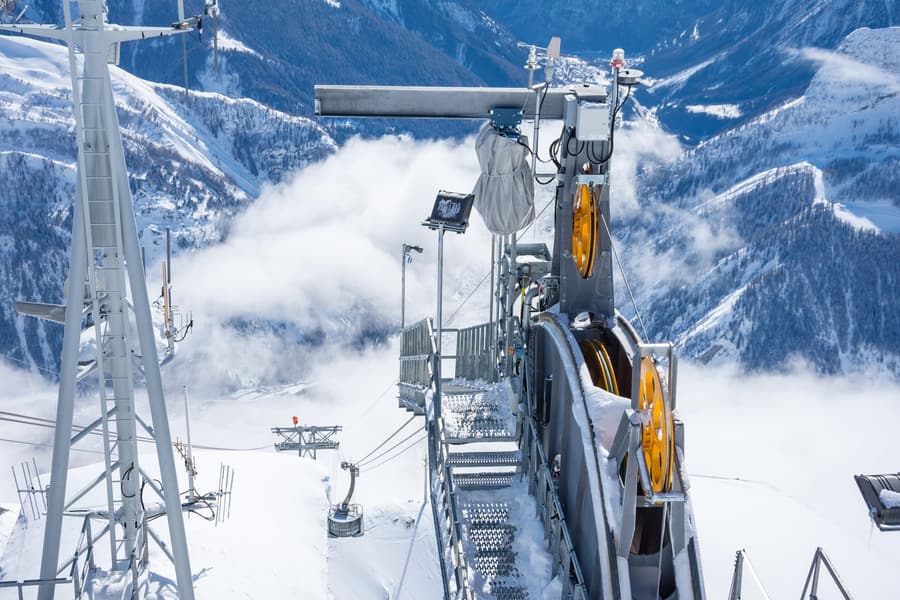 Skyway Monte Bianco Courmayeur to 3,466 m in rotating cabins, 35 minutes west.
 -
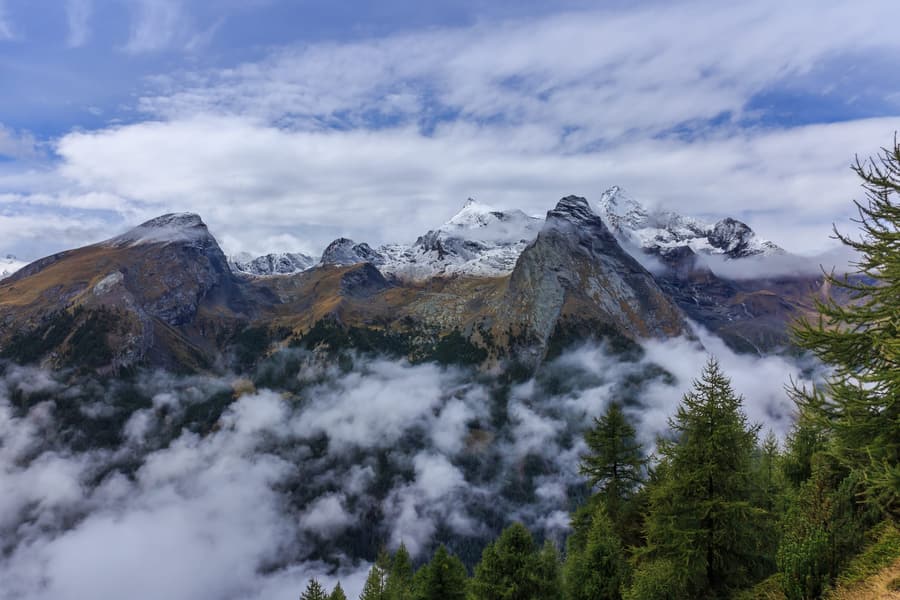 Gran Paradiso National Park Italy's oldest national park, 40 minutes south at Cogne.
 -
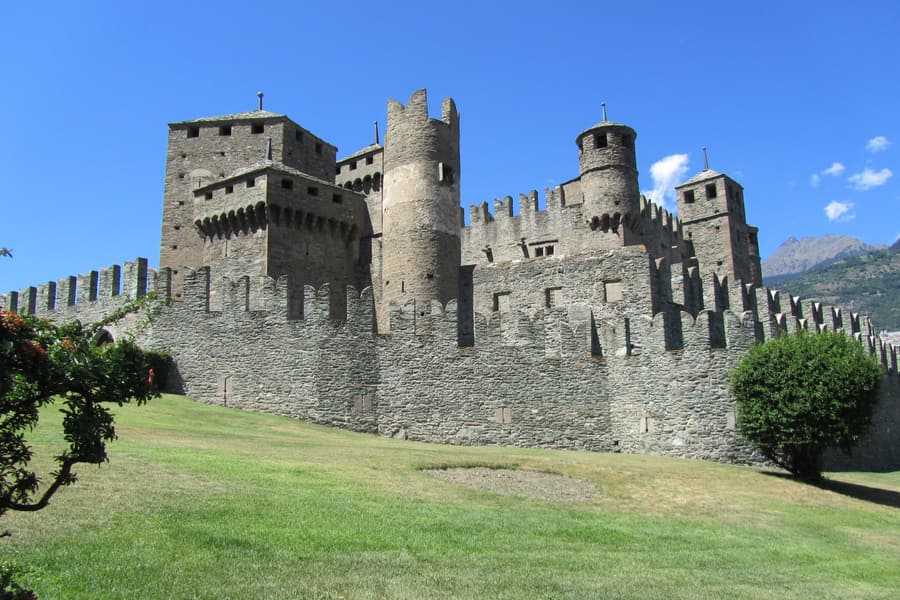 Fénis Castle The valley's most photographed castle, 20 minutes east.
 -
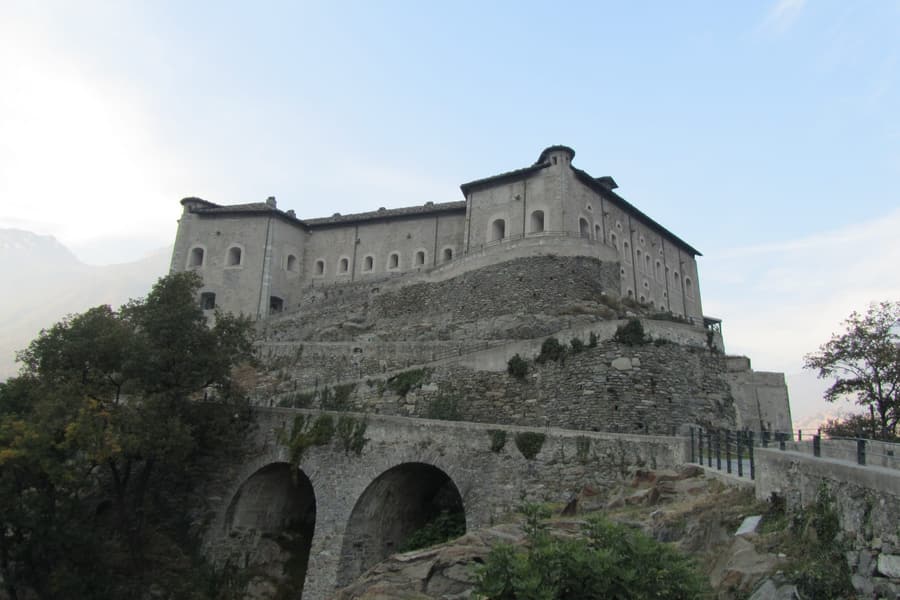 Forte di Bard The fortress that blocks the valley, now the Museum of the Alps.
 -
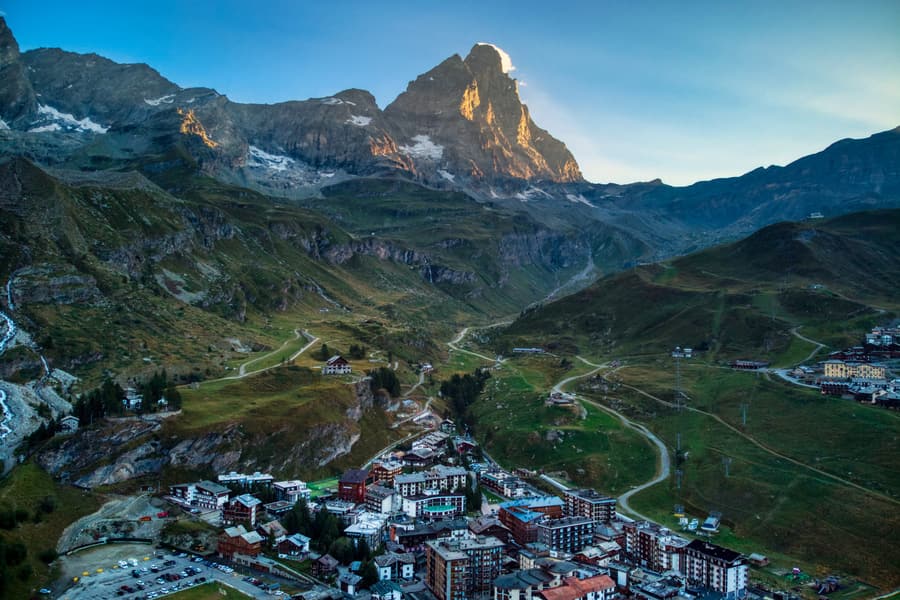 The Matterhorn & Breuil-Cervinia The Italian side of the Matterhorn, an hour north-east.
 -
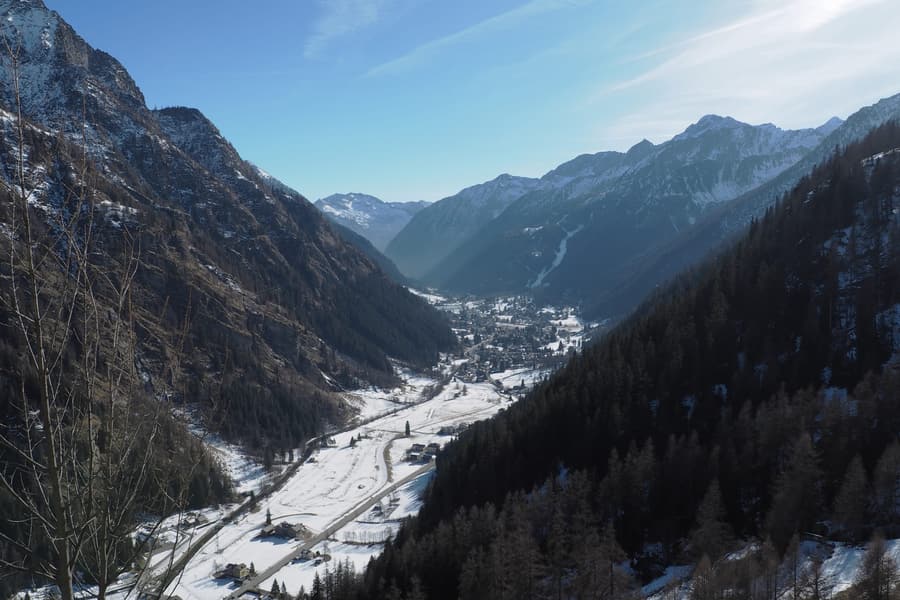 Monte Rosa & Gressoney The Walser valleys under Italy's second-highest massif.
 -
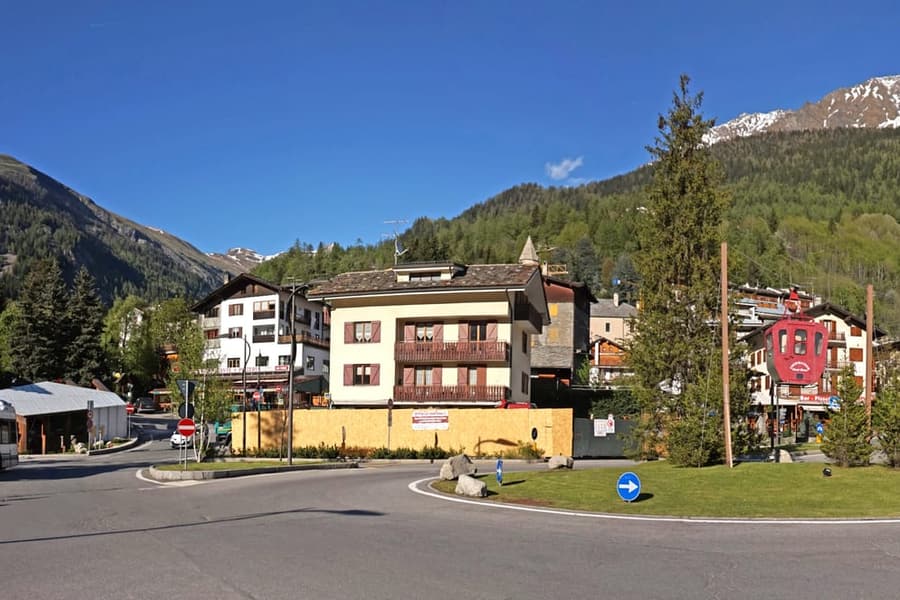 Courmayeur The region's smartest resort, at the foot of Mont Blanc.
Practical
- Best time to go
- Late June–September for the high passes, the walking and Gran Paradiso — many mountain roads and refuges only open from mid-June. December–March for skiing. May and November are the between-seasons when a lot of the valley shuts. The Fiera di Sant'Orso, a thousand-year-old craft fair, fills the town on 30–31 January.
- Getting there
- Turin (TRN) is 2h and Geneva (GVA) about 2h through the Mont Blanc tunnel; Milan Malpensa is 2h30. Trains to Aosta connect at Ivrea or Chivasso and are slow; most people drive the A5. Buses run up the side valleys from the Aosta bus station beside the railway.
- Getting around
- The town centre is small and walkable. Everything else is a valley — a car is close to essential unless you are basing yourself in one resort and using its lifts. The main valley road is good; the side roads are narrow, steep and sometimes closed in winter.
- Eat & drink
- Valdostano cooking is mountain food built for cold: fonduta made with Fontina DOP, carbonada (beef stewed in red wine), zuppa valpellinentze (cabbage, bread and Fontina baked together), polenta concia, and Motzetta, air-dried beef. Lard d'Arnad, cured in salt and herbs in wooden boxes. The wines are the highest vineyards in Europe — Blanc de Morgex is grown to over 1,200 m — and the coffee is served in a grolla, a shared wooden cup with several spouts.
- Know before you go
- Altitude is real: Punta Helbronner on the Skyway is 3,466 m and people do get breathless. The Skyway and the Cervinia lifts run in both summer and winter but close for maintenance in the shoulder weeks. Gran Paradiso's high paths hold snow into July. The Mont Blanc tunnel closes for maintenance periods each autumn — check before routing through Chamonix.