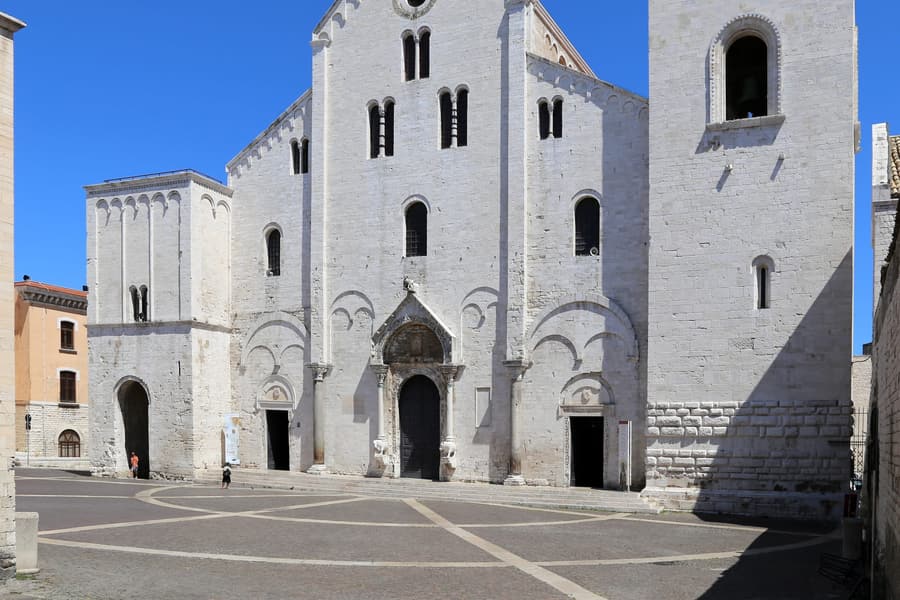
Lecce is built from pietra leccese, a soft golden limestone that can be carved almost like wood and hardens on exposure — which is why the seventeenth century here produced a baroque so dense and so deep-cut that it has its own name, barocco leccese. The façade of Santa Croce is the extreme case: forty years of carving, and every surface occupied. Under all of it is a Roman town, with an amphitheatre sitting two metres below the main square. It is the capital of the Salento, the flat, hot, olive-covered tip of the heel, with two seas within 40 minutes.
For the baroque, which is unlike anything else in Italy; for a small, elegant, very liveable city that is still cheap; and as the base for the Salento — Otranto, Gallipoli, and the clearest water on the Italian mainland.
Things to do
- Basilica di Santa Croce — The high point of Lecce baroque: a rose window held up by carved beasts, and forty years of chisel work above the door.
- Piazza del Duomo — An enclosed square with only one entrance, designed as a stage set — best after dark when it is lit.
- The Roman amphitheatre — Excavated under Piazza Sant'Oronzo and left open — a second-century arena sunk into the modern square.
- A papier-mâché workshop — Cartapesta has been a Lecce craft since the seventeenth century and the workshops still supply churches across the south.
- Grotta della Poesia — A collapsed sea cave near Roca Vecchia that forms a near-perfect swimming pool open to the Adriatic. Get there early.
- Otranto's cathedral floor — A twelfth-century mosaic Tree of Life covering the whole nave — Alexander the Great, King Arthur and the zodiac in it.
- The Notte della Taranta — A pizzica festival across the Grecìa Salentina each August, ending with a concert of 100,000 people at Melpignano.
Where to base yourself
The Lecce neighbourhoods worth knowing before you book.
- Coming soon Centro Storico Inside the walls: Santa Croce, the Duomo square, the amphitheatre and the whole baroque set. Small enough to cross in fifteen minutes.
- Coming soon Around Porta Napoli The northern gate and the university quarter — cheaper rooms, student bars, two minutes from the centre.
- Coming soon Santa Rosa & the newer city Outside the walls: residential, with parking and the everyday restaurants locals use.
- Coming soon The Adriatic coast San Cataldo, Torre dell'Orso and the Grotta della Poesia, 25–40 minutes east — cliffs, coves and clear water.
- Coming soon The Ionian coast Porto Cesareo and Gallipoli, 40 minutes west — long sand beaches and shallow warm water.
- Coming soon The Grecìa Salentina A cluster of villages inland — Calimera, Martano, Melpignano — where a Greek dialect is still spoken and the Notte della Taranta festival is held each August.
3 days in Lecce
- Day 1 Baroque Lecce
Santa Croce first thing, then the Duomo square and its bell tower. Rustico and a coffee mid-morning. Afternoon: the amphitheatre, the Castello Carlo V, and a cartapesta workshop. Aperitivo with Primitivo, dinner in the old town.
- Day 2 The Adriatic side
Drive south-east: Grotta della Poesia for a swim, Otranto for the cathedral floor and the old town, and the Bauxite quarry lake outside it. Back through Santa Cesarea Terme's cliff road.
- Day 3 The Ionian side
Gallipoli's island old town and the fish market in the morning, then the beaches south of it — Punta della Suina or Pescoluse. Sunset over the water, which is the way round this coast works.
Day trips
Worth the train or the drive from Lecce.
-
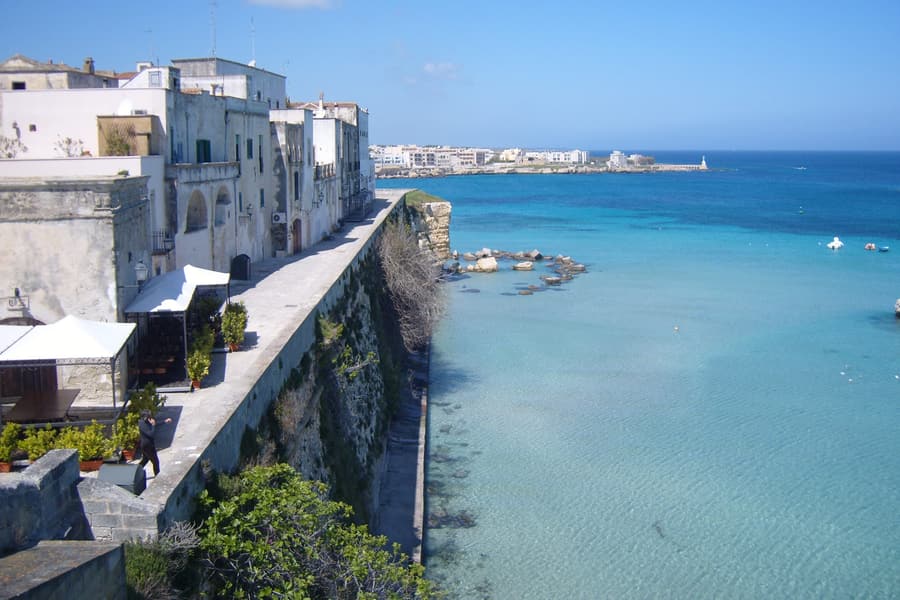 Otranto Italy's easternmost town, 45 minutes east, with the Tree of Life mosaic floor.
 -
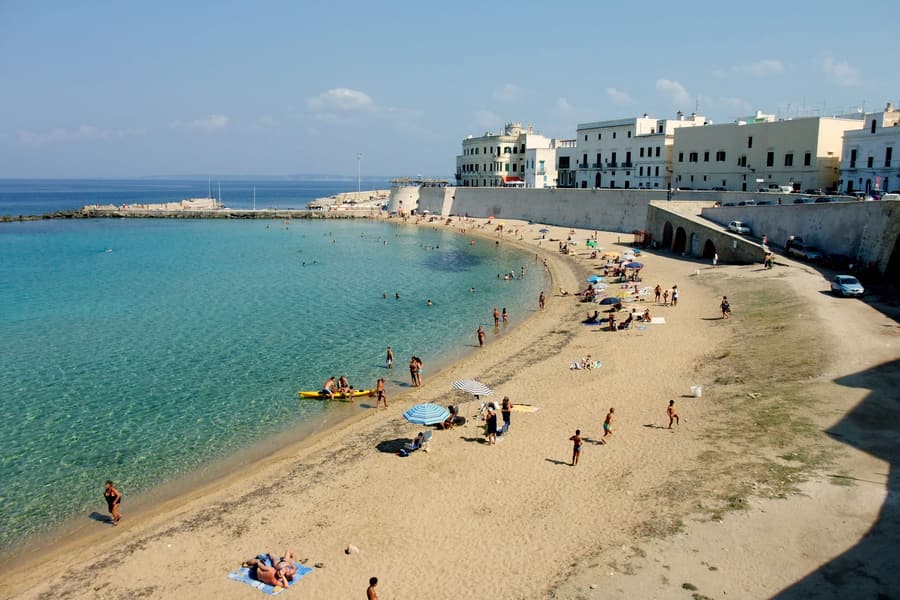 Gallipoli A walled island old town on the Ionian side, 40 minutes west.
 -
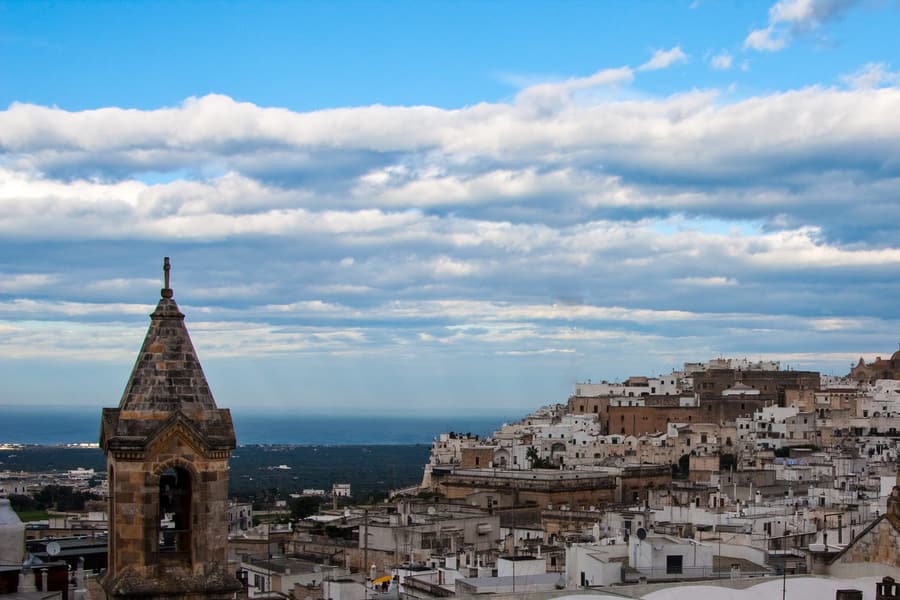 Ostuni The white town on its hill, about an hour north.
 -
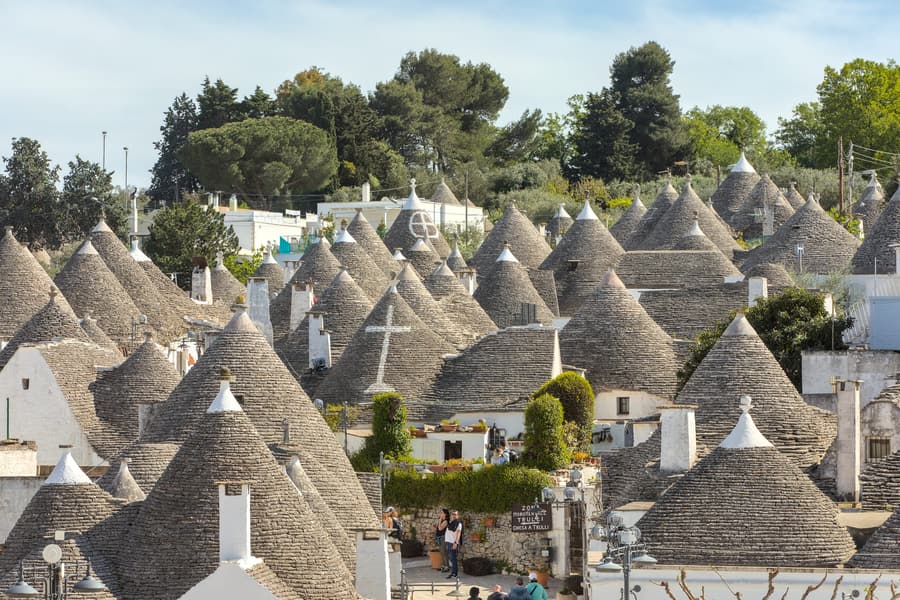 Alberobello The trulli, 1h30 north-west — go late in the day.
 -
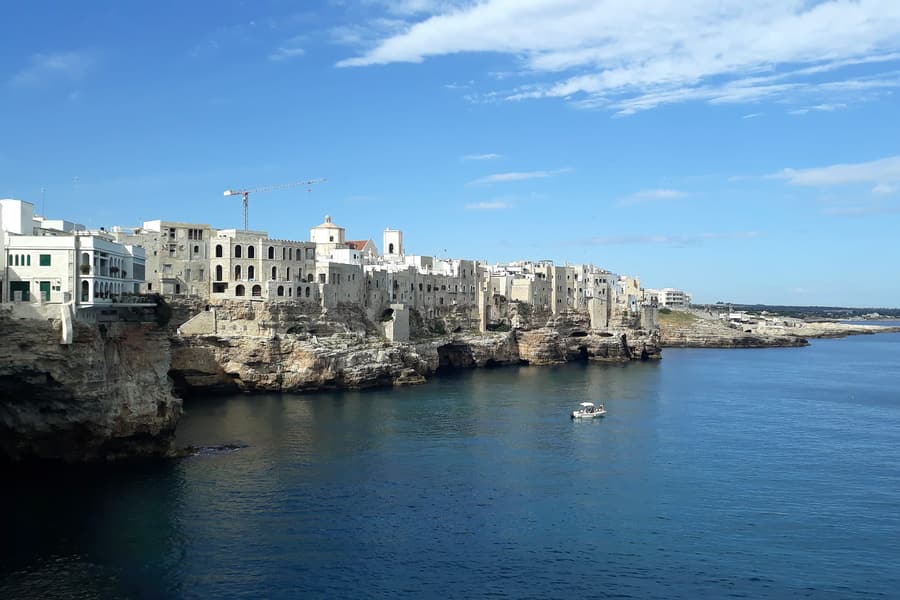 Polignano a Mare A cliff town with a beach in a ravine, 1h30 north.
 -
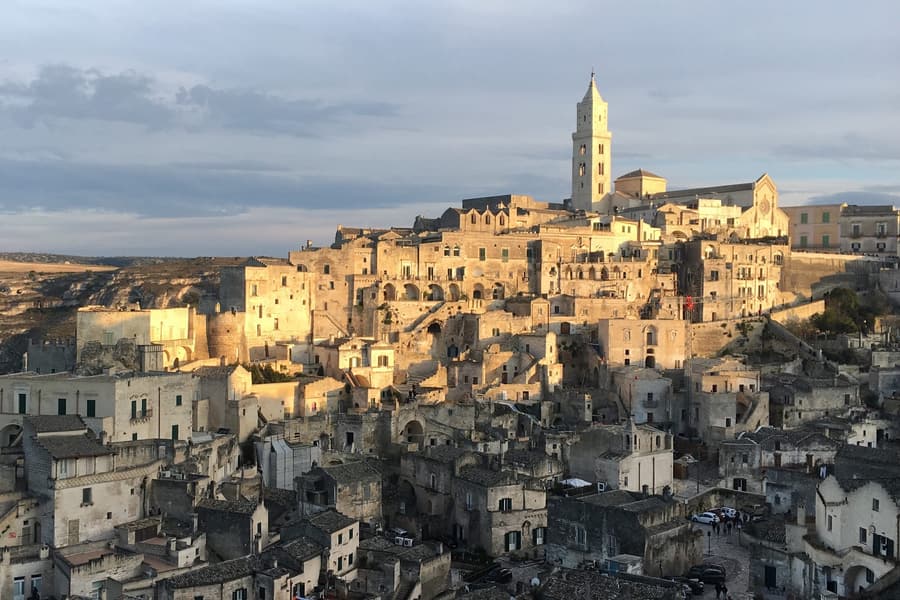 Matera The Sassi, about 2h30 north-west — long, but the best day trip from the Salento.
Practical
- Best time to go
- May–June and September–early October: the sea is warm, the towns are not full, and it is not yet 38°C. July and August are extremely hot and the coast is packed with Italian holidaymakers. Winter is mild and very quiet, and the stone looks its best in low sun. Note that Xylella has changed the landscape — many of the old olive groves are dead or replanted.
- Getting there
- Brindisi (BDS) is 45 minutes by bus or train; Bari (BRI) is 2h. Lecce is the end of the fast line from Rome (5h30) and Bologna; from Bari it is 1h30. A car is close to essential for the Salento coast — the trains are slow and the coastal buses seasonal.
- Getting around
- The centro storico is small and walkable. Everything outside it needs a car. Lecce is flat, so bikes work well in the cooler months.
- Eat & drink
- Salentino cooking is poor-food turned good: orecchiette with cime di rapa, ciceri e tria (chickpeas with fried and boiled pasta), pittule, and taralli. The rustico leccese — puff pastry with mozzarella, béchamel and tomato — is the standard mid-morning snack. Pasticciotto, a shortcrust pastry filled with custard, is eaten warm for breakfast. Primitivo and Negroamaro are the reds; both are dense and warm and go with all of it.
- Know before you go
- Santa Croce and the Duomo now have a combined ticket. Much of the Salento coast has no shade and no facilities — take water. In August the road to Gallipoli and Porto Cesareo is genuinely gridlocked at weekends. Many restaurants close on Mondays out of season.