Urbino is a walled brick hill town of about 14,000 people that was, for thirty years in the fifteenth century, one of the most important courts in Europe. Federico da Montefeltro — mercenary captain, book collector, and the man with the broken nose in Piero della Francesca's profile portrait — built a palace that contemporaries described as a city in the form of a palace, and filled it with the best painters, architects and mathematicians available. Raphael was born four streets away. The whole historic centre is UNESCO-listed, and because the town never grew, the Renaissance plan is intact.
For the Palazzo Ducale, which holds Piero della Francesca's Flagellation, Raphael's portrait of a lady and Federico's intarsia study — a small room panelled in wood illusions that is one of the marvels of the Renaissance. And for a hill town that is a living university city rather than a museum.
Things to do
- Palazzo Ducale and the Galleria Nazionale delle Marche — Piero's Flagellation and Ideal City panel, Raphael's La Muta, Uccello's Miracle of the Desecrated Host — in the building they were made for.
- Federico's studiolo — A tiny study lined with wood-inlay illusions of shelves, instruments and half-open cupboards. Perspective as a party trick, in 1476.
- The Casa Natale di Raffaello — The house where Raphael was born in 1483, with his father's workshop and an early fresco attributed to him.
- The two towers from the Fortezza Albornoz — The view that is on every book about the Renaissance — the palace's slim turrets above the brick town.
- Oratorio di San Giovanni Battista — A small oratory frescoed in 1416 by the Salimbeni brothers, late Gothic and almost always empty.
- Urbania and the Palazzo Ducale ceramics — 20 minutes west, and the historic centre of Marche maiolica production.
- A crescia from a griddle — Split hot, filled with prosciutto and casciotta, eaten standing up. The town's proper lunch.
Where to base yourself
The Urbino neighbourhoods worth knowing before you book.
- Coming soon Within the walls The whole historic centre is about 800 m across: the palace, the cathedral, Raphael's house and the university faculties. Stay here.
- Coming soon Borgo Mercatale The lower entrance below the palace, with the car park, the lift and the helicoidal ramp Francesco di Giorgio built for horses.
- Coming soon The Albornoz fortress The park on the higher hill, with the classic view of the palace's two towers against the countryside.
- Coming soon The Metauro valley Below the town: agriturismi, truffle woods and hill villages like Fermignano and Urbania, 15–25 minutes away.
- Coming soon Pesaro & the coast 35 minutes north-east — Rossini's birthplace, a long beach and the trains.
- Coming soon Montefeltro The hills north-west towards San Leo and Carpegna — empty, high, and full of small fortified villages.
2 days in Urbino
- Day 1 The court
Palazzo Ducale at opening — the courtyard, the Galleria and the studiolo, and the underground service rooms. Crescia for lunch. Afternoon at Raphael's house and the Oratorio di San Giovanni, then up to the Fortezza Albornoz for the view at sunset. Dinner in the centre.
- Day 2 The Montefeltro
Out by car: Urbania for the ceramics, the Furlo gorge, or north to San Leo's fortress. Truffles in autumn. Back for a last evening in the town.
Day trips
Worth the train or the drive from Urbino.
-
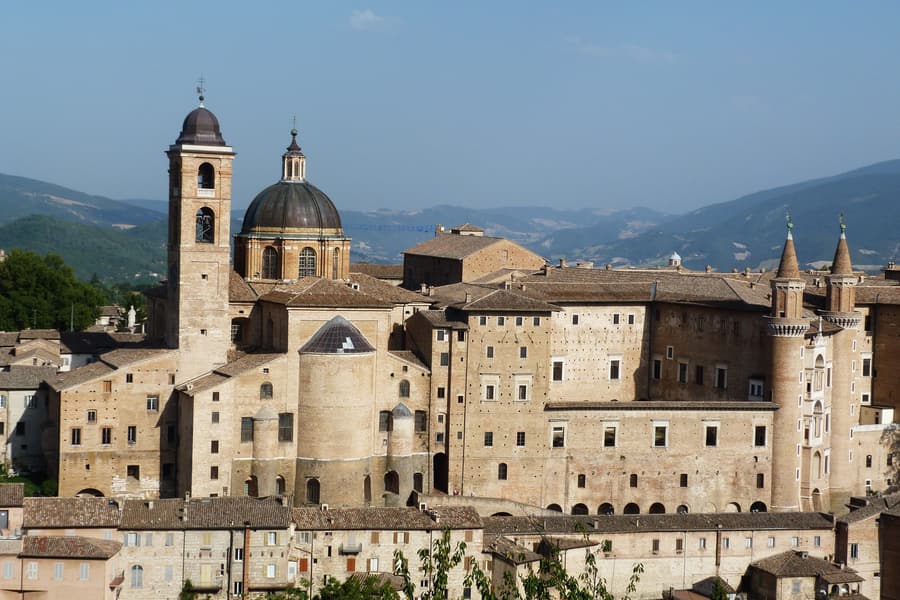 Ducal Palace, Urbino The palace itself — the reason to be here.
 -
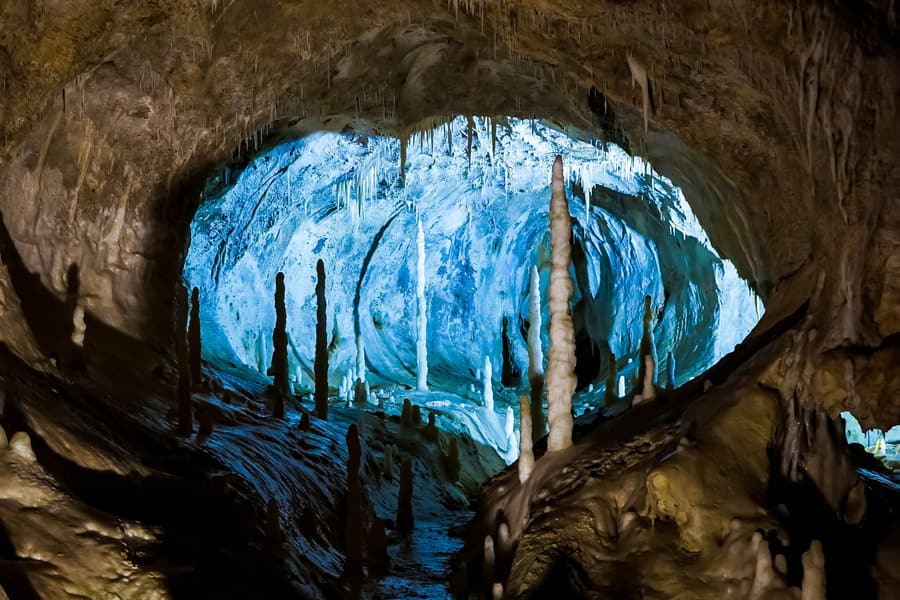 Frasassi Caves One of Europe's largest cave systems, about 1h15 south.
 -
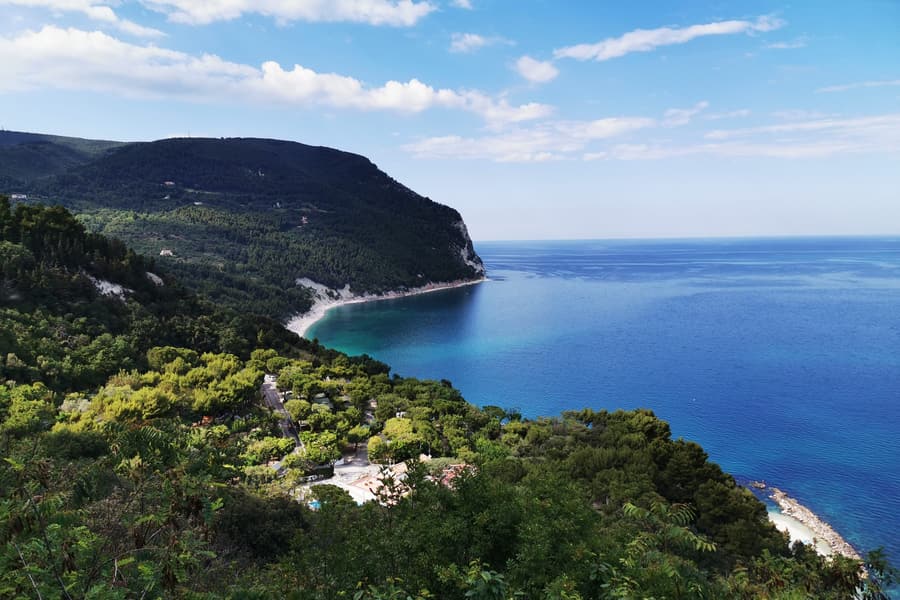 Conero Riviera The only real cliffs on the central Adriatic, about 1h30 south-east.
 -
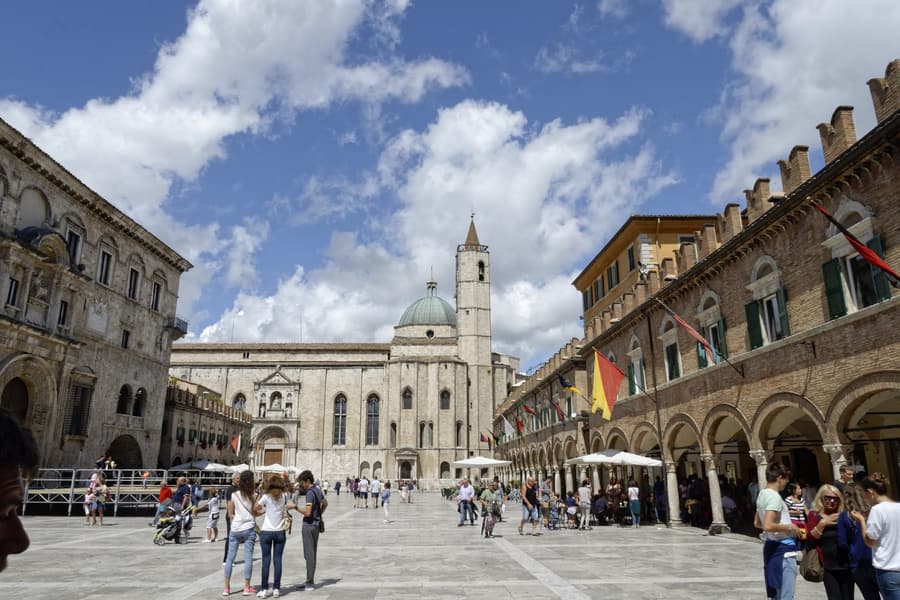 Ascoli Piceno A travertine city and one of Italy's handsomest piazzas, about 2h south.
 -
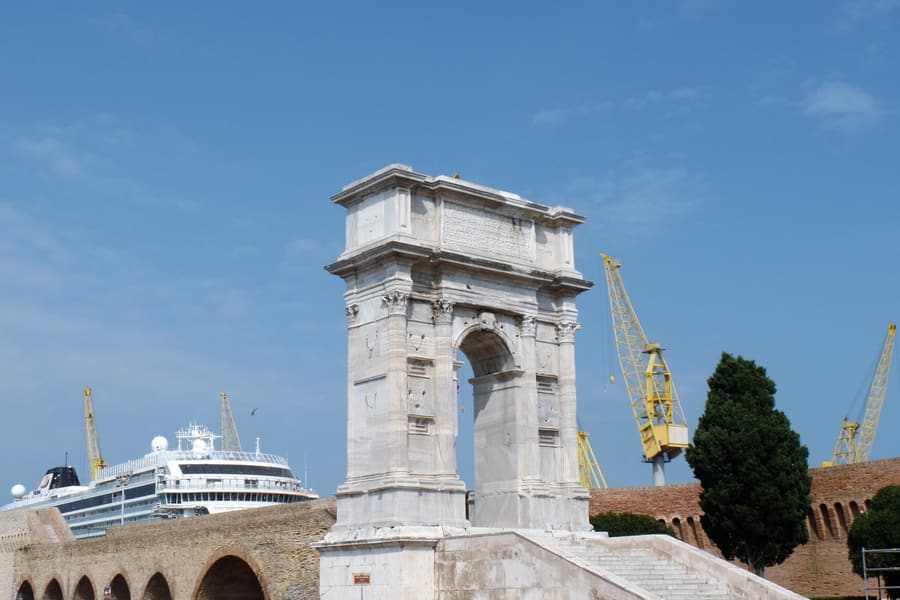 Ancona The port, the airport and the Conero headland, 1h20 away.
 -
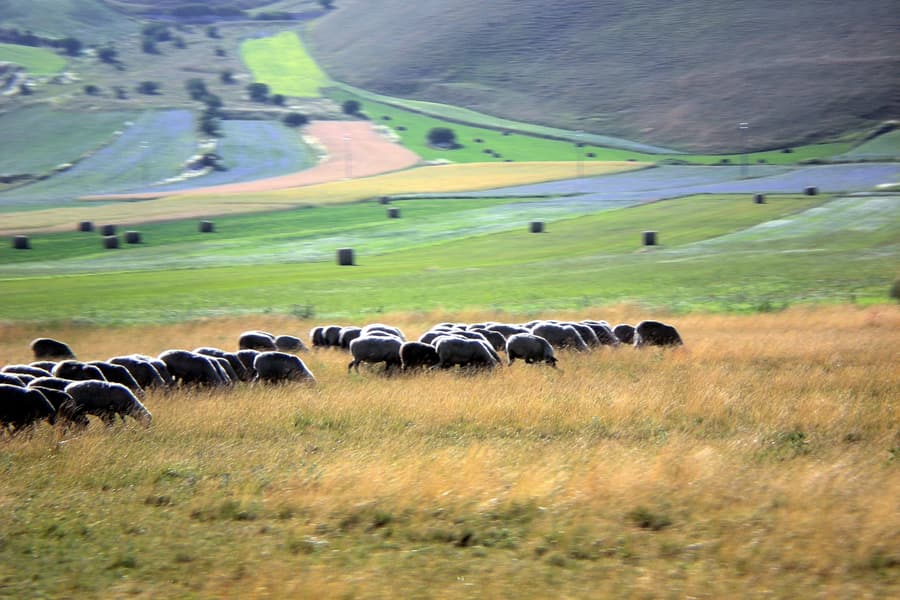 Monti Sibillini National Park The bare Apennine ridges, about 2h south-west.
Practical
- Best time to go
- April–June and September–October. Term time gives the town its energy — 15,000 students in a town of 14,000 residents. Winter is cold and often foggy on the ridge; August is quiet and hot. The Festa del Duca in August fills the streets with Renaissance pageantry.
- Getting there
- No railway. Ancona Falconara (AOI) is the airport, 1h20 away; Bologna and Rimini are the practical rail arrivals, with a bus on from Pesaro (about 50 minutes) or Fano. Driving is straightforward, but leave the car in the Borgo Mercatale car park below the walls and take the lift up.
- Getting around
- On foot, and it is genuinely steep — Urbino sits on two hills and the streets between them are ramps. A public lift runs from the Mercatale car park into the centre. Nothing inside the walls is more than fifteen minutes' walk, but allow for the gradient.
- Eat & drink
- Marchigiano cooking: crescia sfogliata (a layered flatbread from a griddle, split and filled with prosciutto and cheese), passatelli in brodo, coniglio in porchetta, and the casciotta d'Urbino, a soft sheep-and-cow cheese with DOP status that Michelangelo is said to have bought by the wheel. Truffles from the surrounding hills, especially in autumn. Verdicchio and Bianchello del Metauro to drink.
- Know before you go
- The Palazzo Ducale is closed on some Mondays and the last entry is well before closing time — check the day's hours. Raphael's birth house is small and often overlooked; it is worth the twenty minutes. Parking inside the walls is essentially impossible. Sunday and Monday close a lot of the eating.