3 Zinnen Dolomites
A Ski Circuit Around the Three Peaks · Bilingual Alta Pusteria · Snowmaking-Sure and Family-First
A scenic, family-minded corner of the eastern Dolomites where a linked circuit loops around the Sexten peaks, tied together with three old Pustertal market towns on one pass.
- 115 km Piste marketed
- 37 Lifts
- 1,135 m Base
- 2,221 m Summit
- 1,086 m Vertical
- 89 Pistes mapped
🎟 One pass: 3 Zinnen Dolomites ski pass covers every lift across the area.
Terrain & aspect
- Novice
- Easy
- Intermediate
- Advanced
- Flat / ungraded
Slopes mostly face NW — 64% on snow-holding, poleward-facing slopes.
Aspect derived from run bearings · OpenSkiStats / © OpenStreetMap (ODbL).
The area
The 3 Zinnen Dolomites (Drei Zinnen / Tre Cime) sit in the Alta Pusteria, or Hochpustertal, the high, cold valley in the far east of South Tyrol where German and Italian are spoken side by side. The marketed figure is around 115 km of piste spread across a handful of ski mountains, all on one local pass that is itself part of the wider Dolomiti Superski. The core of it is the Giro delle Cime, a circuit of roughly 35 km on 11 lifts that loops around the peaks — Monte Elmo (Helm) above Sesto and San Candido, across through the Stiergarten and onto the Croda Rossa (Rotwand) side, and over the Kreuzbergpass towards the small Val Comelico slopes on the Veneto side. Three towns anchor it: Sesto highest and most alpine, San Candido and Dobbiaco down the valley on the railway. It is not a huge area, and it leans intermediate and family rather than extreme, but the setting under the Dolomite walls and the cold, well-covered snow are the reasons to come.
The scenery and the loop. Few mid-sized areas let you ski a genuine circuit right around the mountains, changing aspect and valley as you go, with the Sexten Dolomites — including the famous Three Peaks in the distance — as the backdrop. Add a cold valley climate, close to complete snowmaking, and a relaxed bilingual character that suits families, and you have a place that punches above its piste count without pretending to be a mega-domain.
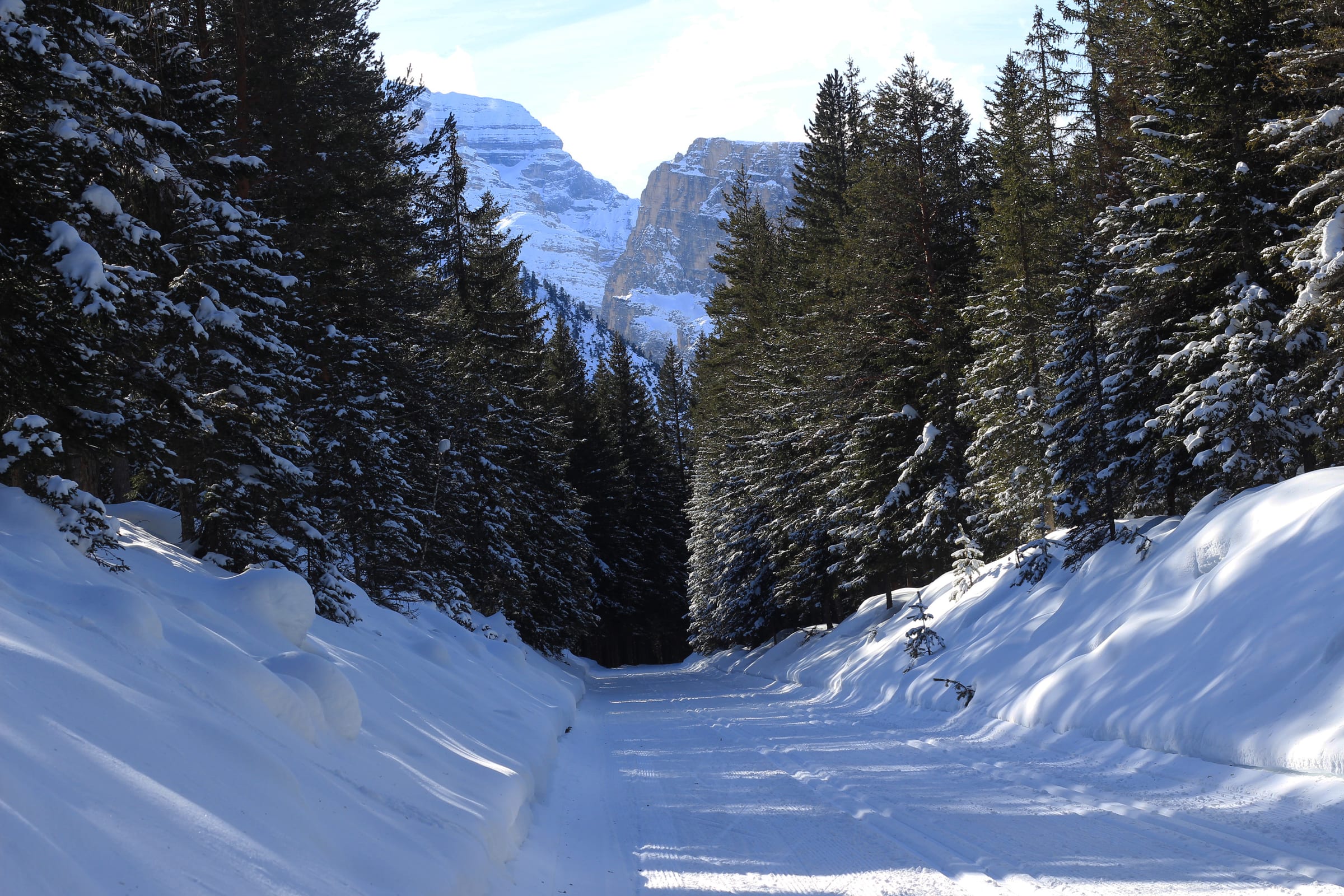
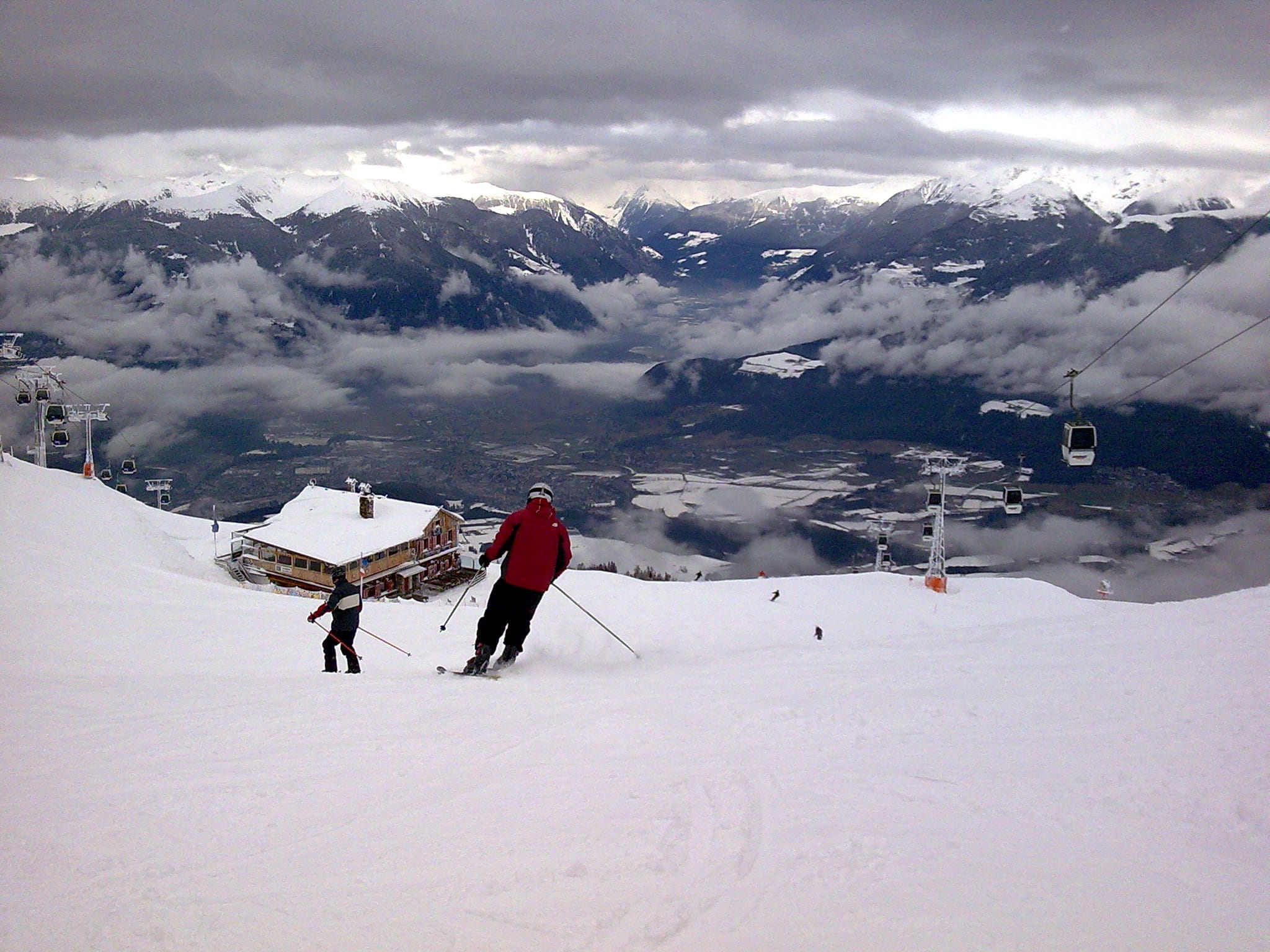
It skis as a cruising, scenery-led area rather than a testing one. The slopes are mostly broad blues and reds on sunny, open faces, with tree-lined lower sections dropping back to the valley towns, and the Giro delle Cime gives the days a shape — you set off in one direction and let the circuit carry you around the mountains. Aspects change as you go, so you chase the sun or the shade through the day. The tone is calm and unhurried, and the mountains around you do a lot of the work.
Best known for
Explore the villages
The pass is the same everywhere — the village you base in shapes the holiday more than the valley you ski. 3 base villages, one lift pass.
San Candido
1,175 mFamilies wanting a real town, easy access and the railway
A handsome bilingual market town at around 1,175 m, at the foot of the Haunold family hill and a short hop from the Helm gondola at Vierschach. It sits on the Pustertal railway and has a pretty, walkable centre, which makes it the easy all-round base for families.
Explore the village →Sesto
1,310 mScenery and the most alpine, doorstep-mountain feel
The highest and most alpine of the bases, at around 1,310 m, closest to the Croda Rossa and the Three Peaks side of the skiing, with the Rotwand gondola reached from the hamlet of Moso just up the valley. Smaller and more mountain-village in feel than the valley towns.
Explore the village →Dobbiaco
1,256 mCross-country, Lake Braies trips and a practical valley base
A larger valley-junction town at around 1,256 m, best known for cross-country skiing and as a gateway towards Lake Braies. Its own downhill slopes are modest and you travel a little to reach the main circuit, but it is a practical, well-connected base on the railway.
Explore the village →- San Candido The family favourite — a bilingual market town on the railway at the foot of the Haunold hill, with Helm access close by
- Sesto Highest and most alpine, closest to the Three Peaks side of the circuit — pick it for scenery and doorstep mountain feel
- Dobbiaco The valley-junction town, best for cross-country and Lake Braies trips, with only modest downhill of its own
Base in Sesto for the most alpine feel and the closest access to the Three Peaks side of the skiing, accepting a smaller, higher village. San Candido suits families best — a handsome market town on the railway, at the foot of the Haunold family hill, with the Helm gondola nearby at Vierschach. Dobbiaco is the practical valley-junction base, strong for cross-country and a gateway towards Lake Braies, though its own downhill slopes are modest and you travel a little to the main circuit.
Skiing, by level
Good and gentle. There are easy nursery areas and a high share of blue runs across the area, and the family hill of Haunold above San Candido is a relaxed, well-covered place to start. It is a genuinely reassuring area to learn in.
The core. Most of the circuit is confident-blue and red cruising, and skiing the full Giro delle Cime around the peaks is the natural intermediate goal — a real journey rather than a lap of the same slope.
Limited but present. Black pitches make up only a small share of the terrain, with the steeper, longer runs on the Helm and Croda Rossa sides, so keen advanced skiers will enjoy a few descents but exhaust the marked steeps fairly quickly.
Not the area's strength. There is some off-piste to be found on the higher faces in the right conditions, best explored with a local guide and avalanche kit, but committed steep-and-deep skiers will find the terrain here modest and are better served in the bigger Dolomiti Superski sectors.
Ski the Giro delle Cime
The circuit that gives the area its identity: a loop of around 35 km on about 11 lifts that carries you right around the Sexten peaks, from Monte Elmo across through the Stiergarten and onto the Croda Rossa side, over the Kreuzbergpass and back. It is mostly lift-linked, with a short ski-bus bridge on the valley floor between the two main massifs, and it finishes with a long run of nearly 5 km back down to Vierschach. Set off early, keep an eye on the last connecting lifts, and let the mountains turn around you.
Skiing under the Dolomite walls
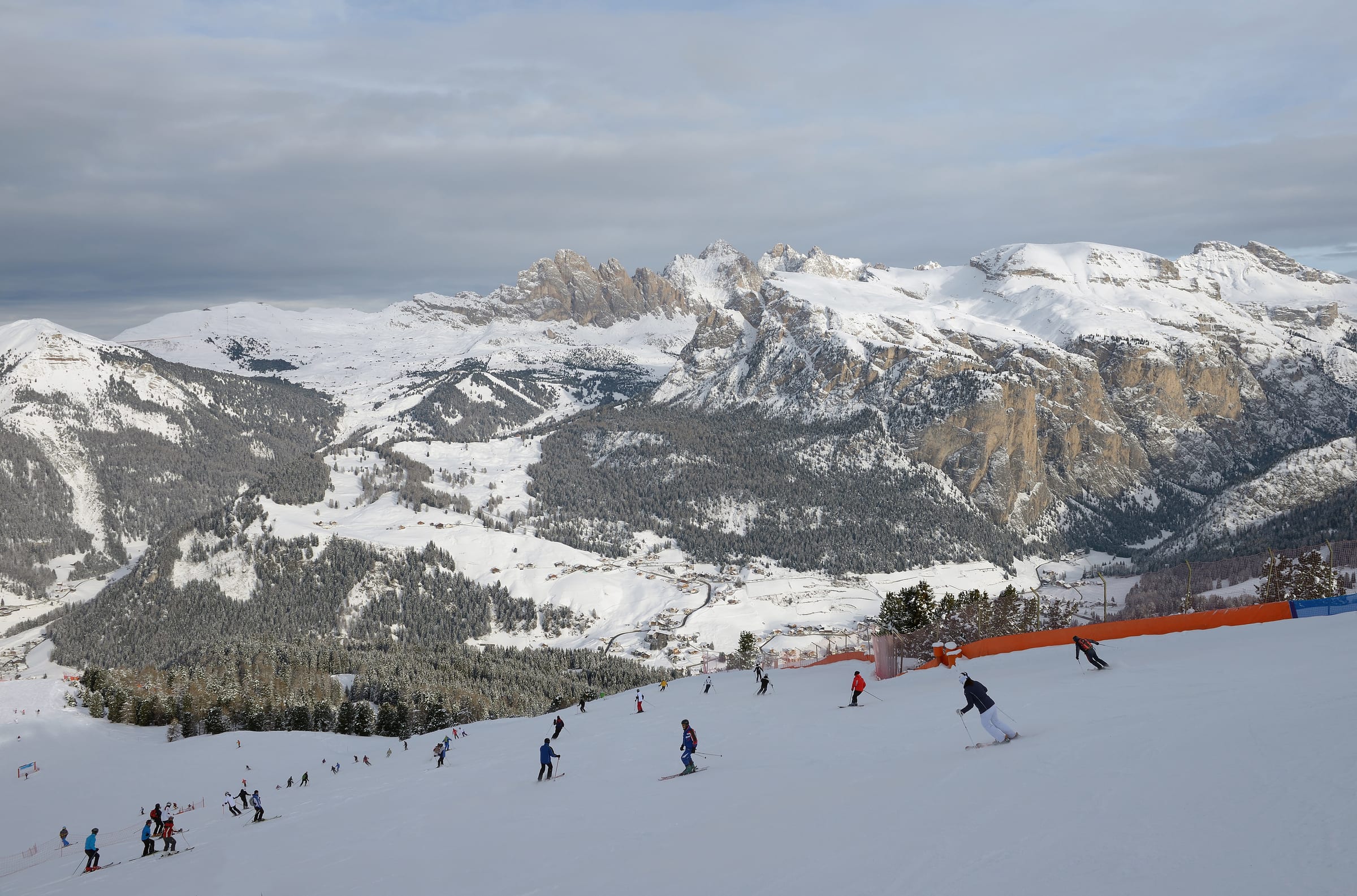
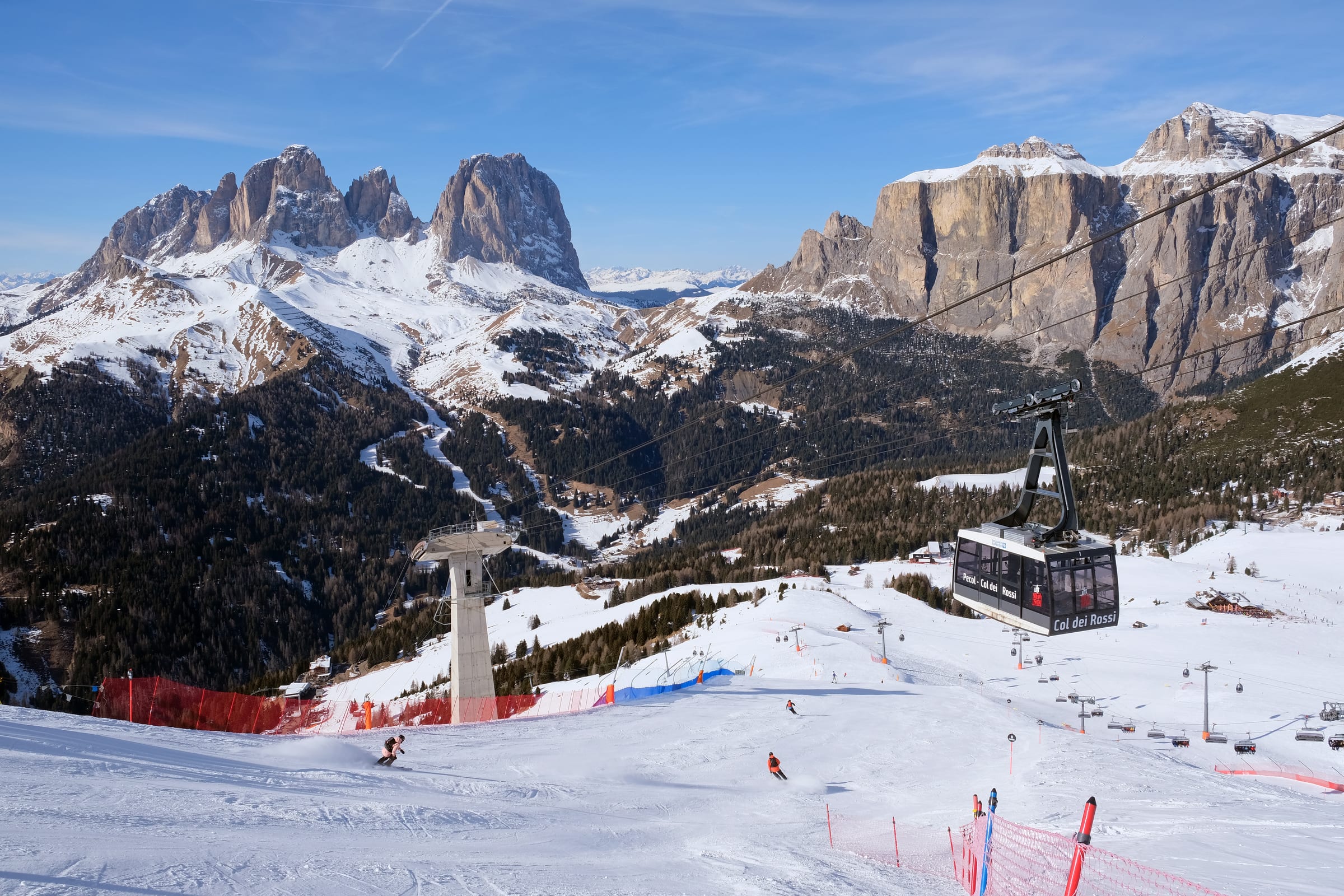
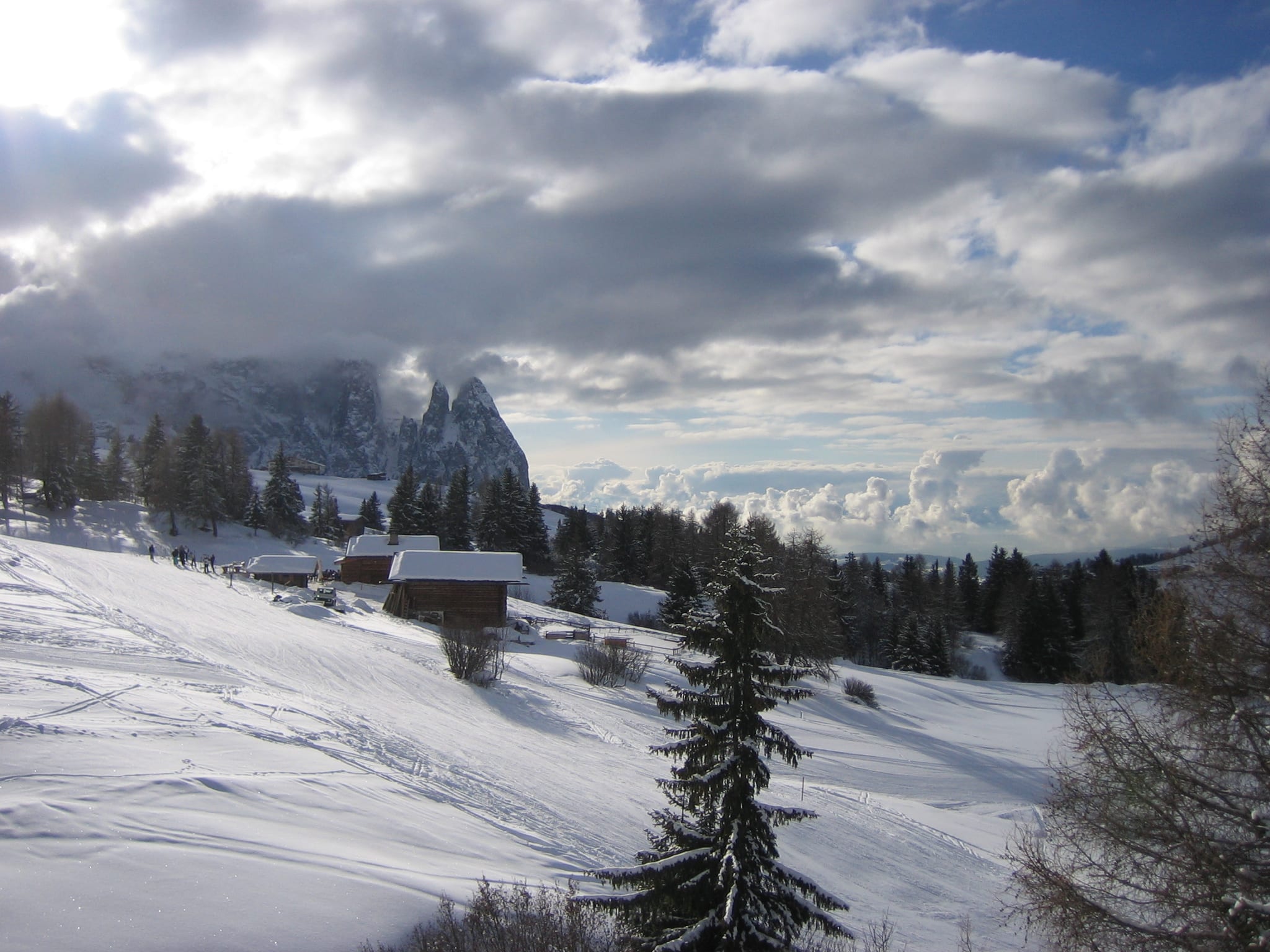
More than the piste count, the reason people remember this area is the setting. The runs sit beneath the pale towers of the Sexten Dolomites, with the distant profile of the Three Peaks appearing across the valley, and the light on the rock at either end of the day is the picture people come back for. It is worth planning a slow morning or afternoon purely to ski the most scenic faces rather than chase kilometres.
A family day and night ski on Haunold
Haunold, or Monte Baranci, rises directly above San Candido and works as a separate family hill on the same pass — gentle, well-covered slopes, a long toboggan option, and floodlit night skiing on selected evenings. It is the low-pressure counterpoint to the circuit: somewhere to put beginners and kids at ease, or to ski a few easy runs under the lights after the main mountains have closed.
Snow & how the mountain faces
Honest answer: the bases are only moderately high, from about 1,130 m in the valley to a top of around 2,225 m, so this is not altitude-insurance skiing. What saves it is the climate and the plumbing. The Alta Pusteria is one of the colder, snowier corners of South Tyrol, and the area runs close to complete snowmaking, so the marked pistes are dependable through the core season even in a lean winter. The shaded Helm slopes hold best; the lower, sunnier runs back to the towns soften on warm spring afternoons, and very early or very late in the season the low bases show.
On the map
The area and its base villages on the live map — pan and zoom to explore. The official piste maps are one tap away beneath it.
Legend
Run difficulty
- Novice
- Easy
- Intermediate
- Advanced / Expert
- Freeride / Extreme
- Unknown
Run types
- Downhill — groomed
- Downhill — ungroomed
- Downhill — gladed
- Nordic (groomed)
- Ski tour
- ☾Lit (night)
- △Not patrolled
- →One-way
- ❄Snowmaking
Lifts
- Operating
- Operating (private)
- Non-operating
- Lift station
Slope-gradient grading
Downhill / ski tour
- Flat<3°
- Easy3–14°
- Intermediate14–22°
- Advanced / Expert22–45°
- Freeride / Extreme>45°
Nordic
- Easy<6°
- Intermediate6–9°
- Advanced>9°
Aspect (sun exposure)
- N — least sun
- E — morning
- S — most sun
- W — afternoon
Legend after OpenSkiMap
How to get there
Innsbruck (INN) is the natural gateway over the Brenner, ~approx 1.5 to 2 hours by road. Venice (VCE) and Verona (VRN) are the larger Italian alternatives further south, each nearer ~approx 2.5 to 3 hours, and Salzburg (SZG) is another Austrian option.
Unusually good for a Dolomite area. Dobbiaco and San Candido both sit on the Val Pusteria (Pustertal) railway, which connects west to Fortezza on the Brenner mainline and east across the border to Lienz in Austria, so you can arrive close to the slopes by train and finish with a short local transfer.
The towns and ski bases are linked by the Pustertal railway and by ski buses, with the SALTO shuttle bridging the one gap in the circuit at valley level. Gondola bases sit at Vierschach for Helm, at Moso near Sesto for the Croda Rossa side, and at San Candido for Haunold. A car is handy for reaching Lake Braies and spreading out, but you can manage the core skiing without one.
Best time to go
January and February for the coldest, most reliable snow across the whole area, when the valley climate and snowmaking are at their best. March brings longer, sunnier days with the higher Helm runs still skiing well, though the lower faces soften in the afternoon. The Italian and South Tyrolean holiday weeks and Carnival are the busiest and priciest; a non-holiday week in late January is the calm sweet spot.
- Season opensEarly-to-mid December, snow-dependent
- Season closesEarly-to-mid April
- Full lift coveragemid-December to early April
- Peak weeksChristmas / New Year and February half-term / Carnival
- Best cold snowJanuary into February
Good to know
Is the snow reliable given the moderate altitude?
Can you ski the whole circuit, or do you need the bus?
German or Italian — and which pass do I need?
Nearby resorts & areas
Other resorts within reach if you're combining trips or comparing.
Getting to 3 Zinnen Dolomites
Book an airport transfer up to the resort, or pick up a car at Innsbruck (INN) — search and compare without leaving the page.
Ski data © OpenStreetMap contributors (ODbL), via OpenSkiMap & Skimap.org. Basemap © OpenFreeMap / OpenMapTiles. · Weather data © Open-Meteo.com (CC-BY 4.0), ERA5 reanalysis. Village grouping & editorial: mynext.holiday. Transfers via Kiwitaxi; car hire via Travelpayouts.