Dolomiti Superski
World's Largest Ski Pass · Twelve Areas, One Ticket · The Sellaronda Circuit
One pass covers around 1,200 km of piste across twelve Dolomite ski areas — but only some of them join up on snow, and the classic is the Sellaronda, a full-day lift-linked loop around the Sella massif.
- 1200 km Piste marketed
- 397 Lifts
- 859 m Base
- 3,235 m Summit
- 2,376 m Vertical
- 843 Pistes mapped
Terrain & aspect
- Novice
- Easy
- Intermediate
- Advanced
- Flat / ungraded
Slopes mostly face N.
Aspect derived from run bearings · OpenSkiStats / © OpenStreetMap (ODbL).
The area
Dolomiti Superski is a single lift pass stretched across twelve separate ski areas in the Italian Dolomites, spanning the provinces of Bolzano, Trento and Belluno — around 1,200 km of piste and roughly 450 lifts in total. It is not one connected mountain. Several of the twelve areas are genuinely lift-linked and you ski between their villages on snow; others you reach only by road or ski-bus, bundled onto the same ticket. The connected heart is the Sellaronda: a circuit of lifts and pistes that loops the whole way around the Sella massif, tying together four Ladin valleys — Val Gardena and Alta Badia in South Tyrol, Arabba in Belluno and Val di Fassa in Trentino. You can ski the loop clockwise or anti-clockwise in a day and return to where you started. Cortina d'Ampezzo sits on the same pass, and it is a headline name, but it is a separate cluster of mountains — you do not ski to it from the Sellaronda.
Scenery no other big domain matches, and enormous mileage on gentle, immaculately pisted cruising. The Dolomites are a UNESCO landscape of sheer pale walls and spires, and much of the skiing is wide, sunny, blue-and-red terrain that rewards a confident intermediate who wants to cover ground and eat well. The Sellaronda gives you a genuine journey around a mountain, on snow, on one pass — a day out few areas can offer.
A mid-altitude, sun-facing domain built for cruising under dramatic rock rather than for high, cold, above-treeline mileage. Most bases sit between roughly 1,200 and 1,600 m and the pistes run mostly below around 2,500 m, so the feel is broad, rolling and scenic — long groomed blues and reds threading between the Sella, the Marmolada, the Tofane and the Sassolungo. Snow tends to be man-made-firm and fast in the mornings and can soften on the sunniest afternoons. This is a piste-cruiser's and a lunch-lover's area; the truly high, glaciated skiing is confined to the Marmolada, the one place the terrain climbs past 3,000 m.
Best known for
Explore the villages
The pass is the same everywhere — the village you base in shapes the holiday more than the valley you ski. 7 base villages, one lift pass.
Corvara (Alta Badia)
1,568 mScenic Sellaronda cruising and gourmet Alta Badia dining
The main village of sunny, gourmet-minded Alta Badia, sitting right on the Sellaronda beneath the Sella walls. Gentle, scenic cruising by day and some of the best mountain food in the Dolomites — a relaxed, well-heeled base rather than a party town.
Explore the village →Cortina d'Ampezzo
1,224 mGlamorous town, dramatic scenery, separate mountains
A grand, glamorous old resort town ringed by the Tofane, Faloria and Cristallo, and an Olympic host name. It's on the Dolomiti Superski pass but skis its own separate mountains, so you come for the town, the scenery and the style as much as the linked mileage.
Explore the village →Canazei (Val di Fassa)
1,465 mCentral Sellaronda access with lively evenings
The liveliest of the Sellaronda base towns, a lived-in Ladin town at the head of Val di Fassa with the Belvedere gondola lifting you straight onto the circuit. A good-value, central choice with more evening life than most Dolomite villages.
Explore the village →Selva di Val Gardena
1,563 mAll-round Sellaronda base with strong beginner terrain
Central, up-valley and plumb on the Sellaronda, with the Saslong World Cup slope on its doorstep and easy beginner terrain close by. The all-round Val Gardena base — convenient for both the circuit and learning to ski.
Explore the village →Ortisei
1,236 mLadin charm and gentle Alpe di Siusi skiing
The prettiest town in Val Gardena, low in the valley and rich in Ladin woodcarving heritage, with cable cars up to the vast, gentle Alpe di Siusi. Charm and easy skiing win here over being right on the circuit's spine.
Explore the village →Arabba
1,602 mSnow-sure, steeper Sellaronda skiing and quiet nights
The highest, most north-facing Sellaronda base, holding the circuit's steepest local pitches and the surest snow, with the Marmolada glacier just up the road. A quieter, more snow-serious choice than the busier South Tyrol towns.
Explore the village →San Cassiano
1,537 mUpmarket, quiet Alta Badia days and fine dining
A small, upmarket Alta Badia village near the foot of the Hidden Valley run, calm and quietly luxurious with a strong reputation for fine food. A refined, unhurried base away from the crowds.
Explore the village →- Corvara (Alta Badia) Right on the Sellaronda in the gentle, sunny Alta Badia bowl with a serious gourmet reputation; best for scenic cruising and eating well.
- Cortina d'Ampezzo A grand, glamorous old resort town beneath the Tofane, but its own separate mountains — best if the town and the scenery matter more than being on the linked circuit.
- Canazei (Val di Fassa) The liveliest of the Sellaronda bases, a proper Ladin town with the Belvedere gondola onto the loop; best for circuit access with some evening buzz.
- Selva di Val Gardena Central, up-valley and directly on the circuit next to the Saslong World Cup slope; best all-rounder base with strong beginner and cruising terrain.
- Ortisei The prettiest Val Gardena town, low and full of Ladin woodcarving heritage, with cable cars to the gentle Alpe di Siusi; best for charm and easy beginner skiing over circuit convenience.
- Arabba The highest, most north-facing and snow-sure Sellaronda base with the steepest local pistes and the Marmolada on the doorstep; best for snow certainty and quieter, steeper terrain.
- San Cassiano A small, upmarket Alta Badia village near the Hidden Valley run, calm and food-focused; best for quiet days and fine dining away from the crowds.
Pick your base around one question first — do you want to be on the connected Sellaronda circuit, or is a famous separate town worth losing the ski-round links? For skiing straight onto the loop, base at Selva or Canazei (central and lively) or Corvara (scenic Alta Badia, superb food). For the surest snow and the steepest local terrain, base high at Arabba. For quiet and upmarket dining, San Cassiano. For a beautiful Ladin town and the gentle Alpe di Siusi, Ortisei — lower and prettier, though a rung off the circuit's spine. For grand-town glamour, Cortina — but accept that it's a self-contained set of mountains on the same pass, not a Sellaronda base. Everywhere shares the Dolomiti Superski ticket, so the skiing on the pass is the same wherever you sleep.
Skiing, by level
Good and gentle in the right spot. Selva di Val Gardena and the wide, sunny Alta Badia slopes around Corvara have easy, well-groomed nursery and blue terrain, and the sprawling Alpe di Siusi (Seiser Alm) plateau above Ortisei is one of the kindest beginner areas in the Alps. What a first-weeker should not do is set off around the whole Sellaronda straight away — it is long, includes reds, and you must watch the last lifts.
The core of the area and its whole reason for being. Endless flowing blues and reds link village to village; a confident intermediate can ski the entire Sellaronda loop in a day, cross valleys for lunch and pile up serious mileage without ever tackling anything alarming. Canazei, Selva and Corvara all sit right on the circuit for exactly this.
Real challenge exists but you go to it. Arabba holds the Sellaronda's steepest, most north-facing pitches and the best hard-snow blacks; the Saslong World Cup downhill above Selva and the Gran Risa race piste at La Villa in Alta Badia are proper steep runs; and the Marmolada gives a long, high descent. It rewards a skier who ranges across the areas rather than one who wants lift-served steeps stacked in one place.
This is not a steep-and-deep expert's domain, and it's fair to say so — the lift-served pitch is limited and the off-piste is modest next to the Western Alps. The standout serious outing is the Marmolada and its long Bellunese descent, plus guided ski-touring lines around the WWI-front peaks. Come for the scenery, the touring and the journeys, not for a week of couloirs.
Ski the Sellaronda loop
The signature day: circle the entire Sella massif on lifts and pistes, either clockwise (orange signs) or anti-clockwise (green), passing through Val Gardena, Alta Badia, Arabba and Val di Fassa and ending back where you started. It's mostly gentle, endlessly scenic and well within a confident intermediate's range — but it's a long way round four mountain passes, so start early and keep an eye on the last connecting lifts so you don't get stranded a valley from your bed.
The Hidden Valley from Lagazuoi
Ride the Lagazuoi cable car above Alta Badia, where WWI tunnels still run through the rock, then ski the Armentarola down the Hidden Valley (Val Setus / Fanes) — a long, quiet run past frozen waterfalls and pale walls that is widely called the most beautiful piste in the Dolomites. At the bottom a horse-drawn rope famously tows skiers along the flat back to the lifts.
Down the Marmolada
The Marmolada is the highest peak in the Dolomites, and its cable cars climb past 3,000 m onto the domain's one true glacier — the WWI 'Queen of the Dolomites'. From the top the long Bellunese descent (marketed at around 12 km) drops all the way toward the Arabba side, the highest, coldest and most snow-sure skiing on the whole pass.
Snow & how the mountain faces
The honest picture is altitude-modest but snowmaking-heavy. Dolomite bases are relatively low and many slopes face south into strong Italian sun, so natural cover can be thin and afternoons can go slushy in warm or bright spells. What holds the season together is one of the most comprehensive snowmaking systems in the Alps — the resorts market near-total coverage of the piste network (around 97%) with thousands of snow guns — so a groomed, skiable surface is usually guaranteed from around December to April even when it hasn't snowed. The one genuinely snow-sure high card is the Marmolada glacier, whose long descent stays cold and holds late. Base high and shaded at Arabba if snow certainty matters most; the lowest towns, Cortina and Ortisei, feel a warm spell first.
On the map
The area and its base villages on the live map — pan and zoom to explore. The official piste maps are one tap away beneath it.
Legend
Run difficulty
- Novice
- Easy
- Intermediate
- Advanced / Expert
- Freeride / Extreme
- Unknown
Run types
- Downhill — groomed
- Downhill — ungroomed
- Downhill — gladed
- Nordic (groomed)
- Ski tour
- ☾Lit (night)
- △Not patrolled
- →One-way
- ❄Snowmaking
Lifts
- Operating
- Operating (private)
- Non-operating
- Lift station
Slope-gradient grading
Downhill / ski tour
- Flat<3°
- Easy3–14°
- Intermediate14–22°
- Advanced / Expert22–45°
- Freeride / Extreme>45°
Nordic
- Easy<6°
- Intermediate6–9°
- Advanced>9°
Aspect (sun exposure)
- N — least sun
- E — morning
- S — most sun
- W — afternoon
Legend after OpenSkiMap
How to get there
Nearest big airport is Verona (VRN), ~approx 2.5–3 hours by road; Venice (VCE) is a similar distance from the eastern valleys and Cortina, and Innsbruck (INN) over the Brenner is close to Val Gardena and Alta Badia at ~approx 2–2.5 hours. Verona and Venice are the reliable year-round gateways; check seasonal ski-transfer schedules.
For the South Tyrol valleys (Val Gardena, Alta Badia), the useful railheads are Bolzano/Bozen and Bressanone/Brixen on the Brenner line, then a ~approx 45–90 min bus or transfer up the valley; from the south, trains reach Verona and you continue up by road.
The twelve areas fan out on separate valley roads, so the final approach depends on which base you choose, and a car or transfer is useful for reaching your village. Once you're on the Sellaronda, though, the lifts become the transport between the four linked valleys during the day — you barely touch the road until you leave.
Best time to go
Roughly December to April for full lift coverage, with the sunniest, most reliable pisted skiing from January into March. February — around the Italian and other European half-terms — is the busiest and priciest stretch, and the Sellaronda can queue at its pinch-points. Late season into April brings long, warm, blue-sky days and soft afternoon snow, lovely for cruising if you accept that the lowest, sunniest slopes tire first and the surest snow by then is up on the Marmolada. Christmas and New Year are the other peak.
- Season opensEarly December (snow-dependent; some areas from late November)
- Season closesMid-to-late April across most of the domain; the Marmolada glacier holds latest
- Season openingearly December, snow-dependent
- Peak weeksChristmas / New Year and February half-terms
- Spring cruisinglate March into April, best up high on the Marmolada
Good to know
Can I really ski the whole area on one pass?
What is the Sellaronda?
How reliable is the snow given how low it is?
Is Cortina d'Ampezzo part of the Sellaronda?
Nearby resorts & areas
Other resorts within reach if you're combining trips or comparing.
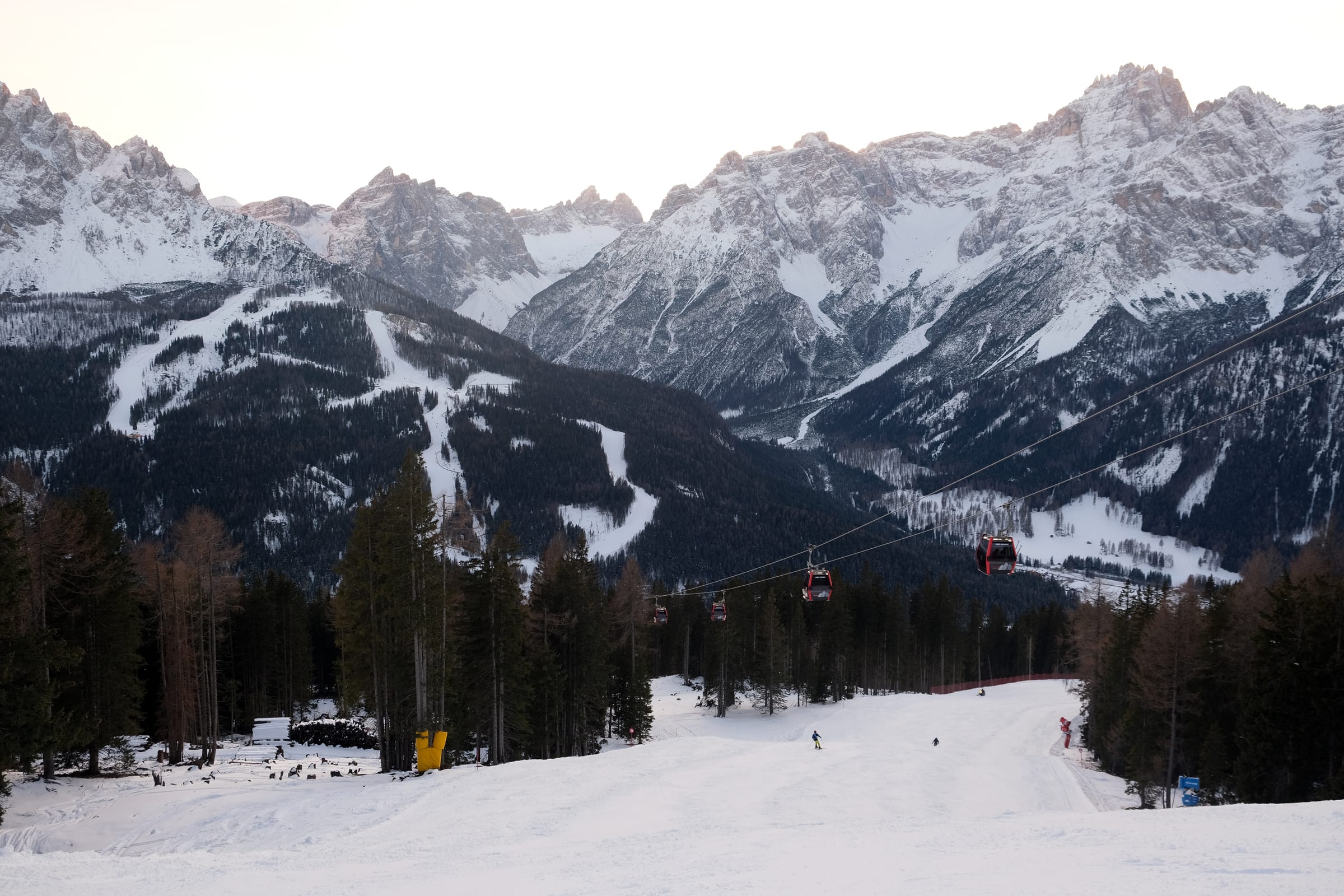
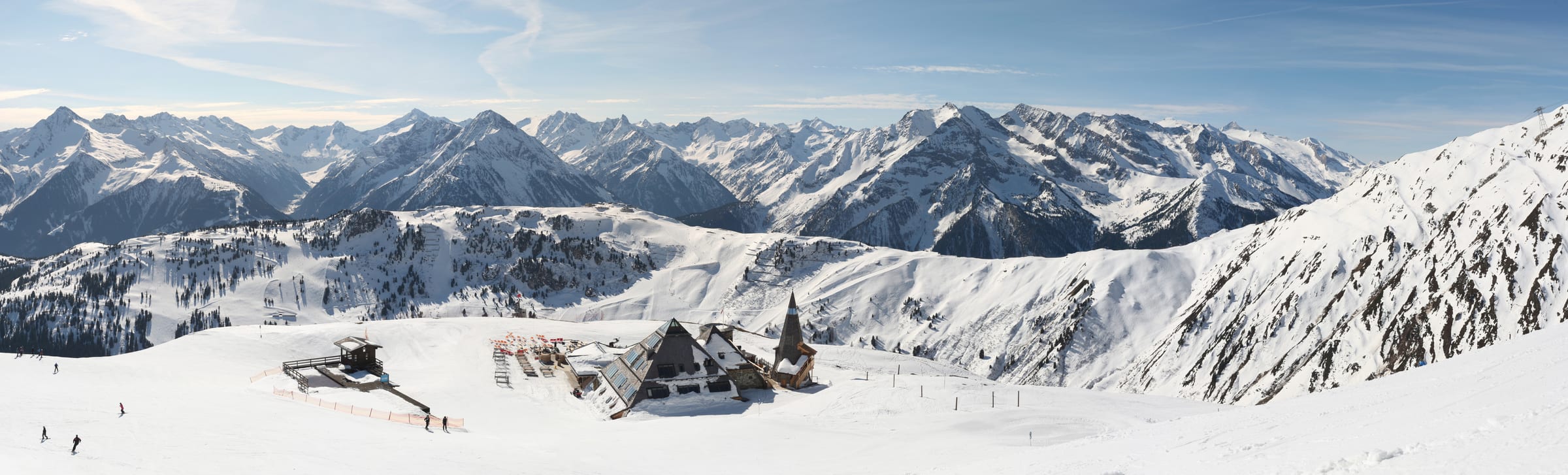
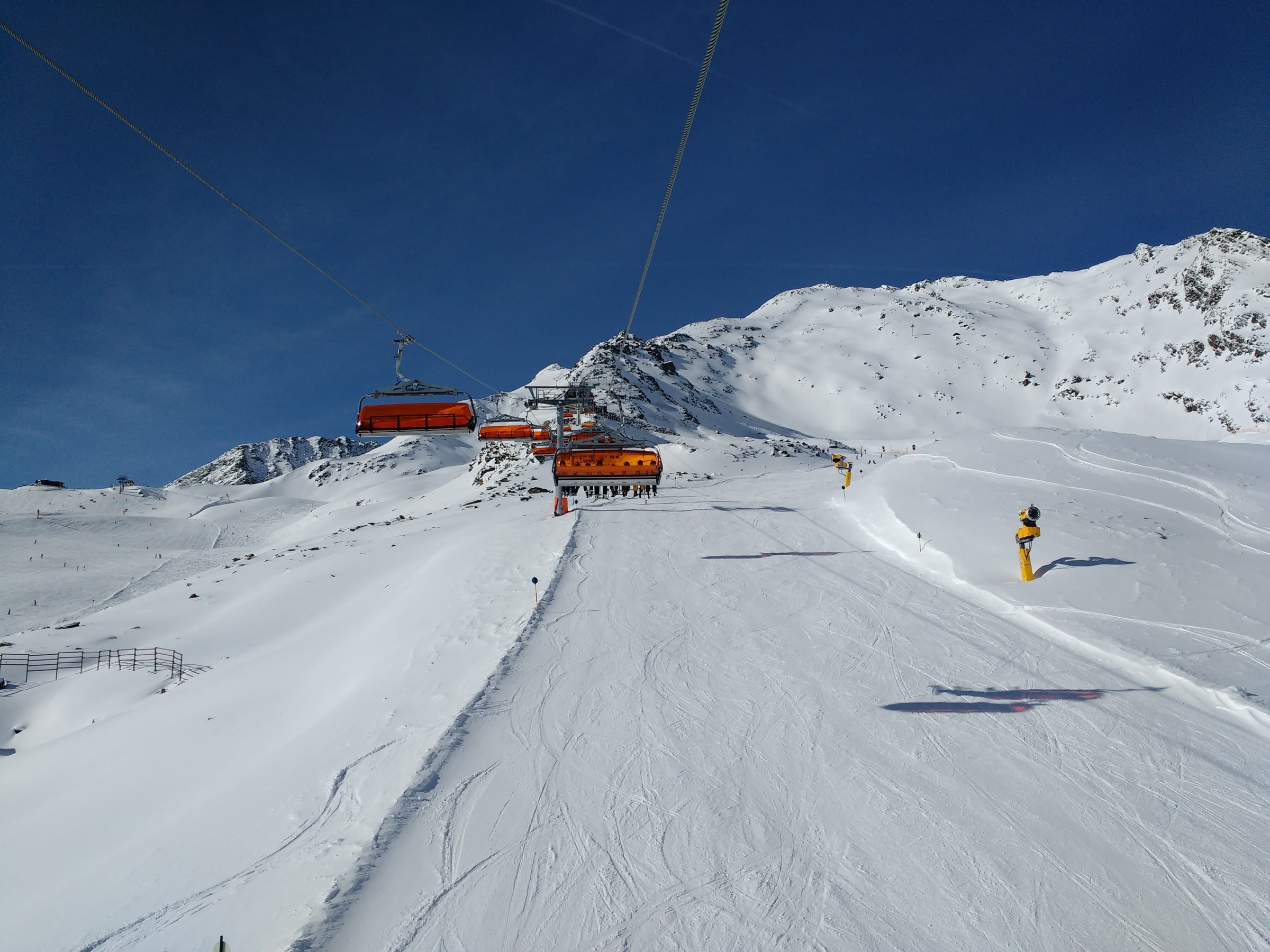
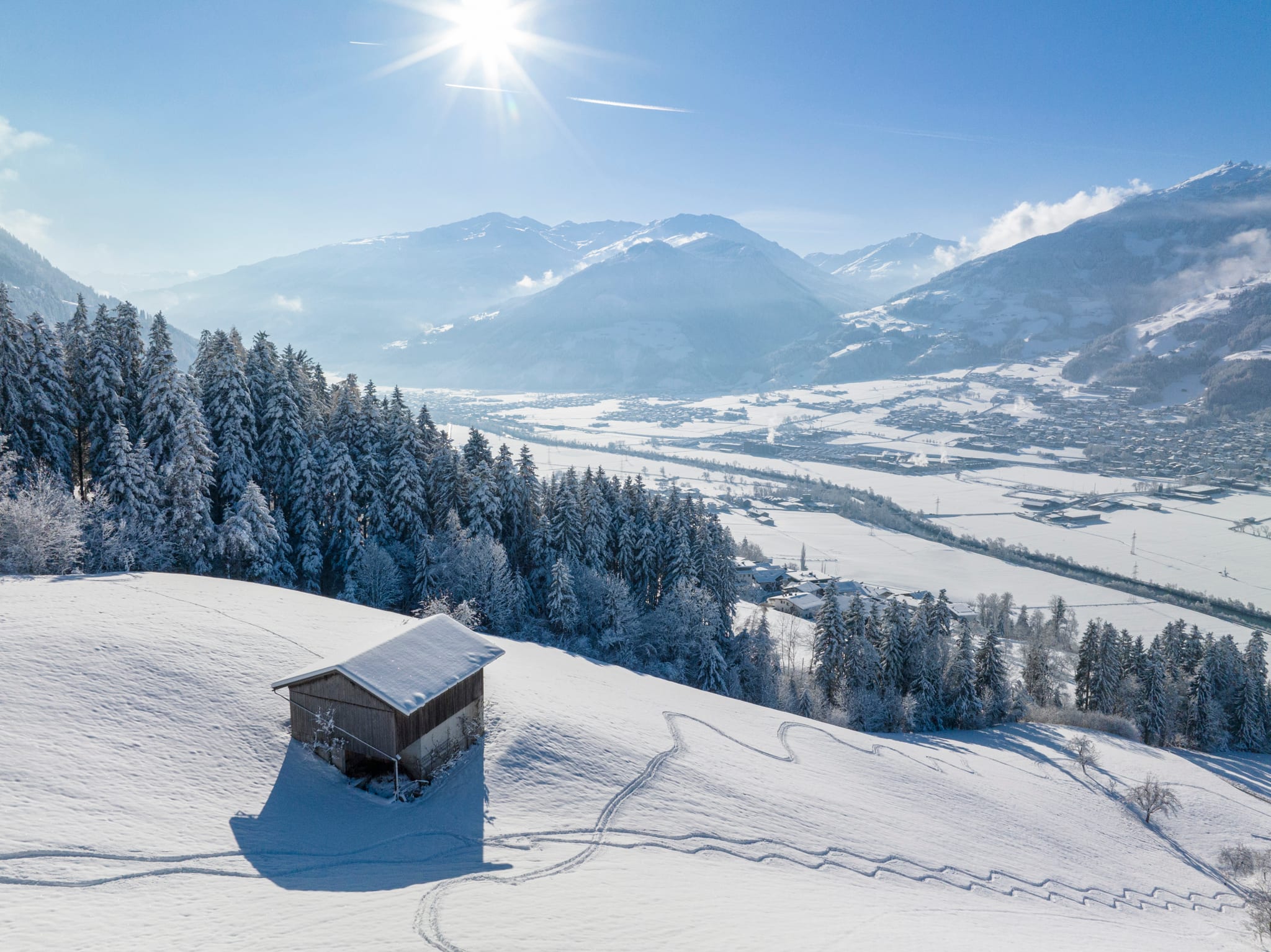
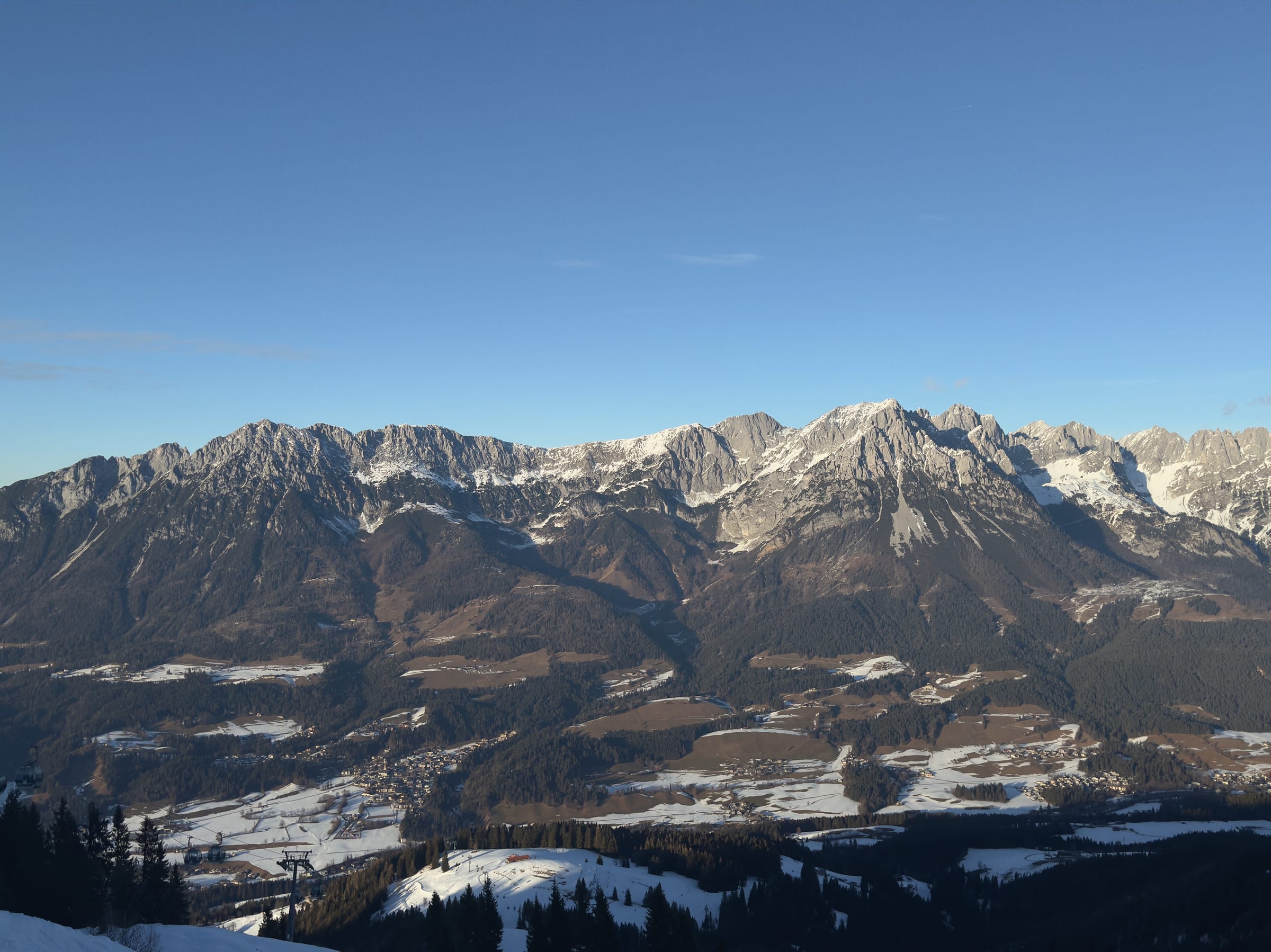
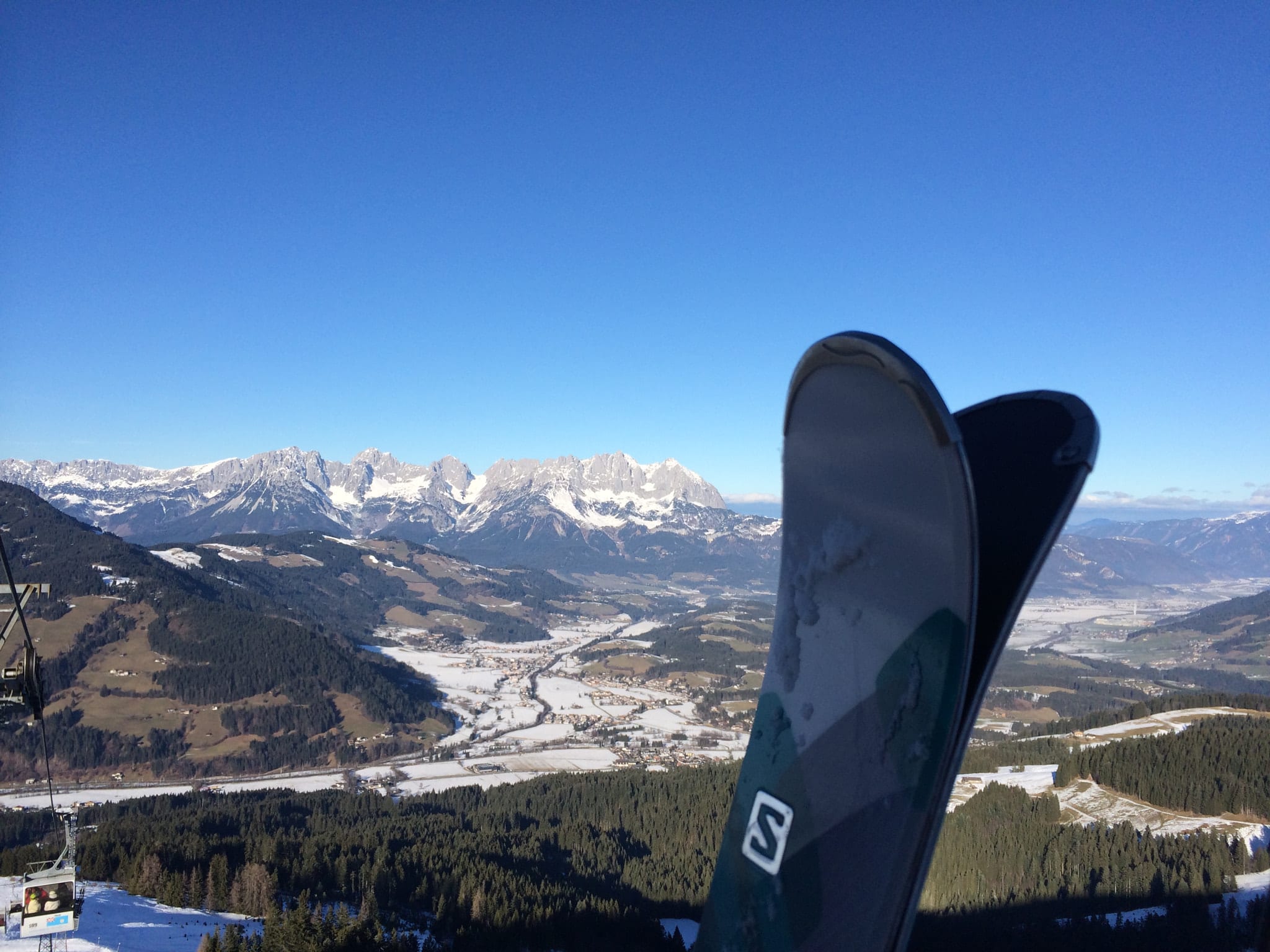 Faces north © Bogdan Rîpă / Wikimedia Commons (CC BY 3.0)
 KitzSki
- Vertical
- 1230 m
- Pistes (mapped)
- 88
- Lifts
- 63
Getting to Dolomiti Superski
Book an airport transfer up to the resort, or pick up a car at Verona (VRN) — search and compare without leaving the page.
Ski data © OpenStreetMap contributors (ODbL), via OpenSkiMap & Skimap.org. Basemap © OpenFreeMap / OpenMapTiles. · Weather data © Open-Meteo.com (CC-BY 4.0), ERA5 reanalysis. Village grouping & editorial: mynext.holiday. Transfers via Kiwitaxi; car hire via Travelpayouts.