Espace San Bernardo
Two Countries, One Pass · Sunny France, Snowy Italy · Lunch on the Italian Side
A cross-border domain linking La Rosière in France with La Thuile in Italy over the Little St Bernard pass — sunny, open slopes on the French side and snowier, steeper, tree-lined skiing on the Italian one, all on a single ticket.
- 152 km Piste marketed
- 49 Lifts
- 1,192 m Base
- 2,799 m Summit
- 1,607 m Vertical
- 109 Pistes mapped
🎟 One pass: Espace San Bernardo lift pass covers every lift across the area.
Terrain & aspect
- Novice
- Easy
- Intermediate
- Advanced
- Freeride
- Flat / ungraded
Slopes mostly face E.
Aspect derived from run bearings · OpenSkiStats / © OpenStreetMap (ODbL).
The area
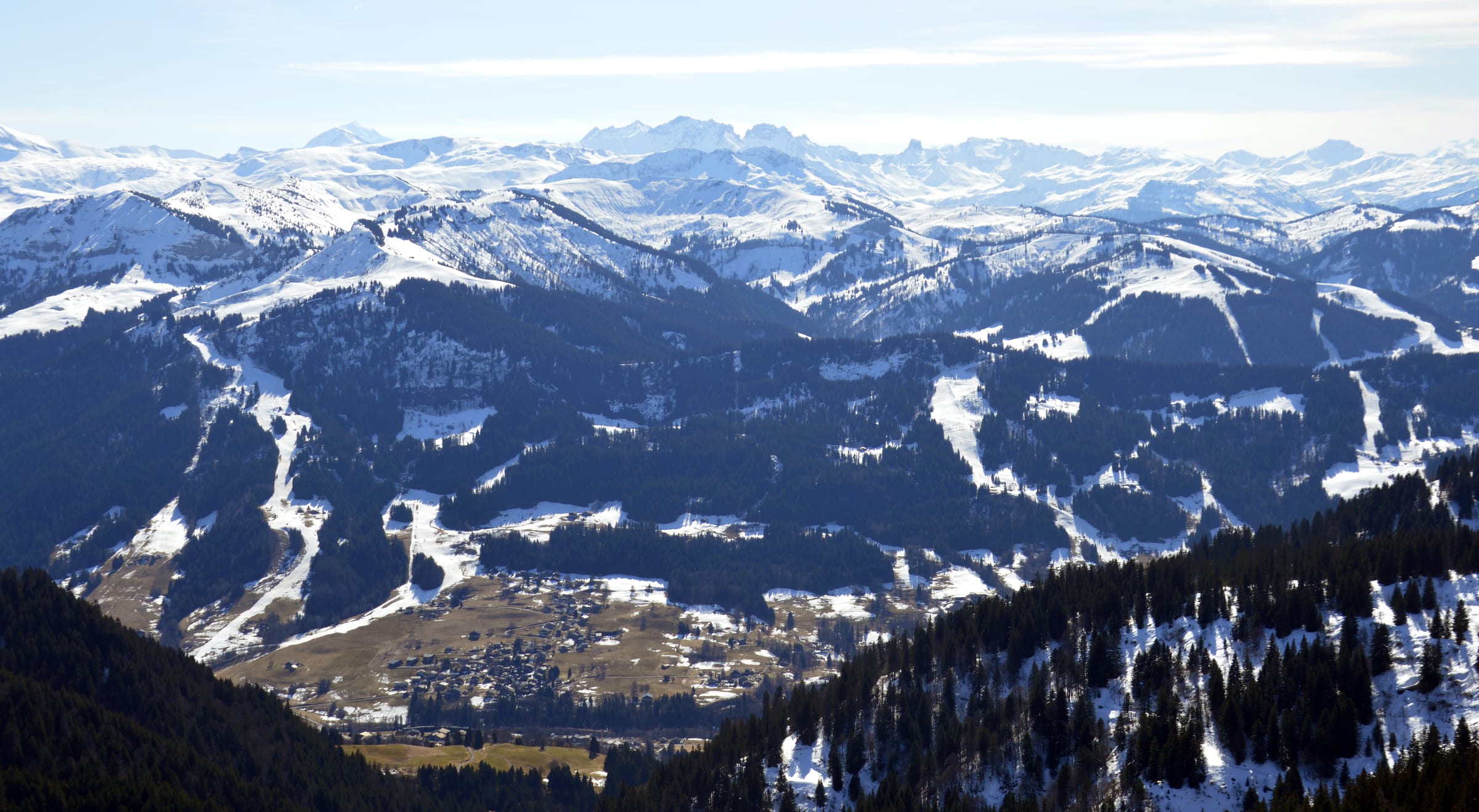
Espace San Bernardo joins two resorts that face each other across the Little St Bernard pass: La Rosière, high on a sunny French balcony above the Isère valley, and La Thuile, lower and in the trees on the Italian side above the Aosta valley. The link runs over the col itself, so a day here means skiing from one country into the other and back — the pass is a real border, closed to cars in winter but open to skiers. The marketed figure is around 150 km of piste on one Espace San Bernardo lift pass, split fairly evenly between the two sides. The characters are opposites: La Rosière is open, south-facing and bright, good for progression and gentle cruising; La Thuile is shadier, steeper and forested, with the area's best snow-holding and its more serious runs. The whole thing hangs on that pass crossing, which is the appeal and, on a windy day, the catch.
The novelty is real and it earns its keep: you genuinely ski between two countries in a day, and the two sides complement rather than repeat each other. La Rosière gives you sun, space and easy intermediate mileage; La Thuile gives you the shade, the trees and the steeper, better-snow terrain — and a long Italian lunch that's part of the point. Neither resort would top a shortlist on its own, but linked over the pass they add up to a varied domain with two genuinely different moods and none of the lift queues of the bigger-name areas nearby.
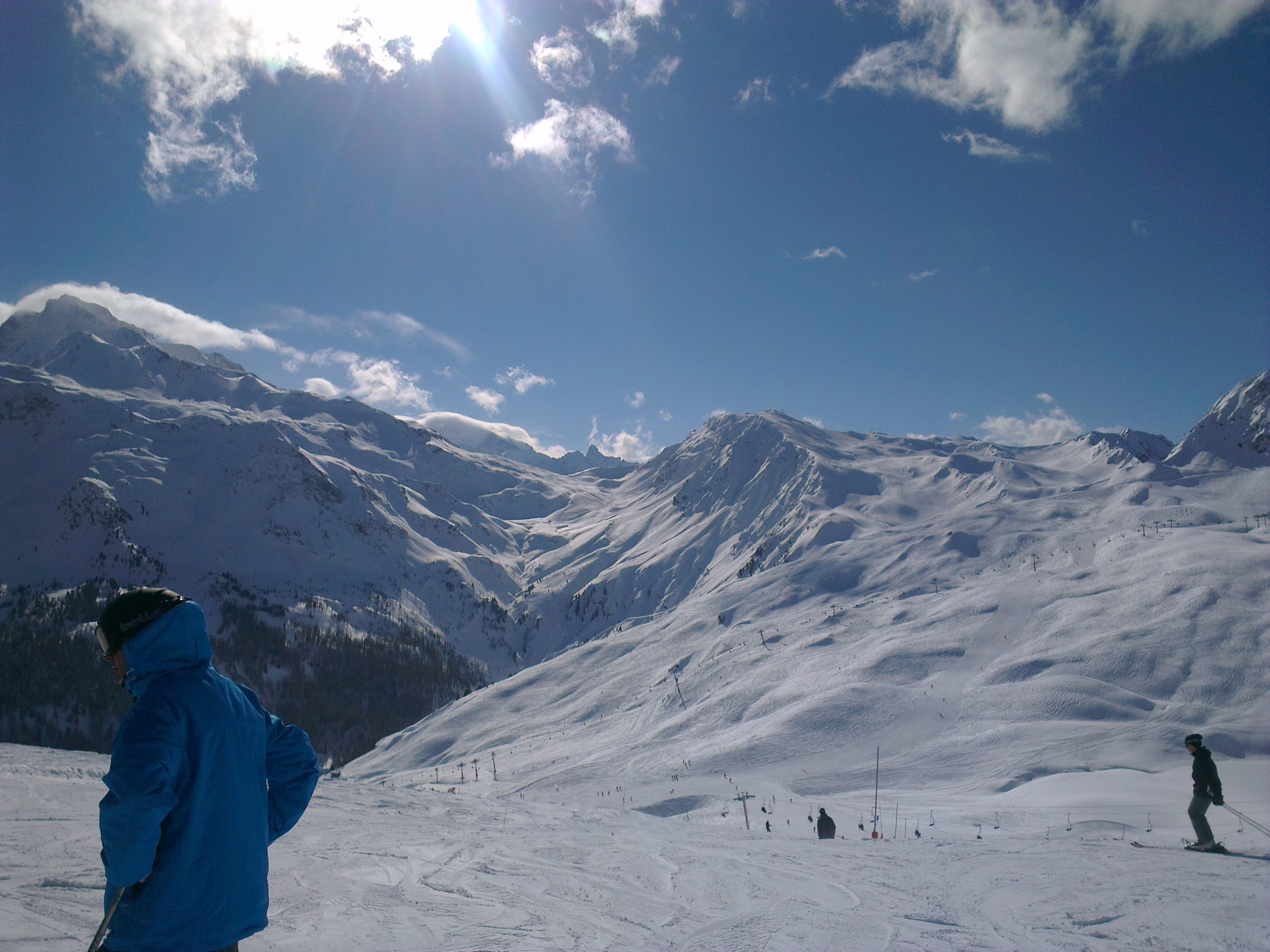
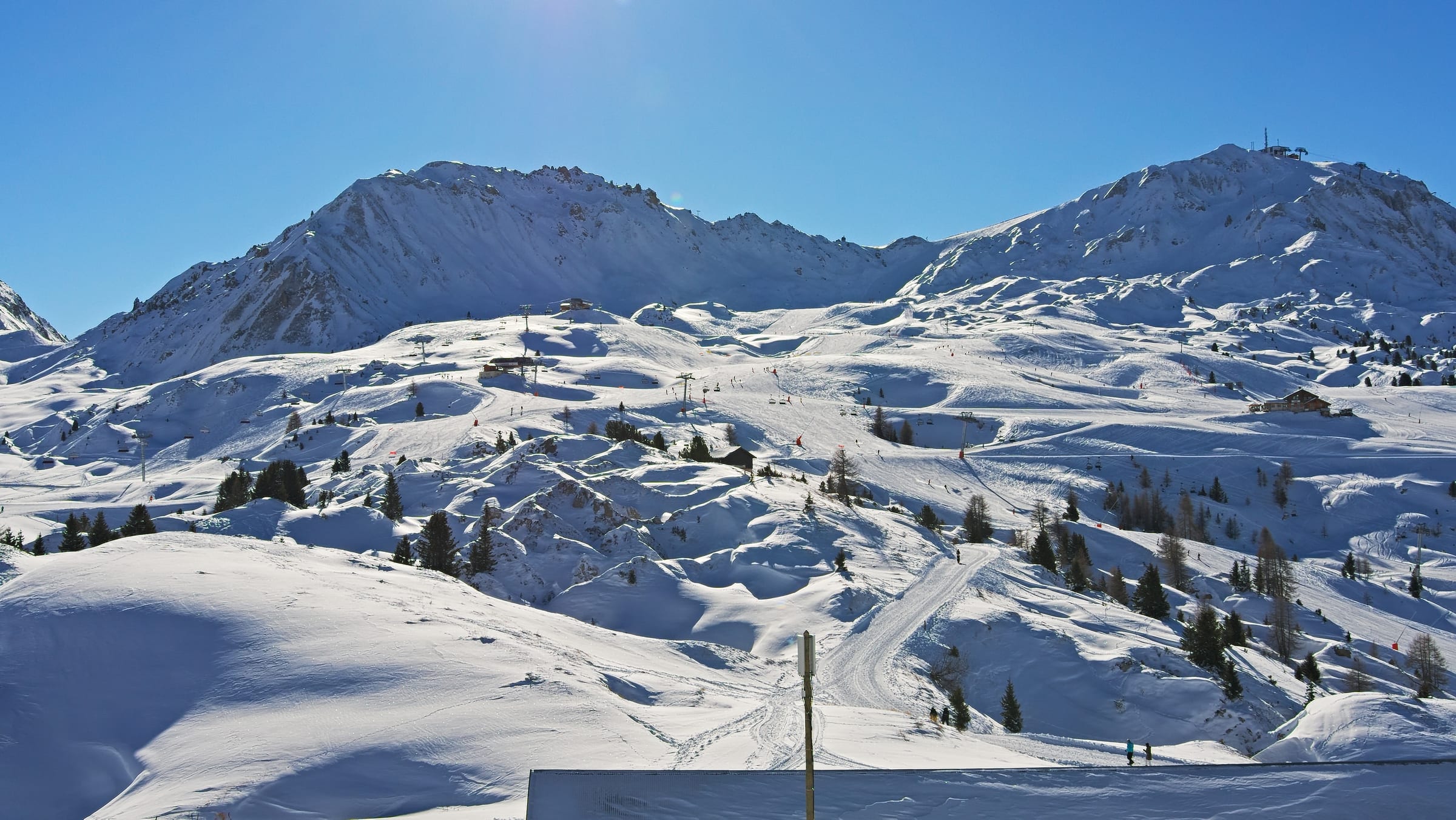
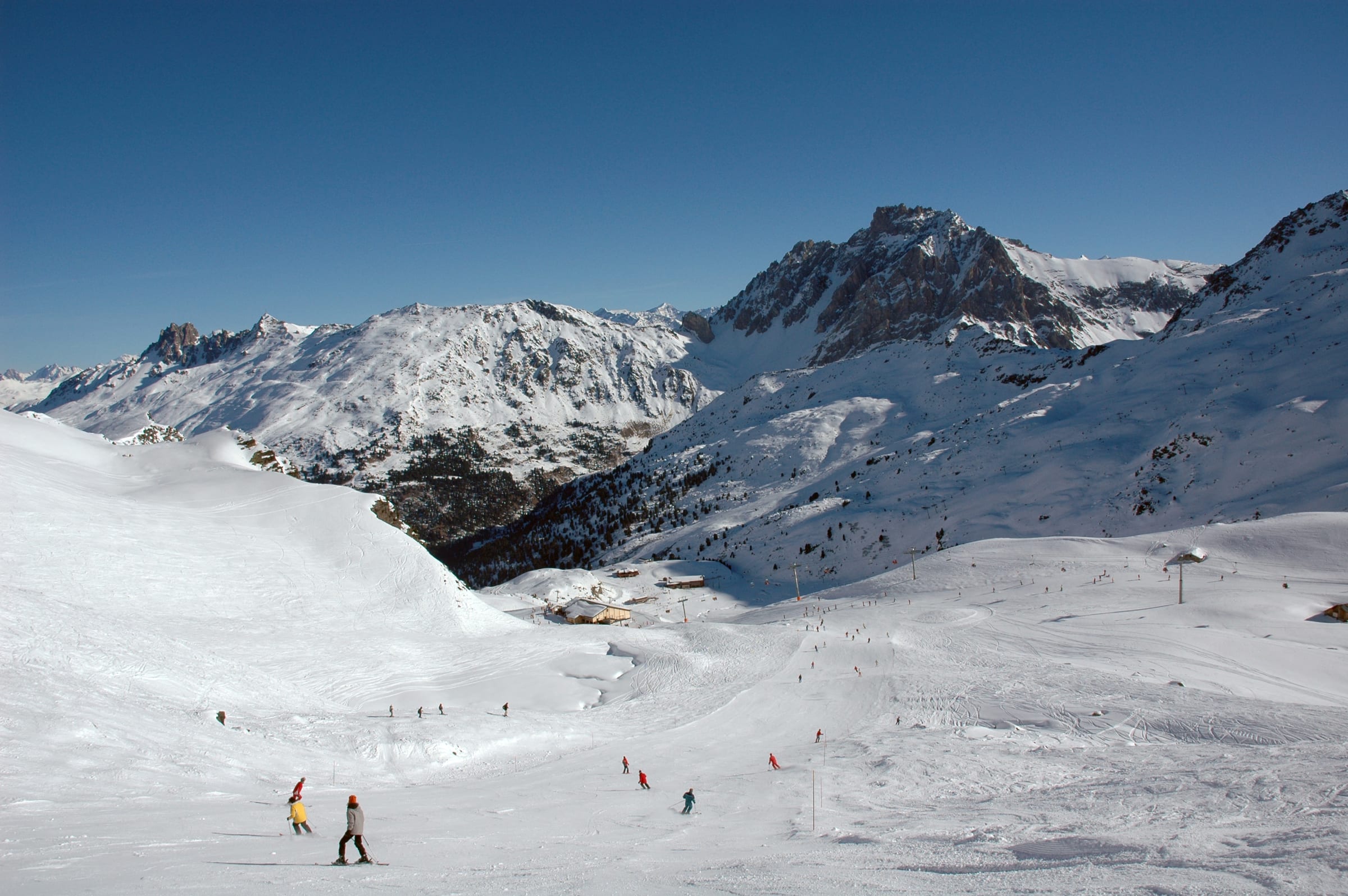
Two sides that ski nothing alike. The La Rosière side is open, south-facing and sunny — broad, rolling intermediate terrain above the treeline, exposed to the light and the weather in equal measure. Cross the pass into Italy and La Thuile is the opposite: shadier aspects, runs cut through larch forest, steeper pitches and quieter slopes. You spend the day moving between the two, and the transition over the col is the day's spine. It skis as an intermediate's domain first, with real steeps and off-piste for those who cross to the Italian side to find them.
Best known for
Explore the villages
The pass is the same everywhere — the village you base in shapes the holiday more than the valley you ski. 2 base villages, one lift pass.
La Thuile
1,441 mBetter snow, freeride and Italian lunches
The Italian side of the pass, a lower town at around 1,440 m in the Aosta valley with the area's best snow and its steeper, tree-lined runs. Quieter and more low-key than a big Italian resort, it's the base for freeride, forest skiing and long mountain lunches — snow and character over sun and doorstep convenience.
Explore the village →La Rosière
1,850 mSunny, ski-in ski-out family cruising
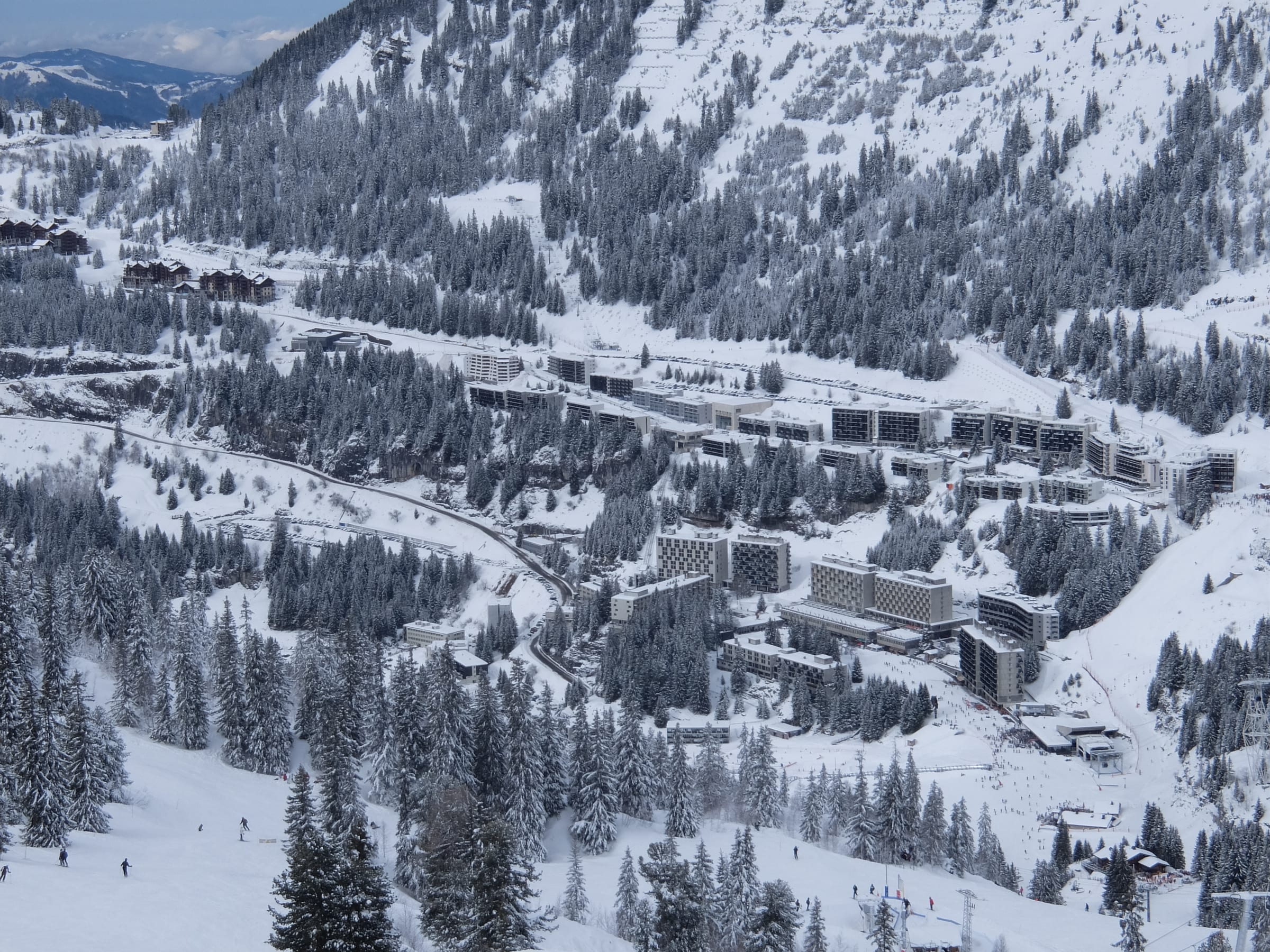
The French side, a purpose-built resort high on a sunny balcony at around 1,850 m above the Isère valley. Open, south-facing terrain and ski-in ski-out convenience make it good for families and progression, though it trades old-village charm for sun and easy access, and its sunny slopes thin faster in warm weather.
Explore the village →- La Rosière Sunny, high and ski-in ski-out — pick it for progression, families and easy French cruising over old-village charm.
- La Thuile Snowier, steeper and tree-lined on the Italian side — the base for better snow, freeride and long mountain lunches.
Base in La Rosière for sun, ski-in ski-out convenience up on the balcony and the easiest access to the open French terrain, accepting a purpose-built resort short on old-village character. Base in La Thuile for better snow, forest runs on the doorstep, a lower and more atmospheric Italian town, and quieter evenings — at the cost of relying on the pass link to reach the sunny French side. Which you pick is really a choice between sun and snow, and between French convenience and Italian character.
Skiing, by level
Fine, mostly on the French side. La Rosière has gentle, sunny nursery and green terrain up on its balcony that's easy to get to and forgiving to learn on. The link over the pass and much of the La Thuile side are better left until you're skiing blues with confidence.
The core of the area. Long blues and reds run all over both sides, and the cross-border loop over the pass is itself an intermediate outing — sunny cruising on the French side, then shadier, more interesting reds down through the Italian trees. A confident intermediate can tour both countries in a day.
Better than the area's reputation, and mostly Italian. La Thuile holds the steeper marked runs, including long, sustained descents through the forest that keep their pitch, while La Rosière's blacks are shorter and more scattered. Cross the pass to find the terrain that tests you.
The off-piste is the reason experts come, and again it favours the Italian side. La Thuile has a well-earned freeride name, with tree-lined and open descents and enough vertical to make a day of it; there's lift-served backcountry off the high points near the pass too. All of it is best with a guide, avalanche kit and the right conditions.
Cross the pass into Italy for lunch
The day everyone plans: ski the sunny French side through the morning, then work your way over the Little St Bernard pass and down into the La Thuile trees in time for a long Italian lunch. Give it real time — the point isn't to rush back, and the food on the Italian side is a genuine reason to linger before you turn round and ski home to France in the afternoon.
Chase snow on the shady Italian side
When a warm spell softens La Rosière's sunny slopes, the fix is to cross the pass and stay in the shade. La Thuile's forested, north-leaning runs hold cold snow far better, and a day spent working its tree-lined pitches is the smart play in mild weather — the same crossing that's a novelty on a good day becomes the practical move.
Freeride and off-piste around Mont Valaisan
The high ground near the pass and the terrain above La Thuile give the area its off-piste name, from open bowls up top to tree runs lower down on the Italian side. It's proper backcountry, wind-exposed and serious near the col — a day to do with a guide, avalanche kit and a careful read of the conditions rather than on a whim.
Snow & how the mountain faces
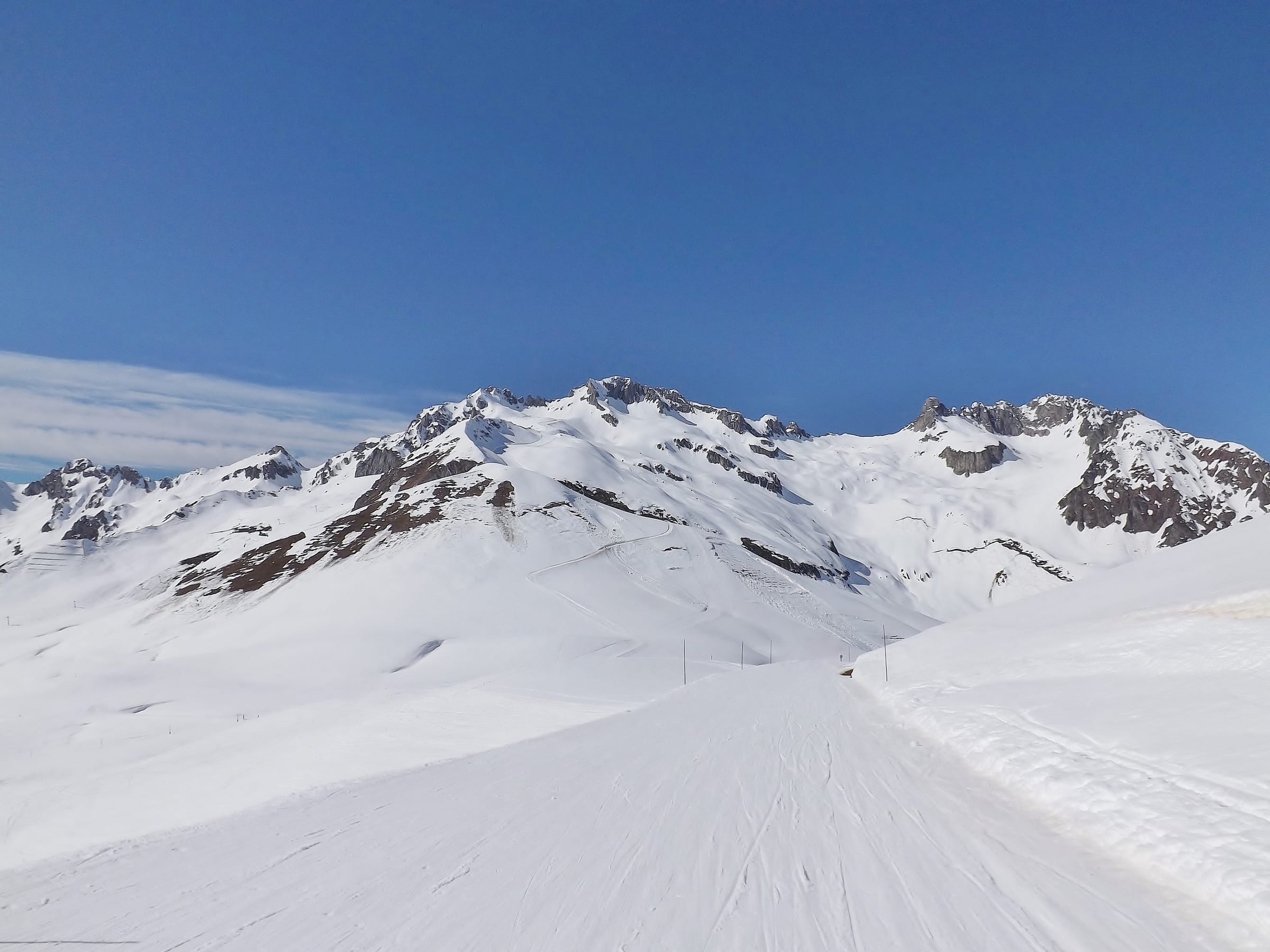
A tale of two aspects. The La Rosière side is high but faces south, so its sunny open slopes catch the light all day — good for warmth and views, less good for holding snow through a mild spell, when the lower and sunnier runs there soften and thin quickly. The La Thuile side is the snow bank of the pair: shadier, more sheltered in the trees and reliably better for cold snow well into the season, even if its town base sits lower. The high link around Mont Valaisan tops out near 2,800 m and holds snow late. The honest weak spots are the sunny lower French pitches in a warm week, and the pass crossing itself, which is wind-exposed enough that the connecting lifts can shut on a bad day and strand you on one side.
On the map
The area and its base villages on the live map — pan and zoom to explore. The official piste maps are one tap away beneath it.
Legend
Run difficulty
- Novice
- Easy
- Intermediate
- Advanced / Expert
- Freeride / Extreme
- Unknown
Run types
- Downhill — groomed
- Downhill — ungroomed
- Downhill — gladed
- Nordic (groomed)
- Ski tour
- ☾Lit (night)
- △Not patrolled
- →One-way
- ❄Snowmaking
Lifts
- Operating
- Operating (private)
- Non-operating
- Lift station
Slope-gradient grading
Downhill / ski tour
- Flat<3°
- Easy3–14°
- Intermediate14–22°
- Advanced / Expert22–45°
- Freeride / Extreme>45°
Nordic
- Easy<6°
- Intermediate6–9°
- Advanced>9°
Aspect (sun exposure)
- N — least sun
- E — morning
- S — most sun
- W — afternoon
Legend after OpenSkiMap
How to get there
It depends which side you're headed for. For La Rosière, Chambéry (CMF) is the closest at ~approx 2 hours, with Geneva (GVA) a common alternative at ~approx 2.5 to 3 hours. For La Thuile, Turin (TRN) on the Italian side is the natural gateway at ~approx 1.5 to 2 hours through the Aosta valley.
On the French side, Bourg-Saint-Maurice in the Isère valley is the nearest mainline station, reached by TGV and by the sleeper, with a bus or transfer up the climbing road to La Rosière. For La Thuile, you come in through the Aosta valley on the Italian side and transfer up by road.
The two resorts sit on opposite sides of the Little St Bernard pass, and the road over the col is closed in winter — so by car they're a long way apart, but on skis the lift link joins them over the top. Once you're up, the linked lifts do the moving between countries during the day; just watch the last connections back over the pass so you don't finish on the wrong side.
Best time to go
January and February for the most reliable cold snow across both sides, including the sunny French slopes that thin later in the season. March brings longer, brighter days and is the sweet spot for the cross-border skiing, with the Italian side still holding snow in the shade while La Rosière basks — though the sunny lower French runs soften in the afternoon. Half-term weeks are the busiest, but even then the area stays quieter than its bigger neighbours; a non-holiday week is calm.
- Season opensMid-December, snow-dependent
- Season closesLate April on the higher terrain
- Full cross-border link openmid-December to mid-April, weather permitting
- Peak weeksChristmas / New Year and February half-terms
- Best of both sidesMarch — sun on the French side, snow still good on the Italian
Good to know
Do you really ski between France and Italy?
Which side has the better snow?
Can the France-Italy link ever be shut?
Nearby resorts & areas
Other resorts within reach if you're combining trips or comparing.
Getting to Espace San Bernardo
Book an airport transfer up to the resort, or pick up a car at Chambéry (CMF) — search and compare without leaving the page.
Ski data © OpenStreetMap contributors (ODbL), via OpenSkiMap & Skimap.org. Basemap © OpenFreeMap / OpenMapTiles. · Weather data © Open-Meteo.com (CC-BY 4.0), ERA5 reanalysis. Village grouping & editorial: mynext.holiday. Transfers via Kiwitaxi; car hire via Travelpayouts.