Paradiski
Two Giants, One Cable Car · Les Arcs Meets La Plagne · Snow-Sure High Bases
Two of France's biggest ski areas — Les Arcs and La Plagne — joined across the Ponturin valley by the double-decker Vanoise Express, sold as one pass over around 425 km of piste.
- 425 km Piste marketed
- 164 Lifts
- 1,199 m Base
- 3,205 m Summit
- 2,006 m Vertical
- 351 Pistes mapped
Terrain & aspect
- Novice
- Easy
- Intermediate
- Advanced
- Freeride
- Flat / ungraded
Slopes mostly face NW.
Aspect derived from run bearings · OpenSkiStats / © OpenStreetMap (ODbL).
The area
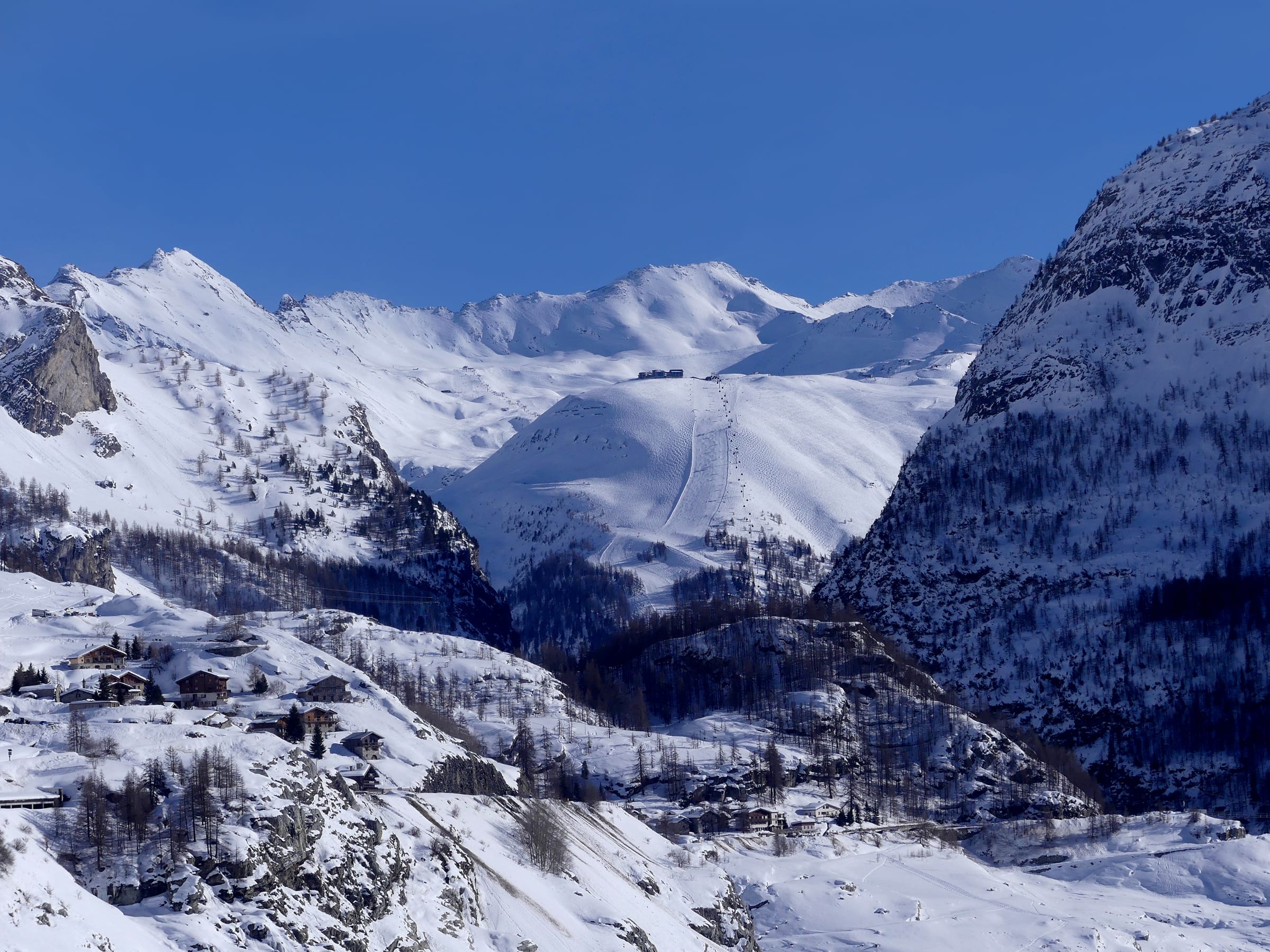
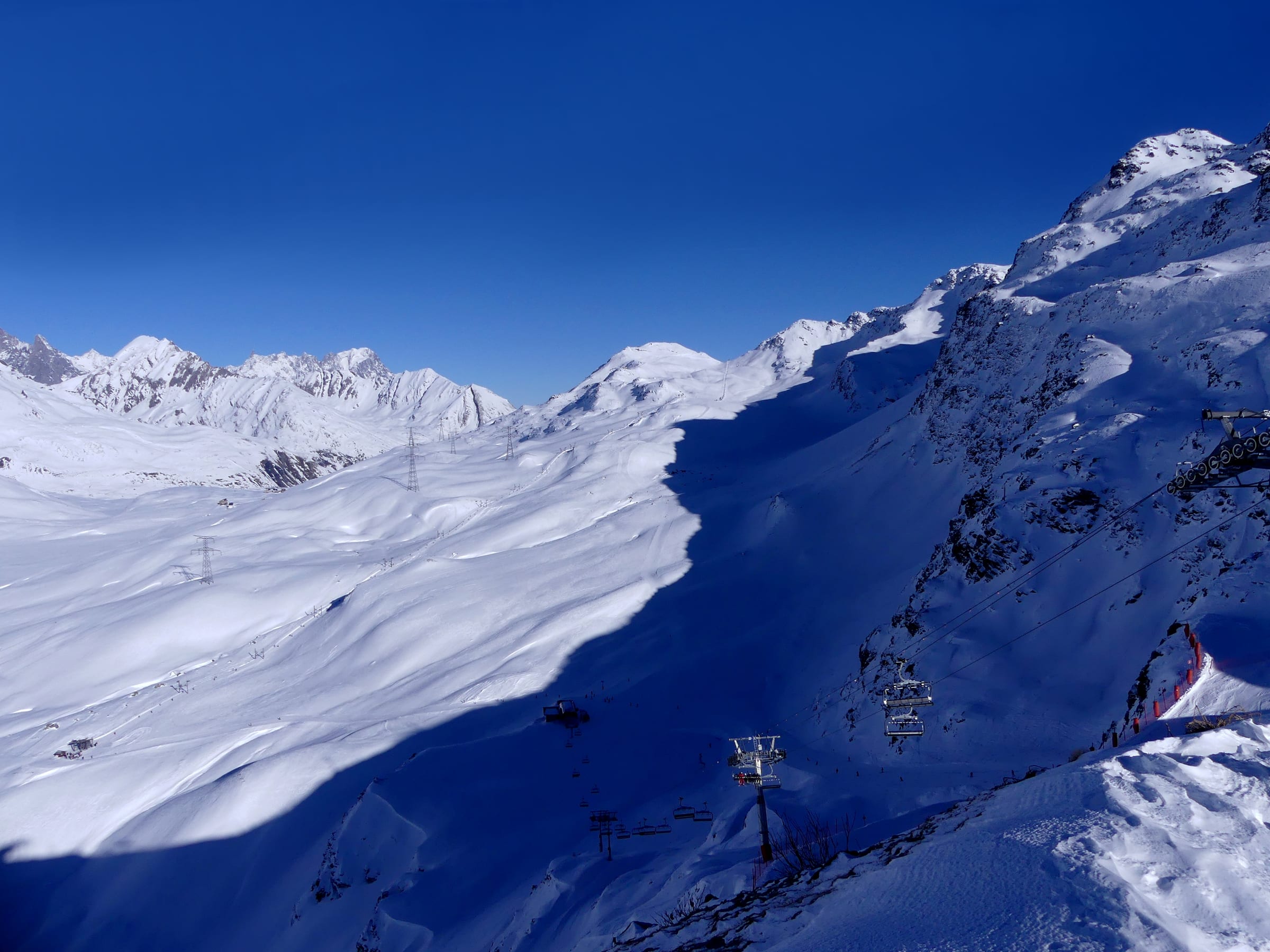
Paradiski is two large, separate ski networks bridged at a single point. On one side, Les Arcs climbs the steep east flank of the Isère valley above Bourg-Saint-Maurice, topping out at the Aiguille Rouge at 3226 m. On the other, La Plagne spreads across a high, gentler basin under the Bellecôte glacier at 3250 m — the domain's high point. Between them runs the Ponturin valley, crossed by the Vanoise Express, a huge twin-deck cable car that links the two in about four minutes. Both sides are big, fully lift-linked areas in their own right; Paradiski is what you get when one pass ties them together, with base villages from wooded hamlets at ~1250 m up to purpose-built resorts above 2000 m.
Range. Each half would be a serious week on its own — Les Arcs for steep, long, high descents, La Plagne for wide cruising and snow-sure altitude — and the Vanoise Express lets you have both without changing resort. The single Aiguille Rouge run drops more than 2000 m of vertical to Villaroger, one of the longest continuous descents in the Alps, and few pass areas pair that with terrain as broad and beginner-friendly as La Plagne's.
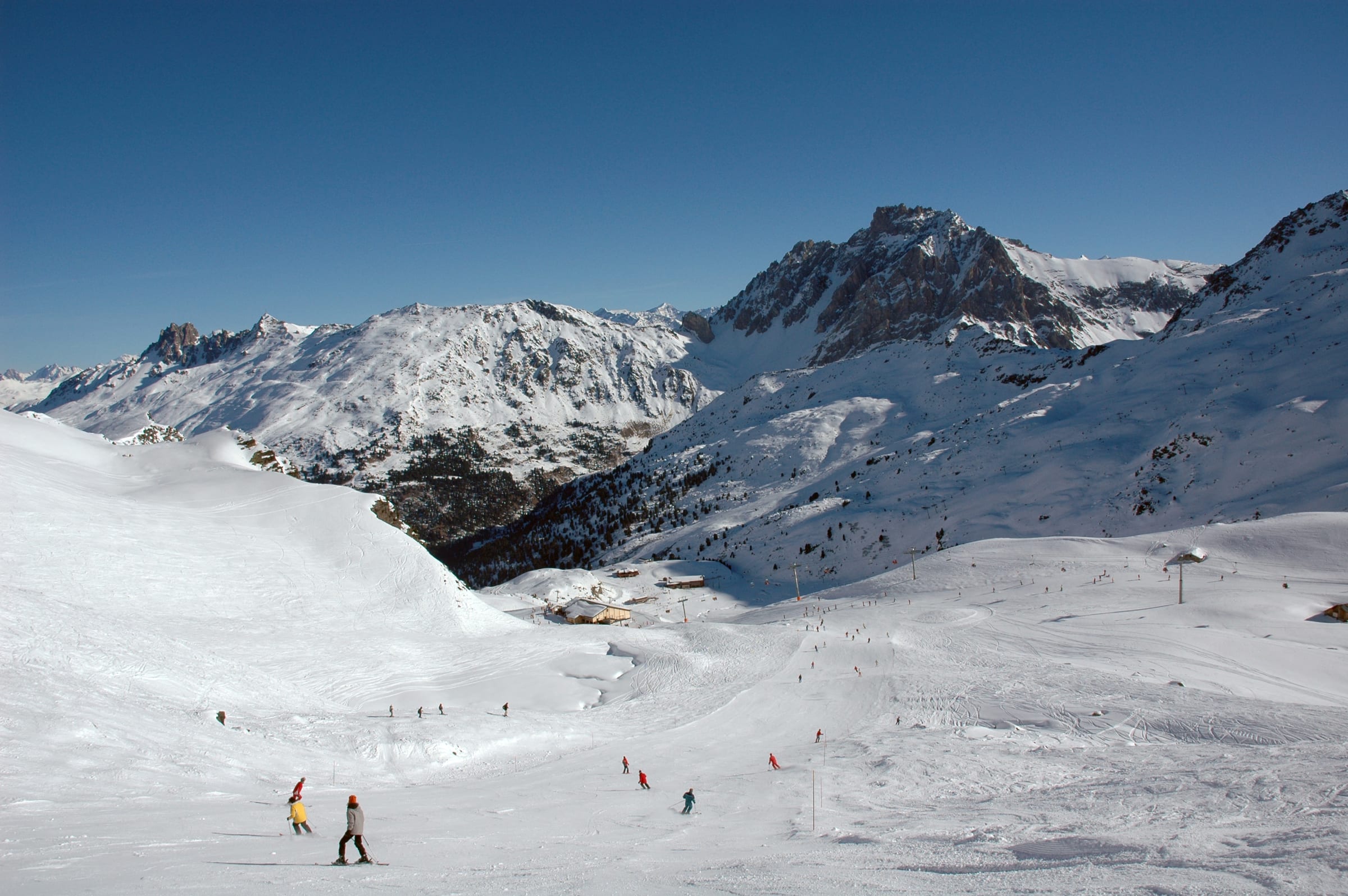
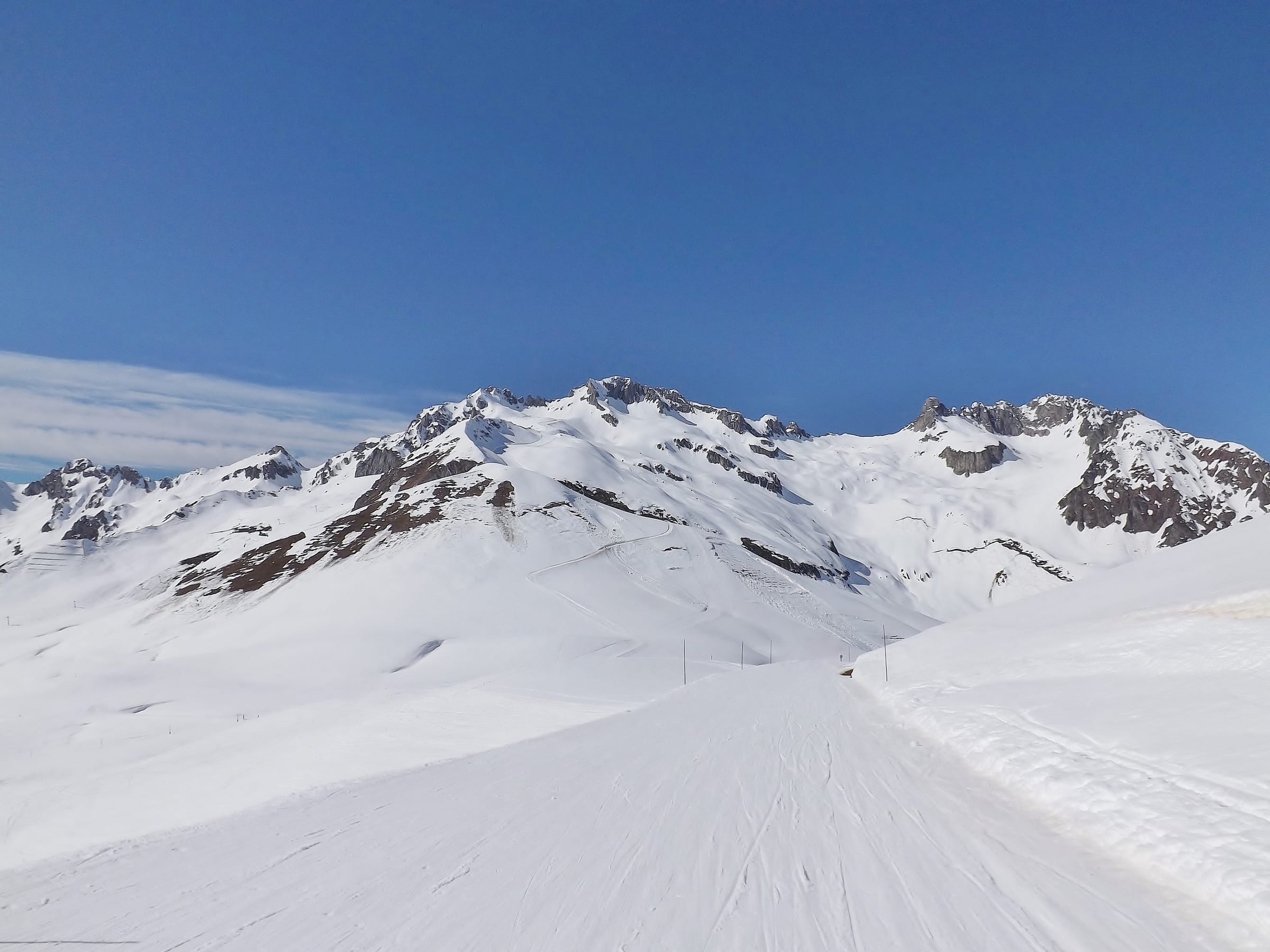
Two contrasting mountains under one ticket. Les Arcs is the steeper, more dramatic side — long fall-line pistes down an open, sunny flank with the Aiguille Rouge glaciated at the top and larch forest low down toward Bourg and Villaroger. La Plagne is wider and softer: a high, rolling basin of cruising blues and reds ringed by the Bellecôte glacier, with sheltered tree runs dropping to Montchavin and Les Coches. Most of the skiing sits above the trees on both sides, so the character is open and fast up high, with wooded runs kept in reserve for storm days at the lower villages.
Best known for
Explore the villages
The pass is the same everywhere — the village you base in shapes the holiday more than the valley you ski. 8 base villages, one lift pass.
Arc 1800
1,800 mLively, central ski-in/ski-out on the Les Arcs side
The busiest and most central of the Les Arcs bases, strung along the mountainside with ski-in/ski-out access and the liveliest bars on this side of Paradiski, including a La Folie Douce for afternoon cabaret. A balanced, well-planned resort that sits with the treeline rather than above it.
Explore the village →Arc 1950
1,950 mUpmarket, car-free ski-in/ski-out convenience
A car-free, pedestrian resort built in the early 2000s in traditional Savoyard style, more polished and residential than its neighbours. You walk everywhere and ski from the door, trading nightlife for calm and good looks.
Explore the village →Arc 2000
2,000 mHigh-altitude snow and access to steep terrain
The highest Les Arcs base, sitting right under the Aiguille Rouge with the steepest, most snow-sure terrain on its doorstep. High, open and purpose-built, it is about the skiing more than the scene.
Explore the village →Arc 1600
1,600 mQuiet, tree-lined family base above Bourg
The quietest and most wooded of the purpose-built Arcs, reached by funicular straight up from Bourg-Saint-Maurice. Sheltered among the trees and low-key, it makes a calmer, family-friendly base.
Explore the village →Peisey-Vallandry
1,350 mSkiing both mountains from a traditional wooded base
Traditional, wooded villages that sit at the geographic centre of Paradiski, right beside the Vanoise Express cable car. The natural choice if you want to ski Les Arcs and La Plagne in equal measure, with a gentler, more rustic feel than the high Arcs resorts.
Explore the village →La Plagne
1,970 mSnow-sure, family cruising on the La Plagne side
The purpose-built hub of the La Plagne side, set high in the central basin with gentle, snow-sure slopes running from the door. Practical and family-focused, it puts the widest, easiest cruising terrain right outside.
Explore the village →Belle Plagne
2,050 mHigh-altitude, ski-in/ski-out convenience
The highest of the La Plagne bases, a compact ski-in/ski-out resort where the lifts start at the village edge. Altitude buys reliable snow and quick access, at the cost of trees and old-village character.
Explore the village →Montchavin-Les Coches
1,250 mTraditional, wooded family base near the cable car
Two traditional, wooded villages low on the La Plagne side, close to the Vanoise Express and full of the old-hamlet character the high resorts lack. Sheltered tree runs and easy access to both mountains make them a relaxed family base.
Explore the village →- Arc 1800 The busiest, most central Les Arcs base with ski-in/ski-out access and the area's liveliest bars; best all-round choice on the Les Arcs side.
- Arc 1950 Upmarket, car-free and purpose-built in Savoyard style; best if you want a polished, walkable base and don't mind paying for it.
- Arc 2000 The highest Les Arcs base, right under the Aiguille Rouge; best for snow certainty and quick access to the steepest terrain.
- Arc 1600 Quiet, tree-lined and low-key at the top of the funicular from Bourg; best for a calmer, more sheltered family week.
- Peisey-Vallandry Traditional wooded villages beside the Vanoise Express; best if you want to ski both Les Arcs and La Plagne equally.
- La Plagne Purpose-built and central in the high basin, gentle snow-sure slopes from the door; best for families skiing mainly the La Plagne side.
- Belle Plagne The highest La Plagne base, ski-in/ski-out at altitude; best for snow-sure convenience without leaving the La Plagne side.
- Montchavin-Les Coches Traditional wooded villages near the Vanoise Express on the La Plagne side; best for old-village character and easy access to both mountains.
Base by which side you'll ski most, because crossing takes a cable-car ride each way. To ski both halves equally, Peisey-Vallandry sits closest to the Vanoise Express on the Les Arcs side and is the natural centre. For the Les Arcs terrain, Arc 1800 is the lively all-rounder, Arc 2000 the snow-sure high option, Arc 1950 the polished car-free one, and Arc 1600 the quiet wooded base above Bourg. For the La Plagne side, Plagne Centre and Belle Plagne put you in the high basin ski-from-the-door, while Montchavin-Les Coches gives traditional wooded villages near the cable car. No village changes the pass — only the daily geography.
Skiing, by level
Strong, and mostly on the La Plagne side — the high central basin around Plagne Centre, Belle Plagne and Aime-la-Plagne has gentle, snow-sure greens and blues you can potter around without committing to big links. Les Arcs is steeper and less forgiving for a true first-timer, though Arc 1800 and Arc 1600 have manageable nursery areas among the trees.
The area's core. Confident blue and red skiers get enormous mileage on both sides, can cross the Vanoise Express and ski two mountains in a day, and — with a week's practice — can take the long Aiguille Rouge descent to Villaroger on its lower, easier sections. La Plagne's cruising and Les Arcs's fall-line reds complement each other well.
Plenty on the Les Arcs side especially: the steep front of the Aiguille Rouge, long top-to-bottom blacks toward Arc 2000, and the vertical off the Bellecôte glacier over on La Plagne. Runs are long here, so it rewards fitness as much as technique.
Real off-piste for those with a guide. The Aiguille Rouge has serious couloirs and the north face of the Bellecôte is a committing, glaciated big-mountain descent with genuine avalanche and crevasse hazard. Neither side is a lift-served extreme area on the scale of Chamonix, but the high, open terrain gives a strong skier a lot to go at when it's safe.
Cross the Vanoise Express to ski both mountains
The defining Paradiski day: ski one side to the valley, board the double-decker Vanoise Express over the Ponturin gorge, and spend the afternoon on the other mountain — Les Arcs and La Plagne in a single day. Watch the cable car's last crossing times so you get back to your own bed, and check it's running before you commit, as high wind can close the link.
The Aiguille Rouge descent to Villaroger
Take the cable car to the 3226 m Aiguille Rouge, the high point of Les Arcs, then ski the long fall-line all the way down to the hamlet of Villaroger at around 1200 m — over 2000 m of vertical in one go, from bare high glacier to larch forest, one of the longest continuous descents in the Alps. Intermediates can manage its lower half by the end of a week.
The Bellecôte glacier and the Olympic bobsleigh
On the La Plagne side, ride up to the Bellecôte glacier at 3250 m — the domain's highest point — for a long red descent off the top. Back down at Plagne, the 1992 Albertville Olympic bobsleigh track still runs, and in the afternoon it opens to the public for a piloted downhill run, an unusual way to end a ski day.
Snow & how the mountain faces
Reliable, thanks to altitude on both sides. Les Arcs skis to 3226 m at the Aiguille Rouge and La Plagne to the 3250 m Bellecôte glacier, and several bases — Arc 2000, Belle Plagne, Aime-la-Plagne — sit high enough to hold cover through the season. The honest trade-offs: the lowest villages (Montchavin, Les Coches, Peisey at ~1250–1350 m) feel a warm spell first, so their home runs can thin early and late; and the Vanoise Express itself crosses an exposed gap, so high wind can close the link and briefly strand you on whichever side you started. Snowmaking backs the main arteries down to the villages.
On the map
The area and its base villages on the live map — pan and zoom to explore. The official piste maps are one tap away beneath it.
Legend
Run difficulty
- Novice
- Easy
- Intermediate
- Advanced / Expert
- Freeride / Extreme
- Unknown
Run types
- Downhill — groomed
- Downhill — ungroomed
- Downhill — gladed
- Nordic (groomed)
- Ski tour
- ☾Lit (night)
- △Not patrolled
- →One-way
- ❄Snowmaking
Lifts
- Operating
- Operating (private)
- Non-operating
- Lift station
Slope-gradient grading
Downhill / ski tour
- Flat<3°
- Easy3–14°
- Intermediate14–22°
- Advanced / Expert22–45°
- Freeride / Extreme>45°
Nordic
- Easy<6°
- Intermediate6–9°
- Advanced>9°
Aspect (sun exposure)
- N — least sun
- E — morning
- S — most sun
- W — afternoon
Legend after OpenSkiMap
How to get there
Geneva (GVA) and Lyon (LYS) are the main year-round airports, each ~approx 2.5–3.5 hours by road; Chambéry (CMF) and Grenoble (GNB) are closer but smaller and mostly seasonal.
The TGV reaches Bourg-Saint-Maurice, at the foot of Les Arcs, from Paris and (in ski season) from London; Aime-la-Plagne station serves the La Plagne side. From either it is a ~approx 20–45 min transfer up to the villages.
From Bourg-Saint-Maurice a funicular climbs straight up to Arc 1600, with road transfers on to the other Arcs villages; the La Plagne villages are reached by mountain road up from Aime and Bourg-Saint-Maurice. Once you're up, the lifts do the work — including the Vanoise Express between the two halves.
Best time to go
Mid-December to April for full lift coverage, with February the busiest and priciest around the French, UK and Dutch half-terms. The quiet sweet spots are mid-January and the second half of March into April, when the high bases and glaciers still hold good snow and the pistes empty out. Late season on the sunny Les Arcs flank means soft afternoon snow; go early in the day up high before it turns heavy.
- Season opensMid-December (snow-dependent; the highest sectors a little earlier)
- Season closesLate April across most of the domain
- Season openingmid-December (snow-dependent)
- Peak weeksChristmas / New Year and February half-terms
- Spring skiinglate March into April on the high sectors
Good to know
Are Les Arcs and La Plagne actually linked, or just on one pass?
Which side should I base on?
How reliable is the snow?
Do beginners have enough here?
Nearby resorts & areas
Other resorts within reach if you're combining trips or comparing.
Getting to Paradiski
Book an airport transfer up to the resort, or pick up a car at Lyon (LYS) — search and compare without leaving the page.
Ski data © OpenStreetMap contributors (ODbL), via OpenSkiMap & Skimap.org. Basemap © OpenFreeMap / OpenMapTiles. · Weather data © Open-Meteo.com (CC-BY 4.0), ERA5 reanalysis. Village grouping & editorial: mynext.holiday. Transfers via Kiwitaxi; car hire via Travelpayouts.