Landmarks
Mount Alvernia & The Hermitage
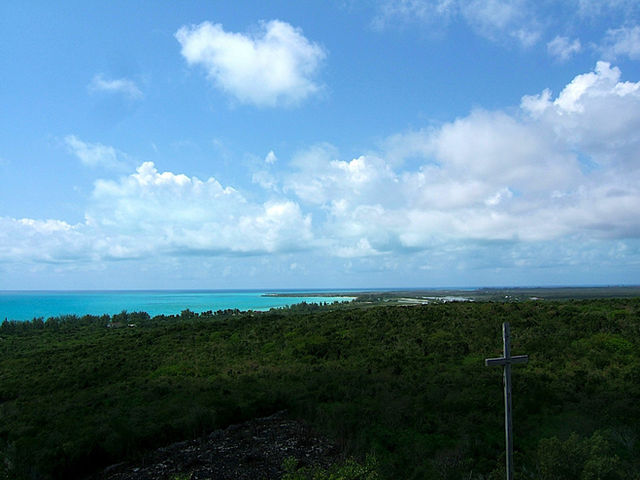
The highest point in the Bahamas (206 ft), topped by a miniature hand-built stone monastery — Father Jerome's Hermitage — with an all-round island view.
Best for Views
A quiet, undeveloped Out Island crowned by the highest hill in the Bahamas, with empty pink-sand beaches, deep folk-music roots and almost no resorts.
Merritt B. -- Cartographer Hyde / Wikimedia Commons (CC0)
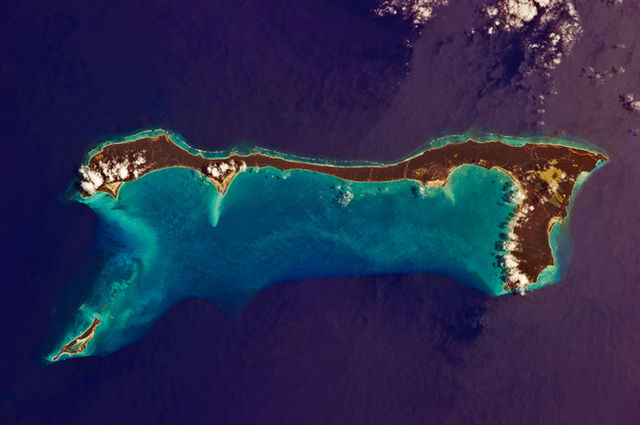
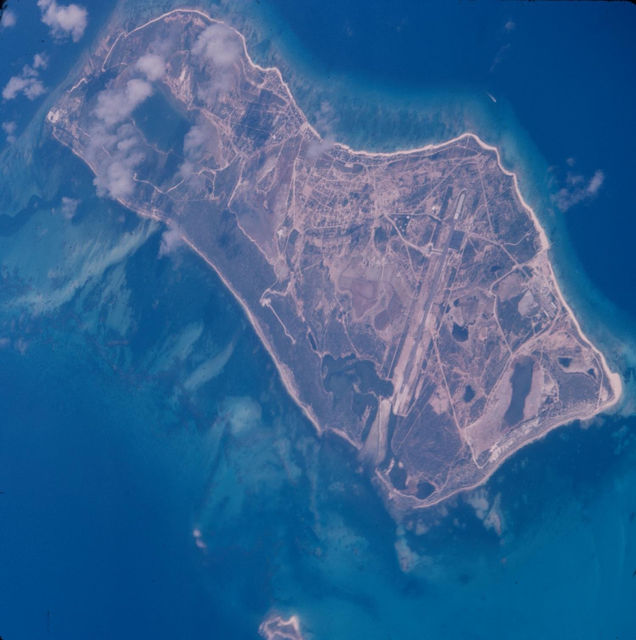
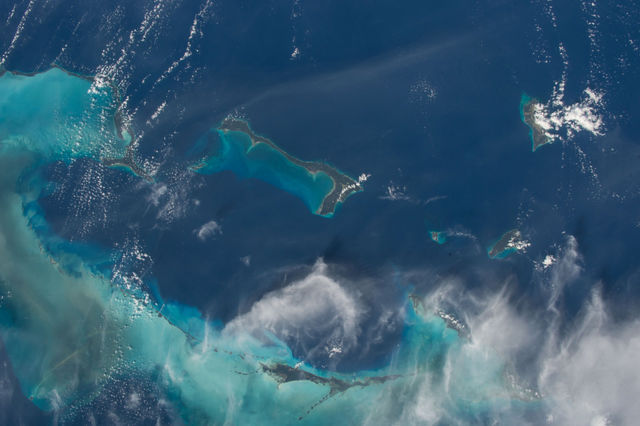
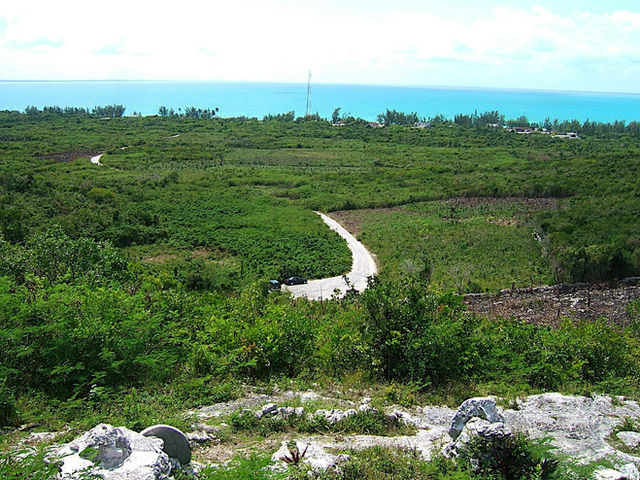
Cat Island is a 48-mile-long, rarely more than a few miles wide island in the central Bahamas, roughly 130 miles southeast of Nassau, with a population of around 1,500. It is one of the quietest and least-developed of the Out Islands — there are no traffic lights, no chain hotels, no cruise berths and only a scattering of small settlements linked by a single mostly-paved main road (the Queen's Highway). What it does have is disproportionate to its size: Mount Alvernia (locally Como Hill), at 206 feet the highest point in the entire Bahamas, crowned by The Hermitage, a miniature stone monastery hand-built in 1939 by the priest-architect Father Jerome; a coastline of long, near-empty beaches, some of them pink-sand; and a living folk culture — this is the home of rake-and-scrape music and the childhood island of the actor Sidney Poitier. The interior is low scrub, farm plots and blue holes; the settlements run from Arthur's Town and Bennett's Harbour in the north through New Bight (the administrative centre) to Old Bight and Port Howe in the south. This is an island for travellers who want genuine remoteness, self-catering or small-lodge stays, and days built around swimming, walking, fishing and talking to people — not one for those who need resort facilities, shopping or a nightlife scene.
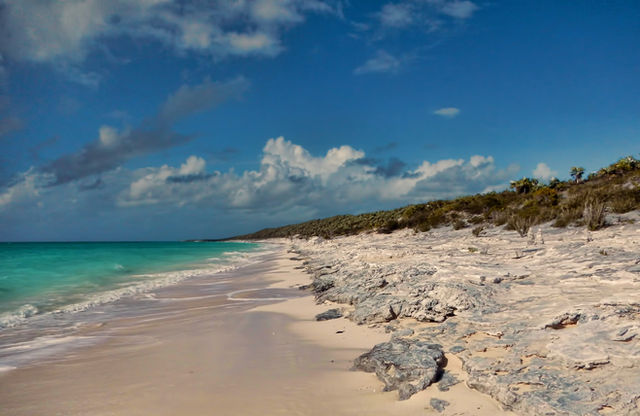
Cat Island rewards a very specific kind of traveller: the one who reads that an island has almost no infrastructure and takes it as a recommendation. The beaches are the headline — miles of soft sand you will frequently have entirely to yourself, from the crescent cove at Fernandez Bay to the roughly eight-mile pink-tinged strand behind Greenwood Beach in the southeast. The climb to The Hermitage on Mount Alvernia, past Father Jerome's hand-carved Stations of the Cross, is the best short walk in the Bahamas and gives a rare long view over the island and both coasts. The flats fishing is world-class — the shallows near Fernandez Bay and the southern settlements hold plentiful bonefish — and the diving off the south coast reaches dramatic wall sites. Above all there is the culture: the raw, joyful rake-and-scrape sound of a carpenter's saw, goatskin drum and accordion, best caught live at the festival over Labour Day weekend in early June. Cat Island pairs naturally with a night or two in Nassau at the start or end of the trip, or with a longer Out Islands hop to Eleuthera or Long Island by air via Nassau.
Eating on Cat Island is a low-key, home-cooking affair built around what the sea and the land provide. Conch is everywhere — cracked (pounded, battered and fried), in salad cured with lime and hot pepper, or in fritters — alongside fresh-caught grouper, snapper and other fish, and the island speciality of land crab, gathered after summer rains and stewed or baked in its shell. Sides run to peas 'n' rice, macaroni cheese, plantain and johnnycake. Dining is chiefly at lodge restaurants and a handful of small local spots in the settlements; opening hours are relaxed and it is normal to phone ahead, as a place may cook to order or not open at all on a quiet night. Self-caterers should note that grocery shops are small and stock is limited and shipment-dependent — bring or buy staples in Nassau if you have particular needs, and buy fish and produce locally when you can. The Bahamian beer Kalik and Sands are the standard drinks; rum is the spirit of choice. Prices are higher than you might expect for such a modest island because almost everything is imported.

Live map of hotels and villas around Cat Island — powered by Stay22. Pan, zoom and compare live prices to pick your base.
Pan, zoom and compare live prices — every stay in one map.
A hire car is essential on Cat Island — this is the single most important thing to arrange. The island is long (around 48 miles) and thin, strung along the Queen's Highway, with settlements, beaches and sights spread far apart and no useful public transport between them. Rentals are informal and limited: cars are usually arranged through your lodge, a local operator or the airport, so book in advance rather than assuming you can pick one up on arrival, and expect older vehicles. Driving is on the left, distances are deceptive on a two-lane road, and roaming livestock, potholes and unlit stretches after dark are the main hazards. Fuel stations are few — top up when you can and do not let the tank run low, especially heading to the remote south. Some lodges arrange bicycles for pottering around a settlement, and boats for fishing and dive trips, but for getting the length of the island there is no substitute for your own car.
There is effectively no public transport on Cat Island. No scheduled bus network runs the length of the island, and there is no taxi rank waiting outside the airport in the way visitors might expect. Transfers between the airstrips and lodges are arranged privately — your accommodation will organise a pickup, and this needs to be confirmed before you arrive rather than sorted on the day. A few local drivers will run informal taxi trips by arrangement, but fares are negotiated case by case and there is no meter or fixed tariff; expect to pay a premium for the long distances involved. The practical upshot is simple: budget for a hire car for the whole stay and treat any occasional lift as a bonus, not a plan.
Time your climb to Mount Alvernia for early morning or late afternoon: the stone staircase is exposed and the midday heat is punishing, and the low light is far better for the long views from the top. Bring more cash than you think you need — the Bahamian dollar is pegged one-to-one to the US dollar and both circulate freely, but ATMs on the island are scarce and unreliable and many small places do not take cards, so draw cash in Nassau before you fly out. Confirm your airport transfer and hire car directly with your lodge before you travel, not on arrival; the same goes for booking dinner, as small kitchens often cook to order. If you can only catch one thing, aim for the Rake & Scrape Festival over Labour Day weekend in early June at Arthur's Town — but book accommodation months ahead, as the island's small stock of rooms fills. For a beach entirely to yourself, head to the long pink strand behind Greenwood in the south or the white sand near Pigeon Cay in the north on any ordinary day. And treat the mail boat and domestic flight schedules as loose — always leave a day's buffer before an international connection out of Nassau.
The landmarks, museums, viewpoints and shores worth your time on Cat Island — filter by what you're into. Tap a card to fly the map to it.
The highest point in the Bahamas (206 ft), topped by a miniature hand-built stone monastery — Father Jerome's Hermitage — with an all-round island view.
Best for Views
No places match those filters — turn a chip back on.
Cat Island · Around the island · 1 island
Skip-the-line tickets and small-group tours in Cat Island — compare across our partners.
We're still curating hand-picked tickets and tours for Cat Island. In the meantime, the map above and the nearby cities are a great place to start.
December – April (dry season)
Cat Island has a warm, subtropical climate with little seasonal temperature swing — daytime highs sit around 25–28°C in winter and 30–32°C in summer, with the sea warm year-round. The meaningful division is wet versus dry. The dry season, roughly December to April, is the high season and the best time to visit: lower humidity, steadier trade winds, comfortable temperatures and the calmest conditions for the flats and the beaches (December to March is also prime bonefishing). The hurricane season runs June to November, overlapping the hotter, more humid and wetter summer months, with the greatest storm risk from August to October; travel is still possible but you should watch forecasts, consider travel insurance and accept that a remote Out Island is a poor place to be caught by a serious system. Late spring (May) and the shoulder around the June festival can be a good compromise of warm weather, thinner crowds and better rates, with the caveat that it edges into the start of the storm window.
Cat Island is a low-crime, welcoming place and the risks here are practical rather than personal. The main hazard is the road: the Queen's Highway is narrow and two-lane, with potholes, wandering goats and cattle, and long unlit stretches — drive slowly, and avoid night driving on unfamiliar sections, particularly in the remote south. In the sea, be realistic about currents and the fact that most beaches are unpatrolled with no lifeguard; on the exposed south and east coasts the surf and rip can be stronger, so swim within your depth and do not snorkel or dive alone. The tropical sun is intense — cover up and reheat protection often, especially on the water. The most important point specific to Cat Island is its remoteness: medical facilities are limited to small clinics, there is no hospital, and evacuation to Nassau takes time, so carry any regular medication, bring a basic first-aid kit, and take extra care with anything that could turn into an injury far from help. Mobile coverage and internet are patchy away from the settlements.
Cat Island is deeply Christian and church-going, with a strong Catholic thread left by Father Jerome alongside Baptist and other congregations — Sunday services are central to island life and worth attending respectfully if invited. Islanders are famously friendly, and a greeting before getting to the point is expected; a simple 'good morning' and a bit of unhurried conversation goes a long way, and rushing people is read as rude. Dress modestly away from the beach — swimwear is for the sand and the water, not the settlements, shops or church. The island also carries a discreet undercurrent of Obeah, the folk-spiritual tradition, which visitors should treat with respect rather than curiosity or ridicule. When visiting The Hermitage, remember it is a religious site as well as a viewpoint: keep noise down and dress appropriately for the climb. Photographing people, homes or church interiors deserves a quick request first. Tipping is customary at lodges and restaurants at broadly US levels.
£150/day mid-range (budget £80, luxury £350+; remote logistics and imported goods push costs up)
911 or 919 (police, fire, ambulance); BASRA marine rescue on VHF Ch 16 / +1 242-322-3877
There are no direct flights to Cat Island from the UK; the route runs via Nassau (NAS). From London, fly to Nassau (direct with British Airways, or via a US hub or another Caribbean gateway), then connect on a domestic flight to the island. New Bight Airport (TBI) is the main gateway: Bahamasair operates several flights a week from Nassau, a hop of around 40 minutes, and Makers Air runs scheduled service from Fort Lauderdale. A network of charter operators also serves the island. Arthur's Town Airport (ATC) in the north gained new scheduled service from Makers Air in May 2026, useful if you are basing at the north end; there is also a private airstrip at Hawks Nest in the south. Allow for the fact that Out Island domestic schedules are light and can shift — build in buffer time around connections, and do not plan a same-day international connection out of Nassau on the back of a single morning flight. There is no scheduled passenger ferry aimed at visitors; the government mail boat serves the island from Nassau but is slow and not a practical way in for most travellers.
Flights, airport transfers and car hire to TBI — search and compare without leaving the page.
Parking, holiday extras, and more — coming soon.
We're lining up parking, holiday extras and activities you'll be able to add to any trip from here.