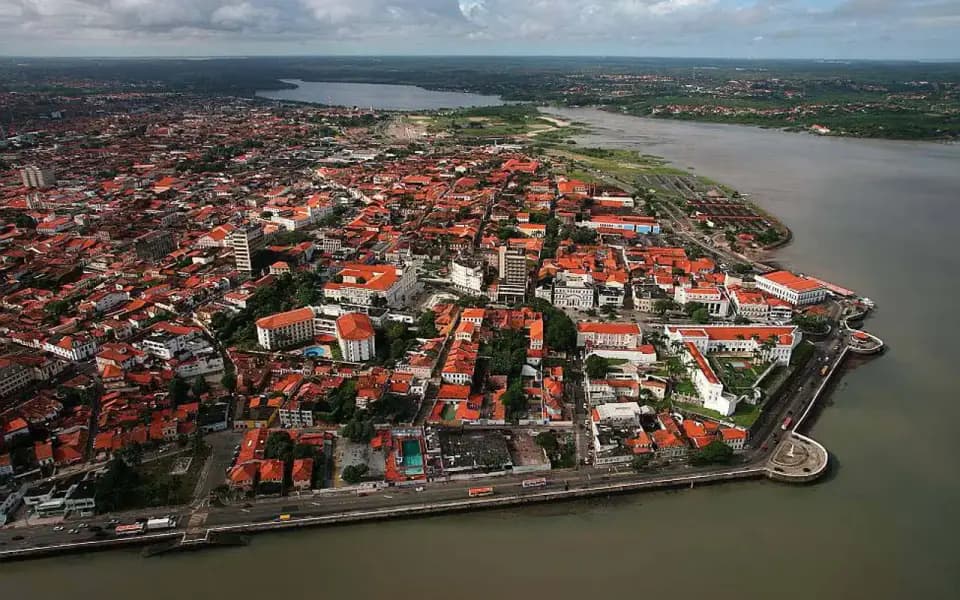
The tiled colonial old town — São Luís's wonder is its old town — the Praia Grande and Reviver districts, where street after street of grand colonial mansions are faced in Portuguese azulejo tiles in blue, white, green and yellow, the largest such collection in Latin America. Some are beautifully restored; many are romantically faded, weathered by the tropical heat, which only adds to the atmosphere. Wander the tiled streets (Rua Portugal, Rua do Giz), step into the churches and the azulejo museum, and soak up the layered French-Portuguese-Dutch-African history. The decaying-but-lovely tiled townscape is the essential experience.
Reggae and music — São Luís has an unexpected and genuine soul: reggae. Locals call the city the "Brazilian Jamaica," and reggae is woven into its culture — bars and clubs playing classic Jamaican and local reggae on giant "radiola" sound systems, a dedicated reggae museum, and a whole scene of slow-dancing "agarradinho." Beyond reggae, the city's Afro-Brazilian culture runs deep in its music, dance and religion. Spend an evening at a reggae bar, and you touch something you'll find nowhere else in Brazil.
Bumba-meu-boi and folk culture — São Luís is famous for Bumba-meu-boi, a spectacular Afro-indigenous-Portuguese folk festival centred on a comic-mythic story of a bull, performed with elaborate costumes, drumming and dance — reaching its climax in June around the São João festivities, when the city erupts in colour and music. It's one of Brazil's great folk traditions, and an extraordinary time to visit if you can. Year-round, the culture, crafts and music of Maranhão give the city a rich, distinctive character.
Maranhão flavours and the wonders nearby — Maranhão's food is northeastern-with-Amazon touches — the signature is arroz de cuxá (rice with the tangy vinagreira/hibiscus leaf and shrimp), plus fresh fish and shrimp, torta de camarão, cassava dishes, and the cassava liquor tiquira, with plenty of seafood. But São Luís is also a gateway: across the bay lies Alcântara, a hauntingly beautiful colonial ruin-town, and a few hours east begin the Lençóis Maranhenses, a surreal landscape of white sand dunes cradling turquoise rain lagoons — one of Brazil's most extraordinary sights. Eat the local specialties, and use the city as a base for these wonders.