← China
CHINA · CITY

Shanghai

  • City
  • April–May and October–November (avoid Golden Week, 1–7 October)
  • PVG
  • 3–4 days, plus a day trip or two
  • Bund Facades
  • Lujiazui Towers
  • Soup Dumplings
  • Plane-Tree Lanes

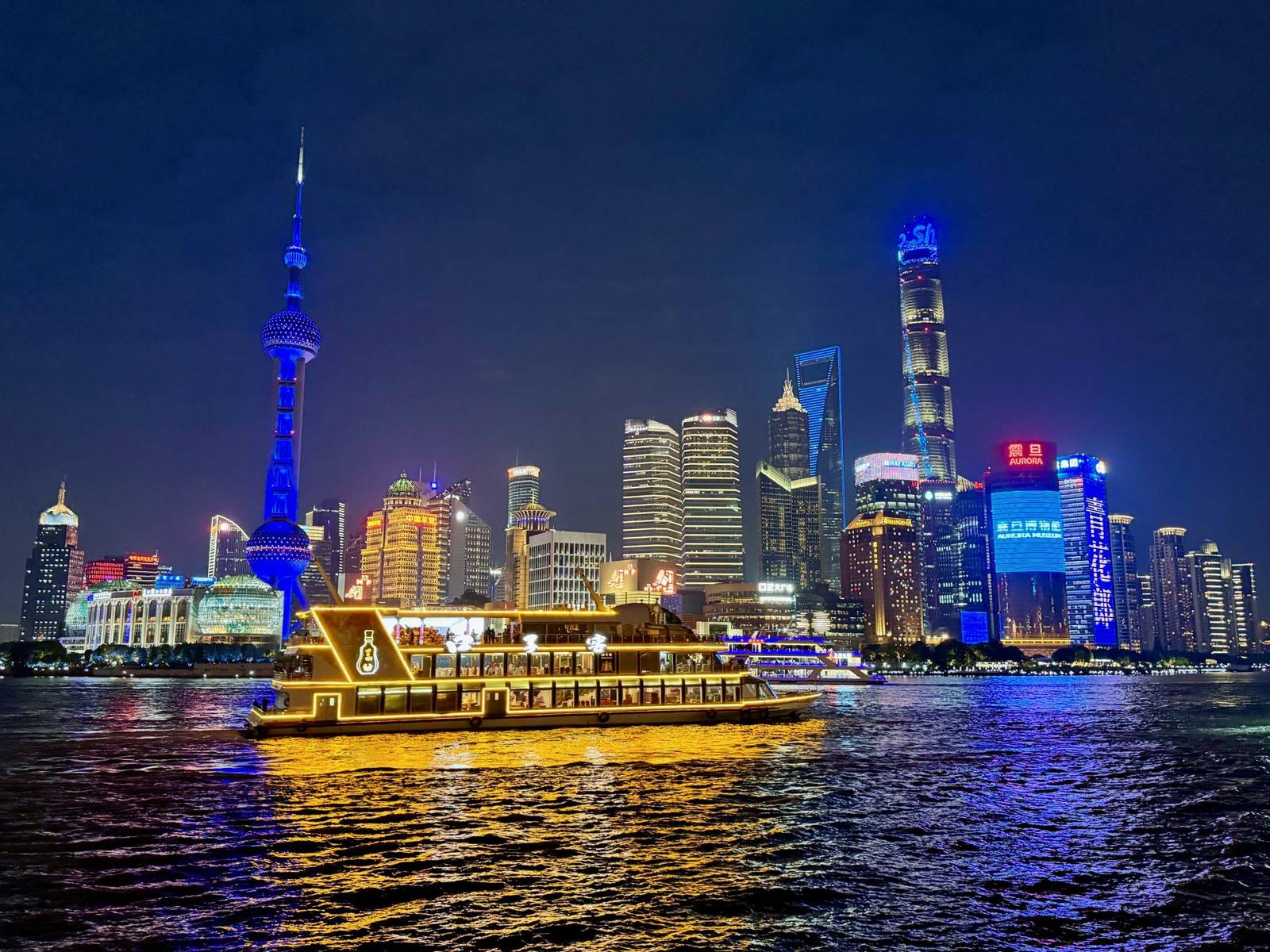
After dark on the Bund promenade: the stone facades behind you lit gold, the Oriental Pearl Tower and the Shanghai Tower glowing across the Huangpu, and sightseeing boats sliding past in both directions.

Shanghai puts a riverfront of early 20th-century buildings and a cluster of supertall towers on opposite banks of the same river, and the metro runs under both. It is big, fast and easier for a first visit to China than its size suggests — once your phone can pay and you have booked the handful of sights that need your passport.

Type
metropolis
Ideal length
3–4 days, plus a day trip or two
Getting around
Shanghai Metro, paid by tapping a contactless Visa, Mastercard or UnionPay card or by QR code in an app; taxis and ride-hailing for short hops and late nights
Neighbourhoods
8 areas
Best season / months
April–May and October–November (avoid Golden Week, 1–7 October)
Language
Mandarin Chinese, plus Shanghainese, the local dialect
Currency
Chinese yuan renminbi (¥)
Budget level
moderate — the big observation decks and hotels cost real money, but the metro, street food and the waterfront are cheap or free
Good for
  • First-timers
  • Architecture
  • Food
  • Museums
  • Skyline views
  • Stopovers
  • Short city breaks
▸ Discover

About Shanghai

Shanghai sits on the Huangpu River, which divides the city into Puxi, the older west bank, and Pudong to the east. On the Puxi side the Bund runs along the river with its row of early 20th-century buildings, and Nanjing Road Pedestrian Street leads inland from it towards People's Square, the city's civic centre and home of the Shanghai Museum. South of the Bund is the old town around Yu Garden and the City God Temple. West of People's Square are Xintiandi and its restored shikumen lanes, then the plane-tree streets of Xuhui and the former French Concession around Hengshan Road and Wukang Road, with Jing'an and its temple on West Nanjing Road to the north. Across the river, Lujiazui is the skyline: the Shanghai Tower, the Jin Mao Tower, the Shanghai World Financial Center and the Oriental Pearl TV Tower. Pudong International Airport and Shanghai Disney Resort lie further out on the east side; Hongqiao, with the second airport and the main high-speed rail hub, is out to the west.

Why go

No other city shows China's last hundred years quite so plainly. You can walk from a Ming-dynasty garden to a colonial-era waterfront to a 118th-floor observatory in an afternoon, and eat soup dumplings at every stop. Shanghai is also the easiest gateway into China for a British traveller: up to 30 days visa-free under the current policy, card-tap entry to the metro and maglev, and high-speed trains that put the gardens of Suzhou and Hangzhou's West Lake within an easy day trip.

Don't miss

  • The Bund — 52 riverfront buildings, best lit after dark
  • Yu Garden — Ming-dynasty garden beside the City God Temple
  • Top of Shanghai Observatory — 118th floor of the Shanghai Tower
  • Shanghai Museum — ancient Chinese art, now on two sites
  • A Huangpu River cruise — both skylines from the water

Signature experiences

The Bund and the river after dark — Start on the Bund promenade around sunset and watch the facades and the Lujiazui towers light up across the water. Then get on the river: standard Huangpu sightseeing cruises last about an hour and leave from Shiliupu Tourist Quay near the Bund and Yu Garden (the busiest departure), Jinling Road E. Quay, and the Oriental Pearl Tourism Wharf on the Pudong side; arrive at least 30 minutes early for ticket checks. Evening sailings cost more than daytime ones. For the cheapest crossing of all, the public ferries carry foot passengers across the Huangpu from ¥2.

Shanghai from the 118th floor — The Top of Shanghai Observatory sits 546 metres up on the 118th floor of the Shanghai Tower, reached by a very fast lift, with a 360-degree view over Lujiazui, the Bund and the river bends. The visit starts at an exhibition hall on B1 about the building's design, and the SKY632 art space on the 125th and 126th floors adds a light-and-sound show. Buy through the tower's official channels (it lists Ctrip, LY.com, Lvmama, Meituan and Dianping) and bring your passport — it is a real-name ticket. If you would rather have the Shanghai Tower in your photo than be in it, the Jin Mao Tower's 88th-floor sightseeing hall nearby is the alternative.

Gardens and temples of the old city — Yu Garden is a maze of rockeries, ponds, pavilions and covered walkways laid out in the 16th century, and it is worth arriving at the 9am opening before the tour groups. Tickets are ¥40 for adults in the peak months (April–June and September–November) and ¥30 the rest of the year; buy at the north or south gate or through the garden's official "上海豫园" mini-program, not from touts. The garden closes on Mondays (except public holidays), has no left-luggage, and its stone paths get slippery in the rain. Next door, the City God Temple and its lanes are the place to graze on five-spice beans and Nanxiang buns. For a quieter temple, head to Longhua Temple in Xuhui or the Jade Buddha Temple in Putuo.

Museum days — The Shanghai Museum now runs two sites. The original, on People's Square, opens 9am–5pm (last entry 3pm) and closes on Mondays except national holidays; while the "Ancient Civilizations of the Americas" exhibition runs there (until November 2027) you need to book ahead. Shanghai Museum East, at 1952 Century Avenue in Pudong, opens 10am–6pm (last entry 5pm), closes on Tuesdays except national holidays, and individual visitors don't need to reserve. Between them they hold nearly 1.02 million cultural relics, focused on ancient Chinese art. For contemporary art, the Power Station of Art in Huangpu and the West Bund galleries in Xuhui are the counterweight.

Lanes, villas and plane trees — Give a morning to walking the former French Concession: Wukang Road and its villas, the Wukang Mansion at the junction where the photographers gather, then east through the plane-tree streets to Sinan Mansions and on to Xintiandi's shikumen lanes for lunch. The official tourism board runs citywalk routes through the same streets. It is the side of Shanghai most visitors remember longest, and it costs nothing.
Neighbourhoods

Shanghai neighbourhood by neighbourhood — the character of each and who it suits.

  • Lujiazui

    The Pudong financial district on the river bend opposite the Bund, where Shanghai's tallest towers stand close together. By day it is offices and malls; at night it is the light show the Bund looks at.

    Why go
    For the view down onto the city from the Shanghai Tower, and the view back across to the Bund.
    Best for
    Observation decksskyline photographyriverside walks
    Known for
    The Shanghai Tower and its Top of Shanghai Observatory on the 118th floor; the 88th-floor sightseeing hall of the Jin Mao Tower; the Shanghai World Financial Center; and the Oriental Pearl TV Tower facing the Bund, with its transparent sightseeing corridor.
  • The Bund

    The riverfront promenade on the Puxi bank, lined with 52 buildings in a mix of classical revival styles. It is busiest, and best, after dark.

    Why go
    For the walk along the river and the face-off between old Shanghai and the Lujiazui towers.
    Best for
    Evening strollsarchitectureriver cruisesnight views
    Known for
    The row of facades known locally as the "Exhibition of World Architecture"; the promenade facing the Lujiazui skyline; the start of Nanjing Road Pedestrian Street; and the Bund Sightseeing Tunnel under the river to Pudong.
  • Yuyuan

    The old Chinese town south of the Bund, centred on Yu Garden and the City God Temple. The streets around them are given over to souvenir halls, snack stalls and tour groups — the garden itself is the calm part.

    Why go
    For a classical Ming-dynasty garden and the temple that has stood here since the early Ming.
    Best for
    Gardenstemplessnacksfirst-day sightseeing
    Known for
    Yu Garden, built in the Ming dynasty's Jiajing and Wanli periods and one of the five classical gardens in Shanghai; the Zigzag Bridge outside its south gate; the City God Temple, dating back to the Yongle period; and stalls selling five-spice beans and Nanxiang steamed buns.
  • Xintiandi

    A few blocks of restored shikumen — Shanghai's stone-gated lane houses — turned into a polished district of shops, cafés and restaurants. It is the tidy, expensive version of old Shanghai, and it knows it.

    Why go
    For an evening drink or dinner in a lane-house setting, and as a starting point for walks into the former French Concession.
    Best for
    Diningevening drinksshoppingarchitecture
    Known for
    The shikumen lanes around Lane 181, Taicang Road; the cafés and terraces of the pedestrian streets; and Sinan Mansions to the south-west, with 51 preserved buildings among the plane trees.
  • People's Square

    The civic heart of Puxi, a big open square and one of the city's main metro interchanges. It is where Nanjing Road Pedestrian Street arrives from the Bund.

    Why go
    For the Shanghai Museum and as an easy hub between everything else.
    Best for
    Museumsshoppingtransport connections
    Known for
    The Shanghai Museum on People's Square, one of two sites sharing a collection of more than a million cultural relics; the metro interchange for Lines 1 and 2; and Nanjing Road Pedestrian Street, which runs from Xizang Middle Road towards the Bund and is billed as the "Number One Commercial Street in China".
  • Jing'an

    The smarter end of the Nanjing Road shopping strip, with malls and offices along West Nanjing Road and lanes of older houses behind them.

    Why go
    For Jing'an Temple, shopping and the local food streets behind the malls.
    Best for
    Shoppingtemplesfooda central base
    Known for
    Jing'an Temple on West Nanjing Road, at its best lit up at night; the Wujiang Road food street just behind West Nanjing Road; Moller Villa; and the Jade Buddha Temple, a short ride north-west in Putuo.
  • Xuhui

    The leafy south-west of central Shanghai, covering much of the former French Concession: plane trees, European-style villas, independent shops and cafés along Hengshan Road and Wukang Road. Further south, the Xuhui Riverside — the West Bund — has turned old wharves into galleries and riverside paths.

    Why go
    For slow walks among the old villas and an afternoon of art by the river.
    Best for
    Walkingcafésarchitecturegalleries
    Known for
    Wukang Road, a historical and cultural street of European-style garden villas, and the Wukang Mansion, the photo stop everyone queues for; Hengshan Road; Longhua Temple, the oldest and largest temple in the Shanghai area, with its Song-dynasty pagoda; and the West Bund Museum on the Xuhui Riverside.
  • Hongqiao

    Shanghai's western transport hub rather than a sightseeing district: Hongqiao Airport's two terminals and Shanghai Hongqiao railway station, with business hotels around them.

    Why go
    For high-speed trains to Suzhou, Hangzhou and Beijing, domestic flights, and an easy night before an early departure.
    Best for
    Transitearly trainsovernight stops
    Known for
    Hongqiao Airport Terminal 2 with metro Lines 2 and 10; Terminal 1 on Line 10; Shanghai Hongqiao railway station; and the Airport Link Line from Terminal 2 to Pudong Airport.

Views & quieter corners

Best views

  • The Bund promenade — the Lujiazui skyline across the Huangpu, best from dusk onwards
  • The Top of Shanghai Observatory — the whole city from 546 metres up on the 118th floor
  • The Oriental Pearl TV Tower's transparent sightseeing corridor — for the drop beneath your feet
  • A Huangpu River cruise from Shiliupu — the Bund and Lujiazui from the water, at their best at night

Quieter corners

  • The public ferry across the Huangpu — from ¥2, the cheapest river view in the city
  • Sinan Mansions — 51 preserved buildings among the plane trees, a quieter walk than Xintiandi next door
  • Longhua Temple — the oldest temple in the Shanghai area, with a seven-storey Song-dynasty pagoda
  • The Shanghai Jewish Refugees Museum in Hongkou, near the North Bund — a quieter, sobering stop away from the main sights
  • Duolun Road Cultural Street in Hongkou — off the usual first-timer route, and an easy pairing with the Jewish Refugees Museum

Food & drink

Shanghai eats on the street as much as at the table. The soup dumpling — xiaolongbao — is the city's calling card, and the lanes around Yu Garden are where most visitors try their first, alongside Nanxiang buns and five-spice beans. Shengjian bao, pan-fried and crisp-bottomed, are the breakfast staple; scallion oil noodles and sesame paste noodles are the cheap, quick lunch; and red-braised pork is the dish that defines the sweeter, darker Shanghainese home cooking. Wujiang Road, just behind West Nanjing Road in Jing'an, is a lively food street of casual restaurants and snacks; Daxue Road in Yangpu is the student quarter of cafés and outdoor tables; and for late-night grazing, Sijing Night Market in Songjiang is billed as the city's largest open-air night market. Coffee is part of everyday life here, from riverside cafés on the North Bund to the independent places of the former French Concession, and the rooftop scene along the Bund is where the city drinks with a view of Lujiazui.

  • Xiaolongbao — thin-skinned soup dumplings filled with pork and hot broth; bite carefully
  • Shengjian bao — pan-fried pork buns with a crisp base and sesame-and-scallion top
  • Scallion oil noodles — plain noodles tossed in fried-scallion oil and soy, a local lunch fixture
  • Red-braised pork — pork belly slow-cooked in soy, sugar and rice wine until glossy
  • Pork chop with rice cakes — fried pork chop with chewy rice cakes, a classic old-Shanghai snack
  • Nanxiang steamed buns — the small steamed buns sold around the City God Temple
Dietary notes

Everyday menus lean on pork and seafood, so if you don't eat either, ask before ordering and look out for dedicated vegetarian restaurants. Gluten-free is hard: soy sauce, wheat noodles and dumpling wrappers are in almost everything, so carry a written note in Chinese.

▸ Where you'll stay

Where you'll stay in Shanghai

Base yourself within walking distance of a metro station on Line 2 or Line 10 and the city is easy. The Bund and the streets just behind it put you on the river with the best views, at a price. People's Square and East Nanjing Road are central, well connected and often cheaper, though noisy. Jing'an and the former French Concession around Xintiandi and Xuhui are the most pleasant to live in for a few days — tree-lined, full of cafés and restaurants, and a short metro ride from the sights. Lujiazui suits a skyline view and business trips but feels empty at night. Hongqiao only makes sense for an early train or flight.

  • Budget
    People's Square or East Nanjing Road central, well connected, rooms on the small side.
  • Mid-range
    Jing'an or Xintiandi walkable, leafy streets, good food and metro links.
  • Luxury
    The Bund or Lujiazui river and skyline views, big hotels, the main sights on the doorstep.
Stay

Hotels & rentals around Shanghai

Pan, zoom and compare live prices — every stay in one map.

We may earn a commission if you book through these links, at no extra cost to you. How we make money

▸ Getting around

Getting around Shanghai

The Shanghai Metro goes almost everywhere a visitor needs, and contactless payment works at more than 500 stations. Tap a contactless UnionPay, Visa or Mastercard card at the gates (with small-value password-free payment enabled), or scan a QR code from the Metro Daduhui or SH MaaS apps, which also work on buses and ferries; staff can help you buy a single ticket. Many taxis take foreign cards. Public ferries cross the Huangpu from ¥2. The centre is walkable in sections — the Bund, Nanjing Road, Xintiandi and the former French Concession are all good on foot — but distances between them are large. A car is pointless.

Line 2 is the visitor's spine, running from Hongqiao Airport in the west across Puxi through People's Square, under the river to Lujiazui and on to Longyang Road (for the maglev) and Pudong Airport. Lujiazui is served by Line 2 (exit 6 for the Shanghai Tower) and Line 14 (exit 9A). People's Square is the interchange for Lines 1 and 2. The Bund Sightseeing Tunnel also runs under the river between the Bund and Pudong. High-speed trains to Suzhou (fastest around 20–25 min), Hangzhou East (fastest around 45 min) and Beijing South (fastest around 4 hr 25 min, most 4½–6 hr) leave from Shanghai Hongqiao and Shanghai Railway Station; book on China Railway's 12306 site or app with your passport.

▸ Plan your days

Suggested itineraries

Ready-made day plans for Shanghai — from a single day to a long weekend.

One day

Start early at Yu Garden for the 9am opening, then graze through the City God Temple lanes on xiaolongbao and Nanxiang buns. Walk north to the Bund and along the promenade, then up Nanjing Road Pedestrian Street to People's Square for the Shanghai Museum (remember it's closed on Mondays). In the late afternoon, take Line 2 to Lujiazui and ride up to the Top of Shanghai Observatory for sunset. Finish with an evening Huangpu cruise from the Oriental Pearl Tourism Wharf or, cheaper, the public ferry back to the Bund to see the waterfront lit up.

Two days

Spend the morning in the former French Concession: Wukang Road and the Wukang Mansion, the plane trees of Hengshan Road, then on to Sinan Mansions and lunch in Xintiandi. In the afternoon, take the metro to Jing'an Temple and wander West Nanjing Road, then eat on Wujiang Road. If you've time, head south to Longhua Temple or the West Bund galleries on the Xuhui Riverside, and finish with a drink in Xintiandi.

Three days

Take a high-speed train from Shanghai Hongqiao to Suzhou — the fastest take around 20–25 minutes — and spend the day in the classical gardens: the Humble Administrator's Garden, the Lingering Garden and the Net Master's Garden are among the nine on UNESCO's list. Or go to Hangzhou East (the fastest trains take around 45 minutes) for a day around West Lake and its causeways. If you'd rather stay closer, Zhujiajiao in Qingpu has Ming and Qing buildings and boat rides along the Caogang River; go on a weekday. Back in the city, finish at Shanghai Museum East in Pudong or with one last walk along the Bund.

▸ What you'll do

Insider tips

  • Before you tap a bank card at the metro gates, check that contactless works on your card — the gates use small-value password-free payment. If you'd rather not use a card, Shanghai's Metro Daduhui app and the SH MaaS app both give you a QR code, and staff can help you buy a single-journey ticket.
  • The maglev also takes a tap of a Visa, Mastercard, American Express or JCB card; if your card is co-badged with UnionPay, the gate charges the UnionPay side.
  • Yu Garden has no left-luggage, so drop bags at your hotel first; in rain its stone paths and bridges get slippery.
  • The Shanghai Metro hotline is 021-6437 0000 if a gate or a card payment goes wrong.
What's on

While you're there

Explore

Explore the area

© OpenFreeMap · OSM · terrain Mapterhorn
▸ Budget

What it costs in Shanghai

Backpacker
a modest daily spend.
Mid-range
the hotel takes most of the money.
Luxury
several times the mid-range spend.
Cash vs card
Shanghai runs on phone payments. Link your foreign card to Alipay or WeChat Pay before you fly (both accept international cards; switch the app to English) and you can scan QR codes almost anywhere. Contactless Visa, Mastercard and UnionPay cards work on the metro, and many taxis now take foreign cards. Carry some yuan as a backup for small stalls.
▸ When you'll go

When to visit Shanghai

April–May and October–November (avoid Golden Week, 1–7 October)

Spring

What to expect — March to May is mild and, by the city's own reckoning, the best season for sightseeing, with flowers in bloom and frequent drizzle. Rain builds through May.

What's best — Comfortable walking weather for the former French Concession and the Bund, azaleas in Yu Garden around the May Day holiday, and lengthening evenings on the river.

Summer

What to expect — Mid-June to early July is the plum-rain season — weeks of continuous rain or grey skies that the city itself calls not the best time to travel. July and August are hot and humid, with afternoon thunderstorms, and the hottest stretch of the year. Typhoon season peaks from late August to mid-September and can bring strong wind and heavy rain. Do the walking early, and keep the air-conditioned museums and observation decks for the afternoon.

What's best — Late sunsets and warm nights for river cruises and the Bund after dark; Shanghai Museum East and the Shanghai Tower are good places to sit out the heat.

Autumn

What to expect — September can still be humid and stormy, but October and November are drier and fresher — ideal for walking the Bund and the old lanes. The National Day holiday, Golden Week, runs from 1 to 7 October in 2026, so expect heavy crowds at the Bund, Yu Garden and Zhujiajiao and book trains early.

What's best — Fresh, drier days for the observation decks, the river and day trips to Suzhou and Hangzhou. Go either side of Golden Week.

Winter

What to expect — December to February is cold and damp, and the humidity makes it feel colder than it looks; snow is rare. December is the driest month. The coldest spell is usually late January to early February. The Spring Festival holiday ran from 15 to 23 February in 2026 — book trains early if your dates fall near it.

What's best — The driest month of the year in December, and indoor sights such as Shanghai Museum East and the Shanghai Tower that don't care about the weather.

▸ Know before you go

Know before you go

Honest swaps

Skip the souvenir halls around Yu Garden's entrance → go straight into the garden at opening time, then eat your way round the City God Temple lanes.

Skip a pricey evening cruise if you are on a budget → take the public ferry across the Huangpu from ¥2 and walk the Bund at night for free.

Skip spending all your time on Nanjing Road Pedestrian Street → take the metro to Wukang Road and walk the plane-tree lanes to Xintiandi.

Skip Zhujiajiao on Golden Week or summer weekends → go on a weekday morning, or swap it for Suzhou's gardens on the high-speed train.

Crowds & timing

Golden Week (1–7 October 2026) and the Spring Festival (15–23 February 2026) are the busiest times: book trains and tickets as early as you can.

Yu Garden and the Shanghai Museum on People's Square both close on Mondays (except public holidays); Shanghai Museum East closes on Tuesdays instead, so plan the week around them.

The Bund promenade is packed on holiday evenings; walk it on a weeknight or early in the morning.

Many attractions sell real-name tickets tied to your passport — book ahead online and carry the passport you booked with.

Local rules & etiquette

British visitors can enter visa-free for up to 30 days for tourism, business or visiting friends, under a policy that runs until 31 December 2026; your passport needs at least six months' validity on arrival and two blank pages.

You must register your place of residence with the local police within 24 hours of arriving. Hotels usually do this at check-in; if you stay anywhere else, check how it will be done.

Carry your passport: it is needed for real-name tickets at the Shanghai Tower, Shanghai Museum, Oriental Pearl Tower and many other attractions, and for train tickets.

Dress modestly and keep your voice down in temples; don't photograph worshippers without asking.

Money

Set up Alipay or WeChat Pay with your foreign card before you go — it is the single biggest thing that makes Shanghai easy. Keep a contactless card and some cash as backups.

After dark

The Bund and Lujiazui are the night-view zone — the riverfront lights, the cruises and the rooftop bars along the Bund.

Xintiandi and the former French Concession around Xuhui and Jing'an are for cocktail bars, wine bars and late dinners.

Jing'an Temple is lit up at night and worth a look on an evening walk along West Nanjing Road.

For street food late, the night markets — Sijing in Songjiang or Daxue Road in Yangpu — keep going after the centre quietens down.

▸ Ready to book your trip?

Getting there

Shanghai Pudong International Airport (PVG), on the east side of the city, has two terminals (T1 and T2) with satellite halls. The Shanghai Maglev is the fast way in: it runs from the airport to Longyang Road station in about eight minutes at up to 300 km/h, where you change to metro Lines 2 or 7. A standard single costs ¥50 and a return ¥80 (VIP ¥100/¥160), and trains leave Longyang Road from 6.45am to 9.40pm and the airport from 7.02am to 9.42pm; you can tap in with a Visa, Mastercard, American Express or JCB card. Metro Line 2 also runs from both Pudong terminals into the city, and the Airport Link Line connects Pudong T1/T2 with Hongqiao T2 (every 15 min, 6am–10.15pm from Pudong). A taxi from Pudong to Lujiazui takes about 50 minutes. Shanghai Hongqiao International Airport (SHA), to the west, has two terminals: Terminal 2 is on metro Lines 2 and 10, Terminal 1 on Line 10, and a taxi to Lujiazui takes about 40 minutes. British visitors can also use China's 240-hour visa-free transit if flying on to a third country with a confirmed onward ticket; at Shanghai it applies at Pudong, Hongqiao and Shanghai Port (Passenger), with dedicated lanes at border control, and lets you travel on to 23 other provincial-level regions. Long-distance trains use Shanghai Hongqiao and Shanghai Railway Station.

  • PVG
  • SHA
Book

Ready to book your trip?

Flights, airport transfers and car hire to PVG — search and compare without leaving the page.