Cyprus

Paphos

Best time
Oct to May
Fly to
Paphos (PFO)
Stay
7 days
Type
City
  • Roman Mosaics by the Sea
  • Aphrodite's Rock
  • Akamas and Turtle Beaches
  • Mild Winter Sun

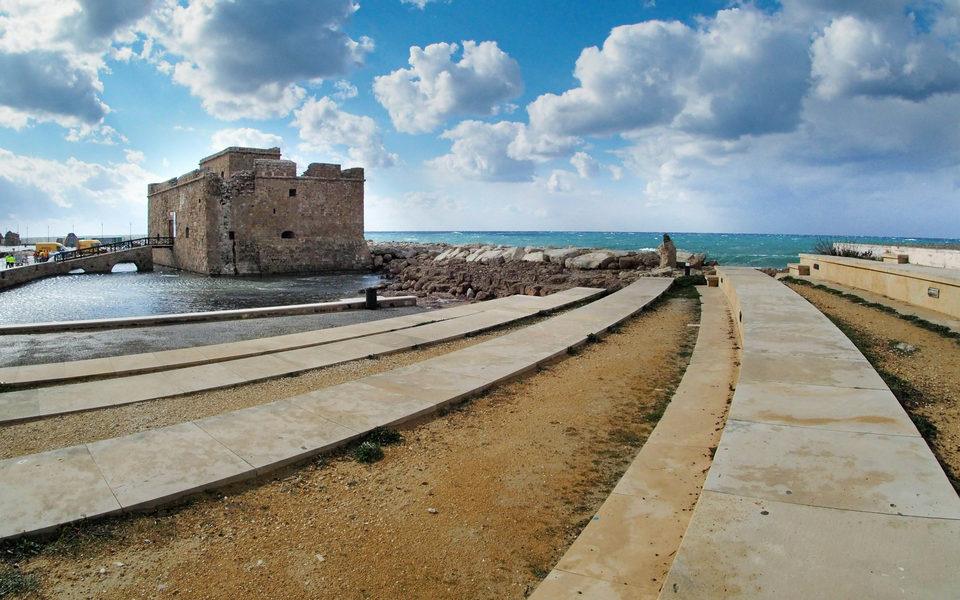
Morning at Paphos harbour: the 1592 Ottoman fort at the end of the quay, the harbour bus station by the park gate, and the Roman floors of the House of Dionysos a short walk inland.

Paphos is the town of west Cyprus: a harbour with a medieval fort, UNESCO-listed Roman mosaics by the harbour, and an old town on the hill above. Use it as a base for Aphrodite's Rock, the Akamas peninsula and Polis. Winters are mild rather than hot; summers are long and dry.

Type
city
Ideal length
7 days
Getting around
hire car for Akamas and the villages (drive on the left); Pafos Buses cover the town, Coral Bay, Kouklia, Polis and the airport
Bases
5 areas
Best season / months
October to May for mild sun and sightseeing; June to September for the warmest sea
Language
Greek (English widely spoken)
Currency
euro (EUR)
Budget level
moderate. Sites and buses are cheap; hire cars, boat trips and seafront hotels add up
Good for
  • Families
  • Winter sun
  • Couples
  • Culture
  • First-timers
  • Beach
Discover

About Paphos

Paphos (Pafos) sits on the south-west coast of Cyprus. Between the 2nd century BC and the 4th century AD it was the island's capital, and the remains of that city now fill the Kato Paphos Archaeological Park, on UNESCO's World Heritage list since 1980. The town has two halves. Kato Paphos is the lower town by the sea, with the harbour, the castle, the mosaics and the hotels along Poseidonos Avenue. Ktima is the old town on the hill, with the market, the town hall and the main bus station. East along the coast are Kouklia, site of the Sanctuary of Aphrodite, and Petra tou Romiou. To the north-west, Coral Bay leads on to the Akamas peninsula, Lara's turtle beaches and the small town of Polis with its harbour at Latchi.

Why go

Come for winter sun that's mild rather than hot, with average highs of about 17°C in January, and history you can walk to from your hotel. In a single morning in Kato Paphos you can see Roman floor mosaics, a harbour fort and a catacomb, with entry at EUR 2.50 to EUR 4.50 when we checked. The flight is about four and a half to five hours, the clocks are two hours ahead, English is widely spoken and you drive on the left. In summer the town turns into a beach resort, with Coral Bay and Akamas close by. Be ready for proper heat in July and August.

Don't miss

  • Kato Paphos Archaeological Park — Roman villa mosaics found in 1962 by a farmer ploughing his field
  • Tombs of the Kings — rock-cut Hellenistic and Roman tombs, some with Doric pillars
  • Petra tou Romiou — Aphrodite's mythical birthplace on the coast road east of Paphos
  • Kouklia (Palaipafos) — the Sanctuary of Aphrodite, worshipped here from the 12th century BC
  • Polis, Latchi and the Baths of Aphrodite — the green north-west at the edge of Akamas

Neighbourhoods

Paphos neighbourhood by neighbourhood — the character of each and who it suits.

  • Kato Paphos and the harbour

    The lower town by the sea: the harbour with its castle, the archaeological park, Pachyammos beach and the hotel strip along Poseidonos Avenue.

    Why go
    Everything on foot: the mosaics, the castle and the seafront, with the harbour bus station next to the park gate.
    Best for
    First-timerscouplesculture
    Known for
    Paphos Castle; the Houses of Dionysos and Theseus; Agia Solomoni; Pachyammos Blue Flag beach; bus 612 to the airport and 631 to Petra tou Romiou.
  • Ktima (the upper old town)

    Paphos's old town on the hill above the harbour: the municipal market, the town hall square, the Agia Sofia mosque and the main Karavela bus station.

    Why go
    Everyday Cypriot town life, cheaper eating and the island's bus hub.
    Best for
    Budgetfoodindependent travellers
    Known for
    The municipal market; the town hall square; the Pafos District Archaeological Museum (free); bus 610 down to the harbour; 613 to the airport; 645 to Polis.
  • Coral Bay and Peyia

    A 500-metre sandy beach between two limestone headlands, in Peyia (Pegeia), with the sea caves and the road into Akamas beyond.

    Why go
    The calmest, shallowest family beach near Paphos, with lifeguards from April to October.
    Best for
    Familiesbeach
    Known for
    Coral Bay Blue Flag beach; Pafos Zoo; the Peyia sea caves; bus 615 every 10 to 15 minutes from the Tombs of the Kings station.
  • Chlorakas and Kissonerga

    Two villages on the coast road between Paphos and Coral Bay.

    Why go
    A base between the town and the beach, on the 615 and 607 bus routes.
    Best for
    Coupleslonger staysfamilies with a car
    Known for
    The Chloraka-Kissonerga coast road; buses 615 and 607; easy reach of Coral Bay and the Tombs of the Kings.
  • Polis and Latchi (Akamas)

    A small town 35 km north-west of Paphos and its fishing harbour at Latchi, at the edge of the Akamas peninsula.

    Why go
    The slow, green end of the district, with fish restaurants at the harbour and the Akamas on the doorstep.
    Best for
    Walkerscouplesnature
    Known for
    The Baths of Aphrodite; Latchi harbour; Agios Andronikos frescoes; the coastal path from the campsite to Latchi; bus 645 to Paphos and 622 to the Baths.

Views & quieter corners

Best views

  • Paphos Castle from the end of the harbour — the fort, the boats and the seafront of Kato Paphos
  • Petra tou Romiou from the coast road — the sea stacks where Aphrodite is said to have risen from the foam
  • The House of Dionysos walkways — Roman floor mosaics with the sea beyond the park
  • Latchi harbour — the fishing shelter and its fish restaurants at the edge of Akamas

Quieter corners

  • Agia Solomoni — an underground chapel in Hellenistic tombs, with Crusader graffiti and a rag-hung tree above
  • Agios Neofytos Monastery — a hermit's cave covered in 12th to 15th-century frescoes, EUR 2 to get in
  • Pafos District Archaeological Museum in Ktima — finds from the Neolithic to 1700 AD, free when we checked
  • The Thursday walking tour of Ktima — markets, the Agia Sofia mosque and the town hall square, booked a day ahead
  • The Peyia sea caves — a protected marine area on the 616B bus beyond Coral Bay

Food & drink

Order a meze and let it come: dips and salad, then small fish such as marida and red mullet, grilled halloumi, lountza and sheftalia, then stews like afelia and stifado, and finally ofto kleftiko, lamb baked in a sealed oven. Come hungry. Halloumi turns up everywhere, from breakfast to the grill. In Geroskipou, just east of Paphos, loukoumi (Cyprus delight) is still made without preservatives. To drink, try Commandaria, the sweet dessert wine billed as the oldest named wine still in production, or zivania, the island's strong grape spirit. Akamas Laona, one of the island's seven wine routes, is in the Paphos district. At Latchi harbour the fish restaurants are known for the fresh catch.

  • Meze — a run of small dishes, from dips and salad to fish, grilled meat and stews, to share
  • Halloumi — the island's semi-hard goat or sheep's milk cheese, grilled, at breakfast or in a meze
  • Ofto kleftiko — lamb baked slowly in a sealed oven
  • Sheftalia — grilled minced-pork rissoles, a meze staple
  • Loukoumi — Cyprus delight, still made in Geroskipou on the edge of Paphos
Dietary notes

A full meze is heavy on grilled meat and fish, so vegetarians should ask for a meat-free version or order the dips, salads, grilled halloumi and vegetable dishes separately. Halloumi is made with goat or sheep's milk, so it isn't dairy-free. For coeliac or other strict diets, contact restaurants before you go.

Photos

Paphos in photos

Where you'll stay

Where you'll stay in Paphos

Decide between sights and sand. Kato Paphos puts the mosaics, the castle and the harbour on your doorstep, with the town beach at Pachyammos. Coral Bay, up the coast, has the calmest family beach. Chlorakas and Kissonerga sit in between on the bus route. Ktima is cheaper and more local. Polis and Latchi suit walkers and anyone wanting a slower pace, but they're 35 km away.

  • Budget
    Ktima or Chlorakas apartments and small hotels in the old town or on the coast road, with buses to the harbour, the airport and Coral Bay.
  • Mid-range
    Kato Paphos or Coral Bay seafront hotels along Poseidonos Avenue near the sites, or family hotels and apartments above Coral Bay.
  • Luxury
    Kato Paphos seafront or the Peyia coast seafront resort hotels, or a villa towards Akamas with a hire car.
Stay

Hotels & rentals around Paphos

Pan, zoom and compare live prices — every stay in one map.

We may earn a commission if you book through these links, at no extra cost to you. How we make money

Getting around

Getting around Paphos

For the Akamas, Lara and the villages, hire a car. You drive on the left, and your UK photocard licence is valid. Seat belts are compulsory front and back, and phone use at the wheel is banned. Limits are 50 km/h in town, 80 km/h on other roads and 100 km/h on motorways. Hire-car insurance only covers the Republic, not the north. FCDO warns that driving standards are poor. Without a car, Pafos Buses cover the town, the coast and the villages. A single costs EUR 2, a night ticket after 21:00 EUR 3 and a day ticket EUR 6.50, all sold on board. Children up to 5 ride free and under-13s pay half. There are no trains in Cyprus. Intercity buses link Paphos with Limassol, Nicosia and Larnaca.

Pafos Buses has four main stations: Harbour (Kato Paphos, next to the archaeological park), Karavela (Ktima), Tombs of the Kings and Polis. The 610 shuttles between the municipal market in Ktima and the harbour. For Coral Bay, take the 615 from the Tombs of the Kings station along the Chlorakas-Kissonerga coast road, every 10 to 15 minutes in the day. The 616 carries on to Peyia and Agios Georgios, and the 616B goes by the sea caves. For Kouklia and Petra tou Romiou, take the 631 from the harbour or the 630 from Karavela. The 604 goes to Agios Neofytos Monastery. The 645 runs about hourly to Polis, Sundays included, and from Polis the 622 goes to Latchi and the Baths of Aphrodite.

Plan your days

Suggested itineraries

Ready-made day plans for Paphos — from a single day to a long weekend.

One day

Start at the Kato Paphos Archaeological Park when it opens at 08:30, for the Houses of Dionysos and Theseus, the Odeon and Saranta Kolones. Walk to the castle at the end of the harbour, then on to the Agia Solomoni catacomb. Finish at the Tombs of the Kings, north along the coast, or take the 610 bus up to Ktima's market.
Two days

Take the 631 from the harbour bus station to Kouklia for the Sanctuary of Aphrodite and the museum in the Lusignan manor (closed Mondays). Carry on to Petra tou Romiou for a swim, and back on the 631; it runs less often from December to March. Next day, ride the 604 to Agios Neofytos Monastery to see the frescoes in the hermit's cave.

Three days

Head north-west on the 645 to Polis, then the 622 to Latchi harbour and the Baths of Aphrodite. With a car, add the Avakas Gorge if the trail is open, and the Lara turtle beach. Or stay south: the 615 to Coral Bay for a beach day and the 616B past the Peyia sea caves.

What you'll do

Insider tips

  • If you'll see more than two sites, a Department of Antiquities pass (1, 3 or 7 days) covers them all.
  • In summer, reach the archaeological park when it opens at 08:30, before the midday heat.
  • Get your passport stamped on arrival and departure: Cyprus isn't in the EES.
  • Never leave your passport as a deposit for a hire car or quad bike. It's illegal to ask for it.
  • Buses after 21:00 cost EUR 3, not EUR 2. Children up to 5 ride free.
  • The Ktima walking tour runs on Thursdays in spring and late autumn; book a day ahead.
  • In an emergency, call 112.
Best beaches
By the sea

Best beaches in Paphos

The 3 shores actually worth the trip on Paphos — ranked, with the vibe of each and where to stay nearby. Tap a card to fly the map to it.

Explore

Explore the area

© OpenFreeMap · OSM · terrain Mapterhorn
Do

Local attractions & tours

Skip-the-line tickets and small-group tours in Paphos — compare across our partners.

Budget

What it costs in Paphos

Backpacker
Base yourself in Ktima, ride the buses (EUR 2 a trip or EUR 6.50 for a day when we checked) and spend your days on free beaches, the free District Museum and EUR 2.50 sites like the castle.
Mid-range
A Kato Paphos hotel plus a few paid days out: the archaeological park (EUR 4.50 when we checked), Kouklia (EUR 4.50), a 3-day antiquities pass (EUR 17) and a hire car for Akamas.
Luxury
A seafront resort hotel, a hire car or private transfers, boat trips from Latchi and dinners of fresh fish at the harbour.
Cash, card and tips
The currency is the euro. Visa and Mastercard are widely accepted and contactless works at nearly all tills. Tipping is up to you and appreciated. Buses sell single, daily and night tickets on board.
When you'll go

When to visit Paphos

October to May

Units

Spring

What to expect — March to May warms up quickly: average highs at Paphos airport go from about 19°C in March to 24 to 25°C in May. The sea is still cool, around 16 to 17°C until the end of March.

What's best — Walking, Kouklia and the Akamas trails before the heat, and Kataklysmos at the old port around Pentecost.

Summer

What to expect — Long and dry from mid-May to mid-October. Average highs at Paphos airport are about 30°C in July and August, and inland it is hotter. The sea reaches about 27°C in August. Wildfire risk runs from April to October and the Met Office issues heat warnings.

What's best — Swimming, boat days from Latchi, and evening visits to the sites, which stay open until 19:30.

Autumn

What to expect — September still averages 29°C and October 26 to 27°C. The sea stays above 22°C into November, when highs drop to about 22 to 23°C.

What's best — Half-term sun without the August heat, and opera at the castle when the Aphrodite Festival is on.

Winter

What to expect — Mild, not hot: average highs of about 17 to 19°C from December to February, lows of about 8 to 10°C. Winter is the rainy season, and there is snow on the Troodos mountains. Sunshine still averages about six hours a day.

What's best — Walking the archaeological sites in cool air, Epiphany at the harbour on 6 January, and a Troodos day trip for snow.

Know before you go

Know before you go

Entry rules

Follow the FCDO's entry rules for Cyprus. Your passport must have been issued less than 10 years before you arrive, be valid for at least 3 months after you leave, and have a blank page for stamps.

You can stay up to 90 days. Cyprus is in the EU but not in Schengen, so its days are counted separately from Schengen days.

Cyprus does not use the EU Entry/Exit System. Make sure your passport is stamped on the way in and out.

ETIAS isn't running yet. When it starts, Cyprus is on the list. Ignore any site selling one now.

The north and the Green Line

Cyprus has been divided since 1974. The UK doesn't recognise the self-declared state in the north, and FCDO can give only limited help there.

You can cross at any official crossing point, and time in the north counts towards your 90 days. Never fly in through Ercan: the Republic treats that as illegal entry.

Hire cars from the south are usually not insured in the north. There are limits on goods you bring back, such as 40 cigarettes each.

Sites and opening hours

Kato Paphos park, the Tombs of the Kings and the castle open daily at 08:30 and close at 17:00 in winter (16 September to 15 April) and 19:30 in summer.

Kouklia (Palaipafos) and the District Museum close on Mondays.

The sites close on Christmas Day, New Year's Day and Orthodox Easter Sunday.

A Department of Antiquities pass covers all its sites for 1, 3 or 7 days.

Sea, sun and health

Swim only on approved beaches and follow the signs: currents can be strong. Blue Flag beaches like Coral Bay have lifeguards from April to October.

Wildfire risk is high from April to October.

Cyprus has zero tolerance on drugs, including laughing gas and cannabis.

Bring a GHIC or EHIC and travel insurance. Emergency number: 112.

Ready to book your trip?

Getting there

Flights land at Paphos International Airport (PFO), open around the clock. Ryanair flies from London Stansted in 4 hours 25 minutes and from Manchester in 4 hours 40. Manchester Airport gives 4 hours 45 for the route. Cyprus is two hours ahead of the UK all year. From the airport, bus 612 runs every day to the Tombs of the Kings station by way of Poseidonos Avenue in Kato Paphos, and bus 613 goes to Karavela station in the town centre. Taxis wait at a 24-hour rank on the right outside arrivals. Larnaca (LCA) is the island's other international airport. Cyprus is not part of the EU Entry/Exit System, so expect a passport stamp instead of fingerprints.

  • PFO
  • LCA
Book

Ready to book your trip?

Flights, airport transfers and car hire to PFO — search and compare without leaving the page.