Galápagos Islands
Darwin's living laboratory: volcanic islands where giant tortoises, marine iguanas and blue-footed boobies share the shore with fearless curiosity.
- Island
- June – November
- 7–10 days
Photo by Heidi Bruce / Unsplash
About Galápagos Islands
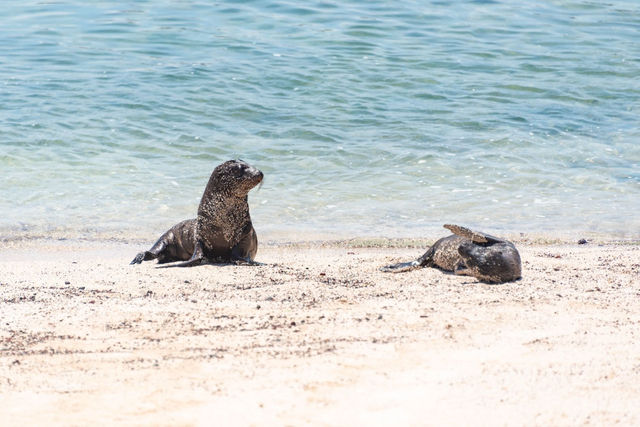
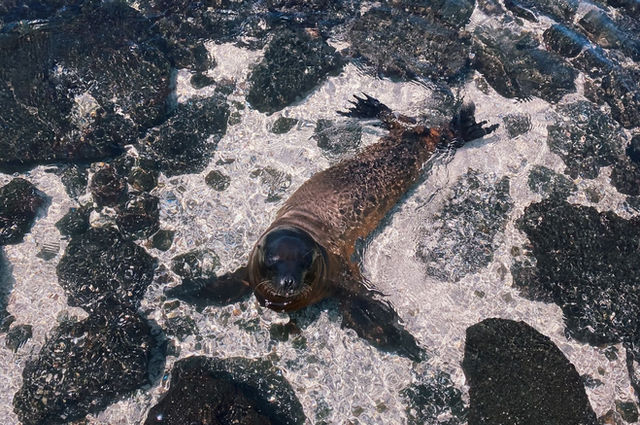
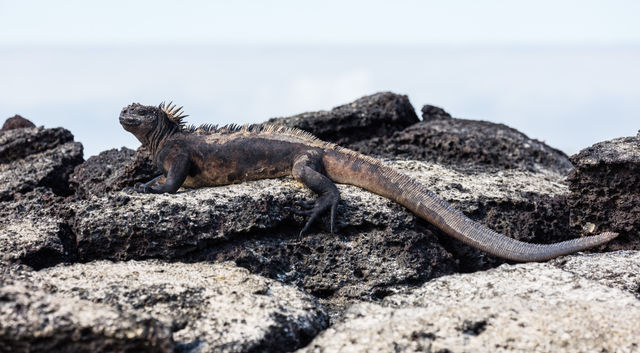
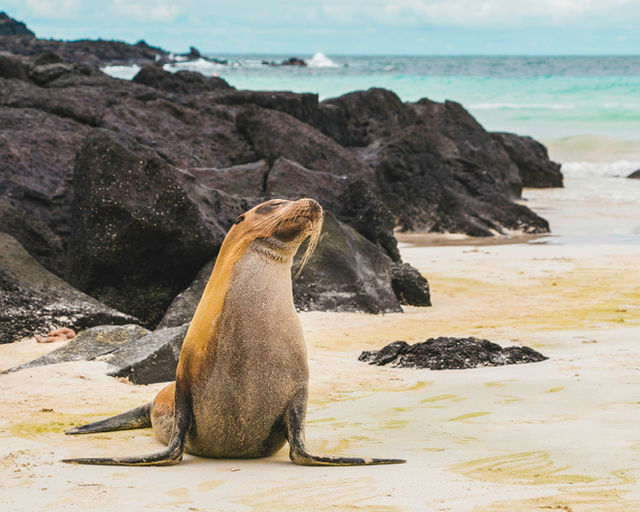
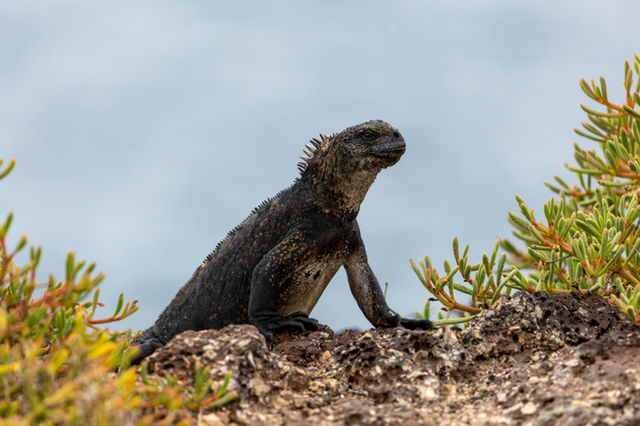
There is a moment that happens to almost everyone in the Galápagos — usually on the first morning, when a sea lion hauls itself onto the path directly in front of you and looks up with complete indifference to your presence. The wildlife here simply does not register humans as a threat, and that single fact changes everything about the experience. The Galápagos Islands are not a place where you peer at animals through binoculars or wait quietly at a hide. You walk among them, snorkel alongside penguins, and sit three feet from a marine iguana while it basks on a lava field. For families with teenagers who have grown up watching wildlife documentaries, this is the moment when the screen becomes real.
The islands were the first site ever inscribed on the UNESCO World Heritage List, in 1978 — under the Natural category, with an inscription that recognised their extraordinary ecological significance and their role in shaping the theory of evolution. Charles Darwin visited in 1835 aboard HMS Beagle and observed how species had adapted across the archipelago's distinct islands, observations that formed the backbone of On the Origin of Species. The tortoises, finches, and iguanas he encountered are still here — and the conservation work that has followed UNESCO inscription has ensured they remain abundant and accessible. Roughly 97% of the land area is protected as the Galápagos National Park.
Reaching the Galápagos from London is a committed journey — two long-haul flights and at least one night in mainland Ecuador — but it rewards the effort in a way that very few destinations can match. Teenagers, in particular, tend to arrive knowing what to expect and leave having experienced something that exceeds it. I have rarely seen a family return from the Galápagos without the sense that they have just had the best trip of their lives.
Highlights
- Giant tortoises in the highlands
- Snorkelling with sea lions and turtles
- Blue-footed boobies and marine iguanas
- Charles Darwin Research Station
- Bartolomé Island's pinnacle
- Wildlife cruises between islands
Food & drink
Traditional dishes
Galápagos food is rooted in Ecuadorian coastal cuisine, with seafood as the dominant ingredient. Seco de mariscos (a rich seafood stew served with rice and plantain) is the archipelago's comfort dish. Ceviche de camarón (prawn ceviche) is ubiquitous and excellent — Ecuador's coastal ceviche style differs from the Peruvian version in being brothier and less acidic, served with popcorn or chifles (green plantain chips). Encebollado, a fish soup with yuca and pickled onions, is the standard Ecuadorian breakfast and appears on almost every local breakfast menu.
Where to eat
Puerto Ayora has the best restaurant selection in the archipelago, with options ranging from cheap local comedores (set-lunch spots) to more polished seafood restaurants on the Charles Darwin Avenue waterfront strip. Family-friendly restaurants cluster near the main harbour and around the central market — the market's food stalls offer the best value on the island for a hot lunch. Prices are noticeably higher than mainland Ecuador: expect ~£10–20 per person for a sit-down main course at a mid-range restaurant. Packing snacks and water for day tours keeps costs manageable; most tour operators provide lunch on full-day excursions.
Drinks
Ecuador produces good coffee — look for Galápagos Coffee, grown in the islands' highlands on Santa Cruz, which is marketed locally and makes an excellent souvenir. Fresh fruit juices (jugos naturales) are excellent and inexpensive. For adults, Ecuadorian craft beer has improved markedly in recent years; local options appear in Puerto Ayora's waterfront bars. Tap water is not recommended for drinking — stick to sealed bottled water and carry a reusable bottle on day trips.
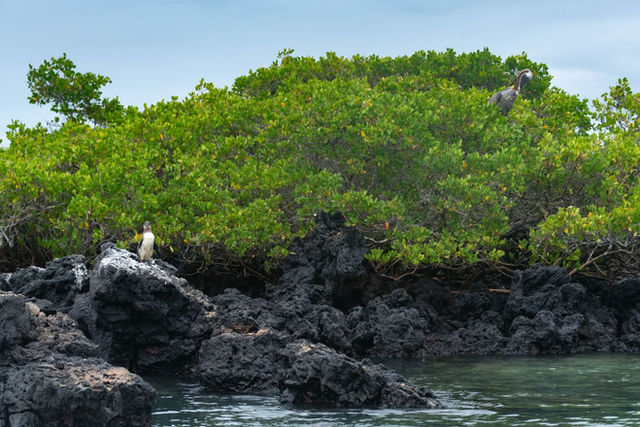
Galápagos Islands in photos
Where you'll stay in Galápagos Islands
<h4>Puerto Ayora (Santa Cruz Island)</h4><p><strong>Puerto Ayora</strong> is the Galápagos' largest town and the natural base for most visiting families. It has the widest range of mid-range family-friendly hotels, the best selection of restaurants, the closest Charles Darwin Research Station, and good access to the island's famous tortoise reserves in the highlands. The town has a lively seafront boardwalk where sea lions sleep on benches and pelicans line the fish market — wildlife encounters begin the moment you step outside. Most island-hopping day trips also depart from Puerto Ayora's harbour, making it the most flexible base for a multi-island itinerary.</p><h4>Puerto Baquerizo Moreno (San Cristóbal Island)</h4><p><strong>Puerto Baquerizo Moreno</strong> is the archipelago's provincial capital and the quieter, more relaxed alternative to Santa Cruz. Families flying in via <strong>San Cristóbal Airport (SCY)</strong> often choose to stay here for at least part of their trip — the town beach is excellent, the sea lion colony on the central waterfront is one of the most accessible in the archipelago, and the pace is noticeably slower than Puerto Ayora. Mid-range hotels and family guesthouses are well-established here.</p><h4>Puerto Villamil (Isabela Island)</h4><p><strong>Puerto Villamil</strong> on Isabela — the largest island in the archipelago — offers a more remote, eco-lodge-style experience. Isabela has unique wildlife (including flightless cormorants and a large tortoise population), beautiful snorkelling at Los Tunneles, and very few crowds compared to Santa Cruz. For families who have already done Santa Cruz and want a second island with a different character, Isabela is my first recommendation. Options are more limited and book up early.</p><h4>How to choose</h4><p>For a first visit, base yourself primarily in <strong>Puerto Ayora (Santa Cruz)</strong> — it gives the best combination of infrastructure, wildlife access, and day-trip options. Add two to three nights in a second island (San Cristóbal or Isabela) if your trip length allows. For families specifically arriving via San Cristóbal, staying there first and moving to Santa Cruz mid-trip works very well: San Cristóbal is calmer for arrival-day exhaustion, and Santa Cruz delivers the best day-trip network for the main portion of the trip.</p>
Hotels & rentals around Galápagos Islands
Pan, zoom and compare live prices — every stay in one map.
Getting around Galápagos Islands
Island transport
The inhabited islands — Santa Cruz, San Cristóbal, Isabela, and Floreana — each have small towns with taxis, water taxis, and local pickup trucks serving the main sites. On Santa Cruz, a network of taxis connects Puerto Ayora to the highland tortoise reserves, the northern beaches, and the Baltra ferry — fares are inexpensive and negotiated before departure. On Isabela, the town of Puerto Villamil is small enough to walk, but the main sites (Los Tunneles, the flamingo lagoon, the tortoise reserve) require a boat or taxi. Driving is not practical in the conventional sense — there are no car rental services for tourists, and the sites accessible by road are few.
Inter-island ferries
Speed boats (locally called lanchas) operate scheduled services between the main inhabited islands. The Santa Cruz–San Cristóbal crossing takes approximately 2 hours; the Santa Cruz–Isabela crossing is around 2.5 hours. Seas can be rough, particularly in the July–November cool season — most crossings depart early morning when conditions are calmer. Pack seasickness medication for anyone susceptible: this is genuinely important and not something to test on the morning of a boat day. Tickets are booked locally at the dock or through hotels; prices are modest (~£20–35 per person per leg).
Day tours and naturalist guides
The majority of wildlife experiences in the Galápagos are delivered via day tours — half- or full-day boat trips to visitor sites with a licensed naturalist guide. These are booked through hotels, tour operators in Puerto Ayora or Puerto Baquerizo Moreno, or in advance online. Pre-booking popular sites (Española Island, Fernandina, North Seymour) is strongly recommended — capacity at each visitor site is capped to protect the ecosystem, and spaces for the highest-demand day tours sell out weeks ahead in peak season.
Liveaboard cruises
A liveaboard cruise — spending several nights on a boat visiting outer islands with a naturalist guide — is the classic Galápagos experience and gives access to remote sites (Fernandina, Genovesa, Darwin and Wolf) that are unreachable on day trips. Liveaboards range from budget to luxury and typically run for 5–15 nights; costs start from around ~£150–250 per person per night for budget options, rising significantly for premium vessels. For families with older teens who can handle a week aboard a small boat, this is the format that delivers the widest range of Galápagos wildlife.
Walking
Within the inhabited towns — Puerto Ayora in particular — walking is both practical and richly rewarding. The seafront boardwalk, the fish market, the Charles Darwin Research Station, and the main restaurants and hotels are all walkable from a central base. Wildlife encounters happen on foot constantly: sea lions on benches, marine iguanas on paths, pelicans at the dock. Flat, easy terrain; no specialist footwear required in town, though hiking boots are recommended for highland tortoise reserves and volcanic trails.
Insider tips
Galápagos National Park (UNESCO World Heritage Site)
The Galápagos National Park — the first UNESCO World Heritage Site ever inscribed (1978) — covers 97% of the land area of the archipelago and is the framework within which everything else here happens. A park entrance fee (currently around ~£90–100 per adult) is paid on arrival at the airport and covers access to all visitor sites across the islands. Crucially, all wildlife-watching and hiking within the park must take place with an authorised naturalist guide — this is not optional, and it is not a restriction to resent. The guides are extraordinarily knowledgeable, and the rule ensures that the extraordinary wildlife trust built over decades of conservation is not eroded. Teenagers who arrive expecting to explore independently almost always admit, by the end of the first day, that the guided experience is better than what they imagined doing alone.
Snorkelling with marine life
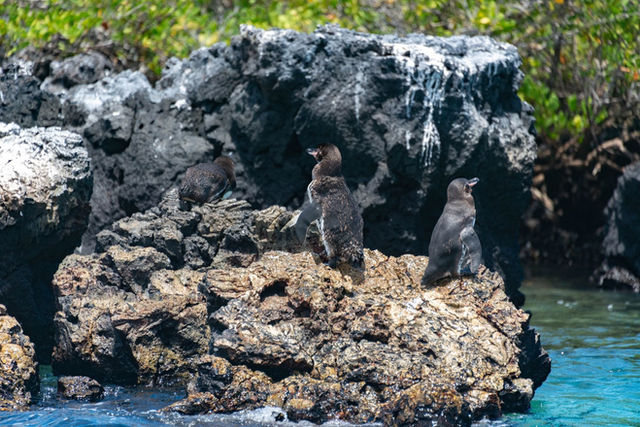
Snorkelling in the Galápagos is unlike anything else in the world. At sites including Kicker Rock (San Cristóbal), Los Tunneles (Isabela), and Punta Espinoza (Fernandina), families can snorkel alongside Galápagos sea lions, marine iguanas underwater, green sea turtles, white-tipped reef sharks, and — seasonally — Galápagos penguins. The water is clear and the encounters are close; snorkelling gear is included with most day tours and liveaboard excursions. Certification is not required for snorkelling — it is accessible to any family member comfortable in open water.
Meeting giant tortoises
The Galápagos giant tortoise is one of the world's longest-lived animals — individuals can exceed 150 years old — and seeing them in the wild is something most visitors count as a highlight of their entire trip. On Santa Cruz, the highland tortoise reserves (accessible from Puerto Ayora by taxi or day tour) put you within arm's reach of tortoises roaming freely through farmland and reserve land. The Charles Darwin Research Station in Puerto Ayora also runs a tortoise breeding programme and provides the scientific and conservation context that makes the national park UNESCO inscription meaningful. For teenagers with any interest in biology or conservation, this is genuinely moving: the tortoise population collapsed to around 3,000 individuals in the 1970s; it now exceeds 20,000, a direct result of conservation work.
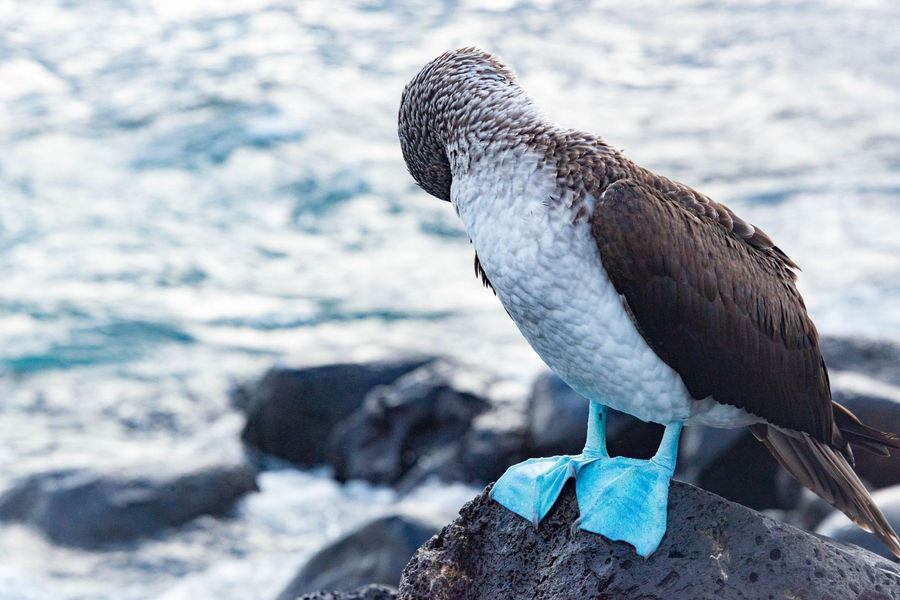
Blue-footed booby watching
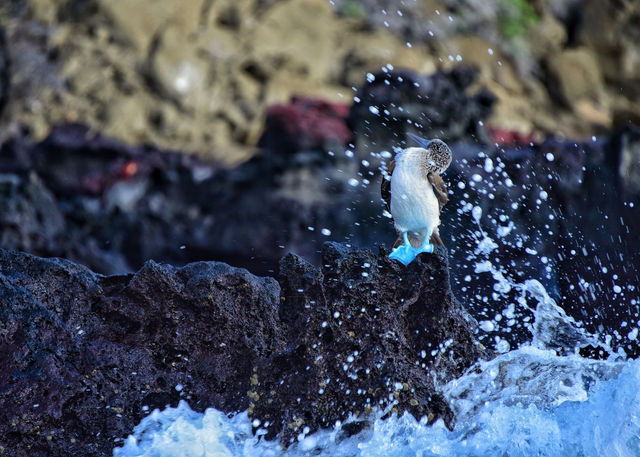
The blue-footed booby is the Galápagos' most photographed bird, and for good reason — the electric blue feet are extraordinary, and the mating dance (males lifting their feet one at a time in a slow, theatrical display) is both hilarious and oddly hypnotic. The best viewing is on Española Island (accessible by day tour from Santa Cruz) between June and August, when courtship is at its peak. Española also has albatrosses from April to December, and the wave-battered cliffs at Punta Suarez are among the most spectacular wildlife-watching spots in the archipelago. Book the Española day tour in advance — it is the most popular in the network.
Kicker Rock sea lion colony (San Cristóbal)
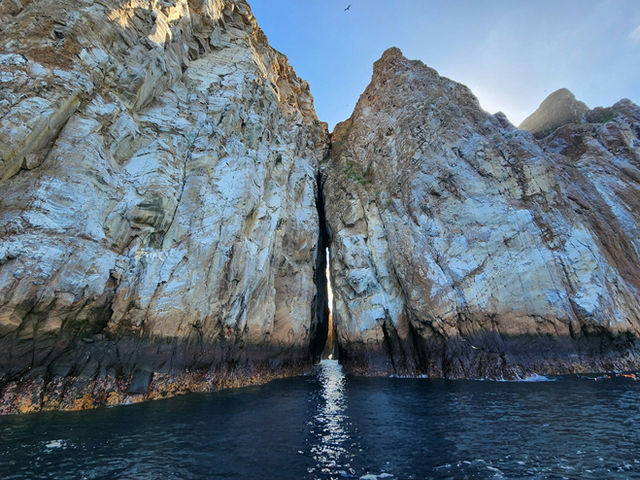
Kicker Rock (León Dormido) is a dramatic twin-tower volcanic formation rising from the sea off San Cristóbal, and snorkelling through the channel between the two rocks is consistently rated as one of the best marine wildlife experiences in the islands. Hammerhead sharks, Galápagos sharks, eagle rays, and sea lions are regular companions. The boat trip from Puerto Baquerizo Moreno takes around 45 minutes each way — manageable for most families, though the channel itself has some current. Day tours depart daily; book through accommodation in Puerto Baquerizo Moreno or in advance from the mainland.
Isabela Island volcanic hiking
Isabela is the largest and arguably most dramatically volcanic of the inhabited islands — it is formed from the merger of six shield volcanoes, and Sierra Negra (active as recently as 2018) offers one of the most accessible volcano hikes in the archipelago. The trail reaches the rim of the world's second-largest volcanic caldera, with views across a landscape that looks genuinely otherworldly. The hike takes around four to six hours return; it is not technical, but it is long and exposed, so sun protection and water are essential. Teenagers with energy to burn tend to love this day.
Darwin's finch watching and wildlife photography
The Darwin's finches — 18 species across the archipelago, each adapted to a specific ecological niche — are the living illustration of natural selection that made the Galápagos scientifically famous. Spotting and photographing multiple species across different islands is a rewarding project for teenagers with any interest in biology or photography, and naturalist guides are excellent at pointing out the beak variations that distinguish each species. The combination of fearless wildlife, varied habitats, and accessible sightlines makes the Galápagos one of the best wildlife photography destinations in the world for non-specialists — a smartphone is sufficient.
Frequently asked
How many days do I need in the Galápagos Islands?
Seven to ten days is the sweet spot for most families visiting for the first time. Five days covers Santa Cruz thoroughly — the highland tortoise reserves, the Charles Darwin Research Station, a North Seymour day trip, and snorkelling at least twice. Adding two to three nights on a second island (San Cristóbal or Isabela) opens up a genuinely different set of wildlife and landscapes. For families considering a liveaboard cruise, seven to eight nights is the typical minimum for a satisfying multi-island circuit.
Is the UNESCO site worth it for teenagers?
The Galápagos is one of the very few UNESCO sites I would describe as genuinely transformative for teenagers specifically. The wildlife is fearless and interactive — you are not watching from a distance, you are walking among it. The scientific story (Darwin's observations leading to evolutionary theory; the conservation crisis and recovery of the giant tortoises) is told through living examples they can see and touch within context. Teenagers who are unimpressed by the idea of a UNESCO site frequently describe the Galápagos as the best thing they have ever seen. The key is a good naturalist guide who engages teenagers directly rather than lecturing at adults.
Do we need to do a liveaboard cruise, or can we stay on land?
You absolutely can base yourself on land — specifically in Puerto Ayora on Santa Cruz, with possible nights on San Cristóbal or Isabela — and have a full, extraordinary experience through day trips. Land-based itineraries are more flexible, easier for families with younger or more restless children, and significantly less expensive than liveaboards. The limitation is that outer islands (Fernandina, Genovesa, Española, Darwin and Wolf) are only accessible on liveaboards or extended overnight tours. For a first visit, land-based with day trips is the right format for most families; liveaboards are for return visitors or families specifically wanting the outer-island wildlife.
How much does a family trip to the Galápagos cost from the UK?
A realistic budget for a family of four spending eight days in the Galápagos (land-based, mid-range) including flights from London runs to approximately ~£8,000–12,000 total, depending on season and how far ahead you book. This breaks down roughly as: flights from London to Ecuador (~£700–1,400 per person return), domestic flights to the Galápagos (~£150–250 per person return), accommodation in Puerto Ayora (~£100–200/night for a family room), daily budget on the islands including day tours and food (~£150–250 per day for a family). The Galápagos national park entrance fee (~£90–100 per adult) is additional. It is not a cheap destination, but most families who go consider it exceptional value for what they experience.
What vaccinations or health preparation do we need?
No vaccinations are required specifically for the Galápagos, but Ecuador generally recommends hepatitis A and typhoid as standard precautions. Yellow fever vaccination is required if arriving from countries where yellow fever is endemic. The Galápagos has no malaria risk. The main health consideration on the islands is sun and heat: the equatorial sun is powerful, dehydration happens quickly on active days, and sunburn is a real risk for families unused to equatorial light. Carry prescription medication for seasickness if any family member is susceptible — inter-island crossings can be rough, and a queasy day spoils a day tour.
What are the rules about interacting with the wildlife?
The Galápagos National Park has strict rules that all visitors must follow: do not touch or feed any wildlife, maintain a minimum distance of two metres from all animals (though if an animal approaches you, you may hold your ground — you cannot be blamed for a curious sea lion), stay on marked trails at all visitor sites, and do not remove anything (rocks, shells, sand, plants). These rules are enforced by your naturalist guide and taken seriously. In practice, the remarkable thing is that the animals routinely breach the two-metre rule on their own terms — a sea lion that decides to investigate you is not your problem to manage, just a joy to experience. The rules exist to prevent habituation driven by human behaviour, not to create distance from wildlife you have come all this way to see.
Which island should we prioritise if we only have five days?
Spend all five days based on Santa Cruz, with day trips radiating outward. Santa Cruz offers the most complete combination of accessible wildlife (giant tortoises in the highlands, marine iguanas and sea lions in Puerto Ayora itself, excellent snorkelling at Las Bachas Beach), the best day-trip network (North Seymour for frigate birds and blue-footed boobies, Bartolomé for dramatic volcanic scenery and penguins, Plaza Sur for sea lions and land iguanas), and the most practical infrastructure for families. If you have a sixth day, a single overnight on San Cristóbal adds the Kicker Rock snorkelling trip and the town sea lion colony — both distinctly worth the inter-island ferry crossing.
Explore the area
Galápagos Islands · Around the island · 1 island
Local attractions & tours
Skip-the-line tickets and small-group tours in Galápagos Islands — compare across our partners.
We're still curating hand-picked tickets and tours for Galápagos Islands. In the meantime, the map above and the nearby cities are a great place to start.
When to visit Galápagos Islands
June – November
Seasons overview
The Galápagos straddles the equator but does not behave like a typical tropical destination. Two seasons govern the islands: the warm/wet season (January–June) and the cool/dry season (July–December). The warm season brings sea temperatures of 23–27°C, calmer waters, and frequent afternoon showers that keep the vegetation lush and green. The cool season — locally called the garúa season — is driven by the cold Humboldt Current pushing up from the south: air temperatures drop slightly to 18–22°C, a persistent mist (the garúa) cloaks the higher elevations, and seas are choppier.
The warm season (January–June) is excellent for snorkelling and swimming — the water is warm and visibility is high, and this is when sea turtles nest and marine iguanas are at their most active. The cool season (July–December) brings the Humboldt Current's nutrient upwelling, which drives spectacular wildlife activity: whale sharks, hammerhead schools, and the feeding frenzies that make the Galápagos famous. Blue-footed boobies perform their courtship dances from June onwards. The trade-off is that seas are rougher, which matters if anyone in your family is prone to motion sickness.
December–January is a shoulder period where conditions from both seasons overlap — often the most comfortable combination of warm water and active wildlife. This is also peak season for visitor numbers.
Best months for families
I recommend December to April for most families: warm water for snorkelling and swimming, calmer seas for inter-island transfers, and active wildlife across every island. June to September is the ideal window for serious wildlife photographers and families with older teens interested in pelagic species — but plan for rougher boat crossings and pack seasickness medication. Avoid the Easter school holiday peak (March–April) if budget is a constraint: this is the busiest and most expensive window of the year.
Know before you go
Safety
The Galápagos is one of the safest family destinations in the world. Crime is extremely rare — the islands' small, conservation-focused communities and limited tourism infrastructure create an environment where families feel comfortable at all times. The main safety considerations are sun exposure (the equatorial sun is intense; high-SPF sunscreen, hats, and rashguards are essential for snorkelling and hiking days) and sea conditions on inter-island crossings (pack seasickness medication for anyone who gets motion-sick, and plan crossings for early morning when seas are typically calmer). All wildlife sites require a licensed naturalist guide, which means families always have an expert on hand — there is no situation where you are navigating an unfamiliar environment alone.
For teenagers, the Galápagos offers an educational experience that is completely self-reinforcing. The UNESCO designation and Darwin's evolutionary theory become tangible rather than theoretical when you are watching marine iguanas sneeze salt, observing four species of Darwin's finch in a single morning, or snorkelling alongside a sea turtle. I have seen teenagers who arrived sceptical about wildlife trips transform entirely within the first 24 hours. The national park's conservation story — near-extinction of giant tortoises reversed through systematic breeding programmes — is also a powerful positive story for young people who worry about environmental collapse.
Daily budget
~£150–250/day mid-range per family (excluding international flights)
Getting there
By air
The Galápagos Islands are reached exclusively by air from mainland Ecuador. There are two airports: Seymour Airport on Baltra Island (GPS), which serves Santa Cruz (a short ferry and bus connection), and San Cristóbal Airport (SCY) on San Cristóbal Island. Both airports receive direct flights from Quito (UIO) and Guayaquil (GYE); flying via Guayaquil is typically faster. The main carriers are LATAM and Avianca; the flight from Guayaquil to Baltra or San Cristóbal is approximately 1 hour 45 minutes.
From the UK, the typical routing is London to Quito or Guayaquil (via Madrid, Amsterdam, or Miami — approximately 12–16 hours including connection), then the onward domestic flight to the Galápagos. Total door-to-door travel time from London is typically 20–26 hours depending on routing and layover. Return fares from London to Quito or Guayaquil run from approximately ~£700–1,400 per person in economy depending on the airline and how far ahead you book; the domestic Galápagos leg adds around ~£150–250 per person return. Many families find it worth spending a night in Quito or Guayaquil to break the journey.
Note: a Transit Control Card (TCT) is required for all Galápagos visitors and is processed at the mainland airport before boarding — staff check your bags for prohibited items (no fresh produce, seeds, or live animals). The card costs a small fee and is non-negotiable. The national park entrance fee (currently around ~£90–100 per adult, ~£45–50 per child under 12) is paid on arrival at the Galápagos airport.
By sea
There is no passenger ferry connection from mainland Ecuador to the Galápagos. Expedition cruise ships and liveaboard dive vessels occasionally position here for longer voyages, but the islands are air-access only for the vast majority of travellers. Inter-island travel within the archipelago by speed boat is efficient and well-established (see Getting Around).
Ready to book your trip?
Flights, airport transfers and car hire — search and compare without leaving the page.
More trip extras
Parking, holiday extras, and more — coming soon.
We're lining up parking, holiday extras and activities you'll be able to add to any trip from here.