← India
INDIA · CITY

Ahmedabad

India's first UNESCO World Heritage city — Indo-Islamic monuments, secret 'pol' neighbourhoods and Gandhi's ashram.

  • City
  • November to February — cool, dry and comfortable, before the intense heat
  • ~approx 1–2 days
  • Walled Old City
  • Pols & Havelis
  • Sabarmati Riverfront
  • Gujarati Thali

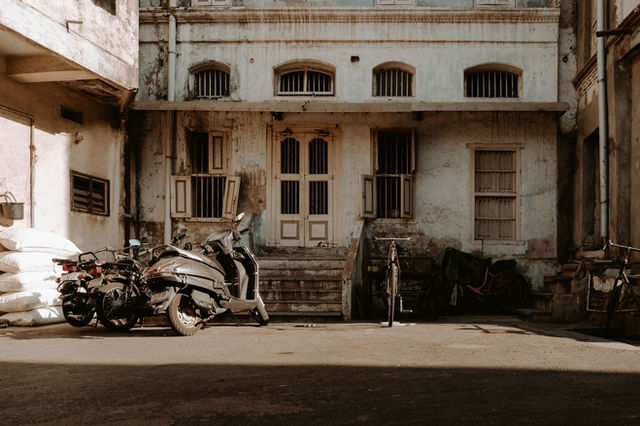
Dawn in a pol, the old residential lanes still cool, carved wooden balconies leaning overhead and bird-feeders (chabutaras) rising from the crossroads — then, come night, the whole city eating its way through Manek Chowk as it turns into a street-food bazaar.

Ahmedabad is Gujarat's biggest city and India's first UNESCO World Heritage City — a 600-year-old walled town of carved wooden havelis and tight residential lanes, split from a modern west bank by the Sabarmati river, and home to Gandhi's most famous ashram and some of India's best vegetarian food.

Type
metropolis
Ideal length
~approx 1–2 days
Getting around
autos, ride-hailing and a metro; walking in the old city
Neighbourhoods
3 areas
Best season / months
November to February — cool, dry and comfortable, before the intense heat
Language
Gujarati and Hindi (and English at hotels and sights)
Currency
Indian rupee (₹)
Budget level
low — very affordable
Good for
  • History
  • Architecture
  • Food
  • Culture
  • Heritage walks
▸ Discover

About Ahmedabad

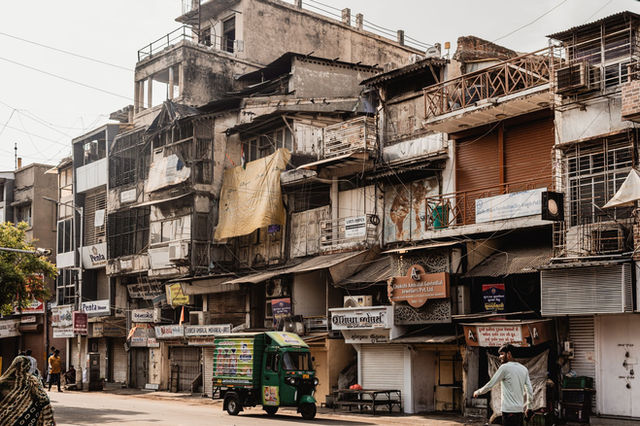
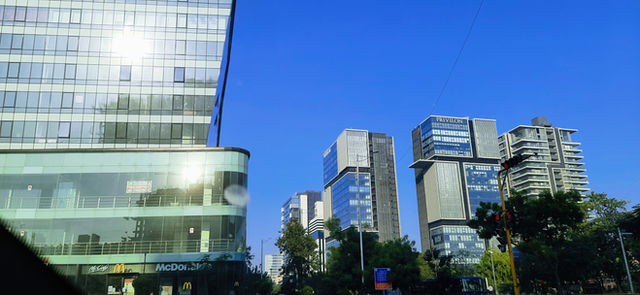
Ahmedabad straddles the Sabarmati river on the plains of Gujarat. The historic core is the walled old city on the east bank — a warren of pols (self-contained residential clusters), bazaars, mosques and temples, laid out over six centuries and now a World Heritage site. Across the river, reconnected by the landscaped Sabarmati Riverfront, spreads the modern western city of universities, design institutes, malls and the CG Road and SG Highway strips, where most hotels and restaurants sit. Gandhi's Sabarmati Ashram stands on the river to the northwest. It's a big, fast-growing metropolis, but the sights concentrate in the old city and along the river.

Why go

Ahmedabad is the place to understand the living Indian old city — its walled town of pols is unlike anywhere, a warren of communal residential architecture you explore on a morning heritage walk. Add India's finest Indo-Islamic mosques and step-wells, Gandhi's Sabarmati Ashram, a textile heritage that made the city rich, and a Gujarati vegetarian table that ranks among the country's best, and you have a deep, under-touristed city that rewards the curious.

Don't miss

  • The walled old city and its pols — on a morning heritage walk
  • Sabarmati Ashram — Gandhi's riverside home and museum
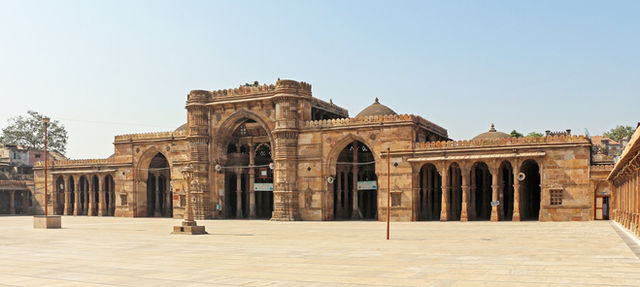
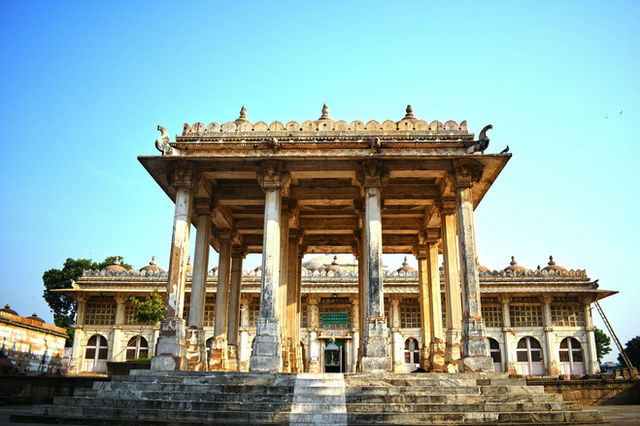
  • The Sidi Saiyyed Mosque — the famous tree-of-life jali screen
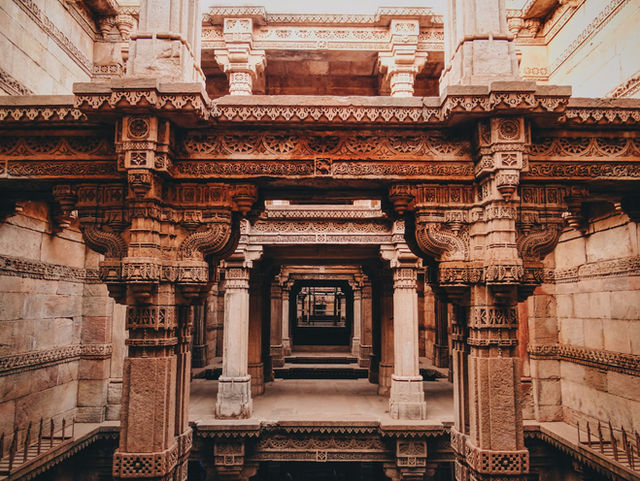
  • Adalaj Stepwell — the ornate underground water temple nearby
  • Manek Chowk — the market that becomes a night food bazaar

Signature experiences

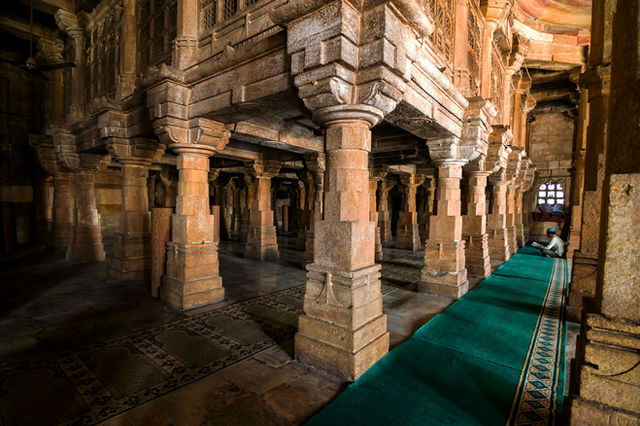
Walking the pols — The old city's pols are its wonder — self-contained clusters of houses reached through a single gate, built around a shared square with a temple, a well and a carved bird-feeder, their wooden balconies almost touching overhead. The official morning heritage walk from the Swaminarayan temple to the Jama Masjid is the best introduction to this communal architecture and its Hindu, Jain and Muslim layers. Go early, when the lanes are cool and waking up. **Indo-Islamic masterpieces** — Ahmedabad's sultanate-era mosques and step-wells are among the finest in India. The Sidi Saiyyed Mosque's stone jali screen — a tree of life carved from a single slab — is the city's emblem; the vast Jama Masjid is a forest of columns; and the Dada Harir and nearby Adalaj step-wells plunge underground in tiers of carved galleries. Together they show a distinctive Gujarati fusion of Hindu craft and Islamic form. **Gandhi's Sabarmati** — On the river northwest of the centre, Sabarmati Ashram is where Gandhi lived for years and from where he launched the Salt March. The simple riverside compound, now a museum, is a quiet, moving place to grasp the man and the independence movement. Pair it with the riverfront walk for a calm half-day away from the old-city bustle. **Eating Gujarati** — Ahmedabad may serve India's best vegetarian food. The unlimited Gujarati thali — a tray of sweet-savoury curries, dals, breads and snacks, refilled until you surrender — is the set-piece; the street brings dhokla, khaman, thepla, fafda-jalebi and the winter one-pot undhiyu. By night, Manek Chowk turns from jewellery market to a heaving open-air food bazaar. Note Gujarat is a dry state — this is a city that feasts on food, not drink.

Neighbourhoods

Ahmedabad neighbourhood by neighbourhood — the character of each and who it suits.

  • The Walled Old City

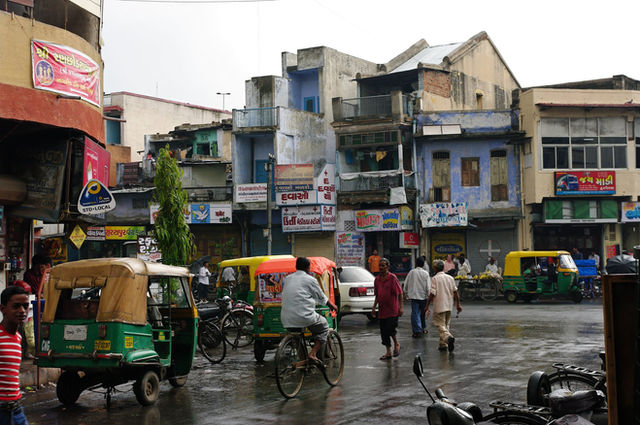
    The 15th-century walled town on the east bank — a dense maze of pols (gated residential clusters), carved havelis, mosques, temples and bazaars, the World Heritage heart of Ahmedabad.

    Why go
    The pols, the great mosques and the market — the living historic city.
    Best for
    Heritage walksarchitecturebazaarsstreet food
    Known for
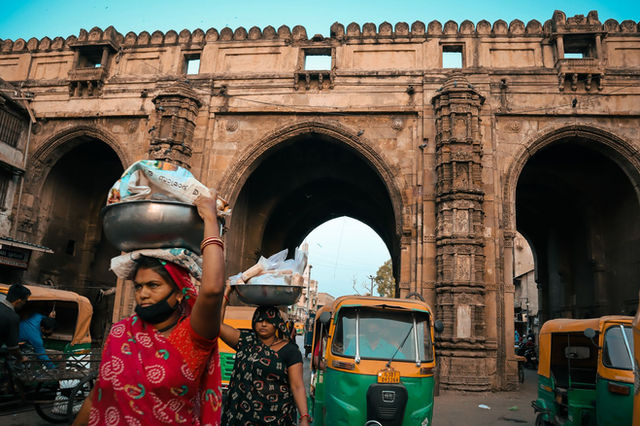
    The pols and their carved wooden houses and bird-feeders, Manek Chowk market, the Jama Masjid and Sidi Saiyyed Mosque, the Bhadra Fort and Teen Darwaza gate, and the Swaminarayan temple where the heritage walks begin.
  • West Ahmedabad

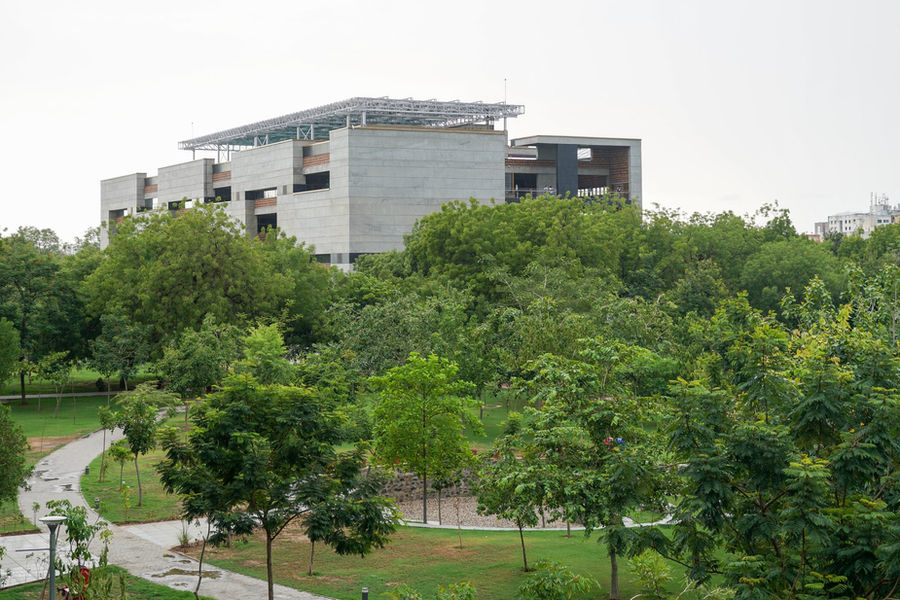
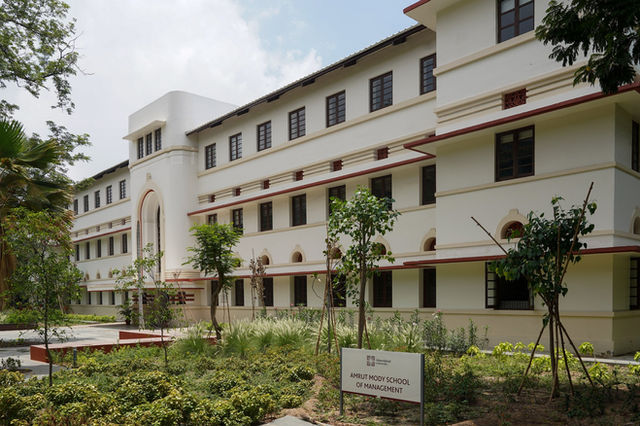
    The modern city across the river — university and design-institute campuses, the CG Road and SG Highway shopping strips, cafés, malls and most of the hotels. Ahmedabad's contemporary, prosperous face.

    Why go
    The hotels, restaurants and cafés, and the design and cultural institutions.
    Best for
    Hotelsdiningcafésmodern shopping
    Known for
    The CG Road and SG Highway strips, the design and management institutes, the malls and multiplexes, and the run of hotels and Gujarati thali restaurants.
  • The Sabarmati Riverfront

    The long, landscaped promenade that reclaimed both banks of the river — walkways, gardens and event spaces linking the old city to the west, with Gandhi's ashram at its northern end.

    Why go
    Sabarmati Ashram, the river walks and the open space.
    Best for
    Gandhi's ashramriverside strollssunset
    Known for
    Sabarmati Ashram (Gandhi's home and museum), the riverfront promenade and gardens, the flower park and market events, and the bridges linking the two halves of the city.

Views & hidden gems

Best views

  • The Sidi Saiyyed jali screen — the tree-of-life carved in stone
  • A pol crossroads at dawn — carved balconies and a bird-feeder tower
  • The Sabarmati Riverfront at sunset — the city reflected in the river
  • Manek Chowk at night — the market transformed into a food bazaar

Hidden gems

  • Adalaj Stepwell — an intricately carved five-storey underground water temple north of the city
  • Dada Harir Stepwell — a quieter, ornate step-well in the old city's east
  • The Calico Museum of Textiles — a world-class textile collection (visit strictly by prior booking)
  • The hidden Jain temples and havelis inside the pols — ask on a heritage walk
  • Kankaria Lake — a restored lakefront with a promenade and gardens, popular in the evening

Food & drink

Ahmedabad is a vegetarian food capital, and its Gujarati cuisine plays sweet against savoury and spice like nowhere else. The unlimited Gujarati thali is the essential experience — a constantly refilled tray of dals, curries, farsan (snacks), breads and a sweet. The street food is superb: spongy dhokla and khaman, rolled thepla, crunchy fafda with jalebi for breakfast, and, in winter, the slow-cooked mixed-vegetable undhiyu. Manek Chowk's night market is the great street-food set-piece. One honest note: Gujarat is a dry state, so this is a city built around eating, not drinking.

  • Gujarati thali — an unlimited tray of dals, curries, breads and a sweet
  • Dhokla / khaman — steamed, spongy fermented-gram snacks
  • Thepla — soft, spiced flatbreads, the classic travel food
  • Fafda-jalebi — crunchy gram-flour strips with sweet spirals, a breakfast pairing
  • Undhiyu — a winter one-pot of mixed vegetables and beans
  • Buttermilk (chhaas) — spiced, cooling, the everyday drink
Dietary notes

This is one of the easiest cities on earth to be vegetarian — the default cuisine is vegetarian and often Jain-friendly (no onion or garlic on request). Vegans should note dairy (ghee, buttermilk, milk sweets) is central, so ask. Meat is a minority cuisine here; halal is found in the Muslim quarters of the old city, kosher effectively not at all. Gluten-free is manageable with rice, dhokla and many snacks, but the wheat breads are everywhere — confirm. Remember Gujarat's alcohol prohibition: no bars, and tourists need a liquor permit.

Ahmedabad in photos

▸ Where you'll stay

Where you'll stay in Ahmedabad

Most hotels sit in the modern western city — around CG Road, Navrangpura and the SG Highway — comfortable and well-served with restaurants, a short auto or metro ride from the old-city sights. For atmosphere, a handful of restored havelis inside or near the walled old city let you stay among the pols. Base in the west for convenience and comfort, or the old city for character and early heritage walks.

  • Budget
    Old city fringe / near the railway station budget hotels and guesthouses, close to the walled town.
  • Mid-range
    Navrangpura / CG Road comfortable hotels near the restaurants and shops, a short ride from the sights.
  • Luxury
    SG Highway / the heritage havelis top-end hotels on the modern strip, or a restored haveli in the old city for character.
Stay

Hotels & rentals around Ahmedabad

Pan, zoom and compare live prices — every stay in one map.

▸ Getting around

Getting around Ahmedabad

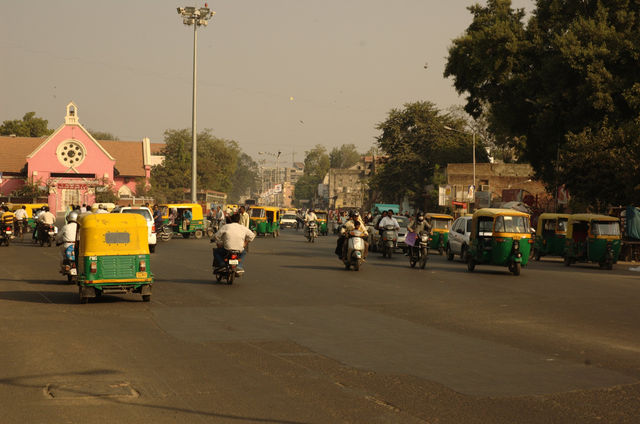
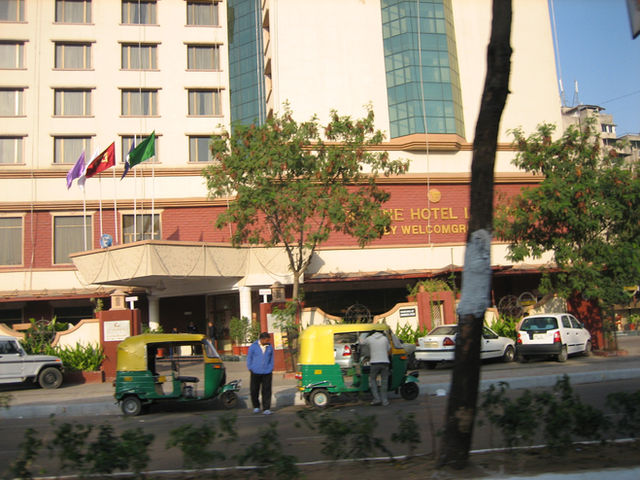
Autos (three-wheelers) and ride-hailing apps are the workhorses, and a growing metro crosses the city; a bus rapid-transit line also runs the main corridors. Walking is the way through the old-city pols and bazaars; a car with a driver helps for the out-of-town step-wells. Agree auto fares up front or use apps.

The old city and the western city face each other across the Sabarmati, a short auto, metro or bridge hop apart (~approx); Sabarmati Ashram is a little upriver, and Adalaj is a drive north — plan those as separate hops.

▸ Plan your days

Suggested itineraries

Ready-made day plans for Ahmedabad — from a single day to a long weekend.

One day

Start at dawn with the old-city heritage walk through the pols, ending at the Jama Masjid and the Sidi Saiyyed screen, then browse the Manek Chowk bazaar. After a Gujarati thali lunch, cross the river to Sabarmati Ashram and walk a stretch of the riverfront. In the evening, return to Manek Chowk as the market becomes a food bazaar, or take in Kankaria Lake.

Two days

Give day two to the step-wells and the modern city. Drive north to the magnificent Adalaj step-well, see the Dada Harir well and any Calico Museum booking, then spend the afternoon in west Ahmedabad's design institutes, cafés and shops. If it's festival season, end with Navratri garba or the kite festival — the city at its most alive.

▸ What you'll do

Insider tips

  • Book the official old-city heritage walk the day before; it starts early from the Swaminarayan temple and transforms the pols.
  • The Calico Museum of Textiles is world-class but admits visitors only by advance booking and on limited days — arrange it ahead.
  • Time a visit for Navratri (autumn) or Uttarayan (mid-January) if you can — the city's two great festivals are extraordinary.
  • Remember the alcohol ban and plan evenings around food and the riverfront; a permit is possible but fiddly.
What's on

While you're there

06
NOV
Diwali 2026
Johari Bazar 194، 302003 Jaipur، India · festival
Build a trip around it →
21
MAR
Holi 2027
J104 105، 281001 Mathura، India · festival
Build a trip around it →
Explore

Explore the area

© OpenFreeMap · OSM · terrain Mapterhorn
Do

Local attractions & tours

Skip-the-line tickets and small-group tours in Ahmedabad — compare across our partners.

We're still curating hand-picked tickets and tours for Ahmedabad. In the meantime, the map above and the nearby cities are a great place to start.

▸ Budget

What it costs in Ahmedabad

Backpacker
roughly €18–35 a day.
Mid-range
roughly €40–85 a day.
Luxury
€160 a day and up.
Cash vs card
Carry rupees in small notes for autos, street food and markets; UPI and cards work in hotels, restaurants and bigger shops.
Tipping
Modest tips are expected — round up for autos, tip a little in restaurants if service isn't added, small notes for guides.
▸ When you'll go

When to visit Ahmedabad

November to February — cool, dry and comfortable, before the intense heat

Spring

What to expect — Warm and dry early, heating rapidly toward a brutal summer by late spring. Comfortable only in the first weeks.

What's best — Warm, clear days for heritage walks early in the season and the colour of Holi — go early, and avoid late spring, when the winter months are far kinder.

Summer

What to expect — Fierce, dry heat on the plains, among the hottest times in India, then a modest monsoon. Sightseeing is genuinely hard. Demanding.

What's best — Lower prices and few tourists, and the monsoon greening the riverfront — but the extreme heat makes this the toughest time. The cool season is far better.

Autumn

What to expect — The heat easing into warm, comfortable weeks after the light monsoon, with the big festival season arriving. A good time.

What's best — Pleasant weather returning and the extraordinary Navratri — nine nights of garba folk dancing that Ahmedabad does like nowhere else — plus Diwali. A wonderful, festive window.

Winter

What to expect — Cool, dry and the most comfortable season for the city, with mild days, cool nights and clear skies. Peak travel months.

What's best — The best weather for the pols, the step-wells and the riverfront, the January kite festival (Uttarayan) filling the skies, and the winter undhiyu on every table — the ideal time to come.

▸ Know before you go

Know before you go

Honest swaps

Skip wandering the pols blind → take the official morning heritage walk to actually read the architecture, then explore freely.

Skip a generic hotel-restaurant dinner → go for an unlimited Gujarati thali and, at night, the Manek Chowk food bazaar.

Skip expecting a bar or a beer → Gujarat is dry; plan an evening around food, the riverfront and Kankaria Lake instead.

Skip only the Sidi Saiyyed screen → carry on to the Adalaj step-well north of the city, the finest of its kind.

Crowds & timing

The heritage walk and the old-city sights are best early morning, before the heat and traffic.

Navratri (autumn) and the January kite festival are magical but pack the city — book well ahead.

Local rules & etiquette

Gujarat is a dry state: alcohol is prohibited, with no bars; foreign visitors can apply for a liquor permit through licensed hotels.

Dress modestly at the mosques and temples, cover your head where asked, and remove shoes at religious sites.

Many old-city temples restrict leather and photography inside — check before entering.

Money

Carry rupees in small notes for autos, street food and markets; cards and UPI cover hotels and bigger spends.

Use bank ATMs and agree auto fares up front or use ride-hailing apps.

After dark

West Ahmedabad (CG Road, SG Highway) has the cafés, restaurants and malls for an evening out — but no bars, this being a dry state.

Manek Chowk in the old city becomes a buzzing night food market — the classic after-dark experience here.

Kankaria Lake's illuminated promenade draws an evening crowd.

▸ Ready to book your trip?

Getting there

Sardar Vallabhbhai Patel International Airport (AMD) is northeast of the city, a short drive from the centre by taxi or ride-hailing. Ahmedabad's main railway station (Kalupur) sits by the old city and links it across India, including fast trains to Mumbai.

Book

Ready to book your trip?

Flights, airport transfers and car hire — search and compare without leaving the page.

▸ Trip extras
Book

More trip extras

Parking, holiday extras, and more — coming soon.

Coming soon

We're lining up parking, holiday extras and activities you'll be able to add to any trip from here.