← Japan
JAPAN · CITY

Kyoto

Japan's ancient imperial capital — 1,600 Buddhist temples, 400 Shinto shrines, geisha lanterns in Gion, cherry blossoms over Maruyama Park and the world's most refined cuisine.

  • City
  • March – May, October – November
  • KIX
  • 3–4 days
▸ Discover

About Kyoto

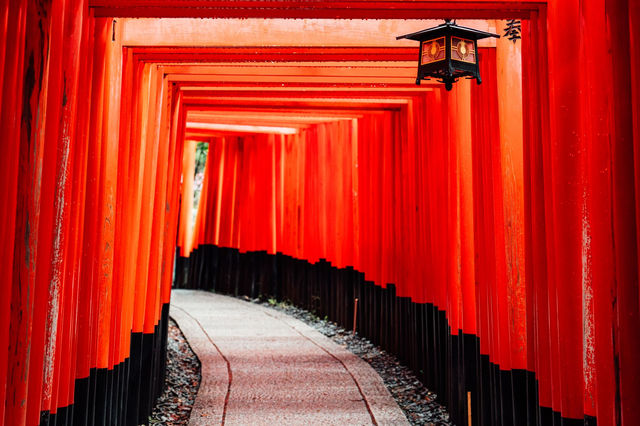
Kyoto was Japan's imperial capital for over a thousand years and remains the country's cultural soul. Seventeen UNESCO World Heritage sites are clustered within the city: from the vermilion torii gates of Fushimi Inari climbing forested Mount Inari to the Zen rock garden of Ryoan-ji and the Golden Pavilion's reflection in its mirror pond. The geisha district of Gion still sends maiko hurrying to evening appointments at ochaya teahouses.

Why go

Kyoto provides what no other place on earth can: the complete encounter with classical Japanese civilisation in a context where it remains alive and not merely preserved. The geiko (Kyoto's term for geisha) and maiko (apprentice geisha) of Gion still perform in the ochaya teahouses of Hanamikoji Street, wearing full regalia; the monks still chant at dawn at Tenryu-ji in Arashiyama; the tea ceremony at Urasenke is performed by masters of a 500-year-old school. At the same time, Kyoto has excellent restaurants, efficient public transport, outstanding accommodation at every price point (from the most beautiful traditional ryokan in Japan to good-value business hotels), and immediate access by Shinkansen (35 minutes) to Osaka's very different energy. It also offers some of Japan's finest seasonal experiences: cherry blossom at Maruyama Park and the Philosopher's Path (late March–early April); maple leaves (momiji) in the temple gardens of Eikan-do and Tofuku-ji (mid-November); and the quiet of a winter morning in a snow-covered Zen rock garden.

Highlights

  • Fushimi Inari-taisha — 10,000 torii gate tunnel
  • Arashiyama bamboo grove at dawn
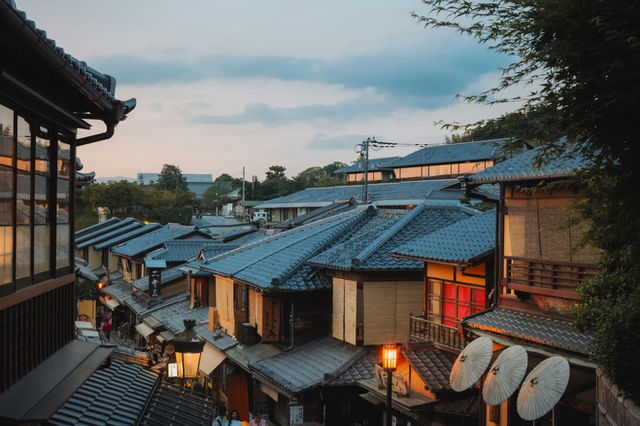
  • Gion district and geisha culture
  • Kinkaku-ji (Golden Pavilion)
  • Nishiki Market food tasting
  • Philosopher's Path canal walk (cherry blossom)

Kyoto in photos

Neighbourhoods

Coming soon

Neighbourhood-by-neighbourhood guides to Kyoto are on the way.

▸ Where you'll stay

Where you'll stay in Kyoto

Live map of hotels and villas around Kyoto — powered by Stay22. Pan, zoom and compare live prices to pick your base.

Stay

Hotels & rentals around Kyoto

Pan, zoom and compare live prices — every stay in one map.

▸ Getting around

Getting around Kyoto

Kyoto's public transport is good but different from Tokyo's — the rail network is more limited, and city buses are the primary way to access many temple districts. The IC card (Suica or ICOCA) works on all Kyoto City Bus, Keihan, Kintetsu, Hankyu and JR services in the city. The Kyoto City Bus day pass (¥700) gives unlimited rides and is excellent value if you plan to visit several outlying temples in a day. Key routes: Bus 205 (circular, north–south loop covering Nishiki, Kawaramachi, Gion, Kyoto Station); Bus 101/102 (Arashiyama); Keihan Line (east side — Fushimi Inari to Gion–Shijo to Sanjo for Philosopher's Path); Hankyu Line (Kawaramachi and Kyoto centre). Cycling: Kyoto is very cycle-friendly — many traditional streets and temple precincts are navigable by bicycle, and numerous hire shops operate near Kyoto Station. Rickshaws (jinrikisha) are available in Arashiyama and Gion for a premium but distinctly atmospheric experience. Taxis are available but expensive.

Kyoto's public transport consists of Kyoto City Bus (most practical for temple districts), Kyoto Subway (two lines — Karasuma Line north–south, Tozai Line east–west), Keihan Railway (east side — Fushimi Inari, Gion, Sanjo), Hankyu Railway (Kawaramachi, Shijo), Kintetsu Railway (Nara and Osaka Kintetsu-Namba), and JR lines within the city and to Osaka/Nara. The Kyoto City Bus Day Pass (¥700 for unlimited city bus rides) is excellent value. IC cards (Suica, ICOCA, Pasmo) work across all modes. Kyoto Station is the hub — all Shinkansen, JR conventional, city bus terminal, and taxi rank. The Subway uses the same IC card system; buy a 1-day subway pass (¥800) if you plan to use it extensively. For Arashiyama: JR Sagano Line (15 minutes from Kyoto Station) or city bus. For Fushimi Inari: JR Nara Line (5 minutes from Kyoto Station). Night services: buses run until approximately 23:00; taxis available after that.

▸ What you'll do

Insider tips

Fushimi Inari at dawn (04:30–06:00) is one of the best experiences in Japan — the thousands of torii gates climbing through cedar forest in silence and early light, before the tour groups arrive, is completely different from the same site at 10:00. Set an alarm. The Philosopher's Path (Tetsugaku no Michi) is a 2km canal-side walking path in the northeast of the city, connecting Nanzen-ji to Ginkaku-ji — at its finest in cherry blossom season but beautiful year-round. The Arashiyama bamboo grove is spectacular but extremely crowded; Jojakko-ji temple nearby has an equally beautiful, quieter bamboo section that most visitors miss entirely. For a ryokan experience at a non-extortionate price, look in the Higashiyama district — several well-reviewed traditional inns provide the full tatami/yukata/kaiseki experience for ¥15,000–25,000 per person per night including dinner and breakfast. Book the tea ceremony experience in advance (particularly at Urasenke) — these fill up in peak season and are not available on walk-in.

Frequently asked

What's on

While you're there

24
JUL
Tenjin Matsuri — Osaka, July 2026
4 本町3丁目6番 中央区, 大阪市, Osaka, Japan · festival
Build a trip around it →
25
JUL
Sumidagawa Fireworks Festival 2026 — Tokyo, July 2026
1 西新宿2丁目5番 新宿区, Tokyo Prefecture, Japan · festival
Build a trip around it →
30
JUL
Sumiyoshi Matsuri — Osaka, July–August 2026
4 本町3丁目6番 中央区, 大阪市, Osaka, Japan · festival
Build a trip around it →
16
AUG
Kyoto Gozan no Okuribi (Daimonji Bonfire Festival) — Kyoto, August 2026
301-1 奈良屋町 中京区, 京都市, Kyoto, Japan · festival
Build a trip around it →
13
SEP
Grand Sumo Tournament — September (Aki Basho) 2026 — Tokyo, September 2026
14 両国2丁目17番 墨田区, Tokyo Prefecture, Japan · sport
Build a trip around it →
Explore

Explore the area

Do

Local attractions & tours

Skip-the-line tickets and small-group tours in Kyoto — compare across our partners.

Not seeing offers? Try or — some destinations have thinner inventory on Tiqets.

▸ When you'll go

Best time to visit Kyoto

March – May, October – November

Kyoto has four strongly seasonal seasons and a climate close to Tokyo's but slightly warmer. Cherry blossom (sakura) peaks late March to early April — the single most visited time in Japan and when accommodation books out months ahead and prices are at their highest; the Philosopher's Path and Maruyama Park are the most beautiful viewing spots. Summer (June–August) is hot and very humid (30–35°C in July–August), with typhoon risk from August–September — tolerable but exhausting for extended outdoor temple-hopping. Autumn (October–November) is Kyoto's finest season: crisp air (15–22°C), spectacular red and gold maple leaves (momiji) in the temple gardens (Eikan-do, Tofuku-ji, Arashiyama) making every garden a painting, and shoulder-season prices slightly below cherry blossom peak. Winter (December–February) is cold (3–10°C) with occasional snow — the rock gardens and moss gardens under snow are very beautiful, temple crowds are at their thinnest, and New Year at a Kyoto shrine (Jidai Matsuri, Gion Matsuri) is deeply atmospheric.

▸ Ready to book your trip?

Getting there

Kyoto has no commercial airport — the nearest is Kansai International Airport (KIX), 75km southwest, served by most major carriers including British Airways, Japan Airlines, ANA and several low-cost carriers. From KIX, the Haruka Express train (JR) runs directly to Kyoto Station in 75 minutes — the most practical connection; pass holders with a JR Pass travel free. Itami Airport (ITM), 40km west in Osaka, handles domestic flights; airport bus to Kyoto takes 55 minutes. The Shinkansen (bullet train) is the main way most visitors arrive: from Tokyo (Nozomi fastest, 2h15; Hikari 2h40 — the Hikari is covered by the standard JR Pass while the Nozomi is not), Hiroshima (1h30) and Osaka (15 minutes). Kyoto Station is a striking modern structure at the southern edge of the city and is the main public transport hub. From Osaka, frequent Shinkansen and conventional express trains make Kyoto a 15–30 minute trip — the two cities are effectively commuter-linked.

  • Osaka Itami Airport (ITM)
  • Osaka Kobe Airport (UKB)
Book

Ready to book your trip?

Flights, airport transfers and car hire to KIX — search and compare without leaving the page.

▸ Trip extras
Book

More trip extras

Parking, holiday extras, and more — coming soon.

Coming soon

We're lining up parking, holiday extras and activities you'll be able to add to any trip from here.