← Japan
JAPAN · CITY

Osaka

Japan's kitchen and comedy capital: Dotonbori neon, legendary street food, Osaka Castle and easy access to Kyoto, Nara and Kobe.

  • City
  • March – May, October – November
  • KIX
  • 3–4 days (standalone); 5–7 days as Kansai base including Kyoto and Nara day trips
▸ Discover

About Osaka

Osaka is Japan with the volume turned up — a city that takes unabashed pride in eating (kuidaore, or 'eat until you drop') and has the restaurants and street stalls to back it up. Dotonbori's neon-soaked canal is the beating heart of the city; Kuromon Ichiba market is where Osaka's chefs shop at dawn. As a base, it's within 15 minutes of Kyoto and 30 minutes of Nara.

Why go

Osaka is the ideal Kansai base: cheaper than Kyoto for accommodation, more food-focused and entertaining for teens than the temple-heavy Kyoto experience, and positioned centrally enough to reach every major regional sight in 15–45 minutes. For a family combining Tokyo with Kansai, Osaka is the obvious anchor for the western leg. The street food alone — takoyaki octopus balls, okonomiyaki savoury pancakes, kushikatsu deep-fried skewers, and fresh tuna sashimi from Kuromon Market — constitutes one of the finest culinary city walks in the world.

Highlights

  • Dotonbori neon canal and street food
  • Takoyaki and okonomiyaki tasting
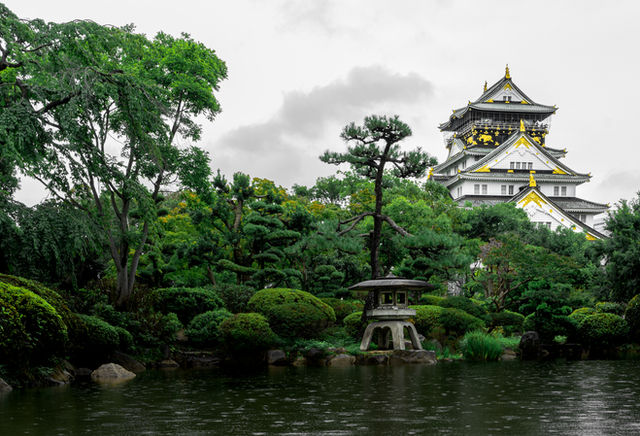
  • Osaka Castle and Nishinomaru Garden cherry blossoms
  • Kuromon Ichiba market fresh uni and wagyu
  • Universal Studios Japan
  • Shinsekai retro entertainment district

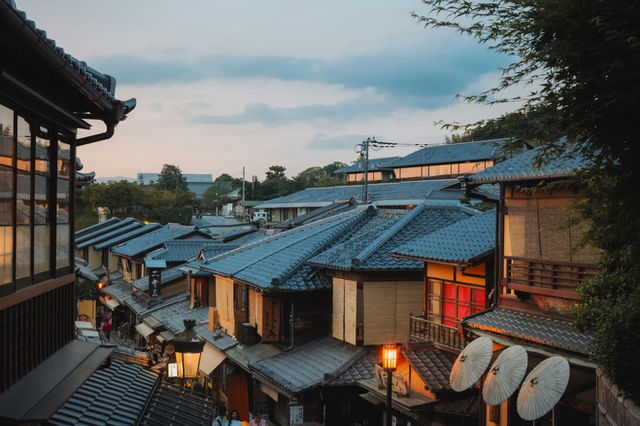
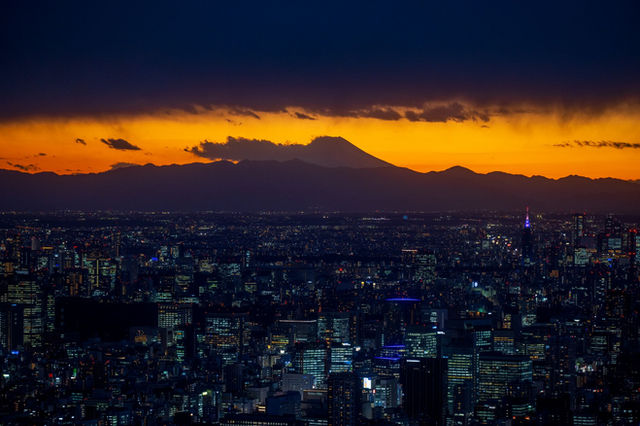
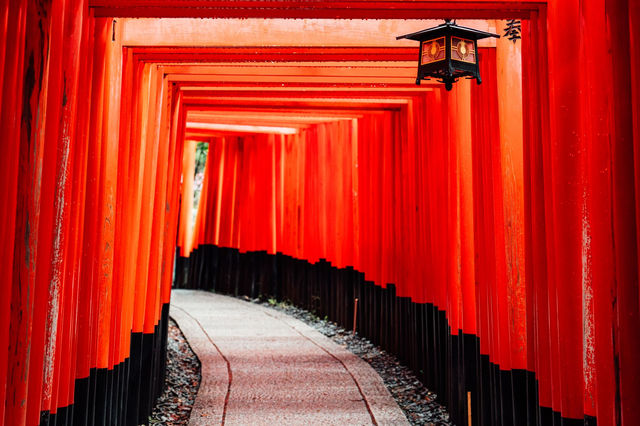
Osaka in photos

Neighbourhoods

Coming soon

Neighbourhood-by-neighbourhood guides to Osaka are on the way.

▸ Where you'll stay

Where you'll stay in Osaka

Live map of hotels and villas around Osaka — powered by Stay22. Pan, zoom and compare live prices to pick your base.

Stay

Hotels & rentals around Osaka

Pan, zoom and compare live prices — every stay in one map.

▸ Getting around

Getting around Osaka

Osaka Metro

Osaka Metro (eight colour-coded lines) covers the city comprehensively. The Midosuji Line (red, line M) is the tourist backbone — running from Shin-Osaka (Shinkansen terminal) south through Umeda (Osaka's northern commercial hub), Shinsaibashi and terminating at Namba (the Dotonbori entertainment quarter) in approximately 15 minutes.

Osaka Amazing Pass

The Osaka Amazing Pass (1-day or 2-day, available at tourist information offices and the airport) covers unlimited Osaka Metro travel plus free or discounted entry to approximately 40 attractions including Osaka Castle and Umeda Sky Building observation decks. Outstanding value for an active first visit.

ICOCA card

The ICOCA stored-value card (Western Japan's equivalent of Tokyo's Suica) covers Osaka Metro, JR lines and buses throughout the Kansai region — and is accepted at convenience stores and many restaurants. Buy at any Osaka Metro station.

Walking

The Namba–Shinsaibashi–Dotonbori district is almost entirely pedestrianised and ideal for exploration on foot. Cycling is popular along the Osaka Castle park routes; bike hire is available near the castle grounds.

Networks

Osaka Metro (eight lines) covers the inner city; JR West (Osaka Loop Line and intercity connections) links to Kyoto, Nara, Kobe and the airports; Hankyu and Kintetsu private railways provide faster or cheaper alternatives for specific Kansai destinations. The ICOCA card covers all three.

Ticketing

The ICOCA stored-value card (buy at any Osaka Metro station, Kansai Airport machines) is the standard practical approach — tap in and out, fare calculated automatically. The Osaka Amazing Pass (1-day or 2-day) covers unlimited Metro travel and around 40 attraction entries — the most cost-effective option for an active sightseeing day.

Key lines

The Midosuji Line (red): Shin-Osaka → Umeda → Shinsaibashi → Namba — the essential tourist route. The Osaka Loop Line (JR West, green): circles the inner city passing Osaka station, Namba, Tennoji and Osaka Castle area. The Kintetsu Namba Line: Osaka Namba to Nara in approximately 45 minutes (Japan Rail Pass not valid; separate ticket or Kintetsu day pass).

Night services

Metro and JR services run until approximately midnight on most lines. Last trains are taken seriously in Japanese culture — check departure times in advance for late evenings.

▸ What you'll do

Insider tips

Osaka Amazing Pass

The Osaka Amazing Pass (1-day or 2-day, buy at Kansai Airport, Osaka tourist information offices or Osaka-Namba station) covers unlimited Osaka Metro travel plus free or discounted entry to approximately 40 attractions — including Osaka Castle keep, Tempozan Ferris Wheel and Umeda Sky Building observation decks. Even covering two or three included attractions makes it good value on top of the transit saving.

Kuromon timing

Kuromon Ichiba Market is best on a weekday morning when it is serving the local restaurant trade rather than a tourist crowd. Fresh oysters, tuna sashimi and tamagoyaki eaten at the stall counter for a fraction of restaurant prices — this is the correct Osaka food experience before Dotonbori gets busy.

Shinsekai

The Shinsekai neighbourhood (south of Namba, around Tsutenkaku Tower) is the most authentically working-class Osaka quarter — 1950s-era covered arcades, Pachinko parlours, and the best-value kushikatsu in the city at a fraction of tourist-area prices. It has a slightly rough reputation that is significantly overstated; it is entirely safe for visitors and provides genuine neighbourhood character.

Nara day trip

Nara (45 minutes from Kintetsu-Namba station by limited express) offers 1,200+ deer freely roaming the park and Tōdai-ji temple — one of Japan's most joyful, child-friendly experiences. Deer biscuits are sold at park entrances; the deer approach visitors directly and are surprisingly bold. One of the best easy day trips in Japan.

Frequently asked

Should we base in Osaka or Kyoto?

Osaka for families wanting food variety, entertainment, Dotonbori energy and flexibility — accommodation is generally cheaper and the city is more lively after dark. Kyoto for temples, traditional culture and wabi-sabi atmosphere. The practical answer: the 15-minute Shinkansen connection (or 30-minute Hankyu express) makes either city viable as a base for visiting the other. Many families split time between both.

Is Universal Studios Japan worth it?

For families with teenagers: Nintendo World and the Wizarding World of Harry Potter are outstanding — among the best themed-area implementations globally. Buy Express passes in advance for the key rides; peak days without fast-pass involve 2–3 hour queues for the most popular attractions. Book tickets online before travelling.

How far is Osaka from Tokyo?

By Shinkansen Nozomi: approximately 2 hours 30 minutes. The Japan Rail Pass covers this journey; the combined Tokyo–Osaka itinerary is the definitive first-Japan experience and highly recommended. Mount Fuji is visible on the right-hand side (northbound window seat) on clear days.

What is takoyaki?

Osaka's signature street food: golf-ball-sized dumplings of savoury batter with octopus, pickled ginger and green onion, cooked in a special dimpled iron pan until crispy outside and liquid inside. Served with takoyaki sauce, Japanese mayonnaise and katsuobushi (dried bonito flakes that wave in the steam). Wanaka at Dotonbori is the most famous stall.

Do we need cash in Osaka?

Yes, more than in Tokyo. A notable proportion of Osaka restaurants, markets and smaller establishments are cash-only — carry sufficient yen and replenish at 7-Eleven or Japan Post ATMs which reliably accept international Visa, Mastercard and Maestro cards.

Is Osaka good for families with young children?

Excellent — the Kuromon Ichiba Market (interactive food stalls), Nara deer park (45 minutes by Kintetsu), Osaka Castle grounds, and the Kaiyukan Aquarium (Tempozan, one of the world's finest aquariums with a whale shark as its centrepiece) are all highly suitable for younger children as well as teenagers.

What's on

While you're there

24
JUL
Tenjin Matsuri — Osaka, July 2026
4 本町3丁目6番 中央区, 大阪市, Osaka, Japan · festival
Build a trip around it →
25
JUL
Sumidagawa Fireworks Festival 2026 — Tokyo, July 2026
1 西新宿2丁目5番 新宿区, Tokyo Prefecture, Japan · festival
Build a trip around it →
30
JUL
Sumiyoshi Matsuri — Osaka, July–August 2026
4 本町3丁目6番 中央区, 大阪市, Osaka, Japan · festival
Build a trip around it →
16
AUG
Kyoto Gozan no Okuribi (Daimonji Bonfire Festival) — Kyoto, August 2026
301-1 奈良屋町 中京区, 京都市, Kyoto, Japan · festival
Build a trip around it →
13
SEP
Grand Sumo Tournament — September (Aki Basho) 2026 — Tokyo, September 2026
14 両国2丁目17番 墨田区, Tokyo Prefecture, Japan · sport
Build a trip around it →
Explore

Explore the area

Do

Local attractions & tours

Skip-the-line tickets and small-group tours in Osaka — compare across our partners.

Not seeing offers? Try or — some destinations have thinner inventory on Tiqets.

▸ When you'll go

Best time to visit Osaka

March – May, October – November

Spring (late March–May)

Spectacular — cherry blossom (sakura) peaks late March to early April at Osaka Castle Park and along the Okawa riverside. Temperatures warm from 12°C in March to a very comfortable 22°C in May. One of Japan's finest seasons for outdoor sightseeing.

Summer (June–August)

Very hot and humid — June brings tsuyu (plum rain, persistent low-level rain), July and August average 33–37°C with high humidity. The Tenjin Matsuri festival (late July) is spectacular but the heat is challenging for sustained outdoor activity. UK school summer holidays coincide with Osaka's hottest, most humid period.

Autumn (September–November)

Arguably Osaka's finest season: clear skies, warm at 18–25°C, spectacular autumn foliage from mid-November in Minoo Park and Osaka Castle Park. September carries some typhoon risk; October and November are the peak comfortable months.

Winter (December–February)

Cool at 5–12°C; occasional light frost in central Osaka, rare snow. The Osaka Illuminage winter lights event and general quiet at major tourist sites make December and January a reasonable shoulder alternative with significantly lower accommodation prices.

Best months

Late April–May and October–November are the practical sweet spots: excellent temperatures, no typhoon risk and some of Japan's most atmospheric seasonal scenery.

▸ Ready to book your trip?

Getting there

By air

Kansai International Airport (KIX), on an artificial island in Osaka Bay, handles all international services to the Osaka/Kyoto region — including direct Japan Airlines flights from London (approximately 12–14 hours). The Haruka Limited Express connects KIX to Shin-Osaka in 50 minutes and to Namba in 70 minutes; the Nankai Rapid train is slower but cheaper. Itami Airport (ITM) in the city serves domestic Japan routes only — relevant only for internal travel from Tokyo.

By Shinkansen from Tokyo

Most UK visitors fly into Tokyo (Narita or Haneda) and travel to Osaka by Shinkansen Nozomi in approximately 2h30 — one of the great train journeys in the world, with Fuji visible on clear days from the right-hand side. The Japan Rail Pass covers this journey and makes the Tokyo-Osaka-Kyoto circuit excellent value. Osaka Shin-Osaka station receives all Nozomi services.

  • Kansai International Airport (KIX)
  • Itami Airport (ITM) — domestic only
Book

Ready to book your trip?

Flights, airport transfers and car hire to KIX — search and compare without leaving the page.

▸ Trip extras
Book

More trip extras

Parking, holiday extras, and more — coming soon.

Coming soon

We're lining up parking, holiday extras and activities you'll be able to add to any trip from here.