← Mali
MALI · CITY

Towns of Djenné

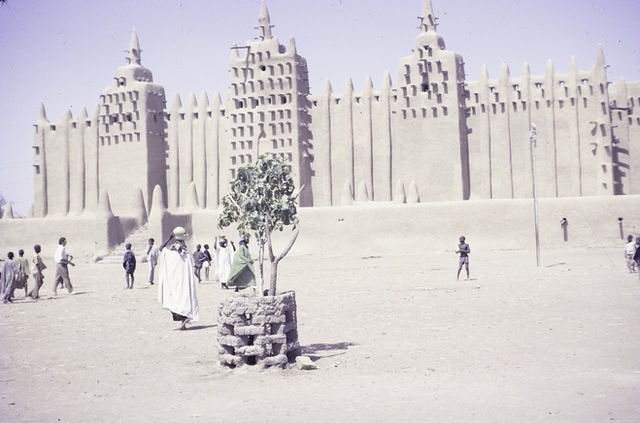
Home to the largest mud-brick building on Earth — the sculptural Great Mosque of Djenné rising over a Sahelian market town.

  • City
  • November to February for the cool, dry season
  • ~approx 1 day (ideally a Monday)

qiv via Wikimedia Commons (CC BY-SA 2.0)

  • The Great Mud Mosque
  • Monday Market
  • Toucouleur Facades
  • Inland Niger Delta

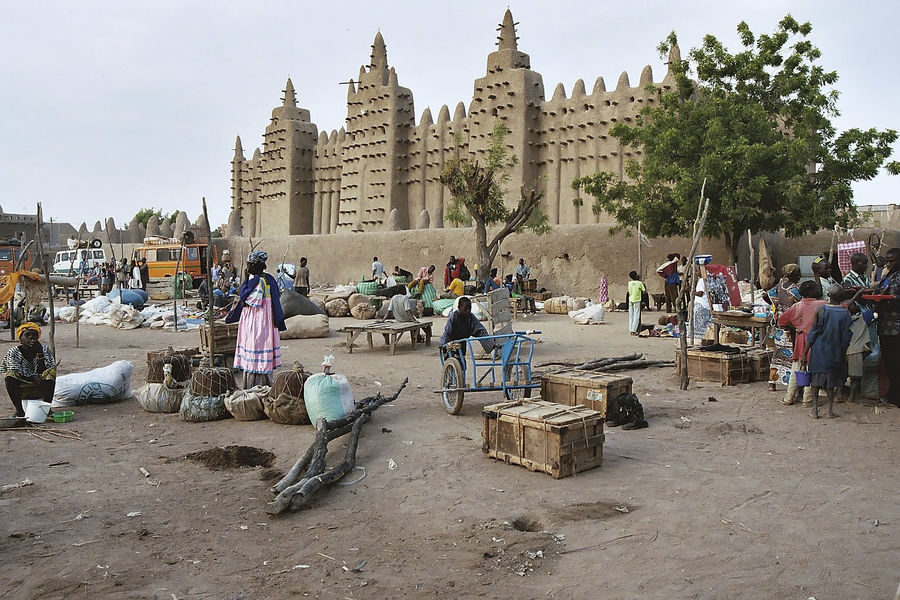
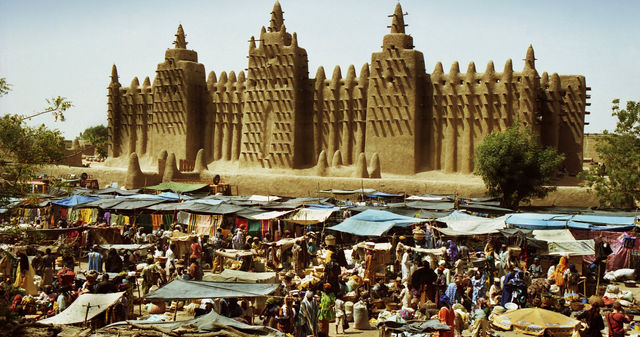
A vast ochre mosque bristling with palm-wood spikes, rising over a market square packed with colour on a Monday morning, its walls the same warm mud as the town spread around it.

Home to the largest mud-brick building on earth: an ancient trading and scholarly town on the Bani River, where a colossal earthen mosque presides over a weekly market and the whole community re-coats it by hand each year.

Type
town
Ideal length
~approx 1 day (ideally a Monday)
Getting around
entirely on foot through the mud-brick town
Neighbourhoods
2 areas
Best season / months
November to February for the cool, dry season
Language
Bambara, Fula and other local languages; French
Currency
West African CFA franc (CFA)
Budget level
low — but access and everyday practicalities are the real question, not price
Good for
  • Earthen architecture
  • Sahel heritage
  • Markets
  • History
▸ Discover

About Towns of Djenné

Djenné sits on the floodplain of the Bani River in central Mali, in the vast Inland Niger Delta, on ground that becomes an island when the annual floods come. Founded well over a thousand years ago — its ancestor city of Djenné-Djeno nearby is one of the oldest known towns in sub-Saharan Africa — it grew rich as a trade link between the Saharan caravans and the gold and goods of the forest south, and as a celebrated centre of Islamic learning. The town is built almost entirely of sun-dried mud brick: some two thousand traditional houses, many with the ornamented Toucouleur-style facades of the region, and, at its heart, the Great Mosque, the largest mud structure in the world. The old town is a UNESCO World Heritage site. The account here centres on its heritage; present-day conditions and access must be checked against current advice.

Why go

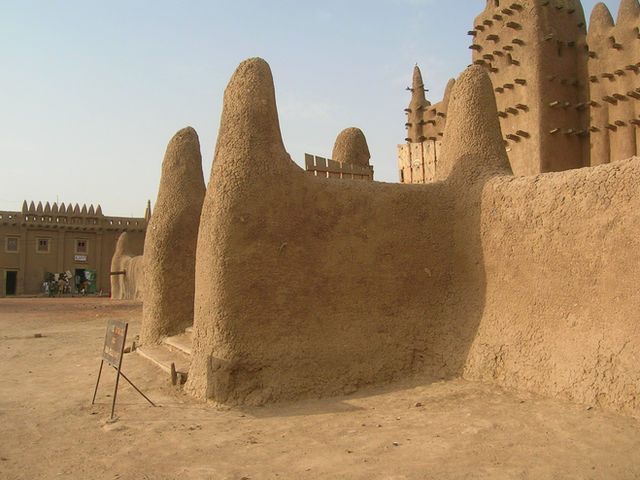
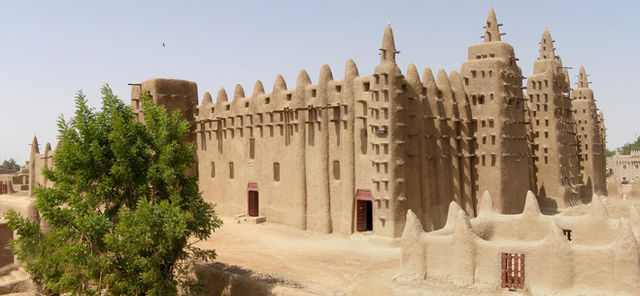
The Great Mosque of Djenné is one of the most extraordinary buildings anywhere — a mountain of mud brick in the Sudano-Sahelian style, its tapering buttresses stuck through with the palm-wood beams (torons) used to replaster it, rebuilt in 1906–07 on far older foundations. Around it stands a rare, near-complete town of earthen architecture and a market that has drawn the region for centuries. Djenné's history as a Saharan trade hub and a seat of Islamic scholarship, and its survival as a living mud-brick town, make its heritage significance immense and internationally recognised.

Don't miss

  • The Great Mosque of Djenné — the largest mud-brick building on earth
  • The Monday market — the great Sahel market before the mosque
  • The Toucouleur mud-brick houses — ornamented earthen facades
  • The annual replastering (crépissage) — the town re-coating the mosque
  • Djenné-Djeno — the ancient city nearby, one of Africa's oldest

Signature experiences

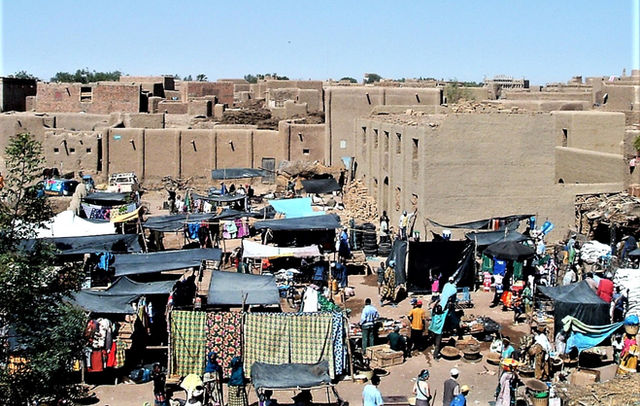
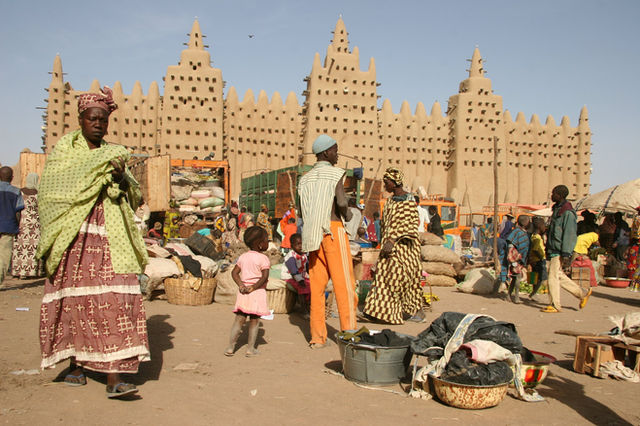
The Great Mosque and the market — Time your visit for a Monday, when the square before the mosque fills with traders from across the Inland Delta — livestock, cloth, pottery, dried fish and spices — and the great earthen building rises over it all. The mosque's tapering walls, its projecting palm-wood beams and its egg-topped towers are the defining image of Sahelian architecture. **The replastering of the mosque** — Each year, before the rains, the whole town turns out to re-coat the Great Mosque with fresh mud plaster in a single communal effort — the crépissage — using the projecting torons as scaffolding. It is why the building survives, and one of the great living heritage rituals of West Africa. **Mud town and river delta** — Djenné is built almost entirely of earth, and a walk through its lanes past the ornamented Toucouleur houses is a lesson in how a whole town is made and maintained from the ground it stands on. Down at the Bani River, the Bozo fishing people work the water of the Inland Delta much as they have for centuries; nearby lie the mounds of Djenné-Djeno, the ancient city from which the town descends.

Neighbourhoods

Towns of Djenné neighbourhood by neighbourhood — the character of each and who it suits.

  • The Great Mosque

    The heart of the town — the colossal mud mosque and the open square before it that fills each Monday with the region's great market.

    Why go
    The mosque itself and the market that gathers beneath it.
    Best for
    The headline landmarkthe marketthe town's core
    Known for
    The Great Mosque with its buttressed walls and projecting torons, the Monday market spread across the square, the ostrich-egg finials on the mosque's towers, and the annual crépissage when the town replasters it together.
  • The Old Town

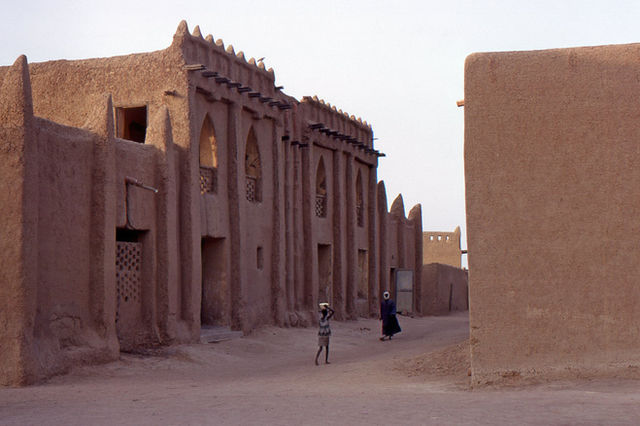
    The maze of mud-brick lanes around the mosque — some two thousand earthen houses, the finest fronted with ornamented Toucouleur facades, and the Koranic schools that made Djenné a place of learning.

    Why go
    The domestic mud architecture and the scholarly heritage.
    Best for
    House facadesthe lanesthe madrasas
    Known for
    The Toucouleur-style houses with their moulded geometric fronts, the narrow mud-brick lanes, the Koranic schools and their manuscript tradition, and the walk down to the Bani River and its Bozo fishing community.

Views & hidden gems

Best views

  • The Great Mosque over a full Monday market
  • The Toucouleur house facades in the old lanes
  • The town and mosque from across the Bani River

Hidden gems

  • The projecting torons of the mosque, structural and used as scaffolding for the replastering
  • The Koranic schools and their old manuscript tradition
  • The Bozo fishing community on the Bani River
  • The mounds of Djenné-Djeno nearby, one of the oldest towns in sub-Saharan Africa

Food & drink

Djenné eats the food of the Sahel and the river — rice and millet with rich sauces, and the freshwater fish of the Bani and the Inland Delta. Expect riz gras (rice cooked in a seasoned sauce with meat or fish), to (a millet-flour porridge with sauce), grilled river fish such as capitaine, and fonio, the fine local grain. Malian tea, poured in three ever-stronger, ever-sweeter rounds, punctuates the day. Meals are communal and eaten from shared bowls.

  • Riz gras — rice cooked in a seasoned meat-or-fish sauce
  • To — millet-flour porridge served with sauce
  • Grilled capitaine — Niger-Bani river fish
  • Fonio — a fine Sahelian grain, steamed
  • Malian tea — poured in three ever-sweeter glasses
  • Fresh river fish from the delta — a Bozo staple
Dietary notes

Vegetarian options are limited in a rice-and-fish, meat-and-sauce food culture, though rice, millet, beans and vegetable sauces are staples; ask about stock. Most food is halal. Kosher and certified gluten-free are not catered to and should not be assumed. Confirm anything essential in advance.

▸ Photos

Towns of Djenné in photos

▸ Where you'll stay

Where you'll stay in Towns of Djenné

Djenné is a small town usually visited in a day, ideally on a Monday, with only simple local lodging — a handful of basic guesthouses in mud-brick buildings. Given the wider situation, current options and their status change and must be checked against present advice; the pointers below describe the town's traditional geography rather than a recommendation to travel now.

  • Budget
    Simple guesthouses in the old town.
  • Mid-range
    A basic hotel near the mosque square.
  • Luxury
    Limited; a restored mud-brick house where available.
Stay

Hotels & rentals around Towns of Djenné

Pan, zoom and compare live prices — every stay in one map.

▸ Getting around

Getting around Towns of Djenné

The town is small and walked entirely on foot through its mud-brick lanes. Reaching it needs road transport and the river ferry, and depends on current conditions.

The mosque square and the surrounding old town are a short walk apart (~approx), with the Bani River at the town's edge.

▸ Plan your days

Suggested itineraries

Ready-made day plans for Towns of Djenné — from a single day to a long weekend.

One day

Come on a Monday. Spend the morning at the market in the square before the Great Mosque, taking in the great earthen building and its torons and towers, then walk the old town's mud-brick lanes past the ornamented Toucouleur houses and the Koranic schools. End at the Bani River among the Bozo fishing community, and — if it can be reached — the ancient mounds of Djenné-Djeno. (Access must be checked against current advice.)

Two days

With a second day, go slower through the old town and its house facades and madrasas, learn how the mud architecture is built and maintained, and take in the river and delta setting that shapes the town's life. (Subject to current access.)

▸ What you'll do

Insider tips

  • Djenné sits across the Bani River and is reached by a ferry crossing onto its floodplain — factor it in where travel is possible.
  • Visit on a Monday for the market; on other days the square and town are far quieter.
  • The interior of the Great Mosque is usually off-limits to non-Muslims — the building is admired from the square.
Explore

Explore the area

© OpenFreeMap · OSM · terrain Mapterhorn
Do

Local attractions & tours

Skip-the-line tickets and small-group tours in Towns of Djenné — compare across our partners.

We're still curating hand-picked tickets and tours for Towns of Djenné. In the meantime, the map above and the nearby cities are a great place to start.

▸ Budget

What it costs in Towns of Djenné

Backpacker
a low daily figure, but access is the real variable.
Mid-range
a modest daily figure by international standards.
Luxury
still low by western standards.
Cash vs card
Mali runs almost entirely on cash; foreign cards are of little use outside the capital — research this thoroughly in advance.
Tipping
Small tips are customary for guides and services.
▸ When you'll go

When to visit Towns of Djenné

November to February for the cool, dry season

Spring

What to expect — Heating rapidly toward the fierce pre-rains heat of the Sahel; hot and dry, the river and delta low.

What's best — Clear, dusty light on the mud town before the rains. The cool season is far more comfortable.

Summer

What to expect — The rainy season, hot and humid, when the delta floods and Djenné can become an island; the rains soften and threaten the mud buildings, and the replastering follows.

What's best — The flooded delta and the greening land, though heat, rain and access make it the hardest time to visit.

Autumn

What to expect — The rains ending, the floodwaters high, the land green, the heat beginning to ease.

What's best — The delta at its fullest and the countryside green, as the dry season approaches.

Winter

What to expect — The best season — warm, dry days and cool nights, the dust of the Harmattan wind sometimes in the air. The main season for markets and travel.

What's best — Comfortable temperatures for the town and the Monday market, and the clearest conditions of the year.

▸ Know before you go

Know before you go

Before you go — official advisories

Most governments currently advise against all travel to central Mali, including the Djenné area; check your own government's current advice first — this guide describes the town's heritage and does not assess present-day safety or access.

Entry, permits, movement and the security situation change constantly and must be verified against current official guidance before any travel.

Honest swaps

Skip a non-market day if you can → Djenné is at its fullest on a Monday, when the market gathers before the mosque, where a visit is possible.

Local rules & etiquette

The Great Mosque's interior is generally closed to non-Muslims; respect this and photograph the exterior only, and ask before photographing people.

The town is a lived-in community of earthen homes, not an exhibit — tread and photograph with care.

Money

Mali is a cash economy and foreign cards are of little use; money and its logistics are among the most important things to research in advance.

▸ Ready to book your trip?

Getting there

Djenné lies off the road between Bamako and Mopti in central Mali and is reached by a ferry crossing onto its floodplain island; all routes and their availability change entirely with the current situation and must be verified.

Book

Ready to book your trip?

Flights, airport transfers and car hire — search and compare without leaving the page.

▸ Trip extras
Book

More trip extras

Parking, holiday extras, and more — coming soon.

Coming soon

We're lining up parking, holiday extras and activities you'll be able to add to any trip from here.