← Mexico
MEXICO · CITY

Puebla

A colonial Mexican city of tiled facades, baroque churches and one of the country's great cuisines.

  • City
  • October to May — dry, mild days; late summer for chiles en nogada
  • ~approx 2 days
  • Talavera Tiles
  • Baroque Churches
  • Mole Poblano
  • Volcano Views

A whole façade sheathed in blue-and-white Talavera tiles, the dizzying gilt of the Rosario Chapel, and the perfect cone of Popocatépetl trailing smoke on the horizon as you spoon into a plate of dark, chocolate-deep mole.

Puebla is Mexico's tile-and-Baroque city — a grand colonial capital of azulejo façades and gilded churches under the snow-capped Popocatépetl volcano, the birthplace of mole poblano and chiles en nogada, and a UNESCO centre made for eating and wandering.

Type
metropolis
Ideal length
~approx 2 days
Getting around
on foot in the centre; taxis and ride-hailing beyond
Neighbourhoods
3 areas
Best season / months
October to May — dry, mild days; late summer for chiles en nogada
Language
Spanish (some English in tourist spots)
Currency
Mexican peso ($)
Budget level
moderate — affordable
Good for
  • Food
  • History
  • Architecture
  • Craft
  • Day-trippers from Mexico City
▸ Discover

About Puebla

Puebla lies in a high valley in central Mexico, a couple of hours southeast of Mexico City, watched over by the volcanoes Popocatépetl and Iztaccíhuatl. The colonial grid centres on the Zócalo and its cathedral, spreading out into tiled streets, church after church, and the antiques-and-arts quarters of Los Sapos and the Barrio del Artista. To the west, the modern Angelópolis district brings malls and business towers; to the northwest, the pyramid town of Cholula sits within reach. It's a big, prosperous city, but the historic core is flat, handsome and walkable.

Why go

Puebla is one of Mexico's great colonial cities and its most important kitchen — the home of mole poblano and the patriotic chiles en nogada, wrapped in a centre of tiled façades and extravagant Baroque churches that earned it World Heritage status. Add the giant pyramid at neighbouring Cholula, the volcano backdrop, the Talavera-pottery tradition and an easy hop from the capital, and you have a rich, under-rated city that rewards a slow couple of days.

Don't miss

  • The Rosario Chapel — the dazzling gilded Baroque interior
  • The Cathedral and Zócalo — the grand colonial heart
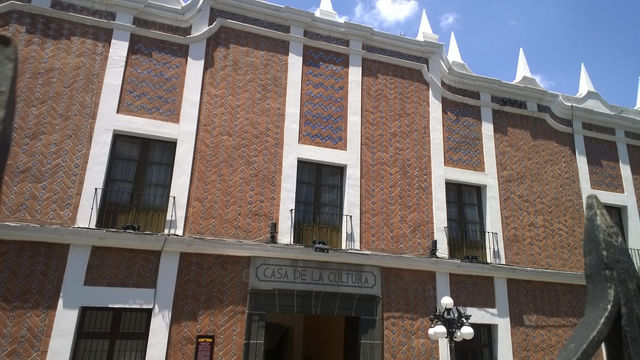
  • The Talavera-tiled streets — the azulejo façades
  • Cholula's Great Pyramid — the church-topped mound nearby
  • Mole poblano — the city's signature dish, at its source

Signature experiences

Baroque and tile — Puebla is a feast of colonial building. The cathedral anchors the Zócalo, but the showstopper is the Rosario Chapel in the Santo Domingo church — a gilded, sculpture-crammed Baroque interior once called the eighth wonder. Outside, whole façades are sheathed in blue-and-white Talavera tiles, and the tiled Casa del Alfeñique looks iced like a cake. Wander the centre church to church, façade to façade; the craft is in the surfaces. **Eating poblano** — Puebla's kitchen shaped Mexican food. This is the birthplace of mole poblano, the dark, chocolate-and-chilli sauce, and of chiles en nogada, the patriotic stuffed poblano chilli under a walnut cream and pomegranate seeds (a late-summer speciality). The street brings cemitas — sesame-seed sandwiches piled with meat and stringy cheese — chalupas and tacos árabes. Eat in the market fondas and the centre, and time a visit for nogada season if you can. **The volcano and the pyramid** — Just northwest, the twin towns of Cholula sit beneath the volcanoes, crowned by the Great Pyramid of Cholula — by volume the largest pyramid on earth, now a grassy mound with a church on top and tunnels burrowing beneath. Climb to the church for the classic view of Popocatépetl smoking behind the yellow chapel. It's the essential half-day, and a reminder of the pre-Hispanic depth beneath the colonial city. **Talavera and craft** — Puebla's famous Talavera pottery — the tin-glazed blue-and-white ceramics — is everywhere, from the tiled façades to the workshops you can tour and the pieces you can buy. Pair it with the antiques of Los Sapos and the artists' plaza, and the city becomes a place to browse and buy as much as to sightsee. Buy certified Talavera to get the real, protected craft.

Neighbourhoods

Puebla neighbourhood by neighbourhood — the character of each and who it suits.

  • Centro Histórico

    The colonial core around the Zócalo — a grid of tiled façades, grand churches and arcaded plazas, elegant and walkable. The World Heritage heart of Puebla.

    Why go
    The cathedral, the Baroque churches and the tiled streets.
    Best for
    Sightseeingchurchescafé-sittingwalking
    Known for
    The Zócalo and the great Cathedral, the astonishing Rosario Chapel in the Santo Domingo church, the tiled Casa de los Muñecos and Casa del Alfeñique, and the church-and-museum-lined streets.
  • Los Sapos and the Barrio del Artista

    The antiques-and-arts quarter southeast of the centre — the Callejón de los Sapos flea market, the artists' plaza where painters work in the open, and a cluster of cantinas and cafés. The bohemian, browsable corner.

    Why go
    The antiques market, the artists' quarter and the cantina scene.
    Best for
    Antiquesartcantinasweekend browsing
    Known for
    The Callejón de los Sapos antiques and weekend flea market, the Barrio del Artista with its open-air painters, the Plazuela de los Sapos cantinas, and the craft and Talavera shops nearby.
  • Angelópolis

    The modern city west of the centre — glassy malls, business towers, museums and the newer hotels, a contrast to the colonial core. Puebla's contemporary face.

    Why go
    The modern hotels, the malls and the striking Baroque art museum.
    Best for
    Modern hotelsshoppingfamiliesthe big museums
    Known for
    The Angelópolis malls and towers, the striking Museo Internacional del Barroco, the modern hotels, and the wide boulevards of the new city.

Views & hidden gems

Best views

  • Cholula's hilltop church with Popocatépetl behind — the classic volcano shot
  • The Rosario Chapel — the gilded Baroque interior
  • The Talavera-tiled façades of the centre — colour street by street
  • The cathedral towers and Zócalo — the colonial heart from a rooftop café

Hidden gems

  • The Biblioteca Palafoxiana — the Americas' oldest public library, a wood-panelled jewel
  • The tunnels of Cholula's Great Pyramid — burrowing beneath the mound
  • The Callejón de los Sapos weekend flea market — antiques and curiosities
  • The Museo Internacional del Barroco — a striking modern building in Angelópolis
  • The camote sweet shops of the Calle de los Dulces — Puebla's candied sweet-potato street

Food & drink

Puebla is one of Mexico's essential food cities, and its dishes are national icons. Mole poblano, the dark sauce of chillies, chocolate and spices, was perfected here; chiles en nogada, a stuffed poblano under walnut cream and pomegranate, is a patriotic late-summer set-piece. The street food is superb: cemitas (sesame-bun sandwiches with milanesa, avocado and quesillo), chalupas (little fried tortillas in salsa), tacos árabes on pita, and the sugary camotes for dessert. Eat in the market fondas and the centre where locals do.

  • Mole poblano — the dark chilli-and-chocolate sauce, born in Puebla
  • Chiles en nogada — stuffed poblano chilli under walnut cream and pomegranate (late summer)
  • Cemita — a sesame-seed sandwich piled with meat, avocado and quesillo
  • Chalupas — small fried tortillas with salsa, meat and onion
  • Tacos árabes — spit-roast pork in pita, a Lebanese-Mexican hybrid
  • Camotes — candied sweet-potato sticks, the local sweet
Dietary notes

Vegetarians manage with cheese, rajas (poblano strips), nopal, mushroom quesadillas and market fare, but lard and meat stock are common, so ask. Vegan options are growing in the centre but limited at traditional fondas. Halal and kosher are effectively unavailable. Gluten-free is workable with corn tortillas (the maize staple) rather than wheat breads — but the cemita and tacos árabes are wheat, so confirm.

Puebla in photos

▸ Where you'll stay

Where you'll stay in Puebla

Stay in the Centro Histórico to walk to the churches, the Zócalo, the tiled streets and the food — the historic core is compact and handsome, with boutique hotels in restored colonial houses. Los Sapos and the streets near the Barrio del Artista are atmospheric and close in. For modern comfort and malls, Angelópolis to the west has the newer hotels, but you'll commute to the sights. The centre is the place for a first visit.

  • Budget
    Around the centre / near the Zócalo hostels and budget hotels walkable to the sights.
  • Mid-range
    Centro Histórico boutique and courtyard hotels in restored colonial houses, steps from the churches.
  • Luxury
    The best colonial boutiques in the centre / Angelópolis high-end restored houses or modern hotels in the new city.
Stay

Hotels & rentals around Puebla

Pan, zoom and compare live prices — every stay in one map.

▸ Getting around

Getting around Puebla

The historic centre is flat and walkable — you'll do the churches, plazas and tiled streets on foot. Taxis and ride-hailing apps cover the longer hops to Angelópolis, Cholula and the terminals; a car isn't needed in the centre and parking is tight. Cholula is a short taxi or colectivo ride away.

The centre and Los Sapos are a walk apart (~approx); Angelópolis and Cholula are short taxi or colectivo rides west and northwest — plan Cholula as a half-day.

▸ Plan your days

Suggested itineraries

Ready-made day plans for Puebla — from a single day to a long weekend.

One day

Start on the Zócalo with the Cathedral, then walk to Santo Domingo for the gilded Rosario Chapel. Wander the tiled streets — the Casa del Alfeñique, the Casa de los Muñecos — and browse the Callejón de los Sapos and the Barrio del Artista. Have a mole poblano or a cemita for lunch, pick up camotes on the sweet street, and end with a rooftop drink over the cathedral towers.

Two days

Give day two to Cholula and the volcanoes. Head next door to climb the Great Pyramid to its hilltop church for the view of smoking Popocatépetl, explore the tunnels and the town's many churches, then return for the Barroco museum in Angelópolis or a Talavera workshop. Round off with a last poblano dinner in the centre.

▸ What you'll do

Insider tips

  • Pair Puebla with Cholula — the pyramid and volcano view are a short hop and make a natural half-day.
  • Time a visit for late summer to try chiles en nogada, the seasonal patriotic dish, at its peak.
  • Buy certified Talavera from a workshop rather than street stalls to get the protected, genuine craft.
  • Puebla makes an easy overnight from Mexico City by frequent bus — worth more than a rushed day trip.
What's on

While you're there

31
OCT
Day of the Dead 2026
Portal De Flores 7, 68000 Oaxaca, Oaxaca, Mexico · cultural
Build a trip around it →
Explore

Explore the area

© OpenFreeMap · OSM · terrain Mapterhorn
Do

Local attractions & tours

Skip-the-line tickets and small-group tours in Puebla — compare across our partners.

We're still curating hand-picked tickets and tours for Puebla. In the meantime, the map above and the nearby cities are a great place to start.

▸ Budget

What it costs in Puebla

Backpacker
roughly €25–45 a day.
Mid-range
roughly €55–100 a day.
Luxury
€160 a day and up.
Cash vs card
Cards work in hotels and better restaurants, but carry pesos for markets, street food, cantinas and the sweet shops.
Tipping
Tipping is expected — around 10–15% in restaurants, small change for guides and help.
▸ When you'll go

When to visit Puebla

October to May — dry, mild days; late summer for chiles en nogada

Spring

What to expect — Warm, dry and pleasant, the highland climate mild by day and cool at night, clear before the summer rains. A comfortable, quieter season.

What's best — Fine walking weather for the churches and streets, Holy Week traditions, and clear volcano views on the best mornings.

Summer

What to expect — Warm days and reliable afternoon rains as the wet season sets in; bright mornings, wet late afternoons. Green and fresh between showers.

What's best — Late summer brings chiles en nogada, the celebrated seasonal dish, plus green hills and warm mornings — carry a layer and sightsee before the afternoon rain.

Autumn

What to expect — The rains tapering into mild, clear weather, with good volcano views and comfortable days. A fine, settled time.

What's best — Clear skies and crisp light on the tiled streets, the tail of nogada season, and Day of the Dead traditions at the start of November.

Winter

What to expect — Dry, sunny days and genuinely cold highland nights, with clear skies and the volcanoes often snow-capped. Chilly after dark.

What's best — The clearest volcano views of the year, bright comfortable sightseeing, and the festive season in the plazas — pack a warm layer for the cold evenings.

▸ Know before you go

Know before you go

Honest swaps

Skip a generic hotel dinner → seek out mole poblano and, in late summer, chiles en nogada at a proper poblano restaurant or market fonda.

Skip mass-produced "Talavera" souvenirs → buy certified, protected Talavera from a real workshop.

Skip only the cathedral → the Rosario Chapel in Santo Domingo is the true showstopper, a few blocks away.

Skip staying only in the city → give Cholula and its pyramid a proper half-day next door.

Crowds & timing

The centre and the Rosario Chapel are busiest at weekends; weekday mornings are calmer.

Chiles en nogada is a late-summer speciality — visit around then to try it at its best.

Local rules & etiquette

Dress modestly inside the churches and remove hats; photography is often limited in the Rosario Chapel — check.

Certified Talavera carries an official mark; look for it if buying the real ceramic.

Respect the working artists in the Barrio del Artista; ask before photographing their work.

Money

Carry pesos for markets, street food, cantinas and sweet shops; cards cover hotels and bigger restaurants.

Use bank ATMs in the centre rather than standalone machines.

After dark

The Zócalo, the cathedral surrounds and the Los Sapos cantinas hold the liveliest evenings.

Cholula, a university town, has a younger, later bar-and-club scene next door.

Angelópolis offers the modern malls, cinemas and restaurant chains for an evening out.

▸ Ready to book your trip?

Getting there

Puebla's airport (PBC) is small; most international visitors fly into Mexico City (MEX) and come on by frequent bus (~approx 2 hours) or car. Long-distance buses arrive at the CAPU terminal, a taxi from the centre.

Book

Ready to book your trip?

Flights, airport transfers and car hire — search and compare without leaving the page.

▸ Trip extras
Book

More trip extras

Parking, holiday extras, and more — coming soon.

Coming soon

We're lining up parking, holiday extras and activities you'll be able to add to any trip from here.