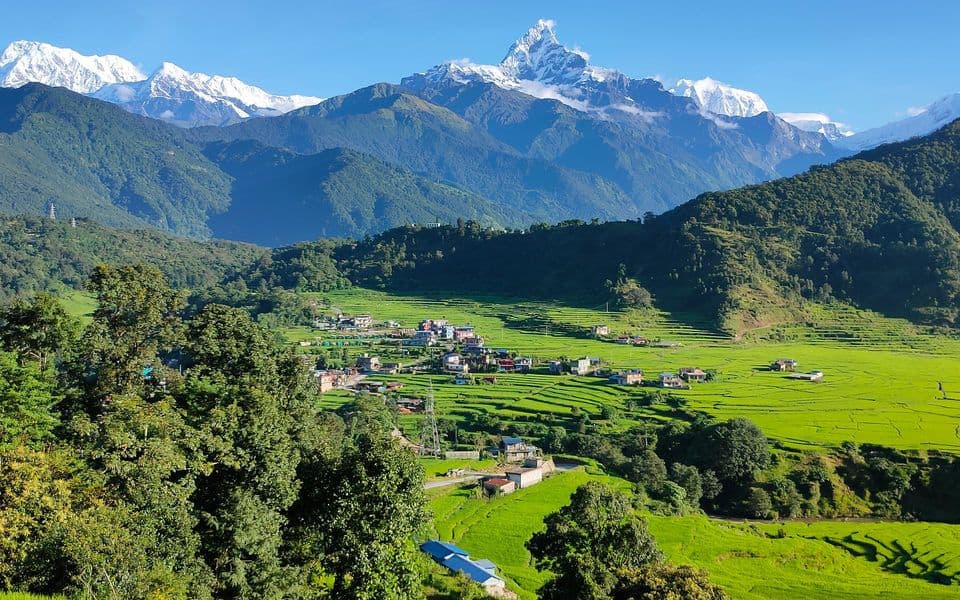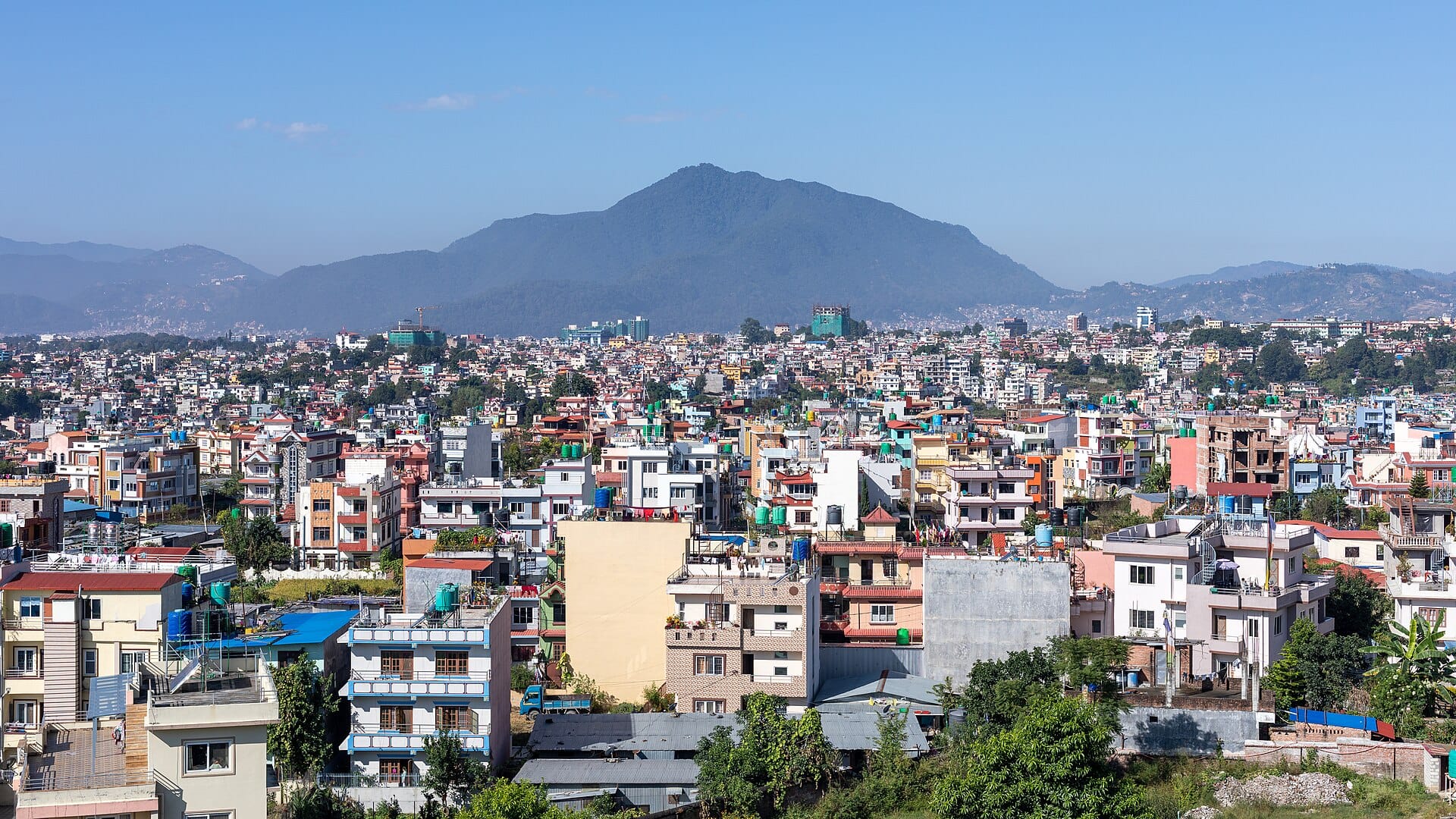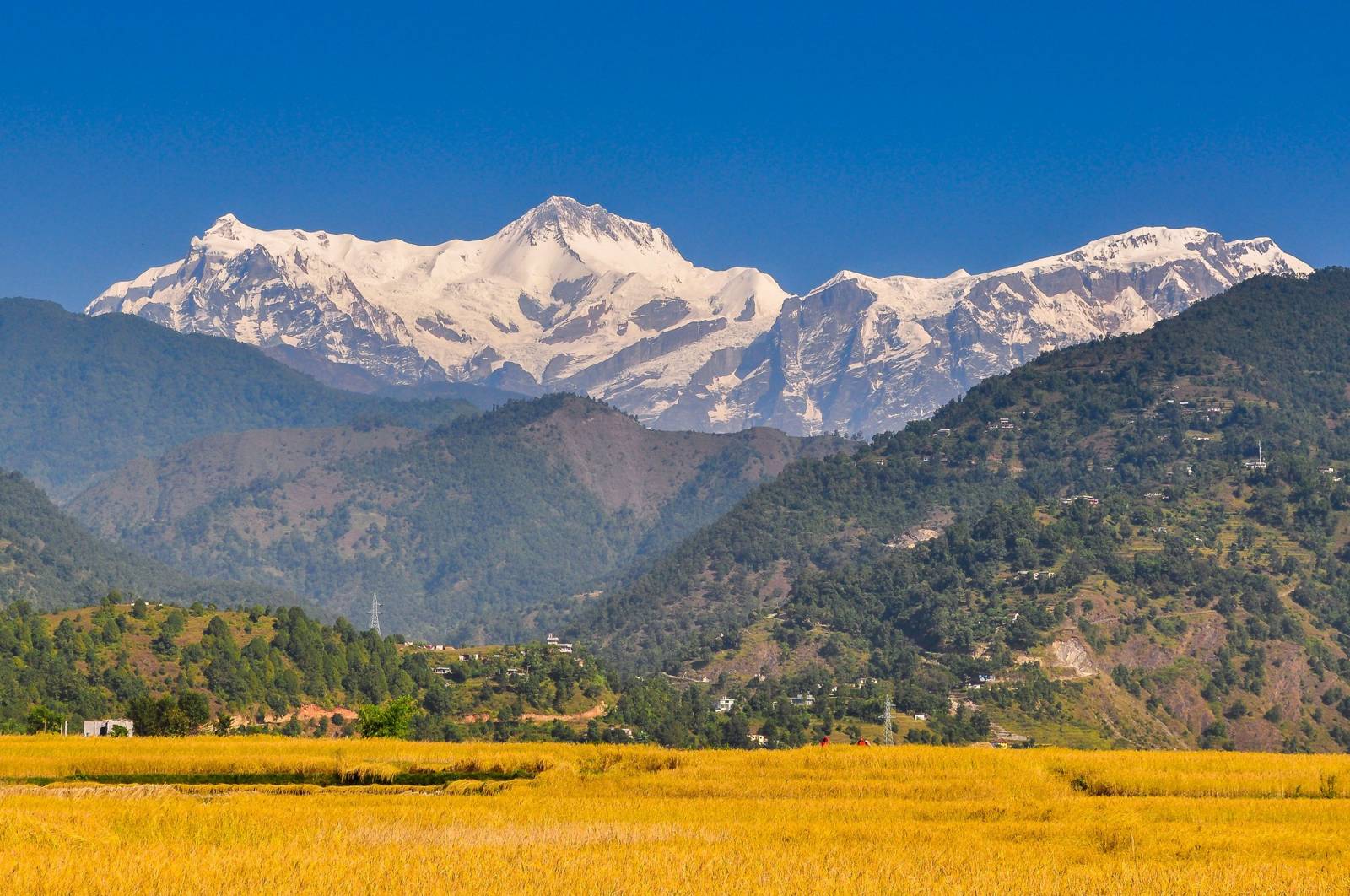
Nepal — hero

Asia

Nepal

Roof of the world, heart of the Himalaya. Trek beneath Everest, spin prayer wheels in Kathmandu, and spot rhinos in steamy jungle, all in one small country.

Currency
Nepalese Rupee (NPR)
Language
Nepali
Best time
October – November, March – April (trekking seasons)
Visa
Visa on arrival (up to 90 days)

The FCDO has no advisory against travel to Nepal.

Still current at: 13 November 2026 Updated: 1 October 2026

Source: UK Foreign, Commonwealth & Development Office — the definitive source. Check it close to your travel dates.

Flight cancelled or delayed because of this? Your rights under UK261 / EU261 →

Why visit

Why Nepal

Temple squares in the Kathmandu Valley, tea-house treks beneath Annapurna and Everest, and rhinos in the lowland jungle of Chitwan: Nepal packs three very different trips into one small country.

  • Everest Base Camp & Annapurna treks
  • Kathmandu Durbar Squares & Boudhanath
  • Pokhara & Phewa Lake
  • Chitwan jungle safari
Read more

Nepal is home to eight of the world's 8,000-metre peaks, Everest among them, and it is the human side of the country that stays with most visitors. In the Kathmandu Valley, the old royal cities of Kathmandu, Patan and Bhaktapur hold seven monument zones that together form a single UNESCO World Heritage Site: pagoda temples, palace squares and the great stupas of Boudha and Swayambhu, where pilgrims walk clockwise at every hour of the day.

Most people come for the mountains. From the lakeside city of Pokhara, the Annapurna range rises almost straight out of the valley. Further east, the flight to Lukla opens the Everest region, Sherpa villages and the trek to Base Camp. Since 2023, most of the main trekking routes require a licensed guide and a TIMS card arranged through a registered agency, so the days of setting off alone are over. We think that is a good thing at altitude.

Drop south to the Terai and Nepal changes completely. In Chitwan National Park you can track one-horned rhinos by jeep, canoe and on foot, then visit Tharu villages on the park's edge. Nearby is Lumbini, the birthplace of the Buddha, with monasteries built by Buddhist communities from around the world.

For clear mountain views, aim for October–November or March–May. The monsoon runs from roughly mid-June into October.

Where to go

The regions of Nepal

Kathmandu Valley (Kathmandu, Patan, Bhaktapur)

The three old cities of the valley were once independent kingdoms under the Malla kings. Their seven monument zones form a single UNESCO World Heritage Site. Kathmandu has Durbar Square, the hilltop stupa of Swayambhunath, Boudha (the valley's largest stupa and a centre of Himalayan Buddhism) and Pashupatinath on the banks of the Bagmati. Patan (Lalitpur), 5 km south-east, is the city of metalworkers, with a palace square, the stone Krishna Temple and the Golden Temple. Bhaktapur, 12 km east, keeps its brick lanes, its pottery squares and the five-storey Nyatapola Temple, which survived the 1933 earthquake.

The Nepal Tourism Board describes the valley's climate as temperate. Most trips begin and end here.
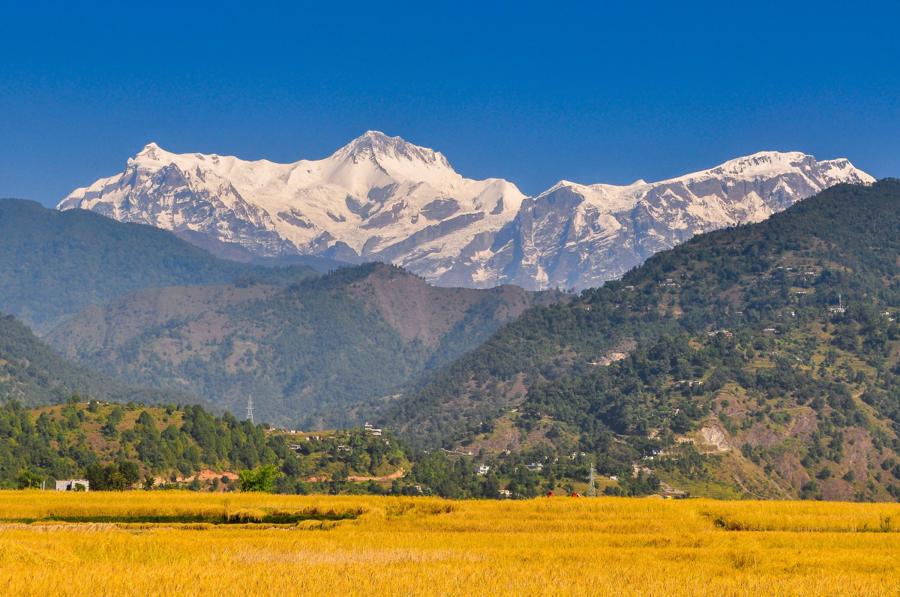
Pokhara & the Annapurna region

Pokhara sits beside Phewa Lake with the Annapurna range behind it. Machhapuchhre, the 'Fish Tail', is the peak everyone photographs. It is the gateway to the Annapurna Conservation Area and a base for paragliding, boating and mountain biking. You can fly from Kathmandu or come by road. It is warmer than Kathmandu, and summers are humid.

The best-known treks start here: Poon Hill–Annapurna Base Camp, Mardi Himal, Khopra and the Annapurna Circuit. All of them are on the Nepal Tourism Board's list of routes that need a licensed guide and an agency-issued TIMS card.

Everest & the Khumbu

Most visitors reach the Everest region on a flight of about 30 minutes from Kathmandu to Lukla. The alternative is a bus to Jiri and a much longer walk in through the Solu hills, which adds around 10 days but helps with acclimatisation. Sagarmatha National Park has been a UNESCO Natural World Heritage Site since 1979 and contains Everest, Lhotse and Cho Oyu. Namche Bazaar (3,500 m), the monastery at Tengboche and the Gokyo valley are the classic stops.

Everest Base Camp, Gokyo and the Three Passes are all guide-and-TIMS routes. The park lists its best seasons as October–November and March–May. Altitude is the main risk here (see Practical).

Chitwan & the Terai

The lowland Terai feels like another country. Chitwan National Park has one-horned rhinoceros, Bengal tiger, leopard, gharial and mugger crocodiles, and more than 500 bird species. You explore by jeep, canoe and on guided jungle walks, and Tharu villages lie on the park's edge. The park headquarters at Kasara is a 21 km drive from Bharatpur, which is about 20 minutes by air or around 145 km by road from Kathmandu. Lodges and resorts are outside the park.

The park's best season is October–March. It gets very hot from April to June: the Nepal Tourism Board quotes highs of up to 43°C.

Lumbini

Lumbini, in the south-west Terai, is the birthplace of the Buddha and a UNESCO World Heritage Site. The landmark is the pillar raised by the Emperor Ashoka. Around it, the 2.56 sq km Lumbini Garden holds monasteries and temples built by Buddhist communities from Thailand, China, Myanmar, Sri Lanka, Japan, Germany and elsewhere. Summers are hot and the monsoon is very wet, so the Nepal Tourism Board recommends winter as the best time to visit. It is a place of pilgrimage, so dress and behave as you would at any active religious site.

Langtang

Langtang National Park lies north of Kathmandu. Trekkers reach it by road via Dhunche, 117 km from the capital. Its routes, among them the Langtang Valley, Gosainkunda Lake, Helambu and the Tamang Heritage Trail, mix high valleys with Tamang culture. The wildlife includes red panda. All of these routes need a licensed guide and an agency-issued TIMS card.

Before you plan: the FCDO reports that major flooding on 26 August 2026 caused widespread damage in Rasuwa district and the Nepal–China border area, and warns that affected areas may remain unstable. Gosainkunda is in Rasuwa. Check the latest FCDO advice and local conditions with your agency first.

A pillar, not a footnote

Eat your way through Nepal

The single reason many travellers come back — the food culture worth reshaping a trip around, and the dishes to seek out region by region.

Nepal

Dal bhat twice daily, a momo obsession, and Newari feasts from the Kathmandu Valley — fuel for the trek.

On any trekking trail the plate that keeps you moving is dal bhat — lentil soup over rice with a spiced vegetable tarkari and fiery pickle — eaten twice a day, and refilled until you wave it off, under the porters' mantra 'dal bhat power, 24 hour'. It's the honest heart of Nepali food, but the country's real obsession is the momo: steamed or fried dumplings pleated shut over spiced buffalo, chicken or vegetables, dipped in tomato-sesame achar.

The gastronomic high point is Newari, the feasting cuisine of the Kathmandu Valley — a ceremonial samay baji platter of beaten rice, grilled choila buffalo, black soybeans and egg, laid out for festivals. Up in the high Himalaya the food turns Tibetan and warming: thukpa noodle soup, potatoes, salty butter tea. Rings of sweet sel roti fry for the holidays, and in the eastern hills you sip warm millet beer, tongba, through a bamboo straw.

Dishes to seek out
  • Dal bhat (lentils
  • rice & vegetables)
  • Momo (dumplings)
  • Newari samay baji (ceremonial platter)
  • Choila (spiced grilled buffalo)
  • Thukpa (Tibetan noodle soup)
  • Sel roti (sweet rice-flour ring)
  • Gundruk (fermented greens)
Things to do

Nature, culture and the outdoors

  1. Walk the Durbar Squares of Patan and Bhaktapur

    Kathmandu Valley

    Two of the valley's World Heritage palace squares, each a short drive from Kathmandu. In Patan, look for the stone Krishna Temple and the bronze museum in Keshav Narayan Chowk. In Bhaktapur, see the Palace of 55 Windows, the Golden Gate and the Nyatapola Temple.

  2. Circle the stupa at Boudha

    Kathmandu

    The largest stupa in the Kathmandu Valley is a centre of Himalayan Buddhism. Join the pilgrims walking clockwise around it, turning prayer wheels as they go,.

  3. Climb to Swayambhunath

    Kathmandu

    The hilltop stupa west of the city, called the 'Monkey Temple' by many visitors, is one of the holiest Buddhist sites in Nepal. It also has Hindu shrines, so it is a good place to see how the two faiths share space. The front steps are steep, and a road runs almost to the top.

  4. See the evening aarati at Pashupatinath

    Kathmandu

    Nepal's most revered Hindu temple stands on the Bagmati River. The main temple complex is open only to Hindus. Visitors watch from the terraces on the east bank, and photography inside the complex is prohibited.

  5. Wake up to the Annapurnas in Pokhara

    Pokhara

    Row out on Phewa Lake for Machhapuchhre's reflection, walk up to the World Peace Pagoda, or go paragliding above the valley.

  6. Trek to Everest Base Camp

    Everest region

    Fly to Lukla and walk up through Sherpa villages to Namche Bazaar and Tengboche, and on towards Base Camp at around 5,300 m. You need a licensed guide, a TIMS card and a slow ascent.

  7. Track rhinos in Chitwan National Park

    Chitwan

    Go on a jeep safari, a canoe ride and a guided jungle walk in search of one-horned rhino, gharial and over 500 bird species. Spend an evening with Tharu culture on the park's edge.

  8. Visit the Buddha's birthplace

    Lumbini

    See the Ashoka pillar and the Sacred Garden, then walk or cycle between monasteries built by Buddhist nations from across Asia and beyond. It is best in the cooler winter months.

Plan your own trip to Nepal
Where to stay

Hand-checked places in Nepal

Browse all Nepal stays →
Plan

Getting there, getting around and where to stay

Getting there from the UK

There are no direct flights between the UK and Nepal. None appear in the Civil Aviation Authority of Nepal's international schedule for 25 October 2026 to 27 March 2027. Most visitors fly into Tribhuvan International Airport, Kathmandu (KTM) with one change. Gulf and Turkish hubs are the obvious connections: Qatar Airways via Doha, flydubai via Dubai, and Turkish Airlines via Istanbul. Air India and IndiGo fly via Delhi. flydubai also flies from Dubai to Pokhara International Airport. Nepal's third international airport is Gautam Buddha International near Lumbini.

Schedules change by season, so check the current timetable with the airline.

Flights to Kathmandu (KTM) →

Getting around

Domestic flights save days. Nepal Airlines and a number of private airlines link Kathmandu with Pokhara, Bharatpur (for Chitwan), Lukla (for Everest) and other airstrips, and some offer sightseeing 'mountain flights'. The FCDO notes two things. First, mountain flights are often delayed or cancelled by weather, so leave spare days and carry extra money. Second, no Nepali airline currently meets international safety standards: all are on the UK Air Safety List. The FCDO suggests checking the list when deciding whether to fly and with whom.

By road, tourist buses run from Kathmandu to Pokhara and Chitwan. The FCDO says they generally offer better safety than local buses, and advises avoiding overcrowded buses and night travel. Long-distance buses leave from the New Bus Park at Gongabu, Kathmandu. Roads are poor, especially in the mountains and during the monsoon. Hiring a car and driver through an agency is common. To drive yourself, you need your UK licence plus a 1968 International Driving Permit.

In the Kathmandu Valley, taxis have black number plates and a roof sign, and no tip is expected. Green Sajha buses run along the main roads, and rickshaws work well in the old city.

Where to stay

Kathmandu, Patan or Bhaktapur

The valley has everything from international five-star hotels to simple guesthouses. Thamel is Kathmandu's main tourist district. Patan is calmer and closer to its own palace square, and Bhaktapur suits travellers who want to wake up in a car-free old town. Whichever you pick, it is worth staying close to the heritage you came to see.

Pokhara

Pokhara has a wide range of places to stay, from resorts with full service to simple lodges. Its lakeside setting makes it the natural place to rest before or after an Annapurna trek.

On trek: tea houses and lodges

On the main trekking routes in the Everest, Annapurna and Langtang regions, you sleep in tea houses and lodges. Expect simple rooms that get colder the higher you go.

Chitwan

Resorts and lodges of varying standards sit outside the national park boundary. Sauraha and Meghauli are among the places listed by the Nepal Tourism Board.

When to go

Weather & timing in Nepal Right now RIGHT NOW 20°C partly cloudy

Best Mar, Nov–Dec · Shoulder Jan–Feb, Apr

Units

Next 7 days

Forecast · Met Office · Powered by Met Office data

Typical · climate data

Best time to visit

October – November, March – April (trekking seasons)

Best for
  • Himalayas
  • Trekking
  • Temples
  • Culture
At a glance
Sunshine 9.5 hr/day
Rainfall 244 mm/mo
Wettest July · 856.3mm
Driest December · 6.2mm
Part of South Asia →
By season

Units

Spring (Mar–May)

What to expect — Daytime highs average about 25°C with overnight lows near 14°C, with plenty of rain.

What's best — Warm, then Shoulder season. Mar and Apr are among the best months here (warm, sunny).

Summer (Jun–Aug)

What to expect — Daytime highs average about 27°C with overnight lows near 20°C — the wettest stretch of the year.

What's best — Wet.

Autumn (Sep–Nov)

What to expect — Daytime highs average about 24°C with overnight lows near 14°C, with plenty of rain.

What's best — Wet, then Shoulder season, then Warm. Nov is among the best months here (warm, sunny).

Winter (Dec–Feb)

What to expect — Daytime highs average about 18°C with overnight lows near 6°C, and it stays largely dry.

What's best — Mild. Dec, Jan and Feb are among the best months here (mild, sunny).

Live forecast map · Windy.com · temperature with wind, °C and km/h

Heat, rain and the best months, region by region

Nepal can be visited all year, but the two classic seasons are October–November and March–May. The Nepal Tourism Board says the clearest skies come after the monsoon in October and November, and spring is rhododendron season. These are also the main trekking seasons. In Kathmandu, average highs are about 24°C in October and 21°C in November, with almost no rain by November. In March to May, highs are 22–26°C, but May already brings pre-monsoon storms: around 240 mm of rain on our figures.

Monsoon (roughly mid-June to early or mid-October): the Nepal Tourism Board says 80% of Nepal's rain falls between June and September. The Department of Hydrology and Meteorology gives a normal monsoon onset of 13 June and withdrawal of 2 October in eastern Nepal. In most recent years, though, it withdrew in the first half of October, so early October can still be wet. In Kathmandu, July averages over 850 mm. The FCDO warns that monsoon travel can be hazardous: landslides and floods can cut off roads and villages for days, and mountain flights are often delayed. Rain-shadow areas such as Manang and Mustang stay much drier.

Winter (December–February): Kathmandu has bright days of 17–18°C and nights around 5–6°C. Higher up there is snow, and the Everest region sees daytime temperatures of about 5°C. This is the best season for Chitwan and Lumbini.

The Terai is a different story: Kathmandu never averages above 27°C, but the southern lowlands get very hot before the monsoon. The Nepal Tourism Board quotes highs of up to 43°C in Chitwan from April to June, and over 40°C across the Terai in summer.

Average daily high (°C) by month. Measured 2020–2024.
AreaJFMAMJJASOND
Kathmandu 171823262527272726242118

Colours as on the month tiles above. Bold: hot, 32°C or more (go early or late in the day). Outlined: very hot, 35°C or more. Wet: 150 mm of rain or more.

A little context

A little history

To read what you're looking at — the empires and eras that shaped Nepal's food, art and streets.

The Kathmandu Valley's rival city-states left an extraordinary legacy of pagoda temples and carved Durbar Squares
unified into a Himalayan kingdom by Prithvi Narayan Shah in the 18th century
never colonised, though bound to Britain by the Gurkha soldiering tradition
the monarchy was abolished in 2008, making Nepal a federal republic; the Buddha was born at Lumbini
Culture

Culture and etiquette

  • Walk clockwise around stupas and temples, as the pilgrims turning prayer wheels at Boudha and Swayambhu do.
  • Take your shoes off before entering a home or a place of worship. Leather items are not allowed in some temple areas: at Pashupatinath, shoes, belts and leather camera cases must be left outside.
  • Some Hindu temples are closed to non-Hindus. At Pashupatinath, the main temple complex is open only to Hindus. Visitors watch from the terraces across the Bagmati, and photography inside is strictly prohibited. Non-Hindus may not enter the nearby Guhyeshwari Temple either.
  • Ask before you photograph people, rituals and shrines.
  • Use your right hand to give, receive, eat and pay. Avoid pointing your feet at people or touching things with them.
  • Dress modestly, especially in rural areas and at religious sites. Public displays of affection are frowned upon.
  • Greet with "Namaste", palms together. The cow is sacred, and killing cows is illegal in Nepal.
Practical

Entry, money and health

Entry and visas (British passport holders)

Visa: British citizens need a visa for visits of up to 90 days. You can get a tourist visa on arrival at Tribhuvan International Airport. To speed things up, the Department of Immigration's online form can be filled in up to 15 days before arrival: print the barcoded submission receipt, pay at the bank counter and take it to the immigration desk. Kiosks at the airport are an alternative. You can also apply in advance through the Department of Immigration's eVisa portal or the Nepal Embassy in the UK.

Fees (Department of Immigration, checked 28 October 2026): 15 days USD 30, 30 days USD 50, 90 days USD 125, all multiple entry. Tourist visas can be extended in Nepal (USD 3 a day, minimum 15 days) up to a total of 150 days per calendar year. Overstaying is a serious offence. Cards are accepted at the airport, but the FCDO advises bringing cash as a backup, preferably US dollars.

Passport: it should be valid for at least 6 months from your date of entry. Border officers may ask for proof of travel insurance (healthcare, repatriation, emergencies) and of where you are staying the first night.

Trekking permits: under the revised TIMS rules in force since 31 March 2023, trekkers on most main routes must be accompanied by a licensed trekking guide and carry a TIMS card issued through a government-registered agency. These include Everest, Annapurna, Langtang, Manaslu, Mustang and Kanchenjunga. The Nepal Tourism Board gives the TIMS fee as NPR 2,000 for non-SAARC nationals. Restricted areas such as Upper Mustang, Upper Dolpa and parts of Manaslu need an additional special permit from the Department of Immigration. National parks charge separate entry fees, for example NPR 3,000 per entry for Sagarmatha and NPR 2,000 per day for Chitwan for foreigners.

Check the latest on GOV.UK entry requirements and the Department of Immigration before you travel.

Money

The currency is the Nepalese rupee (NPR, Rs), issued by Nepal Rastra Bank, which publishes daily reference rates. On 27 October 2026, £1 bought about NPR 203; treat this as indicative. The FCDO warns that ATMs and card payments may not be available in remote areas, so carry enough cash for a trek plus a buffer for weather delays.

Health

See your GP or a travel clinic well before you go. TravelHealthPro recommends hepatitis A and typhoid for most travellers and an up-to-date tetanus. Hepatitis B, rabies, Japanese encephalitis and others may be advised depending on your trip. Japanese encephalitis occurs in the Terai, the Kathmandu Valley and some hill districts, with risk peaking from May to October. There is a low malaria risk below 1,500 m, mainly in the Terai. There is none in Kathmandu or on typical Himalayan treks. Dengue occurs, so avoid mosquito bites, especially by day. Rabies is present: avoid contact with animals.

Altitude: risk starts at about 2,500 m. Above 3,000 m, both TravelHealthPro and the Nepal Tourism Board advise raising your sleeping altitude by no more than about 300–500 m a night, with regular rest days. Headache, nausea, loss of appetite, fatigue and dizziness can be the first signs of altitude sickness. If symptoms worsen, descend. The Himalayan Rescue Association runs aid posts at Pheriche and Manang in the trekking seasons. Make sure your insurance covers trekking at your planned altitude and helicopter rescue.

UK government travel advice

The FCDO's page for Nepal (updated 1 October 2026, still current on 28 October 2026) does not advise against travel to any part of the country. Its main warning is about the flooding of 26 August 2026 in Rasuwa district and the Nepal–China border area, which also affected Gorkha, Nuwakot and Dhading. Affected areas may remain unstable.

Key points from the FCDO:

  • Do not trek alone. Foreign independent trekkers must hire a local guide or porter in national parks and protected areas, and need a permit and TIMS card for the main trekking regions.
  • Above 3,000 m, expect sudden weather changes, avalanches and altitude sickness. Use a reputable agency and be wary of trekking deals that look very cheap.
  • All Nepali airlines are on the UK Air Safety List, and mountain flights are often delayed or cancelled.
  • Monsoon travel (normally June to October) can be hazardous because of floods and landslides.
  • Earth tremors are common.
  • Protests and strikes are fairly common and can turn violent: avoid demonstrations.

Read the full GOV.UK travel advice for Nepal.

Sources · last checked 28 October 2026

We write this guide from official sources only: GOV.UK, national immigration portals, tourism boards, airports and operators, central banks and met services. Rules change, so check the linked pages before you book.

Before you book

Know before you go

The practical back-matter — safety, drones and the essentials, in one place.

Safety

No FCDO advisory against travel FCDO advice →

Official UK Foreign, Commonwealth & Development Office guidance is the definitive source — check it close to your travel dates.

Drone rules (sub-250g)

  • Nepal
    Strict — no on-the-spot flying. Nepal doesn't honour the sub-250g exemption for camera drones: a foreign visitor needs a CAAN permit plus clearances from the Ministry of Home Affairs and Department of Tourism (and the parks authority for park areas). Ceilings are low and flying without a permit risks seizure. ⚠ The Kathmandu Valley's UNESCO sites (Pashupatinath, Boudhanath, the Durbar Squares) are effectively no-fly, and the Everest and Annapurna regions need combined approvals with foreigner fees. Valley permits are rarely granted and can take 90+ days. Rules checked: Jul 2026

National parks, protected sites and religious/heritage venues often have their own rules and permits — always check the specific site before you fly.

The essentials

Plug & voltage Type C/D/M · 230V
Daily budget Budget-friendly (trekking permits add up)
Region Southern Asia