← New Zealand
NEW ZEALAND · CITY

Auckland

New Zealand's harbour city and main gateway: ferries to Waiheke and Rangitoto, volcanic-cone views, Ponsonby's food and the west-coast surf beaches.

  • City
  • February to April for warm seas and fewer crowds; December to February for the warmest weather
  • AKL
  • ~approx 2–3 days
  • Tāmaki Makaurau
  • City of Two Harbours
  • Island Ferries
  • Volcanic Cones

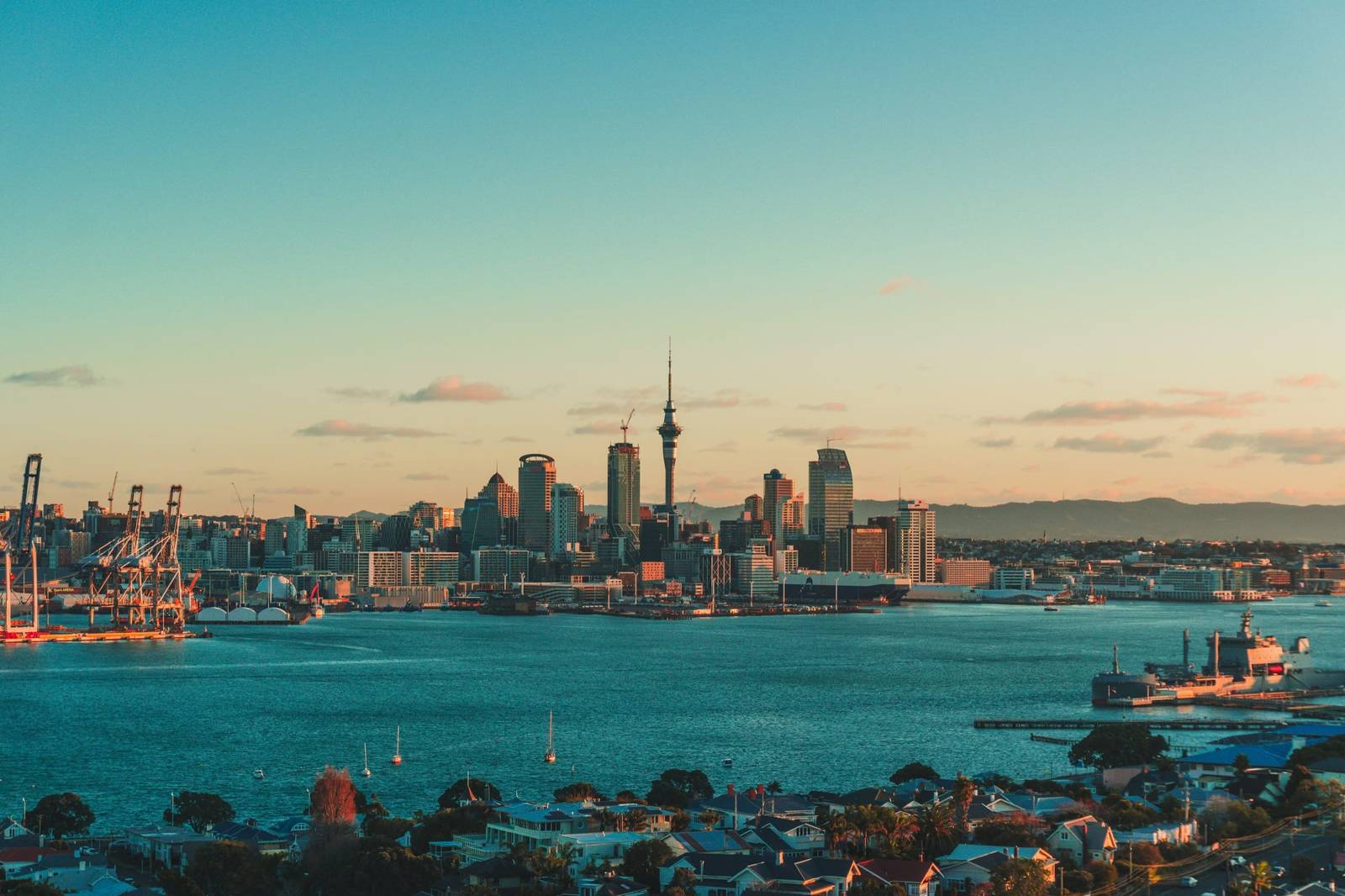
A harbour city built over volcanoes, where a ferry from the foot of Queen Street reaches a vineyard island in 40 minutes and a 600-year-old volcano in 25.

Auckland, Tāmaki Makaurau, is New Zealand's largest city and its main gateway, spread between two harbours over a field of small volcanic cones. Ferries run from downtown to Devonport, Waiheke Island and Rangitoto, the maunga give free views over the city, and the black-sand surf beaches of the west coast are a short drive away.

Type
city
Ideal length
~approx 2–3 days
Getting around
on foot in the centre, Auckland Transport buses and trains by contactless or AT HOP card, and ferries to the islands
Neighbourhoods
5 areas
Best season / months
February to April for warm seas and fewer crowds; December to February for the warmest weather
Language
English and te reo Māori
Currency
New Zealand dollar (NZ$)
Budget level
expensive by UK standards for food and beds, with cheap, capped public transport
Good for
  • First-timers to New Zealand
  • Families
  • Couples
  • Food lovers
  • Walkers
▸ Discover

About Auckland

Auckland, Tāmaki Makaurau, spreads across a narrow isthmus between two harbours, the Waitematā to the east and the Manukau to the west, and is built over a field of small volcanic cones. It is New Zealand's largest city and the arrival point for most long-haul flights, so most trips start here.

The appeal is the setting more than any single sight: ferries across the Waitematā to Devonport, Waiheke and Rangitoto, views from the maunga, black-sand surf beaches on the west coast, and a food scene shaped by Pacific and Asian communities. For the rest of the country, see the New Zealand guide.

Why go

Auckland is where the long flight ends, and we think it is worth two or three days rather than a night. The harbour is the city's playground: a ferry ride puts you on a vineyard island, a 600-year-old volcano or a Victorian seaside village, and the volcanic cones in the suburbs give free views across all of it. The west-coast beaches are wild, the eastern bays are calm, and Ponsonby and the waterfront are good places to eat. It is also the natural start for Northland, Rotorua and the rest of the North Island.

Don't miss

  • Waiheke Island — beaches and vineyards, 40 to 45 minutes by ferry
  • Rangitoto — the summit walk on Auckland's youngest volcano
  • Maungawhau / Mount Eden — the crater and the city view
  • Devonport — the harbour ferry and a seaside village
  • Piha — the west-coast surf beach, swimming between the flags

Signature experiences

Waiheke Island — Fullers360 ferries leave the Downtown Ferry Terminal for Matiatia Wharf, about 40 to 45 minutes away. The island has more than 30 wineries, swimming beaches at Oneroa, Little Oneroa and Onetangi, and a café village at Oneroa a short walk from the wharf. Go for a day, or stay a night to see it after the day-trippers leave.

Rangitoto — Auckland's youngest and biggest volcano rose from the sea about 600 years ago. The ferry from downtown takes about 25 minutes; the summit track is about 7 km and two hours return over lava fields and through pōhutukawa forest, with side trips to the crater rim and the lava caves. The island is pest-free, has no shops, food or drinking water, and its bird and plant life depends on visitors checking their gear before they board.

The maunga — the city is built over volcanic cones, and the Tūpuna Maunga Authority looks after them as sacred sites. Maungawhau / Mount Eden has a boardwalk around its crater and summit and has been free of private cars since 2016; walking up gives the best free view of the city.

The west coast — Piha and the other black-sand beaches of the Waitākere coast are a drive west of the city. They are for walking, watching the surf and swimming only between the flags.

Tāmaki Makaurau's Māori heritage — Auckland War Memorial Museum Tāmaki Paenga Hira in the Domain holds major Māori and Pacific collections; some galleries, including the Māori Court, are closed for works, so check what is open. For a fuller cultural visit, the Waitangi Treaty Grounds in Northland and Te Puia in Rotorua are each a day trip or more away.

Neighbourhoods

Auckland neighbourhood by neighbourhood — the character of each and who it suits.

  • City centre, Viaduct and Wynyard Quarter

    The downtown grid running up from the waterfront: Queen Street, the Sky Tower, the Downtown Ferry Terminal on Quay Street, and to the west the Viaduct Basin and the redeveloped Wynyard Quarter of restaurants, wharves and public spaces.

    Why go
    Ferries, the waterfront walk and the easiest transport links.
    Best for
    First-timersshort staysisland day trips
    Known for
    The Sky Tower, the Viaduct and Wynyard Quarter waterfront, the ferry piers for Waiheke, Rangitoto and Devonport, and Waitematā station.
  • Ponsonby

    An inner-west suburb of Victorian and Edwardian villas, strung along Ponsonby Road with its cafés, bars, restaurants and shops.

    Why go
    To eat and drink well within a short bus ride of the centre.
    Best for
    Foodnightlifecouples
    Known for
    Ponsonby Road's restaurants and bars, villa-lined side streets, and the walk down to the harbour at Westhaven.
  • Parnell

    A hilly, leafy suburb east of the centre beside the Auckland Domain, with boutiques, galleries and cafés along Parnell Road.

    Why go
    For the Domain and the Auckland Museum on foot, in a quieter setting.
    Best for
    Familiesmuseumsa calmer base
    Known for
    Auckland War Memorial Museum Tāmaki Paenga Hira in the Domain, Parnell Road, and the walk down to the harbour.
  • Devonport

    A seaside village on the North Shore, across the harbour from downtown by ferry, with old wooden villas and two volcanic cones.

    Why go
    For harbour views, beaches and a slower pace, with the city a ferry ride away.
    Best for
    Familiescouplesa village feel
    Known for
    The Fullers360 ferry to downtown, Maungauika/North Head and Takarunga/Mount Victoria, Cheltenham Beach, and the ferry stop for Rangitoto.
  • Mission Bay and Tāmaki Drive

    A string of harbour beaches east of the centre along Tāmaki Drive, with Mission Bay the best known, its lawn and cafés facing Rangitoto.

    Why go
    For a city beach, and a flat walk or cycle along the waterfront.
    Best for
    Familiesbeach dayscycling
    Known for
    Mission Bay beach and its cafés, the Tāmaki Drive waterfront path, and views across to Rangitoto.

Views & quieter corners

Best views

  • Maungawhau / Mount Eden — the crater boardwalk and a 360° view over the city
  • Rangitoto's summit — over the Hauraki Gulf and back to the skyline
  • Takarunga/Mount Victoria, Devonport — across the harbour to the city
  • The ferry deck leaving downtown — the skyline and the Harbour Bridge from the water

Quieter corners

  • Takarunga/Mount Victoria in Devonport — a short climb for a harbour view back to the city
  • The Rangitoto lava caves — a 15-minute side trip off the summit track
  • The Tāmaki Drive waterfront path — a flat walk or cycle from the city to Mission Bay
  • Little Oneroa on Waiheke — the smaller beach beside Oneroa, a short walk from the village

Food & drink

Auckland eats like the Pacific city it is: Pacific Island, Māori, Asian and European cooking side by side, built on seafood and New Zealand lamb. Ponsonby Road and the Viaduct and Wynyard Quarter waterfront have the densest run of restaurants and bars, the suburbs hold the best Asian food, and Waiheke's vineyards serve long lunches with their own wines. Look for green-lipped mussels, fish and chips on the beach, kūmara, a hāngī meal cooked in an earth oven, pavlova, and a flat white with breakfast.

  • Green-lipped mussels — New Zealand's big native mussel, steamed or in chowder
  • Fish and chips — best eaten on a beach or by the harbour
  • Hāngī — the Māori earth-oven meal of meat, kūmara and vegetables
  • Kūmara — the sweet potato, roasted or as chips
  • Pavlova — meringue with cream and fruit, claimed on both sides of the Tasman
  • Flat white — the café coffee of every Auckland breakfast
  • Waiheke wine — from more than 30 island wineries
Dietary notes

Vegetarian and vegan food is easy to find, especially around Ponsonby and the city centre, and menus usually mark options and allergens. Gluten-free is widely understood. Halal and kosher options exist but are easier to find with some planning. Tell staff about allergies, especially to shellfish, which features heavily.

▸ Where you'll stay

Where you'll stay in Auckland

Decide first how much you will use the ferries. The city centre and the Viaduct and Wynyard waterfront put the ferry piers, the trains and most restaurants on your doorstep. Ponsonby is the base for eating out, Parnell is quieter and close to the Domain and the museum, and Devonport across the harbour feels like a seaside village with the city a ferry ride away. For a night or two of vineyards and beaches, stay on Waiheke. Book early for December to February.

  • Budget
    City centre hostels and simpler hotels around Queen Street and the upper centre, everything on foot or a short bus ride, and the ferries close by.
  • Mid-range
    Viaduct / Wynyard Quarter and Parnell waterfront hotels and apartments by the Viaduct and Wynyard, or a quieter base in Parnell near the Domain and the museum.
  • Luxury
    The waterfront, Ponsonby and Waiheke Island the smartest city hotels on the waterfront, boutique stays around Ponsonby, and vineyard lodges and villas on Waiheke.
Stay

Hotels & rentals around Auckland

Pan, zoom and compare live prices — every stay in one map.

We may earn a commission if you book through these links, at no extra cost to you. How we make money

▸ Getting around

Getting around Auckland

The centre and the waterfront are easy on foot. Auckland Transport (AT) runs the buses, trains and ferries; trains serve the city-centre stations Waitematā, Te Waihorotiu and Karanga-a-Hape. Ferries are the best way to reach Devonport, Waiheke and Rangitoto. For the west coast, a hire car or a tour is the practical option.

Pay with a contactless card or phone, or an AT HOP card; cash is not accepted on AT buses, and paper tickets work only on trains and ferries. Adult fares from 1 February 2026 are $3 for one zone and $4.90 for two zones by bus or train, and $7.80 for an inner-harbour ferry. Contactless has a $20 daily cap; an AT HOP card has a $50 7-day cap. Tag on and off with the same card or device, and transfers within 30 minutes count as one journey. AT HOP cards cost $5 at the airport machines (domestic terminal near door 4, international terminal near bus stop A). Fullers360 runs the Waiheke and Rangitoto ferries from the Downtown Ferry Terminal.

▸ Plan your days

Suggested itineraries

Ready-made day plans for Auckland — from a single day to a long weekend.

One day

Start on the waterfront, walking from the Downtown Ferry Terminal to the Viaduct and Wynyard Quarter. Take the ferry to Devonport, climb Takarunga/Mount Victoria for the harbour view, then come back for an afternoon at the Auckland Museum in the Domain. Finish with dinner on Ponsonby Road.

Two days

Give the second day to the gulf. Take an early ferry to Rangitoto, walk the summit track (about two hours return) and catch the ferry back, or go to Waiheke for the beaches at Oneroa and Onetangi and lunch at a vineyard.

Three days

Head west to Piha and the black-sand beaches of the Waitākere coast, swimming only between the flags, or stay in town and walk up Maungawhau / Mount Eden in the morning, then follow Tāmaki Drive to Mission Bay for the afternoon.

▸ What you'll do

Insider tips

  • Pay by contactless on Auckland Transport buses, trains and ferries; the $20 daily cap (2026) applies automatically. Stay two days or more and an AT HOP card's $50 7-day cap (2026) works out better.
  • The AirportLink bus to Puhinui and the train is the cheapest way into town; buses take no cash.
  • Between the airport's international and domestic terminals there is a marked walkway of about 950 m (10 to 15 minutes) and a free shuttle bus every 15 minutes from 5am to 11pm.
  • Take 1 to 2 litres of water each to Rangitoto, and clean your shoes and bags before you board: the island is pest-free.
  • Check safeswim.org.nz before a beach day, and at Piha swim only between the red and yellow flags.
  • Auckland's weather changes quickly in every season; carry a light waterproof even in summer.

Frequently asked

How do I get from Auckland Airport to the city centre?

Take the orange AirportLink bus from stop A at the international terminal (stop B at domestic) to Puhinui station, about 20 minutes, then an East West or South City line train to the city-centre stations. The bus runs every 10 minutes from 4.30am to 12.40am, seven days a week. Buses do not take cash: tap a contactless card or phone, or buy an AT HOP card at the airport.

Do I need an AT HOP card?

Not for a short stay. Contactless cards and phones work on buses, trains and ferries, with a daily cap of $20 (2026). If you are travelling on two or more days, an AT HOP card earns the $50 7-day cap (2026) instead. Fares are the same either way; a one-zone bus or train fare is $3 (2026).

How long is the ferry to Waiheke Island?

About 40 to 45 minutes from the Downtown Ferry Terminal (piers 11 and 12, 99 Quay Street) to Matiatia Wharf with Fullers360, a little longer on sailings via Devonport. On peak days there are up to 22 sailings.

Can I climb Rangitoto in a day?

Yes. The ferry takes about 25 minutes from downtown and the summit track is about 7 km and two hours return, with 250 m of climbing over lava. There is no food or drinking water on the island, so bring your own, and leave time to get back for your ferry.

Is it safe to swim at Piha?

The west-coast beaches have strong surf and rips. Surf Life Saving New Zealand's advice is to swim only at a lifeguarded beach between the red and yellow flags, and to stay out if the flags are not up. Check safeswim.org.nz before you go.

How many days do I need in Auckland?

Two to three days cover the city, a harbour island and a volcano; add a day for the west coast or a full day on Waiheke. Most visitors then head on to Northland, Rotorua or the South Island.

Explore

Explore the area

© OpenFreeMap · OSM · terrain Mapterhorn
▸ Budget

What it costs in Auckland

Backpacker
a hostel bed, the AT HOP card (the 7-day fare cap is $50, 2026), free walks up the maunga and along the waterfront, and picnic lunches.
Mid-range
a central hotel, a restaurant dinner, a ferry day to Waiheke or Rangitoto and the Auckland Museum (international adults pay general admission).
Luxury
a waterfront hotel, tasting menus, a vineyard lunch on Waiheke and a private driver for the west-coast beaches.
Cash vs card
Cards and contactless work almost everywhere. AT buses do not take cash: use contactless (daily cap $20, 2026) or an AT HOP card. Tipping is not expected in New Zealand.
▸ When you'll go

When to visit Auckland

February to April for warm seas and fewer crowds; December to February for the warmest weather

Spring (Sep–Nov)

What to expect — Average highs climbing from about 16°C in September to about 20°C in November, with nights of 11 to 14°C. Rain is frequent: November is the wettest month in our data, at about 130 mm.

What's best — Quieter streets and lower demand for beds, gardens in flower, and the first warm days for the islands.

Summer (Dec–Feb)

What to expect — Warm and humid rather than hot: average highs of about 21 to 23°C and nights of 16 to 18°C, with roughly 100 to 120 mm of rain a month. The busiest season.

What's best — Beaches, ferries to Waiheke and Rangitoto, the west coast at Piha, and long evenings on the waterfront.

Autumn (Mar–May)

What to expect — Settled and mild early on: March is the driest month in our data, at about 80 mm, with highs of about 21°C, cooling to about 17°C in May.

What's best — Our pick: warm sea, fewer people, and good walking weather on the volcanic cones and Rangitoto.

Winter (Jun–Aug)

What to expect — Mild but damp: highs of about 15°C and lows of 9 to 11°C, with July and August among the wettest months at about 120 mm.

What's best — Museums, galleries and food, wineries on Waiheke without the crowds, and the cheapest rooms.

▸ Know before you go

Know before you go

Honest swaps

Skip a taxi from the airport → the AirportLink bus to Puhinui and the train into the city run every 10 minutes.

Skip driving up the volcanic cones → the summit of Maungawhau / Mount Eden has been closed to private vehicles since 2016; walk up.

Skip buying water on Rangitoto → there is none for sale; bring 1 to 2 litres each.

Crowds & timing

Summer weekends fill the Waiheke ferries; buy your Fullers360 ticket ahead and check the last sailing back.

Allow plenty of time on Rangitoto to get back to the wharf for your return ferry.

Some Auckland Museum galleries, including the Māori Court and the Pacific galleries, are closed until further notice; check before you go.

Local rules & etiquette

The maunga (volcanic cones) are sacred sites cared for by the Tūpuna Maunga Authority; stay on the paths and boardwalks.

Rangitoto is pest-free: check, clean and seal your bags and shoes before you board.

At the beach, swim between the red and yellow flags; if the flags are not up, do not go in.

Safety
Auckland is a low-risk city for visitors, and the FCDO does not advise against travel to any part of New Zealand. Its general points apply: crime is generally low, but street crime happens in the larger cities, and thieves target unattended vehicles, especially hire cars and campervans, so leave nothing in the car. The bigger hazards are natural. New Zealand is in a major earthquake zone (the local advice is drop, cover and hold), and Auckland's volcanic field is the reason for its cones. On the west-coast beaches, surf and rips are the real danger: swim only between the red and yellow flags at a lifeguarded beach, and if you are caught in a rip, Surf Life Saving New Zealand's advice is to relax and float, raise a hand, and ride the rip until you can swim back. On Rangitoto, the lava is rough and there is little shade, so wear proper shoes and carry water. In an emergency dial 111 for police, fire or ambulance; it is free from any phone. For non-urgent police matters call 105. Take out travel insurance that covers treatment and repatriation.
Culture & etiquette
Auckland is relaxed and informal, and most people use first names from the start. Kia ora (hello, thanks) is used by everyone, and Māori place names and words are part of everyday speech; a little effort with pronunciation is noticed. The volcanic cones, the maunga, are wāhi tapu (sacred places) to mana whenua, the iwi of Tāmaki Makaurau. Stay on the paths, do not climb on the old pā terraces, and respect the vehicle bans on the summits. If you visit a marae or attend a pōwhiri (welcome ceremony), follow your hosts' lead: speeches and a song are followed by the hongi, the pressing of noses, and each marae has its own customs. Tipping is not expected, though rounding up for good service is appreciated. Take your rubbish home from beaches and islands; Rangitoto has no bins.
Daily budget

Expect New Zealand city prices, with accommodation the largest cost; public transport is capped at $20 a day by contactless or $50 a week with an AT HOP card (2026), and many of the best sights, the maunga, the beaches and the waterfront, are free.

Emergency numbers

111 (police, fire, ambulance; free from any phone) · 105 (police non-emergency) · *555 from a mobile (non-urgent traffic incidents)

▸ Ready to book your trip?

Getting there

There are no non-stop flights from the UK. Singapore Airlines flies from London via Singapore, Qatar Airways via Doha (some of its Doha–Auckland flights stop in Australia, which means holding a valid Australian visa), and Air New Zealand via Los Angeles, San Francisco or Houston with British Airways, United or Virgin Atlantic on the first leg. Auckland Airport (AKL) is south of the city: the AirportLink bus runs every 10 minutes from 4.30am to 12.40am to Puhinui station, where East West and South City line trains continue to the city-centre stations, including Waitematā on the waterfront. The 38 bus links the airport with Onehunga. Compare flights to Auckland, and see the New Zealand guide for entry rules.

  • Auckland Airport (AKL)
Book

Ready to book your trip?

Flights, airport transfers and car hire to AKL — search and compare without leaving the page.