← Norway
NORWAY · CITY

Bergen

  • City
  • May to September for long days and the fjord trips; late June to August is warmest and busiest
  • ~approx 2–3 days (more as a fjord base)
  • Hanseatic Wharf
  • City of Seven Mountains
  • Fjord Gateway
  • Rain and Fish

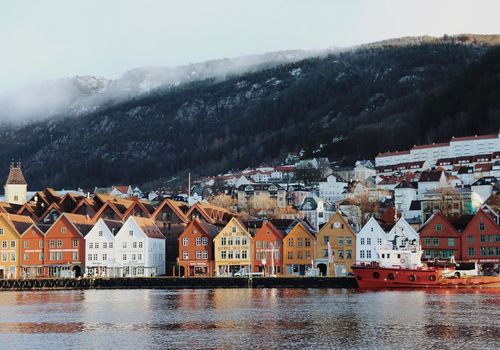
The pointed gables of Bryggen catching low gold light across the harbour, gulls over the fish market, and the smell of rain on old timber as the Fløibanen funicular hums up into the trees behind the town.

Bergen is a wooden harbour town wedged between seven mountains and the sea, where a UNESCO Hanseatic wharf still leans over the water and a funicular climbs to a forest ridge over the rooftops. It is Norway's gateway to the western fjords — and the wettest, most weatherproof, most likeable city in the country.

Type
city
Ideal length
~approx 2–3 days (more as a fjord base)
Getting around
mostly on foot; one Bybanen light-rail line, buses, and two mountain railways (Fløibanen funicular, Ulriken cable car)
Neighbourhoods
6 areas
Best season / months
May to September for long days and the fjord trips; late June to August is warmest and busiest
Language
Norwegian, with fluent, near-universal English
Currency
Norwegian krone (kr / NOK)
Budget level
high — Norway is among Europe's most expensive countries
Good for
  • First-timers
  • Fjord trips
  • History
  • Hiking
  • Cruise arrivals
  • Couples
▸ Discover

About Bergen

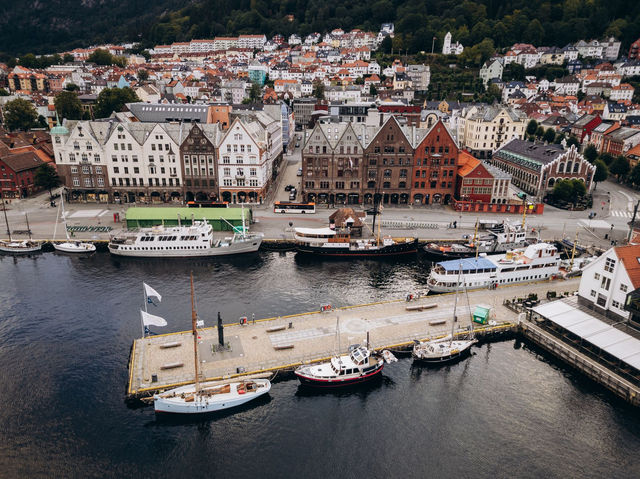
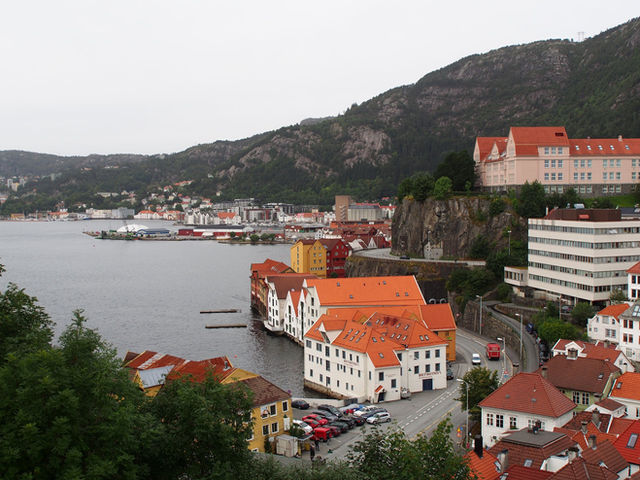
Bergen sits at the head of a sheltered harbour, the Vågen, on Norway's west coast, ringed by steep green mountains that come almost to the waterline. The old Hanseatic trading wharf, Bryggen, runs along the north side of the harbour — a row of narrow, pointed-gable wooden houses on stone footings, rebuilt on the same medieval plots for 900 years. The compact centre wraps around the harbour's head, from the Torgallmenningen main square to the Bergenhus fortress guarding the mouth. Behind the town the ground rises fast into wooden-house slopes and, above them, the mountains of Fløyen and Ulriken. Bergen is the second city of Norway, a major cruise and coastal-ship port, and the classic start or end point for the fjord country to its east.

Why go

Bergen packs a UNESCO World Heritage wharf, a working fish market, world-class fjord access and a mountain you can ride a funicular up into one small, walkable harbour town. It is the most atmospheric city in Norway — soaked in maritime history, framed by peaks, and small enough to feel entirely on foot — and the natural base for the Sognefjord, the Hardangerfjord and the Flåm railway to the east.

Don't miss

  • Bryggen — the UNESCO Hanseatic wharf of leaning wooden merchant houses
  • The Fløibanen funicular up Mount Fløyen for the view over the city and harbour
  • The Fish Market (Fisketorget) at the head of the harbour
  • The KODE art museums and Edvard Grieg's lakeside home at Troldhaugen
  • Bergenhus Fortress with Håkon's Hall and the Rosenkrantz Tower

Signature experiences

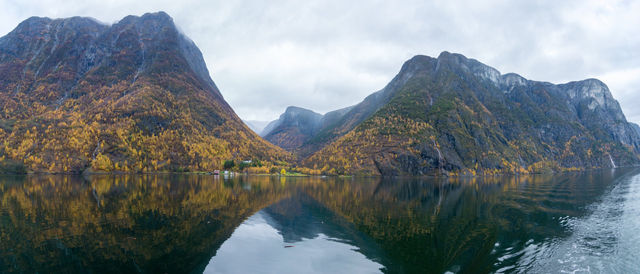
Bryggen and the Hanseatic wharf — Walk the front of Bryggen along the quay, then slip into the timber passages behind it — a warren of leaning walls, worn plank floors and iron tie-rods holding 18th-century houses upright on medieval foundations. The Hanseatic Museum and the Schøtstuene assembly rooms show how German merchants ran the dried-cod trade from here for centuries, living in cold, fireless rooms above their stockfish. It is a working street of shops and studios now, but the fabric is the real thing, rebuilt plot-by-plot after each of the fires that repeatedly swept the wharf. **Up the mountain on the Fløibanen** — From a station just behind the fish market, the Fløibanen funicular climbs in a few minutes to the top of Mount Fløyen, ~320 metres above the town, for the classic view down over Bryggen, the harbour and the islands. At the top there are forest trails, a café, goats grazing in summer, and paths that lead on for hours across the ridge. Fit walkers can climb up and ride down, or hike the ridge to the higher Ulriken and take the cable car back — the "7-mountain" traverse in miniature. **A fjord trip from the harbour** — Bergen is the launch pad for the western fjords, and the water leaves straight from the centre. The most popular is the "Norway in a Nutshell"–style loop east to Flåm — train up over the mountains, the steep Flåm railway down, and a boat through the narrow UNESCO Nærøyfjord — but shorter express-boat fjord cruises run to the Osterfjord, Mostraumen and the Hardangerfjord too. Whichever you take, the point is the same: sheer green walls, waterfalls, and mirror water an hour from the fish market. **Grieg, the fish market and the town's own culture** — Bergen is Edvard Grieg's city, and his lakeside villa and composing hut at Troldhaugen, just out of the centre, run summer concerts in a purpose-built hall over the water. Back in town, the fish market at the harbour head is half tourist theatre, half real trade — buy a paper tray of prawns or a bowl of fiskesuppe and eat it looking at the boats. The KODE museums along the lake hold Munch, Astrup and the Norwegian romantics; the compact centre puts all of it within a short walk. **Wooden Bergen after the rain** — The city is one of the wettest in Europe, and it wears it well. When the rain lifts, walk the near-vertical painted lanes of the Fjellsiden hillside and the Nordnes peninsula, where whole quarters of small timber houses survived the fires — washing lines, cats, hydrangeas and the smell of wet wood and salt. Bergensers are unbothered by weather; buy an umbrella, embrace it, and the low grey light turns out to suit the place.

Neighbourhoods

Bergen neighbourhood by neighbourhood — the character of each and who it suits.

  • Bryggen & the harbour (Vågen)

    The old Hanseatic wharf and the working harbour it faces. A single row of pointed wooden gables on the north quay, with a maze of timber passages behind, and the fish market on the opposite side of the water.

    Why go
    The heart of medieval Bergen and its most photographed face — plus the boats, the market and the fortress all within a few minutes' walk.
    Best for
    First-time sightseeinghistoryharbour walksseafood
    Known for
    The UNESCO Bryggen houses and their creaking back alleys, the Hanseatic Museum and Schøtstuene assembly rooms, the Fisketorget fish market, and the departure quays for fjord boats and the coastal ship.
  • Sentrum & Torgallmenningen

    The commercial core around the broad Torgallmenningen esplanade and the Ole Bulls plass, running back from the harbour to the little Lille Lungegårdsvann lake.

    Why go
    The city's shops, cafés, theatres and its cluster of art museums, all on flat ground between the harbour and the lake.
    Best for
    Museumsshoppingcafésevenings out
    Known for
    The Torgallmenningen and Ole Bulls plass squares, the row of KODE art museums along the lake, the Bergen Kunsthall, the Den Nationale Scene theatre, and the octagonal Blue Stone (Blåsteinen) meeting spot.
  • Nordnes

    The long peninsula on the harbour's south side, a quiet grid of white and painted wooden houses running out to a park, an aquarium and open sea at the tip.

    Why go
    The city's prettiest walk away from the crowds, ending at the Akvariet aquarium and a harbour-mouth swimming spot.
    Best for
    Wooden-house streetsthe aquariumsea viewsa calm stroll
    Known for
    The Akvariet Bergen aquarium, the Nordnes park and outdoor sea pool at the point, and the tightly packed old timber lanes that survived the fires.
  • Fjellsiden & the mountainside

    The steep slope of small painted wooden houses climbing the hillside behind the centre toward the foot of Mount Fløyen — the postcard "wooden Bergen".

    Why go
    The most atmospheric streets in the city, and the bottom station of the Fløibanen funicular.
    Best for
    Wanderingphotographythe funicularquiet corners
    Known for
    The cobbled, near-vertical lanes of Skansen and Fjellveien, the Skansen fire station, the Fløibanen funicular base near the fish market, and long views back over the rooftops.
  • Sandviken

    The old shipping and warehouse district curving north along the shore past the fortress, with a preserved run of white wooden merchant houses and the open-air museum.

    Why go
    A gentler, greener waterfront walk to the Gamle Bergen (Old Bergen) open-air museum.
    Best for
    Waterfront walksthe open-air museumlocal life
    Known for
    The Gamle Bergen Museum of reconstructed timber townhouses, the white sea-warehouses along the shore, and the Sandviksbukten bay.
  • Møhlenpris & Nygård

    A denser, younger quarter southwest of the lake around the university, with student cafés, murals and the botanical hillside.

    Why go
    Bergen's most local, least touristy eating and drinking, plus a green park and museum belt.
    Best for
    Cheap eatsstudent barsparksstreet art
    Known for
    The University of Bergen museum and the Muséhagen botanical garden, the café strip around Møhlenpris, and easy Bybanen access to the airport line.

Views & hidden gems

Best views

  • Mount Fløyen, from the top of the Fløibanen funicular — the definitive view over Bryggen and the harbour
  • Mount Ulriken, the highest of the seven, reached by the Ulriksbanen cable car — a wider, wilder panorama
  • The Skansen and Fjellveien lanes on the hillside — Bryggen and the rooftops framed by wooden houses
  • The Bergenhus fortress ramparts at the harbour mouth, looking back down the Vågen

Hidden gems

  • The back passages of Bryggen, away from the front row — creaking timber galleries most day-trippers never enter
  • Gamle Bergen in Sandviken — a whole reconstructed timber town, quiet and often near-empty
  • The Nordnes sea pool and park at the peninsula's tip — a local swimming and sunset spot
  • The Fjellveien path — a level gravel walk along the hillside contour with the city laid out below, loved by locals for an evening stroll
  • Troldhaugen's little composing hut on the lake — Grieg wrote here, and the setting is as good as the concerts

Food & drink

Bergen eats from the sea. The city built its wealth on dried cod, and fish still runs through everything — creamy Bergen fish soup (fiskesuppe), fishcakes, klippfisk (salt cod), and the harbour market's trays of prawns, crab and smoked salmon. The old dishes are hearty and Thursday-specific: raspeballer (potato dumplings, also called komle) on a Thursday is a genuine Bergen tradition. Save room for a skillingsbolle — the big cinnamon-and-sugar bun that Bergen claims as its own — from a bakery like a proper konditori. Eating out in Norway is expensive, so mix a market lunch and bakery snacks with one good harbour dinner; the fish market stalls and the modern Norwegian kitchens around the centre both deliver, at very different prices.

  • Bergen fiskesuppe — a rich, creamy fish soup, the city's signature bowl
  • Skillingsbolle — a large sugar-crusted cinnamon bun, a Bergen original
  • Raspeballer / komle — boiled potato dumplings, the traditional Thursday dinner
  • Klippfisk / bacalao — salt-dried cod, the trade that built the city
  • Fresh prawns and crab — bought by the tray from the harbour fish market
  • Brunost — Norwegian brown whey cheese, sliced thin on waffles and bread
Dietary notes

Vegetarian and vegan food is easy in the centre — modern Norwegian kitchens and cafés mark it clearly, though the traditional dishes are fish- and meat-heavy. Gluten-free is well understood. Halal and kosher options are limited and concentrated in the centre; self-catering from the Rema 1000 and Kiwi supermarkets is how many travellers keep costs down.

Bergen in photos

▸ Getting around

Getting around Bergen

The centre is small and best walked. A single Bybanen light-rail line runs south to the airport, and a bus network covers the rest; tap a contactless card or use the Skyss app. Two mountain railways climb out of the city — the Fløibanen funicular up Fløyen from behind the fish market, and the Ulriksbanen cable car up Ulriken from the edge of town. A car is a liability in the centre — nowhere to park and everything within walking distance.

Everything central is on foot — Bryggen, the fish market, Sentrum and the Fjellsiden hillside are minutes apart. Nordnes is a flat 10–15 minute walk out along the peninsula; Sandviken a similar walk or a short bus north past the fortress. Only Troldhaugen and the airport really need the Bybanen or a bus.

▸ Plan your days

Suggested itineraries

Ready-made day plans for Bergen — from a single day to a long weekend.

One day

Start at Bryggen when it opens, before the ships, and walk the wharf and its back passages. Cross to the fish market for an early prawn lunch, then ride the Fløibanen up Mount Fløyen for the view and a short forest walk. Come down, wander the Fjellsiden hillside lanes and the KODE museums by the lake, and end with dinner and a drink around Ole Bulls plass.

Two days

Give day two to the fjords. Take a fjord trip from the harbour — the boat-and-rail loop east to Flåm and the Nærøyfjord if you have the full day, or a shorter express-boat cruise if not. Back in Bergen, spend the late afternoon on the Nordnes peninsula to the aquarium and the sea pool, and the evening among the wooden houses of Sandviken and the Gamle Bergen open-air town.

Three days

Use day three for Grieg and the mountains. Head out to Troldhaugen for Edvard Grieg's lakeside villa and a lunchtime concert, then, on a clear afternoon, ride the Ulriksbanen cable car up Mount Ulriken — the highest of the seven — and walk the ridge back toward Fløyen and down into the city, the classic Bergen mountain traverse.

▸ What you'll do

Insider tips

  • A Bergen Card can bundle the Fløibanen, museums and transport and pay for itself fast if you are sightseeing hard — check what your days actually include first.
  • The airport (Flesland, BGO) is connected to the centre by the Bybanen light rail — cheap, frequent and simpler than a taxi.
  • Weather here changes by the hour; carry a packable waterproof always and plan the mountain and fjord days around the forecast, not the other way round.
  • The coastal ship (the Bergen–Kirkenes coastal route) and many fjord boats leave from the harbour — check exactly which quay, as they are spread around the Vågen.
Explore

Explore the area

Interactive area map
Map coordinates coming soon

This place is missing lat/lng — waiting on the next Wix sync.

Do

Local attractions & tours

Skip-the-line tickets and small-group tours in Bergen — compare across our partners.

Magic Ice Bar Bergen: Entry Ticket

Bergen

from £25.27

4.3 (276)
Book on Tiqets →
▸ Budget

What it costs in Bergen

Backpacker
roughly kr 800–1,300 a day.
Mid-range
roughly kr 2,000–3,500 a day.
Luxury
kr 5,000 a day and up.
Cash vs card
Norway is effectively cashless — contactless cards and phones tap through everything, including the fish-market stalls and buses. You rarely need cash at all.
Tipping
Not expected; service is included. Round up or leave ~5–10% for good restaurant service if you wish.
▸ When you'll go

When to visit Bergen

May to September for long days and the fjord trips; late June to August is warmest and busiest

Spring

What to expect — Cool and wet, greening fast, with lengthening days from April. Snow lingers on the high mountains and some fjord trips build back up through May.

What's best — Fewer crowds, waterfalls at full snowmelt volume on the fjord trips, and the city at its greenest before the summer ships arrive.

Summer

What to expect — The warmest, longest and busiest season — daylight late into the night, cruise ships in the harbour, and every fjord trip running. Still frequently wet; Bergen's rain does not take the summer off.

What's best — Long light for the mountains and fjords, outdoor concerts at Troldhaugen, the fish market in full swing, and the widest choice of boats and trains east.

Autumn

What to expect — Cooler, darker and wetter as the storms return, the crowds thinning from September. The mountainsides turn gold and the light goes low and dramatic.

What's best — Autumn colour on Fløyen and Ulriken, quiet museums, cosy cafés, and lower shoulder-season rates once the ships stop.

Winter

What to expect — Dark, wet and windy at sea level, with snow more reliable up the mountains than in the town. Short days, some fjord services reduced, but the city keeps working.

What's best — A snow-dusted Fløyen a funicular ride from the harbour, Christmas markets and the Pepperkakebyen gingerbread town, and the lowest room rates of the year.

▸ Know before you go

Know before you go

Honest swaps

Skip driving into the centre → Bergen is a walking city with brutal parking; leave the car and use your feet, the Bybanen and the boats.

Skip a full-day bus fjord tour if time is short → a shorter express-boat fjord cruise leaves straight from the harbour and still delivers sheer walls and waterfalls.

Skip climbing Fløyen and Ulriken both by railway → walk up one and ride the other down for the same views and a proper leg-stretch.

Skip pricey harbour-front seafood restaurants for lunch → eat prawns and fiskesuppe from the fish-market stalls, then spend on one good dinner.

Crowds & timing

Bryggen and the fish market are busiest late morning to mid-afternoon when the cruise ships are in — go early or in the evening for the wharf to yourself.

Fjord day-trips and the Flåm railway sell out in summer; book the popular "in a Nutshell"-style loops ahead.

The Fløibanen queues at midday in high season; first thing or after the day-trippers leave is quieter.

Local rules & etiquette

Bring proper rain gear and waterproof shoes — Bergen is one of the rainiest cities in Europe, and locals simply dress for it rather than hide from it.

The mountain trails behind the city are real hillwalking — good footwear, water and a check of the weather before you go up Ulriken.

Alcohol is heavily taxed and sold in bars and, for spirits and wine, only through the state Vinmonopolet shops, which close early and all day Sunday.

Money

Tap-to-pay everywhere; cash is close to obsolete. Decline "pay in your home currency" (dynamic currency conversion) on card terminals — always choose Norwegian kroner.

After dark

The bars and clubs cluster around Ole Bulls plass and the streets off Torgallmenningen — the mainstream night out.

The harbour and Bryggen are quieter and more atmospheric in the evening, good for a walk and a waterside drink.

Møhlenpris and the university side have the cheaper, more local student bars.

Live music and theatre run at the Den Nationale Scene and smaller venues; the summer Grieg concerts at Troldhaugen are the cultural set-piece.

▸ Ready to book your trip?

Getting there

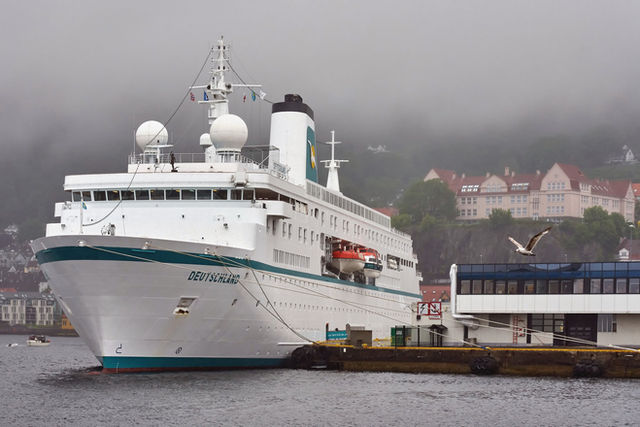
The gateway is Bergen Airport, Flesland (BGO), south of the city, connected to the centre in ~approx 20–25 minutes by the Bybanen light-rail line (line 1) — cheap, frequent and easy. Bergen is also the western terminus of the Bergen Railway (Bergensbanen) from Oslo, one of Europe's great scenic train lines, arriving at the central station a short walk from the harbour. Cruise ships and the coastal route (Hurtigruten / Havila) dock right in the centre.

Book

Ready to book your trip?

Flights, airport transfers and car hire — search and compare without leaving the page.

▸ Trip extras
Book

More trip extras

Parking, holiday extras, and more — coming soon.

Coming soon

We're lining up parking, holiday extras and activities you'll be able to add to any trip from here.